HUTCHINSON, Kan. (AP) — The Kansas State Fair will reevaluate its gun policy this fall because concert security concerns could conflict with state law that allows gun owners to carry their weapons openly.
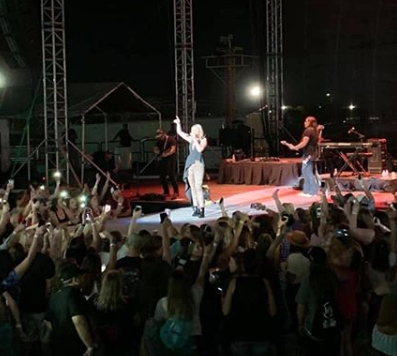
Friday’s Lauren Alaina concert-photo courtesy Kansas State Fair
The fair had to screen concertgoers at the Sept. 7 Billy Currington performance because he required it in his contract, and the show was delayed while everyone and their bags were checked, reported The Wichita Eagle.
Fair Manager Robin Jennison said the fair will likely have to employ that kind of security more often if it wants to continue booking top acts because such requirements are becoming common. The fair also will likely have to impose some limits on the types of bags people can bring to concerts, Jennison said.
Dylan Evans, a member of the fair board, said the fair will have to refine its security processes to make sure it can get the audience screened quickly while still ensuring safety.
“I really feel like this is a new kind of area that we as a board need to look into more … and make sure we do the proper thing to keep the public that comes into the state fair and the people of Kansas safe,” Evans said.
Another board member, Harmon Bliss, said the process will improve as people get used to it.
DETROIT (AP) — More than 49,000 members of the United Auto Workers walked off General Motors factory floors or set up picket lines early Monday as contract talks with the company deteriorated into a strike.
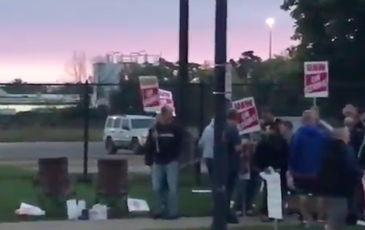
Workers strike early Monday photo courtesy WROC TV
Workers shut down 33 manufacturing plants in nine states across the U.S., as well as 22 parts distribution warehouses.
It wasn’t clear how long the walkout would last, with the union saying GM has budged little in months of talks while GM said it made substantial offers including higher wages and factory investments.
It’s the first national strike by the union since a two-day walkout in 2007 that had little impact on the company.
GM workers joined striking Aramark-employed janitors assigned to GM facilities on the picket lines Sunday night at a sprawling factory on the border between Detroit and the small town of Hamtramck.
Worker Patty Thomas said she wasn’t scheduled to picket, but came out to support her colleagues at the car plant, which GM wants to close.
She’s heard talk that GM may keep the factory open and start building electric pickup trucks there, but she’s skeptical.
“What are they going to take away?” she asked. “That’s the big issue.”
She said workers gave up cost-of-living pay raises to help GM get through bankruptcy, and workers want some of that back now that the company is making profits.
Striking GM employees were joined on the picket lines by workers from Ford and Fiat Chrysler, who are working under contract extensions.
Night shift workers at an aluminum castings factory in Bedford, Indiana, that makes transmission casings and other parts shut off their machines and headed for the exits, said Dave Green, a worker who transferred from the now-shuttered GM small-car factory in Lordstown, Ohio.
Green, a former local union president, said he agrees with the strike over wages, plant closures and other issues.
“If we don’t fight now, when are we going to fight?” he asked. “This is not about us. It’s about the future.”
UAW Vice President Terry Dittes, the union’s top GM negotiator, said a strike is the union’s last resort but is needed because both sides are far apart in negotiating a new four-year contract. The union, he said Saturday, does not take a strike lightly.
“We clearly understand the hardship that it may cause,” he said. “We are standing up for fair wages, we are standing up for affordable quality health care, we are standing up for our share of the profits.”
GM, however, said it offered pay raises and $7 billion worth of U.S. factory investments resulting in 5,400 new positions, a minority of which would be filled by existing employees. GM would not give a precise number. The company also said it offered higher profit sharing, “nationally leading” health benefits and an $8,000 payment to each worker upon ratification.
Because public statements from both sides conflict, it’s hard to tell how long the strike will last, said Kristin Dziczek, vice president of labor and industry at the Center for Automotive Research, an industry think tank. The length “depends on how far apart they really are and where the lines in the sand are drawn,” she said.
Talks were scheduled to resume at 10 a.m. EDT on Monday.
The union’s contract with GM expired Saturday night, but pacts with the company’s crosstown rivals, Ford and Fiat Chrysler, were extended indefinitely. The union has picked GM as its target company this year, and any deal it negotiates will be used as a template for the others. GM was picked because it’s the most profitable of the three, and because its plans to close four U.S. factories have angered union members.
On Sunday, about 200 plant-level leaders voted unanimously to strike against GM if no deal could be reached by Sunday night. Although talks were halted over the weekend, UAW spokesman Brian Rothenberg said there was still dialogue.
Before the talks broke off, GM offered to build a new all-electric pickup truck at a factory in Detroit that is slated to close next year, according to a person who spoke to The Associated Press on condition of anonymity. The person wasn’t authorized to disclose details of the negotiations.
The automaker also offered to open an electric vehicle battery plant in Lordstown, Ohio, where it has a huge factory that has already stopped making cars and will be closed. The new factory would be in addition to a proposal to make electric vehicles for a company called Workhorse, the person said.
It’s unclear how many workers the two plants would employ. The closures, especially of the Ohio plant, have become issues in the 2020 presidential campaign. President Donald Trump has consistently criticized the company and demanded that Lordstown be reopened.
Rothenberg said UAW was striking for fair wages, affordable health care, profit sharing, job security and a path to permanent employment for temporary workers.
GM has factories in Michigan, Ohio, New York, Kentucky, Tennessee, Texas, Missouri, Indiana and Kansas.
A strike would bring to a halt GM’s U.S. vehicle and parts production, and would likely stop the company from making vehicles in Canada and Mexico as well. That would mean fewer vehicles for consumers to choose from on dealer lots, and it would make it impossible to build specially ordered cars and trucks.
Analysts at Cox Automotive said GM has enough vehicles on dealer lots to last about 77 days at the current sales pace. That’s well above the industry average of 61. But supplies of the Chevrolet Tahoe and Suburban large SUVs, which generate big money for the company, are well below the industry average.
The talks this year have been overshadowed by a growing federal corruption probe that snared a top union official on Thursday. Vance Pearson, head of a regional office based near St. Louis, was charged in an alleged scheme to embezzle union money and spend cash on premium booze, golf clubs, cigars and swanky stays in California. It’s the same region that UAW President Gary Jones led before taking the union’s top office last year. Jones himself has been touched by the investigation, leading some union members to call for him to step down, but he hasn’t been charged.
This year’s talks between the union and GM were tense from the start, largely because of GM’s plan to close four U.S. factories, including the one on the Detroit border with the enclave of Hamtramck, as well as Lordstown and factories in Warren, Michigan, and near Baltimore.
Here are the main areas of disagreement:
— GM is making big money, $8 billion last year alone, and workers want a bigger slice. The union wants annual pay raises to guard against an economic downturn, but the company wants to pay lump sums tied to earnings. Automakers don’t want higher fixed costs.
— The union also wants new products for the four factories slated to close. GM currently has too much U.S. factory capacity, especially to build slower-selling cars.
— The companies want to close the labor cost gap with workers at plants run by foreign automakers. GM pays $63 per hour in wages and benefits compared with $50 at the foreign-owned factories. GM’s gap is the largest at $13 per hour, according to figures from the Center for Automotive Research.
— Union members have great health insurance plans and workers pay about 4% of the cost. Employees at large firms nationwide pay about 34%, according to the Kaiser Family Foundation. Automakers would like to cut costs.
————————
DETROIT (AP) — The United Auto Workers union announced Sunday that its roughly 49,000 workers at General Motors plants in the U.S. would go on strike just before midnight because contentious talks on a new contract had broken down.
About 200 plant-level union leaders voted unanimously in favor of a walkout during a meeting Sunday morning in Detroit. Union leaders said the sides were still far apart on several major issues and they apparently weren’t swayed by a GM offer to make new products at or near two of the four plants it had been planning to close, according to someone briefed on the matter.
“We stood up for General Motors when they needed us most,” union Vice President Terry Dittes said in a statement, referring to union concessions that helped GM survive bankruptcy protection in 2009. “Now we are standing together in unity and solidarity for our members.”
It’s still possible that bargainers could return to the table and hammer out an agreement, but union spokesman Brian Rothenberg said at a news conference that it would be unlikely because it is hard to believe they could resolve so many issues before 11:59 p.m.
GM on Friday offered to build a new all-electric pickup truck at a factory in Detroit that is slated to close next year, according someone who spoke to The Associated Press on the condition of anonymity because that person wasn’t authorized to disclose details of the negotiations, which hadn’t been released to the public. The automaker also offered to open an electric vehicle battery plant in Lordstown, Ohio, where it has a plant that has already stopped making cars. The new factory would be in addition to a proposal to make electric vehicles for a company called Workhorse, the person said.
It’s unclear how many workers the two plants would employ. The closures, especially of the Ohio plant, have become issues in the 2020 presidential campaign. President Donald Trump has consistently criticized the company and demanded that Lordstown be reopened.
The UAW’s Rothenberg said the company made general statements about why it is planning to strike, but he would not comment further on GM’s offer. The union said it would strike for fair wages, affordable health care, profit sharing, job security and a path to permanent employment for temporary workers.
In a statement, GM also said the offer made to the union on Saturday included more than $7 billion in U.S. factory investments and the creation of 5,400 new positions, a minority of which would be filled by existing employees. GM would not give a precise number. The investments would be made at factories in four states, two of which were not identified.
The statement also said the company offered “best in class wages and benefits,” improved profit sharing and a payment of $8,000 to each worker upon ratification. The offer included wage or lump sum increases in all four years of the deal, plus “nationally leading” health benefits.
The announcement came hours after the union let its contract with GM expire Saturday night.
If there is a strike, picketers would shut down a total of 53 GM facilities, including 33 manufacturing sites and 22 parts distribution warehouses. GM has factories in Michigan, Ohio, New York, Kentucky, Tennessee, Texas, Missouri, Indiana and Kansas.
On Saturday, Dittes, the union’s chief bargainer, said in a letter to GM members that after months of bargaining, both the union and GM were far apart on issues such as wages, health care, temporary employees, job security and profit-sharing. The letter to members and another one to GM were aimed at turning up the pressure on GM negotiators.
A strike would bring to a halt GM’s U.S. production, and would likely stop the company from making vehicles in Canada and Mexico as well. That would mean fewer vehicles for consumers to choose from on dealer lots, and it would make it impossible to build specially ordered cars and trucks.
The strike would be the union’s first since a two-day work stoppage at GM in 2007.
On Friday, union leaders extended contracts with Ford and Fiat Chrysler indefinitely, but the pact with General Motors was still set to expire Saturday night.
The union picked GM, which is more profitable than Ford and Fiat Chrysler, as the target company, meaning it’s the focus of bargaining and would be the first company to face a walkout.
Talks between the union and GM were tense from the start, largely because GM plans to close four U.S. factories, including the one on the Detroit border with the enclave of Hamtramck, and Lordstown. The union has promised to fight the closures.
Here are the main areas of disagreement:
— GM is making big money, $8 billion last year alone, and workers want a bigger slice. The union wants annual pay raises to guard against an economic downturn, but the company wants to pay lump sums tied to earnings. Automakers don’t want higher fixed costs.
— The union also wants new products for the four factories GM wants to close. The factory plans have irked some workers, although most of those who were laid off will get jobs at other GM factories. GM currently has too much U.S. factory capacity.
— The companies want to close the labor cost gap with workers at plants run by foreign automakers. GM pays $63 per hour in wages and benefits compared with $50 at the foreign-owned factories. GM’s gap is the largest at $13 per hour, followed by Ford at $11 and Fiat Chrysler at $5, according to figures from the Center for Automotive Research.
— Union members have great health insurance plans and workers pay about 4% of the cost. Employees at large firms nationwide pay about 34%, according to the Kaiser Family Foundation. The automakers would like to cut costs.
———–
DETROIT (AP) — The United Auto Workers union announced Sunday that its roughly 49,000 workers at General Motors plants in the U.S. would go on strike just before midnight because contentious talks on a new contract had broken down.
About 200 plant-level union leaders voted unanimously in favor of a walkout during a meeting Sunday morning in Detroit. Union leaders said the sides were still far apart on several major issues and they apparently weren’t swayed by a GM offer to make new products at or near two of the four plants it had been planning to close, according to someone briefed on the matter.
“We stood up for General Motors when they needed us most,” union Vice President Terry Dittes said in a statement, referring to union concessions that helped GM survive bankruptcy protection in 2009. “Now we are standing together in unity and solidarity for our members.”
It’s still possible that bargainers could return to the table and hammer out an agreement, but union spokesman Brian Rothenberg said at a news conference that it would be unlikely because it is hard to believe they could resolve so many issues before 11:59 p.m.
GM on Friday offered to build a new all-electric pickup truck at a factory in Detroit that is slated to close next year, according someone who spoke to The Associated Press on the condition of anonymity because that person wasn’t authorized to disclose details of the negotiations, which hadn’t been released to the public. The automaker also offered to open an electric vehicle battery plant in Lordstown, Ohio, where it has a plant that has already stopped making cars. The new factory would be in addition to a proposal to make electric vehicles for a company called Workhorse, the person said.
It’s unclear how many workers the two plants would employ. The closures, especially of the Ohio plant, have become issues in the 2020 presidential campaign. President Donald Trump has consistently criticized the company and demanded that Lordstown be reopened.
The UAW’s Rothenberg said the company made general statements about why it is planning to strike, but he would not comment further on GM’s offer. The union said it would strike for fair wages, affordable health care, profit sharing, job security and a path to permanent employment for temporary workers.
In a statement, GM also said the offer made to the union on Saturday included more than $7 billion in U.S. factory investments and the creation of 5,400 new positions, a minority of which would be filled by existing employees. GM would not give a precise number. The investments would be made at factories in four states, two of which were not identified.
The statement also said the company offered “best in class wages and benefits,” improved profit sharing and a payment of $8,000 to each worker upon ratification. The offer included wage or lump sum increases in all four years of the deal, plus “nationally leading” health benefits.
The announcement came hours after the union let its contract with GM expire Saturday night.
If there is a strike, picketers would shut down a total of 53 GM facilities, including 33 manufacturing sites and 22 parts distribution warehouses. GM has factories in Michigan, Ohio, New York, Kentucky, Tennessee, Texas, Missouri, Indiana and Kansas.
On Saturday, Dittes, the union’s chief bargainer, said in a letter to GM members that after months of bargaining, both the union and GM were far apart on issues such as wages, health care, temporary employees, job security and profit-sharing. The letter to members and another one to GM were aimed at turning up the pressure on GM negotiators.
A strike would bring to a halt GM’s U.S. production, and would likely stop the company from making vehicles in Canada and Mexico as well. That would mean fewer vehicles for consumers to choose from on dealer lots, and it would make it impossible to build specially ordered cars and trucks.
The strike would be the union’s first since a two-day work stoppage at GM in 2007.
On Friday, union leaders extended contracts with Ford and Fiat Chrysler indefinitely, but the pact with General Motors was still set to expire Saturday night.
The union picked GM, which is more profitable than Ford and Fiat Chrysler, as the target company, meaning it’s the focus of bargaining and would be the first company to face a walkout.
Talks between the union and GM were tense from the start, largely because GM plans to close four U.S. factories, including the one on the Detroit border with the enclave of Hamtramck, and Lordstown. The union has promised to fight the closures.
Here are the main areas of disagreement:
— GM is making big money, $8 billion last year alone, and workers want a bigger slice. The union wants annual pay raises to guard against an economic downturn, but the company wants to pay lump sums tied to earnings. Automakers don’t want higher fixed costs.
— The union also wants new products for the four factories GM wants to close. The factory plans have irked some workers, although most of those who were laid off will get jobs at other GM factories. GM currently has too much U.S. factory capacity.
— The companies want to close the labor cost gap with workers at plants run by foreign automakers. GM pays $63 per hour in wages and benefits compared with $50 at the foreign-owned factories. GM’s gap is the largest at $13 per hour, followed by Ford at $11 and Fiat Chrysler at $5, according to figures from the Center for Automotive Research.
— Union members have great health insurance plans and workers pay about 4% of the cost. Employees at large firms nationwide pay about 34%, according to the Kaiser Family Foundation. The automakers would like to cut costs.
GEARY COUNTY — Law enforcement authorities are investigating an accident that injured two people just after 9p.m. Sunday in Geary County.
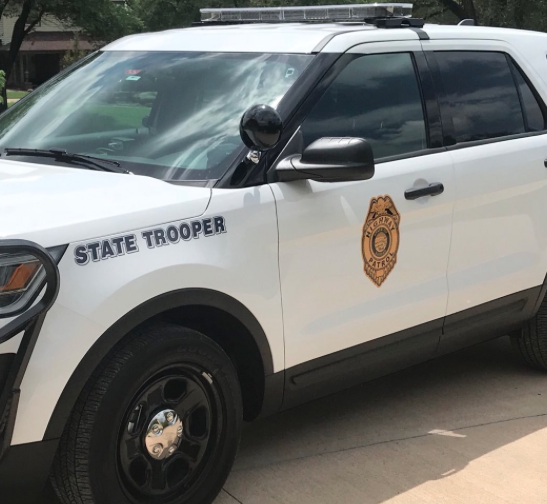
The Kansas Highway Patrol reported a 2006 Nissan Maxima driven by Denilson Acosta Rodriguez, 19, Manhattan, was eastbound in the westbound lanes of Kansas 18 three miles from Interstate 70.
The Nissan struck a 2013 Chevy Cruz driven by Christina D. Tanguay, 17, Junction City, and a 2005 Nissan Altima driven by Tori A. Lamb, 19, Ellsworth, head-on.
EMS transported an unidentified occupant in the Nissan and a passenger in the Chevy Hannah R. Burkhart, 17, Fort Riley to KU Medical Center.
Acosta Rodriguez fled the scene of the accident, according to the KHP.
Tanguay, a passenger in the Maxima Odalis M. Castaneda Carranza, 20, La Puente, CA., and Lamb were not injured. All were properly restrained at the time of the accident, according to the KHP.
Jeremy Miller takes his current mission personally. Miller, a veteran, is walking across the United States to raise awareness of veteran suicides.
Miller spoke with Salina Post during a stop in Kanopolis Sunday afternoon.
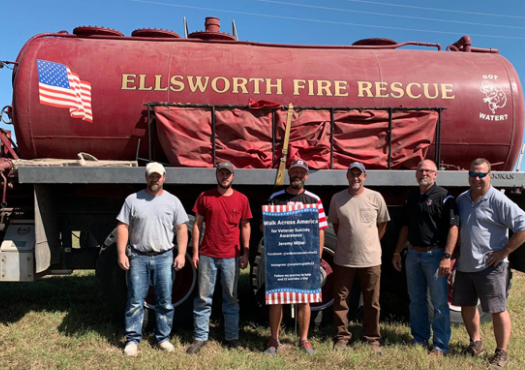
Veteran Jeremy Miller with members of the Ellsworth Fire Department. Photo courtesy Jeremy Miller
Miller, who was a Specialist E4 with the Army Reserve out of Idaho, said he began his journey on May 22 in Crescent City, Calif. His plan is to walk to Arlington National Cemetery in Arlington, Va., by the end of November.
Miller explained that his Army Reserve group did not lose anyone while deployed in Iraq in 2011, however, upon their return to the United States, three of the soldiers killed themselves, Miller said. Miller, himself, attempted suicide, and continues to suffer from post traumatic stress disorder (PTSD), depression, and anxiety, he said.
Deciding that he needed to turn his life around and get his mind in a better place, Miller decided to walk across the U.S. to raise awareness of the high rate of veteran suicides, he said.
“You have to find your happiness and I decided that this walk is the best for me,” Miller explained. “You also have to be vulnerable and talk about what you are going through. It’s good to talk and get it off your chest.”
Walking veterans’ paths cross in Ellsworth
Miller said that while he was in Ellsworth over the weekend, he got to meet Michael Gmur, a Marine veteran who is walking across the U.S. to raise awareness of and funds for homeless veterans.
With route change, Gmur plans to walk into Salina on Thursday
Gmur, who is walking from Portland, Maine, to San Diego, Calif., switched his route last week and spent the night Thursday in Salina. He continued west on Kansas Highway 140 Friday morning and met up with Miller in Ellsworth.
The two spent a good part of Saturday hanging out with the Ellsworth Fire Department.
Miller plans to make it to Salina on Tuesday, and from here will continue walking east on Old Highway 40. He said he tries to walk 20-25 miles per day, but would like to get to the point where he is walking 30 miles per day.
Miller said he was appreciative of how kind and supportive Kansans have been to him. He said that the Ellsworth Fire Department put out a collection jar for him at the barbecue fundraiser they were having. Others have provided meals, places to stay, a haircut, and even followed along behind him to make sure he didn’t get hit by a vehicle.
Once he completes his journey, Miller said he would like to start a non-profit organization that continues to draw attention to the serious issue of veteran suicides.
You can follow Miller’s journey through his Facebook page: Walk Across America. The page also contains a link to his GoFundMe page.
KANSAS CITY, Kan. (AP) — A Kansas man has been convicted of fatally shooting a Baptist church pastor and choir director three decades ago in Kansas City, Kansas.
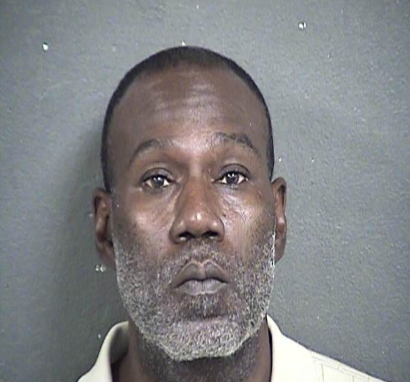
Shields photo Wyandotte Co.
Wyandotte County prosecutors announced Thursday that 51-year-old Melvin Shields of Wichita was found guilty of two counts of first-degree murder in the April 1988 killings of 27-year-old Jolene Jones and 33-year-old Steve Ray.
The victims were longtime friends who had a daughter together. They had met for lunch one day before their bodies were found in a secluded area near the Kansas River. Authorities say Jones’ purse was found several blocks away, and her car was abandoned.
A few months after the killings, Jones was sentenced to prison for unrelated burglary and theft convictions. He later was convicted of other crimes, including aggravated battery and burglary.
LAWRENCE, Kan. (AP) — A 56-year-old Lawrence man was sentenced to three years of probation for giving a teenager drugs that nearly killed him.
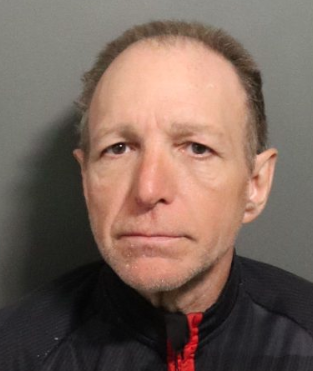
Wingert photo Douglas Co.
Dana Wingert pleaded no contest Wednesday to seven charges, including two counts of endangering a child. He had previously pleaded not guilty and was scheduled to go to trial in October.
A police affidavit says the boy and his 16-year-old friend passed out from a cocktail of drugs and alcohol they took at Wingert’s home on April 21. Police were able to revive the 16-year-old but the 15-year-old was taken to a hospital in critical condition and placed on life support.
Cheryl Wright Kunard, assistant to the Douglas County district attorney, said Thursday she could not update the boy’s condition.
WICHITA, KAN. – Five men indicted in federal court in Kansas are among hundreds of defendants charged in an international fraud investigation, according to U.S. Attorney Stephan McAllister.
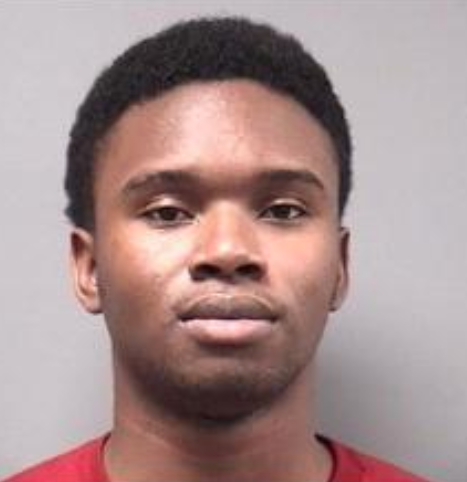
Franklin Okapu-photo Butler Co.
King Bassey Essien, 26, Wichita, Kan., Franklin Ogochukwu Okapu, 20, Wichita, Kan., Oluwatimileyin Aloaye Frederick Diyaolu, 21, Wichita, Kan., Emmanuel Oluwaseun Daramola, 22, Wichita, Kan., and Abasiakara Ime Ekanem, 22, Nigeria, are charged with one count of conspiracy to commit money laundering.
The indictment alleges the defendants received money from victims of fraud in the United States and foreign countries. The frauds took many forms including romance scams and investment scams designed to cause victims to transfer money to bank accounts controlled by the defendants and others. The defendants would transfer the money to other accounts, primarily in Nigeria and Ghana. The defendants also transferred money among themselves, received transfers and made cash withdrawals.
The indictment alleges: Essien’s account received cash depots of more than $190,000, international wire transfers of more than $120,000 and domestic wire transfers of more than $88,000. Two-thirds of the money was transferred to bank accounts in Nigeria and Ghana.
Okapu’s accounts received cash deposits of more than $67,000 and total deposits of more than $337,000, including domestic transfers, money orders and cashier’s deposits. Diyaolu’s accounts received total deposits of more than $572,000. Three-quarters of the money was transferred to bank accounts in Nigeria.
Daramola’s accounts received total deposits of more than $283,000. More than two-thirds of the money was transferred to bank accounts in Nigeria.
Ekanem’s accounts received total deposits of more than $208,000. Almost half the money was withdrawn as cash.
Together, the defendants are alleged to have transferred more than $923,000 to an unindicted conspirator in Lagos, Nigeria, and more than $211,000 to another unindicted conspirator in Lagos, Nigeria.
The defendants in Kansas were among more than 280 people arrested in the United States and overseas as a result of a joint investigation by the U.S. Department of Justice, the U.S. Department of Homeland Security, the Internal Revenue Service, the U.S. Postal Inspection Service and the U.S. Department of State.
The investigation targeted many kinds of scams including so-called romance scams that obtain money from victims by claiming their loved ones need funds, and investment scams that seek money from victims seeking business opportunities.
If convicted, the defendants face up to 20 years in federal prison and a fine up to $500,000. The FBI investigated. Assistant U.S. Attorney Aaron Smith is prosecuting.
The small cannonball fell out as the worker was chopping the diseased tree on the grounds of the Overfelt-Johnston house. The house was used as a hospital during the First Battle of Independence, Missouri, which was fought across the street in 1862.
Fourteen people were killed and 18 wounded as nearly 800 mounted Confederates overpowered the 350 men of the town’s federal garrison.
Property owner Randall Pratt says a cannonball also was found when the property was restored in 1980. That cannonball, which had been shot into a wall, is in a county museum. Pratt plans to keep the latest find at the home.
TOPEKA – Kansas Department for Children and Families secretary Laura Howard named Megan Dodge deputy secretary of operations for the agency. Dodge brings years of experience in government management to the position.
“I am excited Megan has decided to share her talent and expertise in public administration with the Department for Children and Families,” Howard said. “We have a lot of moving parts in DCF and I am confident Megan will use her experience and talent to ensure the agency runs smoothly.”
Dodge and her family recently returned to Kansas after living in San Antonio, Texas for several years. She served in various capacities working for the City of San Antonio, most recently as assistant director for the government & public affairs department, where she oversaw government relations, audio visual/video production and creative services. During her tenure, Dodge worked to implement San Antonio’s legislative priorities and led various projects to enhance public participation and transparency in city government, serving a community of 1.5 million residents. While in San Antonio, Megan also worked in the office of management & budget and the city manager’s office.
Prior to her work in San Antonio, Dodge also served Kansas local governments, working in the county manager’s office for Johnson County and in the city manager’s office for Bonner Springs.
“My family and I are thrilled to be back in our home state of Kansas,” Dodge said. “I look forward to supporting the great teams we have at DCF, making sure employees have the resources necessary to do the important work of protecting children and strengthening families.”
In her role as deputy secretary of operations, Dodge will manage the agency’s information technology, fiscal and facilities departments.
Dodge is a proud native Kansan and lifelong Jayhawk. After earning a bachelor’s degree in Spanish and Public Administration at the University of Kansas, she completed KU’s Master of Public Administration Program, which is ranked top in the nation for programs of its kind.
She and her husband are raising two children in Lawrence.
HUTCHINSON— A Kansas man remains jailed on some serious charges after a domestic case in the city.
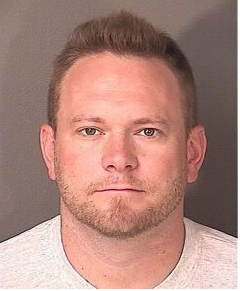
Kennedy photo KDOC
Jeffery Kennedy, 40, Hutchinson, was taken into custody around 11:40 p.m. Thursday on requested charges of battery, interference with law enforcement, criminal trespass and violation of a protection from abuse order and kidnapping.
According to statements made in court Friday, Kennedy was seen dragging a woman by her hair back into a Hutchinson home. Police were called. When officers arrived, no one would answer the door. At one point, officers saw someone look through the curtains. Officers eventually forced their way into the home and found the victim with a cut under her eye. Kennedy had a bump on his head because the victim threw a lamp at him.
Bond was set at $101,750.
Kennedy has a prior conviction for possession of opiates. He will be back in court on Sept. 19.
TOPEKA – With the goal of providing vulnerable families access to strong evidence-based programs, Governor Laura Kelly Friday announced new grantees for the state’s family preservation program.
“At the beginning of my administration I canceled previously awarded family preservation grants because of the lack of transparency,” Kelly said. “Today, I am pleased to say that the Department for Children and Families with assistance from the Department of Administration have chosen well qualified partners to assist in our efforts to strengthen families.”
“I am excited that these new grantees include familiar faces and new partners,” Department for Children and Families Secretary Laura Howard said. “DCF looks forward to working together to reduce risk and safety concerns for children and keep Kansas families together.”
Family preservation is a voluntary service provided to families with a child at risk of entering foster care. It includes both short term case management services and intensive in-home services. The program also may serve pregnant women using substances to help the mother find and maintain substance use treatment.
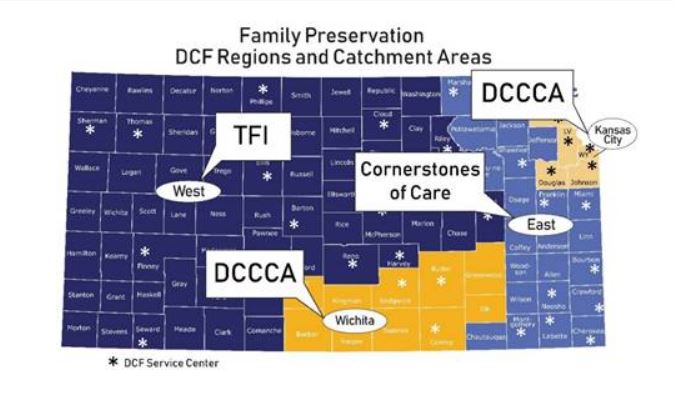
Beginning Jan. 1, three grantees will manage the four DCF regions.
· DCF awarded DCCCA the contracts in the Kansas City and Wichita Regions. DCCCA has 12 years of experience providing family preservation services in Kansas. The agency also has more than 30 years as a prevention services provider and more than 43 years as substance use disorder and addiction provider.
“Given DCCCA’s experience with family services, expertise in substance abuse programming, ability to engage communities and our mission of improving lives, these family preservation grants allow us to combine our strengths,” DCCCA CEO Lori Alvarado said. “Our ultimate goal is to strengthen families and support them to nurture their children, which helps reduce the number of children in care.”
· DCF awarded TFI Family Services the contract for the West region. TFI previously provided family preservation services in Kansas from 2005 to 2009. The agency also has provided recruitment, training, retention and support of foster families across Kansas since 1996.
“TFI Family Services is honored to be selected as the provider for family preservation services in the west region,” TFI CEO Michael Patrick said. “We are excited that our TFI caseworkers and therapists will have the opportunity to serve some of our most at-risk families and ensure they remain safely together as a family.”
· Cornerstones of Care of will manage the contract in the East region. Cornerstones provides intensive in-home services in several Missouri counties including the Kansas City area. The agency also is providing family services for the DCF Kansas City region and functional family therapy for the Kansas Department of Corrections.
“We’re beyond honored and grateful to grow our partnership with the State of Kansas across the DCF East region,” Cornerstones of Care president and CEO Denise Cross said. “We strongly believe in prevention services and will work closely with children, families and community partners through a trauma-informed philosophy. Together, we can keep children safe and families together.”
In order to maintain transparency throughout the process, DCF partnered with the Department of Administration to use a traditional request for proposal process that included:
· DCF grant review teams representing each region and administrative staff
· Technical review for evidence-based practice models, child welfare experience, staffing ratios, accreditation and letters of support.
· Cost proposal review by fiscal staff
In total, DCF received two proposals for the west region, three proposals for the east region, four proposals for the Kansas City region and five proposals for the Wichita region.
The contract term awarded is Jan. 1, 2020 through June 30, 2024.
To report child abuse or neglect or to request services, please call the Kansas Protection Report Center at 1-800-922-5330.
TOPEKA – Every day in America, millions of parents and caregivers take to the road with children in their vehicles. While many children are buckled up in the right car seat for their ages and sizes – nearly half (46 percent) are not, and some aren’t buckled up at all.
Child Passenger Safety Week is September 15-21, 2019, and Safe Kids Kansas, the Kansas Department of Transportation and Kansas Highway Patrol want to ensure children ride as safely as possible—every trip, every time.
“Every 32 seconds in 2017, a child under 13 was involved in a motor vehicle crash,” said Colonel Herman T. Jones, Kansas Highway Patrol. “Using a car seat that fits your child and your vehicle is the best way to keep your children safe.”
According to NHTSA, motor vehicle crashes are a leading killer of children. While fatalities and injuries declined from 2016 to 2017, there is still work to be done to completely eliminate these preventable tragedies. Car seats, booster seats, and seat belts can make all the difference. “In 2017, there were 312 children under the age of 5 saved because they were using restraints,” said Col. Jones. “Car seats matter.”
Too often, parents move their children to the front seat before they should, which increases the risk of injury and death, even if they are buckled up. The safest place for all kids under 13 is in the back seat.
“As parents and caregivers, we have a long list of things we do for our children to show our love. One of the simplest and most important things on the list should be to make sure they are in the right car seat for their age and size,”said Cherie Sage, Safe Kids Kansas. “Get your car seats checked. Make certain they’re installed correctly, and that your kids are in the right seats and are buckled in correctly. Even if you think your child’s car seat is installed correctly, get it checked with a certified Child Passenger Safety Technician, so you can be sure that your child is the safest he or she can be while traveling.”
According to a 2018-19 observational survey, if the driver is belted, about 97% of the observed children are belted too. If the driver is not belted, about 30% of the observed children are belted.
“Drivers play an important role in not only getting to a destination safely, but ensuring all passengers are buckled up,” said Julie Lorenz, Kansas Secretary of Transportation. “Seat belts are for everyone because your life and your passenger’s lives depend on it.”
For optimal safety, it is recommended to keep children rear-facing as long as possible, up to the top height or weight allowed by their particular seats. Once a child outgrows the rear-facing-only “infant” car seat, he/she should travel in a rear-facing “convertible,” or all-in-one car seat. Once your child outgrows the rear-facing size limits, the child is ready to travel in a forward-facing car seat with a harness (always use the tether). After outgrowing the forward-facing car seat with harness, children should be placed in booster seats until they’re the right size to use seat belts safely. And if children are under 13 years old, they should always sit in the back seat.
Remember to register your car seat or booster seat with the seat manufacturer so you can be notified in the event of a recall. Parents and caregivers can find more information on how to choose and use car seats safely at www.ultimatecarseatguide.org.
Over the last five years, almost 15,000 workers disappeared from the Kansas workforce.
During the same timeframe, the state is growing economically, with a recent monthly report showing 14,000 jobs created in the last year and unemployment at 3.3%. That’s below the national rate.
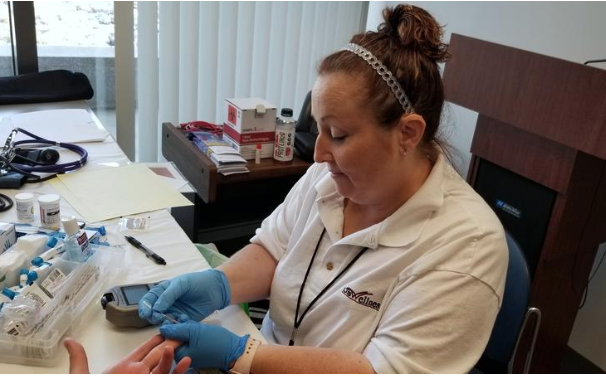
A worker draws blood during a health-care screening in Topeka. Health care jobs will be in high demand as Kansas’ population ages. STEPHEN KORANDA / KANSAS NEWS SERVICE
Despite the good news, Kansas officials see a long-term challenge: having enough employees to fill the state’s jobs, especially in high-demand careers like nursing and accounting.
The total labor force in Kansas peaked in 2009 at 1.521 million, likely driven by the economic downturn that caused people to enter the labor force who otherwise wouldn’t be working. That tapered off, and by the middle of 2014, Kansas’ workforce was 1.493 million.
By July, the number had fallen to 1.479 million.
There are multiple factors at play, Kansas Department of Labor Senior Labor Economist Tyler Tenbrink said, and it starts with the state population.
“Population growth has been almost zero for a few years now,” he said.
Other factors are delaying people from entering the workforce or causing them to leave it. One thing is age: Many in the baby-boomer generation are retiring or could soon.
There’s also pressure on the younger end of the age scale.
“We also have students who are staying in school longer, so they’re not getting into the labor force as quickly,” Tenbrink said.
Certain industries have greater challenges when it comes to the workforce. In the coming decades, the population of older Kansans is expected to grow faster than the state overall, which will require more workers in health care, a sector that’s already struggling.
The Kansas Hospital Association compiled a report outlining the challenges and noted many jobs with expected shortages, ranging from nurses to nursing assistants and home health aids.
“These are the folks that care for people, that are at the bedside,” KHA Vice President Cindy Samuelson said.
To try to tackle the problem, hospitals are partnering with colleges and universities to find ways to let people know there are good-paying careers in demand. Many positions just require a two-year degree, and people can work in the industry while training for a future higher position.
It’s not always as simple as advertising for good-paying jobs. Some hospitals are working to recruit outside of Kansas, but sometimes those workers don’t stay for the long term. It’s led some to find and train local hires, which is what Samuelson calls “growing your own.”
“There is a lot of cost associated with training and getting that person up to speed, and if they’re only there a short amount of years there is a loss,” she said.
It’s a tough nut to crack, and Kansas Labor Secretary Delía García wants state officials to make it a focus by working more closely with education and business groups to train workers while also having lawmakers and officials craft economic development programs to target the problem by attracting people.
“We are in good shape in Kansas, we are stable,” García said. “But we also want to be looking forward.”
Stephen Koranda is Statehouse reporter for the Kansas News Service. Follow him on Twitter @kprkoranda or email skoranda (at) ku (dot) edu.