We have a brand new updated website! Click here to check it out!

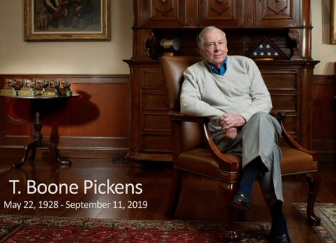
Oil tycoon T. Boone Pickens dies at age 91

OKLAHOMA CITY (AP) — T. Boone Pickens, a brash and quotable oil tycoon who grew even wealthier through corporate takeover attempts, died Wednesday. He was 91.

Pickens was surrounded by friends and family when he died of natural causes under hospice care at his Dallas home, spokesman Jay Rosser said. Pickens suffered a series of strokes in 2017 and was hospitalized that July after what he called a “Texas-sized fall.”

An only child who grew up in a small railroad town in Oklahoma, Pickens followed his father into the oil and gas business. After just three years, he formed his own company and built a reputation as a maverick, unafraid to compete against oil-industry giants.

In the 1980s, Pickens switched from drilling for oil to plumbing for riches on Wall Street. He led bids to take over big oil companies including Gulf, Phillips and Unocal, castigating their executives as looking out only for themselves while ignoring the shareholders.

Even when Pickens and other so-called corporate raiders failed to gain control of their targets, they scored huge payoffs by selling their shares back to the company and dropping their hostile takeover bids.

Later in his career, Pickens championed renewable energy including wind power. He argued that the United States needed to reduce its dependence on foreign oil. He sought out politicians to support his “Pickens Plan,” which envisioned an armada of wind turbines across the middle of the country that could generate enough power to free up natural gas for use in vehicles.

“I’ve been an oilman all my life, but this is one emergency we can’t drill our way out of,” he said in 2009.

Pickens’ advocacy for renewable energy led to some unusual alliances. He had donated to many Republican candidates since the 1980s, and in the 2004 presidential campaign he helped bankroll television ads by a group called Swift Boat Veterans for Truth that attacked Democratic nominee John Kerry. A few years later, Pickens endorsed a Kerry proposal to limit climate change.

Pickens couldn’t duplicate his oil riches in renewable energy. In 2009, he scrapped plans for a huge Texas wind farm after running into difficulty getting transmission lines approved, and eventually his renewables business failed.

“It doesn’t mean that wind is dead,” Pickens said at the time. “It just means we got a little bit too quick off the blocks.”

Pickens flirted with marketing water from West Texas, acquiring water rights in the early 2000s in hopes of selling it to thirsty cities. But he couldn’t find a buyer, and in 2011 he signed a deal with nearby regional water supplier to sell the water rights beneath 211,000 acres for $103 million.

In 2007, Forbes magazine estimated Pickens’ net worth at $3 billion. He eventually slid below $1 billion and off the magazine’s list of wealthiest Americans. In 2016, the magazine put his worth at $500 million.

Besides his peripatetic business and political interests, Pickens made huge donations to his alma mater, Oklahoma State University — the football stadium bears his name, and he gave $100 million for endowed faculty positions.

Pickens’ foundation gave $50 million each to the University of Texas’ M.D. Anderson Cancer Center in Houston and UT Southwestern Medical Center at Dallas. He was among those who signed a “giving pledge” started by billionaire investor Warren Buffet and Microsoft co-founder Bill Gates, promising to donate a majority of his wealth to charity.

“I firmly believe one of the reasons I was put on this Earth was to make money and be generous with it,” he said on his website.

Pickens was born in 1928 in Holdenville, Oklahoma. His father was a landman, someone who secures mineral-rights leases for oil and gas drilling. His mother ran a government office that handled gasoline-rationing coupons for a three-county area during World War II.

A child of the Depression, Pickens credited his father with teaching him to take risks and praised his grandmother for lessons in being frugal. If young Boone continued to leave the lights on after leaving a room, she declared, she would hand the electric bill to the boy so he could pay it.

Pickens went to work by age 12, getting a newspaper route. He expanded it by buying the routes on either side of his — marking his first venture into acquisitions.

Although only 5-foot-8, Pickens was a star guard on his high school basketball team in Amarillo, Texas, and earned a sports scholarship to Texas A&M University. He lost the scholarship when he broke an elbow, and he transferred to Oklahoma A&M, now Oklahoma State.

After graduating with a degree in geology, he joined Phillips Petroleum Co., where his father, T. Boone Pickens Sr., was working. The younger Pickens was unhappy with his job from the start.

After just three years, he borrowed some money and found two investors to start his own business, called Petroleum Exploration. That was a predecessor to Mesa Petroleum, an oil and gas company in Amarillo, which Pickens took public in 1964.

By the 1980s, the stock of the major petroleum producers was so cheap that it became cheaper to get new oil reserves by taking over a company than by drilling. Pickens set his sights on acquiring other companies.

In 1984, Mesa Petroleum made a profit of more than $500 million from a hostile bid for Gulf Corp., then the fifth-largest oil company in the United States, when Gulf maneuvered to sell itself instead to Chevron. Before that, Pickens earned $31.5 million by driving Cities Service into the arms of Occidental Petroleum.

Later that year, Pickens launched a bid for his old employer, Phillips Petroleum. It was an unpopular move in Bartlesville, Oklahoma, where Phillips was headquartered. Residents held 24-hour prayer vigils to support the company.

Pickens’ methods angered his targets.

“He’s only after the almighty buck,” G.C. Richardson, a retired executive of Cities Services, said in 1985. “He’s nothing but a pirate.”

Pickens insisted that he was a friend of ordinary shareholders, who benefited when his forays caused the stock price of a company to rise.

Pickens’ star faded in the 1990s. He lost control of debt-ridden Mesa, and his bullishness on natural gas prices turned out to be a costly mistake.

After leaving Mesa, Pickens in 1996 started BP Capital Management, a billion-dollar hedge fund focused on energy commodities and equities that delivered mammoth gains.

There were difficult times in his personal life. In 2005, Pickens looked on as one of his sons, Michael, was arrested on securities-fraud charges — he pleaded guilty and was sentenced to five years’ probation and ordered to repay $1.2 million.

Pickens owned a ranch in the Texas Panhandle, another in Oklahoma, and a vacation retreat in Palm Springs, California.

After his fall in July 2017, he wrote on Linkedin that he was still mentally strong, but “I clearly am in the fourth quarter.”

___
Sheriff: Body, submerged vehicle found in Kansas lake

HILLSDALE, Kan. (AP) — Authorities have found a body and submerged vehicle in a northeast Kansas lake.

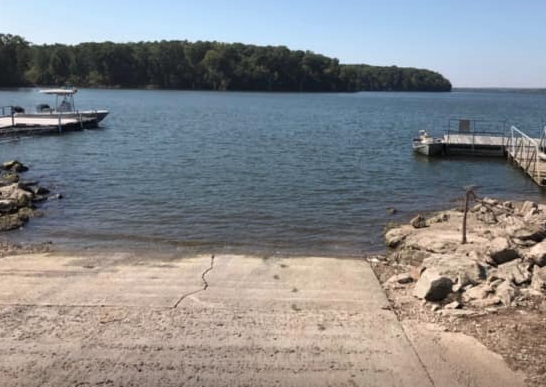
Hillside Lake boat ramp photo courtesy Miami Co. Sheriff

The Miami County Sheriff’s Office and firefighters responded Wednesday morning to Hillsdale Lake after a fisherman reported seeing the body floating in the water. The body was pulled to shore, and divers found the vehicle underwater near a boat ramp.

The sheriff’s office says identification of the body is underway. No other details were immediately released.

Kansas school district prepares to sue over e-cigarettes

GODDARD, Kan. (AP) — Officials at a Wichita-area school district say they are preparing to sue the makers, distributors and sellers of electronic cigarettes and vaping products.

Goddard school board President Kevin McWhorter says the district has a responsibility to protect students from a “growing crisis.” He discussed the issue at a news conference Tuesday, the same day that health officials announced the first death in the state related to an outbreak of a lung disease linked to vaping.

The board passed a resolution Monday that allows a Kansas City area law firm to sue on the district’s behalf. McWhorter says the hope is that other schools and jurisdictions will file similar litigation targeting the e-cigarette and vaping industry.

Superintendent Justin Henry says the district doesn’t intend to seek class action status.

Suspect in 3-county Kan. chase faces kidnapping, other charges

CLOUD COUNTY —Law enforcement authorities are investigating a suspect who is in custody in Ottawa County after a 3-county chase Tuesday.

Woods photo Ottawa Co. Sheriff

Just after 2p.m., authorities in Cloud County initiated a pursuit of a suspect later identified as 23-year-old Michael Woods who was wanted on outstanding warrants, according to Ben Gardner of the Kansas Highway Patrol.

Deputies lost sight of the vehicle as it traveled south into Ottawa County where the Kansas Highway Patrol participated in the pursuit until troopers discontinued the chase due to unsafe speeds, according to Gardner.

Troopers ultimately located the vehicle at the Red Carpet Inn in the 200 block of Diamond Drive. A motel manager directed troopers to a room where they arrested Woods and detained two women.

Woods is being held on requested charges that include aggravated kidnapping, flee or attempt to elude, obstruction, the warrants and numerous additional traffic charges, according to the Ottawa County Sheriff’s Department. The women were held for questioning in the case, according to Gardner.

Amid concerns over violence, 4 killed over 24 hours in Kansas City

KANSAS CITY (AP) — A series of shootings has left four people dead in Kansas City over 24 hours as concerns mount about violent crime in the state’s two largest cities.

Police on the scene of the Tuesday night shooting investigation photo courtesy KCTV

After Missouri Gov. Mike Parson met with leaders in St. Louis to discuss the problem, two people were killed around 9:45 p.m. Tuesday inside an apartment in southern Kansas City.

The scene of that shooting is less than 1 mile from where a shot-up Ford Mustang crashed into a parked vehicle about six hours earlier. Police say the driver was taken to a hospital in critical condition and the passenger was pronounced dead at the scene.

The fourth victim was killed late Monday. He was identified Tuesday as 41-year-old Antwain Foster. None of the other victims have been identified.

Kan. woman’s toddler consumed enough methadone to kill adult

WICHITA, Kan. (AP) — Court records say a Wichita toddler who died at a motel had enough methadone in his system to kill an opioid-addicted adult.

Compass photo Sedgwick Co.

The details were included in an affidavit released Tuesday in the case against 23-year-old Kimberly Compass. She’s charged with first-degree murder in the May 31 death of her 2-year-old son, Zayden JayNesahkluah. He is among several children to die in the Wichita area after state welfare officials were contacted with concerns.

The affidavit says police found three empty or mostly empty bottles of methadone that had been prescribed to Compass in an unlocked child’s Avengers pencil box.

Compass told investigators she only had one of the bottles herself. She said she didn’t give Zayden methadone, but fruit punch that she said he drank tested positive for the drug. Methadone is used to treat pain and narcotic drug addiction.

GM recalls over 3.4M pickups, SUVs to fix brake issues

DETROIT (AP) — Under pressure from the federal government, General Motors is recalling more than 3.4 million big pickup trucks and SUVs in the U.S to fix a brake problem.

The recall covers the Chevrolet Silverado and GMC Sierra 1500, 2500 and 3500 pickups from the 2014 through 2018 model years. Also included are the Cadillac Escalade from 2015 to 2017, and the GMC Yukon and Chevy Suburban and Tahoe from 2015 through 2018.

GM says that as it ages, the pump in the power-assist brakes can put out less vacuum power than needed, increasing stopping distance and the risk of a crash.

The recall comes after the National Highway Traffic Safety Administration began investigating the problem in November of last year.

Dealers will recalibrate the electronic brake control module at no cost to customers. Owners were to be notified starting Sept. 6.

NHTSA, the government’s road safety agency, began investigating the problem last year after getting 111 complaints from owners of poor brake performance. At the time the agency had nine reports of crashes that had caused two injuries.

GM says the problems occur rarely and mostly at low speeds like driving in parking lots. Even with the problem, the brakes “continue to function and exceed the requirements of the appropriate federal motor vehicle safety standard,” GM spokesman Dan Flores said.

The vacuum pump is lubricated with engine oil that flows through a filter screen. In some of the trucks, oil sludge or other debris can clog the screen, reducing oil flow and causing the pump’s vacuum output to drop, Flores said.

The trucks, he said, have a secondary power brake assist system which works when there are problems with the main system, but it is limited at lower speeds. The reprogramming will activate the secondary system faster.

GM isn’t replacing the pumps because pump failures are rare and already are covered by an extended warranty, Flores said. “This remedy will improve brake performance in any situation where brake vacuum drops,” he said.

The recall comes 10 months after NHTSA opened its investigation. Asked why it took that long to do the recall, Flores said only that the company has been cooperating with NHTSA and providing data.

Drivers could feel a vibration in the brake pedal or a change in pressure required to push the brake pedal if their trucks have the vacuum pump problem. If the problem surfaces, owners will see a message on their dashboard telling them to service the brake assist system, Flores said.

Although the recall is a large number, the cost will not be high enough for GM to report it to the Securities and Exchange commission as an event that will materially affect earnings, Flores said. He said he didn’t know the cost.

Sheriff identifies man who died from shock at Kansas grain bin

ATCHISON, Kan. (AP) — Federal officials are investigating the death of an Indiana man at a northeast Kansas grain processing plant.

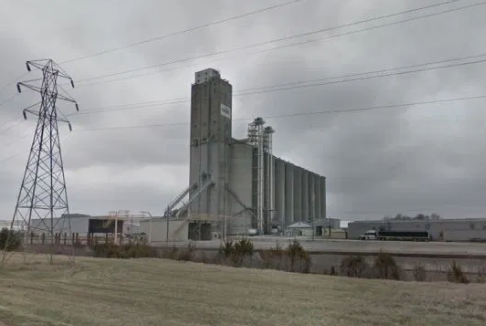
The Cargill Ag plant google image

Atchison County Sheriff Jack Laurie says 26-year-old Angel Silas-Deleon, of Logansport, Indiana, died from an electrical shock Friday at the CargillAg plant in the Cummings area.

The Occupational Safety and Health Administration has opened an investigation into the death.

Laurie said Silas-Deleon was working on a grain bin with a contractor crew from CCSGroup of Seward, Nebraska. The company said another employee is recovering from injuries suffered by the shock.

That employee’s name and condition were not released Tuesday.

Kansas man dies after crash while making U-turn

WILSON COUNTY — One person died in an accident just before 2p.m. Tuesday in Wilson County.

The Kansas Highway Patrol reported a 1994 Dodge pickup driven by David L. Rasmussen Jr., 46, Fredonia, was eastbound on U.S. 400 at Jade Road one mile southeast of Fredonia.

A 2011 Volvo semi driven by Scott M. Gronau, 50, Pittisburg struck the pickup as it was making a U-turn.

Rasmussen was transported to Fredonia Regional Hospital where he died.  Granau was not injured. Rasmusen was not wearing a seat belt, according to the KHP.

Kansas woman sentenced after violent attack on neighbor’s dog

WICHITA —  A Kansas woman arrested after a violent dog attack in November has entered a guilty plea in Sedgwick County.

McPherson -photo Sedgwick County

On Monday, Carlett McPherson, 31, entered the plea to one count of misdemeanor cruelty to animals. After her guilty plea, she was sentenced to six months of probation by agreement of the parties involved, according to the Sedgwick County District Attorney.

On November 16, 2018,  McPherson’s dog entered her neighbor’s yard where the neighbor’s grandson and the neighbor’s dog, Smokey, were located, according to the district attorney.

McPherson’s dog attacked the neighbor’s dog, Smokey.  McPherson tried to break up the dog fight with a broom but was unsuccessful.

She called for help, and a man entered the yard with a tire iron.

The unknown man tried to separate the animals with the tire tool, striking Smokey. There was no evidence that McPherson ever wielded the tire iron that struck Smokey or directed the man to strike Smokey with the tire iron, according to the district attorney.

McPherson left the yard to get a phone to call 911. When she returned, two more of her dogs followed her back to the yard and again attacked Smokey.

Smokey was later euthanized after his bites became infected.  McPherson was charged with one count of misdemeanor cruelty to animals for allowing her dogs to attack the neighbor’s dog, Smokey.

In addition to the probation, the court also ordered her to pay the veterinary bill. Wichita Police continue to search for the man with the tire iron.

Under Kansas law, cruelty to animals includes knowingly but not maliciously killing or injuring an animal. McPherson pled guilty to injuring Smokey. There was no evidence that she intentionally killed the victim animal, Smokey, according to the district attorney.

——–
SEDGWICK COUNTY – Law enforcement authorities are investigation a case of alleged animal cruelty.

McPherson -photo Sedgwick County

Just after 4:30p.m. Friday November 16, police responded to a suspicious character with a weapons call at a residence in the 1000 Block of North Poplar in Wichita, according to officer Charley Davidson.

A suspect later identified as 30-year-old Carlett McPherson was reported beating a dog with a tire iron and releasing other dogs to attack a victim dog.

At the scene, officers did find several dogs involved in a physical disturbance in the front yard of the residence.  Officers worked to separate the animals and with the assistance of animal control officers, the aggressive dogs were captured without incident. The victim dog was transported to a local animal hospital where it died from the injuries.

On December 1, as a result of the investigation, McPherson was arrested and booked into the Sedgwick County Jail on requested charges of animal cruelty, according to Davidson.  She is being held on a 25,000 Bond, according to the jail booking report.

Police will present the case to the district attorney this week.


Coroner: Skeletal remains are of man with connection to Kansas woman

ANDERSON, Ind. (AP) — Skeletal remains found last spring in a central Indiana park have been identified as those of a man who vanished more than a year ago.

Mandrell photo courtesy Madison Co. Sheriff

Madison County Coroner Danielle Noone says a DNA match obtained by Indiana State Police determined the skeletal remains are those of 52-year-old Ronald Mandrell, who had been an Anderson resident but was homeless when he died.

Mandrell’s cause of death and manner of death are undetermined, but Anderson police continue to investigate his death.

Mandrell vanished in July 2018. Mushroom hunters found his remains in April at Anderson’s River Bend Park.

Amy Copeland of Kansas City, Kansas, tells The Herald Bulletin she and Mandrell have a now-adult daughter. Copeland hadn’t spoken to Mandrell in years.

She says his death “just makes me sad.”

Executive with ties to Brownback kicks off run for Congress in Kansas

OVERLAND PARK, Kan. (AP) — A Kansas business executive with political ties to former Republican Gov. Sam Brownback has officially kicked off her campaign to challenge freshman Democratic Rep. Sharice Davids.

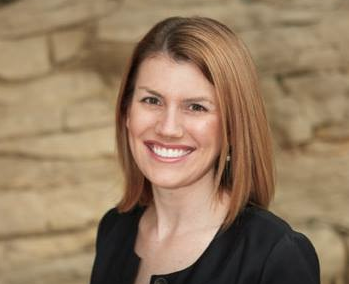
Amanda Adkins courtesy photo

Amanda Adkins made the announcement Monday. It was expected after she filed paperwork last week with the Federal Election Commission creating a campaign committee for a run for the GOP nomination in the Kansas City-area 3rd Congressional District.

Her move sets up a contested GOP primary for the right to challenge Davids. Former National Down Syndrome Society CEO Sarah Hart Weir opened her campaign in July.

Adkins is a vice president for the medical computer systems firm Cerner Corp.

She managed Brownback’s successful U.S. Senate re-election campaign in 2004 and was Kansas Republican Party chairwoman when Brownback was elected governor in 2010.

Sexually transmitted diseases rise in Kansas, especially in rural counties

 CORINNE BOYER
Kansas News Service

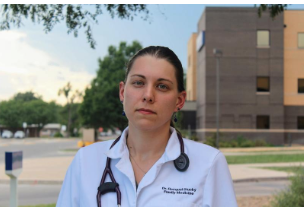
Racquel Stucky is a family medicine physician in Finney County who specializes in preventative medicine. CORINNE BOYER / KANSAS NEWS SERVICE

GARDEN CITY— As a nurse, Betsy Rodriguez interviews teenagers who are sexually active and often shockingly ignorant about sex.

“So if I sit here and ask a teenager, ‘Have you had oral or vaginal sex,’” Rodriguez said, “some of them cannot tell me what oral or vaginal sex is.”

Few places in Kansas, much less the country, draw people from so many places and such dire circumstances. From one apartment complex to the next block, the dominant language can change — dozens of times.

But while immigrants and refugees that man the region’s beefpacking plants often come from places that lack modern health care, it’s far from the only contributing factor. There’s drug abuse, sex trafficking, gaps in sex education classes for teens and a laundry list of cultural taboos all leading to an environment where gonorrhea, syphilis, chlamydia and, now, HIV spread quickly.

Rising STD rates

Since 2015, sexually transmitted diseases have climbed in Kansas along with national rates. A 2017 study from the Centers for Disease Control noted a rise of syphilis, including among the newborns of infected mothers.

More gonorrhea cases were reported, and the report states that’s particularly worrisome because the agency is “running out of treatment options to cure” emerging strains of drug-resistant gonorrhea.

Kansas Department of Health and the Environment Secretary Lee Norman, a physician, said the state saw nine cases of babies who contracted syphilis from their mothers in the womb in 2018. That congenital syphilis can cause developmental delays — even death — in newborns.

For a decade, Norman said, there were no reported cases of congenital syphilis. Within the last several months, he said, “we had a pair of twins born both with congenital syphilis and both died.”

From January to June 2019, Finney County has seen a higher rate of reported chlamydia cases than it did during the same period in 2018.

In 2017, Kansas Health Matters compiled the state’s STD data, which showed Finney County having the second highest rate in the state behind Wyandotte County.

Rodriguez said  that new HIV infections are also on the rise.

Betsy Rodriguez is a staff nurse at the Finney County Health Department and says sexually active young people in the area are uneducated about sex. CREDIT CORINNE BOYER / KANSAS NEWS SERVICE
“A lot of people believe that HIV and syphilis aren’t a thing anymore, but they’re both coming back,” she said. “There are different risk factors for these things, but it applies to everybody — it doesn’t just apply to men having sex with men or bisexual people or transgender people.”

Finney County HIV rates rose from zero to four new cases in 2018.

“To have four new cases identified in 2018 in a small county like Finney,” Norman said, “is troublesome.”

Drug use and the sex trade

Risky behaviors such as unprotected sex and needle sharing still contribute to new infections. Norman said the uptick in opioid and methamphetamine use tracks with the escalation of HIV and syphilis cases.

“Health is not top of mind,” Norman said. “Access to drugs is top of mind.”

Norman said trading sex for drugs isn’t new, but it’s particularly common among people who are poor and mentally ill.

“You talk about, you know, somebody that’s having three or five sexual contacts a day, when they themselves are infected, just in order to get their drugs,” he said. “That’s a public health nightmare.”

Anytime a patient admits to using drugs to Garden City physician Racquel Stucky, she makes sure that patient is tested for STDs. And she worries whether the person might be forced to sell sex for money.

“A lot of times, you’re kind of looking back and you’re like, ‘Oh, my goodness, I wonder if that person is involved in that and will they ever come back and will I ever be able to step in and help in a way?’” Stucky said.

Uncomfortable conversations

Garden City public schools teaches one unit of reproductive health in English in both middle and high school. The classes are abstinence-based. Students’ parents can opt their kids out of those classes.

“Abstinence is the only 100% effective way to prevent pregnancy or the spread of sexually transmitted diseases,” Superintendent Steve Karlin said.

Students are taught about methods of contraception. But Karlin said they are not taught how to use condoms.

Despite rising STD rates, the number of pregnancies among 10- to 19-year-olds in Finney County dropped from 145 in 1995 to 45 in 2018.

Forty languages are spoken in Garden City schools, but reproductive health is taught only in English. Norman said materials should be provided in different languages.

Sister Janice Thome with Dominican Sisters Ministry of Presence has served people from 26 countries in her 22 years with the ministry.

“In most of the countries that our immigrants and refugees come from, you only go to the doctor when you’re sick,” she said. “There’s no such thing as a well-baby checkup or whatever.”

Before coming to the U.S., immigrants and refugees undergo a physical and mental health screening by a doctor, said Rosa Norman, a spokeswoman for the CDC. The checks include tests for leprosy, gonorrhea, syphilis and tuberculosis.

“These are considered inadmissible conditions under federal regulations and must be treated prior to U.S. arrival,” the CDC official said in an email.

Stucky speaks Spanish and uses a phone translation service. Still, she said translating medical terms may feel invasive to some of her patients.

“Even with a translator, you were saying, ‘You know, do this or use a condom.’ And that might be socially, culturally, just not even a thing that you’re allowed to do,” she said.

Stucky, Lee Norman and some state legislators want to attack the problem more aggressively. If a person tests positive for an STD, they want the freedom to treat their sex partners even if they’ve yet to be infected. That approach, called expedited partner therapy, is illegal in Kansas.

A bill approving the treatment passed in the Kansas House this year, but stalled in the state Senate.

“If they have chlamydia, it will be treated,” Norman said. “If they don’t have chlamydia, they haven’t done themselves any harm.”

Corinne Boyer covers western Kansas for High Plains Public Radio and  the Kansas News Service. You can follow her on Twitter @corinne_boyer or email [email protected].

The Kansas News Service is a collaboration of KCUR, Kansas Public Radio, KMUW and High Plains Public Radio focused on the health and well-being of Kansans, their communities and civic life.

Copyright Eagle Radio | FCC Public Files | EEO Public File