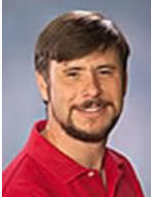
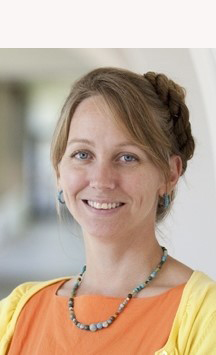
HUTCHINSON – Rachel Myslivy, Climate + Energy Project (CEP) assistant director, has been named one of the Midwest Energy News 40 under 40 award winners.
This program highlights emerging leaders throughout the region and their work in America’s transition to a clean energy economy.
Nominated by CEP Board Chair, Uma Outka wrote, “Rachel is a rising star who stands out as a pioneering young leader in Kansas and the region, advancing the clean energy economy through coalition-building and a diverse set of programs. Rachel is an adept communicator with the ability to bridge partisan barriers to find common ground – a core commitment of CEP that is essential for clean energy policy in the Midwest.”
Rachel Myslivy
Myslivy holds a Master’s in Religious Studies and Environmental Studies from the University of Kansas and Teaching Leadership Certification from the Kansas Leadership Center. She co-founded the Kansas Women’s Environmental Network. As an oral historian and independent filmmaker, Myslivy has produced videos for the Yale Forum on Religion and Ecology and Kansas Rural Center, among others. KU designated her a distinguished young alumni. In 2013, she received KU’s Sustainability Leadership Award, and in 2015, the Kansas Association for Conservation and Environmental Education Award for Excellence in the nonprofit sector.
Read Outka’s recommendation here. Myslivy will be recognized at a reception in Chicago in early November.
Learn more about the 40 under 40 awards and help us congratulate Rachel at CEP’s Ten Year Anniversary on October 27th.
The Climate + Energy Project (CEP) is a non-partisan 501c(3) organization working to reduce emissions through greater energy efficiency and the use of renewable energy. Located in Hutchinson, Kansas, CEP collaborates with diverse partners across the nation to find practical solutions for a clean energy future that provides jobs, prosperity and energy security.
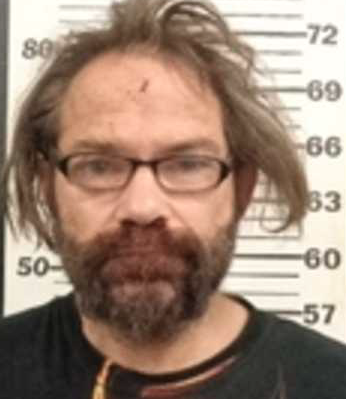
BAXTER SPRINGS, Kan. (AP) — A Kansas prosecutor has filed first-degree murder and other charges against a man suspected of fatally burning a woman and injuring two police officers during a confrontation.
Cherokee County Attorney Jake Conard’s office says 49-year-old Harvey Raymond Ortberg is accused of dousing 65-year-old Sharon Horn with gasoline and setting her on fire Sept. 30 at her Baxter Springs home. She later died at a Springfield, Missouri, hospital. Other charges include burglary, arson and the attempted murder of two responding officers, who also were burned.
Missouri and Kansas officials couldn’t immediately confirm whether Ortberg has an attorney. Once he’s released from the hospital and extradited to Kansas, he’ll be held on a $1 million bond.
He faces life in prison without the possibility of parole for at least 50 years.
WICHITA, Kan. (AP) — Regulatory filings show natural gas is leaking through unplugged abandoned wells that have penetrated a massive underground storage field in Kansas. It is creating a public safety hazard amid a dispute over whose responsibility it is to fix the problem.
Northern Natural Gas Co. told federal regulators in a filing this week that the Kansas Corporation Commission “has sat on its hands with full knowledge of the risk.”
The Kansas agency filed a motion last month with the Federal Energy Regulatory Commission in Washington, D.C., seeking an order forcing Northern Natural to keep its storage gas from escaping through the wells.
But Northern contends Kansas law requires well owners to plug the abandoned wells.
Northern owns the Cunningham Storage Field spanning Pratt, Kingman and Reno counties.
EDWARDS COUNTY — Two people were injured in an accident just before 11a.m. Saturday in Edwards County.
The Kansas Highway Patrol reported a 1999 Buick Century driven by David Castro Vasquez, 27, Dodge City was eastbound on U.S. 56 inside the city limits of Kinsley.
The Buick struck the rear of a camper pulled by a 2010 Dodge pickup and driven by Timothy Faggionato, 57, Willow Alaska.
The Buick fled the scene and Faggionato followed the Buick after calling law enforcement officers.
Authorities located the Buick a residence in Kinsley.
Vasquez and a passenger Sandy Vanessa Gonzalez, 27, Dodge City, were transported to Edwards County Hospital. They were not wearing seat belts at the time of the crash, according to the KHP.
Faggionato was not injured.
The KHP did not release possible charges against the driver for leaving the scene of the accident.
WASHINGTON —President Donald Trump’s decision to end a provision of the Affordable Care Act that was benefiting roughly 6 million Americans helps fulfill a campaign promise, but it also risks harming some of the very people who helped him win the presidency.
An analysis by The Associated Press found that nearly 70 percent of those benefiting from the so-called cost-sharing subsidies live in states Trump won last November.
The number underscores the political risk for Trump and his party, which could end up owning the blame for increased costs and chaos in the insurance marketplace.
The subsidies are paid to insurers by the federal government to help lower consumers’ deductibles and co-pays. To make up for the lost funding, insurers will have to raise premiums substantially, potentially putting coverage out of reach for many.
TOPEKA – For duck hunters and their dogs, wading through mucky water is part of the experience, but one type of “muck” can be especially dangerous for four-legged hunting partners – harmful algae blooms (HAB). A HAB may look like foam, scum or paint floating on the water and be colored blue, bright green, brown or red. This season, if the water appears suspicious or there is decaying algae on the shore, hunters are urged to avoid contact and keep their dogs away. Dogs that swim in or drink water affected by a HAB or eat dried algae along the shore can become seriously ill or die.
Blue-green algae are really a type of bacteria called “cyanobacteria,” which occurs naturally in all of our waters. Under the right conditions, the algae can rapidly increase (bloom) and produce toxins. Although HABs typically begin in May, they can occur through October or later. HABs generally coincide with longer days and warm water temperatures and often flourish in nutrient-laden waters. However, dead algae can wash up on shorelines and in marshy areas and persist for long periods – posing a risk to dogs that eat or drink the algae or ingest it while licking their fur.
Dogs are usually exposed to the toxins by drinking the HAB-affected water. However, they may still be exposed if they walk on, roll in or eat decaying algae along the shore or retrieve a bird with algae on its feathers.
The signs of illness in dogs usually occur within 30 minutes of exposure and include vomiting, diarrhea, lethargy, convulsions, difficulty breathing and general weakness. If your dog has ingested algae, or has any of these signs after exposure, contact your veterinarian immediately as HAB poisoning can quickly lead to death.
People may also become ill after contact with algae-produced toxins. Symptoms vary, depending upon the type of exposure (e.g. direct contact, ingestion, inhalation) but can include rash, vomiting, diarrhea, fever, sore throat, and headache. If you, or your dog, come into contact with algae, rinse the area with clean, fresh water.
The Kansas Department of Health and Environment (KDHE) samples publicly-accessible bodies of water for cyanobacteria when the agency is alerted to a potential HAB. When a HAB occurs, KDHE, in cooperation with the Kansas Department of Wildlife, Parks and Tourism and other lake managers where appropriate, responds by informing the public of these conditions. KDHE does not sample private bodies of water such as farm ponds or livestock watering tanks.
For the most up-to-date list of waters currently experiencing HABs, or to report a suspected HAB not currently listed, visit www.kdheks.gov/algae-illness. Hunters and the general public can also access current lake conditions by calling 1-855-HAB-LAKE (1-855-422-5253).
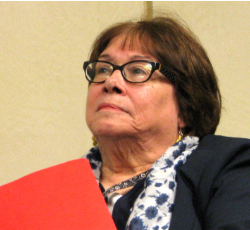
LAWRENCE, Kan. (AP) — A recent cybersecurity breach has a University of Kansas faculty group concerned that it could lead to other attacks, not just at the university, but across higher education.
The Lawrence Journal-World reports that aerospace engineering professor Ron Barrett-Gonzalez says an apparently disgruntled engineering student carried out the hack during the 2016-17 academic year. Barrett-Gonzalez says details of the hack were shared publicly at a School of Engineering Senate meeting last week.
The student in question had allegedly used a keystroke logger to gain faculty members’ login information and passwords and changed his failing grades to As. Keystroke loggers are often used by cybercriminals to steal personal information from public computers and keyboards.
University officials confirmed that a security breach took place but said the attack “was minimal and caught quickly.”
NEW YORK – The global smart food labels market is segmented into technology such as RFID (Radio-Frequency Identification) labels and sensing labels. Additionally, RFID segment is further sub-segmented into low frequency (LF) RFID, high frequency (HF) RFID and ultra-high frequency (UHF) RFID. Moreover, high frequency (HF) RFID segment is projected to showcase a significant growth over the forecast period. Further, the growth of this segment is riding on the back of rising adoption of innovative technology by food industry to provide detail of the food item.
Global smart food labels market is expected to register a 15.2% CAGR over the forecast period. Moreover, the global smart food labels market is projected to expand at a exponential revenue during the forecast period i.e. 2017-2024. The market is expected to expand on the back of rising development of smart infrastructure in developing nations such as China, India and others.
Sensing labels segment by technology is believed to showcase a considerable CAGR during the forecast period. Moreover, North America region accounted the largest market for smart food labels in terms of revenue in 2016. In addition to this, smart food labels market in North America region is expanding due to the presence of major key vendors such as Qliktag. Further, Europe region captured the second largest market of smart food labels owing to rapid urbanization and growing use of digital technology by food manufactures for labeling of food products.
Technological advancement in food labeling
Growing adoption of innovative technology by food industry to provide each and every detail of the food item to its consumer is projected to be the dynamic factor behind the rapid growth of smart food label market. Moreover, rising demand by consumer for proper labeling of food item and growing concern among the consumers regarding food quality are some of the factors propelling the growth smart food label market.
Digitization of Food industry
Spiked penetration of smart technology and robust expansion of smart infrastructure in developed and developing nations are fostering the demand for smart food labels around the globe. Furthermore, guidelines by government to provide labeling on the food item is predicted to bolster the growth of smart food labels market by 2024.
On the contrary, high cost associated with smart food labels is believed to dampen the growth of smart food labels market. Further, less adoption of smart technology in underdeveloped nations is also projected to hinder the growth of smart food labels market.
The report titled “Smart Food Labels Market: Global Demand Analysis & Opportunity Outlook 2024” delivers detailed overview of the global smart food labels market in terms of market segmentation by technology and by region.
Further, for the in-depth analysis, the report encompasses the industry growth drivers, restraints, supply and demand risk, market attractiveness, BPS analysis and Porter’s five force model.
This report also provides the existing competitive scenario of some of the key players of the global smart food labels market which includes company profiling of Qliktag, Smartlabel, Avery Dennison, Labelinsight, Thin Film Electronics ASA, Uwitechnology and ABR. The profiling enfolds key information of the companies which encompasses business overview, products and services, key financials and recent news and developments. On the whole, the report depicts detailed overview of the global smart food labels market that will help industry consultants, equipment manufacturers, existing players searching for expansion opportunities, new players searching possibilities and other stakeholders to align their market centric strategies according to the ongoing and expected trends in the future.
COWLEY COUNTY — Law enforcement authorities are investigating a Kansas high school teacher for an alleged unlawful relationship with a student.
On Friday, police arrested 27-year-old Ethan Dane Huff after report of the relationship with a 17-year-old student and an investigation to established probable cause, according to a media release.
He was booked into the Cowley County Jail on a $10,000 Bond on suspicion of unlawful sexual relations.
According to the school newspaper, Huff taught history at Arkansas City High School.
Phyllis Gilmore, secretary of the Kansas Department for Children and Families, faced questions Tuesday from lawmakers about the number of children missing from the foster care system. FILE PHOTO / KANSAS NEWS SERVICE
The news that about 70 children are missing from the Kansas foster care system is the latest in a string of concerns for lawmakers and child welfare advocates.
Concern for the safety of children, heavy caseloads for social workers and a lack of coordination in the system prompted lawmakers earlier this year to form the Child Welfare Task Force, which heard about the missing children during a meeting Tuesday in Topeka.
The foster care system, overseen by the Kansas Department for Children and Families, was privatized 20 years ago after it failed court-ordered reviews. Care is now overseen by two contractors: St. Francis Community Services in western Kansas, and KVC Health Systems in eastern Kansas.
Missing kids
The task force raised concerns Tuesday about missing children in response to a Kansas City Star article about three sisters who have been missing from their foster home in Tonganoxie since late August.
The girls, all under age 16, were part of KVC’s caseload, and are among 37 children the contractor said were missing as of Wednesday. The Star heard about their disappearance from their foster parent and great aunt, Debbie Miller, who hasn’t seen sisters Emily, Aimee and Christin Utter since Aug. 26.
State Sen. Laura Kelly, a Topeka Democrat, said it was “very concerning” that the Tonganoxie sisters had been missing for almost two months. But Kelly said she was more alarmed that DCF Secretary Phyllis Gilmore hadn’t heard about the girls when Kelly brought it to her attention Tuesday.
“She’s responsible for these kids,” Kelly said. “They are wards of the state, and she’s in charge of that agency. So the fact that she knew nothing about these missing girls is of great concern to me.”
In a Wednesday interview, House Minority Leader Jim Ward expressed exasperation with the Kansas foster care system and its issues, some of which have led to child endangerment and even the deaths of children in care.
“If this was a single event, I would be more willing to listen,” Ward said. “But this is on top of last (month’s) revelation that some foster care kids were sleeping in offices … this is just absolutely unconscionable.”
Ward went even further, reiterating past calls for Gilmore to be removed as head of DCF.
“I’ve been calling for her to be gone for two years, and renew that call today,” he said.
The number of missing Kansas foster care children represents about 1 percent of those in the state’s system.
Jenny Kutz, KVC communications director, said kids who go missing from its care are found within two weeks on average, with many returned to their care within days. However, one teenager has been missing for more than two years.
Janis Friesen, a communications consultant for St. Francis, did not specify how long children in its care are missing, but she noted that teens reported missing are located quickly “in many instances.” She said children ages 12 and older make up 92 percent of the kids missing statewide.
DCF issued a news release Wednesday outlining its protocol for missing and runaway foster children.
According to DCF protocol, contractors are required to notify the department and appropriate law enforcement agency of a missing child within two hours. By the next workday, the contractor has to communicate what they know about the incident to DCF.
“We made the decision to highlight the protocol for handling situations involving runaways and missing children because of questions that arose during the final minutes of the Child Welfare System Task Force meeting on Tuesday,” Gilmore said in the release. “We want to assure the public that protocols are in place, and have been for many years, to ensure that when children run away from their foster care placement, every effort is made to locate them and return them to a safe and appropriate foster care home or facility.”
Serena Hawkins, a guardian ad litem and task force member, said children often run back to their previous home.
“A lot of the time these children have returned to their biological families, and they are being sheltered by these families to prevent them from being removed from DCF again,” she told task force members.
However, running away to return to families is still cause for concern, as 61 percent of the kids removed from their homes in fiscal year 2016 were removed because of abuse or neglect, ranging from physical and sexual abuse to a lack of supervision or abandonment. An additional 16 percent were removed due to a parent’s substance abuse.
More kids coming into the system
State officials say the problems in the foster care system are not unique to Kansas.
The number of children in foster care nationwide increased every year from 2012 to 2015, the last year for which national data is available. Thirty-five states, including Kansas, saw an increase in the number of children in their foster care systems during that period.
Kansas lawmakers are not sure why the number of kids in the system is increasing, but several noted the national opioid epidemic could be one factor, as children are removed from the care of opioid-addicted parents.
The climbing numbers are adding stress to the Kansas system, which has not been able to add enough new foster families to keep up.
One consequence of this increase has been made visible in the couches and makeshift beds set up in contractors’ offices.
At last month’s task force meeting, lawmakers learned more than 100 children in the foster care system had to spend the night in offices instead of homes in the last year when other facilities were not available to immediately take them.
This happens all over the country, Kutz said, and has been a growing problem in Kansas as the state has seen a steady increase in the number of kids in care in recent years. She said KVC sees an average of five kids sleeping in offices each month, with a high of 15 in June. In 19 instances this year, kids have spent multiple nights in offices.
In response, KVC is opening short-term children’s crisis centers to provide temporary beds for kids who would otherwise be stuck in offices. Kutz said KVC opened beds in Hays and plans to open a crisis center with up to 20 beds in Kansas City, Kansas, in January. KVC is considering a third center in Wichita.
Friesen did not say how many children St. Francis had staying in its offices this year, but she did say the placement process can be prolonged for older youth with behavioral issues, many of whom then spend the night in the contractor’s offices. She said St. Francis is seeing an increase in harder-to-place children.
Next steps
The task force, which has met three times, is examining issues with the foster care system more broadly, looking at how DCF oversees foster care, integration and adoption. Rep. Linda Gallagher, a Lenexa Republican, said she expects the issue of missing kids to come up again, along with worker caseloads and other consequences of increased numbers of kids.
The task force will meet twice more before putting out its preliminary findings in January 2018. Its final recommendations will be issued a year later.
“My intent and my hope is that the task force will identify where the problems are, where the balls are being dropped, and where children are falling through the cracks,” Gallagher said.
SMITH COUNTY— A Kansas woman was injured in an accident just after 6p.m. Friday in Smith County.
The Kansas Highway Patrol reported a 2002 Jeep Cherokee driven by Lucinda M. Johnson, 62, Smith Center, Vehicle was southbound on U.S. 281 eleven miles south of U.S. 36.
The jeep left the roadway and entered the west ditch. The driver lost control of the jeep. It rolled and the driver was ejected.
Johnson was transported to the Smith County Hospital. She was properly restrained at the time of the accident, according to the KHP.
TOPEKA – The open enrollment period for Medicare coverage in 2018 begins October 15, 2017, and runs through December 7, 2017.
“Older adults can sign up for Medicare for the first time during this period, and current Medicare consumers can make changes to several aspects of their coverage as well,” said Kansas Department for Aging and Disability Services (KDADS) Secretary Tim Keck. “If you’re already enrolled, this is an opportunity to review your coverage and make adjustments if necessary so it better meets your needs.”
“Earlier this year, CMS announced new policies that support increased flexibility of benefit, allowing Medicare Advantage plans to offer innovative plans that fit the needs of people with Medicare,” Secretary Keck said. “More affordable choices through this patient-centered approach to health care lead to greater health security for those who need it most.”
During open enrollment, those currently enrolled may:
· Switch from original Medicare to Medicare Advantage, or vice versa;
· Switch from one Medicare Advantage plan to another or from one Medicare Part D prescription drug plan to another;
· And if you didn’t enroll in a Medicare Part D plan when you were first eligible, you can do so during open enrollment, although a late enrollment penalty may apply.
If you want to enroll in a Medicare Advantage plan, you must meet some basic criteria:
· You must be enrolled in Medicare Part A and B
· You must live in the plan’s service area
· You cannot have end-stage renal disease (some exceptions apply)
The federal Center for Medicare and Medicaid Services (CMS) estimates that the Medicare Advantage average monthly premium will decrease by $1.91 (about 6 percent) in 2018, from an average of $31.91 in 2017 to $30. More than three-fourths (77 percent) of Medicare Advantage enrollees remaining in their current plan will have the same or lower premium for 2018.
If you’re already enrolled in a Medicare Part D prescription plan or a Medicare Advantage Plan and you don’t want to make changes to your coverage for 2018, you don’t need to do anything during open enrollment, assuming your current plan will still be available in 2018. If your plan is being discontinued and isn’t eligible for renewal, you will receive a non-renewal notice from your carrier prior to open enrollment. If you don’t, it means you can keep your plan without doing anything during open enrollment.
Be aware that benefits and premiums could be changing for 2018. So even if you’re confident you want to keep your current coverage for the coming year, it’s important to understand any changes that may apply and check to make sure your current plan is still the best available option. The available plans and what they cover changes from one year to the next, so even if the plan you have now was the best option when you shopped last year, it’s important to verify that again before you lock yourself in for another year.
Between January 1 and February 14 each year, those enrolled in a Medicare Advantage plan can leave that plan and return to original Medicare. If you leave your plan, you will have until February 14 to enroll in a Part D plan that will begin the first day of the following month that you enroll.
Changes to be aware of for 2018 include:
• 46 Medicare Advantage plans are available
• 100 percent of people with Medicare have access to a Medicare Advantage plan
• 23 Medicare prescription drug plans are available with premiums varying from $20.40 to $155.60
• 75 percent of people with a Medicare prescription drug plan have access to a plan with a lower premium than what they paid in 2017
For more information on these changes and other Medicare-related issues, please contact KDADS’ Senior Health Insurance Counseling for Kansas (SHICK), a free program that offers Kansans an opportunity to talk with trained, community volunteers and get answers to questions about Medicare and other insurance issues.
SHICK has counselors throughout the state that can assist people to stay informed on changing conditions in health care insurance. Call 800-860-5260 for this free counseling service.
SHICK counselors receive training on Medicare, Medicare Supplement Insurance, Long-Term Care and other health insurance subjects that concern older Kansans. The counselors do not work for any insurance company, their goal is to educate and assist the public to make informed decisions on what’s best for each individual situation.
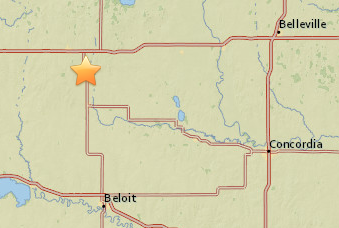
JEWELL COUNTY — Another earthquake shook north central Kansas on Friday. The quake at 9:13 p.m. measured a magnitude 2.7 and was centered approximately 4 miles southeast of Mankato, according to the U.S. Geological Survey.
This is the 4th quake in Kansas this week. On Wednesday at 6:29p.m. a quake measured a magnitude 3.1 and was centered approximately ten miles northwest of Harper, according to the U.S. Geological Survey.
On Tuesday a magnitude 2.5 quake was centered approximately 19 miles southeast of Salina, according to the USGS. On Sunday a 2.6 magnitude quake was centered four miles east of Harper.
There are no reports of damage or injury from Friday’s quake.
 By DOROTHY BARNETT
 Learn more about the 40 under 40 awards and help us congratulate Rachel at CEP’s Ten Year Anniversary on October 27th.