We have a brand new updated website! Click here to check it out!

Kan. among states reporting vaping-related lung illnesses to the CDC

NEW YORK (AP) — U.S. health officials on Friday again urged people to stop vaping until they figure out why some are coming down with serious breathing illnesses.

Officials have identified about 450 possible cases, including as many as five deaths, in 33 states. The count includes newly reported deaths in California, Indiana and Minnesota.

No single vaping device, liquid or ingredient has been tied to all the illnesses, officials said. Many of the sickened — but not all — were people who said they had been vaping THC, the chemical that gives marijuana its high. Many are teens.

Health officials have only been counting certain lung illnesses in which the person had vaped within three months. Doctors say the illnesses resemble an inhalation injury, with the body apparently reacting to a caustic substance that someone breathed in. Symptoms have included shortness of breath, fatigue, chest pain and vomiting.

The illnesses have all surfaced this year, and the number has been growing quickly in the last month as more states have begun investigations. A week ago, U.S. officials pegged the number at 215 possible cases in 25 states.

It’s unclear whether such illnesses were happening before this year.

“We’re all wondering if this is new or just newly recognized,” Dr. Dana Meaney-Delman of the Centers for Disease Control and Prevention told reporters Friday.

An Illinois health official, Dr. Jennifer Layden, said officials there don’t know when such illnesses first began, but she said there has been a marked increase since spring.

Deaths previously were reported in Illinois and Oregon .

Indiana officials said the person who died there was an adult, but they didn’t say when it happened or release other details. Health officials in Los Angeles said they were investigating a vaping death as well. And Minnesota health officials said that state’s first known vaping-related death was a person over 65 years with a history of lung problems who had vaped illicit THC products and died in August.

Recent attention has been focused on devices, liquids, refill pods and cartridges that are not sold in stores.

New York state has focused its investigation on an ingredient called Vitamin E acetate, which has been used to thicken marijuana vape juice but is considered dangerous if heated and inhaled. State investigators have found the substance in 13 cartridges collected from eight patients. In several cases, the ingredient made up more than half of the liquid in the cartridge.

CDC officials said they are looking at several ingredients, including Vitamin E acetate. But Meaney-Delman added that no single factor has been seen in every case.

Also Friday, the New England Journal of Medicine released a series of articles that give medical details about cases reported in Illinois, Wisconsin and Utah.

An article on 53 illnesses in Illinois and Wisconsin noted that nearly one-fifth of the cases were people who said they vaped nicotine and not anything that contained THC or CBD oil.

For that reason, doctors and health officials are continuing to suggest people stay away from all vaping products until the investigation establishes exactly what’s at the root of the illnesses.

Meaney-Delman said avoiding vaping is “the primary means of preventing this severe lung disease.”

It’s not yet clear what impact the recent illnesses are having on vaping rates, but some health officials are hoping more Americans will become wary.

There’s been a split among public health experts about the value of vaping nicotine. Some argue e-cigarettes are not as lethal as conventional cigarettes and can be a valuable aide to smokers trying to kick the habit.

But others say studies have not established that adult smokers who try vaping end up quitting smoking long term. And they fear that kids who might never have picked up cigarettes are taking up vaping.

The National Association of County and City Health Officials “has long been cautious about endorsing e-cigarettes even before the recent spate of illnesses, because little scientific evidence exists to show that e-cigarettes and other nicotine delivery devices are effective cessation devices,” spokeswoman Adriane Casalotti said in a statement.

The states reporting vaping-related lung illnesses to the CDC are Arkansas, California, Colorado, Connecticut, Delaware, Florida, Georgia, Iowa, Illinois, Indiana, Kansas, Kentucky, Louisiana, Maryland, Michigan, Minnesota, Montana, North Carolina, Nebraska, New Jersey, New Mexico, New York, Ohio, Oregon, Pennsylvania, South Carolina, Tennessee, Texas, Utah, Virginia, Vermont, Wisconsin, and West Virginia.
Man charged with stealing donation boxes at Islamic Center in Kansas

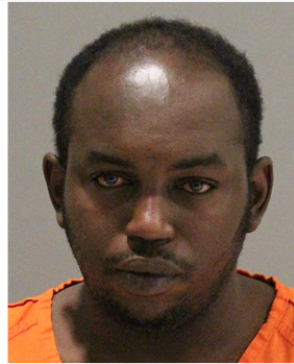
Amadou Oury Bah -photo Omaha police
Surveillance images courtesy Lawrence Police

LAWRENCE, Kan. (AP) — A man has been charged with breaking into the Islamic Center of Lawrence last month and stealing two donations boxes.

Amadou Oury Bah, 32,  was charged Thursday with burglary, theft and criminal damage to property. Police said previously that the donation boxes contained between $1,000 and $2,000 in cash.

Police previously asked for help identifying the break-in suspect, who was captured on surveillance video. Bah was arrested last week in Omaha, Nebraska, and is jailed on $15,000 bond.

Kansas to benefit from BLM oil/gas lease sale

BLM

SANTA FE, N.M. — The Bureau of Land Management New Mexico raised $9,839,328 in its quarterly oil and gas lease sale held September 5, 2019. Nearly 50 percent of the revenue from the sale will go to the states where the oil and gas activity occurs—in this case New Mexico, Kansas and Oklahoma—while the rest will go to the U.S. Treasury.

For this sale, the BLM offered leases on 15 parcels totaling 3,174.08 acres. The highest bid per acre was $31,001 sold to Cimarex Energy Company for 40 acres in Lea County, New Mexico. The highest bid per parcel was a total of $3,176,397 sold to Platform Energy III, LLC in Lea County, New Mexico, for 396.68 acres.

For more details about the sale results, please visit: https://www.blm.gov/programs/energy-and-minerals/oil-and-gas/leasing/regional-lease-sales/new-mexico.

The BLM awards oil and gas leases for a term of 10 years and as long thereafter as there is production of oil and gas in paying quantities. If the leases result in producing oil or gas wells, revenue from royalties based on production is also shared with the state.

The BLM is a key contributor to the Trump Administration’s America First Energy Plan, which is an all-of-the-above plan that includes oil and gas, coal, strategic minerals, and renewable sources such as wind, geothermal, and solar, all of which can be developed on public lands.

The BLM’s policy is to promote oil and gas development if it meets the guidelines and regulations set forth by the National Environmental Policy Act of 1969 and other subsequent laws and policies passed by the U.S. Congress. The sales are also in keeping with the America First Energy Plan, which includes development of fossil fuels and coal, as well as renewable energy.

The BLM manages more than 245 million acres of public land located primarily in 12 Western states, including Alaska. The BLM also administers 700 million acres of sub-surface mineral estate throughout the nation. Diverse activities authorized on these lands generated $96 billion in sales of goods and services throughout the American economy in fiscal year 2017. These activities supported more than 468,000 jobs.

Kan. school districts double down on drug testing, targeting even middle schoolers

FORT SCOTT, Kansas  Thirteen-year-old Aura Brillhart and her 11-year-old sister, Morgan, will face a new sort of test in school this year: a drug test.

CHRIS NEAL / FOR THE KANSAS NEWS SERVICE

The middle and high schools in their community of Fort Scott, Kansas, are among the latest to require random drug testing of students who want to participate in sports, clubs, dances or any other extracurricular activities.

Fort Scott and the Bushland Independent School District near Amarillo, Texas, join the growing number of communities across America testing kids as young as 11 for illicit drug use.

Nationally, a federal government survey shows, nearly 38% of school districts had such policies in 2016, up from a quarter of districts a decade earlier.

But over that time, the number of schools employing other drug prevention strategies dropped. The latest School Health Policies and Practices Study shows that a declining number of districts require elementary schools to teach drug and alcohol prevention, have arrangements with off-site organizations to provide drug treatment and provide funding for professional development on drug prevention.

The rise in drug testing is a reaction to the still-raging opioid epidemic and liberalized marijuana laws spreading across the country, according to health experts and educators. “The biggest fear is that legalization will lead to more teen use,” said Dr. Paul Glaser, a child psychiatry professor at Washington University School of Medicine in St. Louis.

More schools are adopting drug testing even as research remains mixed on how effective it is at reducing teen drug use. Supporters say it gives kids a reason to say no to drugs and may identify students who need help with drug problems. But opponents argue it invades student privacy and diverts money from educational priorities like books.

Bushland’s program costs about $10,000 a year. Fort Scott’s costs about $4,000, which Superintendent Ted Hessong said is the costliest part of the district’s overall drug prevention strategy.

To Amber Toth, principal at Fort Scott High School, the cost-benefit ratio is clear. Stopping even one student from going down the costly path of drug abuse and addiction, she said, “is worth $4,000.”

Counteracting ‘peer pressure’

Chris Wigington, superintendent of the Bushland district in Texas, said the school board asked him to look into the idea of drug testing after he arrived less than two years ago. In his previous school systems, he said, testing helped kids resist peer pressure to take drugs.

“We all know peer pressure is very real,” he said.

The programs — allowed under a 2002 U.S. Supreme Court ruling — are similar in Bushland and Fort Scott, with random testing of a relatively small portion of the student body several times a year. Under Fort Scott’s policy, 10 middle school students and 20 high school students are randomly tested each month with a urine screening for 10 drugs.

If they test positive, they are suspended from extracurricular activities. In both Fort Scott and Bushland, results are disclosed only to students, parents and certain school staff members, such as the student’s principal. The information does not appear on academic records and isn’t shared beyond school walls.

Families in Fort Scott may opt out of testing. But if they do, their children can’t participate in activities or even park a car in the school parking lot. Toth said only a few families have opted out.

“Our policy is a little bit different than some of the policies of schools in our area,” said Toth, who wrote it. “It has a treatment component where a student can lessen their consequences.”

The school is partnering with a mental health provider offering free services to students who test positive. Hessong said the testing and treatment policies are part of a larger district drug prevention strategy that includes drug education in middle and high school health classes, a “Red Ribbon Week” awareness program in elementary schools and sweeps by drug-sniffing dogs brought in by local law enforcement in the middle and high schools. He said he’s not sure of the total cost of these efforts.

Toth said the district’s drug prevention efforts address a growing issue. A 2018 youth survey showed that pot and prescription drug abuse among middle and high school students was higher in Bourbon County, where Fort Scott is located, than the state average.

More than 8% of students in the county reported using marijuana in the previous month, for example, compared with a state average of 6.5%. And Toth said marijuana use has been rising among local students as other parts of the country have legalized it.

“They sort of view it as harmless,” she said.

Hoener, a former social worker who is now Bourbon County’s economic development director, said her eighth grader, Aura, has told her about friends caught with pot in their lockers.

Concerns linger

It’s unclear whether testing will make a difference. “It’s a mixed bag on the research,” said Washington University’s Glaser.

A 2015 report from the American Academy of Pediatrics said there’s a lack of convincing scientific data demonstrating that testing works. A previous study, directed by the National Center for Education Evaluation and Regional Assistance in 2010, examined seven school districts and compared substance use reported in high schools that tested and those that didn’t. It found that 16% of students subject to drug testing reported using drugs compared with 22% of students in schools that didn’t test. Testing didn’t change students’ reported intentions to use drugs in the future.

Glaser said some students find ways to use drugs outside of testing periods or choose ones that are not screened. Sometimes, he said, kids who are suspended from activities after testing positive may get depressed or bored, making them more likely to use drugs.

Lauren Bonds, legal director for the American Civil Liberties Union of Kansas, said the growth in such testing is concerning. “There are more effective ways to limit student drug use,” she said.

Glaser said districts would do best to have an array of drug prevention and treatment programs. One good strategy, he said, is identifying young children suffering from trauma or family problems and getting them help before they turn to drugs. He’s involved with such a program in Missouri that provides services to young children referred by schools and also gives students, teachers and families preventive information and education.

“It’s always harder to treat the brain after it’s been affected by these substances,” he said.

Aura said that even though she doesn’t use illicit drugs, she realizes she may be randomly chosen for testing at some point. “I’d be OK with it,” she said, “but it would also be weird.”

KHN senior correspondent Sarah Jane Tribble contributed to this report.

Laura Ungar: [email protected], @laura_ungar

2019 Kansas Climate + Energy award winners to be honored

CEP

HUTCHINSON – The Climate + Energy Project is pleased to announce the 2019 Climate + Energy Awards, recognizing individuals and organizations who are leading the way to a clean energy future.

The awards celebrate lifetime achievement, volunteer engagement, and innovative change agents in Kansas. Join us in honoring our award winners on Monday, September 30, at the Lawrence Beer Company for Visions of a Resilient Kansas, our annual fundraiser and awards ceremony.

Mary Fund

Impact Award: A lifetime achievement award recognizing an individual whose work resulted in positive, long-term, broad impacts in climate, energy, and environmental issues across the state.

Mary Fund has dedicated her life to sustainable agriculture and rural communities. A strong presence at the Kansas Rural Center, Topeka,  for the last 40 years, Mary has worked bravely and tirelessly to raise issues of environmental concern – from clean energy to clean water, healthy soils to local foods, and so much more. Mary never shies away from bringing up the important, if controversial issues, including most recently highlighting climate change in town halls across the state. Mary is as direct in her opinions as she is curious about what others think, which makes her a valuable partner to all.

Mary has elevated rural issues to legislators while simultaneously addressing challenging issues with rural audiences. Mary’s no-nonsense, common-sense approach has been foundational to conversations about environmental issues for decades.

Kim Bellemere

Mark Richardson Sustainer Award: A volunteer-recognition award for an individual who has regularly engaged with CEP for at least five years.

Kim Bellemere has been a reliable and enthusiastic partner with the Climate + Energy Project for the last eight years, first as a steering committee member for Water + Energy Progress and most recently as a strong WEALTH partner.

In her work as the Director of Outreach at the Grassland Heritage Foundation, Shawnee Mission, Kim speaks passionately about the important role of grasslands and native plants as a climate solution. Kim’s leadership on climate change among conservationists has lit a spark for change and catalyzed partnerships to address climate issues locally. Kim’s nominator explained, “I’ve often felt overwhelmed by the climate change discussion, until I started having conversations with Kim and noticed the work that she was doing with Grassland Heritage Foundation. Small steps lead to big ones, and it’s people like Kim that take the first step so that the rest of us can follow.”

The Merc Co+op

Changemaker Award: Recognition for an organization or individual whose recent (1-3 years) work has significantly advanced climate, energy, and/or environmental issues in Kansas.

The Merc Co+op, Lawrence, has elevated solar power and electric vehicles as clean energy solutions in a high-profile location. Through a full rooftop array, two solar covered carports and a solar covered patio, the community-owned grocery store installed 688 high performance solar panels to provide 29% of their energy each year, when combined with an electric vehicle charging station and a solar covered pergola the panels will produce enough energy to power 22 homes each year.

The Merc’s highly visible location for solar panels and one of the few Electric Vehicle charging stations in Lawrence has strong potential to inspire other businesses to get on board with clean energy. The Merc Co+op is also working to ease the pressures of food deserts in Kansas by opening a grocery store in Wyandotte county. Since 2012, the co-op has reduced electricity consumption by 30% through LED lighting and preventative maintenance, in addition to reducing waste, improving access to local foods, and presenting sustainable options for the northeast Kansas community.

Metro KC Climate Action Coalition

Metro KC Climate Action Coalition
The Metro KC Climate Action Coalition has rapidly elevated the issue of climate change in northeast Kansas.

Initiated by Lindsey Constance and Mike Kelly, the MKCCAC provides a vehicle for local and state elected officials to take action on climate change. The coalition brings together diverse local elected officials to use their power to tackle climate change at the local and state level. MKCCAC has organized several events, including the upcoming Metro KC Climate Action Summit in Kansas City on September 14. They are in the process of developing a local action playbook, a climate emissions inventory, and more. This bipartisan coalition has made impressive progress convening elected officials across the state line, leading with conversations about regional climate change solutions.

Kansas GOP votes to scrap 2020 presidential preference vote

COLUMBIA, S.C. (AP) — Republican leaders in Kansas and South Carolina have voted to scrap their presidential nominating contests in 2020, while party officials Nevada were deciding whether to follow suit as the GOP erects more hurdles for the long shots challenging President Donald Trump.

In March of 2016, Trump addressed a large crowd in Wichita. -photo courtesy Mark Cowin

Canceling primaries, caucuses and other voting is not an unusual move for the party of the White House incumbent seeking a second term, and allows Trump to try to consolidate his support as Democrats work to winnow down their large field of candidates.

A spokesman for the South Carolina Republican Party, Joe Jackson, confirmed that the party voted Saturday against holding a presidential primary next year. The Kansas GOP tweeted on Friday that it will not organize a caucus “because President Trump is an elected incumbent from the Republican Party.” Its state committee planned to approve rules Saturday for an “internal party process” for selecting convention delegates, according to Kelly Arnold, the party’s former state chairman, and Helen Van Etten, a member of the Republican National Committee from Topeka.

Officials in Nevada scheduled meetings later Saturday to determine the fate of their contests. A decision in Arizona is expected later in the month.

Challengers have emerged to Trump, including Bill Weld , a former Massachusetts governor, and Joe Walsh , a former Illinois congressman. Others may join them.

Walsh told CNN after the South Carolina vote that his campaign would “fight South Carolina and any other state that considers doing this.” He also noted that Trump complained during the 2016 election “about how the Democrats were rigging the system to get Hillary (Clinton) elected. Well, look what he’s doing now. You talk about rigging a system.”

Primary challenges to incumbents are rarely successful, and Trump’s poll numbers among Republican voters have proved resilient. Nonetheless, Trump aides are looking to prevent a repeat of the convention discord that highlighted the electoral weaknesses of Presidents George H.W. Bush and Jimmy Carter in their failed reelection campaigns

Since last year, Trump’s campaign has worked to monitor and at times control the process by which delegates to next year’s Republican National Convention in Charlotte, North Carolina, are selected. His campaign wants the convention to be a four-night “infomercial” for Trump by sidelining the president’s detractors within the party.

The effort is an acknowledgment that Trump hasn’t completely cemented his grip on the GOP and might not coast to the nomination without some opposition. To that end, the campaign has worked over the past year to scuttle any attempts at a Trump challenge by party dissidents, mindful that a serious primary opponent could weaken Trump heading into the general election.

In January, the Republican National Committee voted to express its “undivided support” for Trump and his “effective presidency.”

In years past, both Republicans and Democrats have cut state nominating contests when an incumbent president from their party ran for a second term. In 1984, South Carolina GOP leaders opted to call off their primary as President Ronald Reagan sought a second term. In 2004, the GOP again canceled the state’s primary with leaders deciding instead to endorse President George W. Bush’s reelection bid.

The South Carolina Democratic Party didn’t hold presidential primaries in 1996 or in 2012, when Presidents Bill Clinton and Barack Obama were their incumbents.

The Nevada Republican Party was expected to hold a vote on possibly changing its rules to allow a bypass of its presidential nominating caucuses in 2020 and endorse Trump outright. The move would allow the state’s central committee members to hold a vote and commit the state’s GOP delegates to the president, shielding him from a primary challenge.

15 and 18-year-old brothers charged in Kansas City killing

KANSAS CITY (AP) — An 18-year-old Kansas City man and his 15-year-old brother have been charged with killing another man in a case that prosecutors allege was motivated by revenge for an earlier shooting in which the younger brother was wounded.

Mackey is being held in Jackson County

The older brother, Taylor Mackey was charged Thursday with second-degree murder and three other felonies in the death of Isaac Louis Brown. No attorney is listed for him in online court records. The younger brother is charged as a juvenile with first-degree murder and armed criminal action.

Court records say Mackey told detectives he believed Brown was responsible for shooting his brother and wanted him to feel the same pain. He says he was thinking it was time to “Get him” before he and his brother pulled out guns and shot Brown one time each.

Applications open for KDOT’s new Cost Share Program

KDOT

TOPEKA – The Kansas Department of Transportation (KDOT) has launched a new program designed to provide state funding for transportation projects while also leveraging local and private funding. The new Cost Share Program will provide funding to local entities for transportation projects that improve safety, support job retention and growth, improve access or mobility, relieve congestion and help areas across the state improve the transportation system.

Up to $50 million will be available in the program for fiscal year 2020. The on-going program, which has at least $11 million available, requires a minimum of 15% non-state cash match.  Additional consideration will be given to project applications that commit more than the minimum required match amount. The funding above the base $11 million comes from a one-time, $50 million State General Fund transfer. A minimum 25% match is required for projects to qualify for the one-time funds.

The Cost Share Program is open to all transportation projects including roadway (on and off the state highway system), rail, airport, bicycle/pedestrian and public transit. Funds from the program can only be used for construction.

“Creating the Cost Share Program allows us to leverage both state and local dollars to help address important transportation needs across Kansas,” said Kansas Secretary Julie Lorenz. “We look forward to working with Kansas communities to build projects that improve safety and keep the Kansas economy moving.”

Funding for the program is part of the $216 million in sales tax authorized by the Legislature and Gov. Laura Kelly to remain in the state highway fund in fiscal year 2020. In addition to the Cost Share Program, those funds are being used to increase highway preservation, help complete delayed T-WORKS projects, improve safety and provide new funding opportunities for cities and counties.

Applications will be accepted on an ongoing basis beginning Sept. 3, 2019, and will be reviewed twice annually, in October and March. To be included in the first review period, applications must be submitted by Oct. 11, 2019. Selection criteria will include consideration of projects that meet program objectives, eligibility categories and requirements. Geographic distribution also will be considered during project selection.

Application and a fact sheet on the Cost Share Program can be found at www.KSDot.org or with the links below:

Application

Fact Sheet

Great Bend teen hospitalized after rollover accident

BARTON COUNTY— One person was injured in an accident just after 10:30a.m. Saturday in Barton County.

The Kansas Highway Patrol reported a 2007 Ford Focus driven by Angela Natalie Enriquez, 18, Great Bend, was northbound in the 100 Block of 20th Avenue.

The driver lost control of the vehicle. It left the roadway to the right, entered the ditch, struck a culvert and rolled into a field on the east side of the road.

EMS transported Enriquez to the hospital in Great Bend. She was properly restrained at the time of the accident, according to the KHP.

Kansas First-District congressman launches U.S. Senate campaign

TOPEKA, Kan. (AP) — Western Kansas’ congressman launched a Senate campaign on Saturday, pitching himself to fellow Republicans as a pragmatic conservative who can keep the seat in GOP hands by thwarting immigration hardliner Kris Kobach’s bid for the party’s nomination.

Two-term Rep. Roger Marshall entered the race facing some skepticism from the right despite his anti-abortion and gun-rights views and a consistent record of voting with President Donald Trump. Marshall ended June with $1.4 million in campaign funds, giving him a jump on fundraising.

Marshall kicked off his campaign at the state fair. In an AP interview beforehand, he stressed his rural ties and portrayed himself as part of a line of western Kansas congressmen who later served in the Senate, including former Senate Majority Leader and Kansas political icon Bob Dole.

Marshall and Kobach are among five GOP candidates actively campaigning to replace four-term Republican Sen. Pat Roberts, who is not seeking re-election in 2020. Kobach, a former Kansas secretary of state, built a national profile by advocating tough immigration policies, though he lost the Kansas governor’s race last year after his take-no-prisoners style alienated moderate voters.

“Nobody is more pro-life or pro-Second Amendment than I am,” Marshall said. “Am I a kinder, gentler voice? Probably. Am I going work across the aisle to solve problems? You bet.”

Many Republicans fear a repeat of last year, when Kobach narrowly won a crowded GOP primary only to lose the governor’s race to Democrat Laura Kelly. Some prominent Republicans have been nudging U.S. Secretary of State Mike Pompeo to jump in, though Marshall said Pompeo was “encouraging” about Marshall’s candidacy when they spoke a few weeks ago.

Marshall, who describes himself as a “fifth-generation farm kid,” said he is confident he can win a crowded GOP primary by building on his western Kansas political base. His 1st District covers roughly 60 percent of the state and Dole, Roberts and Kansas’ other senator, Republican Jerry Moran, all held the House seat previously.

The safe Republican district’s GOP voters tend to turn out in disproportionately high percentages in primaries, putting Marshall in “a very good spot,” said Bob Beatty, a Washburn University political scientist.

“He fits the classic Kansas U.S. Senate mold, the traditional mold,” Beatty said.

Kobach relied on a strong conservative base to win the Republican nomination for governor. He contends that he’ll benefit from the greater voter turnout in a presidential election year and a focus on issues such as immigration. He said in opening his campaign in July that Kansas doesn’t need “a quiet senator.”

Marshall said he’s determined to fight what he calls “socialist” proposals from Democrats, such as “Medicare for All” government health coverage and the sweeping Green New Deal aimed at combatting climate change.

Some Republicans question whether Marshall can win over the hard right and even described him as a moderate in the weeks before he entered the race. The conservative interest group Club for Growth gives him a 61 percent rating through 2018, which is the lowest for any Republican member of Kansas’ congressional delegation.

Marshall, a 59-year-old physician, won his House seat in 2016 by ousting tea party Rep. Tim Huelskamp in the GOP primary. Huelskamp had clashed with House leaders and was stripped of the state’s traditional seat on the Agriculture Committee, which was returned to Marshall.

“He can’t get the Huelskamp people,” said Tim Shallenburger, a former state treasurer and Kansas Republican Party chairman.

Also actively campaigning for the GOP nomination are Kansas Senate President Susan Wagle, Dave Lindstrom, a Kansas City-area businessman and former Kansas City Chiefs player, and Bryan Pruitt, a conservative gay commentator. Matt Schlapp, the American Conservative Union’s president, and Alan Cobb, president and CEO of the Kansas Chamber of Commerce, also are considering the race.

The Democrats with active campaigns are former Rep. Nancy Boyda, former federal prosecutor Barry Grissom and Usha Reddi, a city commissioner in the northeast Kansas town of Manhattan.

Marshall had the backing of the U.S. Chamber of Commerce in his 2016 race against Huelskamp. But Scott Reed, who is the group’s senior political strategist and who managed Dole’s 1996 presidential campaign, said it also has encouraged Cobb to explore the race and is waiting to see who runs and “who’s making their marks.”

“We’ll get with many of the other right-of-center groups in D.C. and in Kansas and try to make a decision all together,” he said. “This is a must win.

Kansas makes good use of wind power, but other renewables … not so much

(Photo by Brian Grimmett, Kansas News Service)

 
Kansas News Service

WICHITA— Kansas is a national leader in wind energy, but a new report shows the state lags in the adoption of other so-called green technologies.

Find out how Kansas compares to the rest of the country.

Wind

Kansas and other Plains states produce the majority of the nation’s wind energy. While that’s mostly because the area has the highest average sustained wind speeds, the leading wind states have put in place regulatory policy and tax incentives aimed at attracting wind developers.

In 2018, developers installed 543 megawatts of new wind generation in Kansas, according to a new U.S. Department of Energy study. That’s good enough for sixth in the country.

As far as overall capacity, Kansas ranks fifth.

And since 2009, the amount of wind-generated electricity produced in Kansas has grown sevenfold, the third most of any state during the same time period.

Solar

Like with wind, Kansas is in a great position to turn abundant solar radiation into electricity.

Unlike with wind, it hasn’t.

A report from the environmental advocacy group Environment America ranks Kansas 45th in solar energy growth from 2009 to 2018.

In 2018, only 36 gigawatt hours (GWh) were produced in the state. That’s compared to nearly 40,000 GWh coming from the nation’s top state, California.

Everything Else

Kansas has adopted other new green technologies slower than most of the country, too. Cumulative electric vehicle sales in Kansas through 2018 is only 2,621 vehicles — ranking 33rd among U.S. states.

Major electric utility companies in Kansas haven’t invested in any large-scale battery storage projects, either. That’s not unique — it’s a relatively new technology — but the Environment America report shows adoption in the rest of the country is growing quickly.

But thanks to Kansas’ quick adoption of wind energy and developers’ willingness to build here, the state still ranks high when it comes to the amount of renewable energy it produces in relation to how much energy it consumes.

In 2018, 47% of the electricity the state used came from wind or solar, the second- highest percentage in the country.

Brian Grimmett reports on the environment, energy and natural resources for KMUW in Wichita and the Kansas News Service. You can follow him on Twitter @briangrimmett or email him at grimmett (at) kmuw (dot) org. The Kansas News Service is a collaboration of KCUR, Kansas Public Radio, KMUW and High Plains Public Radio focused on the health and well-being of Kansans, their communities and civic life.

Adjusted releases approved for Kansas River Basin reservoirs

(Courtesy of Kansas Geological Survey)

USACE

KANSAS CITY – The Kansas City District, U.S. Army Corps of Engineers was authorized a deviation from the operating manual for cumulative releases from reservoirs in the Kansas River Basin.

This decision was made in consultation with the Missouri River Basin Water Management through a thorough impacts analysis that addresses the downstream impacts of increased release targets and upstream impacts of not evacuating all the stored flood waters in the reservoir projects. Retaining flood storage in the Kansas River reservoirs into the next flood year presents unacceptable risk to downstream life and property for all stakeholders below the lower Kansas River reservoirs.

The 2019 flood resulted in flood control storage at the Kansas City District lakes and reservoirs being filled through the spring and summer months to alleviate downstream flooding on the Missouri River. Record setting rainfall hasn’t stopped, as many localities again set rainfall records in the month of August. Missouri River stages remain high, which leads to decreased releases from reservoirs along the Kansas River – most notably Milford, Tuttle Creek, Perry, and Clinton.

Currently, there is more than two million acre-feet of stored flood waters within the Kansas River Basin projects. To evacuate this storage prior to this winter’s freeze, the Kansas City District has received a deviation which allows it to increase the Phase 1 target on the Missouri River at Waverly from 90,000 cubic feet per second to 140,000 cfs. This is necessary, as a 90,000 cfs target is not expected to allow for releases from the lower 50 percent of flood control storage in the Kansas Basin until November or December. We estimate that the 140,000 cfs target at Waverly will facilitate emptying the stored flood waters over a three month period. Continued wet weather may prolong the drawdown.

Throughout the flood event, the Corps has shared vital information regarding the Missouri River system, and that all operations have impacts on one another. Exact dates and amounts of releases from the Kansas basin will depend on releases from Gavins Point, inflows to the Kansas River basin, and tributary inflows. Gavins Point releases are anticipated to remain at 70,000 cfs into October and remain above 60,000 cfs through November.

It’s important that the public remains vigilant, as higher river levels will persist. While the drawdown is occurring, it is anticipated the flow in the Kansas River, outside of local rain events, will remain between 20,000 cfs and 30,000 cfs. This is well below action stage along the Kansas River. 140,000 cfs at the Waverly gage on the Missouri river is approximately two foot above flood stage. Missouri River gages downstream of Waverly will be below flood stage at a flow of 140,000 cfs, but rainfall could result in them going over flood stage.

Kansas man jailed for alleged murder after fatal parking lot fight

SEDGWICK COUNTY —Law enforcement authorities are investigating a fatal beating in a Kansas grocery store parking lot and have made an arrest.

Just after 2a.m. Wednesday. Police responded to a disturbance in the Dillons parking lot in the 2200 Block of North Rock Road, according to officer Charley Davidson.

Speakman photo Sedgwick Co.

At the scene, officers located a man unconscious and with critical injuries. The victim identified as 33-year-old Haley Collins was transported to an area hospital.
Investigators have learned that Collins and a suspect identified as 35-year-old Steven Speakman were involved in a disagreement, according to Davidson. Speakman battered Collins during the dispute. On Thursday, Collins died.

Police arrested Speakman at the scene of the fight for aggravated battery. He is now being held without bond on a requested charge of first-degree murder.

This is the 21st criminal homicide this year in Wichita, according to Davidson.

Copyright Eagle Radio | FCC Public Files | EEO Public File