We have a brand new updated website! Click here to check it out!

🎥 First national TV spot for cannabis industry now airing

SUBMITTED

DENVER – Hoban Law Group, the nation’s largest, full-service cannabis and hemp law firm, has received approvals and is now airing the first national TV spot for the cannabis industry. The advertisement marks the first time that a national TV spot has used the word ‘cannabis.’ Bob Hoban, leading legal expert in the cannabis industry and founder of Hoban Law Group, appears in the advertisement discussing the firm’s specialties and national reach.

“As the first ‘cannabusiness’ law firm, we’ve seen firsthand how the industry has significantly evolved in the last nine years,” said Bob Hoban. “We’re excited to once again make waves in the legal side of the cannabis industry, starting a new trend of legal advertising.”

The Hoban Law Group specializes in hemp, medical marijuana, and adult-use cannabis issues and worked with Denver-based producer DCP Media to create a spot that met the requirements of a variety of networks.

It wasn’t easy. Bob Hoban, the firm’s founder and namesake, told Leafly the networks wanted to make sure “we didn’t hit people over the head with the word ‘marijuana.’ So in the ad we talk about industrial hemp, and the medical and adult use marketplaces. They asked us not to flash a lot of marijuana plants, which was fine, that’s not our M.O. anyway.”

The 30-second advertisement is unique in that Hoban Law Group’s services do not include any tangible product, only legal and business consulting. This helped in receiving approvals from each network to air during primetime slots. The commercial first aired on August 21 and will continue through mid-September, airing eight times per day on CNN, Fox News, MSNBC, Viceland, The Weather Channel, Headline News, and Fox Business.

About Bob Hoban, Esq.
Bob Hoban is Managing Partner at Hoban Law Group, America’s premier cannabusiness law firm. Hoban is the former president of the Cannabis Business Alliance and a member of the National Hemp Association, the National Cannabis Industry Association and the Colorado Cannabis Chamber of Commerce.

About Hoban Law Group
Hoban Law Group is the nation’s only full-service cannabis business (“cannabusiness”) law firm, servicing all legal medical and adult use cannabis. Formed in 2009, Hoban Law Group is Colorado’s largest and most experienced cannabis business law firm, providing expert commercial legal advice to its clients in the regulated marijuana dispensary system and the industrial hemp industry. Hoban Law Group has attorneys in every state and territory where legalization has occurred.

For more information, visit Hoban Law Group’s website at www.hoban.law.
SBA awards $380K to Kansas Dept. of Commerce

SBA

WASHINGTON – The U.S. Small Business Administration announced this week that $18 million in funding has been awarded to 44 State international trade agencies through SBA’s competitive State Trade Expansion Program (STEP), to support export growth among U.S. small businesses.

STEP is designed to increase both the number of small businesses that begin to export and the value of exports for small businesses currently exporting. Expanding the base of small business exporters and making the process as easy as possible is a key component of the Administration’s small business strategy.

“The awards will provide a solid foundation for small businesses planning to enter and set them up for success,” said SBA Administrator Linda McMahon.

Last year (FY 2016), the Kansas Department of Commerce was awarded $383,000 in STEP grant funding to support small businesses for their participation in export training, market entry programs, tradeshows, and trade missions. Kansas provided access to multiple export seminars and courses, offered by many partners like the Kansas Small Business Development Center and the US Commercial Service. In addition, Kansas provided exhibition opportunities under the U.S. Pavilion at the Paris Air Show, as well as participation in trade missions to Mexico, Brazil, China, and countries in Central Asia.

The 2017 STEP awards will allow states to assist small businesses with the information and tools they need to succeed in export related activities that are in line with the objectives of the program. These objectives include participation in foreign trade missions, foreign market sales trips, services provided by the U.S. Department of Commerce, as well as design of international marketing campaigns, export trade show exhibits, training workshops and more.

STEP awards are managed and provided at the local level by state government organizations. The program is managed at the national level by the U.S. Small Business Administration’s Office of International Trade.

In SBA Region 7 States of Iowa, Kansas, Missouri and Nebraska the following new awards were made:
Iowa – Iowa Economic Development Authority – $265,000
Kansas – Kansas Department of Commerce – $380,000
Missouri – Missouri Division of Business & Community Services – $400,000
Nebraska – Nebraska Department of Economic Development – $263,720
See the full list of STEP awardees for FY 2017.

About the Small Business Administration

The U.S. Small Business Administration (SBA) was created in 1953 and since January 13, 2012 has served as a Cabinet-level agency of the federal government to aid, counsel, assist and protect the interests of small business concerns, to preserve free competitive enterprise and to maintain and strengthen the overall economy of our nation. The SBA helps Americans start, build and grow businesses. Through an extensive network of field offices and partnerships with public and private organizations, the SBA delivers its services to people throughout the United States, Puerto Rico, the U.S. Virgin Islands and Guam. To learn more about SBA, visit https://www.sba.gov.

Jury deadlocked in trial of fatal Kansas drive-by shooting

Martinez- photo Topeka Police

TOPEKA, Kan. (AP) — A Shawnee County jury could not reach a verdict in the trial of a man charged in the fatal shooting of a Topeka pedestrian.

The jury announced Friday that it was deadlocked after about a day of deliberations in the case of 21-year-old De’Angelo Megle Martinez, of Topeka.

Martinez is charged with alternative counts of first-degree murder in the 2016 shooting death of 20-year-old Brian Wade Miller, who died in April 2016 in a drive-by shooting.

The Topeka Capital-Journal reports 18-year-old Christopher Pattillo was earlier convicted of first-degree murder in Miller’s death. Witnesses during his trial said Martinez was the gunman who fired 14 shots from a van driven by Patillo.

Inmate who escaped in Oklahoma on the way to Kansas is caught

Walp and Foy-photos Major Co. Sheriff

FAIRVIEW, Okla. (AP) — Authorities say one of two inmates who escaped by overpowering guards in northwest Oklahoma and stealing a prison transport van has been arrested in Pennsylvania.

The Major County, Oklahoma, sheriff’s office said on its Facebook page that 32-year-old Andrew Foy was arrested Friday.

Details of the arrest and where it took place were not released and the sheriff did not return a phone call for additional information.

Authorities say Foy and 37-year-old Darren Walp escaped Aug. 22 near Fairview, Oklahoma. The Facebook post says Walp remains at large.

The van was later found abandoned and the men were last seen driving a stolen tractor-trailer rig in the Tulsa suburb of Sapulpa.

Authorities say Foy was being taken to Wyoming and Walp to Kansas, both to face charges for nonviolent offenses.

Kansas sheriff’s deputy rescues puppies from animal abuse

Ammo -photo courtesy Reno Co. Sheriff

RENO COUNTY — A Kansas sheriff’s deputy rescued 8 puppies from abuse and took a special interest in one of them.

On Thursday, Reno County Deputy Chris Shields responded to a home in Nickerson for an animal welfare check, according to a social media report.

Upon arrival Shields discovered horrible living conditions and obvious animal abuse for 8 new puppies.

Deputy Shields seized all 8 puppies from the home and transported them to a veterinarian in Lyons.

Law enforcement authorities submitted a case to the District Attorney for 8 counts of Cruelty to Animals.

Seven of the 8 puppies were housed overnight and shipped by volunteers to Pawsitive Tails Rescue in Kansas City.

The 8th puppy found a new home with the Deputy Shields’ family. The puppy’s new name is Ammo.

Volunteer shooters needed to thin bison herd

FLAGSTAFF, Ariz. (AP) — The National Park Service will use skilled shooters, capture and other methods to reduce the Grand Canyon’s bison population by more than half.

The agency gave final approval this month to the effort to bring the number of bison to around 200 within three to five years.

Park officials say the massive animals are damaging natural and cultural resources. Up to 600 roam the Grand Canyon’s far northern reaches and the adjacent forest.

Volunteer shooters would be selected through a lottery and have to prove they’re proficient with firearms and physically fit. Much of the work would be done on foot.

The bison meat would be given to volunteers, tribes and food banks.

A team is expected to develop guidelines later this year.

Police: Kansas man forced woman out of car, drove away

Smith- photo Shawnee Co.

SHAWNEE COUNTY —  Law enforcement authorities are investigating a suspect for auto theft.

Just after 2p.m. Friday police responded to the 500 Block of SW Western in Topeka. A suspect forced a woman from her car and drove away, according to a media release.  Dispatched officers located the vehicle and suspect in the 300 Block of SW Polk.

They arrested 45-year-old Craig L. Smith for Aggravated Robbery. An investigation revealed that Smith and the woman had a prior domestic relationship.

SBA makes changes to its Surety Bond Program

SBA

WASHINGTON – The U.S. Small Business Administration has noted two important changes to its Surety Bond Guarantee (SBG) Program that will increase contract opportunities for small contractors, supporting them to grow their business operations. The changes will become effective on September 20, 2017.

The SBA will increase the guarantee percentage in the Preferred Surety Bond Program from no more than 70 percent to no more than 90 percent. The SBA’s guarantee will be 90 percent if the original contract amount is $100,000 or less, or if the bond is issued to a small business that is owned and controlled by socially or economically disadvantaged individuals, veterans, service disabled veterans, or certified HUBZone and 8(a) businesses. All other guarantees will be 80 percent.

The eligible contract amount for the Quick Bond Application (Quick Bond) will increase to $400,000 from $250,000. The Quick Bond is a streamlined application process, with reduced paperwork requirements, that is used in the Prior Approval Program for smaller contract amounts. SBA’s review and approval requires minimal time, allowing small businesses to bid on and compete for contracting opportunities without delay.

Through its SBG Program, consisting of the Prior Approval and the Preferred Surety Bond Programs, the SBA guarantees bid, payment and performance bonds for contracts that do not exceed $6.5 million, and up to $10 million with a federal contracting officer’s certification. The SBA’s guarantee encourages the surety company to issue a bond that it would not otherwise provide for a small business.

For more information on the SBA’s Surety Bond Guarantee Program, please visit www.sba.gov/surety-bonds.

About the U.S. Small Business Administration

The U.S. Small Business Administration (SBA) was created in 1953 and since January 13, 2012 has served as a Cabinet-level agency of the federal government to aid, counsel, assist and protect the interests of small business concerns, to preserve free competitive enterprise and to maintain and strengthen the overall economy of our nation. The SBA helps Americans start, build and grow businesses. Through an extensive network of field offices and partnerships with public and private organizations, the SBA delivers its services to people throughout the United States, Puerto Rico, the U.S. Virgin Islands and Guam. Go to www.sba.gov.

Kansas woman sentenced for laundromat bleach attack

Witt-photo Reno Co.

RENO COUNTY — A Kansas woman accused in a bleach attack at a Hutchinson laundromat was sentenced Friday.

Destiny Witt, 19, Hutchinson, was granted 2 years community corrections with a 2-year, 5-month underlying sentence.

Witt entered pleas to two charges including aggravated battery and conspiracy to commit aggravated battery. As part of a plea agreement, the state dropped a charge of aggravated robbery and misdemeanor battery.

One of the other suspects, Jamice Craig, also entered a plea to aggravated battery and conspiracy to commit aggravated battery. She still awaits sentencing.

The preliminary hearing for the third suspect, Victoria Keene, is in recess to allow the state to locate three witnesses who didn’t appear in court.

The victim says the incident occurred in the 600 block of East 4th at a local laundry mat.

The victim was knocked down, had bleach poured on her and her ankle run over by a vehicle.
She was transported to Hutchinson Regional Medical Center for treatment.

Kansas plan sets ‘tough’ long-term goals for current kindergartners

Kansas is setting aspirations for much higher math and reading competency among the class of 2030 — today’s kindergartners — in a long-term accountability plan for its public schools.

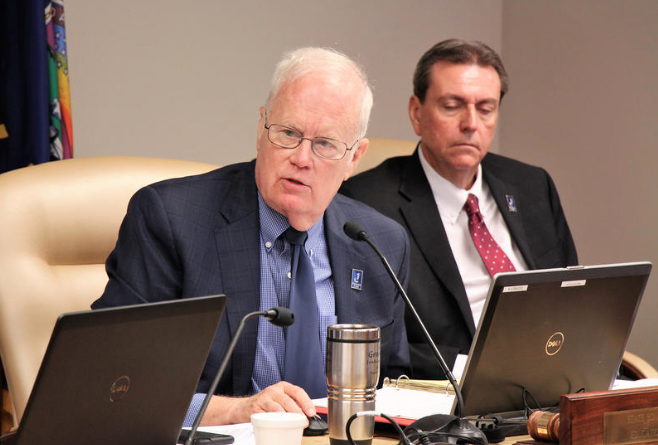
Members of the Kansas State Board of Education, including Jim Porter, expressed support for a long-term accountability plan for schools but also questioned whether its goals were realistic.
CELIA LLOPIS-JEPSEN / KANSAS NEWS SERVICE

Kansas officials submitted the accountability blueprint Tuesday to the U.S. Department of Education. It does not include language promoting controversial school choice concepts that Gov. Sam Brownback’s office advocated for, according to staff at the state education department.

Members of the Kansas State Board of Education expressed support for the plan Tuesday but questioned agency officials about the targets, which call for three out of four students to be proficient in math and reading by the year 2030.

“Is it realistic?” chairman Jim Porter, a Fredonia Republican, wondered.

“Seventy-five percent is going to be tough, but it’s what we need,” replied Beth Fultz, an official with the state education department.

Read the long-term plan submitted by the Kansas State Department of Education.

Education officials picked that number based on the state board’s goal of preparing children for college and careers. The board’s vision leans on Georgetown University research suggesting upwards of 70 percent of the workforce will need postsecondary credentials in the near future.

Just one in three Kansas students currently scores at a proficient level on state math tests, and about 40 percent do so on reading and language arts tests.

“Proficient” in this context means a score of 3 or 4 — the top two scores on the state’s tests. Children take the assessments in third through eighth grades and once in high school. A score of 3 or 4 is designed to indicate mastery of skills and knowledge at each grade level that prepare the child for college.

Proficiency rates are even lower among students with disabilities and groups that are historically socioeconomically disadvantaged. Just 13 percent of black students score at a proficient level on Kansas math tests, for example.

Schools are expected under the plan to hit the target of 75 percent for their overall student bodies, but also specifically for students in minority groups and for children with disabilities, from low-income families or learning English as a second language.

The Kansas accountability plan also aims for a 95 percent high school graduation rate in 2030, compared to the current 86 percent.

‘The power of school choice’

-CLICK to EXPAND

Brownback signed off on the plan Monday. His office did not answer questions submitted Tuesday about whether he had pushed the education department to insert provisions into its plan about charter schools, vouchers or other school choice programs — a divisive topic among education advocates — and whether he had worked with a third-party organization on the matter.

Spokeswoman Rachel Whitten provided this comment instead: “Governor Brownback supports the State Board of Education’s efforts to improve educational outcomes for all Kansas students, and remains a strong supporter of innovation at the local level.”

During a presentation to the state board, education department staff said Brownback’s office had worked with an organization to review the plan and provide feedback to state education officials.

A copy of the organization’s input, obtained through an open records request, urges Kansas education officials to “consider harnessing the power of school choice” by, for example, increasing the prevalence of charter schools, of which there are currently only 10 in Kansas.

Read the ExcelinEd recommendations on the Kansas plan.

“School choice gives families the freedom to leave persistently low-performing schools,” wrote ExcelinEd, a foundation created by former Florida Gov. Jeb Bush. “Research shows that school choice, in combination with strong accountability, can have a positive effect on low-performing schools.”

The academic benefits of charter schools versus traditional public schools are a subject of debate among education researchers.

Though school choice provisions didn’t make the cut for Kansas’ blueprint, education department staff told the state board they were still in conversations with Brownback’s office on those concepts.

“Because we want to work with the governor’s office, we’ll keep working and see if there’s any way we can assist them,” Tate Toedman said.

Kansas’ submission of an accountability plan to the U.S. Department of Education is required to show how the state will comply with the Every Student Succeeds Act, also known as ESSA.

ESSA is the 2015 federal statutory overhaul that replaced No Child Left Behind, a 2001 law that set a target of closing achievement gaps and reaching 100 percent math and reading proficiency by 2014.

The federal government has sway over certain accountability matters because schools receive federal funds.

Measuring progress, not just targets

State board vice chairwoman Kathy Busch, a Wichita Republican, suggested Kansas make clear that its schools will be measured in part based on the progress of their students, not just on whether they hit the 75 percent proficiency target.

Setting an across-the-board 75 percent target “just screams of No Child Left Behind to me,” she said.

State board vice chairwoman Kathy Busch suggested that the long-term plan make clear that Kansas schools will be measured in part based on the progress of their students, not just on whether they hit the 75 percent proficiency target.
CREDIT CELIA LLOPIS-JEPSEN / KANSAS NEWS SERVICE

“Having lived with the 100 percent rule, which was …” she said, but paused and cut off her sentence. “That’s all I’ll say.”

No Child Left Behind became highly unpopular over the years. Many educators thought it was unfairly onerous, particularly to schools serving higher numbers of high-poverty and minority children, because the goal was unrealistic.

Deputy education commissioner Brad Neuenswander said state education officials would consider the growth that each school shows, rather than basing measures entirely on whether they hit or miss their targets.

Education officials also said the new accountability system would be “more helpful” and less punitive than No Child Left Behind by providing technical assistance to help struggling schools improve.

They predicted federal education officials would provide feedback on Kansas’ plan by December.

The Kansas Association of School Boards, an advocacy group that represents most of the state’s 286 boards of education, submitted feedback to state education officials praising the ESSA plan — with a caveat.

The association called the 2030 targets “a moral imperative” meant to help ensure financial security for Kansans through rigorous education.

“However, if Kansas is serious about reaching these unprecedented goals, it will require commitments far beyond the scope of this plan,” the group wrote. “The State Board will need to continue and significantly strengthen its advocacy with state and federal lawmakers for the additional finances required to accomplish such ambitious outcomes.”

Dozens of school districts are locked in an ongoing, seven-year long legal battlewith the state over school funding levels. The districts accuse the state of underfunding education to the point that it violates Kansas’ obligations under the state constitution.

Celia Llopis-Jepsen is a reporter for the Kansas News Service, a collaboration of KCUR, Kansas Public Radio and KMUW covering health, education and politics. You can reach her on Twitter @Celia_LJ.

Kansas teen dies after ejected in 4-vehicle rollover crash

JOHNSON COUNTY — A Kansas teen died in an accident just before 5p.m. Friday in Johnson County.

The Kansas Highway Patrol reported a 2016 Ford Edge driven by Derek Jacob Drennon, 19, Lansing, was northbound on Kansas 7 just south of 83rd Street passing traffic on the right shoulder.

The driver lost control of the vehicle side swiping a 2013 Ford Edge driven by Shawn Michael Sisney, 47, Shawnee, which was traveling northbound on K-7 in the right lane.

The 2016 Ford Edge then cut across the lanes of traffic to the west, entered the center grassy median where it rolled over multiple times and the driver was ejected.

The vehicle then struck a southbound 2005 Mitsubishi Endeavor driven by Cathy A. Fishman, 58, Overland Park. The debris from the impact struck a 2015 Ford Fusion driven by Stephen L. Griffeth, 68, Lawrence, as it was traveling southbound on K-7 in the right lane.

Drennon was pronounced dead at the scene and transported to Frontier Forensics. Fishman was transported to Overland Park Regional Medical Center.

Sisney and Griffeth were not injured.   Drennon was not wearing a seat belt, according to the KHP.

Kansas Creative Arts Industries Commission announces Arts in Medicine

KCAIC

TOPEKA — Arts in Medicine, a partnership between the Kansas Creative Arts Industries Commission and Emporia State University, is accepting applications from associations, agencies, and organizations that provide medical services to Kansans. If accepted, the applicant agency will have the opportunity to work with faculty and graduate students in the art therapy program at Emporia State University to build a program that meets the needs of specified populations.

Applicants may be interested in offering patients, clients, or staff art therapy services such as:
Group art therapy programming designed to meet the psycho-social needs of patients, care givers, or medical personnel
Individual art therapy for patients receiving treatment (i.e. cancer treatments or transfusions)
Art-based workshops for medical personnel or clinicians in training (stress relief, group bonding, etc.)
Arts-based programs at special events (grief camps, open houses, etc.)

Applicants must be Kansas-based institutions, organizations, or associations that provide medical services to Kansas citizens. Applications are welcome from agencies that serve all age and developmental levels. Art experience and art skills are not necessary.
Applications are due by October 2, 2017. Applications will be reviewed and evaluated by a panel including members of KCAIC, ESU, and art therapy professionals.

To submit an application visit https://kansascaic.submittable.com.

The Benefits of Medical Art Therapy
Provided by Dr. Gaelynn P. Wolf Bordonro ATR-BC, Director of the Emporia State University Art Therapy Program

Art therapy can be used in a variety of medical settings, including support centers, clinics, and hospitals (Czamanski-Cohen, 2012). Patients express themselves while exploring issues regarding their hospitalization and illness, including impact on daily living, relationships, treatment concerns, belief systems, support systems, etc. (Medical Art Therapy, 2014; Minar, 1999; Nainis et al., 2006; Schriener and Wolf Bordonaro, 2012; Wolf Bordonaro, 2003).

Benefits of art therapy include:

• Improved blood pressure, heart rate, and respiration (Malchiodi, 2007).

• Stress reduction (Bell & Robbins, 2007; Leckey, 2011; Schrade, Tronsky, & Kaiser, 2011; Ulrich, 1992).

• Decreased anxiety (Walsh, Martin, & Schmidt, 2004; Walsh & Weiss, 2003).

• Opportunities for emotional release (Council, 1993)

• Reduced resistance related to medical procedures (Favara-Scacco, Di Cataldo, Smirne, & Schiliro, 2001)

• Increased positive behavior with others, including medical staff, visitors, or family members (Favara-Scacco, Di Cataldo, Smirne, & Schiliro, 2001)

• Decreased negative symptoms, such as tiredness and anxiety (Nainis, Paice, Ratner, Wirth, & Shott, 2006)

• Increased healthy coping skills (Nainis, Paice, Ratner, Wirth, & Shott, 2006)

• Decreased distress symptoms (Monti et al., 2006)

• Reduced anxiety and stress for family caregivers (Walsh, Radcliffe, Castillo, Kubar, & Broschard, 2007)

• Increased positive emotions such as, joy, humor, spontaneity, and flow (Reynolds & Prior, 2003; Walsh & Weiss, 2003; Walsh, Martin, & Schmidt, 2004).

• Increased mindfulness and awareness (Collie, Bottorff, & Long, 2006; Nainis, 2005; Reynolds & Prior, 2003; Reynolds, 2004a)

• Reduced rates of depression in cancer patients on chemotherapy (Bar-Sela, Atid, Danos, Gabay, & Epelbaum, 2007)

• Reduced depression, anxiety, and somatic symptoms (Thyme et al., 2009)

• Improved self-confidence and readjustment after cancer diagnosis and treatment (Luzzatto & Gabriel, 2000)

• Improved medical decision making processes (Czamanski-Cohen, 2012)

• Increased relaxation, communication, and expression (Forzoni, Perez, Martignetti, & Crispino, 2010)

• Restoration of self-identity and personal worth (Collie, Bottorff, & Long, 2006; Luzzatto & Gabriel, 2000)

• Engagement in generative, empathetic and altruistic acts (Appleton, 2001; Reynolds & Prior, 2003)

• Opportunities to leave concrete “legacies” (Piccirillo, 1999; Rutenberg, 2008)

• Reinforced sense of ability (Nainis, 2008)

• Discovery of inner strengths which compensate for losses caused by illness (McGraw, 1999; Minar, 1999)

• Increased positive communication (Walsh & Weiss, 2003)

• Parents of children who receive art therapy are more relaxed and better able to cope with medical events (Favara-Scacco, Di Cataldo, Smirne, & Schiliro, 2001)

For more on the Kansas Creative Arts Industries Commission, a division of the Kansas Department of Commerce, go to KansasCommerce.gov/caic.

Rare vintage bottles from across U.S. to be auctioned

SUBMITTED

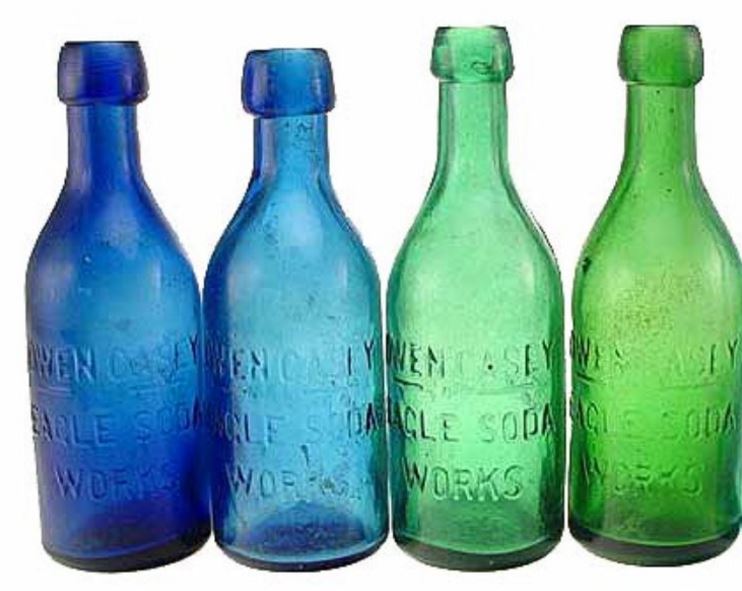
SACRAMENTO, Calif. – A terrific selection of rare and vintage bottles from across the United States – to include Western and Eastern sodas, bitters, inkwells, whiskeys and more – will be sold in Auction #64, an internet and catalog auction that goes online October 13th and ends on Sunday, October 22nd, by American Bottle Auctions (www.americanbottle.com) of Sacramento.

“This auction will feature the largest and finest selection of Western sodas we’ve ever offered, with many rare one-of-a-kinds,” said Jeff Wichmann, owner of American Bottle Auctions. The centerpiece of the category is the collection of the late Ken Salazar. “Ken was a picky collector who had some fine bottles stashed away that we’re proud to present at auction,” Wichmann said.

Also featured will be additional super sodas from the John O’Neill collection, a broad selection of Eastern sodas, rare bitters bottles from both sides of the country, a large inkwell collection and more. “Typically our sales are top-heavy with Western bottles and this sale has plenty of those, but we also have some of the finest known examples in many other categories,” Wichmann said.

Wynkoop Sarsaparailla bottle, dating to the 1850s (est. $5,000-$10,000)

The Wynkoop Sarsaparilla bottle in the sale isn’t particularly rare (it’s one of about 20 known), but it’s a highly desired medicine and sarsaparilla category bottle. Its early production, dating to the 1850s, combined with a beautiful blue color and crudity, make it one of the most popular bottles for collectors in that category. This example has a pre-sale estimate of $5,000-$10,000.

The Wonser’s Indian Root Bitters is the aqua variant – the earliest made of the more prevalent amber examples. It’s somewhat rare, one of maybe ten known, and this one’s got color going for it: a fiery blue aqua with good crudity. Also, it’s in perfect condition. American Bottle has sold several amber versions of this bottle, but never an aqua. It should hammer for $8,000-$15,000.

The R&H Columbia soda bottle was made especially for the Gold Rush town of Columbia, in California, from 1852-1856. The fine example in this auction is one of only a half-dozen known and carries an estimate of $7,000-$15,000. Columbia, previously known as Hildreth’s Diggings, was called “the gem of the Southern mines,” having produced a good bit of gold during the rush.

National Bitters bottle shaped like an ear of corn, circa 1870s (est. $7,000-$10,000)

The National Bitters bottle shaped like an ear of corn is one of the most popular of the figural bitters known. Produced in the 1870s, these bottles were either colored amber (the most common variant, selling in the $500 range) or aqua (much more rare and desirable. The bottle in this sale isn’t only aqua, it’s in perfect condition. It’s also expected to change hands for $7,000-$10,000.

Western whiskey flasks made between 1870 and 1900 are considered desirable and are a part of any serious collector’s arsenal. The Jessie Moore whiskey flask being auctioned boasts loads of embossing and should knock down for $5,000-$10,000. The bottle is one of perhaps 25 known, but one rarely comes up for bid because collectors like to keep their examples close to home.

Figural bitters bottle for Brown’s Celebrated Indian Queen (est. $5,000-$10,000)

The Brown’s Celebrated Indian Queen is another figural bitters that’s quite prevalent but very popular, too. Modeled after an Indian maiden, the bottle is usually amber, so when a green one turns up collectors pay attention. The bottle in this sale is particularly nice in color – deeper than the usual lime green. A flake on the mouth isn’t expected to deter bidders (est. $5,000-$10,000).

B&G (San Francisco) soda bottles were made from 1852-1856, almost always in cobalt blue or some variant of dark blue. So when this example, in deep teal aqua, presented itself, it was quite remarkable. The bottle, with the eight-sided mug base, is in excellent condition and is a must-have for serious collectors of early Western sodas. It has a pre-sale estimate of $6,000-$10,000.

The 1860s Alex Von Humboldt’s Stomach Bitters bottle is another rare and desirable Western bitters bottle. There are many different variants of this bottle but this is one of the finest ones American Bottle Auctions has ever come across. It has loads of whittle and a gorgeous amber color, making this example hard to beat. It’s expected to find a new owner for $5,000-$10,000.

Interested bidders may register for Auction #64 now, on the American Bottle Auctions website, at www.americanbottle.com. Inquiries may be made via e-mail, to [email protected].  Additional pictures or videos are available on request.

Copyright Eagle Radio | FCC Public Files | EEO Public File