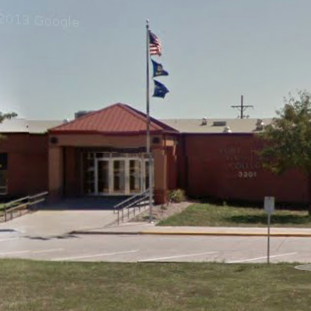
LYON COUNTy— Law enforcement authorities conducted a walk-through of buildings at a Kansas Technical College Monday after a reported threat.
According to the USD 386 Madison-Virgil’s social media page the school district received a message from Dr. Dean Hollenbeck, President of Flint Hills Technical College in Emporia late Sunday.
The Technical College had a concern raised on a security and safety issue.
At approximately 6a.m. Monday police made a walk-through of all the buildings on the FHTC main campus site and the down town campus/Humanitarian Center.
Additionally, the school has a security team posted at all the campus sites for the entire day. The goal is to ensure the safety of all students, faculty and staff.
Only the front door are open on the Main campus building, the Technology building and the Humanitarian Center, to ensure the safety of all students and staff.
USD 253 in Emporia also increased security Monday, according to the school district spokesperson. The High School is located across from the technical college.
Police and the school released no additional details on the reported threat.
SEDGWICK COUNTY — Law enforcement authorities are investigating a shooting and continue to look for a suspect.
Just after 9p.m. Saturday, police responded to report of a shooting at an apartment in the 2200 Block of South Oliver in Wichita, according to officer Charley Davidson. A 25-year-old man lives at the apartment with a 24-year-old girlfriend.
The 25-year-old and his 23-year old brother got into a fight, according to police. During the fight the 25-year-old hit his brother on the head with a hand gun. The weapon discharged and wounded the brother in the shoulder and the leg of a 36-year-old man also at the apartment.
Both were transported to an area hospital for treatment of non-life-threatening injuries, according to Davidson.
The 25-year-old fled the scene. Police have made no arrests. Anyone with information is asked to call police.
RENO COUNTY — Law enforcement authorities are investigating a suspect for alleged kidnapping.
On Sunday morning, deputies were dispatched to what was described as a rolling disturbance on Kansas 14 and east 56th Avenue in Reno County, according to a social media report.
Dispatch advised they had an open line with Markia Ahleah Miller, 20, and they could hear her screaming “Help.” They also said there was a man in the vehicle who could be heard yelling and possibly hitting the dash board or the steering wheel.
Deputies found the vehicle, ran the vehicle’s plate through dispatch and were advised it was the vehicle from the rolling disturbance. Deputies conducted a traffic stop at 56th and Yaggy Road, made contact with the driver Jesus Valtierra, 22, Hutchinson, and requested he step out of the vehicle.
After conducting interviews with both parties there was enough probable cause to arrest Valtierra on charges of Kidnapping, Domestic Battery as well as operating a vehicle with no ignition interlock device as is a restriction on his license.
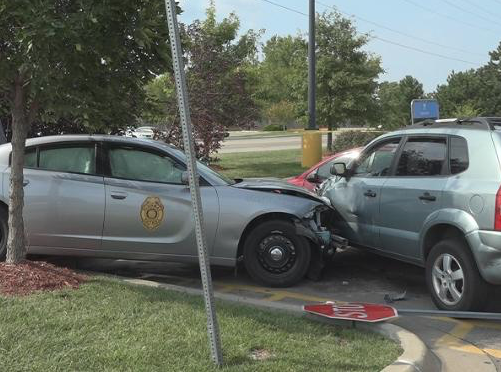
Sunday crash involving a KHP trooper Sunday in Shawnee County-photo courtesy WIBW-TV
SHAWNEE COUNTY — Two people including a Kansas Highway Patrol trooper were injured in an accident just after 2:30p.m. Sunday in Shawnee County.
The Kansas Highway Patrol reported a Dodge Charger driven by Trooper Dray Carlton, 28, was northbound on Rochester Road just north of U.S. 24 with lights and sirens activated.
A 2000 Chevy Camaro driven by Robert E. Wells,71, Topeka, was westbound exiting a private drive and pulled out in front of the Charger. The Charger struck the Camaro. The Camaro left the road to the right and struck a 2005 Hyundai Tucson which was legally parked. The collision pushed the Hyundai into a legally parked Saturn Ion.
Carlton and Wells were transported to St. Francis Hospital. Both drivers were properly restrained at the time of the accident, according to the KHP.
LAWRENCE, Kan. (AP) — Two former NASA astronauts who graduated from the University of Kansas will be grand marshals at next month’s homecoming parade.
The university says retired astronauts Joe Engle and Steven Hawley will lead the Oct. 6 parade through downtown Lawrence. Both men are Kansas natives.
The theme of the 105th homecoming is “Jayhawks of the Galaxy.”
Engle grew up in Chapman and graduated from Kansas in 1955 with a degree in engineering. He was commander of the Space Shuttle Columbia in 1981 and the Space Shuttle Discovery in 1985.
Hawley, a Salina native, graduated from Kansas in 1973 with an astronomy degree. He was a mission specialist on five space shuttle flights from 1984 to 1999, logging more than 770 hours in space. He teaches in Kansas’ physics and astronomy department.
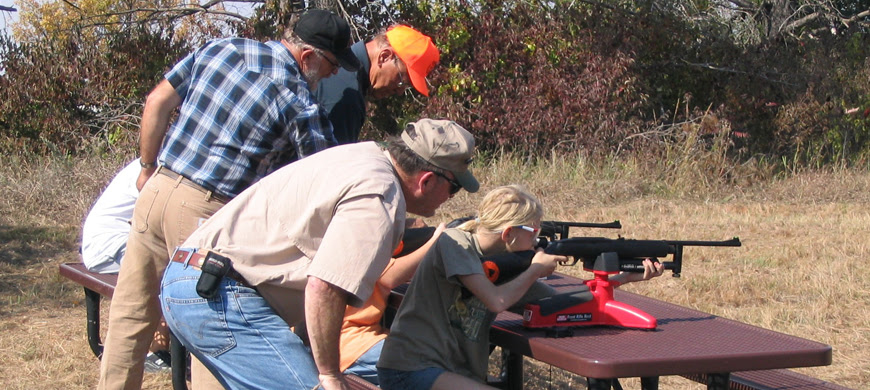
COUNCIL GROVE – The National Wild Turkey Federation (NWTF) will hold the 2017 Kansas State JAKES Camp Sept. 30-Oct. 1 at White Memorial Camp, 6 miles north of Council Grove, off Highway K-177. The camp is open to youth 17 and younger who want to learn more about hunting and outdoor skills.
On Saturday, participants can select up to six activities from a list that includes fishing, arts and crafts, JAKES Take Aim BB gun shooting, trap shooting, still target shooting, archery, canoeing, and turkey calling with NWTF Grand National and World Turkey Calling Champion, Billy Yargus.
On Saturday evening, JAKES members can participate in the annual NWTF Kansas State JAKES (ages 12 and under) and Xtreme JAKES (ages 13 to 17) turkey calling contests. Prizes will be awarded to the top three finishers in each division. The evening will close with Yargus entertaining everyone with stories of becoming a world-class turkey caller.
On Sunday, Pastor Gary Cargill will start the day with a sunrise service. After the service, participants will enjoy presentations by Master Falconer Doug Burt and a naturalist from the Milford Nature Center.
The cost of the event is $20 for JAKES members, $30 for non-JAKES members (which includes a JAKES membership), and $20 for adults. Options for Saturday night include commuting, tent camping (bring your own tent), RV camping (a few RV hook-ups are available) or for an additional fee, staying in a resident cabin (bunk beds and shared bath). Boys and girls will have separate cabins. The cost includes lunch and supper on Saturday and breakfast on Sunday. Meals will be prepared by the White Memorial Camp kitchen staff. All youth 17 and younger will receive a commemorative t-shirt and win a prize in a drawing at the end of the event on Sunday. One lucky youth will win a shotgun.
The NWTF Kansas State JAKES Camp was awarded the “Best State JAKES Event” in 2012, the “Best Special JAKES Event” in 2013 at the NWTF National Convention in Nashville, Tenn. and “Honorable Mention” in 2013, 2014, and 2015.
For more information and to register, contact Gib Rhodes at 620-437-2012.
WICHITA, Kan. (AP) — A top elections official says federal investigators examining Russian interference in the 2016 election have not contacted the Kansas secretary of state’s office.
Kansas elections director Brian Caskey also said that he is unaware of any county election official in the state who may have been contacted by the Federal Bureau of Investigation. He says the FBI contacts counties directly, and he would not necessarily know that information.
Caskey made the comments following his presentation at a Wichita meeting of civil rights advocates seeking to increase citizen participation in Kansas elections. He told the group the secretary of state’s office is working on cybersecurity, without elaborating.
He says the reason no U.S. vote counting system was breached is because those are not connected to the internet.
OLATHE, Kan. (AP) — The widow of an Indian national who was fatally shot in an apparent hate crime at a Kansas bar was facing deportation after his death meant she lost her U.S. resident status.
The Kansas City Star reports U.S. Rep. Kevin Yoder of Kansas and others were able to secure a 1-year visa for Sunayana Dumala of Olathe. But she is still seeking a way to become a permanent resident of the country.
Dumala’s husband, Srinivas Kuchibhotla, died in a Feb. 22 shooting at Austins Bar & Grill in Olathe. His friend and another man were wounded.
He and his wife, also an India native, lived in the U.S. for 10 years. They married in 2012 and applied for a green card on his work visa.
Location of Sunday’s quake -image Kansas Geological Survey
SUMNER COUNTY — A earthquake shook portions of Kansas Sunday. The quake just after 10:15a.m. measured a magnitude 2.3 and was centered approximately four miles west of Argonia, according to the U.S. Geological Survey.
It is the third quake in Kansas this month. The U.S. reported a 2.5 magnitude quake just before 5p.m. on Thursday in Harper County and a 2.3 quake north of Cheny on September 2.
There are no reports of damage or injuries from Sunday’s quake.
TOPEKA — The Kansas Supreme Court Friday affirmed a Reno County District Court judge’s order that 41-year-old Joshua Watkins must register as a violent offender under the Kansas Offender Registration Act. The judge found he used a vehicle as a deadly weapon to commit an aggravated assault on a law enforcement officer.
Watkins claimed a jury, instead of the judge, must make the factual finding that he used a deadly weapon. But the majority of the court ruled his argument was lacking because Watkins did not raise the issue until he appealed.
Watkins was convicted of aggravated assault on a law enforcement officer, felony flee and elude, and driving while suspended with the crimes occurring in November 2012. He was sentenced to just over three years for the convictions. He is eligible for parole on those charges next month.
The case involves a shoplifting investigation by Reno County Sheriff’s Deputies. The crime occurred at Heartland Outdoor in South Hutchinson.
Watkins was suspected in the case and fled in a Dodge Durango. A chase with sheriff’s deputies lasted 5-7 minutes. During the chase, Watkins attempted to hit a Kansas Highway Patrol trooper head-on with the SUV.
TOPEKA – Approximately 3 percent of all children in Kansas under 18 are living in households where a grandparent provides that child’s primary care. In honor of grandparents who take on this tremendous responsibility, the Kansas Department for Children and Families (DCF) is celebrating them on Grandparents Day, Sept. 10.
A Topeka woman stepped forward to serve as a relative placement when her grandchildren were recently removed from their home. The grandmother says she wanted to keep the siblings together and out of a non-relative foster home. (To protect the privacy of the children, the family is not being identified.)
The Topeka woman attended a proclamation signing ceremony in August, where Governor Sam Brownback designated Sept. 10 as National Grandparents Day.
Approximately 33 percent of children currently in foster care in Kansas are being cared for by relatives, in many instances grandparents. When a child must be removed from his/her home for safety reasons, DCF and its foster care contractors make it a priority to identify relatives or known adults to the children as placement options. Children placed with grandparents or other relatives experience fewer placement moves, are more likely to be placed with siblings, and have fewer behavior problems.
“Whenever a child must be taken from their home, grandparents often provide a safe and loving alternative to reduce the trauma of being removed from their home,” DCF Secretary Phyllis Gilmore said. “As a grandparent myself, I treasure the time I can spend with my grandchildren. I am tremendously grateful to grandparents across the State of Kansas who have volunteered to provide full-time comfort and care for their grandchildren.”
The Kansas Department for Aging and Disabilities (KDADS) provides support to grandparents serving as parents through its Relatives as Parents Program (RAPP). The program was created by several agencies concerned with the welfare of older adults, children and youth.
RAPP offers support groups and referrals to community resources such as legal services, financial assistance, medical assistance, day care, emergency food, housing assistance and recreational activities for children.
For more information about RAPP, contact Sharon Dabzadeh at KDADS, by calling 785-296-4986 or 800-432-3535.
Permanent display of the Kansas Dept. of Wildlife, Parks and Tourism
KDWPT
PRATT – If you have questions about Kansas wildlife, hunting, fishing, camping, state parks, or in-state travel destinations, you’ll find answers at the Kansas State Fair, Sept. 8-17, in Hutchinson. Kansas Department of Wildlife, Parks and Tourism (KDWPT) staff will be on hand at various locations throughout the fair to talk or just hear your story.
The permanent KDWPT display – which includes aquariums full of Kansas fish and terrariums holding various live native snakes and lizards – is at the north end of the Eisenhower building. Information and Law Enforcement staff will be available to answer any question you may have about the Kansas outdoors. You can also pick up regulation pamphlets, hunting and fishing atlases, state park guides and other information materials. And if you’ve ever wondered just how big an American bison bull is, you can stand next to a full-body mount of one the Great Plains’ iconic residents.
If you really like fish, don’t miss the KDWPT mobile aquarium, which will be set up just south of the grandstands at the southeast fairgrounds entrance. Fisheries Division staff will be waiting to answer questions and provide angling tips to anyone interested in Kansas fish and fishing. The 40-foot-long, 3,200-gallon aquarium provides up-close views of many popular Kansas sport fish.
If you’ve ever thought about staying in a state park cabin, you can see the real deal at the fair. A cabin, like those available for rent in our state parks, is located on the north side of Lake Talbot. Drop by, tour the cabin, and visit with state park staff about what’s available at our 26 Kansas state parks.
And finally, step into the Pride of Kansas building and visit the KDWPT Travel and Tourism booth. Department staff will answer questions about popular Kansas destinations, day-trips, scenic byways, unique restaurants and more. You’ll find literature to help you discover places and things to do in Kansas you never imagined existed. It’s true, “there’s no place like Kansas,” or the Kansas State Fair. See you there.
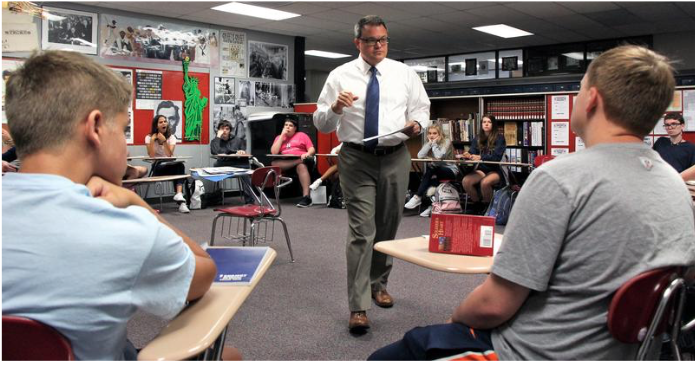
The “Rose standards” have been a central issue to several school finance lawsuits across the country, including the current Gannon v. Kansas case. They refer to a list of seven skill sets that one court ruling said schools should help students attain. CELIA LLOPIS-JEPSEN / KANSAS NEWS SERVICE
As dozens of Kansas school districts spar with the state over funding for public education, the term “Rose standards” has emerged as arcane but critical jargon among lawyers and judges, and surfaced over and over again in court documents.
Though the term has appeared in past school finance lawsuits in the state since a March 2014 Kansas Supreme Court ruling, it is undeniably front and center in the ongoing Gannon v. Kansas wrangling.
The word “Rose” appeared 68 times in that court’s March school finance ruling, which struck down the state’s system as unconstitutional.
Now, attorneys for the state and Legislature await the court’s ruling on whether the Legislature’s $293 million funding increase to be phased in over the next two years is enough.
Below is a primer on where the Rose standards concept came from and what it means.
Where does ‘Rose’ come from?
The term refers to a 1989 ruling by the Kentucky Supreme Court in a case called Rose v. Council for Better Education that focused on whether the state was meeting its constitutional mandates regarding public education.
Scholars of education law have described Rose v. Council as a turning point in school finance litigation — one of three critical cases at the tail end of the 1980s that took a new tack. The issues at the heart of Rose have since emerged repeatedly in cases across the country.
William Thro, the general counsel for the University of Kentucky, reflected on this impact in a 2010 paper.
In other words, the court battles were no longer just about gaps between wealthier and poorer school districts. The door was open for scrutinizing overall resources and whether states were meeting their obligations to provide public education.
What does that have to do with Kansas?
Going back as far as the 1970s, lawsuits have played a key role in shaping the way Kansas funds its schools.
Rose v. Council entered the conversation at least as early as 1991 in a school finance lawsuit called Mock v. Kansas. The case was resolved before reaching trial but spurred a 1992 overhaul of the state’s school funding system.
Rose reappeared in rulings from the early and mid-2000s as part of Montoy v. Kansas. Montoy is the high-profile case that preceded Gannon v. Kansas — the current legal battle — and led to a three-year plan approved by the court in 2006 for boosting annual school funding by more than $750 million.
Like the Gannon case, Montoy wasn’t just about the question of whether poorer school districts had resources akin to wealthier ones. It explored broader obligations.
With the advent of Gannon, Rose v. Council resurfaced. Three-and-a-half years into the Gannon case, which began in 2010, the Kansas Supreme Court issued a rulingmaking clear that the question of whether the state is underfunding its public school system hinges on whether resources for schools are adequate to meet criteria identified in the Rose decision.
In the Rose ruling, the justices included a list of seven skill sets that schools should help children attain at a sufficient level:
Oral and written communication skills to enable them to function in a complex and rapidly changing civilization.
Knowledge of economic, social and political systems to enable them to make informed choices.
Understanding of governmental processes to enable them to understand the issues that affect their community, state and nation.
Self-knowledge and knowledge of their own mental and physical wellness.
Grounding in the arts to enable them to appreciate their cultural and historical heritage.
Training or preparation for advanced training in academic or vocational fields, to enable them to choose and pursue life work intelligently.
Academic or vocational skills to enable them to compete favorably with their counterparts in surrounding states, in academics or in the job market.
The Kansas State Board of Education says these standards guide its work overseeing public schools. In recent years, schools and Kansas state education officials have increasingly turned their focus to helping students acquire life skills and prepare for academics and careers after high school.
Gannon is now in its seventh year, and as recently as March, the Kansas Supreme Court ruled in the case that Kansas continues to fall short of the Rose concepts. Among other problems, the justices slammed the state for cutting the link between student enrollment and funding per school, a move that was part of a state strategy to freeze school budgets.
Kansas lawmakers voted in June to re-establish a funding formula that links dollars to factors like enrollment and phases in a two-year $293 million increase in state aid to schools.
A fresh round of oral arguments over whether this would satisfy the Rose standards took place in mid-July at the Kansas Supreme Court.
The state argued it would. The plaintiff school districts disagreed.
The parties are waiting for the justices to rule. If the plaintiffs win, it could require lawmakers to increase state aid by hundreds of millions of dollars in coming years.
Celia Llopis-Jepsen is a reporter for the Kansas News Service, a collaboration of KCUR, Kansas Public Radio and KMUW covering health, education and politics. You can reach her on Twitter @Celia_LJ.