COLUMBUS, Kan. (AP) — A 23-year-old man captured in Souther California was sentenced to nearly five years in prison for the death of an Oklahoma man in Kansas.
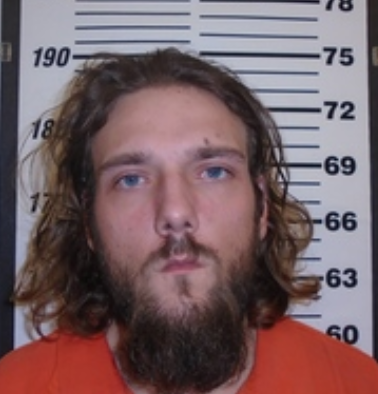
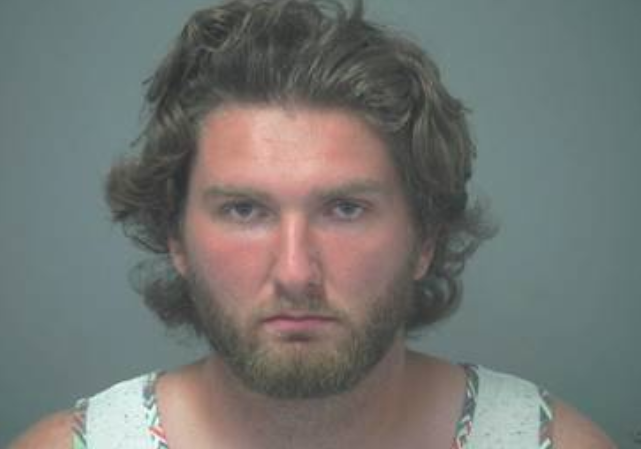
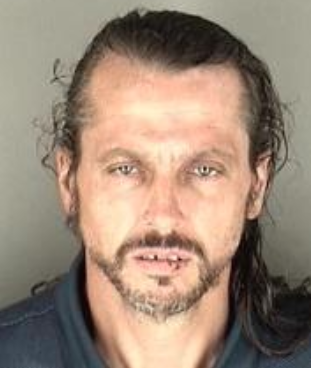
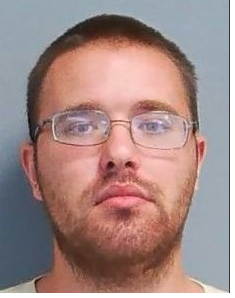
Ty Bohlander photo Cherokee Co.Diana Bohlander photo Cherokee Co.
Ty Bohlander was sentenced Tuesday to 59 months in prison in the death of 64-year-old James McFarland of Tulsa, whose body was found along a road in southeast Kansas in April 2017.
In March, the Santa Monica California Police Department located and arrested him in conjunction with the Cherokee County, Kansas Sheriff’s Department.
Bohlander and his 58-year-old mother, Diana Bohlander, pleaded guilty in July to voluntary manslaughter after initially being charged with first-degree murder. Diana Bohlander’s sentencing was rescheduled because her attorney couldn’t attend Tuesday’s hearing.
Cherokee County Sheriff David Groves says the Bohlanders and McFarland were living out in a van. McFarland died of blunt force trauma to the head during an argument with Ty Bohlander.
COWLEY COUNTY — Law enforcement authorities and USD 465 officials are investigating a school janitor for alleged sex crimes.
Jantzen photo Cowley County
On Sunday, a parent and student reported to police incidents that took place between the juvenile and an employee at Winfield High School, according to a media release.
Following an investigation, police arrested 21-year-old Brenden Jantzen on a requested charge of indecent liberties with a girl under the age of 16, according to the release.
Jantzen is on the USD 465 staff as a custodian, according to district director of business and finance Tom Fell.
His job duties also included working with the district’s in-school suspension program.
On Wednesday, Jantzen was formally charged and is no longer in custody, according to online court records.
On September 9, theUSD 465 school board will meet and may determine Jantzen’s employment status, according to Fell.
Jantzen is due in court again September 25, according to the county attorney’s office.
NEW YORK —Walgreens announced on its corporate website Thursday that the company is joining other retailers in asking our customers to no longer openly carry firearms into their stores other than authorized law enforcement officials.
On Tuesday, Walmart and Dillons parent company Kroger have requested that customers not openly carry firearms in their stores, even where state laws allow it.
Last month, a gunman entered a Walmart store in El Paso, Texas, killing 22 people . The gunman used an AK-style rifle — one that Walmart already bans the sale of — in the deadliest shooting in the company’s history. Texas became an open carry state in 2016, allowing people to openly carry firearms in public.
The nation’s largest retailer has been facing increasing pressure to change its gun policies by gun control activists, employees and politicians after the El Paso shooting and a second unrelated shooting in Dayton, Ohio, that killed nine people . A few days before that, two Walmart workers were killed by another worker at a store in Southaven, Mississippi.
In the aftermath of the El Paso shooting, Walmart took an initial step of ordering workers in stores nationwide to remove video game signs and displays that depict violence. But that fell well short of demands for the retailer to stop selling firearms entirely. Critics have also wanted Walmart to stop supporting politicians backed by the NRA.
The retailer has long found itself in an awkward spot with its customers and gun enthusiasts. Many of its stores are located in rural areas where hunters depend on Walmart to get their equipment. Walmart is trying to walk a fine line by trying to embrace its hunting heritage while being a more responsible retailer.
With its new policy on “open carry,” McMillon noted in his memo that individuals have tried to make a statement by carrying weapons into its stores just to frighten workers and customers. But there are well-intentioned customers acting lawfully who have also inadvertently caused a store to be evacuated and local law enforcement to be called to respond.
Walmart and Kroger joins a string of other retailers and restaurants including Starbucks, Target and Wendy’s in asking customers not to openly carry their guns when they visit their premises. But they are not enforcing an outright ban because they don’t want to put their employees in confrontational situations.
Walmart says it hopes to help other retailers by sharing its best practices in background checks. And the company, which in 2015 stopped selling assault rifles like the AR-rifles used in several mass shootings, urged more debate on the reauthorization of the assault weapons ban while also calling for the government to strengthen background checks. Walmart said it sent letters Tuesday to the White House and the congressional leadership that call for action on these “common sense” measures.
Kroger said late Tuesday that it’s joining those encouraging elected leaders to pass laws that will strengthen background checks and remove weapons from those who have been found to pose a risk for violence.
Over the last 15 years, Walmart had expanded beyond its hunting and fishing roots, carrying items like assault rifles in response to increasing demand. But particularly since 2015, often coinciding with major public mass shootings, the company has made moves to curb the sale of ammunition and guns.
Walmart announced in February 2018 that it would no longer sell firearms and ammunition to people younger than 21 and also removed items resembling assault-style rifles from its website. Those moves were prompted by the mass shooting at a high school in Parkland, Florida, that killed 17 people.
In 2015, Walmart stopped selling semi-automatic weapons like the AR-15 style rifle, the type used in the Dayton shooting. The retailer also doesn’t sell large-capacity magazines. Dick’s Sporting Good stopped selling assault-style weapons in 2018.
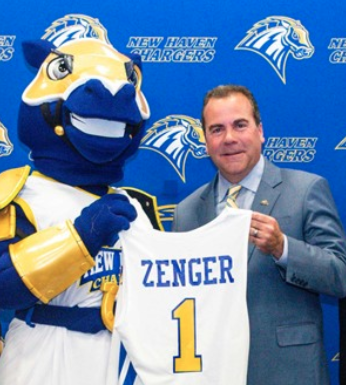
WEST HAVEN, Conn.– The University of New Haven has named former University of Kansas Athletic Director Sheahon Zenger, Ph.D., as its new director of athletics and recreation, according to a media release from the school.
Zenger photo courtesy UNH
KU fired Zenger in May 2018. He replaces Chris Palmer, a former football coach who spent decades in the National Football League, who retired earlier this year.
Zenger played football at Fort Hays State University.
With more than 25 years of experience in administration, development, coaching, and academia, Zenger brings unprecedented experience to the Chargers. Most recently, he served as an assistant to the chancellor at Texas Christian University and an adviser to the director of athletics. Prior, he was director of athletics for the University of Kansas (2011 to 2018) and Illinois State University (2005 to 2011).
Zenger, who officially joined the University on September 1, leads the University’s intercollegiate athletics program and oversees its recreational offerings. He has been charged with directing the University’s early exploration of a potential move to the Division I level.
“President Kaplan’s growth of the University’s programs, facilities, and endowment during his tenure has been nothing short of phenomenal,” Zenger said. “And his excitement about expanding the University’s athletic footprint and reputation is exceptional. I am very pleased to be joining this remarkable community and can’t wait to begin contributing to the University’s success.”
Zenger was selected following an extensive national search that was conducted by a university-wide committee, in consultation with DHR International, a respected global executive search firm. During the recruiting process for this vital position, President Kaplan and Zenger connected on a multitude of levels. The duo will jointly teach a seminar for honors students that will take place during the fall semester.
As director of athletics at the University of Kansas, Zenger raised tens of millions in funds, built nine athletic buildings, and created a culture of collegiality in the athletic department. During his seven years, the athletic teams combined to make nearly 70 postseason appearances. The program earned four national Coach of the Year awards and 11 Big 12 Conference Coach of the Year awards. Twice during his tenure the athletics department set a record for the program’s highest cumulative GPA.
“We are thrilled to bring Sheahon’s broad background and talent to the University of New Haven and look forward to his vision and leadership of our athletics program,” said President Kaplan. “He brings a unique combination of strengths and experience that are aligned with our ambitious vision to ensure that our student-athletes compete at the highest level on and off the field.”
Zenger joins the University at an exciting time in its history. Earlier this year, the University announced that The Charger Challenge, the University’s inaugural comprehensive campaign, which was launched as a precursor to the University’s Centennial in 2020, exceeded its original goal of $100 million. The milestone, which does not include more than $28 million in federal and state contracts that have also been secured during the campaign, was reached almost a year in advance of the start of the 100th year, leading the University to increase its campaign goal to $120 million to raise additional funds for, among other priorities, athletics. According to President Kaplan, continuing to build the athletics program will help advance the momentum that has taken place on campus.
“Our student-athletes have long proven to be stars on the field, in the classroom, and in the community, said President Kaplan. “I am confident that Sheahon will take our already successful athletics program to an even higher level. I look forward to the many important contributions he will undoubtedly make.”
According to the release, the University of New Haven is a private, co-educational university that was founded on the Yale campus in 1920.
LINCOLN COUNTY, NE — Law enforcement authorities are investigating three suspect on drug charges after a traffic stop.
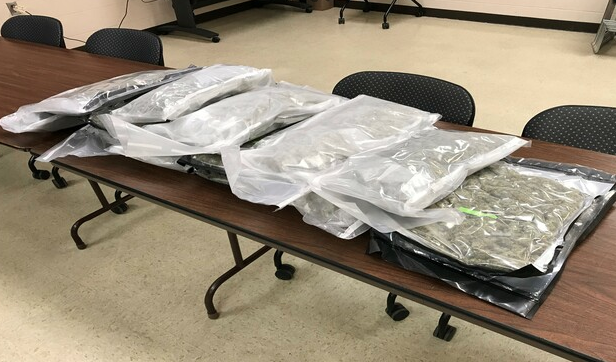
photo courtesy Nebraska State patrol
Just after 1 a.m. Tuesday, a trooper with the Nebraska State Patrol observed an eastbound Nissan Pathfinder speeding near York, according to a media release. During the traffic stop, an NSP K9 detected the odor of a controlled substance coming from inside the vehicle.
Troopers searched the vehicle and found approximately 18 pounds of marijuana as well as 800 THC vape cartridges. The driver, Aaron Braun, 26, of Madison, Wisconsin, and passenger, Kristofor Cooks, 27, of Fitchburg, Wisconsin were both arrested for possession of marijuana – more than one pound, possession with intent to deliver, and no drug tax stamp. Both were booked into the York County Jail.
Later Tuesday morning, another trooper observed a Ford F-250 with a license plate violation traveling eastbound near North Platte. During the traffic stop, an NSP K9 detected the odor of a controlled substance inside the vehicle.
A search of the vehicle revealed 14 pounds of marijuana, drug paraphernalia, and multiple types of controlled pills. The driver, Keith Cerney, 32, of Cedar Rapids, Iowa, was arrested for possession of marijuana – more than one pound, possession with intent to deliver, possession of controlled substances, possession of drug paraphernalia, and no drug tax stamp. He was booked into the Lincoln County Jail.
WASHINGTON (AP) — Google will pay $170 million to settle allegations its YouTube video service collected personal data on children without their parents’ consent.
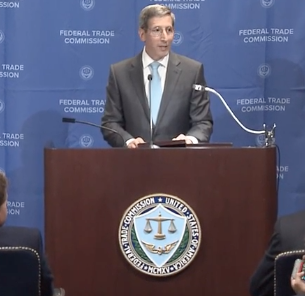
Federal Trade Commission Chairman Joe Simons during Wednesday’s media briefing on the settlement
The company agreed to work with video creators to label material aimed at kids and said it will limit data collection when users view such videos, regardless of their age.
Some lawmakers and children’s advocacy groups, however, complained that the settlement terms aren’t strong enough to rein in a company whose parent, Alphabet, made a profit of $30.7 billion last year on revenue of $136.8 billion, mostly from targeted ads.
Google will pay $136 million to the Federal Trade Commission and $34 million to New York state, which had a similar investigation. The fine is the largest the FTC has levied against Google, but it’s tiny compared with the $5 billion fine against Facebook this year for privacy violations.
YouTube “baited kids with nursery rhymes, cartoons, and more to feed its massively profitable behavioral advertising business,” Democratic Commissioner Rohit Chopra said in a tweet. “It was lucrative, and it was illegal.”
The federal government has increased scrutiny of big tech companies in the past two years — especially questioning how the tech giants collect and use personal information from their billions of customers. Many of the huge Silicon Valley companies are also under antitrust investigations aimed at determining whether the companies have unlawfully stifled competition.
Kids under 13 are protected by a 1998 federal law that requires parental consent before companies can collect and share their personal information.
Tech companies typically skirt that by banning kids under 13 entirely, though such bans are rarely enforced. In YouTube’s lengthy terms of service, those who are under 13 are simply asked, “please do not use the Service.”
Yet many popular YouTube channels feature cartoons or sing-a-longs made for children. According to the FTC, YouTube assigned ratings to its video channels and even had a “Y” category directed at kids ages 7 or under, but YouTube targeted ads to those kids just as they would adults.
The FTC’s complaint includes as evidence Google presentations describing YouTube to toy companies Mattel and Hasbro as the “new Saturday Morning Cartoons” and the “#1 website regularly visited by kids.”
“YouTube touted its popularity with children to prospective corporate clients,” FTC Chairman Joe Simons said. But when it came to complying with the law, he said, “the company refused to acknowledge that portions of its platform were clearly directed to kids.”
According to the settlement, Google and YouTube will get “verifiable” consent from parents before they collect or use personal information from children. The company also agreed not to use data collected from children before.
YouTube has its own service for children, YouTube Kids. The kids-focused service already requires parental consent and uses simple math problems to ensure that kids aren’t signing in on their own.
YouTube Kids does not target ads based on viewer interests the way the main YouTube service does. But the children’s version does track information about what kids are watching in order to recommend videos. It also collects personally identifying device information.
On Wednesday, Google said that starting early next year, YouTube will also limit personalized ads on its main service for videos meant for kids. Google is relying on video creators to label such items, but will employ artificial intelligence to help.
YouTube won’t seek parental consent there, however, even on videos intended for children. YouTube is avoiding that precaution by instead turning off any personal tracking on those videos, saying it will collect only what is needed to make the service work. For such videos, YouTube also won’t offer features like comments and notifications.
Videos made for kids will still feature ads — just not the targeted, personal ads that generally bring in the most money for video creators.
“I think there has been a general anxiety of the kids and family community of creators on YouTube for quite some time,” said Chris Williams, CEO and founder of pocket.watch, a studio that works with many popular YouTube child stars, including Ryan ToysReview.
Pocket.watch helps YouTube stars expand beyond the streaming site and find new lines of business, from consumer products to network TV shows. Williams expects that business to become more important. But YouTube will still be the big way to build an audience, he said.
“It represents a part of the puzzle for your brand growth, a big one,” he said.
The settlement now needs to be approved by a federal court in Washington. As with the Facebook settlement, the FTC vote was 3-2, with both Democrats opposing it as too weak.
Sen. Edward Markey, a Massachusetts Democrat, said the settlement won’t turn YouTube into a safe place for children and “makes clear that this FTC stands for ‘Forgetting Teens and Children.'”
A coalition of advocacy groups that helped trigger the investigation said the outcome will reduce behavioral advertising targeting children.
Jeff Chester, executive director of the Center for Digital Democracy, said the settlement “finally forced Google to confront its longstanding lie that it wasn’t targeting children on YouTube.”
But he said the “paltry” fine signals that politically powerful corporations can break the law without serious consequences.
Other critics, including dissenting Democratic Commissioner Rebecca Slaughter, said too much responsibility was being placed on video creators to classify their own content as kid-oriented, and thus limited to less-lucrative ads. They say that potentially allows Google to turn a blind eye as some try to cheat the system to make more money through ad revenue sharing.
Andrew Smith, the FTC’s consumer protection director, acknowledged that concern as valid, but said YouTube “has strong incentives to police its platform” to avoid further action.
Google is already under a 2011 agreement with the FTC that barred it from mispresenting its privacy policy and subjected the company to 20 years of regular, independent privacy audits. Google was fined $22.5 million in 2012 for violating that settlement when the FTC found it improperly used tracking cookies on Apple’s Safari browser.
SHAWNEE COUNTY — Law enforcement authorities are investigating a shooting and after asking the public for help have located a suspect and made an arrest.
Donald Jackson, Jr. photo Topeka PoliceDonald Jackson, Jr., photo Shawnee Co. Jail
Just after 11:00 p.m. August 27, police were dispatched to the 2500 Block of SW Clay in Topeka after report of a shooting, according to Lt. Aaron Jones.
Upon arrival, officers located a woman who was suffering from a non-life threatening gunshot wound to the leg. AMR transported her to a local hospital for treatment.
Information gathered has led investigators to issue an attempt to locate for Donald Jackson Jr, 44 of Topeka. He was last seen leaving the area in a small, red, two door vehicle, according to Jones.
On Wednesday, the US Marshals’ Fugitive Task Force located Jackson and arrested for on requested charges that include Aggravated Battery, Shooting into an Occupied Dwelling and Shooting into an Unoccupied Dwelling, according to Lt. Manuel Munoz.
Jackson has numerous convictions that include arson, criminal threat, obstruction and for drugs, according to the Kansas Department of Corrections. He was released from prison August 15.
—————
SHAWNEE COUNTY — Law enforcement authorities are investigating a shooting and asking the public for help to locate a suspect.
Donald Jackson, Jr. photo Topeka Police
Just after 11:00 p.m. Tuesday, police were dispatched to the 2500 Block of SW Clay in Topeka after report of a shooting, according to Lt. Aaron Jones.
Upon arrival, officers located a woman who was suffering from a non-life threatening gunshot wound to the leg. AMR transported her to a local hospital for treatment.
Information gathered has led investigators to issue an attempt to locate for Donald Jackson Jr, 44 of Topeka. He was last seen leaving the area in a small, red, two door vehicle, according to Jones.
Police advised the public not approach Jackson and notify law enforcement if you see him.
Jackson has numerous convictions that include arson, criminal threat, obstruction and for drugs, according to the Kansas Department of Corrections. He was released from prison August 15.
HUTCHINSON— A woman found beaten and unconscious in an alley in Hutchinson August 24 has died.
Ervin photo Reno County
According to the Reno County Attorney’s office, 29-year-old Lora Stratton died at a Wichita hospital. She never regained consciousness.
Senior District Attorney Thomas Stanton says he will be filing a motion amending charges against 24-year-old Isaac G. Ervin to first-degree murder.
Stanton says no additional charges are anticipated at this time against the co-defendant, 22-year-old Delshay Visonhaler, who is charged with one count of reckless aggravated battery and one count of obstruction.
Ervin is expected to make an appearance before Judge Joe McCarville for a status hearing on Sept. 18. Stanton says the amended charges will be brought against the defendant at that time.
JOPLIN, Mo. (AP) — A high school football player has collapsed and died after practice in southwest Missouri.
The Joplin school district said in a statement that emergency personnel responded around 5:30 p.m. Wednesday to the Joplin High School gymnasium after sophomore Kadin Roberts-Day had a medical emergency. The team had been practicing indoors.
The statement says Kadin was transported to a hospital and died due to cardiac arrest.
Kadin was a 6-foot-3-inch (1.9 meter), 205-pound (93-kilogram) offensive lineman.
The statement describes Kadin’s death as “tragic” and offers sympathy to his family and friends. It says coaching staff and teammates remember him as “extremely personable and caring.”
The district is making counseling services available for students.
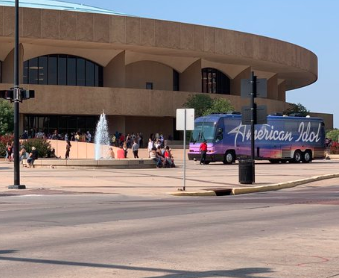
WICHITA, Kan. (AP) — Hundreds of superstar hopefuls have auditioned in Wichita to appear on the television show “American Idol.”
American Idol’s bus outside Century II in Wichita Wednesday-photo courtesy American Idol
The stop Wednesday in Wichita was the show’s first scouting visit to the city since it started 17 years ago.
Among those in line were hopefuls from Wichita, like Zephaniah Moore, an aspiring R&B singer who polled friends and family on Facebook about whether he should audition for “Idol.” They said he should.
Also in line was Sharane Calister, a 26-year-old singer from Des Moines, Iowa, who in the spring of 2018 placed 11th on another singing competition, NBC’s “The Voice.”
Those given the green light in Wichita will have to survive several more rounds before they get a chance to sing in front of the celebrity judges.
WICHITA, Kan. (AP) — Wichita plans to join a massive lawsuit against opioid makers, distributors and pharmacies.
The city council approved a law firm Tuesday to represent it in federal litigation in Ohio, where the flood of cases over the opioid epidemic is being handled. Attorney Andrew Hutton says the city’s complaint could be filed by the end of the week.
Hutton said in a statement that opioid manufacturers used deceptive marketing to maximize profits. He says doctors were convinced to prescribe opioids, not just for cancer patients or those recovering from surgery, but also for chronic-pain sufferers, despite the risk of addiction.
The city wants to be compensated for costs such as opioid-related emergency calls. At the county level, the Wichita area had 148 opioid-related deaths last year.
SIDNEY, Neb. (AP) — Authorities say a Wyoming man died after his car collided with tanker truck on Interstate 80 in western Nebraska.
The crash occurred around 3 p.m. Tuesday, about 7 miles west of Sidney. The Nebraska State Patrol says 20-year-old Chance Seivley of Cheyenne, Wyoming, was headed west when his car ran off his lane and onto rumble strips. The patrol says Seivley overcorrected and crossed the median, striking the eastbound tanker truck driven by Monte Larson, 57, Salina.
Seivley was pronounced dead at the scene. Larson suffered only minor injuries, according to the Nebraska State Patrol.
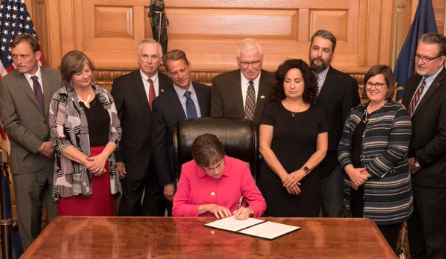
TOPEKA — Governor Laura Kelly announced the Governor’s Council on Medicaid Expansion Wednesday.
Governor Kelly signs the executive order Wednesday photo courtesy office of Kansas governor
This Council of legislators, policy experts, advocates, stakeholders and community leaders will spearhead the Medicaid expansion efforts in the 2020 legislative session.
The members of the Council and their current positions are listed below:
Tom Bell – President and CEO, Kansas Hospital Association
Sen. Ed Berger – State Senator, District 34
Rep. Susan Concannon – State Representative, District 107
Denise Cyzman – CEO, Community Care Network of Kansas
Ximena Garcia M.D., Community Health Advocate
Cathy Harding – President and CEO, Wyandotte Health Foundation
Rep. Don Hineman – State Representative, District 118
April Holman – Executive Director, Alliance for a Healthy Kansas
Dave Kerr, former president of the Kansas Senate
Kyle Kessler – Executive Director, Association of Community Mental Health Centers
Sen. Carolyn McGinn – State Senator, District 31
Rep. Monica Murnan – State Representative, District 3
Dr. Lee Norman – Secretary, Kansas Department of Health and Environment
David K. Livingston – CEO, Aetna Better Health of Kansas
Sen. Pat Pettey – State Senator, District 6
Rep. Jason Probst – State Representative, District 102
Jerry Slaughter – Interim Executive Director, Kansas Medical Society
Kevin Sparks – CEO, United Health Community Plan for Kansas
Michael Stephens – President and CEO, Sunflower Health Plan
Sen. Gene Suellentrop – State Senator, District 27
Suzanne Wikle – Senior Policy Analyst, Center for Law and Social Policy
Rep. Kathy Wolfe Moore – State Representative, District 36
The Governor delivered the following remarks Wednesday on Medicaid expansion:
It’s hard to believe, but in just four months, another legislative session will be upon us. Every legislative session offers its own unique set of challenges and opportunities, and 2020 will be no different.
For the last several months I’ve been working with my administration to begin planning for the year ahead.
Many of those plans are still in development, but one piece of my 2020 agenda is a certainty:
I am going to do everything in my power to ensure this will be the year we will finally expand Medicaid in Kansas.
When I traveled around the state last fall, Kansans made it clear that this is a high priority. They want as many Kansans as possible to have access to affordable, high-quality health care. They want our hospitals supported, and they want the jobs Medicaid expansion will bring.
Medicaid expansion isn’t just a matter of smart health care policy. It is smart fiscal policy. It is smart economic policy. It is smart public policy.
I’ve stood at this podium many times over the last year explaining why Medicaid expansion makes sense for Kansas. I won’t repeat those arguments again today.
Instead, I’m here to talk about how we can finally bring this over the finish line.
As you all are aware, I put forward a proposal to expand Medicaid on Kansas Day last year. I continue to believe that proposal was the simplest, most commonsense path forward – a plan that includes measures that promote self-sufficiency, a plan that includes safeguards to protect against exorbitant spending, and a plan that can be implemented effectively without undue costs or administrative burden.
The House also took a position and passed a bill very similar to the one I offered, with very few amendments.
And this fall, the Senate will finally begin its work on the interim committee to start drafting its own plan.
This is finally a step in the right direction.
But one thing concerns me as this work gets underway.
Although Medicaid expansion has been at the top of voters’ minds for several years, the issue has received no formal committee review or vetting process in well over two years. Much has changed in that time, both federally and at the state level.
For starters, we have a new President and, therefore, a new Centers for Medicare & Medicaid Services Administrator. The CMS administrator gets the final say on how states can amend their Medicaid systems.
Obviously, we have a new governor, in addition to many recently-elected legislators who are diving into this issue for the first time. Several additional states have implemented expansion, with varying degrees of success, and an abundance of new data have been collected.
The landscape has undeniably shifted. And the one benefit Kansas can leverage as a late-expansion state is the lessons learned from those who went before us. It is critical that we do this.
To that end, today I will sign Executive Order 19-10, creating the Governor’s Council on Medicaid Expansion.
The Council will bring together both new and veteran voices on Medicaid expansion and will be charged with supporting legislative efforts to find the best version of Medicaid expansion for Kansas.
This Council will not develop or endorse new legislation. Rather, I’ve asked them to study the costs and benefits associated with expansion models in other states.
It will be facilitated by a national, nonpartisan policy expert from the National Governors Association, and they will meet three times before the end of the year to explore these issues.
By studying other state models for expansion, I am hoping we can avoid repeating some of the expensive, unnecessary mistakes made in other states.
While I hope the Council will be able to identify 3 to 5 guideposts or goals for responsible expansion in Kansas, it will not develop new legislation.
This Council will serve solely as an educational, transparent forum for public discussion, in a broader setting than can be achieved in an interim committee.
These discussions will be an important supplement to legislative work that is already underway. The experiences of the 36 other states that already moved forward with expansion varied widely depending on what shape each state plan took – particularly in the early phases of implementation.
That’s why this Council is necessary.
We know not all models for expansion are created equal. We must carefully study other state approaches and outcomes so that our final Kansas plan balances our unique needs with evidence-based best practices.
I want to thank every legislator, policy expert, advocate and community leader who has accepted our invitation. We want to hear everyone’s voice.
We want a thorough, honest discussion.
I am deeply committed to working with the Legislature to find a bipartisan solution. I want these Council members to ask the hard questions … to come up with a plan that works for all Kansans.
It’s the only way to get things done, and done right.
Let’s work together to figure out how we can best serve Kansans, get them the access they need to affordable health care, and bring Kansas dollars back to Kansas.
I look forward to collaborating with this Council and to, finally, bring Medicaid expansion to Kansas.