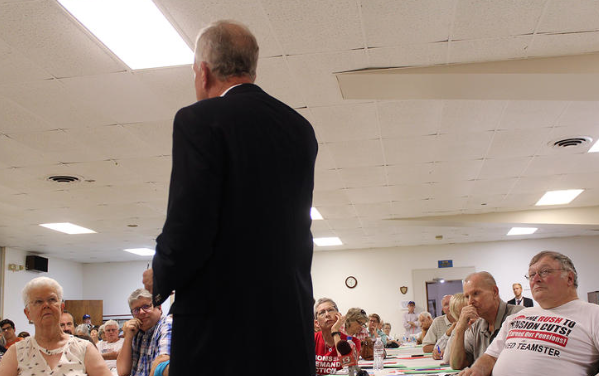
U.S. Sen. Jerry Moran speaks at a town hall meeting Friday in Topeka. News broke during the meeting that White House strategist Steve Bannon was leaving his job. JIM MCLEAN / KANSAS NEWS SERVICE
BY JIM MCLEAN
News of White House strategist Steve Bannon’s resignation broke Friday afternoon during U.S. Sen. Jerry Moran’s town hall meeting in Topeka.
The second-term Republican was fielding questions about President Donald Trump’s fitness for office when a man in the back of the American Legion hall reading the news on his cell phone shouted that Bannon was out.
“We have breaking news during my town hall meeting,” Moran quipped as many in the crowd applauded.
In an interview after the meeting, Moran said he hoped that Bannon’s departure and the presence of a new chief of staff — former Marine Gen. John Kelly — would bring more order to what to date has been a relatively dysfunctional White House.
“I assume that the president made a decision that his administration will perform better in the absence of Steve Bannon, and I look forward to the administration coming together in a greater level of hope that the country will be less divided,” Moran said.
Moran, one of the few Republican members of Congress to earlier this week directly criticize the president for his ambivalent statements about last weekend’s violence in Charlottesville, Va., said infighting among Trump’s senior staff had made it difficult to work with the White House.
“We’ve seen the difficult times this White House has had in having a message and knowing what that message is and staying on that message,” he said. “We saw that with Charlottesville. We had three different statements and (it) was therefore hard to know exactly where the president was.”
Prior to joining Trump’s campaign a year ago, Bannon headed the conservative Breitbart News, where he created a platform for the so-called “alt right,” a movement that includes white nationalists.
Though he said he had never met Bannon, Moran said he had seen reports indicating he was leader of one of the warring factions that had created a “very divisive world at the White House.”
Jim McLean is managing director of the Kansas News Service, a collaboration of KCUR, Kansas Public Radio and KMUW covering health, education and politics. You can reach him on Twitter @jmcleanks.
LENEXA – The U.S. Environmental Protection Agency (EPA) Region 7’s Air Program has awarded an additional $499,009 to the Air Pollution Control Program at the Kansas Department of Health and Environment (KDHE), in support of implementing the requirements of the Clean Air Act.
KDHE will use these funds to support air quality programs across the state. The Air Pollution Control Program includes National Ambient Air Quality Standards, like ozone, particulate matter and sulfur dioxide mitigation, and implementing and maintaining an ambient air monitoring program.
“Working with our states in partnership is how EPA will fulfill our ‘back to basics’ agenda. Providing this funding directly to the states, where the work on air quality is accomplished, allows us to make great strides forward in keeping the air we breathe clean,” said EPA Administrator Scott Pruitt.
TOPEKA— The Supreme Court Friday affirmed Phoebe Shaylor’s conviction in Reno County District Court for failure to register as a drug offender under the Kansas Offender Registration Act.
Shaylor, 41, claimed she should not have been required to register because the requirement was imposed after her original conviction for manufacture of methamphetamine in 2002.
In 2007, the Legislature amended the law, imposing the requirement on persons convicted of unlawful manufacture of controlled substances or controlled substance analogs “unless the court makes a finding on the record that the manufacturing or attempting to manufacture such controlled substance was for such person’s personal use.”
Shaylor argued her conviction for failing to register violated the ex post facto clause of the United States Constitution, which prohibits Legislatures from retroactively punishing previously committed crimes. The principal issue for the court was whether registration requirement was punishment for the original manufacture of methamphetamine conviction. A divided Supreme Court held Shaylor failed to demonstrate that it was.
Writing for the majority, Justice Dan Biles noted under existing Kansas case-law regarding sex offenders that registration was a non-punitive civil regulatory requirement and not punishment. Based on that precedent, Biles continued, Shaylor needed to make a sufficient evidentiary showing in the district court to prove the prior case-law was inapplicable to drug offenders.
Since Shaylor didn’t do that and raised the issue for the first time on appeal, the majority held her constitutional challenge was not valid and affirmed her conviction.
WICHITA, Kan. (AP) — A Wichita man has been sentenced to probation for a hit-and-run that killed a U.S. Marine.
The Sedgwick County district attorney’s office says 27-year-old Dreu Wikle was sentenced Friday to two years of probation. He would serve three years in prison if he violates probation.
Wikle pleaded guilty to leaving the scene of an accident.
The accident in May 2016 killed 31-year-old Grant Burris, of Haysville, a Purple Heart recipient who was checking the mail at his parents’ home when he was hit.
Witnesses told police the driver didn’t stop after hitting Burris, who served four tours in Iraq. He died 11 days after being hit.
Court documents say Wikle thought he hit a mail box but didn’t stop.
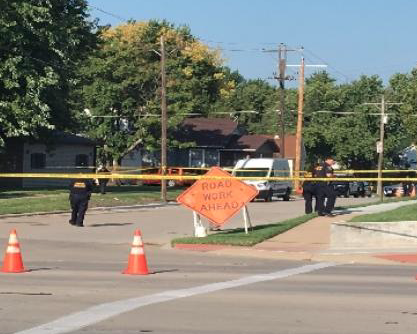
Police at the scene of Saturday morning investigation-photo courtesy WIBW-TV
SHAWNEE COUNTY – Law enforcement authorities are investigating a murder scene and have identified the victim.
Just after 8 a.m. Saturday, police were dispatched to 15th and Topeka Blvd. in Topeka after report of an unresponsive man later identified as 44-year-old Kenneth Leray Vetaw, according to a media release. He had wounds consistent with being shot. Authorities have not confirmed how he died.
An investigation determined Vetaw was injured in the 1400 Block of SW Harrison, left that area on foot and died where first responders found him.
No additional details were released. Anyone with information on the crime is asked to call police.
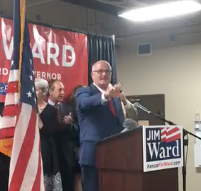
WICHITA, Kan. (AP) — A top Democratic lawmaker says he is joining the crowded race to replace Republican Kansas Gov. Sam Brownback.
House Minority Leader Jim Ward of Wichita announced his candidacy Saturday. He had named former Democratic Party chairman Lee Kinch as his campaign treasurer earlier this week.
Brownback is serving his second term and is expected to leave office early to become U.S. ambassador-at-large for international religious freedom.
Ward was elected to the Kansas House of Representatives in 2002, and is the ranking Democrat on the House committee on Education.
Other Democrats in the race include former Wichita mayor Carl Brewer and former state representative Josh Svaty. GOP candidates include Lt. Gov. Jeff Colyer, Secretary of State Kris Kobach and Insurance Commissioner Ken Selzer.
SHAWNEE COUNTY – Law enforcement authorities are investigating an aggravated robbery and continue the search for two suspects.
Just before 1:30 a.m. Saturday, police were dispatched to the area of SE 6th and Gilmore in Topeka after reports of an aggravated robbery and car theft, according to a media release.
A woman told police she had been parked inside her black 2008 Dodge Caliber when a white Mercury passenger car pulled up beside her.
Two white males, one armed with a handgun got out of the vehicle fired the gun and forced her from her car. She was not injured. The suspects drove away in her car that had a temporary tag.
The suspects are described as white males. The first is 6-foot 2-inches tall and weighing approximately 250-pounds. He wore a black shirt, blue jeans and was armed with handgun.
The second suspect is described as skinny and wearing a multi-colored mask.
Anyone with information on the crime is asked to call police.
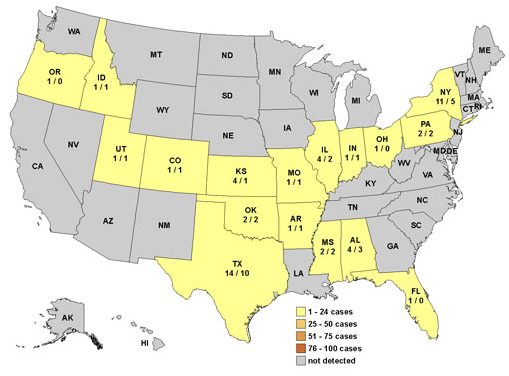
Annual total number of equine cases of EIA and number of affected premises in each State, 2001 – 2016. 52 positive horses, 34 positive premises- USDA MAP
MANHATTAN, Kan. (AP) — Six horses at a Finney County facility will be euthanized after becoming infected with equine infectious anemia.
The Kansas Department of Agriculture said in a news release Friday that it was contacted this month about a positive test for the disease. All the exposed horses were tested and five other horses tested positive. Because the disease isn’t curable, the animals will be euthanized.
The remaining horses at the facility will be observed and retested in 60 days. The facility is under quarantine.
EIA is most commonly spread by biting flies and ticks. It doesn’t affect people but can be spread to horses, mules and donkeys.
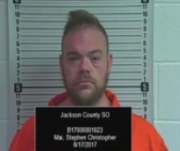
JACKSON COUNTY— Law enforcement authorities are investigating a suspect on drug, theft and weapons charges.
On Thursday afternoon, Jackson County Sheriff’s Office Deputies stopped Stephen Mai, 33, of Ellinwood, for a traffic violation near Mayetta.
A caller reported a 2002 Honda DRV matching Mai’s vehicle description driving recklessly, according to a media release.
Deputies were able to stop the vehicle and arrested Mai on the scene.
During the arrest, deputies found a handgun that had been reported stolen. Mai also had in his possession, a large amount of substances believed to be methamphetamine, marijuana and other controlled substances. He had a large assortment of collectable coins and metals, firearms and thousands of rounds of ammunition and other property.
Deputies booked Mai into the Jackson County Jail for the following charges: Possession and with intent to distribute methamphetamine, possession with intent to distribute marijuana, possession of drug paraphernalia, possession of stolen property, criminal use of a firearm, unlawfully in possession of a prescription drug with the intent to distribute, and driving while suspended. Bond on Mai was set at $30,000.00.
PRATT – September 1 marks the opening of hunting seasons in Kansas, and the date is approaching fast. Once September gets here, the hunting season floodgates open with dove, teal, deer, greater prairie chicken, and snipe seasons opening in quick succession. And while September can’t get here quickly enough for most hunters, there is much to do before it does.
First, go to www.ksoutdoors.com where you can apply for Special Hunts, which offer limited hunter access to areas not normally open to hunting. The application deadline for hunts that occur in September and October is 9 a.m., August 14. The application deadline for hunts in November, December, January and February is 9 a.m., Sept. 25. More than 400 hunts are being offered through a lottery drawing, all of which ensure hunters enjoy high-quality hunting experiences.
While you’re at ksoutdoors.com buy all your licenses and permits. You can also download the 2017 Kansas Hunting and Furharvesting Regulation Summary and 2017 Kansas Fall Hunting Atlas. Printed versions of each will be available by Sept. 1 at all Kansas Department of Wildlife, Parks and Tourism offices and hundreds of licenses vendors statewide. You can also request mailed copies by calling (620) 672-5911.
Once you have our licenses and permits, it’s time for some pre-season preparation and practice. Of course all your gear needs to be collected and examined before the seasons open. And more importantly, get out and practice shooting. Not only will pre-season practice make you more proficient but it will also help ensure that shotguns, bows, and rifles are in safe operating condition.
The best part about preparation is that it’s almost as fun as actually hunting, and it amps up anticipation of coming seasons. They’ll be here before you know it, so get out and get ready now.
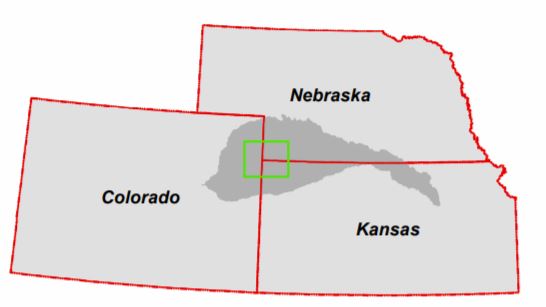
MANHATTAN — The Republican River Compact Administration (RRCA) will hold its 57th annual meeting at 10:30 a.m. MST (11:30 a.m. CST) on Tuesday, Aug. 22, 2017. The meeting will take place at the Burlington Community Center Conference Hall at 340 S. 14th St. in Burlington, Colorado.
The RRCA meeting will be hosted by the Colorado Division of Natural Resources, and will focus on water-related issues and activities, including compact compliance, within the Republican River basin in Kansas, Colorado and Nebraska.
Kansas, Colorado and Nebraska entered into the Republican River Compact in 1943 to provide for the equitable division of the basin’s waters, remove causes of potential controversy, promote interstate cooperation and joint action by the States and the United States in the efficient use of water and the control of destructive floods. The RRCA is composed of three commissioners representing Kansas, Colorado and Nebraska: Kansas Department of Agriculture, Division of Water Resources Chief Engineer David Barfield; Colorado State Engineer Kevin Rein; and Nebraska Department of Natural Resources Director Jeff Fassett.
In addition, RRCA will hold a work session to prepare for the annual meeting at 8:30 a.m. MST (9:30 a.m. CST) Tue., August 22, also in the Conference Hall of the Burlington Community Center. Both the work session and the annual meeting are open to the public.
Individuals who have questions regarding the meeting should contact KDA water management services program manager Chris Beightel at [email protected] or 785-564-6659 for more information.
A decade after Kansas unveiled plans to migrate its driver’s license records from an aged mainframe to modern information technology infrastructure, the effort remains incomplete and, auditors say, troubled.
Now five-and-a-half years past the original completion deadline — a goal that has moved repeatedly — legislative auditors revealed in a report published July 31 that ongoing woes could cause the KanDrive project to miss yet another “go live” date, while also going above its original $40 million budget.
Auditors fear, too, for the quality of the final IT product. They cited a February technical review that found gaps in code, limited functionality and existing features that “required workarounds to function.”
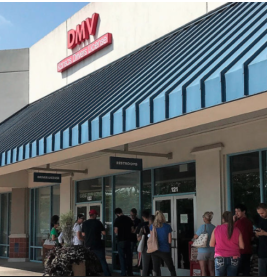
More than five years past its original deadline, an information technology project to migrate Kansas driver’s license records to a new system remains incomplete and troubled, auditors say. SUSIE FAGAN / KANSAS NEWS SERVICE
Officials at the Kansas Department of Revenue told auditors that “significant” progress has been made on fixing bugs and that they remain committed to lifting the curtain on the project at the start of 2018.
Lisa Kaspar, the department’s director of vehicles, told a panel of lawmakers receiving the audit results last month that development will be done in time to test the system this fall.
She described private contractor MorphoTrust, a company that specializes in ID services, as the project’s “main risk” and said her team is communicating with MorphoTrust weekly.
“We are holding them very accountable,” Kaspar said. “They did have some delays. We are now back on track with them. I mean, not to the original dates, but we are comfortable that we’ll still be able to go live with our system on Jan. 3.”
The issue of accountability is a sensitive one because past reviews found the department didn’t hold another contractor, 3M, to its commitments or obtain related financial penalties from that company.
Audits indicate MorphoTrust has missed at least two major deadlines. In the most recent case, it delivered equipment “that is not working properly.”
MorphoTrust did not respond to a request for comment.
The Department of Revenue declined to make officials available for an interview ahead of this story.
“We are building strategies for the impending rollout,” spokeswoman Rachel Whitten said. “We are not ready to discuss it publicly at this time.”
‘Critical’ infrastructure
At issue, according to auditors, is one of the Department of Revenue’s “most critical systems” — a platform tracking the driving records of 2 million people that must at all times be accessible to law enforcement agencies.
Plans to migrate the Kansas driver’s license system and other records solidified in 2007 as the DMV Modernization Project. In 2009, 3M landed a contract for the work, worth $25 million of the total $40 million Kansas planned to spend. To help pay for it, the state tacked a $4 fee onto prices Kansans paid at their local treasurer’s offices for vehicle registrations.
Snags in the project began early and persisted past its 2012 deadline. Flawed work by contractors bedeviled it, but independent reviewers also found evidence of problems with project management, office culture, staffing and leadership.
And in the midst of it all, a 2014 audit found that regularly scheduled third-party reviews of the project were discontinued in violation of state policy. Quarterly updates to lawmakers were misleading and incomplete, the audit said, preventing them from knowing the extent of the problems as the project fell year after year behind.
Sen. Laura Kelly, a Topeka Democrat, called for the 2014 audit.
“I wanted to know what had gone wrong,” she recalled.
Kelly remains concerned that a pattern of poor planning and project management, combined with under-resourcing, may be dogging the state’s IT efforts. Though IT can be complex and arcane, the process deserves public scrutiny, she said earlier this month.
“So much government service now is done through technology,” said Kelly, a lawmaker since 2005 who sits on the Legislature’s audit committee. “We have no choice but to keep our eyes on it.”
Separately, the state’s aborted 2013 attempt to wean four state agencies off an IBM mainframe with an in-house IT infrastructure project called GovCloud led to millions of dollars in equipment sitting unused in the basement of Docking State Office Building.
In December, auditors released results of a three-year check into IT security at 20 Kansas agencies that store sensitive information. They found substantive problems at most of them, including unsecure websites and unpatched vulnerabilities that could open the door to hackers.
The cost to taxpayers of the data breach remains unclear. Kansas is on the hook to pay for free credit monitoring for the victims, but the state has redacted pricing information from documents provided to the Kansas News Service — and hasn’t answered questions about whether it has any insurance that will help cover the expense.
Representatives of the Kansas Office of Information Technology Services, under the Office of the Governor, declined to comment on whether there are any overarching problems, such as under-resourcing or poor project management, hurting the state’s IT functions. They deferred comment to the agencies involved in the troubled projects.
However, the office’s 2016-2017 strategic plan lays out a number of issues that need to be addressed, including that IT infrastructure and support are isolated by agency and that infrastructure is out of date. The plan describes the current situation as “fraught with risk” and points to “incidents demonstrating significant data security exposures.”
History of problems
Because of the history of problems with the modernization of the driver’s license database, the Legislature’s auditing staff members now review the project on an ongoing basis, updating lawmakers four times a year.
The 2014 audit came after phase one of the DMV Modernization Project — a revamped vehicle title and registration platform — went live in 2012. That launch, 10 months behind schedule, led to hours-long lines for Kansans trying to update their tags in some counties.
Swamped county treasurers brought in extra staff or even closed doors to catch up on backlogged applications.
Rep. Don Schroeder, another member of the Legislature’s audit committee, said he could accept the delays in the implementation of the driver’s license portion of the project if the state has been fixing the bugs to ensure a solid product. The Hesston Republican wants to avoid a repeat of phase one’s rocky launch.
“That’s my biggest concern,” said Schroeder, a lawmaker since 2007. “Just hoping it doesn’t become something like that.”
The 2014 audit estimated counties spent more than $2 million on overtime and other expenses triggered by the 2012 rollout — even though the state had initially predicted it would cost them nothing.
Auditors turned up other concerns, too. They said Kansas paid out 90 percent of the 3M contract before finally canceling it in May 2014. The company had not delivered on key elements of the contract when the work was canceled, according to auditors. (Officials with 3M declined to speak to auditors.)
At the time, Department of Revenue officials said the remaining work would be finished in-house by November 2015, and that it would cost about $2 million.
That didn’t happen. Instead, the project was closed and relaunched as KanDrive, with a $6 million projected price tag.
After Sam Williams was appointed revenue secretary in late 2016, he ordered an independent review that found multiple problems and concluded KanDrive was at risk of missing its deadline and running out of money. The agency moved to reduce the project’s scope and restructure its team.
The project will again go through the bureaucratic hoops to be closed and relaunched with a new name: KanLicense.
In a letter to lawmakers in response to the audit, Williams signaled commitment to the Jan. 3, 2018, deadline and said he has hired a chief information officer to help.
“Although the scope was changed,” he told lawmakers, “the KanDrive project will still have major benefits provided to the Division of Vehicles.”
Auditors expressed appreciation for the department’s efforts to address the KanDrive problems, but they see continued risks for the project’s quality and for further delays.
They were concerned, too, about the project’s overall cost.
Changes to project scope and structure “made it impossible for us to evaluate whether changes in the project’s cost estimates are appropriate,” the auditors wrote.
In 2014 auditors estimated that Kansas had spent $37 million of the original $40 million budgeted for the DMV Modernization Project, including the unanticipated costs to counties in 2012.
Estimates for finishing the project range from $8 million to $10 million in their latest report.
Celia Llopis-Jepsen is a reporter for the Kansas News Service, a collaboration of KCUR, Kansas Public Radio and KMUW covering health, education and politics. You can reach her on Twitter @Celia_LJ.