TOPEKA – The Kansas attorney general’s office received more than 5,100 new applications for concealed carry licenses in the recently ended 2017 fiscal year, Kansas Attorney General Derek Schmidt said Tuesday in a media release.
Between July 1, 2016, and June 30, 2017, the Concealed Carry Licensing Unit received 5,119 new applications. This was the lowest number of applications received in a fiscal year since the licensing program began in 2006. A legislative change in 2015 allows eligible Kansans to carry concealed without a license.
While the number of new applications has waned, most Kansans who already have permits are choosing to keep their licenses active. The Concealed Carry Licensing Unit received more than 21,000 renewal applications during the 2017 fiscal year.
Licenses are still required in most states, and Kansas licenses are currently recognized in 38 states.
“Many Kansans continue to recognize the benefits of obtaining a license, including our reciprocity agreements with other states,” Schmidt said. “We continue to work with other states to ensure Kansas licenses are recognized.”
Schmidt also encouraged all Kansans who intend to carry firearms to pursue training opportunities. He reminded all Kansans who choose to carry firearms to comply with properly posted signage.
Currently, more than 83,000 Kansans have active concealed carry licenses. More information on the concealed carry licensing program is available on the attorney general’s website
The Gannon v. Kansas lawsuit is in its seventh year. In that time, the case has led to repeated rulings against the state for underfunding schools and responses by lawmakers in the form of appropriations bills.
What’s it all about? Here are five issues central to the battle.
Significant numbers of Kansas children lack basic math and reading skills.
Oral arguments are scheduled for July 18 at the Kansas Supreme Court in the Gannon v. Kansas school funding lawsuit, which is now in its seventh year. FILE PHOTO / KPR
This is particularly true for students from socioeconomic groups that are historically disadvantaged, including children from low-income families and children from racial and ethnic minorities.When the Kansas Supreme Court struck down existing funding levels as unconstitutional in March, the justices emphasized the state’s responsibility to help fix student achievement. Standardized test results show that about one-quarter of Kansas students are struggling with math and reading, the justices noted. That includes half of the state’s African-American students, one-third of Hispanic students and one-third of students from low-income families.
The concern that the state needs to provide more resources to support achievement for specific student groups isn’t new. It played a key role in another school finance lawsuit in the early to mid-2000s, Montoy v. Kansas. That case led in part to funding increases that target students with disabilities, from low-income families or learning English as a second language.
School resources available to children vary based on where they live.
That’s because local tax wealth varies. In the context of the state’s school finance formula, there are wealthier districts and poorer districts, meaning districts with more taxable property and those with less.
An example: Kaw Valley and Royal Valley, neighboring rural school districts north of Topeka that serve about 1,200 and 800 students respectively. Kaw Valley has one of the strongest tax bases in the state relative to the number of students it serves — a coal power plant falls within its boundaries. Royal Valley, which covers a few small towns, farmland and the Potawatomi Nation Reservation, has one of the weakest. A single mill of property tax generates more than $300,000 in Royal Valley but only a tenth as much in Royal Valley.
The state tries to even the playing field through extra state aid to districts with weaker local tax bases. The Gannon lawsuit partly revolves around the extent to which the state needs to do that.
Things were OK — as far as the courts were concerned — then the recession hit.
Montoy v. Kansas pushed the state to ratchet up school funding by more than $750 million through a three-year plan that won court approval and finally put an end to that case, which, much like Gannon, had lasted several years.
Then the recession hit. Gov. Kathleen Sebelius and her successor Mark Parkinson cut hundreds of millions of dollars from K-12 schools in 2009 and 2010. That made the state vulnerable to a fresh legal challenge from school districts whose concerns had been resolved by Montoy. In 2010 the Gannon lawsuit began.
Many educators became more frustrated after Gov. Sam Brownback took office in 2011 and pursued, together with the Legislature, deep cuts to income taxes instead of restoring the school finance plan that had been approved in the Montoy case.
With each passing year, operating schools costs more money.
School expenses and student enrollment continued to grow in Kansas, even though the Montoy plan fell by the wayside in 2009 and the state cut school funding.
Lawyers for the Gannon plaintiffs argue Kansas’ school funding has fallen hundreds of millions of dollars behind inflation. That’s a key sticking point between the state and school districts.
In June the Legislature voted to increase annual funding by nearly $300 million within two years. The state’s lawyers argue that’s enough to end the lawsuit, but the plaintiffs’ lawyers say it’s at the most just one-third of what is needed.
Inflation within those two years will eat up more than half of the nearly $300 million, they say, and another chunk will likely go toward raising stagnant teacher salaries, leaving little to bolster academic programs for struggling students.
The state’s lawyers reject those arguments. They point to a statistical analysis conducted for the Legislature this year that aimed to identify successful school districts based on academic measures, and then to check the districts’ spending levels. The state argues the $300 million plan is in line with spending practices at the 41 districts.
The state has constitutional obligations to the children of Kansas.
The provision of the state constitution that frequently pops up in the school finance argument reads: “The legislature shall make suitable provision for finance of the educational interests of the state.”
The state has argued in the past that the Legislature nevertheless has the power to decide how much to spend on schools — without judicial interference.
The courts disagree and have issued repeated rulings on school finance stretching as far back as the 1970s. Those rulings tend to home in on themes mentioned above: that educational opportunities should be adequate, that a child’s ZIP code shouldn’t determine access to quality schools and that local taxpayers in less wealthy districts shouldn’t face unreasonable tax burdens to try to offer adequate resources.
Celia Llopis-Jepsen is a reporter for the Kansas News Service, a collaboration of kcur.org, Kansas Public Radio and KMUW covering health, education and politics. You can reach her on Twitter @Celia_LJ.
FINNEY COUNTY – Law enforcement authorities are investigating a suspect for aggravated battery.
Just before 2 a.m. Monday, police were dispatched to 700 Safford Street in Garden City for reference a person who had been run over by a vehicle, according to a media release.
The investigation revealed the suspect, Diane Wagner, 57, Garden City, had responded to the 700 block of Safford Street to pick up her grandson. An argument ensued between family and Wagner attempted to leave the residence in her vehicle with the child.
The victim attempted to remove the child from the car as Wagner was leaving. The victim clung to the vehicle and was dragged down the alley until she lost her grip and her legs were run over by the rear wheel of the vehicle.
The victim was transported to St. Catherine Hospital where she was treated and released for minor injuries.
Wagner was arrested and lodged in the Finney County Jail and could face the possible charge of Aggravated Battery.
KANSAS CITY, Kan. (AP) — Federal immigration officials are being sued by the families of two people who authorities say were killed by a Mexican national in the U.S. illegally.
The lawsuit filed in Kansas City, Kansas, alleges Immigration and Customs Enforcement officials negligently allowed Pablo Serrano-Vitorino to stay in the country illegally before he allegedly killed four people in Kansas and one in Missouri last year.
Serrano-Vitorino is jailed on one count of first-degree murder in Missouri. He also faces four counts of first-degree murder in Wyandotte County, Kansas.
The Kansas City Star reports that the lawsuit says Serrano-Vitorino re-entered the U.S. after being deported in 2003. The families claim he was released from Kansas jails in 2014 and 2015 after federal immigration officials didn’t follow procedures and missed chances to detain him.
First responders on the scene of Sunday’s accident-photo courtesy WIBW TV
TOPEKA, Kan. (AP) — Authorities say a person who suffered critical injuries after falling 25 feet was likely trying to jump a gap between two bridges in Kansas.
The Topeka Capital-Journal reports the man was transported to a Topeka hospital Sunday evening with injuries that are considered life-threatening. He’s believed to be between 17 and 20 years old.
Topeka Police Lt. Aaron Jones says the victim likely thought he could land safely or that there was something to catch him.
Jones says investigators don’t believe the victim intentionally jumped off the bridge, but that he may have been trying to jump between northbound and southbound bridges along Kansas Avenue.
Police say witnesses reported calling 911 after watching the fall. Jones says witnesses described him as “happy go lucky.”
TOPEKA–The Kansas Department of Commerce Office of Minority and Women Business Development is accepting nominations for Kansas minority and/or women owned businesses, advocates, young entrepreneurs and corporations. These nominations celebrate Minority Enterprise Development (MED) Week, and nominees will be recognized at the annual Kansas Minority and Women Business Awards Luncheon to be held on Oct. 5 at the Capitol Plaza Hotel in Topeka.
“Minority Enterprise Development Week offers us the opportunity to celebrate the many outstanding minority and women owned business in our state,” said Kansas Commerce Interim Secretary Nick Jordan. “These Businesses make Kansas a better place to live and work by creating jobs and giving back to their communities”
The deadline to nominate a business or individual is Friday, July 14. Online nomination forms can be accessed at KansasCommerce.gov/MEDweek. To request a hard copy of the form, please contact Rhonda Harris at [email protected] or (785) 296-3425. All forms submitted by mail must be postmarked by July 14. Forms can be mailed to Rhonda Harris, Office of Minority and Women Business Development, Kansas Department of Commerce, 1000 S.W. Jackson St., Suite 100, Topeka, KS 66612; faxed to (785) 296-3490; or emailed to [email protected].
The Office of Minority and Women Business Development provides assistance in business management, identifying resources for financing and establishing contacts in the public and private sectors. The office is responsible for certifying minority- and women-owned businesses as small disadvantaged businesses for procurement and subcontracting opportunities.
SALINE COUNTY – Law enforcement authorities are investigating a suspect on felony charges.
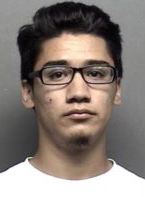
Police say Jose Escobedo, 19, Salina, allegedly stole prepaid car wash tickets from the manager’s office at Casey’s General Store, 2404 South Ninth in Salina, according to Salina Police Capt. Paul Forrester.
Escobedo used the prepaid tickets to pocket cash paid by customers.
From June 26 to July 2, Escobedo allegedly stole $1,648 in cash. He was booked into the Saline County Jail for felony theft.
KANSAS CITY, KAN. – An Overland Park man was sentenced Monday to 97 months in federal prison for distributing child pornography on the Internet while posing as a 46-year-old woman, according toU.S. Attorney Tom Beall.
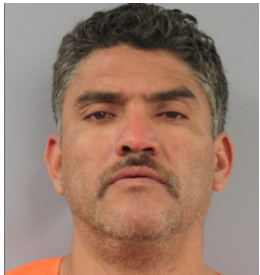
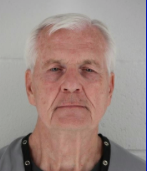
Frank Joseph Kurtz, 70, Overland Park, Kan., pleaded guilty to one count of distributing child pornography. In his plea, he admitted that an investigation by the Israeli National Police first identified emails in which Kurtz used the alias “Lisayearning46” to send child pornography to another person.
The FBI in Kansas tracked the emails to Kurtz, who registered with Yahoo under the name “Lisa Lewis” and used photos he found on the Internet as his profile picture.
WASHINGTON (AP) — The American Civil Liberties Union has filed a lawsuit accusing President Donald Trump’s commission investigating election fraud of failing to comply with a law designed to ensure public accountability. Kansas Secretary of State Kris Kobach is Vice Chairman of the commission.
The lawsuit filed Monday in federal court in Washington says the commission held its first meeting without notifying or making the meeting open to the public. The lawsuit says the commission also failed to make meeting records public. The ACLU says that violates the Federal Advisory Committee Act. The lawsuit also says the commission is improperly stacked with individuals who’ve supported Trump’s statements on illegal voting.
Department of Justice spokesman Ian Prior wrote in an email that the office is reviewing the complaint. He declined futher comment.
The commission’s request for the release of voter data has prompted other lawsuits.
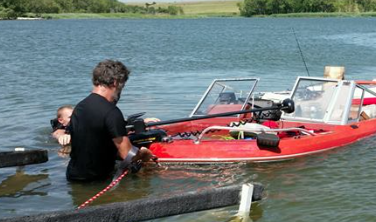
Sunday boating incident in Jewell County-photo KDWP&T Game Wardens
JEWELL COUNTY – Access to life jackets helped two boaters safely reach the shore after their boat sank Sunday afternoon at Jewell State Fishing Lake, according to the Kansas Department of Wildlife and Parks.
A Game Warden, a Jewell County Sheriff’s Deputy and helpful citizens also helped get the boat out of the water and to a ramp.
The Kansas Department of Wildlife and Parks Game Wardens reminded everyone to always wear a life jacket.
TOPEKA, KAN. – A Kansas man was sentenced Monday to 20 years in federal prison on drug and gun charges, according to U.S. Attorney Tom Beall.
Jason Lars Sheets, 36, Salina, pleaded guilty to one count of conspiracy to distribute methamphetamine and one count of brandishing firearms in furtherance of drug trafficking.
In his plea, he admitted he was a member of a drug trafficking organization operating in the Salina area in 2016. He admitted that he and his co-defendants jointly possessed 18 firearms including pistols and rifles.
Co-defendants include:
Seth Allen George, 26, Salina, who was sentenced in June to 18 years.
Tyler Lee Shea, 21, Salina, Kan., who was sentenced in June to 15 years.
Kyle Allen Palmer, 30, Salina, Kan., who was sentenced in April to 15 years.
Beall commended the Bureau of Alcohol, Tobacco, Firearms and Explosives, the Salina Police Department, the Saline County Sheriff’s Office and Assistant U.S. Attorney Greg Hough for their work on the case.
SEDGWICK COUNTY- Law enforcement authorities are investigating an armed robbery and asking for help to find a suspect.
Just after 2a.m. Monday, police responded to a gas station in the 800 Block of South Meridian in Wichita, according to officer Charley Davidson.
An employee reported a woman described as white, 5-foot 8-inches tall, wearing a yellow mask, gloves, black shirt and blue jeans entered the business. She displayed a handgun and demanded money. As the suspect took the cash from the store, a 38-year-old man who witnessed the crime and was carrying a gun fired two shots in the air in the parking lot.
The suspect got into the back of a white Chevy pickup and escaped. Davidson said police do not advise firing the gun as the bystander did. “You could face charges and those bullets do come down.” He indicated that while you do have the right to protect yourself, police need those in a similar situation to be a good witness by observing anything unique that might help solve the crime.
Anyone with information on Monday’s robbery is asked to contact police.
HARPER COUNTY-A Kansas teen died in an accident just after 11:50p.m. Sunday in Harper County.
A 1995 Dodge pickup driven by Adrian Gerber, 18, Anthony, was northbound on Southeast 70 Avenue, according to the Harper County Sheriff Tracy Chance.
The vehicle traveled through a T intersection at SE 70 Road. The driver attempted a turn, the truck rolled and a passenger 16-year-old Tanner Asper of Anthony was ejected.
Asper was pronounced dead at the scene. Gerber refused treatment. It appears they were not wearing seat belts, according to Chance.

 TOPEKA – The Kansas attorney general’s office received more than 5,100 new applications for concealed carry licenses in the recently ended 2017 fiscal year, Kansas Attorney General Derek Schmidt said Tuesday in a media release.