We have a brand new updated website! Click here to check it out!

Rural Kansas Teacher Pay Ranks Lowest In U.S.

Of Kansas’ 286 school districts, 207 are rural as defined by the U.S. Department of Education. They are shown here in dark blue. The rest are classified as town, suburban or urban school districts.
CELIA LLOPIS-JEPSEN / KANSAS NEWS SERVICE

In his 26 years at Meade Unified School District 226, a 400-student district southwest of Dodge City, Superintendent Kenneth Harshberger has watched the educational landscape change.

Teachers are harder to recruit — even for elementary jobs, which were traditionally easier to fill.

“The first time I tried to hire an elementary teacher 25, 26 years ago, we had over 100 applicants,” he recalled. “Now I can’t get five applicants.”

While there likely are numerous reasons behind that change, a new national report on rural teacher pay in the 50 states shows Kansas ranks lowest. That report follows another Kansas-specific study noting evidence of a teacher shortage in some rural areas of the state, particularly in the southwest corner.

Ken Weaver, dean of the Teachers College at Emporia State University, co-authored an analysis of the teacher shortage situation in Kansas that was released last year. He thinks the newly released national report on teacher pay may shed light on one of the reasons for the Kansas shortage.

“I do think that’s an important piece of the puzzle,” he said. “The challenge is, how does that piece of the puzzle kind of make it out there, into the minds and into the hearts of policymakers and decision-makers?”

The Kansas State Department of Education recently launched a website hoping to coax more students into the education profession. Rural school districts in particular are struggling to fill vacant teaching jobs as fewer college students pursue degrees in education.
CREDIT KANSAS STATE DEPARTMENT OF EDUCATION

The national compilation by the Rural School and Community Trust draws on 2012 information that schools reported to the federal government — total instructional salaries divided by the number of instructional staff in each district. The trust uses this calculation as a stand-in for teacher pay.

At rural schools in Kansas, this works out to about $40,900, compared to a national average of just under $57,800. Missouri came in second-lowest around $44,100.

The trust used the federal government’s definition of rural school districts. Nationally, nearly 20 percent of public school students attend rural schools. In Kansas, the figure is a little higher.

The trust’s report does not adjust for cost of living differences among rural areas in different regions of the country.

Jeremy Hill, director of the Center for Economic Development and Business Research at Wichita State University, noted other potential caveats about the national report. It is possible, for example, that pay varies because some states tend to employ teachers with more experience or higher educational attainment.

Getting creative

In the Meade district, Harshbarger has become creative in finding teachers. Last year district officials worked with a college for the first time on an arrangement to hire a student as a full-fledged teacher — albeit with supervision.

And with some college students landing teaching job offers before graduation, they’ve begun calling universities.

“I will call K-State or Wichita State and ask for the heads of the departments and say, ‘Can you give me the names of any kids?’” Harshberger said. “And a lot of times they won’t give it to us unless they’ve been given permission. And I say, ‘Well, can you ask those kids if we can have permission to contact them?’”

The teacher shortage report that Weaver and others authored found 109 unfilled teaching jobs in southwest Kansas in the 2015-16 school year. Those jobs remained vacant at least through the first half of the academic year and into the spring, when tallies were finalized.

The report, which found teachers were migrating from rural areas to more populated ones, corroborated anecdotes of shortages that had prompted warnings from top Kansas education officials in recent years.

Nationally, teachers earn more in larger towns, suburbs and cities than rural areas.

The trust’s report found rural salary spending per instructional staff lagged nearly $2,000 behind towns and more than $10,000 behind suburban and urban districts, though those figures don’t factor in cost of living.

A decade-old U.S. Department of Education analysis that did do so found rural teacher pay lagged $1,000 to $2,900 behind cities, towns and suburbs after adjusting for this difference.

‘Several areas of concern’

The authors of last year’s report on Kansas teacher vacancies suggested further monitoring and investigation to explore causes and solutions. But they suspected pay as a factor.

“The low salaries are one of several areas of concern and they need to be addressed,” Weaver said.

Click to Enlarge

In Meade, starting pay for a teacher straight out of college is around $36,000.

It’s unclear how this compares to the statewide average. The Kansas State Department of Education doesn’t track starting pay.

But the Kansas Association of School Boards conducts a voluntary annual survey. For 2016-17, 220 of 286 school districts reported their starting salaries to the association. The average among these was about $34,700.

District budgets vary, as do local spending priorities, which are determined by school boards.

Kismet-Plains USD 483, a 700-student district next to Meade, offers beginning teachers $42,000 a year.

“We have to pay well just to attract folks,” Superintendent Elton Argo said, adding that the area lacks amenities that draw many applicants to larger towns, cities or suburbs.

The 540-square-mile district does not have a dentist or optometrist, he said, and a physician comes to the area only a few days a week. Outdoor opportunities like fishing and hunting abound, but there’s not a movie theater or bowling alley.

“Geography will always be a complication,” he said.

Like Harshberger, Argo, who has been superintendent in Kismet-Plains for 11 years, said the traditional paths to finding teachers are less fruitful than they once were.

“Job fairs — we still attend some of those, but it’s kind of a waste of our time,” Argo said. “There aren’t many applicants there.”

Fewer future teachers

Secondary teaching positions and special education jobs are particularly difficult to fill, superintendents say.

Their concerns come amid a drop in students preparing to become teachers.

According to the U.S. Department of Education, about 2,500 fewer people enrolled in teacher preparatory programs in Kansas in 2015 compared to four years earlier. The number of people completing such programs slid by about 460 over the same period.

State universities and the Kansas State Board of Education are responding with efforts ranging from changes to teacher certification requirements to new career-transition programs.

Just two examples: Kansas State University has a new one-year online master’s degree for aspiring elementary teachers who didn’t major in education at college and Emporia State has received approval from the Kansas Board of Regents for such a program, too.

But superintendents, university faculty and education officials alike have suggested the teaching field has become less attractive, not just because many other jobs offer better pay and health insurance, but because of a years-long fight over state aid to schools, lawmakers’ decision to strip teacher tenure from Kansas statute and other factors. The picture they paint is one of low morale.

In Meade, Harshberger said, summer school programs disappeared amid years of budget cuts, purchases of equipment and supplies like textbooks slowed, individual teachers took on more duties at work and pay stagnated.

“They know they’re not in it for the money. None of us are in it for the money — we’re in it because we love kids,” he said. “But I’ve seen a lot of dismay, particularly in the last seven years, that we’ve been hardly able to put any money in schools.”

Weaver, who often speaks with families of students considering an education major, put it this way: Though he can promise parents that their children will have jobs to choose from upon graduation, he can’t deflect their concerns about compensation.

“Moms and dads are saying truthfully, ‘We love our child. We want the best for our child, but we cannot support our child going into teaching as a career,’” he said.

Celia Llopis-Jepsen is a reporter for the Kansas News Service, a collaboration of kcur.org, Kansas Public Radio and KMUW covering health, education and politics. You can reach her on Twitter @Celia_LJ.  

Boating Under The Influence is serious offense and deadly

KDWPT

PRATT – You know “your limits,” you’ve never been in an alcohol-related accident before, and you could handle your boat with a blindfold on. You figure it’s summertime, the weekend, and time to relax and knock back a few. But that good time that you’re after can quickly turn tragic no matter how well you think you can hold your liquor. This summer season, don’t put yourself, those onboard, and other boaters in harms way by boating under the influence – it’s not worth the risk.

Alcohol use is still the leading known contributing factor in fatal boating accidents. And there’s a difference between drinking on land and drinking in a boat. Sun, wind, noise, vibration, and motion – “stressors” common to the boating environment – intensify the side effects of alcohol, drugs, and some medications.

According to the National Association of State Boating Law Administrators, July recorded the highest number of recreational boater accidents and deaths nationwide in 2016, with the second highest in June. Don’t become a part of those statistics. Kansas Department of Wildlife, Parks and Tourism boating law enforcement officers will be on patrol during the July 4 holiday weekend as part of Operation Dry Water, a nationwide campaign to raise awareness of boating under the influence. Officers will administer breathalyzer blood alcohol tests, and if you blow a blood alcohol content of .08 percent or more, you will be given a boating under the influence citation and lose your boating privileges.

If you suspect someone is boating under the influence, contact 911 immediately and provide the operator with the location, the suspect’s boat registration numbers, and a complete description of the operator and passengers.

For information on boating in Kansas, including regulations and registration information, visit ksoutdoors.com/Boating.

Keep kids safe from summer fire safety hazards

KANSAS FIRE MARSHAL

TOPEKA – Grilling on the barbecue and campfires are great ways to spend quality time outdoors in the summertime. Summer is also a season when kids spend a great deal of time home alone and need to be taught the importance of fire safety.

It’s important to remember any fire can cause serious injuries to children. In fact, summer is the season when there is an increase in visits to the emergency room due to fire and burn injury. Safe Kids Kansas and the Office of the State Fire Marshal (OSFM) remind families to take simple precautions which will prevent “What I Did This Summer” stories from including trips to the emergency room.

Preventing “Home Alone” Disasters

Bored kids at home alone over the summer can injure themselves or cause severe fire damage to their homes by playing with fire or even when cooking their meals on the stove. Parents need to talk to their kids about fire dangers and create and practice an escape plan, which includes two ways out of every room.

Kids should be taught to crawl low to the ground and be able to evacuate the home within two minutes, then call 911 from outside the home with a cell phone or at a neighbor’s house.

To prevent fires from occurring in the first place, parents should hide all matches and lighters and teach their children to practice kitchen safety. It is safest for parents to prepare meals for their children or teach them to prepare their food that does not require the use of a stove. Kids that parents deem responsible enough to cook their meals should be taught cooking safety, such as staying in the kitchen and remaining attentive to any items on the stove, using a timer to prevent food from burning, and knowing how to use a lid to smother a flaming skillet.

Safe Grilling
Grilling food outdoors is a national summer pastime. But before lighting up the grill, know the facts and keep safety in mind. Grill fires at home are estimated to cause an average of 10 deaths, 100 injuries, and $37 million in property loss each year in the U.S.

Follow these grilling safety tips:
 Gas and charcoal grills should only be used outdoors.
 The grill should be placed away from the home, deck railings and out from under eaves and overhanging branches.
 Keep children and pets away from the grill area
 Keep your grill clean by removing grease or fat buildup from the grills and in trays below the grill to prevent flare ups.
 Never leave your grill unattended.

Fun and Safe Camp Fires
Many families enjoy camping during the summer months and making s‘mores around the campfire is often part of that tradition. Be fire smart when you head for the great outdoors, and be prepared to take extra precautions when you may be far from a water source.

Follow these campfire safety tips:
 Supervise children and keep them away from the fire.
 Teach kids how to stop, drop and roll if their clothing catches fire.
 Keep plenty of water nearby and have a shovel for throwing sand or dirt on the fire if it gets out of control.
 Never leave a campfire unattended.

When extinguishing the fire, drown it with water. If you do not have water, use dirt. Continue adding and stirring until all material is cooled. However, do not bury coals, as they can smolder and start to burn again.

For more information about fire safety, visit www.safekids.org or www.firemarshal.ks.gov/firesafety.

Sen. Moran’s VA Accountability legislation signed into law

U.S. Sen. Jerry Moran, R-KS

OFFICE OF SEN. MORAN

WASHINGTON – U.S. Senator Jerry Moran (R-Kan.) today applauded the signing of the Department of Veterans Affairs Accountability and Whistleblower Protection Act into law. This spring, Sen. Moran joined U.S. Senators Johnny Isakson (R-Ga.), Marco Rubio (R-Fla.), Jon Tester (D-Mont.) and John McCain (R-Ariz.) to introduce this legislation, which passed the Senate and House of Representatives this month. Sen. Moran released the following statement after the bill signing:

“Since the disturbing reports of veterans being neglected and mistreated across the country and in Kansas, I have been committed to developing legislation that gives the VA authorities to hold bad actors accountable while protecting veterans and VA whistleblowers who are trying to do what is in the best interest of our nation’s heroes. I am pleased the President signed this bipartisan legislation that I spearheaded to ensure the VA supports hardworking employees who care deeply about our veterans, and removes those few bad actors who fail to perform their duties in service to veterans.

“Many Kansans are familiar with the alarming case at the Leavenworth VA where a VA employee who stands accused of abusing the veterans he was supposed to serve and was allowed to retire and can now collect benefits from the VA. We must make certain this kind of injustice never happens again, which is why I added a provision in this bill with strong consequences for VA employees and their benefits when they are convicted of a felony against veterans or related to their employment. This law is a step forward for our veterans and one of many changes the VA must make if they are going to earn back the trust of veterans and provide them with the care they have earned and deserve.”

Background on the Department of Veterans Affairs Accountability and Whistleblower Protection Act:
The Department of Veterans Affairs Accountability and Whistleblower Protection Act increases the VA’s authority to remove employees at all levels of the department, shortens the removal process and ensures an individual removed from the VA is not kept on the VA’s payroll while appealing that decision. It will also make it easier for the VA to remove poorly performing senior executives and replace them with qualified candidates. Additionally, any appeals by senior VA executives would no longer be brought before the Merit Systems Protection Board, but instead would be handled directly by the VA secretary under an expedited timeline.

The Department of Veterans Affairs Accountability and Whistleblower Protection Act will establish in law the newly created Office of Accountability and Whistleblower Protection within the VA.

The bill is widely supported by key veterans stakeholders including the VA and U.S. House of Representatives Veterans Affairs’ committee leadership. It has also won the support of numerous advocacy groups that represent millions of veterans in the United States and key government accountability groups. Read more about the legislation’s support here.

The legislation also includes a number of other provisions to hold employees accountable, including:

  • Requiring the VA to evaluate supervisors based on the protection of whistleblowers;
  • Incentivizing managers to address poor performance and misconduct among employees by requiring the VA secretary to include this as part of the annual performance plan;
  • Prohibiting bonuses for employees who have been found guilty of wrongdoing;
  • Prohibiting relocation expenses to employees who abuse the system.

Click on VA Accountability for a one-page summary of the legislation.


Court upholds Kansas commune leader’s rape, murder convictions

Perez-photo KDOC

WICHITA, Kan. (AP) — The Kansas Supreme Court has unanimously upheld the convictions for murder and other charges against the leader and self-proclaimed seer of a Kansas commune which lived off the life insurance payouts of its dead members.

The state’s highest court affirmed on Friday the convictions against Daniel U. Perez.

He was also convicted of fraud for lying on life insurance applications along with numerous counts of rape and other sexual assault charges involving young girls who had been living at the commune with their mothers.

Although Perez was charged with only one murder count for the 2003 death of Hughes, several members who carried hefty life insurance policies also died.

Perez was charged in 2011 when a woman who had been 12 at the time told authorities the drowning was staged.

New Kansas law forms task force to review child welfare

TOPEKA, Kan. (AP) — Kansas Gov. Sam Brownback has signed into law a measure that creates an independent task force to review the state’s child welfare system.

The measure was in response to the deaths of a number of children who had been in state custody. It also followed a series of audit reports that were critical of the Kansas Department for Children and Families’ management of the state foster care system.

The measure calls for a 19-member panel to examine all aspects of the state’s child welfare system. The task force will include lawmakers, people involved in family court services and social welfare, and law enforcement.

The group will file a progress report at the 2018 legislative session’s start, with a final report due in January 2019.

Homeless man charged with fatal beating of Kansas man

Hottman booking photo from a February arrest in Salina

TOPEKA— A homeless man has been charged with killing another man behind a Topeka gas station.

The Topeka Capital-Journal reports that 41-year-old Jason Hottman was charged Thursday with second-degree murder in the killing 34-year-old Jason Baker. Police found Baker bleeding and unresponsive June 2 behind the Haag’s Express gas station in the western part of the city.

Police said that on June 4, Hottman jumped off a bridge onto Interstate 70. He sustained injuries not believed to be life-threatening.

Hottman has previous convictions in Dickinson and Saline County for burglary, criminal threat, harassment by telephone, criminal trespass and violation of a protection order.

Police on the scene of the June 2 fatality-photo courtesy WIBW TV

The prosecutor’s office didn’t immediately return an email message asking whether Hottman has an attorney.

USGS reports 5th earthquake in Kansas this week

Image Kansas Geological Survey

HARPER COUNTY – A fifth earthquake this week jolted portions of Kansas Friday afternoon.

The quake just before 3p.m. measured a magnitude 2.5 and was centered approximately 7 miles southwest of Harper, according to the U.S. Geological Survey.

The agency recorded earthquakes in the same general area Tuesday afternoon and Thursday morning. They measured 3.1 and 3.7.

A pair of quakes shook portions of Kansas Monday. Just after 2.am. a 2.9 quake hit 6 miles northwest of Mankato in Jewell County. At 10:15 p.m. Monday, the USGS recorded a 2.6 quake three miles south of Rose Hill in Butler County.

The USGS has recorded 15 quake in Kansas in June.

They reported 9 Kansas earthquakes in May, nearly a dozen in April, seven in March and six in February.

There are no reports of damage or injury from Friday’s quake.

Police: Kansas man jailed for 1983 stabbing death


Rosas- photo Finney Co.

FINNEY COUNTY- Law enforcement authorities are investigating a 1983 murder and have made an arrest.

On August 27, 1983, at 3:10 a.m. police were dispatched to a club formally known as the Gambler, 107 W. Santa Fe Street in Garden City for a reported man on the ground in the parking lot, according to a media release.

When Officers arrived on the scene, they located Ignacio Vasquez,37, Garden City. He was pronounced dead at the scene from multiple stabs wounds.

During the initial investigation, witnesses reported a fight had occurred in the parking lot of the club. Additional persons were also identified to have been stabbed or suffered cutting wounds during the fight.

Witnesses reported that Octaviano “Toby” Rosas was involved in the murder of Vasquez. In 1984 a witness identified Toby as being the person who stabbed Vasquez. Toby was subsequently arrested and charged in Finney County District Court. On October 24, 1984, the charges against Toby were dismissed due to lack of cooperation from the witness to testify at the preliminary hearing.

Throughout the past 32 years, follow-up has been completed in this cold case investigation. In February 2017 new information was obtained and Detectives of the Garden City Police Department followed up this information. It led Detectives to identify Frank Rosas, 62, Garden City, as a suspect in the murder.

On Thursday, June 22, 2017, a warrant was issued and police arrested Rosas. He is being held lodged in the Finney County Jail on a requested charge of 2nd-Degree Murder.

Despite Kan. boy’s death, Brownback signs bill delaying amusement park law

TOPEKA, Kan. (AP) — Kansas Gov. Sam Brownback has signed a bill that will delay enforcement of part of a new law that toughens regulations for amusement park rides.

The measure signed Friday calls for stricter inspection requirements and more oversight of rides and still will take effect July 1. The bill Brownback signed delays a provision that creates criminal penalties for operating a ride without a license until Jan. 1 and prohibits the Department of Labor from enforcing penalties until new rules are published.

The department had been concerned that some parks wouldn’t be able to comply with the new tougher standards by July 1.

The initial law was enacted in April after the death of Republican Rep. Scott Schwab’s son, Caleb, last summer at Schlitterbahn Water Park in Kansas City, Kansas.

Judge fines Kobach for misleading court on documents taken to Trump

Trump met on Nov. 20 with Kobach at Trump’s New Jersey golf course. photo courtesy Fox

WICHITA, Kan. (AP) — A judge has fined Kansas Secretary of State Kris Kobach $1,000 for misleading the court about the contents of materials he was photographed taking into a November meeting with then President-elect Donald Trump.

The ruling Friday by U.S. Magistrate Judge James O’Hara also requires Kobach to submit to a deposition by the American Civil Liberties Union about that document as well as a separate draft amendment to the National Voter Registration Act.

The ruling stops short of ordering the materials be made public as the ACLU had requested.

But O’Hara says they would become a judicial record if attorneys file them as exhibits in a motion. The parties would then face a tougher standard to meet to keep them secret.

Kobach did not immediately respond to a request for comment.

Former Kansas City physician sentenced again for health care fraud

KANSAS CITY, Mo. (AP) — A former Kansas City physician was sentenced to one year and three months in federal prison without parole for a fraud scheme that involved disability exams for veterans.

Federal prosecutors say 74-year-old Wayne Williamson also was ordered Wednesday to pay restitution of $39,155.

Williamson surrendered his medical license in 2010 after pleading guilty to health care fraud, conspiracy to distribute drugs and harassing or attempting to harass an investigator with the Missouri State Board of Healing Arts. He was sentenced to three years in prison and banned from participating in Medicare and Medicaid programs.

Despite not having a license, Williamson performed disability examinations for the Department of Veterans Affairs at Industrial Medical Center in Independence. The federal government requires disability exams be conducted by credentialed providers with unrestricted licenses.

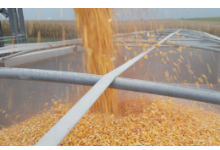
Appeal expected; jury awards $218M to Kan. farmers in seed case

KANSAS CITY, Kan. (AP) — The Latest on a Kansas jury’s award of nearly $218 million to Kansas farmers who sued Syngenta over genetically modified corn seed. (all times local):

11:25 a.m.

Swiss agribusiness giant Syngenta says it will appeal a Kansas federal jury’s awarding of nearly $218 million to Kansas farmers who sued the company over its introduction of a genetically modified corn seed variety.

Syngenta says in a statement that it is “disappointed” by Friday’s verdict after a three-week trial in Kansas City, Kansas. That case involves four Kansas farmers representing more than 7,000 growers in the state. Another trial involving about 60,000 cases begins next month in Minnesota.

The lawsuits allege Syngenta introduced the seed variety to the U.S. market before China approved it for imports, wrecking an increasingly important export market for U.S. corn and causing price drops.

The Kansas trial was the first test case. It and the Minnesota trial will provide guidance for how the complex web of litigation in state and federal courts could be resolved

___

11 a.m.

A federal jury in Kansas has awarded nearly $218 million to farmers who sued Swiss agribusiness giant Syngenta over its introduction of a genetically engineered corn seed variety.

Friday’s verdict after a three-week trial in Kansas City, Kansas, involves four Kansas farmers representing more than 7,000 farmers in the state. Another trial involving about 60,000 cases begins next month in Minnesota.

The lawsuits allege Syngenta introduced the seed variety to the U.S. market before China approved it for imports, wrecking an increasingly important export market for U.S. corn and causing price drops.

The Kansas trial was the first test case. It and the Minnesota trial will provide guidance for how the complex web of litigation in state and federal courts could be resolved.

Copyright Eagle Radio | FCC Public Files | EEO Public File