With a record number of children in state custody — more than 7,000 at the end of March — Kansas officials have made recruiting and retaining foster parents a priority.
Speaking at a recent Statehouse event, Gov. Sam Brownback said Kansas should reverse its current situation and have foster parents waiting to be assigned children.
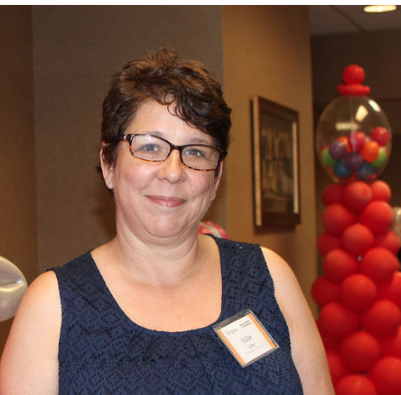
Julie Lane of Olathe, who has been a foster parent for 11 years, serves as executive director of the Kansas Foster and Adoptive Parent Association. She says foster children now tend to have more mental health and substance use issues. MEG WINGERTER / KANSAS NEWS SERVICE
“This is doable. We just need people to step up,” he said. “Listen to your heart. Don’t block it.”
But foster parents say it takes more than good intentions to care for children in state custody, especially those who have special needs or behavior issues.
Editor’s note: Kansas privatized its foster care system in 1997, after a lawsuit revealed widespread problems. Twenty years later, the number of Kansas children in foster care has shot up — by a third in just the last five years — and lawmakers are debating whether the system once again needs serious changes. The Kansas News Service investigated problems in the system and possible solutions. This is the fourth story in a series.
Jennifer Johnson said she and her husband started fostering teenage boys with special needs about six years ago at their Topeka home. They chose that group because she works as a high school special education teacher and because many families don’t want to take teens, she said.
“I’m comfortable with that age group, and a lot of people are not,” she said.
They had access to individual therapy, for the children, and family therapy, so she and her husband could learn how to encourage each child toward better behavior, Johnson said. They also could use attendant care for some of the children, so someone could watch a child if they had to be elsewhere, she said.
Some of the placements didn’t work, even with the supports. Several boys had to leave after they physically assaulted her or her husband, Johnson said.
In January they decided to stop fostering teens with special needs after one boy attacked a younger child who was visiting, she said. They currently foster four teens without special needs.
At first, Johnson said it felt like they had failed, because they viewed disruption of a child’s placement like divorce — something they never intended to do. But sometimes, they couldn’t keep a child in their home because of the risk to their family, she said.
“You take the kids where they’re at. You do the best you can,” she said. “You take care of your marriage and your family first while you’re helping the kids.”
‘Multiple layers of issues’
Julie Lane of Olathe, who serves as executive director of the Kansas Foster and Adoptive Parent Association, became a foster parent 11 years ago. Foster children now tend to have more mental health and substance use issues, she said.
Foster parents need education and support to deal with those conditions, she said, and have to contend with difficulty getting services following years of funding cuts to mental health.
“We’re seeing kids with a lot more severe issues and lot more multiple layers of issues,” she said.
Melissa Mendez, of Shawnee, told the House Children and Seniors Committee earlier this year that she feels “blessed” to be a foster parent but could use more help meeting children’s needs. She has fostered 11 children in less than three years, including three who currently live with her family.
Perhaps the most serious problem is when foster parents can’t get accurate information about a child’s history, Mendez said. For example, a caseworker told her a child had only one incident of physical aggression, but the child actually had serious mental health issues and violent behaviors and eventually was sent to a psychiatric facility, she said.
“He pulled my hair, punched me, bit me,” she said. “We were not equipped to provide for him. Because we were provided incorrect information, he had another loss in his life.”
Representatives for the two contractors that administer the Kansas foster care system, Saint Francis Community Services and KVC Kansas, say they provide extensive supports for foster parents. Kansas privatized its foster care system in 1997, with the Kansas Department for Children and Families overseeing the contractors.
Children in the foster care system get health insurance through KanCare, the state’s privately managed Medicaid system. Foster parents typically get a stipend of about $20 per day for a child’s needs. Some also qualify for help paying for child care. Benefits are less generous for family members who take in foster children, however.
Both contractors also assign a caseworker to conduct monthly visits with each foster family, answer questions and assist in emergencies.
Jenny Kutz, spokeswoman for KVC Kansas, said the organization regularly collects feedback from foster parents about better ways to assist them. KVC Kansas offers short-term respite care, help with back-to-school supplies and workshops in person, by phone and online.
Patrice Classen, director of the Saint Francis foster home program, said it also offers monthly training workshops that cover topics like handling children’s challenging behaviors, working with birth parents and addressing trauma. Saint Francis also provides family support groups and offer resources online and in print, she said.
The organization would like to offer more breaks for foster parents, Classen said, but a shortage of foster parents makes it difficult to find someone to take children for a night or weekend. Generally, parents get respite care for family emergencies or short trips out of town, she said.
“That’s one of the (services) we could use more of,” she said.
Mendez, of Shawnee, said child care remains a challenge for foster parents who work. The state’s payments for day care are low, she said, so foster parents who work have to make up the difference. Last-minute appointments also sometimes interfere with the family’s plans.
“Foster parents do have lives outside of foster parenting,” she said. “There are times when I don’t feel valued.”
Finding the right fit
Other foster parents, however, say they receive all the support they need. Denise J. Shellman, of Wichita, said the caseworkers for the two brothers in her care keep her up-to-date on any developments in their cases and typically return text messages within 10 minutes if she has a question. They also have been flexible in changing plans, she said.
For example, the older brother, who is 5, initially was placed in a different home, and his caseworker intended to gradually integrate him with the Shellmans over the summer, she said. His visits went well, and the caseworker agreed to move up his integration to May after Shellman requested it.
“I actually look forward to when (the caseworkers) come over,” she said. “I’ve heard a lot of horror stories — a lot of them — but I think it has a lot to do with communicating with your social workers.”
Placing children in the right home is key, Shellman said. The younger brother, age 4, had behavioral problems in his first foster home but adjusted well to a slower pace in her home, she said.
About a third of children in the Kansas foster care system are in kinship placements, where relatives or close family friends care for children removed from their homes without going through the full licensing process. They don’t always receive the same level of financial support that licensed foster homes do.
Melanie and Michael Craig of Salina are caring for three grandsons — ages 1, 2 and 9 — as part of a kinship foster care placement. CREDIT BRYAN THOMPSON / KANSAS NEWS SERVICE
Melanie Craig, of Salina, is caring for three grandsons — ages 1, 2 and 9 — as part of a kinship foster care placement. She and her husband wouldn’t want the boys placed with a family they don’t know, she said, but they have struggled to provide for them.
Craig quit her part-time job to care for the boys because they don’t qualify for child care assistance, she said, and they have occasionally turned to the Salvation Army for food and to other charities for diapers. The $150 one-time clothing allowance for all three boys and $349 in cash assistance each month haven’t covered the cost of food and the boys’ other needs, she said.
“Everything adds up,” she said. “It’s crazy. I’m really frustrated with the system.”
Craig said she could use a little extra help. She had to seek out a community organization that offered a few hours of free child care each week so she could take care of errands, and she and the boys’ mother have had to arrange visits on their own.
Saint Francis didn’t know the boys were going on overnight visits with their parents, because the caseworker forgot to record approving them before she went on medical leave, she said.
“The left hand doesn’t talk to the right hand or the foot, so they’re all kicking each other and hitting each other constantly,” she said.
Additional licensing rules
Despite the emphasis on finding more foster homes, DCF added steps to the licensing process after a July 2016 Legislative Post Audit report recommended the state pay more attention to family finances and the backgrounds of other people living in a foster home.
DCF reports about 2,800 licensed foster homes statewide, not counting kinship placements.
Under the new rules, anyone older than 10 in a foster home has to be fingerprinted and the family has to provide information about income and budget to show that another child can be supported.
Some families had concerns about the new rules, Classen of Saint Francis said, but those have tapered off.
Both contractors said they offer potential foster parents assistance with completing the licensing process, which can take six months or longer. As part of the process, parents have to complete 30 hours of training.
Not everyone completes the process, but that can be a good thing, said Johnson, the Topeka foster mother. If parents decide fostering isn’t for them, it prevents children from being placed in a home that isn’t prepared for their needs, she said.
“Our job is to get kids ready to go home or to be adults,” she said. “It’s not like you’re getting a puppy from the pound.”
Getting parents through the licensing process isn’t enough, however. Lane’s organization is working with KVC to arrange additional respite care for foster parents of difficult children, but they can’t offer it to everyone because of a shortage of workers and volunteers.
Foster parents are particularly vulnerable with their first few foster children, Lane said, and some surrender their licenses after a bad first placement.
“It really is an on-the-job learning experience,” she said. “I think we have some people jumping ship faster than we used to.”
Meg Wingerter is a reporter for the Kansas News Service, a collaboration of kcur.org, Kansas Public Radio and KMUW covering health, education and politics. You can reach her on Twitter @MegWingerter.
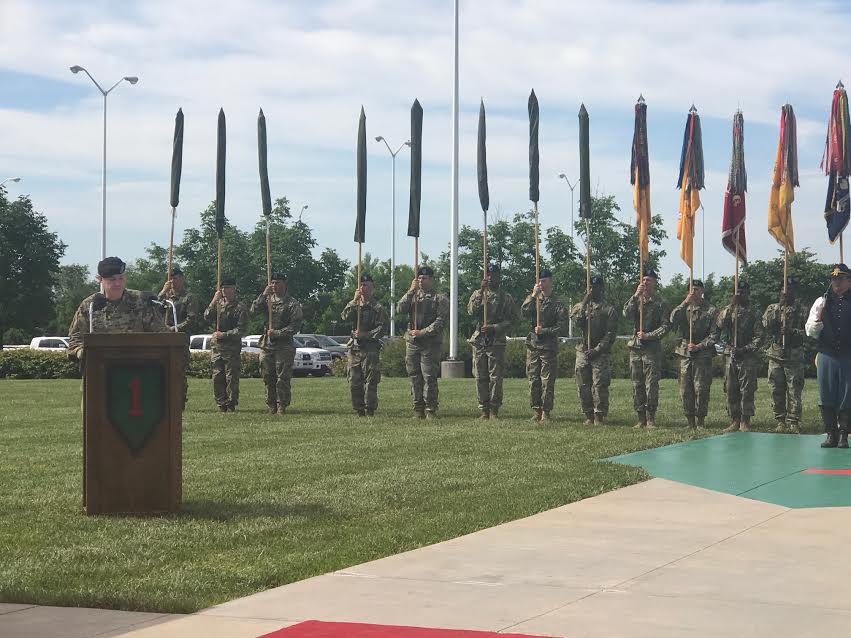
Fort Riley and 1ID Acting Senior Commander Brigadier General Patrick Frank at Thursday’s ceremony. (Photo courtesy JC Post)
OFFICE OF SEN. MORAN
WASHINGTON – U.S. Senators Jerry Moran (R-Kan.) and Pat Roberts (R-Kan.) this week applauded Senate passage of their resolution, S. Res. 115, to formally recognize the 100th anniversary of the First Infantry Division – officially nicknamed “The Big Red One” – based at Fort Riley, Kan. The division was organized on June 8, 1917. U.S. Representative Roger Marshall of the First Dist. (R-Great Bend) has introduced a companion resolution, H. Res. 267, in the U.S. House.
“Since 1917, Big Red One soldiers have fought bravely and sacrificed to protect our nation from global threats,” said Sen. Moran. “On the 100th anniversary of the First Infantry Division, we honor the efforts of all who have served and continue to serve in the Big Red One to defend so many lives, protect our American ideals and preserve freedom for all.”
“Known around the world for their heroism and their distinctive ‘Big Red One’ shoulder patch, the U.S. Army’s First Infantry Division has led our fighting forces and protected our nation from threats around the world for 100 years,” said Sen. Roberts. “I am proud to introduce this resolution to recognize the valiant efforts of these men and women in uniform and to honor those of the First Infantry Division who have made the ultimate sacrifice during their service to our nation. As their motto states: ‘No Mission Too Difficult, No Sacrifice Too Great, Duty First!’ It is an honor to represent Ft. Riley and the First Infantry Division.”
As members of the first permanent combined arms division of the U.S. Army, soldiers of the Big Red One have been among our nation’s greatest fighting forces in conflicts around the globe since World War I. Big Red One fighting forces are memorialized at monuments throughout the United States and Europe, including Normandy, France, overlooking Omaha Beach and sites in Belgium and the Czech Republic as well as our nation’s capital on the White House grounds.
On Tuesday, June 6, the anniversary of D-Day, Sen. Moran visited the Big Red One Memorial in Washington, D.C. and paid tribute to Big Red One soldiers alongside retired former Commanding Generals of the 1st Infantry Division, including General Carter Ham, LTG Bob Durbin and LTG Kenneth Hunzeker.
NEWTON— A great crowd turned out to see the Amtrak test train that made a stop in Newton Friday afternoon.
The train, carrying officials from Amtrak, BNSF Railway and county, city and state officials from Oklahoma and Kansas, continues its study on bringing back rail passenger service between Kansas City and Fort Worth. The route is already served from Oklahoma City southward.
Joe McHugh, vice president of Amtrak, says the trip went smoothly as officials from both companies discussed what would need to be done to the infrastructure, since the proposed line sees significantly more train traffic than when Amtrak last ran on the line.
Newton residents gathered at the station to welcome the train. Conductors provided tours of the train during its 20-minute stop. McHugh says the interest on re-establishing the line continues to grow, as the bus service currently provided by Amtrak to Oklahoma City continues to increase ridership.
Due to cuts by Congress, the Reorganization Act of 1979 pressed by the U.S. Department of Transportation under the Carter administration, Amtrak’s Lone Star — as it was called back then — was discontinued on Oct. 8, 1979. At the time of its discontinuance, the train was ranked as Amtrak’s 7th-most-popular long-distance train.
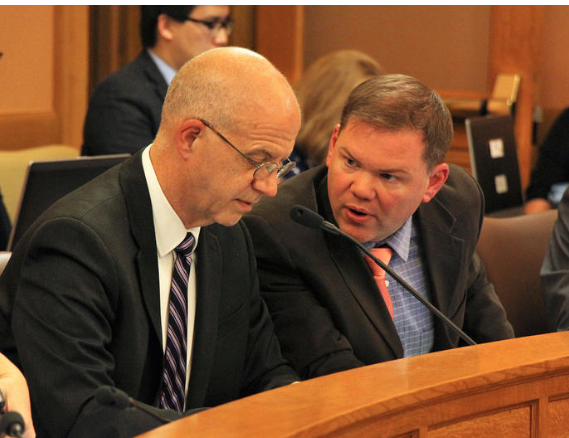
Kansas legislative research staff members J.G. Scott, left, and Dylan Dear confer while answering questions from lawmakers during Thursday night’s negotiations. A panel of senators and representatives worked toward a compromise between two budget bills. CELIA LLOPIS-JEPSEN / KANSAS NEWS SERVICE
TOPEKA, Kan. (AP) — Kansas legislators are trying to resolve their differences over pay raises for state employees and settle their last remaining budget issues so they can end their annual session.
House and Senate negotiators met for a second day Friday to draft a final version of the state budgets for the fiscal year beginning July 1 and the fiscal year starting in July 2018.
Lawmakers cannot adjourn their annual session without finishing work on the spending blueprints for state government.
A key issue was pay raises for state employees.
The Senate approved a 2 percent pay raise for all workers. The House approved pay raises averaging 11 percent for workers in the court system other than judges. The judicial branch has said its pay lags well behind market rates.
———-
ByCELIA LLOPIS-JEPSEN
The Kansas House and Senate worked into the night Thursday on a state budget, just two days after voting
Negotiators from both chambers launched into evening talks shortly after the House passed a multiyear spending plan that differs from the Senate’s on key points such as pay raises for state employees.
Lawmakers are just days from setting a record for the state’s longest legislative session. But if negotiations proceed smoothly, they could wrap up the budget this week.
Senators passed their budget Sunday. After hours of debate Thursday, 99 of the House’s 125 members approved their 500-page spending blueprint, which includes appropriations of more than $6 billion annually from the state general fund.
“We’re able to balance our budget, pay our bills, have an ending balance,” Topeka Republican Rep. Brenda Dietrich said after casting her vote in favor. “And any of the additional spending that we’re doing is primarily necessity, which is making our KPERS payments.”
Olathe Republican Rep. Erin Davis described the lengthy floor debate as positive.
“I just want to commend the leadership for letting us actually have a debate on the floor,” she said. “It’s been a few years since we’ve been able to do that, and let the entire chamber have their say.”
But the bill met with opposition from some conservatives who decried state spending as too high, and from some Democrats who said the package doesn’t do enough.
“My biggest disappointment is it does not include a raise for many, many, many of my constituents that work for the state and have not gotten a raise for going on 10 years,” said Topeka Democratic Rep. Vic Miller, who expressed hope the House would defer to the Senate’s position, which includes salary increases for state employees. “Should they do that then I’ll likely vote yes.”
The Senate’s plan includes about $120 million over the next two fiscal years for that purpose.
Some lawmakers also worried the Legislature will continue to funnel hundreds of millions of dollars from the Kansas Department of Transportation to cover other areas of the state budget.
“We can’t keep doing it this way,” said Rep. John Carmichael, a Wichita Democrat.
Other features of the House budget include higher payments into the pension system in 2018, nearly $5 million for additional beds at Osawatomie State Hospital and extra funding for maintenance and repair staff at Larned State Hospital.
The House plan boosts support for community mental health centers and services designed for seniors who need assistance to be able to stay in their homes longer. It also alleviates budget cuts at Kansas State University and the University of Kansas, which experienced steeper reductions in state aid than other Board of Regents institutions last year.
The Senate’s version differs on dozens of points, from pension payments to IT and health care spending.
Negotiators didn’t need to cover K-12 spending Thursday because the House and Senate agreed on an education budget earlier this week and sent it to Brownback.
Celia Llopis-Jepsen is a reporter for the Kansas News Service, a collaboration of KUCR.org, KPR and KMUW covering health, education and politics. You can reach her on Twitter @Celia_LJ.
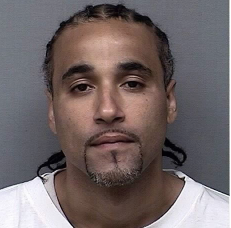
OLATHE, Kan. (AP) — A man who spent nearly 17 years in prison for a 1999 robbery is free after supporters found another man who looked like him and lived near the crime scene.
Richard Anthony Jones, of Kansas City, Missouri, was freed Thursday. He always maintained he didn’t commit the robbery in Roeland Park and, after a hearing on Wednesday, a Johnson County judge ordered him released.
The Kansas City Star reports witnesses at Wednesday’s hearing, including the robbery victim, testified they could no longer say if Jones committed the crime after seeing pictures of the two men.
Johnson County District Judge Kevin Moriarty then ruled the new evidence made it unlikely that another jury would convict Jones of the crime.
The other man testified Wednesday that he didn’t commit the robbery.
TOPEKA – The Kansas Department of Health and Environment (KDHE) has discovered that four Culex species mosquito pools collected from traps in Reno, Shawnee and Johnson counties are positive for West Nile virus in preliminary testing, and that two birds in Shawnee County have tested positive for West Nile virus.
In addition, Kansas is reporting the first case of West Nile virus in 2017 in a person from Barton County. These findings may indicate that West Nile virus transmission could occur much earlier in 2017 than in previous years.
The Culex species are known to transmit West Nile virus, but are not known to transmit Zika virus.
West Nile virus can be spread to people through bites from infected mosquitoes, but it is not contagious from person to person. Symptoms range from a slight headache and low-grade fever to swelling of the brain or brain tissue and in rare cases, death. People who have had West Nile virus before are considered immune.
KDHE has developed West Nile virus risk levels to help guide prevention efforts for both communities and individuals. These risk level reports will be posted weekly at https://www.kdheks.gov/epi/arboviral_disease.htm. All three regions of Kansas are currently at the high risk level.
KDHE recommends the following precautions to protect against West Nile Virus:
When you are outdoors, use insect repellent containing an EPA-registered active ingredient on skin and clothing, including DEET, picaridin, oil of lemon eucalyptus or IR3535. Follow the directions on the package.
Many mosquitoes are most active at dusk and dawn. Be sure to use insect repellent and wear long sleeves and pants at these times, or consider staying indoors during these hours.
The elderly or immunocompromised should consider limiting their exposure outside during dusk and dawn when the Culex species mosquitoes are most active.
Make sure you have good screens on your windows and doors to keep mosquitoes out.
Get rid of mosquito breeding sites by emptying standing water from flower pots, buckets and barrels.
Change the water in pet dishes and replace the water in bird baths weekly.
Drill holes in tire swings so water drains out.
Keep children’s wading pools empty and on their sides when they are not being used.
Cases are most common in the late summer and early fall. In 2012, there were 57 cases of West Nile virus in the state, the most cases since the virus first made its way into Kansas in 2002. More recently, in 2016, 34 cases were identified in Kansas. Among these cases, 21 were hospitalized, and there were five deaths. In addition to tracking cases of human illnesses caused by West Nile virus, KDHE assesses the potential for West Nile virus by conducting mosquito surveillance, including laboratory testing.
Birds generally are not tested for West Nile virus in Kansas, and KDHE will not be collecting information about dead birds. If you find a dead bird, KDHE recommends that you wear gloves, place the bird in a plastic bag, and dispose of it in the garbage.
BARTON COUNTY – Law enforcement authorities in Barton County are investigating on drug charges.
Just after 11 a.m. Thursday, Barton County Sheriff’s Office deputies received information about a suspected marijuana grow operation near the city of Galatia.
Detectives were able to obtain a search warrant. It was executed in the 700 block of North West 200 Road, according to a media release.
Upon searching the residence and related property, officers located a large marijuana growing operation. The operation was both indoor and outdoor. The plants ranged in size from seedlings to mature plants. The operation consisted of irrigation and cultivation practices. In excess of 1,146 cultivated marijuana plants were seized as well as cultivation supplies, irrigation and other equipment.
Deputies arrested Arthur Kronenberg, 32, Olmitz.
He was booked into the Barton County jail on charges of cultivation and distribution of marijuana, possession of marijuana, possession of drug paraphernalia and no drug tax stamp. Kronenberg is being held in lieu of $300,000 bond.
Approximate location of Friday’s drive-by shooting-google map
SEDGWICK COUNTY – Law enforcement authorities in Sedgwick County are investigating a drive by shooting.
Just before 12 a.m. Friday, officers responded to report of a shooting in the 2900 Block of East Ellen in Wichita, according to Sgt. Nikki Woodrow during the daily media briefing.
Upon arrival, officers found seven individuals inside the residence ranging in age from 3 to 57.
The residence was struck multiple times by gunfire. A 57-year-old woman was wounded and transported to a local hospital in serious condition, according to Woodrow.
Police have no suspects. They do not believe the shooting is gang related, according to Woodrow.
They ask that anyone with information to call Wichita police.
Governor Brownback during a Wednesday news conference
TOPEKA, Kan. (AP) — A major financial rating agency says Kansas’ credit outlook is stable after lawmakers overrode Republican Gov. Sam Brownback’s veto of a bill that largely rolls back the income tax cuts he championed in recent years.
The Kansas City Star reports that Moody’s Investor Services affirmed the state’s Aa2 credit rating and revised its outlook from negative to stable after the legislation action Tuesday night.
Kansas has experienced multiple credit downgrades in recent years. Moody’s says the state has repeatedly hurt its credit outlook by depleting cash reserves and deferring pension contributions, but the $1.2 billion tax increase would “go a long way toward solving the state’s budget challenges.”
Moody’s also upgraded the credit rating for the state’s IMPACT bonds, which are based on income tax, from A1 to A3.
SHAWNEE COUNTY – Law enforcement authorities are investigating a Wednesday kidnapping, have found the body of a victim and continue to search for a suspect.
Just after 4:30 Thursday, police responded after a body of a woman was found near the area of SW 1st Street and Marshall in Topeka, according to Police Lt. Jennifer Cross
in a media release.
Just before 10p.m., authorities identified the deceased kidnapping victim as Viviana Vazquez, 33, Topeka.
Police continue the search for Pedro Enriquez, 38, Topeka, who took Vazquez, against her will Wednesday. He was last seen leaving a residence in 1300 BLK SW Garfield in Topeka Wednesday morning in a silver Chrysler PT Cruiser displaying Kansas license plate 057 JJU.
Police indicated he has ties to Mexico and may attempt to leave the country to avoid capture.
Vazquez filed for divorce in April, and divorce records show that the couple had 3- and 10-year-old children. Authorities say two children were left behind during the kidnapping and weren’t hurt.
WILSON COUNTY – The Kansas Bureau of Investigation (KBI) and the Fredonia Police Department arrested a Fredonia man for his alleged involvement in a Thursday morning homicide, according to a media release.
At approximately 10 a.m. Thursday, June 8, the KBI was asked by the Fredonia Police Department to assist in investigating a suspected homicide.
The initial investigation indicates 50-year-old Eddie Cohee was murdered at his residence at 613 Jackson St. in Fredonia sometime Thursday morning. Officers from the Fredonia Police Department arrived at the residence at approximately 9:30 a.m. to perform a welfare check and found Cohee deceased. Authorities believe Cohee suffered from blunt force trauma. The autopsy is currently pending.
Sean Cohee, age 25, of Fredonia, was arrested and booked into the Wilson County Jail at approximately 11 a.m. today for first degree murder. He is the victim’s son.
The Wilson County Sheriff’s Office and the Montgomery County Sheriff’s Office assisted in this investigation.
Cohee has a previous drug conviction in Wilson County.