We have a brand new updated website! Click here to check it out!

AG secures $1.2M from dollar store chains for selling expired products

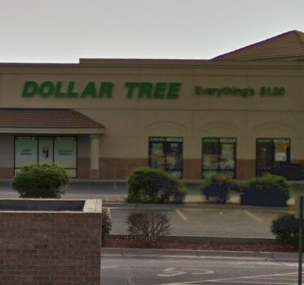
NEW YORK – Attorney General Letitia James announced Tuesday that discount retail chains Dollar General, Dollar Tree, and Family Dollar will pay $1.2 million in fines and damages for selling expired products.

The settlements resolve a multi-month undercover investigation over the chains’ sale of expired over-the-counter drugs, Dollar General’s sale of obsolete motor oil, and Dollar Tree and Family Dollar’s failure to comply with New York’s bottle deposit law.

google image

“It’s a tough pill for customers to swallow that the over-the-counter drugs they were buying may have been expired,” said New York Attorney General Letitia James.

“Consumers have a right to expect that products on store shelves are safe, fresh and suitable for their advertised use. These settlements will ensure that Dollar General, Dollar Tree, and Family Dollar will not only pay both a substantial fine and damages, but, more importantly, update their business practices to comply with the law so that no expired over-the-counter drugs are sold to a consumer again.”

Beginning in March 2016, investigators for the New York State Office of the Attorney General conducted undercover visits to numerous Dollar stores throughout New York State to inspect store shelves for expired products. At a number of Dollar General, Dollar Tree, and Family Dollar stores, investigators found over-the-counter drugs that were months beyond their expiration dates. New York law prohibits the sale of over-the-counter drugs beyond the date marked on the product’s label.

Google image

Additionally, investigators also found on shelves at a number of Dollar General stores a variety of Dollar General-branded motor oils that are obsolete, including DG SAE-30 — which is not suitable for most automobile engines built after 1930 — and DG SAE 10W-40 and DG SAE 10W-30 motor oils — which are not suitable for use in most engines built after 1988. The Dollar-General branded motor oil bottles used the same or similar descriptors as other brands of motor oil that are suitable for modern engines and were placed next to those brands on store shelves. There were also no on-shelf signs near those products to warn consumers of their unsuitability for use in modern engines.

Finally, beginning in December 2017, undercover investigators visited a number of Dollar Tree and Family Dollar stores and attempted to return bottles that are subject to New York’s bottle deposit law. At some stores, investigators were either told that the store did not accept deposit bottles for return, or would only accept them with proof of purchase, in violation of New York’s bottle deposit law, which requires retail stores to accept beverage containers for redemption if they are of the design, shape, size, color, composition, and brand sold or offered for sale at the store. At some stores, investigators also purchased a Starbucks brand bottle of Frappuccino, and in some cases, were charged a bottle deposit, even though the bottles are not subject to New York’s bottle deposit law.

The settlements with both Dollar General and Dollar Tree/Family Dollar (Dollar Tree acquired Family Dollar in 2015, but each chain continues to maintain separate store operations) require the New York stores to make significant reforms to their policies and procedures for managing their stock of over-the-counter drugs, including:

  • Maintaining and utilizing a system for electronically recording and tracking the expiration dates on merchandise delivered to their distribution centers,
  • Maintaining and enforcing policies and procedures that require employees to rotate stock when restocking store shelves, as well as conducting weekly inspections of store shelves to remove any expired products,
  • Conducting monthly audits of each retail store to check for expired products, and
  • Instituting third-party audits of 10% of the chains’ New York stores for a period of at least one
    year to check for expired over-the-counter drugs.

Additionally, Dollar General discontinued the sale of obsolete motor oil during the course of the investigation and has agreed to pay $1,100,000 in restitution, damages, penalties, and costs to the State of New York. Dollar General customers who purchased obsolete motor oil may file a complaint online or call 1-800-771-7755 to be mailed a form.
 

Kansas City-area man charged in beating death of his mother

KANSAS CITY (AP) — A man has been charged in the fatal beating of his mother.

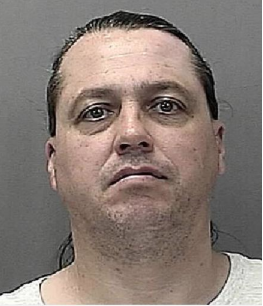
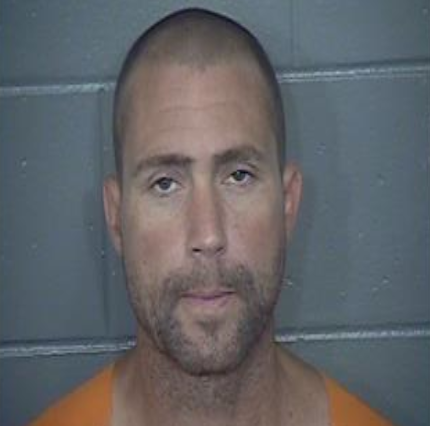
Lucas Mauritzen photo Jackson Co.

Jackson County authorities say Lucas Mauritzen, 38, Independence, Mo., was charged Tuesday with first-degree murder and armed criminal action.

Court records indicate his mother, Tamera Rainey, was found dead Saturday at an Independence home.

Court records say Mauritzen told a detective he hit his mother throughout the day Saturday and did not try to help her when had trouble breathing. After she died, Mauritzen left and slept at a friend’s house. Mauritzen reportedly told a detective he went back to the home Monday and then went to a neighbor’s house, where he allegedly said “I had to put her down.”

Online court records don’t identify an attorney for Mauritzen.

Police ask for help to locate Kan. felon who allegedly shot woman

SHAWNEE COUNTY — Law enforcement authorities are investigating a shooting and asking the public for help to locate a suspect.

Donald Jackson, Jr. photo Topeka Police

Just after 11:00 p.m. Tuesday, police were dispatched to the 2500 Block of SW Clay in Topeka after report of a shooting, according to Lt. Aaron Jones.

Upon arrival, officers located a woman who was suffering from a non-life threatening gunshot wound to the leg. AMR transported her to a local hospital for treatment.

Information gathered has led investigators to issue an attempt to locate for Donald Jackson Jr, 44 of Topeka.  He was last seen leaving the area in a small, red, two door vehicle, according to Jones.

Police advised the public not approach Jackson and notify law enforcement if you see him.

Jackson has numerous convictions that include arson, criminal threat, obstruction and for drugs, according to the Kansas Department of Corrections. He was released from prison August 15.

Kansas, other states seek to fix Missouri River flood bottlenecks

JEFERSON CITY, Mo. (AP) — After a year of devasting flooding, several Midwestern states are joining together to try to identify bottlenecks along the Missouri River that can cause waters to back up and worsen flooding in certain areas.

Flood Recovery Advisory group met Tuesday photo courtesy Missouri Dpt. of Agriculture

Officials in Kansas, Missouri, Iowa and Nebraska teamed up to submit a draft study proposal Tuesday to the U.S. Army Corps of Engineers, which manages dams and helps design many of the major levees in the Missouri River basin, said Dru Buntin, deputy director of the Missouri Department of Natural Resources.

The analysis, which could take up to six months to complete, would identify constriction points such as levees, roads or bridge embankments that can increase the river’s chances of flooding. Federal, state and local officials then could come up with alternatives as part of a regional approach to reducing the damage from future floods, Buntin said.

“We’re not going to go back to the years in the past, where all of the sudden once the flood’s over we go back to the same practices, the same ways that we have always done things,” Missouri Gov. Mike Parson said. “It’s time to make changes.”

The plan was announced at the first meeting of a Missouri flood recovery task force. Other states and cities also are rethinking the way they rebuild from floods, which some experts contend are becoming more likely due to climate change. Some officials from Midwestern states also have blamed the Corps’ river management practices for contributing to the floods.

The Missouri meeting was attended by U.S. Army Corps of Engineers leaders from district offices in Kansas City, St. Louis, Omaha, Nebraska, and Rock Island, Illinois.

Col. John Hudson, commander of the Corp’s Omaha District, cautioned that fixing pinch points along the river is not a long-term solution because new problem spots could emerge elsewhere. The bigger challenge, he said, is the overall care and capacity of the Missouri River system, which includes six major dams in South Dakota, North Dakota and Montana.

The Corps has estimated that it could cost more than $1 billion to repair levees damaged by this year’s flooding in the Missouri River basin. Flooding and severe storms have caused an estimated $1.2 billion of additional damage to public infrastructure in about two dozen states, according to an Associated Press analysis.

Those figures don’t include damage to homes, businesses and farms. In Missouri alone, an estimated 1.2 million acres (0.49 million hectares) of farmland were flooded and more than $100 million of crop insurance already has been paid to more than 12,000 claimants, federal and state officials said Tuesday.

Officials hoping to fix flood bottlenecks pointed to Iowa Highway 2 as one example. The four-lane road was flooded and washed out along its approach to a Missouri River bridge that connects with Nebraska. Highway engineers say part of the problem rests with a levee that juts closer to the river at that point, creating a narrow passageway for raging floodwaters.

The Iowa Department of Transportation has approved a $34 million project to re-align the levee and build a pair of 1,000-foot-long (305-meter-long) bridges before the road reaches the main Missouri River bridge. By widening the path for flood waters, studies indicate the upstream water level could drop by as much as 1 foot during a major flood, said Charlie Purcell, director of the project delivery division at the Iowa Department of Transportation.

“It basically reduces the amount of water that kind of piles up upstream of the bridge location,” Purcell said. “It will lessen the likelihood of levee overtopping.”

Police: Kansas felon found on top of victim just before arrest

HUTCHINSON, Kan. — A Kansas felon is in more trouble after his alleged involvement in a case of domestic violence.

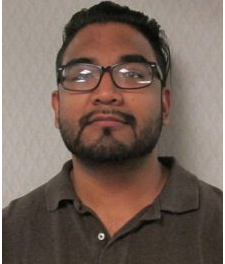
Pina photo KDOC

Arthur Pina Jr., 31, Hutchinson, is charged with aggravated kidnapping, aggravated domestic battery, possession of methamphetamine and felony interference.

Police were called to a Hutchinson home on the report of a disturbance and tried to make contact with Pina. He refused to open the door, so officers had to break a window to gain entry. Once inside, they found Pina on top of the victim. He refused to follow their commands and was eventually placed into custody.

According to the criminal complaint, he may have choked the victim and at some point as he held her down.

He has ten previous convictions that include intent or reckless cause/permit a child less than 18 to be injured/endangered, criminal restraint, domestic battery and for drugs, according to the Kansas Department of Corrections. He had been out of prison since April 2018.

With the criminal charges filed, Pina is expected back in court next month.

The Latest: Lawyers drop subpoena for lottery scandal book notes

IOWA CITY, Iowa (AP) — The Latest on a subpoena seeking an Iowa journalist’s notes from a book on a lottery scandal (all times local):

Tipton – Iowa Dept. of Corrections

Lawyers are withdrawing a subpoena that sought the interview notes of an Iowa journalist who wrote a book about a lottery insider who rigged jackpots in several states.

Perry Beeman received the subpoena last week from lawyers for Larry Dawson, an Iowa jackpot winner who contends that the rigging reduced his prize by millions of dollars.

Beeman co-wrote a recent book, “The $80 billion Gamble,” with former Iowa Lottery CEO Terry Rich. It tells the story of how now-imprisoned lottery security contractor Eddie Tipton altered number-picking programs on computers to win jackpots in Colorado, Wisconsin, Kansas and Oklahoma.

The subpoena ordered Beeman to turn over his correspondence with Rich since January 2018, including notes related to four interviews conducted last year.

But on Tuesday, hours after The Associated Press published a story about the request, Dawson’s legal team decided to withdraw the subpoena after speaking with Beeman.

Beeman says he’s happy with that decision.

__

10:40 a.m.

An Iowa journalist who wrote a book about the lottery insider who rigged jackpots in several states has been subpoenaed to turn over notes related to his reporting.

Perry Beeman received the subpoena last week from lawyers for Larry Dawson, an Iowa jackpot winner who contends that the rigging reduced his prize by millions of dollars.

Beeman co-wrote the recent book “The $80 billion Gamble” with former Iowa Lottery CEO Terry Rich. It tells the story of how now-imprisoned lottery security contractor Eddie Tipton altered number-picking programs on computers to win jackpots in Colorado, Wisconsin, Kansas and Oklahoma.

The subpoena orders Beeman to turn over his correspondence with Rich since January 2018, including notes related to four interviews they conducted last year.

Beeman says he is considering his options for responding to the request. He says he has objected to subpoenas previously because they have “a chilling effect on the reporting process.”

The Iowa Supreme Court has ruled that reporter’s sources, unpublished information and notes are privileged material and may be subject to disclosure only in limited circumstances.

Kansas man jailed after explosive device found near elementary school

FINNEY COUNTY — Law enforcement authorities are investigating a suspect in connection with an explosive device in Garden City.

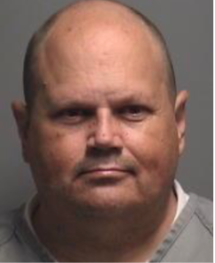
Dortch photo Finney County

Just after 8a.m. Monday police responded to report of criminal damage in the 1300 Block of North 8th Street in Garden City, according to Sgt. Lana Urteaga.

At the scene, officers located a suspicious package that was a believed to be an explosive device. Officers secured the area and closed the 1200 to 1400 Block of 8th street for over 6 hours. They also notified officials with nearby Abe Hubert Elementary School of the situation. The school chose to go do an exterior lockdown during the investigation, according to Urteaga.

Police and the Kansas Highway Patrol determined the device was fireworks put together not for their intended purposes and used to make an explosive device, according to Urteaga. They also arrested 22-year-old Tristen Dortch of Garden City.

He is being held on a $25,0000 bond of on requested charges that include criminal use of an explosive device, criminal threat and criminal damage to property, according to the Finney County Jail.

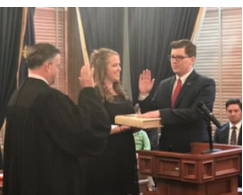
Evergy celebrates merger, rings opening bell at New York Stock Exchange

NEW YORK CITY– Evergy leaders rang the opening bell at the New York Stock Exchange Tuesday to commemorate the upcoming name change for its operating companies.

KCP&L and Westar Energy, which merged in June 2018 will begin operating as Evergy in October.

“Last year KCP&L and Westar joined to form a leading Midwest energy company,” Terry Bassham, Evergy president and chief executive officer, said.

“As Evergy we are bringing efficiencies to our operations, stabilizing prices and maintaining our close ties with our communities.”

Coroner identifies Kan. man who died rock climbing in Colorado canyon

BOULDER COUNTY, CO — Law enforcement authorities are investigating of a Kansas man who died after falling while rock climbing Saturday in Colorado and have identified the victim.

According to Coroner Emma R. Hall , the victim has been positively identified as Matthew Hagney, 50, of Bel Aire, Kansas.

He and a companion had just completed a climbing route and were searching for a way to descend. When the Hagney walked to the edge of a cliff to look over, a rock gave way and he fell.

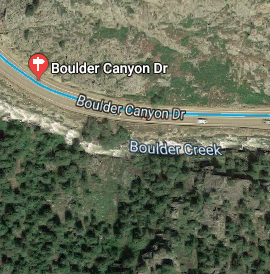
His body was found in the 32700 block of Boulder Canyon Drive, in an area called the Bell Buttress in Boulder Canyon about 9 miles  west of downtown Boulder.

An autopsy has been completed and the cause and manner of death are pending further investigation, according to Hall.


Federal judge blocks Missouri’s 8-week abortion ban

KANSAS CITY, Mo. (AP) — A new Missouri ban on abortions at or after eight weeks of pregnancy won’t take effect Wednesday after a federal judge temporarily blocked it from being implemented.

U.S. District Judge Howard Sachs put a pause on the law as a legal challenge against it plays out in court.

Planned Parenthood and the American Civil Liberties Union of Missouri filed the lawsuit, arguing that the law is unconstitutional and goes against the landmark 1973 U.S. Supreme Court Roe v. Wade ruling that legalized abortion nationwide.

The law includes exceptions for medical emergencies, but not for rape or incest. If courts don’t uphold the eight-week ban, the measure includes a series of less-restrictive bans ranging from 14 weeks up to 20 weeks. The policy also bans abortions based solely on race, sex or a diagnosis indicating the potential for Down syndrome.

Similar laws have been struck down in North Dakota and Iowa.

Attorneys for the state can appeal the judge’s ruling. They argue that courts have allowed limits on abortions based on the gestational age of the fetus, although similar abortion restrictions in North Dakota and Iowa have been struck down by judges. In court documents, they told the judge that the state’s goal is “protecting fetal life” as well as protecting women. During a court hearing Monday, Missouri Solicitor General John Sauer’s argument centered on his contention that Planned Parenthood and the ACLU do not have standing to challenge the law.

Federal law allows states to prohibit abortions after fetuses are viable outside the womb, which can be from 24 to 28 weeks.

Missouri’s law also includes an outright ban on abortions except in cases of medical emergencies, but that would take effect only if Roe v. Wade is overturned.

Missouri already has some of the nation’s most restrictive abortion regulations. Just one clinic in the state performs abortions.

Appellate court to hear Kan. vet’s fight to keep daughter in US

KANSAS CITY, Kan. (AP) — A federal appellate court will hear the case of a retired Army lieutenant and his wife who are seeking to keep their adopted Korean-born daughter in the country after she graduates from college.

Patrick Schreiber, wife and daughter-courtesy photo

Attorneys for the family of Hyebin Schreiber said Monday that the hearing is set for next month. Schreiber was 15 when she went to live with her aunt and uncle, Army veteran Patrick Schreiber, in Lansing, Kansas, because of family problems in Korea.

Schreiber’s deployment to Afghanistan caused the couple to put off her adoption until she was 17. The age limit for a foreign-born adopted child to become a naturalized U.S. citizen is 16.

She currently is in the U.S. legally on a student visa, but could be forced to leave after she graduates from the University of Kansas.

Police: 15-year-old Kan. girl threatened boy on social media

RILEY COUNTY — Law enforcement authorities are investigating a teen after an alleged threat.

Just before 7:30 a.m. Monday, police filed a report for aggravated criminal threat in the 1900 block of Lincoln Drive in Manhattan, according to the RCPD activity report.

Officers listed a 15-year-old boy as the victim and a 15-year-old girl as the suspect when it was reported she threatened the victim on social media while displaying a weapon.  Police have not reported an arrest.

Snapchat

On August 21, a citizen alerted the Riley County Police Department that a video had been posted to the social media messaging phone app Snapchat which depicted a 15-year-old boy and 15-year-old girl holding what appeared to be a gun and making threatening statements, according to Captain Josh Kyle.

Preliminary investigation indicates the video was directed at a different 15-year-old boy and a 17-year-old boy.

All the parties mentioned are students at Manhattan High School West Campus.

Copyright Eagle Radio | FCC Public Files | EEO Public File