We have a brand new updated website! Click here to check it out!

Kansas Officials To Students: Tell Us How We Can Help Prevent Bullying

TOPEKA — Bullying just won’t go away. If anything, the advent of smartphones and social media has made it worse.

Students walk to class at a Topeka high school.
CHRIS NEAL / FOR THE KANSAS NEWS SERVICE

That’s forced a conversation on what Kansas schools can do to help. The problem? It’s easier to get adults to weigh in than students.

Earlier this year, Kansas put together a panel of teachers, counselors, officials and others to craft recommendations that will go to the Kansas State Board of Education for consideration this winter.

Kansas has had an anti-bullying law for more than a decade with basic requirements for school policies and procedures.

It’s too early to know what new measures the panel will suggest. It could be anything from tweaks to state policies to guidance on how schools should handle bullying incidents.

“Some of those things are already there,” said Myron Melton, who works for the state Department of Education. “But we know that they haven’t been fully effective in remedying the problem. Our goal now is to say, what’s missing?”

Anyone can send in their thoughts and ideas by email, but should know that those letters become part of the panel’s meetings and materials. They are available to the public and archived online.

Instructions for writing to the panel

The education department also has a chat room dedicated to the topic that functions similar to a closed Facebook group. It’s hosted on the pro-privacy social media platform called MeWe; only people age 16 and older can use it.

Cyberbullying on the rise

A survey released by the U.S. Department of Education last month shows an uptick in cyberbullying reports. And girls were more likely than boys to say others had bullied them through social media and texts.

Equality Kansas, a civil rights group that fights discrimination based on sexual orientation or gender identity, pushed for the anti-bullying legislation more than a decade ago and has called for additional measures since.

“There are districts that have done the absolute bare minimum” under the current law, executive director Tom Witt said. Others “have gone all out in educating their faculty and students on bullying prevention.”

“And there’s no correlation between the size of the district and the quality of their bullying prevention efforts,” he added. “It’s real spotty.”

Among the changes Equality Kansas wants to see: Require all districts to explain their anti-bullying policies, procedures and prevention efforts online, and give hard copies of those policies to students and parents at enrollment.

That would help solve the problem of students not knowing how to seek help, who at their district handles bullying allegations and in what way they process those allegations.

Witt said his organization frequently gets questions about how students can seek help or how a district handles bullying allegations, and parents get frustrated when schools aren’t responsive.

“It’s a persistent problem with at least a partial solution,” he said.

The anti-bullying panel’s public meetings wrap up Dec. 2, so comments should be submitted before then.

Celia Llopis-Jepsen reports on consumer health and education for the Kansas News Service. You can follow her on Twitter @Celia_LJ or email her at celia (at) kcur (dot) org. 

Kansas HPV vaccine rates improve significantly

KDHE

TOPEKA – Today, the National Immunization Survey regarding Teens released its annual report for 2018 which shows Kansas is improving in vaccine rates for HPV and MenACWY and remaining consistent with Tdap. This report is available in the Morbidity and Mortality Weekly Report from the Centers for Disease Control and Prevention.

The survey, which is conducted among teens ages 13 to 17, monitors the vaccines received by adolescents, specifically HPV, MenACWY and Tdap.*

“In 2014, Kansas had the lowest coverage in the nation for the HPV vaccine with only 34.4 percent of respondents reporting one or more doses received,” said KDHE Secretary Lee Norman, MD. “I’m very pleased to report that Kansas is now at 62.3 percent coverage in 2018, up significantly from 52.4 percent in 2017.”

Activities that have contributed to the increase in HPV Vaccination coverage, include:

  • Education for vaccine providers throughout the state during Vaccines For Children program site visits
  • Education provided at Kansas Immunization Conferences
  • Development of HPV Toolkit by the Immunize Kansas Coalition funded by the KDHE
  • Multiple partner organizations conducting efforts to increase awareness and importance of the HPV vaccine
  • Focus on the importance of provider recommendation to patients to receive the vaccine

Kansas has seen an average increase in HPV coverage of 6.3 percentage points annually since 2014 while the national average increase has been 4.4.

“One of the most significant factors to successful vaccination against HPV cancer appears to be a recommendation from a medical provider,” Secretary Norman said.

The survey demonstrates that, in Kansas for 2018, of those who received the recommendation from a medical provider, 69.5 percent received the vaccination while only 35.8 percent received the vaccination without a provider recommendation.

The Advisory Committee on Immunization Practices (ACIP) routinely recommends HPV vaccination at age 11 or 12. In addition, ACIP has recently updated their recommendation to include some adults up to age 45 based on the safety and effectiveness of this vaccine against some HPV cancers.[1]

The MenACWY vaccine coverage increased from 72.1 percent in 2017 to 75.3 percent in 2018. This school year, MenACWY has just become a required vaccination for school entry.

*Vaccine Description:

  • Tdap – protects against tetanus, diphtheria and pertussis. Recommended for ages 11-13. Healthy People 2020 target is 80 percent coverage. Kansas 2018 rate is 89.4 percent.
  • MenACWY – protects against certain strains of meningococcal disease. Recommended for ages 11-13 with a booster dose at age 16. Healthy People 2020 target is 80 percent. Kansas 2018 rate is 75.3 percent.
  • HPV – protects against HPV related cancers. Two dose series recommended for ages 11-13. Doses administered six months apart. If first dose is not given before 15th birthday, a three-dose series is needed. Healthy People 2020 target is 80 percent. The Kansas 2018 rate is 62.3 for one or more doses, 40.7 percent.

Remarks of Kan. man accused of shooting at police not admissible

LAWRENCE, Kan. (AP) — A judge won’t allow prosecutors to use statements that a Lawrence man made to police after he was accused of shooting at officers because he had asked for an attorney before he made them.

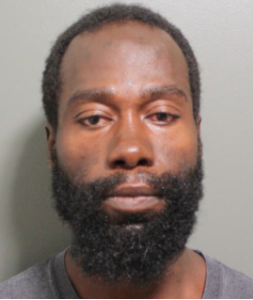
Abdul Jalil Hussein-photo Douglas County

Douglas County Judge James McCabria ruled in favor of 35-year-old Abdul Jalil Hussein on Wednesday. Hussein is charged with multiple felonies, including attempted first-degree murder and aggravated assault of a law enforcement officer.

The charges stem from a June 2018 incident in which Hussein allegedly used an ax to chop through his mother’s front door while armed with a pistol. He then drove back to his own home a few blocks away, where he is accused of exchanging gunfire with a Lawrence police officer.

The detectives who questioned him were from Johnson County.

Police will start voluntary swatter alert system in Wichita

WICHITA, Kan. (AP) — Wichita police will begin using a system that places alerts on addresses where potential swatting targets could be living.

Police body camera images of The December 2018 fatal response to a swatting call -courtesy Wichita Police

Swatting involves someone making a hoax emergency call to send law enforcement officers, particularly SWAT teams, to a particular address.

The program announced Friday is voluntary and open to people who think they might be a victims of swatting.

The alerts would be available to first responders. Wichita officer Paul Cruz said in a news release the alerts wouldn’t slow emergency responders, but would make them aware they might be responding to a hoax call.

In 2017, Wichita police fatally shot Andrew Finch after a caller falsely claimed a murder and hostage situation was occurring at his home. The call was aimed at someone who lived at the home before Finch.

Kansas man dies while rock climbing in Colorado canyon

BOULDER, Colo. (AP) — Authorities say a 50-year-old man from Kansas has died after he fell while rock climbing in Colorado.

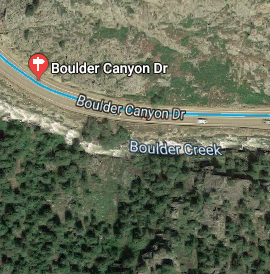
The Boulder County Sheriff’s Department says the man fell about 60 feet Saturday in an area called the Bell Buttress in Boulder Canyon about 9 miles  west of downtown Boulder.

His name hasn’t been released.

The sheriff’s department says the man and a companion had just completed a climbing route and were searching for a way to descend. When the victim walked to the edge of a cliff to look over, a rock gave way and he fell.

KBI warns fingerprint database in danger of failing

TOPEKA, Kan. (AP) — A database of finger and palm prints used by law enforcement and child welfare workers is in danger of failing and needs to be replaced, a Kansas Bureau of Investigation official told lawmakers.

The system contains more than 2 million finger and palm prints and if it stops working police wouldn’t be able to check prints of criminal suspects and child welfare workers couldn’t do background checks on potential foster parents.

“If the system is not replaced, there is a significant risk that it will fail,” KBI spokesman Joe Mandala told a legislative committee this past week. “A failure of this system would cripple criminal justice and public safety operations across the state, most directly at local law enforcement agencies.”

The database is also used for people applying for visas, employees in adult care homes, individuals involved in child placement and to identify people who have died. The Kansas system handles about 120,000 criminal requests and 60,000 non-criminal requests a year, Mandala said.

Kansas is the last state in the country using the database, called the Automated Fingerprint Identification System, or AFIS. It has been in place since 2007 and the company that made it, MorphoTrack, will stop providing maintenance by 2025, the KBI said.

Lawmakers on the committee complained that they had not been sufficiently warned about the urgency of replacing the system, which would cost about $8 million.

Mandala responded that the KBI submitted a replacement plan in 2017 to state information technology officials and included information about the need to replace the system for the past three years in a briefing book for lawmakers. He said the agency also sought a budget increase to pay for the project, but the governor’s office didn’t include the money in its spending recommendations.

“You guys didn’t think to raise the flag any higher when you weren’t getting any results since this is 2019?” Sen. Caryn Tyson, a Parker Republican, asked Mandala.

The KBI is conducting a feasibility study that is required before a replacement project can proceed.

The study was ongoing when the budget was being developed last year, said Lauren Fitzgerald, a spokeswoman for Gov. Laura Kelly.

“Governor Kelly is committed to keeping our communities safe and ensuring that law enforcement has the tools necessary to do their jobs. We look forward to working with the KBI and the legislature to determine the next steps for replacing the aging AFIS system,” Fitzgerald said in a statement.

The KBI hopes to request proposals to replace the system this year. Replacement will take two years, Mandala said.

Aetna changes Kansas leaders with $1B Medicaid contract at risk

TOPEKA, Kan. (AP) — Insurance company Aetna is bringing in new leaders to run its Medicaid operations in Kansas after complaints from hospitals and others put it at risk of losing its state contract.

CHRIS NEAL / FOR THE KANSAS NEWS SERVICE

The Kansas Department of Health and Environment confirmed Friday that Keith Wisdom is no longer the CEO of Aetna Better Health of Kansas.

The company declined to answer questions about whether it had replaced Wisdom but said in an emailed statement that it is “bringing in additional leaders with extensive experience in Medicaid” to help “effectively support the needs of this population.” The company would not identify the new hires.

Aetna provides Medicaid health coverage to about 100,000 Kansas residents under a state contract worth about $1 billion a year. The program serves mostly low-income children but also parents, pregnant women, people with disabilities and seniors in long-term care.

The state turned the day-to-day operations of its Medicaid program over to private health insurance companies in 2013, during Republican Gov. Sam Brownback’s administration. One of the three original companies, Amerigroup, lost its contract last year to Aetna in a bidding process, before Democratic Gov. Laura Kelly took office in January.

Kelly’s administration put Aetna on notice last month that it was failing to comply with the terms of its contract. Aetna submitted a plan earlier this month to come into compliance, but health department officials have said the plan failed to address their concerns.

Complaints have included a lack of transparency about which health providers Aetna covers and delays and mistakes in payments to doctors and hospitals. The original three companies faced complaints similar to those that Aetna now faces.

A legislative oversight committee is scheduled to convene a two-day meeting starting Monday, with testimony both days from state officials and the companies managing the Medicaid program.

Kansas chiropractor acquitted of 2 sex-crimes against patients

EMPORIA, Kan. (AP) — A jury has acquitted a former Emporia chiropractor on two of three charges alleging sex crimes against patients.

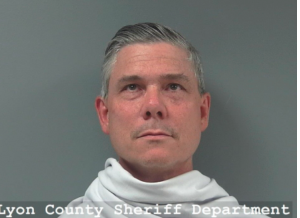
Hawkins -photo Lyon County Sheriff

Eric Hawkins was found not guilty Friday of aggravated sexual battery and rape charges stemming from separate incidents.

Hawkins was accused of rape against a then-16-year-old girl in 2015 and aggravated sexual battery against a then-22-year-old woman last year.

Defense attorney Christopher Joseph said Hawkins was sloppy and should have better explained his procedures to the women but he didn’t molest them. He said no one doubts that the patients believed their versions of what happened but the jury found there was reasonable doubt.

Jury selection for another sexual battery charge is scheduled for next week. Hawkins is accused of inappropriately touching a 32-year-old female in March 2015.

Tyson plant fire sends ripples of uncertainty through cattle industry

GARDEN CITY — Ali Abdi usually cuts meat at the Tyson plant in Holcomb, and was at the plant when a fire broke out and destroyed part of the structure.

Smoke rising from the Tyson plant fire  photo courtesy Shrimplin Photography

He didn’t see it as he and the other workers evacuated, but, he said, “Yes, I was scared.”

The Holcomb Tyson plant processed approximately 5,600 cattle per day, which represents 5% of the beef processed in the U.S. and nearly a quarter of cattle processing in Kansas. No cattle died in the fire, Tyson spokeswoman Liz Croston said.

Tyson also operates beef plants in Texas, Nebraska, Illinois and Washington state and will transport cattle destined for Holcomb elsewhere.

“We will leverage our entire supply chain to meet customer demands for our products,” she said.

But without a large number of trucks hauling livestock to feedlots and the Tyson plant itself, Garden City and Finney County will lose out on truckers fueling up their vehicles and themselves, County Administrator Randy Partington said.

Additionally, when livestock truck drivers take longer routes, they face “hours of service” regulations, requiring 10 hours of rest for every 14 hours of driving, according to Colin Woodall, senior vice president of government affairs with the National Cattlemen’s Beef Association.

A crane towers over Tyson’s plant in Holcomb, Kansas, after a fire burned a section of the plant.
CREDIT CORINNE BOYER / KANSAS NEWS SERVICE

The association has asked the Federal Motor Carrier Safety Administration for an exemption, but as of Wednesday, the request had not been granted. Woodall said he’s not sure when the government may have an answer.

“Every day is opportunities lost here as we’re trying to move cattle to the other plants in order to pick up the slack and try to recover in the market as best we can,” Woodall said, adding later that if the exemption doesn’t come, that “ultimately just slows down the movement of cattle and then you get cattle that are stacking up and these feedlots and they need to be moved.”

For feedlots, time is money. If cattle spend more time in feedlots, it costs the operation more money, according to Clint Alexander, an animal and food science professor at Garden City Community College.

“Now they’re going to worry about the overall cost of things going up, because (the cattle) may spend more time on feed, you’re going to have a higher percentage of health products that might have to be used, especially in this heat …” he said.

The Kansas Livestock Association is also working with the National Cattlemen’s Beef Association and federal regulatory agencies on waiving rules that would keep cattle moving to other plants. It’s also working with the U.S. Department of Agriculture to make sure more meat inspectors and graders are available where more cattle are being processed, KLA spokeswoman Scarlett Hagins said.

After the fire, the price of boxed beef went up and the price of live cattle went down, Hagins said, and “created a lot of uncertainty in the market,” she said.

“We’re seeing some improvement there and it’s kind of starting to get a little more leveled out than it was … right after the fire.”

Meat team sidelined

Earlier this week, the Holcomb plant’s parking lot was full of cars, disaster cleanup crews and a large crane that towered over the plant.

All of the full-time employees at the Tyson plant are getting 40 hours of pay per week, Croston said, but  part-time employees are not being compensated.

“There will be opportunities for them to work during the reconstruction,” she added.

Across town at Garden City Community College, Alexander coaches the school’s meat-judging team, which has won a national championship and several awards. The fire is having a major impact on the team.

“… (W)e practiced at Tyson quite regularly and obviously that’s not available anymore,” Alexander said.

He also said that in September, 100 to 150 students from as many as 15 schools were expected to attend a Beef Empire Days contest at Tyson.

He hasn’t found another meatpacking plant to hold the competition, and in the last 30 years, Alexander said he only knows of one other time the competition was cancelled.

The GCCC program also runs a business matching ear tags from cattle heads to tags on carcasses. Alexander said the feedlots paid for the carcass data service, which brought in $4,000 to $6,000 per month.

“That was a good income for our program. And now we’ve lost that for a couple months,” he said.

The effect on the city

On Tuesday, Garden City commissioners voted on a resolution that declared no “financial emergency” existed due to the Tyson plant.

The city uses a set of financial guidelines to assess a “financial emergency” — it can be triggered if the unemployment rate increases by 2 percent should a major employer leave or if repairs from a catastrophic event costs a city department more than 20 percent of its budget.

Garden City Manager Matt Allen said the city began discussing steps to take after the county’s largest employer caught fire. Had the plant not reopened, city officials would have looked for ways to reduce spending by not filling open positions and putting off approved expenditures and while finding new sources of revenue.

“We knew we weren’t dealing with a long-term closure of the plant or employees not getting paid,” Allen said.

For now, Finney County has not been financially impacted by the fire, but could see a reduction in sales tax revenue in the coming months.

Corinne Boyer covers western Kansas for  the Kansas News Service. You can follow her on Twitter @corinne_boyer or email cboyer (at) hppr (dot) org.

KU study examines how media frames climate change coverage

(Photo credit: Pexels.com)

KU NEWS SERVICE

LAWRENCE — Climate change is a problem facing countries around the world, but media coverage of the topic differs from one nation to the next. A new study from the University of Kansas shows the way media frame climate change coverage can be predicted by several national factors, yet none tend to frame it as an immediate problem requiring national policies to address the issue.

While richer countries tend to frame climate change coverage as a political issue, poorer countries more often frame it as an international issue that the world at large needs to address.

Hong Vu, KU School of Journalism and Mass Communication

“Media can tell people what to think about. At the same time, framing can have an effect on how people think about certain issues,” said Hong Vu, assistant professor of journalism at KU and the study’s lead author. “Not only can framing have an impact on how an issue is perceived but on whether and how policy is made on the issue. With big data, machine-learning techniques, we were able to analyze a large amount of media climate change coverage from 45 countries and territories from 2011 to 2015.”

Vu and co-authors Yuchen Liu, graduate student at KU; and Duc Vinh Tran of Hanoi University of Science and Technology published their findings in the journal Global Environmental Change. They analyzed over 37,000 articles and considered national factors such as economic development, weather and energy consumption. They reviewed headlines from nationally circulated publications of varying political ideologies that contained the keywords “greenhouse gas,” “climate change” and/or “global warming,” or the local language equivalent.

The most consistent predictor of how the issue was framed was a nation’s gross domestic product per capita.

“We showed that the issue is more politicized in richer countries. In poorer countries, it was framed more as an international issue,” Vu said. “Which makes sense, as poorer countries don’t have the resources that richer countries do to fight it.”

Even when richer countries framed the issue as one they could address with their more plentiful resources, it was often also framed as a political issue and would focus on debate or argument about political approaches as opposed to proposing policy solutions. Media from richer countries also focused more on the science of climate change.

When climate change was framed as an economic issue, it was in countries that had the most severe climates and those that have experienced the most adverse consequences of climate change and natural disasters, loss of life and property, and economic effects.

In terms of social progress framing, richer countries framed the issue in terms of energy policy and use. Those that emit the most carbon dioxide framed content in terms of energy issues, while poorer countries and those that had experienced the most severe climates focused more on natural impact.

The study also used independent nation-level variables from several databases, including the World Bank, the Center for Research on the Epidemiology of Disasters, the Global Carbon Atlas Project and Freedom House, all nongovernment organizations working in development or on climate change.

The authors argue that the international relations frame being the most widely used reflects the fact that climate change is a problem every nation needs to address. Economic effects being second most popular reflects that fighting climate change will have impacts on every economy and that when natural disasters and climate change were discussed, they were nearly always brought forth in an economic sense. They also contend that richer countries framing the issue as political reflects that climate change skeptics in those nations gaining more media prominence and the efforts of multiple groups trying to politicize the issue, influence media agendas and policymaking.

The study helps add to the understanding of media influence on climate change coverage, Vu said. Future work will address questions of framing the topic, if it’s done on local, national or global levels, if communicators suggest solutions, if such solutions are attributed to individuals, businesses or governments and efficacy of proposed solutions. Three decades of communications on the topic show there is not a sense of immediacy in covering the problem and influencing policy.

“As communications researchers we want to know why, if climate change entered public discussion more than 30 years ago and we’ve been covering it as a global problem since, why can’t we slow the warming climate down,” Vu said. “If we want the public to have better awareness of climate change, we need to have media imparting it in an immediate sense. By looking at how they have portrayed it, we can better understand how to improve it, and hopefully make it a priority that is reflected in policy.”

New Chief Information Technology Officer appointed for Kansas

Dr. DeAngela Burns-Wallace

OFFICE OF GOVERNOR

TOPEKA – Governor Laura Kelly has announced Kansas Department of Administration Secretary DeAngela Burns-Wallace will be the new Chief Information Technology Officer for the Kansas Office of Information Technology Services (OITS). The appointment is effective immediately, with the OITS duties done in addition to her work leading the Kansas Department of Administration.

“Secretary Burns-Wallace has the leadership skills and executive experience necessary for a successful Chief Information Technology Officer to possess,” Governor Kelly said. “Our state’s computer systems are vulnerable to both domestic and international security threats. Secretary Burns-Wallace understands these threats and will ensure that our state’s infrastructure is prepared to handle them and keep Kansans’ information secure.”

Prior to joining the Kelly administration earlier this year, Burns-Wallace served as vice provost of undergraduate studies at the University of Kansas. Previously, Burns-Wallace was assistant vice provost for undergraduate studies at the University of Missouri. She earned a bachelor’s degree in international relations from Stanford University, a master’s degree in public policy and international affairs from Princeton University and a doctorate in higher education management from the University of Pennsylvania.

“I’m honored to be selected by Governor Kelly to serve in this important role,” Secretary Burns-Wallace said. “I believe in public service and I look forward to working with Governor Kelly, the Legislature and the OITS and Department of Administration teams to serve the people of Kansas. We must ensure that the state has the IT systems in place to conduct its daily business and maintain the safety and security of our data in today’s ever-changing and interconnected world.”

OITS was created under Governor Sam Brownback. Previously, OITS was known as the Division of Information Systems and Communication (DISC) and was a division of the Kansas Department of Administration. OITS is an independent agency, but the two agencies still maintain close operational relationships in several areas because the transition was never completed.

“The relationship OITS has had with the rest of state government has been challenging, and communication between the agency and its customers has been difficult. This was not the fault of the agency’s previous leadership. It is, however, a direct result of the fact that the previous administration split OITS from the Department of Administration and then failed to properly support the move, convey its mission and get buy-in from the rest of state government,” Kelly said.

Burns-Wallace replaces Lee Allen, who has decided to leave the agency.

“I appreciate the work Lee has done for OITS, and thank him for his service to the State of Kansas,” Governor Kelly said.

Kan. sex offender admits he was involved in a web site for child porn

KANSAS CITY, KAN.– A registered Kansas sex offender was sentenced this week to 10 years in federal prison for possessing child pornography, according to U.S. Attorney Stephen McAllister.

Ben Grace photo KBI offender registry

In addition, the defendant was ordered to pay $5,000 to the fund established by the Justice for Victims of Trafficking Act.

Benjamin Grace, 32, Lawrence, pleaded guilty to one count of possession of child pornography. In his plea, he admitted he was identified during an FBI investigation of a service on the internet that was involved in the production, advertisement and distribution of child pornography.

After executing a search warrant at his home in Lawrence, FBI agents interviewed him at his workplace in Overland Park. He admitted viewing child pornography, including images of children as young as five years old.

At the time, Grace was listed on a Kansas Bureau of Investigation web site because of a 2008 felony conviction in Johnson County on a charge of electronic sexual solicitation of a child.

11-year-old Kansas boy struck by semi after fall from bicycle

FINNEY COUNTY— One person was injured in an accident just before 6p.m. Friday in Finney County.

The Kansas Highway Patrol reported a 2020 Peterbilt semi driven by Robert J. Baldridge, 55, Holcomb, was northbound on Business 83 just north of U.S. 83.

Emilio Corrales, 11, Garden City, was  southbound on a bicycle on the walkway portion of the bridge off the east edge of the roadway. Witnesses observed the bicycle drive off the bike path, causing it and the boy to fall out into the northbound lane of Business 83 right in front of the semi.

The passenger side of the semi struck both the bike and the boy. The semi came to an abrupt stop to render aid the boy.

EMS transported Corrales to Wesley Medical Center.  Baldridge was not injured and had been wearing a seat belt at the time of the accident, according to the KHP.

Copyright Eagle Radio | FCC Public Files | EEO Public File