GEARY COUNTY – Two drivers were hospitalized after they fell asleep in separate Sunday morning accidents in Kansas.
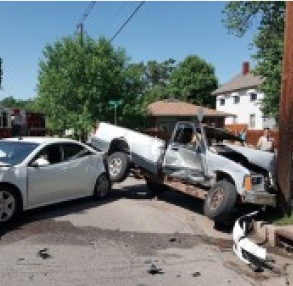
The Kansas Highway Patrol reported just after 7a.m., a 2006 Ford F150 driven by Matthew P. Northcutt, 30, Junction City, was westbound on Interstate 70 just west of U.S. 177.
He fell asleep and the pickup drifted into the median. The driver then overcorrected and the pickup traveled across both westbound lanes and overturned in the ditch
Northcutt was transported to Geary Community Hospital.
Just after 9a.m., a 1998 Ford Mustang driven by Bo Raymond, 31, Yankton, SD., drifted off U.S. 40 just west of Stubbs Road in Shawnee County when he fell asleep at the wheel. The Mustang overturned.
Raymond was transported to the hospital in Topeka.
Raymond was not wearing a seat belt, according to the KHP.
PRESTON, Kan. (AP) — Two southern Kansas farmers are rearing unusual sets of triplet calves.
The Hutchinson News reports that Delbert Ross described the recent discovery of the triplets in a pasture on the line dividing Pratt and Kiowa counties as “pretty special.”
He says it’s been at least 25 years since he’s seen triplets and that one of those calves was stillborn. He’s watching to see whether he’ll have to pull one or two of the calves to bottle rear.
On the other end of Pratt County, near Preston, another set of triplets was born in mid-March at the home of Mike and Sarah Jackson. They raise purebred Simmental cattle that their three daughters show for 4-H.
Pratt Community College agriculture instructor Lori Montgomery says it’s rare to have “live, healthy triplets.”
TOPEKA–The Kansas Creative Arts Industries Commission is now accepting applications for its two main grant categories. The deadline for application submission is May 15, 2017 and the review dates are the week of June 5, 2017. The grant period is from June. 1, 2017 to June 30, 2018. Projects should still be active as of the review date, though relevant expenses made during the entire grant period can be included, projects completed before the review date are unlikely to be funded. The programs and their sub-categories are as follows:
STRATEGIC INVESTMENT PROGRAM
The Strategic Investment Program recognizes the important role creative organizations play in building and sustaining cultural and economic vibrancy in Kansas. By funding a variety of professional and organizational development opportunities that impact cultural programming, these grants support initiatives that use the arts to enhance community vitality, revitalize neighborhoods, generate local business, create and preserve job opportunities and impact tourism. Applicants must make a compelling case as to why this particular self-identified activity or opportunity was selected, how it will have a substantial impact on their work and community, and how it will enhance the national reputation of Kansas.
Strategic Investment Program grants are awarded in three categories:
· Organizational Development: This category provides funding for professional development opportunities for Kansas based arts organizations that help strengthen business practices, increase organizational viability and promote long term sustainability.
· New and Expanded Works: This program provides funding for new or significantly expanded productions, exhibitions, programs or events by Kansas-based nonprofit arts organizations. Projects should either be an entirely new type of program for the organization designed to diversify its services or an expansion of an existing program designed to significantly enhance the quality of current offerings.
· Equipment and Technology: This program provides funding to purchase equipment, materials, and/or technology upgrades to expand or improve an applicant’s organization.
ARTS INTEGRATION PROGRAM
Arts Integration Programs support the role the arts play in all levels of education, community service, and workforce development. This program provides funding for educational institutions, arts organizations, and community service non-profits to use the arts to increase student success, foster creative thinking, develop critical job skills, and enhance community development.
Arts Integration Programs are awarded in three categories:
· Visiting Artists: This category provides funding for eligible organizations to engage and deepen the impact of arts programming on local and underserved audiences through exposure to and interaction with professional visiting arts. Presenters may book artists in any discipline, not just in performing arts. Projects should strive to integrate an arts discipline into non-arts content areas; help interpret an exhibition, performance, or presentation; and support community development goals and objectives.
· Integrated Arts Education: This category supports new or expanded educational programming that integrates arts learning into non-arts curriculum and content areas to address emerging technologies, areas of skills shortages, STEM curricula, workforce readiness, and increase student performance.
· Innovative Partnerships: This category supports innovative programming between arts organizations and non-arts organizations to impact a variety of community and/or economic development goals. Arts organizations are encouraged to partner with other community entities (hospitals, prisons, etc.) to develop arts-centered programs that address community needs such as public health, transportation, tourism, unemployment, aging, corrections, etc.
To review the application process, as well as program and category specific policies and guidelines visit KansasCommerce.gov/CAIC.
Grants will be reviewed by peer panel and awarded at the quarterly commission meeting on June 6, 2017.
All grants are made possible through a partnership with the National Endowment for the Arts and are subject to KCAIC and NEA standards and regulations.
On April 7, 26 grants in 19 communities totaling $139,582 were awarded by the Commission in the above categories.
KANSAS CITY, Kan. (AP) — Police have arrested the Kansas man charged with killing the sister of a girl whose kidnapping 17 years earlier sparked a massive manhunt before she was found dead in Missouri.
Kansas City, Kansas, police say Emenencio Lansdown was arrested Sunday morning after a five-hour standoff. Lansdown shot at officers several times before ultimately surrendering around 7 a.m.
Prosecutors have charged the 41-year-old with second-degree murder and criminal possession of a firearm in the death of 34-year-old Casey Eaton of Kansas City. Kansas.
Eaton’s sister, Pamela Butler, was 10 in October 1999 when she was kidnapped while roller-skating near her Kansas City, Kansas, home. The abductor, Keith Nelson, got away, and Butler’s body was later found in Grain Valley, Missouri.
Nelson later was convicted in federal court and sentenced to death.
—————
KANSAS CITY, Kan. (AP) — Kansas City, Kansas, police and federal marshals are asking for the public’s help in finding a man accused of killing the sister of a girl whose kidnapping 17 years earlier sparked a massive manhunt before she was found dead in Missouri.
Prosecutors in Kansas’ Wyandotte County have charged Emenencio Lansdown with second-degree murder and criminal possession of a firearm.
He’s accused of fatally shooting 34-year-old Casey Eaton of Kansas City, Kansas, late Wednesday. Her body was found in a vehicle.
Eaton’s sister, Pamela Butler, who was 10 in October 1999 when she was kidnapped while roller-skating near her Kansas City, Kansas, home. The abductor, Keith Nelson, got away, and Butler’s body was later found in Grain Valley, Missouri.
Nelson later was convicted in federal court and sentenced to death.
The social and health effects of isolation on some rural Kansas residents spurred three Catholic nuns to convert a storefront in Concordia into a drop-in center where women can find support and resources.
Sister Loretta Jasper cut the ribbon on the Neighbor to Neighbor drop-in center on Cedar Street in Abilene, Kansas in February. BRYAN THOMPSON / KCUR
Seven years after the center opened, two dozen women on average come through each day in the town of about 5,000 to socialize, do laundry, get a cooking lesson, or simply connect with others.
Sister Pat McLennon, who helped launch Neighbor to Neighbor in Concordia and still serves as its co-director, says the center started as a place for women in the community to teach skills to young mothers in poverty while providing enrichment activities like reading and music to their kids. But it quickly drew women of all ages, including some helping as volunteers and others fulfilling mandated community service.
McLennon says Neighbor to Neighbor serves as a complement to social service agencies that provide utilities or food assistance. The women who visit the center have come to look out for each other, sharing tips about job opportunities or just checking in.
“It’s just the neighborly way that people can help one another,” McLennon says.
Sister Loretta Jasper, a nun from the same order who works as a mental health counselor in Abilene, says some adults have difficulty coping with small-town life.
“They don’t have a safe or a healthy support system, or maybe they’re very isolated, or maybe they don’t have anyone who’s really going to listen to them,” she says.
That got Jasper wondering if Neighbor to Neighbor could be replicated in Abilene, a town of 6,600 about 75 miles southeast of Concordia. Beyond their size, the towns share other similarities including poverty level and average income.
Some of the women Jasper counsels have had children taken into state custody and are working to be reunited with them. Many are under orders to complete substance abuse or mental health counseling.
But mandated treatment programs can be restrictive.
“There are goals that need to be accomplished in order for the person to continue,” says Jasper. Job responsibilities, childcare conflicts or lack of transportation can get in the way. “And if they can’t do it, then they’re automatically removed from continued services.”
Jasper says sometimes what the women really need is to have access to support in a casual setting. The new drop-in center in Abilene, that Jasper is now heading, offers parenting classes and 12-step programs without any required commitments.
Patti O’Malley, who has been working with Jasper to bring Neighbor to Neighbor to Abilene, knows the value of such programs from personal experience. A stockbroker in town, she says she started drinking too much wine after the market crashed in 2008. She went through rehab herself. Then her teenaged son, who was also struggling with addiction, died in a car crash.
“When I lost my son, I felt like I had a choice,” O’Malley says.”It was roll up in a ball and give up, or do something with all that love that I had for my son.”
O’Malley chose the second option, and founded the Cedar House, a residential facility for women recovering from addiction. Sister Loretta Jasper chairs the board of the Cedar House Foundation, which is also providing funding for Neighbor to Neighbor.
Among the women at the sober house, O’Malley says one idea seems to resonate.
“The same word kept coming out as the word, and the word was ‘community.’” She says it’s that feeling of connection with each other that helps the women stay sober.
Risks of isolation
The need for connection is human nature, according to Carrie Henning-Smith, a rural health researcher at the University of Minnesota.
Patti O’Malley, a stock broker in Abilene and in recovery herself, founded a sober house and helped launch the drop-in center in town. CREDIT BRYAN THOMPSON /KCUR
“So, finding ourselves in situations where there are not opportunities to meaningfully engage with other people is not how we’ve evolved to live,” says Henning-Smith.
And Henning-Smith says social isolation can be downright dangerous.
“It can be as harmful to your health as smoking cigarettes, as being severely obese,” says Henning-Smith.
The danger goes beyond being a risk factor for chronic illnesses.
Suicide rates are higher in rural areas than in urban settings, due at least in part to isolation and loneliness. In fact, according to the most recent data from the CDC, the rate of suicide in counties with fewer than 50,000 residents — like Dickinson and Cloud counties, home to Concordia and Abilene respectively — was nearly double the rate in counties with more than a million people.
Abilene Police Chief Mike Mohn sees the effects of isolation firsthand.
“We do see, on the suicide part of it over the last several years, an increase in dealing with people that have concerns and problems,” says Mohn.
Mohn says the new drop-in center gives women in the community one more resource.
Neighbor to Neighbor in Abilene is already offering a daily free lunch and knitting classes, and Sister Loretta is teaching a seminar on self-management of chronic pain.
O’Malley sees the need for a place to connect and get support even among her financial consulting clients.
“I work with the public, and I work with recent widows and recent widowers, and I see what happens very quickly, the loneliness — and sometimes the deterioration that happens with that loneliness,” O’Malley says.
Researcher Henning-Smith says the health benefits of human connection alone, while difficult to quantify, shouldn’t be underestimated.
“Connecting people with each other, connecting people in community, presents opportunities for friends, for neighbors, to say, ‘Hey, have you been to the doctor? Are you keeping up with your medications?’” says Henning-Smith. “It can impact mortality risks in ways we can hardly even begin to understand.”
Bryan Thompson is a reporter for the Kansas News Service, a collaboration covering health, education, and politics across the state. You can reach Bryan on Twitter@KSNewsBryan.
TOPEKA – The Kansas Department for Aging and Disability Services (KDADS) has scheduled a listening tour of the state for public discussions of the Kansas System of Care, a project for addressing the needs children and youth in the state with a serious emotional disturbance (SED) and their families.
The federal Substance Abuse and Mental Health Services Administration (SAMHSA) has awarded KDADS a four-year, $9.5 million grant to create the System of Care (SOC) under SAMHSA’s System of Care Expansion and Sustainability Cooperative Agreements program.
“We are going to be working with community partners to improve the lives of children with SED and their families,” KDADS Secretary Tim Keck said. “This listening tour will allow us to collect the best ideas from around the state about improving behavioral health outcomes for this vulnerable population.”
KDADS is collaborating with four Community Mental Health Centers (CMHCs) in Kansas and with the Center for Behavioral Health Initiatives (CBHI) at Wichita State University’s Community Engagement Institute to strengthen the services provided to children with SED.
“Our goal is to create an outcomes-based system that is family centered and culturally appropriate to meet these children’s needs,” Secretary Keck said.
HUTCHINSON, Kan. (AP) — A southern Kansas man has been ordered to spend two years and eight months in prison for causing a two-vehicle 2016 wreck that killed an 80-year-old man.
Everett W. Hardy was sentenced Friday in Hutchinson on a Reno County charge of involuntary manslaughter. Hardy also was ordered to serve two years on post-prison supervision.
Prosecutors dropped a charge that accused Hardy of driving without insurance.
Authorities said Hardy drove through the marked intersection and hit a pickup truck driven by John B. “Jack” Johnson. That pickup truck then hit a utility pole.
Johnson died at a Wichita hospital more than three weeks later.
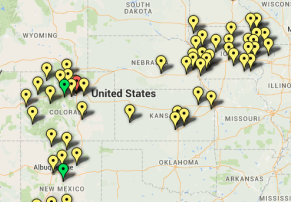
A map from the Center for Immigration Studies shows sanctuary cities all over the country. (Photo: Center for Immigration Studies)
WASHINGTON (AP) — The Trump administration is putting on notice officials in several major cities that are sanctuaries for immigrants in the U.S. illegally.
The administration has sent letters warning that they may lose law enforcement grant money unless they document cooperation with federal immigration authorities.
The Justice Department’s inspector general has identified nine jurisdictions as limiting the information local law enforcement can provide to federal immigration authorities about those in their custody.
The jurisdictions include the state of California and the cities of New York, Chicago, Philadelphia and New Orleans.
Some of the localities remain defiant, despite risking the loss of money that police agencies use to pay for everything from body cameras to bulletproof vests.
DOUGLAS COUNTY- Law enforcement authorities in Douglas County are investigating an armed robbery.
Just after 12:33 p.m. Friday, officers responded to a reported armed robbery at the Cash 2 Go, 1717 West 6th Street in Lawrence, according to a media release.
A woman victim reported two men, one armed with a weapon, entered the business and demanded money.
The suspects took an undisclosed amount of cash, and fled the area westbound on West 6th Street. They were last seen in an older model red Pontiac passenger vehicle.
Lawrence Police request that anyone who may have information related to this incident to please contact the Lawrence Police Department at 785-832-7509.
WICHITA, Kan. (AP) — The Catholic Diocese of Wichita is beginning a training program aimed at high school graduates who want to start on the path to seminary without leaving the city.
The Wichita Eagle (https://bit.ly/2pKZY10 ) reports that the St. Joseph House of Formation is a two-year program for seminarians who will live on the campus of St. Joseph Parish and pursue associate degrees at Newman University while interacting with local priests.
“Formation” is a period during which the Catholic Church works to educate a man so he is able to eventually live as a priest.
The program will start with three to five men but is expected to grow to up to 16 or more in the next five to seven years.
Wichita’s seminarians currently study at three different colleges out of state.
BUTLER COUNTY –Law enforcement authorities in Butler County are investigating a case of counterfeit money and alerting the public.
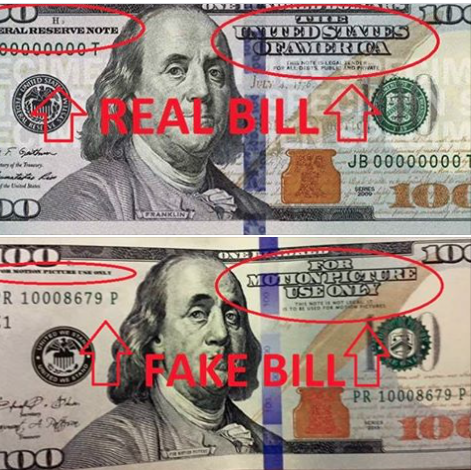
The El Dorado Police Department has been notified that people are passing and attempting to pass fake $100 bills, according to a social media report. It is prop money, according to police.
The fake bill says “For Motion Picture Use Only” and “This is note is not legal it is to be used for motion pictures” on the right side of the bill and on the left side it says For Motion Picture Use Only.
The real bill says “The United States of America” and “This note is legal Tender for all debts, public and private” on the right side of the bill and on the left side it says Federal Reserve Note.
Police reminded many times people doing this scam will fold the bills or attempt to cover the wording while passing the bills. “Make sure to check the bills so that you do not fall victim to this scam. If you have accepted a fake bill make sure to report it to the jurisdiction in which you accepted the bill.”
TOPEKA – The Kansas Department for Aging and Disability Services (KDADS) has been awarded $3,114,402 for the first year of a two-year grant by the U.S. Department of Health and Human Services (HHS) for the prevention and treatment of opioid abuse in Kansas.
“Opioid addiction and abuse is a growing problem in Kansas, as it is in the rest of the country,” KDADS Secretary Tim Keck said. “Kansas is the 16th highest opioid prescribing state in the country. We are working to address this critical public health issue before it gets any worse.”
The Kansas Department of Health and Environment (KDHE) reports that, between 2013 and 2015, Kansas’ prescription opioid overdose death rate increased by 28 percent and heroin deaths increased by 71 percent.
Increases in opioid-related drug misuse and deaths parallel the increase in prescription opioid availability. According to data from Kansas Tracking and Reporting of Controlled Substances (KTRACS), the Kansas prescription drug monitoring program, there were more than 4.2 million Schedule II-IV prescriptions and more than 256 million pills dispensed in Kansas in 2014. Furthermore, more than 100,000 Kansas patients had overlapping prescriptions for opioids and benzodiazepines and more than 75,000 patients had more than 90 morphine-milligram equivalent per day of opioid prescriptions in 2014.
The grant funding, announced today by HHS Secretary Tom Price, is part of the first of two rounds provided for in the 21st Century Cures Act. It is being made available through the State Targeted Response to the Opioid Crisis Grants administered by the federal Substance Abuse and Mental Health Services Administration (SAMHSA).
KDADS’ Behavioral Health Commission will implement, oversee and monitor grant activities; 80 percent of the grant funding will be used to pay for treatment and recovery activities, with the remainder going to prevention, early intervention and public education.
The agency plans to issue an RFP to identify prospective providers to manage all elements of the project within four targeted regions, West, Southeast, Northeast and Southcentral (Wichita area), including quality assurance and timely care, and to communicate progress to the state. In addition, a special project under the grant will focus on methadone treatment clinics. KDADS licenses and regulates nine methadone clinics in five counties that treat individuals for heroin and other opioid addictions.
A report finds that immigrants and refugees in the Kansas City metropolitan area must overcome cultural, financial and administrative obstacles to access health care services — even, in some cases, those provided by clinics established to serve the uninsured. CREDIT CREATIVE COMMONS-PIXABAY
Immigrants — both legal and undocumented — living in the metropolitan Kansas City area face unique barriers to health care, according to a report released this month by the REACH Healthcare Foundation.
Based on information gleaned from surveys and discussions facilitated by social service agencies, the report concludes that immigrants and refugees, including many from Somalia and the Chin region of Burma, must overcome cultural, financial and administrative obstacles to access health care services — even, in some cases, those provided by clinics established to serve the uninsured.
Brenda Sharpe, president and CEO of the foundation, said the report will help it determine priority needs as it works to increase access to health care for poor and underserved people in its six-county service area, which in addition to the KC metro area includes a rural county in southeast Kansas.
Undocumented immigrants are a particular focus of the report, because they are not eligible for subsidized coverage under the Affordable Care Act or Medicaid, she said.
“We needed to learn more about the barriers to health care for these groups and get their perspectives on what would help them navigate health care systems,” she said.
“Fear and mistrust” are significant barriers among undocumented immigrants, according to the report.
Other barriers cited in the report include:
A lack of quality interpreters at hospitals, clinics and private physician practices to help immigrants and refugees navigate what they view as an overly complicated health care system.
Health care workers who lack an understanding of the immigration system and how it can “re-traumatize immigrants” escaping war, torture and other forms of violence.
Limited access to specialists and behavioral health services.
Based on the findings, organizations that serve the immigrant and refugee communities provided the foundation with recommendations that ranged from funding programs that educate health consumers and providers to establishing a self-insurance plan for undocumented immigrants. The recommendations will help guide the foundation’s board in setting funding priorities, Sharpe said.
The foundation was established in 2003 with proceeds from the sale of Health Midwest. It is among the organizations that provide funding to KCUR for the Kansas News Service.
Jim McLean is managing director of the Kansas News Service, a collaboration of kcur.org, Kansas Public Radio and KMUW covering health, education and politics in Kansas. You can reach him on Twitter @jmcleanks.