SALINE COUNTY – The National Weather service reported record high temperatures across the state on Sunday.
The 3p.m. temperature in Salina was 90 degrees and it eventually climbed to 92, according to the National Weather Service.
That broke the previous high temperature of 86 degrees for March 19 of 86 degrees in 1907.
It was the earliest 90-degree temperature ever recorded in Salina.
The high temperature of 93 in Garden City tied a record from 1972.
The high temperature of 90 in Russell broke a record from 1972. The 90 degrees in Concordia broke a record of 81 set in 1921. It was also 92 in Manhattan, 90 degrees in Topeka and Emporia and 89 in Lawrence. Most of those locations didn’t reach 90 degrees until the first week of June in 2016.
Here are some highs today across western Kansas. Temperatures on average were 30 to 35 degrees above normal. #kswxpic.twitter.com/Tvx8z1w0nf
TOPEKA, Kan. (AP) A Kansas House committee has advanced a bill that would protect public employers from liability for employees carrying concealed handguns while working outside of a public building.
The House Federal and State Affairs Committee passed the bill Friday. Under the bill, a public employer could not be sued if their employee acted wrongfully or negligently with their concealed gun while out of the building for work. Employers are already protected from liability when an employee is in a public building.
Wichita Republican Rep. John Whitmer says employers shouldn’t be held responsible for an employee’s personal choice to carry a concealed weapon. Overland Park Republican Rep. Stephanie Clayton didn’t support the bill and says a victim would be able to sue for more damages from the employer than the employee.
SEDGWICK COUNTY – Law enforcement authorities in Sedgwick County are mourning the loss of a K-9 in the line of duty on Saturday.
Just after 8 PM on Saturday, police were dispatched to a disturbance with a weapon at a residence inside the Lamplighter Mobile Home Park in the 2300 block of E. MacArthur in Wichita, according to a social media report.
Shortly after officers arrived on scene the suspect of the disturbance came outside and had a gun, according to officers at the scene.
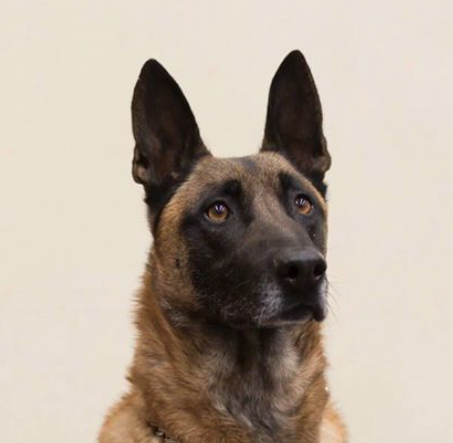
A Wichita Police K-9 Handler released K-9 Rooster to apprehend the suspect. The suspect started shooting and killed Rooster.
Officers returned fire and wounded the suspect.
The suspect was transported to an area hospital and died from his injuries.
K-9 Rooster had served with the Wichita Police Department for five years.
TOPEKA, Kan. (AP) — Kansas might chart its own legal path on abortion.
It would happen through a lawsuit that could turn a state in which the anti-abortion movement has won a long string of legislative victories into fairly friendly territory for abortion rights.
The state Supreme Court heard arguments this past week in a legal challenge to a 2015 law that bans a common second-trimester procedure. The key issue is whether the Kansas Constitution protects abortion rights independently of the U.S. Constitution.
If the justices say the state constitution does, Kansas courts could strike down abortion restrictions that federal courts have or would uphold.
The only certainty in such a case appears to be that Kansas courts would deal with additional legal disputes on abortion.
KANSAS CITY, Mo. –A Kansas man pleaded guilty in federal court Friday to robbing a bank in Excelsior Springs, Mo, according to Tom Larson, Acting United States Attorney for the Western District of Missouri.
Kishahn Lewis, 20, of Topeka, pleaded guilty before U.S. Chief District Judge Greg Kays to the charge contained in a Sept. 20, 2016, federal indictment.
By pleading guilty today, Lewis admitted that he stole $150 from the National Bank of Kansas City, located in Excelsior Springs, on Sept. 12, 2016. Lewis handed a note to a bank teller that demanded money and claimed he had a weapon. The teller complied with the demand by giving Lewis three $50 bills.
According to court documents, a witness saw Lewis run from the bank and through a parking lot before getting into a gray Volvo. Lewis then drove south to 69 Highway. An Excelsior Springs police officer spotted the Volvo as it entered southbound Interstate 35 from 69 Highway and pulled his patrol car alongside Lewis’s vehicle. When Lewis saw the police officer, he immediately exited onto 291 Highway, and then exited that highway. The police officer located the Volvo parked at the intersection of A Highway and 291 Highway but did not see anyone inside the car. The officer passed the Volvo and radioed to other units that the car was abandoned. However, when the officer circled back, the car was gone. A few minutes later, Pleasant Valley police officers located the Volvo and stopped the car at a Quik Trip at Interstate 35 and Pleasant Valley Road.
Lewis was arrested with the demand note and the three $50 bills in his possession.
Under federal statutes, Lewis is subject to a sentence of up to 20 years in federal prison without parole. The maximum statutory sentence is prescribed by Congress and is provided here for informational purposes, as the sentencing of the defendant will be determined by the court based on the advisory sentencing guidelines and other statutory factors. A sentencing hearing will be scheduled after the completion of a presentence investigation by the United States Probation Office.
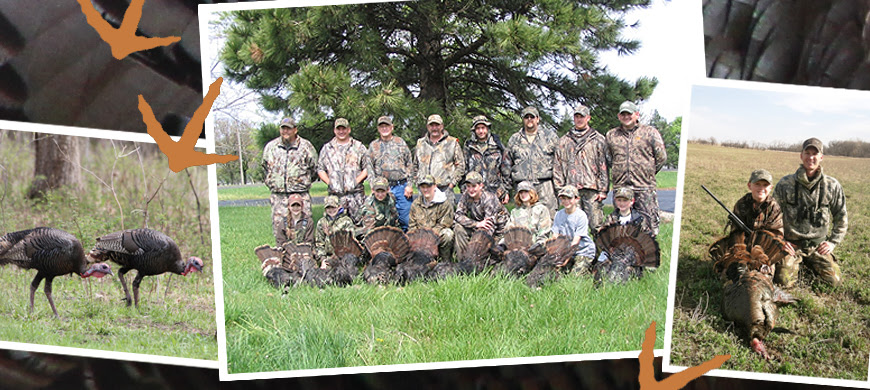
COUNCIL GROVE – If you know a youngster who is interested in learning about turkey hunting, keep reading. This spring will mark the 17th year of the Council Grove Youth Turkey Hunt. The Kansas Department of Wildlife, Parks and Tourism (KDWPT), in cooperation with area chapters of the National Wild Turkey Federation, Quail and Upland Wildlife Federation, and the U.S. Army Corps of Engineers, will host a workshop and special turkey hunt on Saturday, April 1, 2017.
The hunt is part of KDWPT’s Pass It On program, and wildlife area manager, Brent Konen, designed this event to provide beginning hunters with a safe and high-quality spring turkey hunting experience. The event is open to youngsters age 11-16, who should be accompanied by a parent or mentor. Spaces are limited, so hunters must register no later than March 22 by calling Konen at (620) 767-5900.
Young hunters, accompanying adults and guides will gather Friday evening, March 31, to pattern shotguns and scout hunting areas. In the predawn of Saturday morning, April 1, hunters and guides will venture to area locations on public and private land where turkeys have been located during preseason scouting efforts. Breakfast and lunch will be provided, and there will be door prizes and a turkey hunting presentation. Hunters will learn why spring turkey hunting is so exciting and addicting, hearing toms gobble from the roost, witnessing birds strut and display and hopefully seeing one called to within shotgun range. If past hunts are any indicator, participants will have exciting stories of turkey encounters to tell.
Spring turkey hunting might be the perfect way to introduce a youngster to hunting. It’s safe, the weather is mild, and few hunts can match the excitement felt when a tom gobbles closer and closer.
Lodging is available in nearby Council Grove and camping is available at Council Grove Lake. Participants are encouraged to explore historic Council Grove, scenic Morris County and travel the Flint Hills National Scenic Byway while visiting the area.
A report by the Kansas Advisory Committee to the U.S. Commission on Civil Rights says that the proof of citizenship and voter ID requirements imposed by a 2011 Kansas law impose a “burden” on voters. CREATIVE COMMONS-FLICKR / H. MICHAEL KARSHIS
Kansas’ “strictest in the nation” election law may have been written with the intent to discriminate against certain groups of voters and should be reviewed by the U.S. Department of Justice to ensure that it doesn’t violate federal law, a civil rights panel says in a report issued Tuesday.
The report, written by the Kansas Advisory Committee to the U.S. Commission on Civil Rights, says that the proof of citizenship and voter ID requirements imposed by a 2011 Kansas law “may impose a substantially higher burden than that which has been previously challenged in the U.S. Supreme Court.”
Kansas lawmakers passed the Secure and Fair Elections, or SAFE, Act at Secretary of State Kris Kobach’s urging to guard against voter fraud. However, based on testimony received at hearings conducted in January 2016, the advisory committee says that voter disenfranchisement appears to be a much bigger problem than voter fraud.
“The number of eligible voters turned away from the polls in Kansas due to lack of required identification or failure to provide documentary proof of citizenship may far exceed the number of documented cases of voter fraud,” the report says, stressing that errors in voter registration don’t rise to the level of fraud.
“Those who continue to raise concerns regarding voter fraud have cited errors in registration data as evidence that voter fraud may be significantly more widespread that it appears,” the report states, specifically rebutting claims made by Kobach and President Donald Trump that illegal voting is widespread.
Evidence Of Voter Suppression
The advisory committee report says that research has found that stricter ID and registration requirements can suppress voter participation. It goes on to say that a preliminary analysis of Kansas turnout data “suggests that voter participation declined following the implementation of the SAFE Act.”
“Testimony indicated the SAFE Act may disparately impact voters on the basis of age, sex, disability, race, income level and affiliation,” the report says.
Kobach disputes that and other findings in the report, which he calls biased.
Kansas lawmakers passed the Secure and Fair Elections, or SAFE, Act in 2011 at Secretary of State Kris Kobach’s urging to guard against voter fraud. CREDIT STEPHEN KORANDA / KPR
“The advisory committee report is not worth the paper that it was written on,” Kobach said in an interview Tuesday, insisting there isn’t credible evidence of voter suppression.
“These advisory committees exist in all 50 states and some do their work pretty carefully and others do not, and Kansas unfortunately did not,” he said, charging that members of the committee “were biased” against the SAFE Act.
“You could see that in the hearings themselves,” he said. “They obtained testimony overwhelmingly from people who were opposed to the Kansas law.”
Mildred Edwards, chairwoman of the Kansas committee, defended the report, saying members made “every effort” to get differing viewpoints.
“We worked really hard as a committee to find a bipartisan presentation panel to come before us,” Edwards said, noting that Kobach was among those invited to testify.
“We cast our net far and wide and we believe those individuals with the voices that should be heard were present at that hearing,” she said.
A Kansas ‘Poll Tax’
The cost of obtaining documents necessary to prove citizenship is also a barrier, the report says. While the law makes the documents available from state agencies at no cost, some prospective voters have been charged due to “insufficient training” of state workers. In addition, the report says fees charged to Kansans by agencies in other states constitute what amounts to an unconstitutional “poll tax.”
In addition to urging a Justice Department review of the SAFE Act, the report recommends that Congress establish a working committee to study the impact of a 2013 U.S. Supreme Court ruling that struck down the section of the Voting Rights Act that authorized federal oversight of election laws in states with a history of discriminating against voters. Congress should use the information generated by the working group to develop an updated formula to identify states that “require continued review,” the report says.
The report also says the congressional working group should study the feasibility of a national voter registration system to replace a state-based system that has resulted in a confusing patchwork quilt of election laws.
“The U.S. is currently the only major democracy without a standard voter registration system at the national level,” the report says.
Kobach said the recommendation is an indication of the committee’s “sloppy work.”
“If they had done their homework, they would know that is actually prohibited by the federal Constitution … which says that the states are in charge of the registration of voters and determining who the qualified voters are,” he said.
Jim McLean is managing director of the Kansas News Service, a collaboration of kcur.org, Kansas Public Radio and KMUW covering health, education and politics in Kansas. You can reach him on Twitter @jmcleanks.
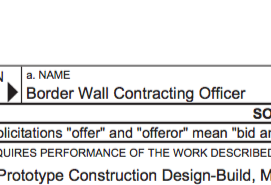
WASHINGTON (AP) — The Trump administration wants to build a 30-foot-high border wall that looks good from the north side and is difficult to climb or cut through. The specifications were found in a pair of contract notices posted to a government website further detailing President Donald Trump’s promise to build a “big, beautiful wall” at the Mexican border.
The notices were made public late Friday by Customs and Border Protection. That’s Homeland Security Department agency that will oversee the project and eventually patrol and maintain the wall. The proposals are due to the government by March 29.
One of the requests calls for a solid concrete wall while the other asks for a see-through structure. Plans call for 30- foot-long prototypes to go up in San Diego.
TOPEKA – Kansas animal rescuers asked the House Agriculture Committee Thursday to support their efforts in regulating puppy mills.
The proposed bill, SB47, would add pet animal rescue networks under the jurisdiction of Animal Health Commissioner of the Kansas Department of Agriculture (KDA). The bill passed the Senate last month on a 34-5 vote with one abstention.
The KDA would establish rules and regulations concerning the operations, registration and recordkeeping of the organization.
The bill would add a numbers of new laws and amendments for animal rescue organizations as well as licensed dog breeders. However, not everyone agrees on the proposed legislation.
One of the controversial points was changing how inspectors contact dog breeders. Under current law, it is up to the inspectors’ discretion if they want to notify a breeder they are coming before a visit.
Board Member of Unleashed Pet Rescue and Adoption Susan Kaufmann said that dog breeders should not get a warning before inspection. She compared these inspections to inspections when she worked in a hospital, and said not knowing keeps the staff always on their A-game.
“We have to be in a constant state of readiness, and that has improved our care,” Kaufmann said. “We are not spending a year getting ready, we are just always ready.”
Kansas Federation of Animal Owners member Rebecca Mosshart said this amendment is not feasible for breeders that live in rural communities.
Mosshart said everything in her town is at least 30 minutes away from each other, so it is difficult for her to come back for an inspection quickly. She said inspections without her present are difficult.
“Most of my employees do manual work,” Mosshart said. “I do not allow my employees into my record keeping.”
Rep. Virgil Weigel (D-Topeka) pointed out to Mosshart that under a licensing contract agreement, she filled out certain hours and days of the week where she, or a representative, would be available for inspection.
Mosshart acknowledged that, but said she often has to be away from her home to go to the vet. She said it would be nice to get a heads up, so she could make sure she is home for the inspection.
Another controversial topic in the bill is the addition of an $80 no contact fee. That means if an inspector came to a breeder’s home and no one was there within a certain time frame (previously allocated on their licensing contract), the breeder would be charged.
The House Agriculture Committee will now rework some of the wording in the bill before sending it for a vote. The wording could change how the bill would affect licensed puppy breeders.
Madison Coker is a University of Kansas junior studying journalism from Kansas City.
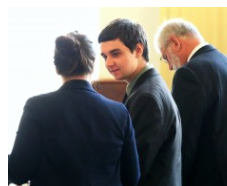
Public defender John Henderson touches the shoulder of Sam Vonachen after jurors left to decide the verdict in the murder trial- pool photo Hutchinson News
RENO COUNTY – A Kansas teen convicted on two counts of murder for the killing of his mother and sister who died after he set fire to the family home turned 18 on Friday.
Samuel Vonanchen was removed from the Bob Johnson Juvenile facility and transported to the Reno County Correctional Facility at 7 a.m. Friday, according to a social media report from the Reno County Sheriff.
A jury in August of 2016 also convicted Vonachen for attempted first-degree murder for trying to kill his father and aggravated arson for setting of the September 2013 fire.
The teen is waiting to have a new mental evaluation completed before he is sentenced in the case.
In January attorneys said they were waiting until after Vonachen turned 18 to transfer him to the adult side of the Larned State Hospital for the evaluation.
With all of the talk in recent years about Kansas’ budget problems, it can be hard to keep track of what programs have been cut and by how much.
So, some Kansans may not remember that last summer Gov. Sam Brownback ordered more than $56 million in cuts to KanCare, the state’s privatized Medicaid program. Including the amount of federal matching funds lost, the cuts amounted to $128 million.
Kansas lawmakers remember the cuts, and they are taking steps to reverse them.
“It’s certainly a priority for me,” said Sen. Vicki Schmidt, a Topeka Republican who chairs the Public Health and Welfare Committee.
On Thursday, the Senate took a first step by passing a bill that would raise fees that insurance companies classified as health maintenance organizations, or HMOs, pay to do business in the state. That includes the three managed care organizations that administer KanCare.
The bill would not restore all the cuts. Instead, it would reverse a $47 million reduction in reimbursements paid to hospitals, safety net clinics, nursing homes and community mental health centers for providing care to the approximately 425,000 low-income, disabled and elderly Kansans enrolled in KanCare.
As originally written, the bill would have imposed the HMO fee increase retroactive to Jan. 1. But the Senate changed the implementation date to July 1. That means the state will not have the money to reverse the cuts until Jan. 1, 2018, according to the Kansas Hospital Association.
Still, Tom Bell, the hospital association’s president, said his members are encouraged by the Senate’s approval of the bill on a 27-13 vote.
“We are pleased that the Kansas Senate has taken an important step toward reversing a policy that has been harmful to health care access in Kansas,” Bell said.
The effort to reverse the cuts could get more complicated in the House, where some members are backing a bill that in addition to raising the HMO fee would increase a state assessment on hospitals known as the “provider tax.”
The hospital association and groups representing doctors, mental health centers and safety net clinics strongly oppose the House bill, arguing in testimony Thursday to the House Health and Human Services Committee that it “harms the providers it is intended to help.”
The House bill is thought to have the backing of the Brownback administration because the governor and Lt. Gov. Jeff Colyer want to use some of the additional money it would generate to provide grants to struggling rural hospitals, create more residency slots for graduating physicians and help establish a private osteopathic medical school.
Jim McLean is managing director of the Kansas News Service, a collaboration of kcur.org, Kansas Public Radio and KMUW covering health, education and politics in Kansas. You can reach him on Twitter @jmcleanks.