We have a brand new updated website! Click here to check it out!

DCF unveils training lab for Child/Adult Protection workers

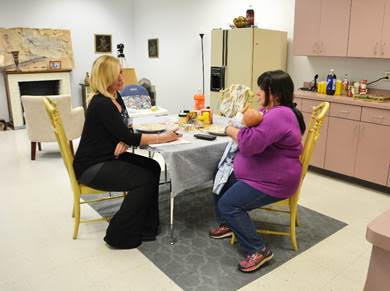
DCF Special Investigator Rhandy Miller (left) and local actress Vicki Trembly (right) participate in a live training simulation in the DCF training lab on Feb. 16, Topeka.

DCF

TOPEKA – The Kansas Department for Children and Families (DCF) works diligently to improve the performance and safety of our adult and child welfare professionals. On a daily basis, our staff enter unpredictable, sometimes volatile, environments in order to protect and defend our most vulnerable Kansans. Whether entering an abusive home or testifying in court, it is important that these individuals are prepared and trained to handle difficult situations.

To that end, today, DCF unveiled its new simulation training lab during an open house, at the DCF Administration Building, 555 S. Kansas Ave., Topeka. The open house offered guests the opportunity to view the lab, as well as live training simulations.

The lab is designed to support the learning and training experiences of child welfare professionals, as well as adult protective services and licensure staff, on issues such as worker safety, interview techniques, communication techniques and investigations.

The training lab offers three different settings welfare professionals encounter. A residential arrangement includes a simulated kitchen, living room and/or bedroom. The home environment can be set up clean or dirty, and can include mock drug paraphernalia, alcohol containers, fake insects and other safety violations, to create a realistic scene. The training lab can also be transformed into a courtroom scene, complete with a judge’s bench, witness stand, court reporter, parent’s attorney and county/district attorney.

Through interaction with trained actors, workers are immersed in a realistic, interactive environment, while maintaining a safe learning experience. Simulations can be set up to include various relationships and interactions, such as family interviews, child and adult protection investigations and assessments, courtroom testimony and assessing foster and adopted families.

“This lab affords the opportunity to learn with real experiences in a safe environment, but also a very realistic environment,” DCF Strategic Development Director Beth Gunsalus said. “Our workers can learn to respond appropriately in intense, highly-emotional or unsafe situations in a home or courtroom.”

The training lab is equipped with cameras that produce a live feed in a nearby control room. Peers and supervisors can observe the training in real-time, offering additional learning experiences for other workers and providing a chance for instant feedback. In addition, the training can be broadcasted live to regional offices or recorded for online training classes.

The simulation training lab is part of the Kansas Child Welfare Professional Training Program (KCWPTP), which is a new, comprehensive training program rolling out to child welfare staff this year.

“The KCWPTP is an interactive, interwoven training system for the agency and our community partners,” Gunsalus said. “It also includes needs assessment features, allowing us to get feedback from staff on areas of emphasis they would like to focus on. This allows us to deliver the right training, to the right people, at the right time.”
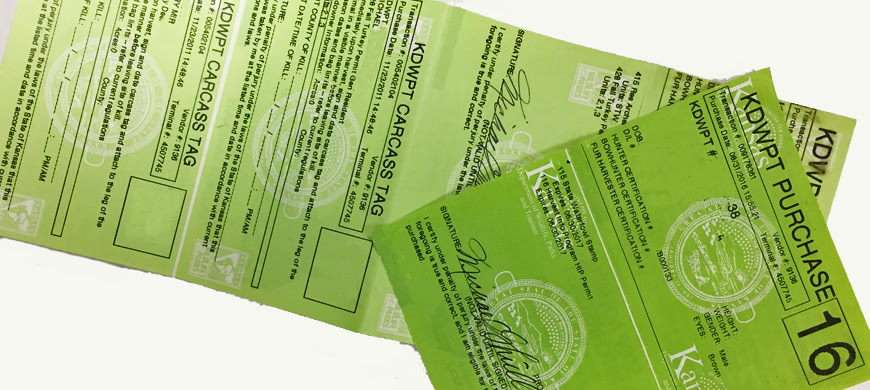
Kansas Wildlife, Parks And Tourism gets new licensing system

kwdpt-purchaseKDWPT

PRATT – In late February, the computer license sales and reservation system the Kansas Department of Wildlife, Parks and Tourism (KDWPT) has used for many years will be no more. A new and improved system, provided by Active Network, will go into full operation. Active Network has provided the software and point-of-sale hardware for 11 years that allowed KDWPT to accept campsite and cabin reservations and sell licenses online, maintaining all license records electronically. That contract expired and a new contract, with some changes, is now in place.

License buyers and campers won’t notice a big difference; however, the current license sales system will shut down at 9:45 p.m. on Sat., Feb. 18, and the new system will be online at 8 a.m. on Wed., Feb. 22. No license or permit sales will be available through the system for roughly three days. The campsite and cabin reservation system will shut down at 12:01 a.m., Mon., Feb. 20 and go back online at 6 p.m., Tue., Feb. 21.

While it may be inconvenient for anyone who tries to buy a license or make a reservation during the downtime, this time is important to allow data to be transferred, configurations to be completed and to ensure everything is working properly before going live. The new system will retain the KDWPT numbers of everyone who purchased a hunting or fishing license in the old system, and there will be no changes in pricing.

The new system will provide some advantages to users, including allowing customers to purchase hunting and fishing licenses at the same time they make camping or cabin reservations. It will allow customers to reprint licenses within 48 hours if they were unable to print during the transaction. Other features include allowing customers to browse available licenses and permits before they make a purchase, buy licenses or permits for multiple years when available (such as buying a 2017 hunting license and a 2016 HIP stamp) and logging in with an email address to edit personal information on record such as address and phone number.

One significant change with the new system involves permits that have carcass tags attached, such as deer, turkey, elk, and antelope, which could have been purchased from home and printed out on a desktop printer under the old system. This caused many issues for Law Enforcement since there was no way to prohibit someone from printing multiple carcass tags with one permit. In the new system, permits with carcass tags will have to be purchased and issued through a license agent or over the phone, in which case the permit/carcass tag will be mailed to the customer.

Kansas deputy testifies about alleged sexual assault

Luth and Newman-Caddell

OLATHE, Kan. (AP) — A Kansas sheriff’s deputy says two Kansas City-area men who are charged with kidnapping and raping her referred to each other by name during the attack.

The 22-year-old Johnson County deputy testified Thursday in the preliminary hearing for 25-year-old William Luth, of Blue Springs, Missouri, and 21-year-old Brady Newman-Caddell, of Independence, Missouri. Each man is charged with aggravated kidnapping, aggravated sodomy and two counts of rape.

The Kansas City Star reports that the deputy said one of the men asked her for directions last October as she walked to work at the detention center in Olathe, Kansas. She says the man punched her and forced her into the car, where the two men sexually assaulted her before releasing her.

She testified they called each other “Will” and “Brady” during the assault.

___

Indictment: Kansas man stole, sold fitness watches online

WICHITA – A federal grand jury returned an indictment Wednesday charging a Kansas man who worked at a store catering to runners with stealing more than $250,000 in merchandise, according to U.S. Attorney Tom Beall.

Craig W. Sullivan, 41, Olathe, Kan., is charged with 10 counts of wire fraud and three counts of mail fraud. The indictment alleges the crimes occurred while Sullivan worked for Garry Gribble’s Running Sports, which has five locations in the Kansas City area.

Sullivan oversaw merchandise arriving at the main store in Overland Park. He was responsible for distributing merchandise to the other locations.

The indictment alleges Sullivan stole merchandise — mainly Garmin GPS running watches – and sold them to an individual in California who operated an online business on eBay.

Sullivan shipped the stolen merchandise to California via the U.S. Postal Service and received payment via PayPal. The indictment alleges he received 51 payments totaling about $275,780.

Trump health pick: Maternity coverage should be optional

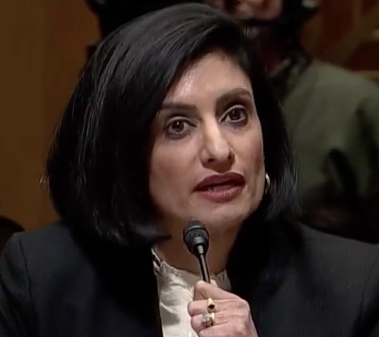
Seems Verma during Thursday’s testimony-courtesy CSPAN

WASHINGTON (AP) — President Donald Trump’s pick to lead the government’s major health insurance programs says maternity coverage should be optional for patients.

Indiana health care consultant Seema Verma tells the Senate Finance Committee that patients — not the government — should determine the insurance benefits they need.

Verma was facing questions from Michigan Democratic Sen. Debbie Stabenow about the Obama-era health law. That law made maternity and newborn coverage a mandatory benefit for all health insurance plans.

Verma tells Stabenow that some women want maternity coverage and “some women might not choose that.”

Republicans have criticized the law’s requirement that insurers cover a standard set of “essential” benefits, including women’s health services.

Verma would head the Centers for Medicare and Medicaid Services, which also oversees the 2010 health law.

2 Kansas man jailed for alleged meth lab in their house

Nicholas Bird
Nicholas Bird

GEARY COUNTY – Law enforcement authorities in Geary County made an arrest at an alleged meth lab on Wednesday.

Following a month-long investigation, the Junction City -Geary County Drug Operations Group assisted by the Riley County Hazardous Materials Response team executed a search warrant at 1303 Spring Hill Road in Junction City.

Police reported the arrest of Joshua D. Grilliot, 24 and Nicholas E. Bird, 28, both of Junction City on suspicion of Unlawful Manufacture of Methamphetamine.

Both were confined without bond at the Geary County Detention Center pending their first appearance in Geary County District Court.

The Drug Operations Group seized components used in the manufacture of methamphetamine, methamphetamine and drug paraphernalia.

Joshua Grilliot
Joshua Grilliot

The group is a joint task force composed of members of the Junction City Police, Geary County Sheriff’s and Grandview Plaza Police Departments.

Sen. Moran sponsor, Sen. Roberts co-sponsor of bill to spur short line railroad investment

img_8291OFFICE OF SEN. MORAN

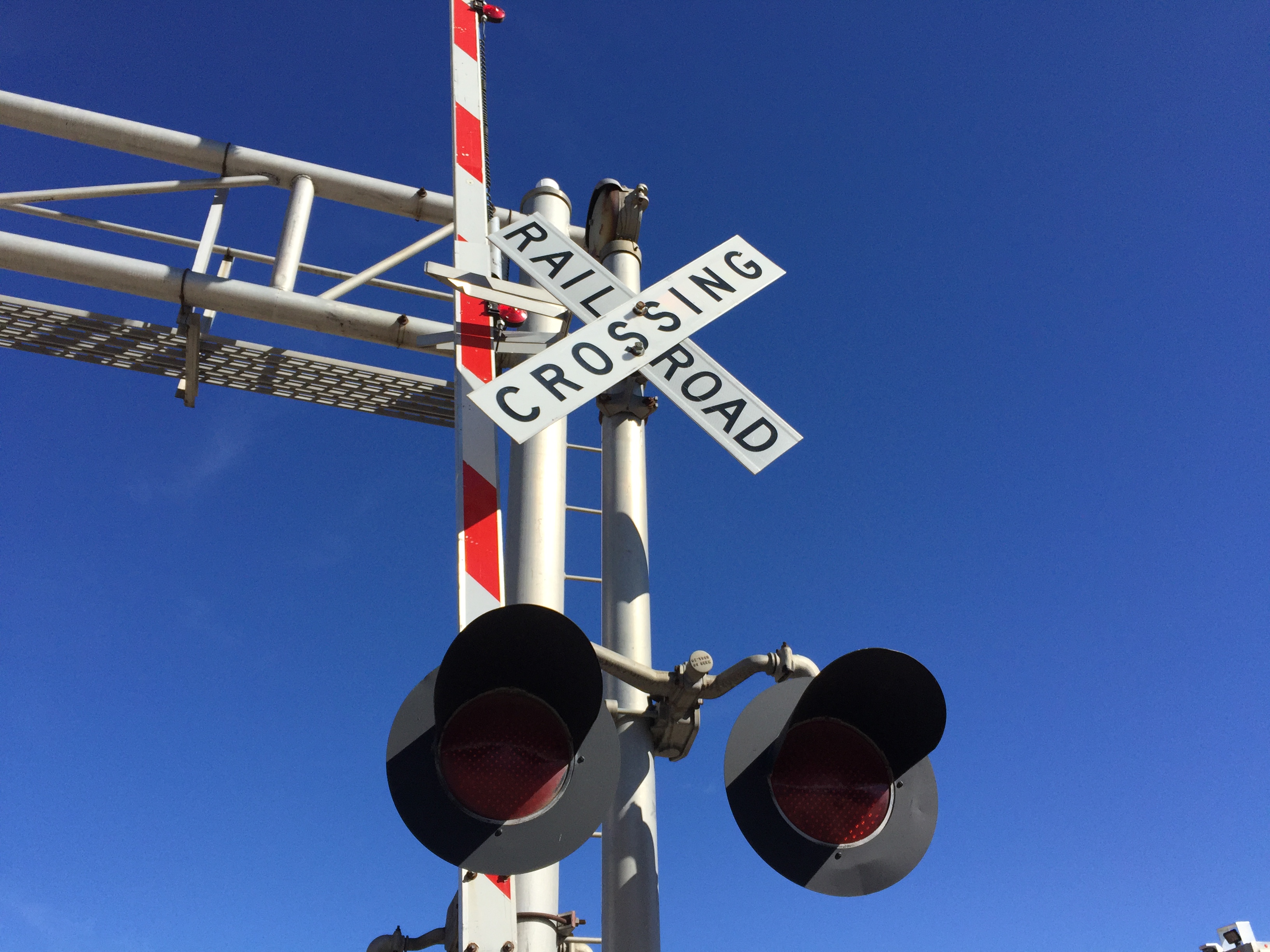
WASHINGTON – U.S. Senator Jerry Moran (R-Kan.) today joined Sen. Mike Crapo (R-Idaho) to introduce the Building Rail Access for Customers and the Economy (BRACE) Act (S. 407). The bipartisan legislation would further extend the short line railroad track maintenance tax credit that expired in 2014.

“Short lines matter greatly to us in Kansas,” said Sen. Moran. “It is critical for Kansas farmers and factories that we have an efficient, cost-effective way to move the commodities and goods produced in our state – and the short line railroad network fits that need. This legislation will help support large areas of the country, including many rural communities across Kansas, where short lines serve as the main connection to the national railroad network and markets far from home.”

“The team members on the South Kansas and Oklahoma Railroad, Kansas and Oklahoma Railroad, Kaw River Railroad, and our Pittsburg headquarters staff come to work every day to focus on the needs of Kansas farmers, cement plants, as well as coal, chemical, steel and plastics shippers,” said Watco Companies Chief of Global Strategy Ed McKechnie. “Sen. Moran’s tireless efforts in support of rural transportation for more than a decade now to build an enormous bipartisan coalition – first in the House and now in the Senate –have made tremendous impacts. We appreciate his leadership and we will continue to put our customers first and invest in Kansas infrastructure with the support of this important bill.”

The tax credit was established by legislation introduced by then-Rep. Jerry Moran in 2004 to encourage railroads, railroad customers and suppliers – who depend the most on short line railroads – to invest directly in maintaining the more than 2,000 miles of short line rails in Kansas. Located in the center of America’s heartland, Kansas is one of the leading rail and distribution centers in our country and plays an integral role connecting farmers and factories with communities around the globe. The short line railroad track maintenance credit provides short line and regional railroads a 50 percent tax credit for railroad track maintenance expenses, up to $3,500 per mile of track owned or leased by the railroad.

In addition to Sens. Crapo and Moran, S. 407 is cosponsored by Sens. Debbie Stabenow (D-Mich.), Pat Roberts (R-Kan.), Richard Blumenthal (D-Conn.), Jonny Isakson (R-Ga.), Bob Casey (D-Pa.) Roger Wicker (R-Miss.), Chuck Schumer (D-N.Y.), James Inhofe (R-Okla.) and Ron Wyden (D-Ore.). Companion legislation was introduced in the U.S. House of Representatives by Rep. Lynn Jenkins (R-KS-02).

Kansas Law Enforcement Skeptical Of Kobach Immigration Bills

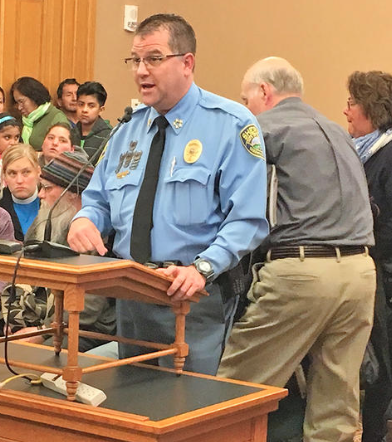
Sedgwick County Sheriff Jeff Easter told legislators Wednesday that law enforcement agencies were not consulted before two immigration bills were introduced. ANDY MARSO / KANSAS NEWS SERVICE
Sedgwick County Sheriff Jeff Easter told legislators Wednesday that law enforcement agencies were not consulted before two immigration bills were introduced.
ANDY MARSO / KANSAS NEWS SERVICE

By ANDY MARSO

Kansas legislators heard concerns from law enforcement groups Wednesday about two immigration bills promoted by Secretary of State Kris Kobach.

The bills seek to enlist state and local officers in efforts to enforce federal immigration law. But the Kansas Highway Patrol and the Kansas Sheriffs’ Association said they don’t have the resources to do that and they don’t want to be exposed to costly lawsuits if they wrongfully detain someone under the complex federal regulations.

Both groups said they weren’t consulted before the bills were introduced.

“It would be nice if folks sat down with us and said, ‘This is our proposal. How do we get there and how do we have law enforcement approval of this?’” said Sedgwick County Sheriff Jeff Easter. “It’s been just shoved down our throat, and then we have to come up here and testify.”

Kobach did not attend Wednesday’s hearing on the bills at the Senate Federal and State Affairs Committee. One of his aides, Moriah Day, testified in his place.

Day said Kobach was in Washington, D.C., for the winter meeting of the National Association of Secretaries of State.

The bills in question had been enacted in other states and are effective in curbing illegal immigration, Day told committee members.

Penalties For Sanctuary Cities

Senate Bill 157 would require the Kansas Highway Patrol to enter into an agreement with the U.S. Department of Homeland Security to essentially deputize some troopers to work on the department’s behalf in enforcing immigration law.

The highway patrol submitted written testimony saying there were several technical problems with the bill and, with the agency already short-staffed by 70 officers, diverting troopers to immigration enforcement would mean compromising on things the patrol does to keep roads safe.

Senate Bill 158 would remove all state funds from any city or county with “sanctuary” policies that shield immigrants from investigation by federal agents.

The Kansas Chamber of Commerce joined cities and counties in opposing the bill. Eric Stafford, a lobbyist for the Chamber, said its broadness made it difficult for municipalities to know how to comply.

Lindsay Espinosa, 13, testified against the immigration bills. CREDIT ANDY MARSO / KANSAS NEWS SERVICE
Lindsay Espinosa, 13, testified against the immigration bills.
CREDIT ANDY MARSO / KANSAS NEWS SERVICE

“Just last week the secretary of homeland security was asked what the definition of a sanctuary city was, and he said he has no idea,” Stafford said. “If our guy in charge doesn’t know, maybe somebody in the state of Kansas does?”

Easter said the bill targets a handful of counties, including his, based on a list compiled by the Center for Immigration Studies, a think tank he called a “partisan website.” The counties were included because they don’t automatically comply with requests from U.S. Immigration and Customs Enforcement to detain individuals for an additional 48 hours after their scheduled release from custody to give agents time to investigate their immigration status.

Easter said such “detainers” have led to costly legal battles in other states, including civil rights lawsuits in Arizona’s Maricopa County.

“For two years we’ve been labeled a sanctuary county because there’s court rulings out there that would have got me sued,” Easter said, “and I don’t feel like that’s a good use of taxpayer money.”

Easter said this week that his office will honor ICE detainer requests if they’re accompanied by a probable cause affidavit.

Personal Testimony

Wednesday’s hearing in a small Statehouse room was packed with people, most of them in opposition to the bills.

During the 90-minute hearing, the crowd heard emotional testimony from both sides.

A pair of 13-year-old Wichita girls, Lindsay Espinosa and Cynthia Bautista, testified that the bills would make people in Latino communities afraid to report crimes to police and split families like theirs with mixed immigration status.

Dennis Bixby said his 19-year-old daughter was killed in an auto collision in Basehor by a person who was in the country illegally and had been released from custody while awaiting a deportation hearing.

“I know you’re going to hear a lot of things about breaking up families today,” Bixby said. “Well, they broke up our family. She was our only child. There will be no grandchildren.”

Religious groups testified against the bills. Jarrett Meek, the pastor of an evangelical church in Kansas City, Kan., said that if the intent was to reduce crime, the measures were misguided, because crime has dropped as immigration to his area has increased.

“Immigrants are driving economic revitalization in our community,” Meek said. “It’s an exciting thing to happen and it’s an exciting place to live.”

Andy Marso is a reporter for kcur.org‘s Kansas News Service, a collaboration of KCUR, Kansas Public Radio and KMUW covering health, education and politics in Kansas. You can reach him on Twitter @andymarso

USGS: 3rd earthquake this week reported in Kansas

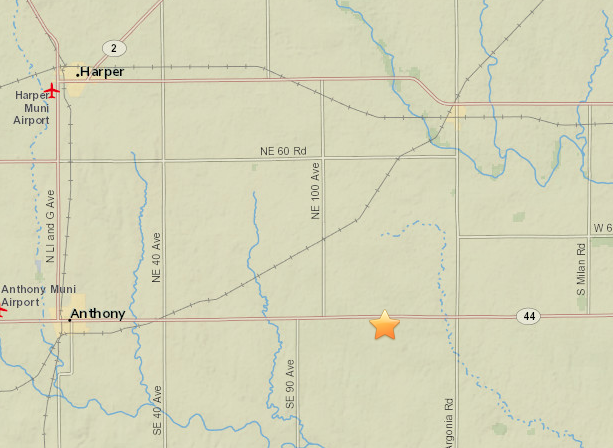
Location of Thursday’s quake-USGS image

HARPER COUNTY — An earthquake shook South Central Kansas just 7:40a.m. on Thursday.

The quake measured a magnitude 2.7, according to the U.S. Geological Survey and was centered approximately 16 miles east of Anthony.

On Monday a 3.3 quake hit just north of the Oklahoma State line in Sumner County. On Sunday, a 3.1 magnitude quake shook 16 miles northwest of Harper.

There were no reports of damage or injuries on Thursday, according to the Harper County Sheriff’s Department.

Silver Alert issued for missing Kansas couple

photo courtesy Lyon Co. Sheriff

LYON COUNTY – Law enforcement authorities are working to locate an elderly couple reported missing from North Lyon County.

Sheriff’s deputies reported family last spoke to Rosetta, 63, and Meredith Heathman, 70, on Tuesday morning, according to a media release.

The Heathman had plans to go to dinner in Emporia that day.

The couple are driving a gray 2016 Dodge Journey SUV with a Kansas disabled veteran 8402 plate. There is a sticker on the rear window that says “Tet Offensive.”

Meredith and Rosetta have a history of heart related diseases.

The Heathmans live in the area of the 1900 block of Road 300 in North Lyon County.
Anyone with information is asked to call 620-341-3205.

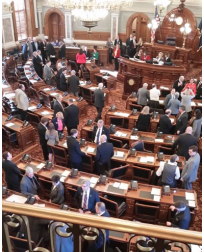
Kansas House approves bill raising your income taxes

TOPEKA, Kan. (AP) — The Latest on the Kansas Legislature’s debate over balancing the state budget and increasing taxes (all times local):

11:55 a.m.

The Kansas House has approved a bill that would increase personal income taxes to help balance the state budget.

The vote Thursday was 76-48 and sends the measure to the Senate.

The bill would raise more than $1 billion over two years, starting in July. It would abandon core policies championed by Republican Gov. Sam Brownback.

Supporters had eight votes less than the two-thirds majority of 84 necessary in the GOP-controlled, 125-member House to override a Brownback veto.

The bill’s backers also lost seven votes overnight. The House gave the bill first-round approval Wednesday on an 83-39 vote.

Brownback has said he would not sign the bill because he opposes broad income tax increases like those in the measure.

The Senate expects to debate the bill Friday.

___

10:15 a.m.

Kansas Senate President Susan Wagle says her chamber will move with unusual speed to consider a House bill raising personal income taxes if the House approves it.

Wagle said the Senate already has made plans to debate and take a final vote on the House bill Friday.

The House was taking final action on the bill Thursday after members gave it first-round approval Wednesday on an 83-39 vote.

The bill seeks to balance the state budget through June 2019 by raising more than $1 billion in new revenues between now and then.

The measure would abandon core tax policies championed by Republican Gov. Sam Brownback in 2012 and 2013. He said Wednesday that he would not sign it.

Wagle said she believes the House bill also could pass the Senate.

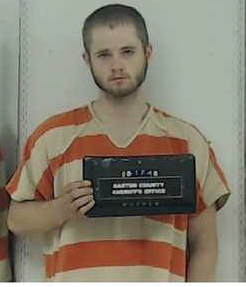
Kansas traffic stop leads to prison for drug distribution

Codey Elsasser
Codey Elsasser

BARTON COUNTY – A Kansas man, stopped for a traffic violation, is going to prison on drug charges.

A Barton County District Judge sentenced Codey Deon Elsasser, 32, Great Bend, to 15 months for distribution or possession with intent to distribute marijuana and a separate charge of possession of methamphetamine.

On August 17, 2016, deputies from the Barton County Sheriff’s Office stopped a vehicle near the intersection of 10th and Patton Road in Great Bend for a traffic violation. The driver, Elsasser, was a habitual violator and driving on a revoked driver’s license. During the course of the investigation, a quantity of suspected marijuana and methamphetamine were found in the vehicle.

The Barton County Sheriff’s Office investigated the case. Mellor prosecuted the case for the Barton County Attorney’s Office.

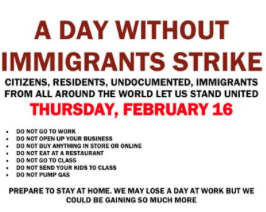
‘Day Without Immigrants’ protests underway in Kansas, across US

Courtesy image

WICHITA (AP) — Immigrants across the country are expected to stay home from school and work on Thursday to show how critical they are to the U.S. economy and way of life.

“A Day Without Immigrants” actions are planned in cities including Kansas City, Wichita, Topeka, Philadelphia, Washington, Boston, Houston, Chicago and New York. The protest gained momentum on social media and by word of mouth.

See their social media page promoting a rally in Topeka.

It comes in response to President Donald Trump, whose administration has pledged to increase the deportation of immigrants living in the country illegally. Trump campaigned on building a wall along the U.S.-Mexico border, and blamed high unemployment on immigration. As president, he’s called for a ban on people from seven Muslim-majority countries from coming into the U.S.

Organizers expect thousands of people to participate or show solidarity with workers.

Copyright Eagle Radio | FCC Public Files | EEO Public File