BARTON COUNTY -The Kansas Court of Appeals reversed a district court judge’s decision to set aside the identity theft conviction of a woman who moved to Kansas from Mexico in 2003 without proper documentation to join her husband, according to court documents.
Following a jury trial, Melissa Valles was convicted of illegally using the social security number of a Colorado resident to obtain employment at several Great Bend businesses, according to a media release from the court.
However, the judge who heard the case granted a motion to arrest judgement, essentially ruling that the court did not have jurisdiction over the case.
The Barton County Attorney’s Office appealed that decision, and the Court of Appeals agreed that the trial judge was incorrect in his decision. Arguing the State’s case to the three-judge panel on the Court of Appeals, then-County Attorney Doug Matthews contended that a change in the law allowed the case to continue even though the language used in the complaint to charge Valles was technically incorrect.
The judges on the Court agreed, holding that the complaint was sufficient since it alleged facts that, if proven beyond a reasonable doubt, would show that Valles had committed a crime in Kansas.
Because Valles understood the charges being brought against her, she was able to present a defense, even though that defense was unsuccessful.
The Court of Appeals panel concluded that the trial judge erred by granting the motion. The case will now be returned to Barton County for sentencing before a different judge
EDITOR’S NOTE-Kansas lawmakers who oppose concealed guns in hospitals and on university campuses have failed to revive legislation that would keep such weapons out after June.
The House Federal and State Affairs Committee rejected a bill Wednesday to allow the University of Kansas Medical Center in Kansas City, Kansas, to continue banning concealed guns.
By SAM ZEFF
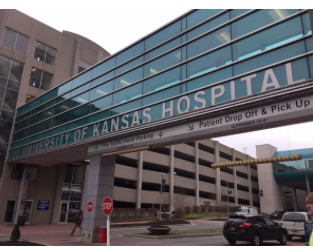
The University of Kansas Hospital says it would need to triple its security force if it must allow almost anyone to carry a concealed gun come July. CREDIT SAM ZEFF / KCUR 89.
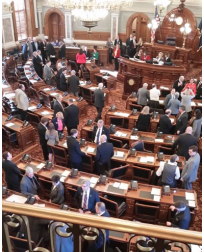
The fight is raging on in Topeka over whether to roll back a law that would let almost anyone carry a concealed gun on a college campus or in a library or public hospital.
The debate has mostly been around whether guns enhance or detract from people’s safety.
Less talked about is just how much allowing guns on campuses could cost.
For one Kansas City area institution it could run into the millions.
Most Kansas Board of Regents institutions have said they have little choice but to let people carry concealed weapons on university or community college campuses.
Any of the institutions could prohibit guns, but they would have to buy metal detectors and post armed guards at each entrance of every area that they want to keep firearm-free.
Across the 36 campuses there are 800 buildings with who knows how many doors.
KU Hospital and Medical Center officials say there are more than 100 access points around its complex in a maze of buildings that have been stitched together over the decades.
Securing those access points would cost plenty.
“We’re talking about tripling the size of the department,” says Med Center Chief of Police Richard Johnson. “Clearly, the hospital is going to continue to take the approach that whatever needs to be done to keep the staff and patients safe is what we’ll do.”
Johnson’s been lobbying for four years against the concealed carry law.
Currently KU Med has 45 police officers and 60 unarmed security guards.
KU police starting pay is $47,493, with the price of benefits on top of that. So just adding 20 sworn officers to the department would cost a minimum of $1.2 million.
That doesn’t include the cost of the added security guards, dispatchers or overtime.
Starting pay for security guards and dispatchers is $31,000 a year.
The metal detectors run somewhere between $4,000 and $5,000 each.
“That would take money away from important patient care advances and staff advances,” says KU Hospital CEO Bob Page. “And that would be a big challenge for us and it would be difficult for us to understand why we would be put in that position.”
A position, KU says, that would put it at a competitive disadvantage with other metro hospitals, all of them private.
But does KU Med really need that much security, asks Rep. Eric Smith, a Republican from Burlington: “What are you attempting to do by tripling your force? Are you going to try and cover all 100 access points that he (Johnson) estimated? Or what is your intent at that point?”
Smith is a deputy sheriff by trade and he’s been tough in committee hearings on those who want to roll back the concealed carry law.
And, Smith says, he’s quite sure KU’s pricey security plan is not an unfunded mandate by the Legislature.
“If they believe that’s the course they have to go, that is not us mandating, that is them making that choice to go in that direction.”
But for Rep. Louis Ruiz, a Democrat who represents the district where KU Hospital sits, $1 million or more on extra security is a waste and money the hospital shouldn’t even have to think about spending.
“Wyandotte County where we’re at, our health outcomes are the worst in the state. Maybe we should look at research as to why this is happening and what we can do to remedy that situation instead of spending money making sure people can carry guns or not carry guns into a location,” Ruiz says.
His solution? He and many others simply want lawmakers to roll back the concealed carry law that takes effect in just five months.
But the politics around this is tricky. The committees that are hearing testimony on the roll back are a bit more conservative than the Legislature in general.
So much of what’s happening now is laying the groundwork for a fight on the House and Senate floors.
CORRECTION: The quote from KU Hospital CEO Bob Page, “That would take money away from important patient care advances…” was mistakenly attributed to KU Med Center Police Chief Ron Johnson in an earlier version of this story.
Sam Zeff covers education for KCUR and the Kansas New Service. Follow him on Twitter @SamZeff.
RILEY COUNTY –Two people were injured in accident during a pursuit by law enforcement just before 3p.m. on Tuesday in Riley County.
The Kansas Highway Patrol reported a 2009 Lexus driven by Robert N. McGinley, 26, Lee’s Summit, MO., was westbound on Kansas 18 near south 6th and Fort Riley Boulevard fleeing from Rossville Police.
The vehicle went left of center and collided with a 2002 Chevy passenger vehicle drive by Hober, David F. Hober, 35, Manhattan.
McGinley and Hober were transported to Via Christi in Manhattan. Hober was properly restrained at the time of the accident, according to the KHP.
WICHITA, Kan. (AP) — Wichita police say two police officers are on administrative leave pending the outcome of internal and criminal investigations.
The department released no details other than saying it possibly involves misconduct and the move was prompted by another agency’s criminal probe.
Some 2015 phone calls of former state Sen. Michael O’Donnell, now a Sedgwick County commissioner, were intercepted by investigators. The paper says two former employees were sent letters by the Justice Department saying their calls with him had been intercepted.
O’Donnell did not respond to a message seeking comment.
Wichita businessman Brandon Steven told the paper he is the subject of an inquiry into poker and efforts to open a casino. Federal officials notified several parties that calls with him also were intercepted.
FORD COUNTY – One person was injured in a 3-vehicle accident just after 4p.m. on Tuesday in Ford County.
The Kansas Highway Patrol reported a 2016 Dodge Ram pickup driven by Jessee Stickell, 51, Pottsville, PA., was northbound on U.S. 56 just south of U.S. 400.
As the pickup approached the intersection at Lariat Way, a 2001 Cadillac DeVille driven by Jose G. Soto-Gonzalez, 30, Dodge City, attempted to cross U.S. 56 from Lariat Way.
The Dodge collided with the Cadillac and rolled into the northeast ditch. The Cadillac spun around and hit a USD 443 school bus driven by Wade S. Hampton, 64, Dodge City, that was stopped on Lariat Way headed west bound on U.S. 56.
Stickel was transported to Western Plains Medical Center.
Soto-Gonzalez, Hampton and 9 children on the school bus were not injured.
The drivers were properly restrained at the time of the accident, according to the KHP.
TOPEKA, Kan. (AP) — Kansas legislators who favor balancing the state budget with a big income tax increase are preparing to test fellow lawmakers’ appetite for such a fix.
The state House was planning to debate a bill Wednesday that would boost personal income taxes to raise more than $1 billion over two years, starting in July. The measure would abandon core policies championed by Republican Gov. Sam Brownback.
The measure has bipartisan support but Republicans in the GOP-controlled House are split.
Kansas faces budget shortfalls totaling nearly $1.1 billion through June 2019. The state has experienced persistent financial problems since Republican lawmakers slashed personal income taxes in 2012 and 2013 at Brownback’s urging.
The bill would end an exemption for more than 330,000 farmers and business owners and boost income tax rates.
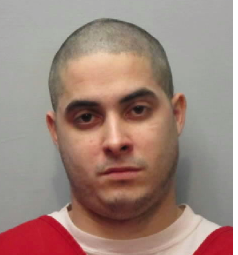
RENO COUNTY – The suspect in a February 4, stabbing in a vehicle in Hutchinson’s Carey Park was in court Tuesday to hear the formal reading of charges.
Elijah B. Norris, 28, is now charged with aggravated battery- domestic violence, possession of marijuana with intent to distribute and possession of drug paraphernalia.
The victim who had been stabbed multiple times in the head and was bleeding profusely when police arrived was first taken to Hutchinson Regional Medical Center, then transported to Via-Christi St. Francis Regional Medical Center for treatment which included stitches for the five wounds she suffered. There were two children in the vehicle, ages one and three. They were safe and unharmed.
Police located Norris and EMS transported him to Hutchinson Regional Medical Center for a laceration to his hand believed to have occurred during the attack.
Officers also found a bloody kitchen knife as well as several small plastic baggies of suspected marijuana believed to be connected to the case. One had blood on it. The total weight being over 25 grams according to the complaint.
Norris has served time in prison for aggravated battery, possession of drugs and burglary and his case now moves to a future waiver-status docket. He remains jailed on a $50,000 Bond.
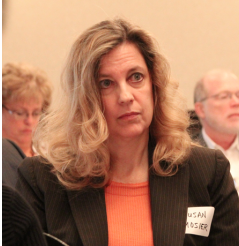
Susan Mosier, secretary of the Kansas Department of Health and Environment, spoke Thursday to a Kansas House committee about Gov. Sam Brownback’s reasons for opposing Medicaid expansion, which include uncertainty about the future of the Affordable Care Act and the federal money it guarantees to states to cover most of the cost of expansion. CREDIT FILE PHOTO
The message delivered to a legislative committee Thursday by opponents of expanding Medicaid eligibility in Kansas boiled down to this: Expansion has been a disaster in the states that have enacted it, so don’t do it.
Gregg Pfister, legislative relations director for the Florida-based Foundation for Government Accountability, ticked through a list of expansion states where costs and enrollment significantly exceeded projections.
“When considering expansion, each one of these states looked at the problem, studied the projections and decided that this was an expenditure that their state could afford. Unfortunately, they were wrong,” Pfister told members of the House Health and Human Services Committee.
Supporters of Medicaid expansion in Kansas acknowledge that demand for services has exceeded projections in some states, but they don’t necessarily consider that a problem given that more people are getting needed services and the federal government is shouldering most of the cost.
“Even with enrollment exceeding estimates, states have seen budget savings and revenue that still makes expansion budget positive in most cases,” said Sheldon Weisgrau, in a memo distributed to the media before the hearing to counter the anticipated arguments of opponents.
Weisgrau is director of the Health Reform Resource Project, an educational initiative funded by several regional health foundations, some of which also provide funding to KCUR and the Kansas News Service.
In addition to creating cost overruns, Michael Tanner, a senior fellow at the Cato Institute in Washington, D.C., said Medicaid doesn’t provide quality care.
“In almost every health outcome, Medicaid is outperformed by private health insurance,” Tanner said. “In my opinion, it would be a significant mistake for Kansas to expand Medicaid at this time.”
The main study Tanner cited to support his claim didn’t follow patients long enough to determine the extent to which their health improved once they obtained Medicaid coverage, Weisgrau said.
Susan Mosier, secretary of the Kansas Department of Health and Environment, reiterated Gov. Sam Brownback’s reasons for opposing expansion, which include uncertainty about the future of the Affordable Care Act and the federal money it guarantees to states to cover most of the cost of expansion.
Mosier also took issue with claims made by supporters, most notably the Kansas Hospital Association, that expansion would generate more than enough revenue to cover the state’s share of the cost.
“There are several flaws with that analysis,” Mosier said. “There is no cost benefit to the state, in fact there is additional cost.”
The official estimate that Brownback administration’s budget office prepared said expansion would cost the state an additional $110 million in the first two years.
Audrey Dunkel, a senior financial analyst for the hospital association, disputed the accuracy of the estimate. She said revenues and cost savings generated by expansion — most of which were acknowledged in the budget office report — would generate about $13 million more than the amount needed to cover the state’s share of expansion costs.
The expansion bill under consideration — House Bill 2064 — would extend eligibility for KanCare, the state’s privatized Medicaid program, to more than 300,000 Kansans with annual incomes at or below 138 percent of the federal poverty level, about $16,000 for an individual. However, it’s expected that only about half that number would enroll for a variety of reasons.
The committee is expected to vote next week on whether to send the bill to the full House.
Jim McLean is managing director of kcur.org‘s Kansas News Service, a collaboration of KCUR, Kansas Public Radio and KMUW covering health, education and politics in Kansas. You can reach him on Twitter @jmcleanks.
WICHITA, Kan. (AP) — The husband of a woman killed in a Dillons parking lot is suing the grocery store for negligence.
The Wichita Eagle reports 60-year-old Annette Hedke died in February 2015 after slipping in the parking lot and then struck by a vehicle driven by Dillons employee Christopher Schrader.
Schrader was charged with involuntary manslaughter, driving under the influence and other crimes. He was sentenced to nearly six years in prison.
Sean Brennan, Dennis Hedke’s attorney, says it’s unclear whether Schrader was working at the time of the accident.
The suit, asking for more than $75,000, says Dillons should have been aware of Schrader’s alcohol problem that’s shown from a previous felony DUI conviction.
Dillons spokewoman Sheila Lowrie said she could not comment on the suit, but that the company “remains deeply saddened by the tragic death of Mrs. Hedke.”
RENO COUNTY – Fifteen of sixteen employees briefly hospitalized following a carbon monoxide leak at a Reno County manufacturing business on Monday returned to work Tuesday.
Fire crews evacuated employees from the building located in the 1600 Block of East Wasp Road south of Hutchinson after they confirmed elevated levels of carbon monoxide.
Employees thought something was wrong at the business and began complaining of headaches, according to Alex Birkenfeldt, SYT USA CEO.
Emergency room staff tested and treated employees and then sent them home.
Birkenfeldt said a gas heater responsible for the leak is being replaced.
The business manufactures fiberglass parts, according to Birkenfeldt.
SALINA, Kan. (AP) — Leaders of a fundraising campaign say they have reached their goal for establishing a new home for the University of Kansas School of Medicine-Salina.
A news release from Tom Martin, executive director of the Salina Regional Health Foundation says the group has raised more than $7.6 million. Its original goal was just over $7.5 million.
The campaign total includes a $2 million gift from the Dane G. Hansen Foundation in Logan.
The new center will be in a former bank building in downtown Salina. Demolition work started last fall and new construction is expected to begin soon.
The building is expected to open in June 2018.
The Kansas-Salina campus welcomed its first class in July 2011.
DODGE CITY, Kan. (AP) — The owner of a Dodge City hunting preserve is offering a $1,000 reward for information leading to the arrest of people who slipped onto the preserve and killed several animals.
Ryan Engelking, owner of Dodge City Exotic Hunt and Safari near Dodge City, says some of the animals killed recently were pets and not on the reserve for hunting.
The Dodge City Daily Globe reports Engelking estimates the killings will cost him about $25,000. He says many of the animals killed were rams.
The owner believes at least two people committed the crime and hunted using bows and arrows.
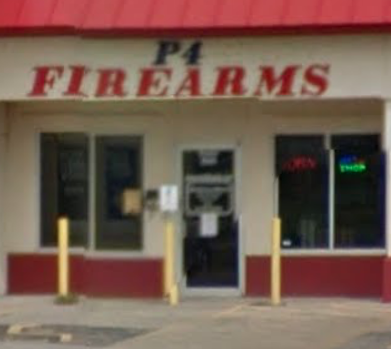
SEDGWICK COUNTY – Law enforcement authorities in Sedgwick County continue their investigation of a weekend burglary involving dozens of guns.
P4 Firearms, 1556 North Broadway in Wichita reported a reward is now offered for information in the case, according to a social media report.
Unknown suspects burglarized the store early Saturday. The store was closed on Saturday due to the burglary.
If you have any information on the suspects, please call Crime Stoppers at 267-2111, or the ATF.
Please check any firearms before you buy them to make sure you are not buying stolen property.
If you come across any of the firearms on the list, call 911 so officers can come investigate.

 BARTON COUNTY -The Kansas Court of Appeals reversed a district court judge’s decision to set aside the identity theft conviction of a woman who moved to Kansas from Mexico in 2003 without proper documentation to join her husband, according to court documents.