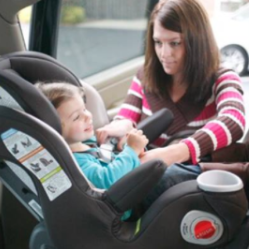
TOPEKA — Child safety advocates gathered in the House Judiciary Committee meeting last week to support a bill that they say would help decrease child fatalities in car accidents.
HB2077 would protect people who perform inspections, install or adjust child safety seats if there was an injury caused by a car seat malfunction. The bill also limits civil liability for people who educate others on how to install or adjust a child safety seat.
The people who perform these tasks are certified passenger safety technicians and they specialize in car seats for young children.
Kansas has 641 certified child passenger safety technicians (CPST), but Safe Kids Kansas member Teresa Taylor said that number is too low.
“The goal of this bill is to recruit more certified passenger safety technicians and to offer more services to the community,” Taylor said.
Taylor said people are wary of getting the certification to become a technician because of the potential liability issues. Proponents expect this bill would eliminate those worries and encourage others to complete the training.
According to the Kansas Traffic Safety Office, a neutral party on this bill, child safety seats have been shown to reduce fatal injury by 71 percent for infants and 54 percent for toddlers.
The National Highway Safety Administration says more than 46 percent of the child seats are installed incorrectly.
The Kansas Traffic Safety Office reports that Kansas has 118 Child Passenger Safety Inspection Stations that aim to provide help with car seat installation. In 2016, the stations assisted over 1,900 low-income families by providing them with car seats for their children as well as seat training.
Rachel Ault, a registered nurse for Stormont Vail Health and a CPST, testified in favor of the bill. Ault said she felt compelled to do her part, because she frequently deals with children with preventable injuries caused by improper seat installations.
“Right now, companies are hesitant to get involved in helping certified passenger safety technicians,” Ault said. “Stormont Vail said if this bill passed, they would join the cause.”
Stormont Vail Health submitted a written testimony saying, “with the passing of this legislation, Stormont Vail Health intends to develop a Child Passenger Safety program to provide this needed resource to the families we serve.”
There were no opponents to the bill. However, Rep. John Carmichael (D-Wichita) expressed some concerns about who would be affected by the bill.
“Why wouldn’t you want an inspector to be responsible for their negligence like lawyers, doctors and everyone else?” Carmichael asked.
Proponents said the technicians receive extensive training through a four-day program with required continuing education. They said this program is enough to justify the technicians’ case and the liability should be assumed by the people involved in the car accidents and car manufacturers.
The bill states it does not apply to “civil actions for damages resulting from gross negligence or willful misconduct.”
Now, committee members will discuss amending the language of the bill to only apply to cases of negligence so it does not limit as many cases.
Madison Coker is a University of Kansas junior studying journalism from Kansas City.
TOPEKA, Kan. (AP) — Restoring state funding for higher education is a structural way to keep college costs down for students, the head of Kansas’ governing board of education said after a community college announced plans to develop a degree costing just $15,000.
Blake Flanders, the Kansas Board of Regents’ president and chief executive, told the Topeka Capital-Journal that regents-governed colleges and universities have lost $75 million in funding over the past three years. Last spring, Republican Gov. Sam Brownback cut 4 percent from public higher education to help balance the budget, saving about $30 million.
Flanders watched Friday as Brownback announced that Cowley County Community College in Arkansas City had accepted his challenge to try to try to develop a program culminating in a $15,000 four-year degree.
That proposal would require students to complete two years of courses at Cowley County while still in high school, then transfer to Fort Hays State University.
But state lawmakers still have to appropriate scholarship funding, and Fort Hays State hasn’t yet set tuition rates.
“This type of program really highlights the need for higher ed and the need to keep costs down,” Flanders told the Capital-Journal. “And that’s why the Board of Regents’ No. 1 priority is to restore the funding that was taken out of the budget for higher ed. That’s the structural way to keep costs down for students and parents.”
The regents say that state general funding for universities as a percentage of total funding has been declining since 1999 — from slightly more than 40 percent to just over 20 percent. At the same time, tuition as a percentage of funding rose from about 15 percent to nearly 30 percent.
Kansas faces a budget shortfall of more than $500 million in the next fiscal year.
“We’re in a tough budget cycle, and I would hope we could get back to the point of having stable funding for higher education,” Brownback said.
While applauding Cowley County Community College’s initiative, House Minority Leader Jim Ward, a Wichita Democrat, said Kansas needs to fund higher education.
“Who’s against trying to find affordable education opportunities? That’s not the issue,” Ward said. “The issue is you’re not providing funding so kids can get into schools at any cost or without massive debt.”
RENO COUNTY — A Kansas man who entered guilty pleas as charged for drug distribution and theft was sentenced Friday to just over 14-years in prison.
Police arrested Richard Manion, 27, Hutchinson, after an officer recognized him and knew he was wanted on several warrants.
During the arrest and investigation, police discovered 29 grams of methamphetamine as well as some prescription pills. They also did a search of a local motel room and allegedly found more items consistent with drug distribution including $4,000 in cash.
Manion was also charged with stealing mail that included credit cards. One card was sent to one of the victims and had not been activated. Over the next four days, the card had been used at 25 different locations in Hutchinson and McPherson.
Video was obtained showing Manion and a co-defendant, Aubrey Ramsey, using the cards at various locations.
The duo rented motel rooms where Manion used his own name and vehicle information.
Judge Trish Rose sentenced him to the 14-years on the charge of distribution of methamphetamine and ran all the other convictions concurrent to that which was a part of the plea agreement. However, Manion was also convicted for two drugs cases with the feds and was sentenced to 10-years in federal prison
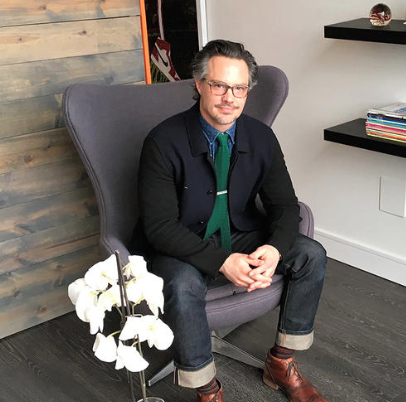
Damon Heybrock’s medical practice in Westwood is part of a growing group of primary care offices that charge a monthly fee rather than taking insurance. Kansas Lt. Gov. Jeff Colyer says he’d like to explore ways to fit the model in Medicaid. ANDY MARSO / KANSAS NEWS SERVICE
Dr. Damon Heybrock’s office doesn’t look like a traditional medical clinic.
Heybrock finished converting a two-story row house into a medical practice in September, putting exam tables in the bedrooms and a centrifuge for lab tests next to the kitchen sink.
Original pieces by Kansas City artists cover the walls of the clinic in Westwood, which Heybrock named Health Studio KC.
The look isn’t the only thing that’s different about his practice — so is the payment method.
Heybrock is part of a growing group of Kansas doctors who accept no insurance. Instead, they charge a monthly membership fee — in Heybrock’s case $60 for an adult — for unlimited office visits, phone calls and some lab tests.
They call it direct primary care, or DPC. Heybrock said he chose it because he didn’t want to spend time worrying about insurer coding and billing or become part of a hospital group in which doctors largely oversee the work of lower-level providers.
“I didn’t get into medicine to manage,” Heybrock said. “I got into medicine to see patients.”
As DPC practices grow, patient advocacy groups warn that they’re no substitute for comprehensive medical insurance and patients who treat it that way risk large out-of-pocket bills.
But the doctors say they’re filling a customer service niche that patients aren’t finding in practices that depend on insurance reimbursement. They are collaborating and clearing regulatory hurdles and, if President Donald Trump fulfills one of his campaign pledges, they could soon move into a new arena: Kansas Medicaid.
An alliance forms
Heybrock’s previous job was at Cerner, where he worked for almost 10 years in the on-site employee clinic.
The Kansas City-based health information technology company is self-insured, so Heybrock didn’t have to bother with insurance.
“I liked how we were doing medicine,” Heybrock said. “The longer appointment times; we built a team care model, lot of integration and all that, so I loved that. But it was time for me to move on.”
Heybrock wanted to practice that way, but in his community, so he turned to DPC.
Two years earlier he would have had few resources to look to for help in setting up his practice.
But now Heybrock is part of the Midwest DPC Alliance, a group of 17 direct primary care doctors at nine locations in the Kansas City metropolitan area (eight in Kansas and one in Platte City, Mo.). The group’s leader, Kylie Vannaman, said it started with a dinner party in October 2015.
“We met informally and found it to be really great,” Vannaman said. “Just good camaraderie, good social support, and it just has kind of grown and manifested into this loose organization.”
Kylie Vannaman is the leader of the Midwest DPC Alliance, a group of 17 direct primary care doctors in the Kansas City area. CREDIT ANDY MARSO / KANSAS NEWS SERVICE
Vannaman, who has a direct primary care clinic in Johnson County with her colleague Haseeb Ahmed, said the group now meets quarterly.
Vannaman said the group’s focus is largely educational right now: explaining to the public that DPC is having a doctor essentially on retainer. It’s what used to be known as “concierge medicine,” but she and her colleagues are trying to do it at prices accessible to people who aren’t wealthy.
Their organization also adds political clout to direct primary care practitioners in Kansas, a group that has thus far been led by Josh Umbehr, a Wichita physician and Libertarian candidate for lieutenant governor.
Umbehr, who owns AtlasMD, has long been an advocate of DPC and worked with the Kansas Medical Society this year to draft a bill that would allow doctors to negotiate prices with medical testing labs on behalf of their patients.
Since 2007 Kansas law has required that labs bill patients or their insurers directly, because of fears that doctors would mark up prices if they acted as middlemen. But DPC doctors say they actually want to do the opposite: haggle for lower prices.
“We’re the middleman helping bring the cost down,” Umbehr said in a phone interview.
House Bill 2027, which exempts DPC doctors from the lab billing restrictions, passed the Kansas House 119-1 this week. It requires DPC doctors to show patients in writing what lab they used and what the costs were.
“The consumer protection side of that would still be if a doctor didn’t describe what their prices are, they would get in trouble,” Umbehr said.
The Trump effect
Removing regulations for DPC doctors makes some patient advocacy groups nervous.
Most DPC physicians recommend that their patients at least couple their primary care membership with a low-premium, high-deductible health insurance plan to help cover catastrophic medical emergencies.
But Andrea Callow, a senior policy analyst with the group Families USA, said that still leaves gaps in coverage that could lead to big out-of-pocket expenses.
“For low-income people, all of those risks just get further amplified,” Callow said.
For years Umbehr has pushed for a pilot program to include DPC in KanCare, the Kansas Medicaid program that mainly serves low-income children and pregnant women and people with disabilities.
He’s proposed allowing Kansans in Medicaid to get a voucher or debit card to purchase their primary care from a DPC provider.
According to the national Direct Primary Care Coalition, several states have tried to incorporate DPC into their Medicaid programs.
Lt. Gov. Jeff Colyer, a plastic surgeon from Overland Park who has had extensive input on KanCare, said federal rules make it difficult. But that could change under Trump, who has said he wants to shift Medicaid to a block grant system that gives states more administrative flexibility.
If that happens, Colyer said Kansas will look at making DPC an option for the state’s 425,000 KanCare beneficiaries.
“I’m interested in all options on the table,” Colyer said. “We need good-quality care and we need a variety of care providers and a variety of options, and I think that’s an interesting one to explore.”
Callow said it’s hard to evaluate the risks and benefits without knowing exactly how the state would use DPC in KanCare.
But her group generally opposes shifting the costs of health care to individual consumers and would advise treading carefully with changes to Medicaid. The federal rules are there for a reason, she said. For example, they require early childhood screening for mental illness as part of primary care.
“Everything that makes Medicaid Medicaid right now would potentially sort of be shifted in this kind of environment,” Callow said.
Andy Marso is a reporter for kcur.org‘s Kansas News Service, a collaboration of KCUR, Kansas Public Radio and KMUW covering health, education and politics in Kansas. You can reach him on Twitter @andymarso.
SEWARD COUNTY –Two Kansas men were injured in an accident just after 11:45p.m. on Saturday in Seward County.
The Kansas Highway Patrol reported a 2008 Volkswagen Jetta driven by Rodrigo
Alvarez, 24, Liberal, was westbound on U.S. 54 six miles east of Liberal.
The vehicle crossed left of center, entered the south ditch, entered a side skid, tripped in the soft dirt and rolled.
Alvarez and a passenger Arturo Martinez, 30, Liberal were transported to the Southwest Medical Center.
They were properly restrained at the time of the accident, according to the KHP.
TOPEKA — The Summer Food Service Program (SFSP) is seeking sponsors who are willing to provide nutritious meals to Kansas children during the summer months.
SFSP is a program of the U.S. Department of Agriculture (USDA) and is administered in the state of Kansas by the Kansas State Department of Education. The program provides reimbursement to schools, public agencies and private nonprofit organizations for food services.
Meals can be served free to children in areas with school or census eligibility based on free and reduced-price meal eligibility. Communities that already have sponsors still have needs, such as additional meal sites, volunteers or activities, said Cheryl Johnson, director of KSDE’s Child Nutrition and Wellness. Check with your community to find out what services are needed.
During the school year, nearly half of the children in Kansas qualify for reduced-price or free meals. The goal of the SFSP is to ensure children in needy areas continue to receive nutritious meals during summer vacation when the low-cost or free school meals provided through the Child Nutrition Programs of the USDA are no longer available. SFSP sponsors receive reimbursements for documenting and serving healthy meals to children between the ages of 1 to 18 at approved sites. These nutritional opportunities help keep children ready to learn when school resumes. This is a critical component of reaching the Kansas State Board of Education’s vision for education — Kansas leads the world in the success of each student.
More than 350,000 lunches are served to Kansas children each day during the school year, while only 29,000 children statewide receive free meals each day by SFSP sponsors during the summer months, according to KSDE. This means more sponsors across the state are needed. Kansas SFSP sponsors served a record 1.32 million meals during the summer of 2016 but still fell short of meeting the needs of Kansas children.
SFSP meals can complement supervised activities that are safe, fun and filled with learning opportunities, Johnson said. Children benefit nutritionally by receiving complete, wholesome meals while parents benefit from help in stretching their food dollars. Children who continue to receive healthy meals throughout the summer feel better, behave better and go back to school ready to learn, Johnson said.
Organizations interested in serving nutritious meals to children through a summer program can call Kelly Chanay with KSDE’s CNW program at (785) 296-2276. For more information, visit www.kn-eat.org and click on the Summer Food Service Program tab.
TOPEKA – KANSAS! magazine, the state’s premier travel magazine, invites readers to nominate their favorite local eateries in Kansas for the magazine’s third annual readers’ choice issue. Only local restaurants, cafes, food trucks, bakeries, and other eateries will be will be considered. Nominations opened Wednesday, February 1, and will be collected through March 14.
Submissions may be entered at www.kansasmag.com, or mailed to 1020 S Kansas Ave Ste 200, Topeka, KS 66612-1389 or emailed to [email protected]. Social media users can participate through Instagram and Twitter using #BestLocalEatsKS or #NoPlaceLikeKS in their post. From March 15 through May 31, readers will have a final opportunity to vote from a list of semi-finalist with the highest nominations. The winners will be announced in November.
Last year, KANSAS! readers voted for their favorite small town in Kansas. After thousands of votes were tallied, the five winning small towns were Atwood, Council Grove, Lecompton, Marysville, and Norton. For more about these small towns you can pick up the winter issue currently available on newsstands.
“The ‘Favorite Small Town in Kansas’ was very successful, and many fans and readers participated. We had votes from not only Kansas but all over the U.S.,” explained Andrea Etzel, editor of KANSAS! magazine. “It was also wonderful to see so many engaged and the communities’ involvement.”
For more information and a complete list of guidelines visit, www.kansasmag.com.
About KANSAS! magazine
First published in 1946, KANSAS! has grown to become an international award winning household magazine. KANSAS! magazine is published quarterly by the Tourism Division of the Kansas Department of Wildlife, Parks & Tourism. Every issue tells a story through inspiring words and vibrant photography capturing the beauty and essence of the Sunflower State.
LEAVENWORTH, Kan. (AP) — A former worker at a youth center on Kansas’ Fort Leavenworth faces sentencing next month after being convicted of sexual misconduct with a 13-year-old girl.
A Leavenworth County jury on Friday found 24-year-old Nicholas Clark guilty of two counts each of aggravated indecent liberties with a child and aggravated indecent solicitation with a child.
Authorities said Clark solicited the child at the center in August 2014, and that the girl’s mother reported it the matter to police after finding conversations between Clark and the girl on the girl’s cell phone.
OLATHE, Kan. (AP) — A Kansas man is accused of fatally shooting a man and wounding a woman in an apartment.
KMBC-TV reports that Johnson County prosecutors charged 47-year-old Michael Collins Smith of Prairie Village with first-degree murder, attempted murder and child endangerment.
Authorities say officers responding to a reported armed disturbance Thursday in Overland Park found 28-year-old Anthony Shuster shot to death in an apartment.
Investigators say an unidentified woman sustained injuries not considered life-threatening during the alleged attack.
Court records don’t show whether Smith has an attorney.
RENO COUNTY- Law enforcement authorities in Reno County are investigating a suspect in connection with a Saturday stabbing at Carey Park in Hutchinson.
The victim, who had been stabbed multiple times in the head and was bleeding profusely called police.
The first officers on scene located and began treating the victim. Additional officers began setting up a perimeter and eventually took the suspect Elijah B. Norris, 28, Hutchinson, into custody near the intersection of Blanchard and Emerson Loop East.
He was transported to Hutchinson Regional Medical Center for a laceration believed to have occurred during the attack.
Officers also located a bloody kitchen knife as well as several small bloody plastic baggies of suspected marijuana believed to be connected with this case.
These items were located between the location of the stabbing and where Norris was arrested.
After treatment Norris was transported to the Reno County Correctional Facility and booked.
The victim in the case was transported to Hutchinson Regional Medical Center and then transported by ground ambulance to Via Cristi St. Francis Regional Medical Center in Wichita.
Her injuries appear non-life threatening, but the nature of those injuries required more advance treatment, according to police.
The two small children with the victim were released to family members.
Norris is jailed for the stabbing, and the drugs. Potential charges include aggravated battery, distribution of marijuana and possession of drug paraphernalia. Bond set at $50,000.
Norris has previous convictions for aggravated battery, possession of drugs and burglary, according to the Kansas Department of Corrections.
TOPEKA – A Kansas woman was sentenced Friday to 34 months in federal prison for the sex trafficking of a 17-year-old girl, according to U.S. Attorney Tom Beall.
Tiara Jade Newman, 23, Topeka, pleaded guilty to one count of conspiracy to commit sex trafficking.
In her plea, she admitted that on March 21, 2015, she and her husband, co-defendant Reginald Newman, 30, Topeka, Kan., took a 17-year-old girl from Topeka to Junction City, Kan., for the purpose of prostitution.
The Newmans rented two rooms at a Value Place motel in Junction City. They used one room for performing commercial sex acts and slept in the other room. Newman and the girl met a solder from Fort Riley at the Value Place motel. The soldier paid $250 to have sex with both of them.
Tiara Newman took the girl along on an “out call” to the Fairfield Inn in Manhattan, Kan. Newman told a customer there that the girl was new and she was showing her the business. The customer noticed that the girl was nervous and gave her a tip.
Reginald Newman kept all the money from the commercial sex acts. He pleaded guilty and is awaiting sentencing.
TOPEKA, Kan. (AP) — An attorney for a Kansas man accused of causing the death of an 8-year-old passenger on his motorized scooter is seeking another examination to determine his competency to stand trial.
The Topeka Capital-Journal reports that 36-year-old Marvin Tibbs III of Topeka said during a court hearing Friday that he’ll seek funding for a specialist to examine his client.
Tibbs is charged with alternate counts of reckless second-degree murder or involuntary manslaughter in the death of Trenton Feliciano. Tibbs also is charged with aggravated child endangerment, reckless driving, failure to stop at a stop sign and failure to wear protective gear.
Authorities say Tibbs was giving Feliciano a ride on his motorized scooter in October 2014 when it crashed, fatally injuring the boy.