Addison Maxwell, Larned, Family Wheat Harvest, first place 2018
KHS
TOPEKA — First grader Addison Maxwell of Larned photographed his family’s wheat harvest last year, showing vivid blue skies and golden grains. He received first place in his category in the Happy Birthday, Kansas! Student Photo Contest and won an iPad for his work. Addison’s was one of 402 contest entries received and he was among 24 students to receive awards.
Students are once again invited to enter their photographs in the Happy Birthday, Kansas! photo contest, and will be eligible for special prizes. This year’s theme is Going to School in Kansas. First place winners in each grade from first to 12th will receive iPads; second place awards in each grade are Kindles. These photographs from students across the state contribute to the pictorial history of Kansas. They will be preserved by the Kansas Historical Society.
Joseph Basala’s three young sons riding in a small dog-drawn wagon on a farm in Dorrance on March 13, 1910. (Photo by L. W. Halbe )
L. W. Halbe was an early 20th century student photographer who made a similar impact in his community. With a small box camera, the 15-year-old captured photos of Dorrance in Russell County and left a remarkable history, that continues to be preserved at the Kansas Historical Society. Today’s young photographers can make similar contributions by photographing people and places in their lives.
The contest deadline, for first through 12th grade students, is 5 p.m. Friday, December 20, 2019. Winners will be announced as part of the state’s 159th birthday commemoration at the Kansas State Capitol on January 29, 2020. Find more information and a complete list of contest rules at happybirthdayks.org.
The contest is sponsored by the Kansas legislative spouses in conjunction with the Kansas Historical Society.
Find photographs from the Halbe collection online in Kansas Memory:
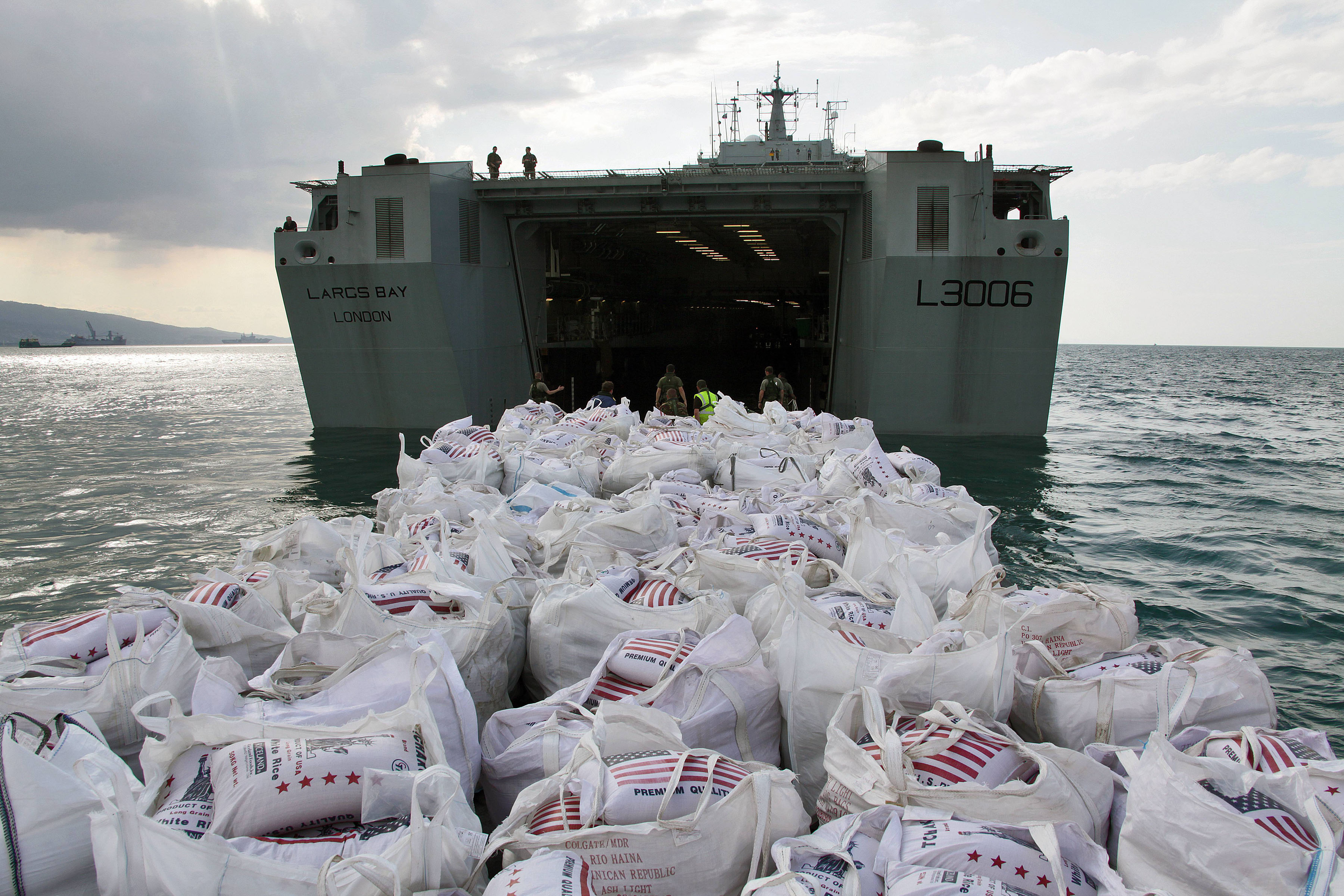
Thousands of tons of rice and corn are offloaded from a floating platform off the coast of Haiti following a 2010 earthquake. (Photo by The Royal Navy, via WikiCommons)
LAWRENCE — A renowned 1992 sketch on “Saturday Night Live” follows newly elected President Bill Clinton as he and Secret Service agents jog into McDonald’s. When a customer asks if he’s in favor of sending U.S. troops to Somalia, Clinton (played by Phil Hartman) provides his own humanitarian aid metaphor by grabbing McNuggets from other customers and claiming “it’s being intercepted by warlords.”
“And you can send all the food you want,” he says filching various items, “a McDLT, hot apple pie … it’s just gonna end up with the warlords!”
But many scholars also agree with this satirical assessment, proclaiming humanitarian food aid increases the risk and longevity of civil conflict in countries that receive it.
Sébastien Mary
Not true says Sébastien Mary, an academic program associate in the University of Kansas Department of Economics. His new article, “Humanitarian Food Aid and Civil Conflict,” appears in the current issue of World Development.
“There is still a misguided belief that it can create more evil than help,” Mary said.
“When I think about what food aid does, you’re gonna have positive effects and negative effects. But I have a hard time understanding why — or haven’t seen a clear explanation for why — the negative effects should dominate the positive ones.”
A 2014 article contending U.S. food aid “increases the incidence and duration of civil conflict,” published in the American Economic Review by Nathan Nunn and Nancy Qian, propelled Mary into challenging this assertion.
“When I first read it, I was like, ‘That’s kind of suspicious,’” he said. “You have a lot of anecdotes. But to extend the anecdotal evidence and case studies and say, ‘It doesn’t work’ — scientists rarely make that step, but policymakers do.”
So he recruited a colleague to help him study the methods used to come up with this assumption.
“I realized there were flaws in the way they ran the analysis. We wanted to address this and see whether we could first replicate their work making the same mistake, then correct the mistake and see what happened,” Mary said.
His research for the article (co-written with Ashok Mishra of Arizona State University) estimates the effect of food aid on civil conflict by sampling 79 recipient countries between 2002-2017. He found a 10 percent increase in this aid per capita decreases the incidence of conflict by a 0.2 percentage. It also decreases the onset and duration of such conflicts.
“Humanitarian food aid saves lives,” Mary said.
A surprisingly few amount of cross-national studies have been performed on this topic – only about four or five, according to Mary.
“Before I did this paper, I wrote another looking at three other cross-national studies that examined humanitarian aid overall. And when I looked at the studies, I replicated three and overturned the results in two. I was like, ‘Wow, we have a problem,’” said Mary, who began working at KU in January.
He believes his own research will be equally scrutinized … and possibly overturned. In the piece, he provides the data and computer code his team used so others can attempt to replicate his results.
“It will probably be criticized for a couple of things that we discussed in the paper that we stated might be a problem,” he said of baseline issues such as migratory flows. “But the one thing I think helped us get confidence is the fact we can replicate the results from the previous study.”
A native of Rennes, France, Mary has written extensively on global food and nutrition security. This includes articles on food trade and extreme hunger and a book titled “The Eurasian Wheat Belt and Food Security.”
Prior to his academic track, he worked for the European Commission in a research center focused on agriculture and rural development in what he terms “evidence-based policymaking.”
“It’s only going to get worse,” Mary said of the strain on humanitarian aid in conflict regions.
“You’re going to have a population of 9 billion people within 25 years. The stress on the food systems is only going to increase, and with that the competition for the planet’s resources will increase. This will be an eternal problem. Hence the need to better understand how and whether aid works.”
TOPEKA — Kansans of all ages who love history are encouraged to express that interest in the two essay contests presented by Native Sons and Daughters of Kansas. The cash prizes have increased in both contests this year. Winners will be announced and recognized as part of the 102nd annual meeting of Native Sons and Daughters of Kansas in Topeka on Friday, January 31, 2020.
The annual Olive Ann Beech Kansas Factual Story Contest, sponsored by Native Sons and Daughters of Kansas, was begun in 1931 to encourage preserving factual, unpublished happenings and anecdotes from today and yesterday. The contest is open to everyone, one entry per person. Stories must be true and unpublished, take place in Kansas, and limited to 750 words. Entries are submitted electronically via email by 5 p.m. Friday, December 20, 2019, to Cindy Stillings, Kansas Historical Foundation (KHF), [email protected]. Submissions should use “Beech Memorial Contest” in the subject line, and include the author’s name, mailing address, and phone number.
This essay contest is named for aviation’s Olive Ann Beech, of Wichita, who provided essay contest winners with cash awards for more than 30 years. The Beech essay contest cash awards are: first place, $300; second place, $250; third place, $150; and $100 each for two honorable mentions. Entries will be judged on quality of writing and interesting anecdotal stories of Kansas.
The Mamie Boyd Kansas! Say It Above a Whisper Contest, sponsored by Native Sons and Daughters of Kansas, began in 1936 as a way for students to celebrate and express pride in the state. The contest is open to Kansas students in eighth through 12th grades, one entry per person, and limited to 250 words. Entries are submitted electronically via email by 5 p.m. Friday, December 20, 2019, to Cindy Stillings, Kansas Historical Foundation, [email protected]. Submissions should use “Boyd Essay Contest” in the subject line, and include the author’s name, school, grade, mailing address, and phone number.
Kansas newspaperwoman Mamie Boyd coined the phrase used for the contest title. The Boyd essay contest cash awards are: first place, $300; second place, $250; third place, $150; and $100 each for two honorable mentions. Past essays have described interesting and strong-hearted Kansans, the state’s vast grain crops and grasslands, diversities in population, and the emotions and pride called to mind by the state’s unique beauty. Entries will be judged on quality of writing, originality, creativity, and sincerity in expressing pride in the state of Kansas.
MANHATTAN — The Kansas Department of Agriculture has funds available for reimbursement to Kansas specialty crop growers who attend an educational conference with a primary focus on specialty crops. Qualifying conferences may include sessions about production practices, specialized equipment and technology, pest and disease management, specialty crop marketing practices, or business principles for specialty crop producers.
Applicants who apply for the reimbursement will be required to attend the conference and to complete surveys before, immediately after, and six months post-conference prior to payment being issued. Conferences not eligible will include those within the state of Kansas and the Great Plains Growers Conference. KDA will reimburse Kansas specialty crop growers up to $850 each in order to offset the cost of their conference registration, mileage/flights, hotel, meals, etc. The award is available on a first-come, first-served basis. The deadline for application is December 15, 2019.
Examples of conferences that may be eligible for applicants to attend include, but are not limited to:
North American Strawberry Growers Association Conference; January 19-22, 2020; San Antonio, Texas
North American Raspberry & Blackberry Association Conference; March 3-6, 2020; St. Louis, Missouri
Great Lakes Expo Fruit, Vegetable, & Farm Market Conference; December 10-12, 2019; Grand Rapids, Michigan
Mid-Atlantic Fruit and Vegetable Convention; February 28-30, 2020; Hershey, Pennsylvania
Southeast Regional Fruit & Vegetable Conference; January 9-12, 2020; Savannah, Georgia
This program is made possible by a U.S. Department of Agriculture Specialty Crop Block Grant (SCBG). The SCBG makes funds available to state departments of agriculture solely to enhance the competitiveness of specialty crops. According to USDA, specialty crops are defined as “fruits, vegetables, tree nuts, dried fruits, horticulture and nursery crops, including floriculture.”
This grant fits KDA’s mission to provide an environment that enhances and encourages economic growth of the agriculture industry and the Kansas economy. For application details, go to the KDA website at www.agriculture.ks.gov/grants. Questions should be directed to Lexi Wright, From the Land of Kansas Program Coordinator, at 785-564-6755 or [email protected].
TOPEKA – Featured presentations about the cattle markets, how the industry is using its resources to position beef as the optimal choice over plant proteins and the continual progress being made on beef sustainability will highlight the educational program at the Kansas Livestock Association (KLA) Convention. The three-day event will be held December 4-6 at the Wichita Hyatt and Century II Convention Center.
CattleFax Chief Executive Officer Randy Blach will offer perspective on the cattle and beef markets during Beef Industry University (BIU), sponsored by the Farm Credit Associations of Kansas. As the industry waits for one of the largest beef processing facilities, the Tyson plant in Holcomb, to come back on-line after the fire in early August, Blach will discuss packing capacity and what that means for future growth in the cattle business. He will assess where the industry stands with herd expansion and what that means for beef supplies in 2020. Blach’s outlook for the year ahead will consider grain prices, energy costs, the macroeconomy, beef exports and consumer demand for beef and its competitors.
The Industry Information Session, sponsored by Elanco Animal Health, will feature two speakers discussing how the industry is positioning beef as plant-based protein options gain notoriety. This involves separate, but closely coordinated efforts between both the checkoff and policy divisions of the National Cattlemen’s Beef Association (NCBA). From the checkoff perspective, NCBA Senior Vice President of Global Marketing Alisa Harrison will outline how checkoff dollars are being used to highlight the taste and nutritional advantages of beef. High-level digital strategies and paid advertising on social media platforms are among the ways this is being accomplished.
In addition, Kansas Beef Council staff will share a video featured in the upcoming in-state checkoff campaign titled “One Simple Ingredient.” The message, targeted at millennials and Generation Z consumers, provides positive differentiation for beef from meat substitutes. The policy side of the fake meat issue will be presented by NCBA Vice President of Government Affairs Ethan Lane. He will outline how NCBA staff in Washington, D.C., is working to ensure all protein sources, including the plant-based varieties and cell-cultured options of the future, are produced and marketed under the same food safety and labeling standards as animal-based proteins.
The Consumer Trends Forum, hosted by the Kansas Beef Council and Kansas CattleWomen and sponsored by the Kansas Soybean Commission, will feature Elanco Animal Health Technical Consultant in Sustainability Sara Place. She will highlight how the cattle industry has reduced its environmental footprint in recent years. In her previous role as NCBA senior director of sustainable beef production research, Place oversaw the checkoff-funded life cycle assessment used to benchmark the sustainability of the U.S. beef industry. She has been interviewed on the subject by many major media outlets and has spoken on high-profile panels targeted at the consuming public.
An individual who takes his humor seriously will entertain the crowd at the Cattlemen’s Banquet, sponsored by INTRUST Bank and Tyson. Devin Henderson helps people use humor to perform at their best in the workplace. He will show livestock producers how humor can help them deal with change, stress, failure and difficult people. Henderson’s presentation is sponsored by Micro Technologies and Zoetis.
KLA members will review existing policy and consider new resolutions during committee and council meetings at the convention. Among policy issues expected to be discussed are proper labeling of meat alternatives to better inform consumers, continued efforts to preserve and enhance the lesser prairie chicken population, trichomoniasis and the CattleTrace project. Final policy consideration will come during the general KLA membership meeting at the end of the convention.
The KLA Trade Show will feature livestock products and services on display for producers, as well as being the site for many social events and meals at the convention. A barn party will close out the trade show schedule, with entertainment by the Jared Daniels Band. The band’s appearance is sponsored by Merck Animal Health and Kansas Feeds.
Schedule and registration information is available on www.kla.org or in the November/December Kansas Stockman. All livestock producers are welcome to attend.
KLA works to advance members’ common business interests on legislative, regulatory and industry issues affecting producers at both the state and federal levels. The association’s work is funded through voluntary dues dollars paid by its members.
LAWRENCE – Those on the political left who play fast and loose with the term “hacked,” as in “Russia hacked the 2016 presidential election,” are aiding the Kremlin in its mission of undermining Americans’ faith in the democratic process, two University of Kansas researchers write in a new scholarly paper.
This dispiriting discourse threatens to discourage voting in 2020, contend the co-authors, Brett Bricker, assistant specialist and assistant director of debate in the Department of Communication Studies, and Jacob Justice, doctoral student and fellow debate coach.
Their article titled “Hacked: Defining the 2016 Presidential Election in the Liberal Media” was published in the fall edition of Rhetoric & Public Affairs. In it, Bricker and Justice cite the intelligence community consensus that while Russia hacked into Democratic National Committee computers and used that information in its 2016 influence campaign against Hillary Clinton, no electronic ballots were changed by computer hacking.
Definitional arguments have great salience going forward, they wrote.
“Our country is having a debate about how to define what Russia did in the 2016 election,” Justice said. “On the one side, we’ve got conservatives, who would probably define it as not very much at all — that the 2016 election was not about Russia as much as it was about Trump winning because of a smart campaign. Then we’ve got an intelligence community that says Russia intervened in the election in these very specific ways … And then on the left end of the spectrum, there’s a vocal and influential group of people who define what Russia did as a hack — that they hacked our election or they hacked American democracy.”
Defining social-media disinformation campaigns as hacking “introduces further haziness into a debate that is already rife with misinformation,” Bricker and Justice wrote.
“If we adopt this broad definition,” Justice said, “not just that the Democratic Party was hacked, but that the entire nation or our democracy was threatened by Russia — that could do Putin’s work for him by convincing the public that our democracy has been irreparably harmed, or that their votes not going to be counted because the Russians can change voting results with the push of a button.”
The authors lay the blame for this problem at the feet of the liberal media, which they define as media that liberals consume, including the Washington Post, CNN and MSNBC.
They wrote, “We demonstrate that the insular nature of much of the liberal media … enabled the spread of this misleading definition. Through a rhetorical analysis of texts defining Russia’s influence campaign as ‘hacking,’ we demonstrate that Twitter and the publications produced by the liberal media were highly influential in creating the widespread notion that Russia ‘hacked’ the election.”
The authors cite Malcolm Nance’s book, “The Plot to Hack America,” published just days before the 2016 election, as “influential in shaping popular understandings of the Russian influence campaign” ever since.
Bricker and Justice assert four negative consequences of defining Russian behavior broadly as hacking.
“First, this definition contributes to the already endemic problem of misinformation about the issue,” they wrote. “Second, defining Russia’s interference as a ‘hack’ has the potential to unduly limit the range of policy remedies considered to address the problem of electoral interference. Third, broad definitions of Russia’s interference as an attack on the nation risks militarizing dialogue on the issue, with dangerous consequences for United States-Russia relations. Fourth, such wanton declarations that the election was ‘hacked’ may discourage electoral participation by leading voters to conclude that the system of democracy itself is illegitimate and broken.”
The authors cite polls showing that large minorities of Democratic voters believe that Russians actually changed voting-machine tallies to help elect Donald Trump. It is widely recognized that conservatives circulate conspiracy theories in the Trump era, but what is alarming, according to the authors, is that a similar dynamic is present among liberals.
“If progressive forces aim to be champions of reasoned decision making,” the authors wrote, “they must avoid engaging in the very behavior that they criticize by propagating the misleading notion that ‘Russia hacked the election.’ The willingness of trusted figures in the liberal media and elected officials to participate in the perfunctory spread of this definition is disturbing.”
They wrote, “Without rebuke, conspiratorial thinking may become increasingly mainstream” and that “(s)uch a development has deleterious effects on democracy in the United States, raising the prospect that politics could become a permanently ‘fact-free’ affair as both sides of the political spectrum prioritize short-term political benefits over the long-term health of the nation’s public discourse.”
TOPEKA – The Kansas Livestock Association (KLA), founded in 1894, is celebrating its 125th birthday in 2019. Association members will celebrate this milestone in conjunction with its 107th annual KLA Convention and 48th Trade Show, December 4-6 in Wichita.
A group of more than 100 Flint Hills ranchers who met in Emporia to discuss cattle theft and unreasonable railroad freight rates started the organization. Today, KLA has 5,600 members in all 105 Kansas counties and 40 states. Cattle theft continues to be a challenge, and today’s issues in the transportation arena are electronic logging and limited hours of service for truckers, which put livestock being hauled at risk.
“KLA has been advocating for its members at the Kansas Statehouse and on Capitol Hill since its earliest days,” said KLA Chief Executive Officer Matt Teagarden.
Key issues addressed include a state indemnity for ranchers who lost animals due to foot-and-mouth disease in 1915, alleged market manipulation by packers in 1916, the Texas Fever lawsuit against the federal government in 1926 and a beef boycott by Boston restaurant owners in 1928. KLA officers traveled to Washington, D.C., to obtain an exemption for farm labor from the military draft in 1917.
KLA has worked hard to secure a better business atmosphere for ranchers, feeders and other agricultural producers. In 1975, KLA pushed a bill through the Kansas Legislature calling for prompt payment on fed cattle by packers. The organization led the charge for similar federal legislation the following year despite opposition from the packing industry. KLA fought regulation of the trucking industry in 1978 because the changes would have been unrealistic for hauling livestock. In 1986, Kansas voters approved a constitutional amendment crafted by KLA and other farm groups calling for use-value appraisal on ag land and exempting farm machinery and livestock from the property tax rolls.
“This helped keep the state’s business climate on a level playing field with other states and is considered to be the biggest tax victory in KLA’s history,” said Teagarden.
Since celebrating its centennial in 1994, KLA has continued to seek ways to serve its members and keep the livestock industry vibrant, both in Kansas and across the nation. The past 25 years have seen an expansion of services available to KLA members, including Ranchland Trust of Kansas, KLA Environmental Services and rapid growth of KLA Risk Management Services (the association’s self-funded workers’ compensation pool), which was started in 1993.
Perhaps one of KLA’s brightest moments came in the wake of “the cow that stole Christmas.” Following discovery of BSE December 23, 2003, all the contingency planning by the National Cattlemen’s Beef Association, KLA and the entire U.S. beef industry paid off, as a successful public relations campaign helped maintain consumer confidence in beef and prevent a catastrophe for the beef and cattle industry.
In the springs of 2016 and 2017, wildfires burned hundreds of thousands of acres of grassland and tens of thousands of miles of fence in Kansas. In the wake of these disasters, the Kansas Livestock Foundation, the charitable arm of KLA, collected and paid out more than $3 million to fire victims. In addition, KLA helped coordinate delivery of hay, feed, fencing materials and other supplies to those affected by the fires.
KLA’s founding fathers were predominately cow-calf producers and also grazed many yearling cattle in the Flint Hills. When the cattle feeding industry sprang up in western Kansas in the mid-20th century, KLA’s membership embraced this new segment and welcomed feeders into the fold. In 2008, after large dairy operations began to locate in Kansas, the association once again expanded its tent to make room for another major segment of Kansas agriculture. Representing all segments of the diverse agricultural industry in Kansas has made KLA a strong, well-rounded organization that is well-respected in the legislative and regulatory arenas.
Over the years, the association continually has striven to fulfill its mission to advance its members’ common business interests and enhance their ability to meet consumer demand.
KLA is a 5,600-member trade organization representing the state’s livestock business on legislative, regulatory and industry issues at both the state and federal levels. The association’s work is funded through voluntary dues dollars paid by its members.
MANHATTAN — A public hearing will be conducted at 10:00 a.m. on Monday, October 21, 2019, to consider the adoption of proposed changes to pet animal health regulations. The hearing will be held in room 124 on the first floor of the Kansas Department of Agriculture, 1320 Research Park Dr. in Manhattan.
One proposed new regulation, K.A.R. 9-18-23, would allow, under specified conditions, the transfer and adoption of feline immunodeficiency virus-positive (“FIV”) cats.
The other proposal would repeal several regulations (K.A.R. 9-12-1, 9-23-2, and 9-23-3) which had previously regulated hobby kennel operators; those operators are now subject to general requirements, so specific regulations are no longer necessary.
A copy of the proposed new regulation, as well as an expanded notice of public hearing, may be accessed on the KDA website at agriculture.ks.gov/PublicComment.. All interested persons may attend the hearing and may present comments either orally or in writing, or both. Written comments can be submitted on the public comment website prior to the hearing or sent to the Kansas Department of Agriculture, 1320 Research Park Drive, Manhattan, KS, 66502.
Any individual with a disability may request accommodation in order to participate in the public hearing and may request a copy of the regulations in an accessible format. Persons who require special accommodations must make their needs known at least five days prior to the hearing. For more information, including special accommodations or a copy of the regulations, please contact Ronda Hutton at 785-564-6715.
LAWRENCE — After Donald Trump was elected president and put a renewed focus on fossil fuels, several large corporations made headlines by setting goals to increase the renewable energy they buy. Many are making progress on those pledges, while varying state energy laws have made it easier in some parts of the country than others.
A University of Kansas law professor has written an article analyzing corporate renewable pledges, outlining how policies have played a part and cautioning it is important to realize what 100% renewable goals mean in context.
Uma Outka
Uma Outka, William R. Scott Research Professor at the KU School of Law, said corporations are driving new development of renewable energy. Her article, published in the Utah Law Review, examines that growth and takes an early look at how state policies are influencing the development.
“The trend of large corporations pledging to boost their renewable energy consumption seemed so counter to the direction the Trump administration wanted to turn in terms of energy policy. So, I wanted to understand the legal environment for corporate buyers specifically,” Outka said. “It’s a little too early to compare the success or efficacy of the newest state policies. But when traditionally regulated states took note of the fact that the vast majority of deals were made in the most ‘deregulated’ states, some have taken notice and tried to adapt. That’s the most recent development.”
State laws regarding energy development vary widely from state to state. And while deregulated states have seen large amounts of corporate deals, they are not the only states that have seen significant renewable energy growth.
Kansas, for example, is what Outka calls a hybrid state, with traditional utility regulation while also being part of the Southwest Power Pool.
Because of exceptional wind resources in Kansas, the state is first in the nation for electricity generated from wind and may well become the first state to generate most of its electricity from wind power.
States have also increasingly begun to change their policies in response to the growing corporate demand for renewable energy, and states that are more traditional in their regulatory approach have found new ways to be part of renewable energy development. While renewable energy is growing in some places in the current political climate, it’s not surprising given who is driving the demand. Large corporations are large customers that spend a lot of money on energy and utility companies have a clear economic incentive to provide them options they desire.
“Companies are influencing the energy industry with their demand for clean power, without a doubt,” Outka said. “It’s part of a larger trend of consumers playing a more significant role on the electric grid.”
While companies such as Google have touted their status as the “largest corporate renewable energy buyer on the planet,” others such as Facebook, Amazon, Microsoft, IKEA and Nike have made public statements about their intent to increase the amount of renewable energy they buy. It is important, however, to understand what it means when corporations or others claim they will derive 100% of their energy from renewable sources, Outka said. First of all, corporations have several reasons to buy renewable energy, not the least of which is promotion of their public image. A positive boost among shareholders and consumers can be viewed as almost as valuable as saving money or reducing a company’s carbon footprint. And while such goals are laudable, unless a company is generating all of its own renewable energy, it is not 100% green.
“It is important to understand what it means when a company says ‘100 percent renewable energy.’ If Google or another corporation says they’re powered by 100% renewable energy, it’s not completely accurate,” Outka said. “If they’re connected to the grid, they’re still using the energy mix, though they may be offsetting that usage (through purchases of certificates and other methods). The problem isn’t solved, though these are very important steps.”
Corporate demand for renewable energy is not just leading to purchase of more green energy but also to large amounts of new renewable energy development, Outka said. Companies such as Walmart have made corporate policies that all new green energy it buys will come from new energy development. That demand is having both economic and policy results as states work to enact policies friendly to such development. While such development is largely positive, Outka cautions it should be viewed with a critical eye as well.
Public utility commissions have made progress in developing renewable energy, while state legislatures have not been as actively involved. With more active legislative leadership, the trend could foster a broader and more inclusive policy dialogue. So long as corporate deals occur largely outside state planning, there is potential for development exceeding transmission capacity and other problems. Outka said such development discussions should focus on what the goal of new energy projects is, whether it be economic development, environmental impact reduction or others. Expanding who gets to take part in the decision making is as vital issue as well.
“This is a useful trend that can accomplish only so much,” Outka said.
Large corporations have had an undeniable influence on the trend of increased development of renewable energy in recent years, but it is not clear how existing and new policies enacted in light of the demand will influence other energy buyers. In future research, Outka plans to study energy law and the low-income household. The research will be part of a larger look at how customers interact with the energy grid, in addition to the examination of corporate customers and previously published work on how cities interact with the low carbon grid.
TOPEKA – Kansas Governor Laura Kelly and Secretary of Commerce David Toland announced today they have kicked off the development of the “Framework for Growth” – a robust strategy to accelerate economic growth in the state of Kansas.
The announcement comes after a months-long search for a professional consulting services firm to help research and analyze the Kansas economy and deliver a comprehensive economic development blueprint for the state.
“The economic challenges facing Kansas require innovative solutions and a well-coordinated approach,” Governor Kelly said. “It’s been more than 30 years since the state had a formal strategy to accelerate economic development. The creation and implementation of a new economic growth strategy, along with other initiatives such as tax reform, will help ensure Kansas remains an attractive place for individuals and businesses alike.”
In coordination with members of Kansas businesses and economic development organizations, the Commerce team will develop the first economic development strategy for the state of Kansas since the Redwood-Krider report was issued in 1986.
“Kansas’ lack of a strategy has resulted in our state lagging in some key economic indicators such as GDP growth, population growth and labor participation. Under the leadership of Governor Kelly, I’m excited to announce that we have now embarked on a necessary journey to bring Kansas back to best in class,” Secretary Toland said. “To be competitive in today’s global economy, we must identify and pursue new, nimble economic best practices. It’s past time that we develop a thoughtful, strategic plan to guide Kansas forward.”
A steering committee consisting of economic development professionals, Kansas business leaders and Commerce staff has been created to guide the team through the planning process and the development of the Framework for Growth.
“Our local and regional economic development partners and business stakeholders are critical to our success as a state, so as we put together the team who would guide this process, it was important they were represented in the steering committee,” Toland said. “We also want to ensure that all interested stakeholders have the opportunity to be involved in this process and have created an online survey to capture feedback and allow individuals to share their ideas of how to create long-term prosperity for Kansas.”
The Department of Commerce selected McKinsey and Company as its partner for this important initiative. The work over the next several months will be broken into three phases: assessment and benchmarking, recommendations and best practices, and implementation planning. Each of these phases will be underpinned by ongoing stakeholder and public engagement, and the Department of Commerce will provide progress reports upon the completion of each phase.
For more information on the Kansas Framework for Growth, visit www.kansasgrowth.com.
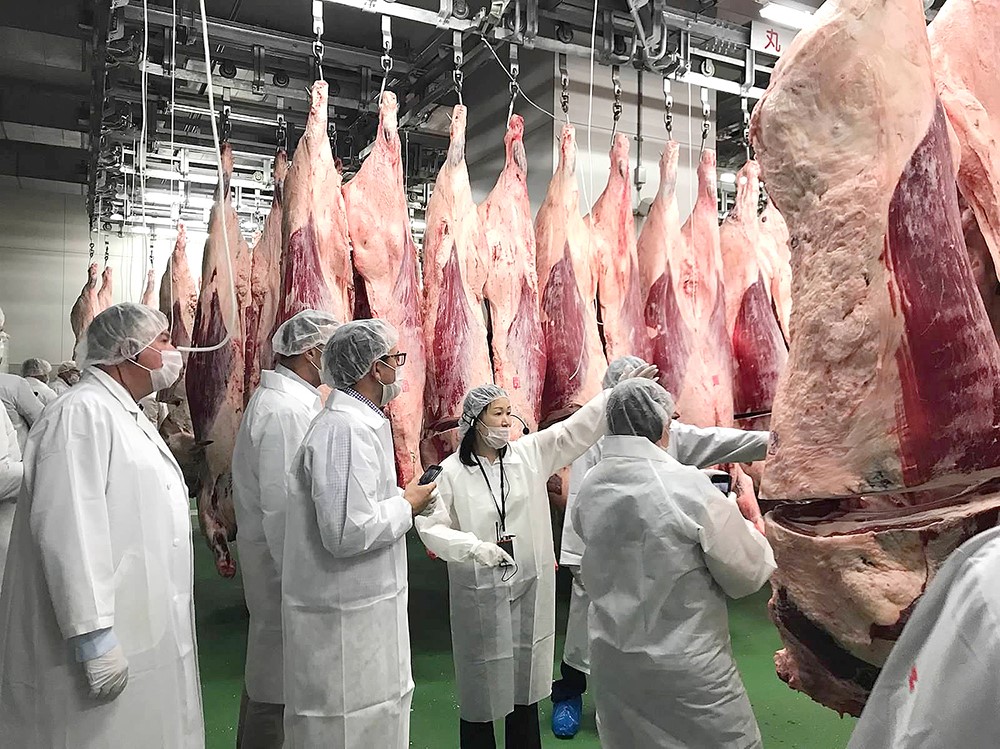
Heartland Tour participants toured Tokyo Meat Market where they saw a Japanese Wagyu beef carcass auction.
KDA
MANHATTAN — The Kansas Department of Agriculture was among 23 different organizations represented during the U.S. Meat Export Federation (USMEF) Heartland Tour in Tokyo and Sendai, Japan, September 1-7, 2019. Suzanne Ryan-Numrich, KDA international trade director, and Bob Haselwood, Berryton, Kansas Soybean Commission, represented the state on the mission.
The Heartland Tour visited Japan upon the announcement of the U.S.–Japan bilateral agreement. “The agreement is exciting for Kansas. Japan is consistently one of our leading and most valuable trade partners,” said Ryan-Numrich. “In 2018, Kansas exported over $754 million in agricultural commodities to Japan. This agreement will reduce tariffs and put us at a more level playing field with our competitors.”
Heartland Tour participants Bob Haselwood, Berryton, Kansas Soybean Commission; Suzanne Ryan-Numrich, KDA; and Caleb Plyler, Arkansas Beef Council, at a USMEF promotional event at Weber Park in Tokyo. The group showed Japanese consumers how to grill a ribeye steak and pork back ribs — grilling is a new method of preparation for most Japanese consumers.
During the Heartland Tour, participants observed the USMEF staff working to promote U.S. red meat and were able to join in on promotional events such as the USMEF Urban BBQ, a U.S. Beef and Pork promotion event with a celebrity chef, and a consumer event where they were able to demonstrate how to grill a ribeye steak and pork ribs. Grilling is a new method of preparation for most Japanese consumers.
The group was provided a market briefing by U.S. Department of Agriculture–Japan officials, toured the Tokyo Meat Market and beef carcass auction, and met with the Japan Meat Traders Association, Prima Ham, and Starzen, one of Japan’s largest meat importers and distributors. The team also traveled to Sendai, Japan, toured Kawaguchi Wagyu Farm, and met with the Sendai Beef Tongue Association.
Kansas exported nearly $726 million in red meat to Japan in 2018. “Not only can we look at exports in terms of red meat, but also exports of corn and soybeans in all forms. In 2018, the U.S. exported 40 million bushels of corn and 9.7 million bushels of soybeans to Japan in the form of red meat,” said Haselwood. “The USMEF has partnered with corn and soybean checkoff dollars to promote U.S. corn- and soybean-fed pork at the retail level. As a Kansas farmer, that’s meaningful work.”
Immediately following the USMEF Heartland Tour, the Kansas Department of Agriculture, along with the Kansas Department of Commerce, participated in the 51st Annual Joint Meeting of the Midwest U.S.–Japan Association and Japan–Midwest U.S. Association in Tokyo, Japan. The meeting is an annual gathering of business leaders from each association to reinforce the economic, political, and cultural ties that link the national economy of Japan with the regional economy of the Midwest.
KDA strives to encourage and enhance economic growth of the agriculture industry and the Kansas economy by exploring and expanding both domestic and international marketing opportunities. KDA is offering two upcoming opportunities to Kansas farmers, ranchers and agribusinesses to participate in State Trade Expansion Program (STEP) grant trade missions planned for 2020: VICTAM Asia/Petfood Forum Asia, Bangkok, Thailand, March 24-26; and NAMPO Harvest Day, Bothaville, South Africa, May 12-15. Interested persons should contact Suzanne Ryan-Numrich at [email protected] or 785-564-6704.
WICHITA —Deanna Caudill hasn’t used an inhaler since she was a child. That all changed for the 25-year-old Wichita State graduate student this month when, after getting a back-to-school cold, she never seemed to recover.
“It’s like every morning I wake up and I cannot breathe,” she said. “It’s just a feeling I’ve never had in my whole life be this bad.”
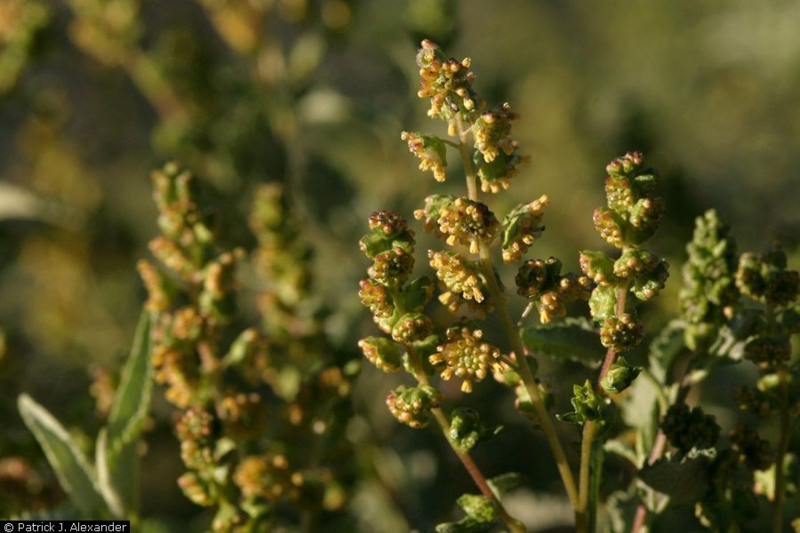
Caudill suffers from an allergic reaction to ragweed pollen and the lingering effects of a cold — a combination that’s becoming increasingly common for Kansans in September.
While ragweed pollen is typically at its peak this month, increased average temperatures caused by climate change are upping the total amount of ragweed pollen in the air every year. That means for many people with allergies, every year is worse than the last.
Plus, the third week of September is typically known as Asthma Peak Week: More allergy attacks happen now than any other time of the year.
Caudill’s symptoms are so bad that she’s already ran out of the first inhaler her doctor prescribed to her.
“I’m hoping that they don’t tell me I need to do breathing treatments,” she said. “Because I’m really busy and I don’t have time for all of this.”
Off the charts
As busy as Caudill is, doctors at Children’s Mercy Hospital in Kansas City, Missouri, are likely even busier.
Doctors at the hospital monitor and forecast the pollen count every day. Usually people who are sensitive to ragweed begin getting itchy eyes, noses and throats when the count gets above 100 per cubic meter in the air.
“We’ve been getting counts in the 1,000 to 1,500 range which is off the chart — until we made the chart get taller,” said Jay Portnoy, an allergist and immunologist at Children’s Mercy Hospital.
It’s led to more people seeking medical attention, especially now. To prepare for the influx of patients, Portnoy’s team makes sure to increase staffing levels. He also said he typically takes vacation in July or October so that he’s available during peak season.
Because increased amounts of ragweed pollen is a regularly occurring event, Portnoy said people should prepare themselves each year by seeing their doctor and making sure all of their medications are filled. He also encouraged people with worsening symptoms to go back to their doctors to see what other prescriptions might be available.
A pollen explosion
While it’s regular for ragweed pollen to spike in September, its peaks have been increasing in the past few years.
Lewis Ziska, an environmental health professor at Columbia University, said there’s a correlation between increasing temperatures and higher pollen counts in the Northern Hemisphere. By analyzing temperature and pollen count data at 17 monitoring stations with histories greater than 20 years, Ziska found that as temperatures increased, so did pollen counts.
The longer growing season (between spring’s last freeze and fall’s first freeze) is also increasing how long plants are producing pollen, lengthening allergy season.
“It turns out carbon dioxide isn’t a political molecule,” Ziska said. “It can stimulate both good plants and bad plants.”
But it’s not all bad news for those suffering through puffy eyes and endless boxes of tissues. Ragweed season in Kansas usually ends near the beginning of October — just in time for increased levels of mold.
Brian Grimmett reports on the environment, energy and natural resources for KMUW in Wichita and the Kansas News Service. You can follow him on Twitter @briangrimmett or email him at grimmett (at) kmuw (dot) org. The Kansas News Service is a collaboration of KCUR, Kansas Public Radio, KMUW and High Plains Public Radio focused on the health and well-being of Kansans, their communities and civic life.
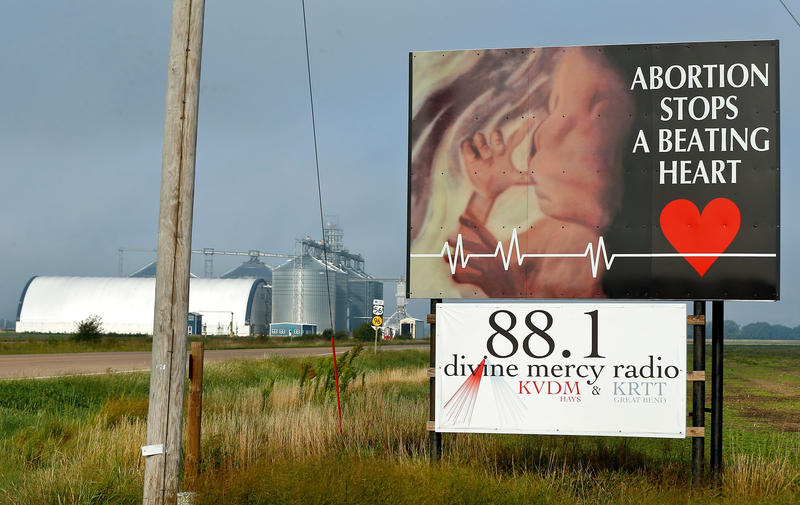
TOPEKA – Kansas lawmakers spent years imposing ever tougher restrictions on abortion and then saw the state Supreme Court declare that women hold a right to the procedure.
Now Republicans and abortion opponents appear determined to amend the Kansas Constitution to reverse that ruling.
They’re looking to protect years of wins on the contentious issue, efforts that peaked during the term of Republican then-Gov. Sam Brownback. Those anti-abortion victories included blocking most abortions after the 21st week of pregnancy and requiring parental consent for minors to get an abortion.
Groups such as the influential Kansans for Life warn that the high court’s ruling earlier this year puts those laws in danger.
“They’re in jeopardy,” said Jeanne Gawdun, a senior lobbyist for Kansans for Life. “The Legislature’s been able to enact over 25 different pro-life provisions, because it’s the will of the people.”
That risk is a rallying cry for conservative lawmakers. On Wednesday, a special committee made up of members from the Kansas House and Senate recommended an amendment to the state constitution. They want to specify in the document that there is no right to abortion.
Changing the Kansas Constitution is no easy task. Both the Kansas House and Senate would have to approve an amendment with a two-thirds majority. Then the issue would go on a ballot for a statewide vote.
“All Kansans should be concerned about this matter,” Republican Senator Eric Rucker said after the committee vote. “(They) have a right to vote on whether or not to uphold this most unusual decision by the Supreme Court.”
Republicans hold large majorities in both chambers of the Kansas Legislature. The GOP has 84 of the 125 seats in the House, the exact number of votes needed to approve a constitutional amendment. In the Senate, 27 of 40 senators must approve a constitutional amendment and Republicans hold 29 seats.
In both chambers, a few moderate-leaning Republicans will be critical swing votes. Lawmakers narrowly failed to override Democratic Gov. Laura Kelly’s veto of an abortion bill last session. An override requires the same two-thirds majority as a constitutional amendment.
As some Republicans rally behind the threat of undoing abortion restrictions, Democrats are preparing to push back.
“It completely opposes our platform,” Kansas Democratic Party Chair Vicki Hiatt said. “We strongly believe in a woman’s right to choose.”
The lawsuit that triggered the Kansas Supreme Court’s landmark decision this year is still pending. The high court clarified that the state constitution promises abortion rights and sent the case back to a lower court.
Because of that uncertainty, Democratic Rep. Pam Curtis said it’s unclear that existing abortion restrictions will be wiped out. She served on the committee that recommended a constitutional change and voted against the proposal.
“We really don’t know that yet,” she said. “We’re already jumping to a conclusion.”
Stephen Koranda is Statehouse reporter for the Kansas News Service. Follow him on Twitter@kprkoranda or email skoranda (at) ku (dot) edu.