PRATT – It can be difficult to quantify the positive effect a public program has, but when it comes to the Kansas Hunter Education program, there’s no denying the program is not only working, but exceeding expectations. The 2018 Kansas hunting season has proved the safest one yet – with zero fatalities and a record-low of just four reported firearm-related incidents.
“It has been years of hard work and dedicated services that has brought us to this point,” says Kansas Department of Wildlife, Parks and Tourism (KDWPT) Hunter Education Program coordinator Kent Barrett. “Having said that, we also know that next year will bring us a whole new set of circumstances that will test us once again.”
Of the four incidents reported in 2018, two were the result of hunters swinging on game; one was attributed to poor firearm handling; and one was the result of the unsafe use of a decoy. Thankfully, none of the reported incidents were fatal.
Though no firearms were involved, Hunter Education staff keep record of treestand-related incidents, as well. Two were reported for 2018, and in both cases the hunters were not wearing fall arrest systems. Neither incident proved fatal.
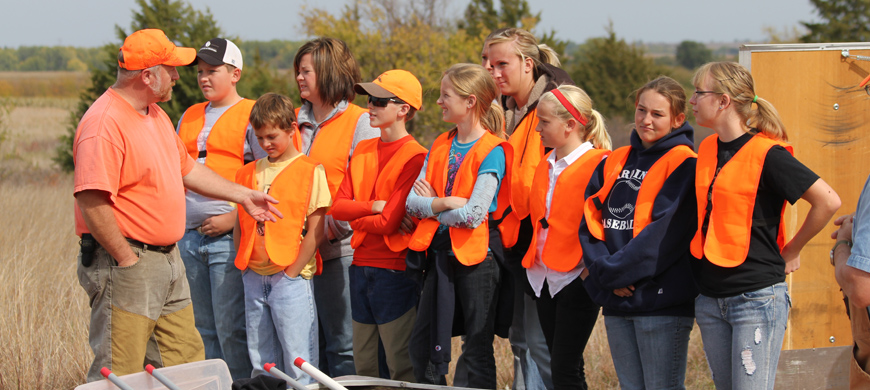
Kansas Hunter Education staff attribute these record-breaking low numbers to one thing: the program’s more than 1,400 volunteer hunter education instructors who share with students safe firearm handling practices, ethics, wildlife regulations and conservation principles.
According to Barrett, volunteer instructors meet with, teach, and certify approximately 9,000 students per year.
While staff and volunteers would ideally like to see the number of incidents dropped to zero, current reports remain a stark contrast to statistics from 50 years ago when seven lives were lost in a year, two years in a row.
Hunting remains one of the safest outdoor activities in Kansas, but everyone must do their part to keep it that way. As any Kansas Hunter Education instructor will tell you, the best piece of equipment a hunter can have afield is right between his or her ears.
WASHINGTON – U.S. Senator Jerry Moran (R-Kan.) commemorated the 65th anniversary of Brown v. Topeka Board of Education, a landmark decision that started the legal process of integrating schools across the nation in a speech on the floor of the United States Senate Friday.
“On this anniversary of Brown v. Board of Education, we remember the legacy left behind by Linda Brown and her parents,” said Sen. Moran. “Linda Brown just passed away last year, and we honor her, her family and all those involved in the civil rights movement. This legacy is one which requires all Americans, each of us, to uphold the self-evident truth that all men and women are created equal. Let us remember the legacy of Brown v. Topeka Board of Education, and in doing so, I ask every American to commit to racial justice and equal opportunity.”
Earlier this week, Sen. Moran joined the Kansas delegation in introducing a resolution recognizing the 65th anniversary of the Supreme Court’s decision and its importance to Kansas and our country.
Remarks as delivered:
“Mr. President, thank you. On the 65th anniversary of the Supreme Court decision, Brown v. Board of Education, I rise to pay tribute to Kansas families, led by the Browns, and all Kansans who took part in challenging the injustice of racial segregation.
“For 60 years leading up to Brown, much of America adhered to the Supreme Court ruling in Plessy v. Ferguson that established the doctrine, ‘separate but equal.’ But, when applied to our school buildings and the education of our children, nothing about it was equal.
“In 1951, Linda Carol Brown was in the third grade and she would walk six blocks to a bus stop that would take her to Monroe Elementary more than a mile away from her home. This, despite the fact that Sumner Elementary just was seven blocks from her home. Even after repeated applications for attendance at the neighborhood school, the Browns and other families were rejected because of the color of their skin.
“In that year, 13 parents – led by Linda’s father, Oliver – filed suit against the Topeka Board of Education on behalf of their 20 children. Combining other cases throughout the country, Thurgood Marshall argued on their behalf before the United States Supreme Court; the court that he would later join as a justice.
“On May 17, 1954, the Supreme Court unanimously issued its landmark decision, announcing Plessy’s ‘separate but equal’ doctrine violated the Fourteenth Amendment. While full integration would take years to accomplish, the events set in motion by these intrepid parents were irreversible, and they are worthy of our respect and honor today.
“Nowhere was this truer than in the city where it all started. Before the case had even reached the Supreme Court, the Topeka Board of Education began integrating its primary schools.
“Kansas has its pre-Civil War bloodshed to determine whether the territory would enter the union as a free or slave state, and Wichita was home to one of the first sit-ins to integrate drugstore lunch counters, but it is Brown v. Board of Education that is our state’s greatest connection to the nation’s pursuit of racial justice.
“That these events happened in Kansas reflect the imperfect history of our state – and our nation – but also the resolve of individual Kansans and national organizations like NAACP to right wrongs and to make a ‘more perfect union’ that our Constitution contemplates.
“On this anniversary of Brown v. Board of Education, we remember the legacy left behind by Linda Brown and her parents. Linda Brown just passed away last year, and we honor her, her family and all those involved in the civil rights movement. This legacy is one which requires all Americans, each of us, to uphold the self-evident truth that all men and women are created equal.
“Let us remember the legacy of Brown v. Topeka Board of Education, and in doing so, I ask every American to commit to racial justice and equal opportunity.”
PRATT – At its April 25 meeting in Colby, the Kansas Wildlife, Parks and Tourism (KWPT) Commission voted on a number of amendments to current regulations, a few of which will benefit furharvesters.
In a 6-0 vote, Commissioners voted in favor of amending current furbearer regulations to clarify how to measure the jaw spread on body-gripping and foothold traps.
Commissioners approved an amendment to current furbearer regulations eliminating the requirement that furharvesters permanently surrender the lower canine teeth of an otter when presenting it to the department for tagging.
Commissioners approved amendments to current bobcat trapping regulations, removing outdated provisions related to tagging and effective dates on nonresident bobcat hunting permits.
Passing 6-0, Commissioners voted to accept an amendment to current fur dealer regulations that will allow the sale of swift fox pelts from states that don’t have tagging requirements for swift foxes.
Other items voted on and approved during the public hearing portion of the meeting include:
A series of amendments to regulations which establish hunting, fishing and furharvesting restrictions on department-managed lands. Current restrictions can be viewed on ksoutdoors.com by clicking “Laws, Regulations and Enforcement,” “Law and Regulations,” then “All Regulations.” See K.A.R. 115-8-1.
Amendments that will simplify the application process for field trial permits, removing extensive event mapping requirements.
An amendment to current dove hunting regulations that will remove pellet guns as a legal method of take.
Commissioners also approved 2019-2020 waterfowl seasons as follows:
Youth
High Plains Unit: Oct. 5-6, 2019
Low Plains Early Zone: Oct. 5-6, 2019
Low Plains Late Zone: Oct. 19-20, 2019
Low Plains Southeast Zone: Nov. 2-3, 2019
Teal
High Plains Unit: Sept. 21-29, 2019
Low Plains Zones: Sept. 14-29, 2019
Duck
High Plains Unit: Oct. 12, 2019 – Jan. 05, 2020 and Jan. 17-26, 2020
Low Plains Early Zone: Oct. 12-Dec. 8, 2019 and Dec. 14-29, 2019
Low Plains Late Zone: Oct. 26-Dec. 29, 2019 and Jan. 18-26, 2020
PRATT – The Kansas Department of Wildlife, Parks and Tourism (KDWPT) is seeking public input on Kansas’ Monarch Conservation Plan through May 30. The Kansas Monarch Conservation Plan outlines a 20-year objective to conserve, enhance and create pollinator habitat on private, public and urban lands through non-regulatory, voluntary efforts.
Kansas is a national stronghold for monarch conservation and is uniquely positioned to conserve and enhance large acreages and landscapes ideal for monarch migratory and breeding habitat.
The Kansas Monarch Conservation Plan serves as a guiding document to support ongoing and future conservation efforts, taking into account that successful implementation of the plan will require a multi-sector approach. For this reason, KDWPT has collaborated with individuals from ranching and farming organizations, conservation organizations, industry, agencies, academia, and tribal nations – representing 68 organizations – to set voluntary goals for the conservation of monarchs and other native pollinators.
Any individual or entity planning, implementing or funding monarch conservation activities in Kansas should reference this document and consider providing input.
We all owe a debt of gratitude to three Kansas law enforcement officers who sacrificed their lives for the safety and protection of others.
National Police Week is May 12 to May 18.
The names of Sedgwick County Sheriff’s Deputy Robert Kunze and Wyandotte County Sheriff’s Deputies Theresa King and Patrick Rohrer will be added to the National Law Enforcement Officers Memorial in Washington, D.C., during a ceremony May 13.
“We must never forget these brave officers,” McAllister said. “We will strive to be worthy of the sacrifices they made for us and to carry on their dedication to law enforcement. I invite the public to join our office in showing support for their families and their fellow officers.”
King and Rohrer were shot to death June 15, 2018, in Kansas City, Kan., while transporting prisoners between jail and court. Kunze was shot to death Sept. 16, 2018, during an arrest in western Sedgwick County.
According to the FBI, 55 law enforcement officers died in 2018 from injuries received during felonious incidents
Victim officer profile:
Average age: 37 years old
Average length of service: 10 year
Gender: 52 male, 3 female
For more information, see of the FBI report Law Enforcement Officers Killed and Assaulted, 2018 at https://ucr.fbi.gov/leoka/2018/.
Stephen McAllister is the U.S. Attorney for Kansas.
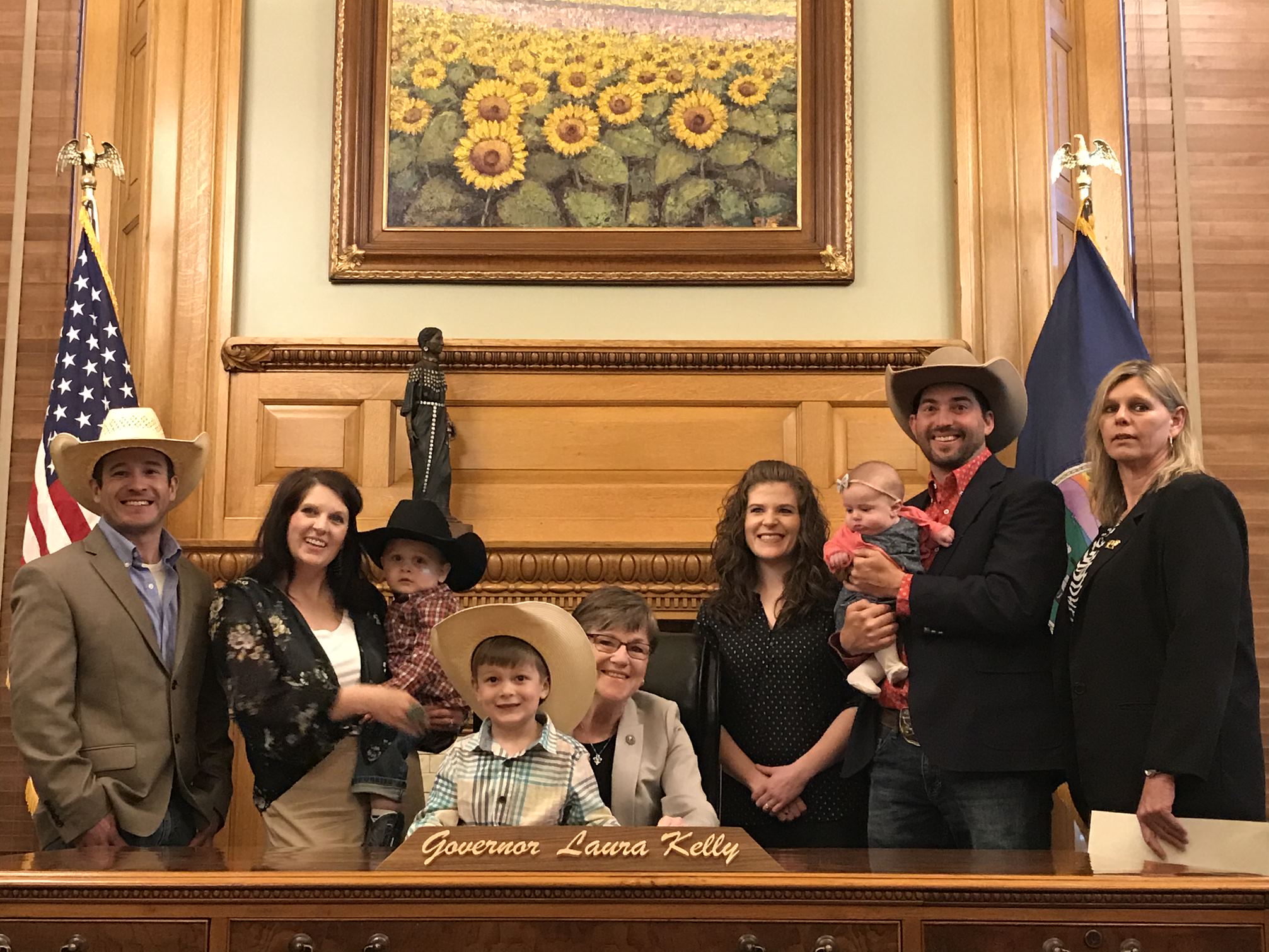
TOPEKA – Many products get publicity and special recognition during the year. But in Kansas, if any product deserves its own month, it’s beef. That is why Kansas Governor Laura Kelly has declared May as Beef Month in the state. This declaration makes the 35th consecutive year beef has received this honor.
According to Kevin Thielen, executive director of the Kansas Beef Council, the value of beef to the economy and social fabric of the state is remarkable.
“With more than 6.35 million cattle on ranches and in feedyards in the state, Kansas ranks third in the country,” says Thielen. “That’s more than twice the state’s human population. Kansas cattle producers are proud of the nutritious, delicious beef they help bring to tables in this state, across the country and around the world.”
Kansas has about 46 million acres of farm ground. Not all of this land can be used to grow crops, however. Grazing cattle is an ideal technique for efficiently utilizing grasses and plants growing on nearly 15 million acres of Kansas pasture and rangeland. These acres would be wasted if not for ruminants like cattle that can turn these resources into essential protein and nutrients for humans.
Kansas ranked second in fed cattle marketed, with 4.9 million in 2017. Beef cattle and calves represented 52.8% of the 2017 Kansas agricultural cash receipts.
The effect of the beef industry on employment is significant as well. According to the American Meat Institute, Kansas companies that produce, process, distribute and sell meat and poultry products employ as many as 19,502 people, while generating an additional 48,070 jobs in supplier and associated industries. These include jobs in companies supplying goods and services to manufacturers, distributors and retailers, as well as those depending on sales to workers in the meat industry.
The product they help bring to market is one that contributes substantially to the human diet. Lean beef provides 10 essential nutrients, including zinc, iron, protein and B vitamins. It does all this for only 170 calories per 3-ounce serving. In fact, a serving of beef provides the same amount of protein as two servings (1 ½ cups) of cooked black beans – which have 341 calories.
Kansas ranchers and feeders are committed to producing beef responsibly and sustainably, Thielen says. But beef production refined over many generations is only part of the story. Producers also keep consumer needs and wants top of mind.
“While all aspects of beef raising and processing are important, producing beef that is delicious, safe, wholesome and nutritious is ‘job one’ for our industry,” Thielen says. “After all, producers of beef are also consumers of the beef they produce. They’re proud of their role in supplying this terrific food that so many people enjoy.”
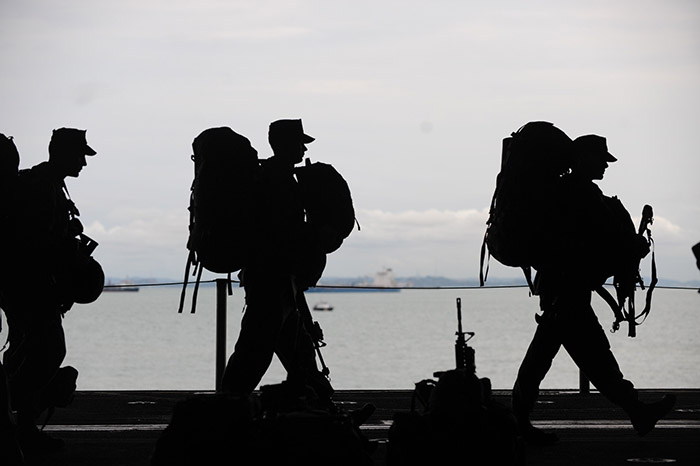
LAWRENCE — When one thinks of the military, images of elite, highly fit soldiers often come to mind. Conversely, talk of eating disorders generally steers toward undernourished individuals, often young women. However, data has shown that the prevalence of eating disorders in the military is roughly the same as in general society, and two University of Kansas researchers have secured a grant from the Department of Defense to develop a screening to detect eating disorders among the nation’s soldiers and identify organizational barriers to identifying and treating them.
Kelsie Forbush, associate professor of psychology, and Alesha Doan, associate professor of women, gender & sexuality studies and faculty member in the School of Public Affairs & Administration, have secured a three-year, $1.7 million grant to study eating disorders in the military, adapt a previously successful screening tool and determine organizational challenges to detecting and treating eating disorders in both active-duty soldiers and veterans. The grant is administered by KU’s Life Span Institute.
Active military face a wide range of dangers on the battlefield, and the risks of post-traumatic stress are well-documented. However, the constant pressure to meet fitness standards, physical requirements to enlist and expectation for leaders to maintain fitness levels as role models all can lead to eating disorders.
Kelsie Forbush
“Many people are not aware that the military has rigorous standards that require military personnel to meet specific body mass and other physical fitness standards,” Forbush said. “In addition to physical fitness and body mass standards, in deployment situations, soldiers can experience additional pressures that can lead to disordered eating. The availability of calorie-dense ‘meals, ready to eat’ and high-calorie cafeteria-style comfort food served in chow halls can cause weight gain. Active-duty service members are also exposed to stress and trauma, which may lead to unhealthy eating behaviors in an attempt to cope with traumatic experiences and temporarily ‘escape’ from negative emotions.”
Recent studies show that eating disorders occur in about 13 to 15 percent of young women and 3 percent of young men in the general population, and those statistics are approximately the same among members of the military. That number could actually underestimate the total in the military as there is not currently a servicewide screening to detect eating disorders, and those most often used in general populations rely on highly gendered questions most applicable to young women, Forbush said.
Failure to maintain body mass index and fitness standards can lead to referral to weight-loss programs and, potentially, discharge from service. Further, eating disorders have the highest mortality rate among all mental health disorders. Yet, despite the severity, no screening is in place for recruits and active-duty military or within the Veterans Health Administration system. Forbush’s research group has developed a screening known as the Eating Pathology Symptoms Inventory, shown to comprehensively measure disordered eating in both men and women.
The researchers will work to adapt the screening to identify veterans who may have eating, mood, anxiety or trauma disorder. A nationally representative sample of 1,000 men and women discharged from the military within one year will take the screening at four time points. The reliability and validity will be tested, and a shorter form will be developed and tested with a second sample of 400 veterans to determine if the screening can accurately identify cases of eating, mood, anxiety or trauma disorder.
The screening will be designed to detect disordered eating and other potentially dangerous behaviors such as muscle building, excessive exercise, purging and restricting.
Alesha Doan
Doan will lead research into organizational barriers by conducting interviews with a subset of 100 veterans on their perceptions of institutional and cultural issues that may prevent identification and treatment of eating disorders.
“We’ll be looking at organizational practices and policies that may factor into eating disorders and perhaps impede treatment,” Doan said. “We want to better understand how the environment may be creating formal barriers that contribute to the problem. For example, eating disorders are often viewed as a health issue that affects women. Understanding this issue as a gendered problem may heighten stigma for men seeking treatment in the organization.”
By developing effective screening, the researchers hope the military can implement measures to detect enlistees at risk of eating disorders when they enter, identify current soldiers also at risk or currently displaying disordered eating behaviors and to serve veterans who suffer from eating disorders. Potential recruits often feel pressure to lose weight rapidly in order to qualify, active-duty military face high levels of stress, and veterans often deal with post-traumatic stress, all of which can contribute to disordered eating. To complicate matters, obesity is a problem throughout society. Early detection and treatment could greatly enhance military readiness, the researchers said, as well as lead to improved health following treatment.
In addition to the Department of Defense funding, Forbush has received $330,000 in Research Excellence Initiative funding from KU’s College of Liberal Arts & Sciences. The funding will support two years of research via an Academic Accelerator Award in the College, which will allow Forbush to complete a longitudinal research project designed to improve the ability to predict who will recover or relapse from an eating disorder and to provide treatment to KU students experiencing eating disorders.
The military project is also among the first to examine eating disorders and related mental health conditions among veterans on a national level. Thus, Forbush and Doan said they hope the results will not only contribute to the understanding of the scope and effects of eating disorders in post-9/11 veterans but demonstrate the need for a national VA program to address them.
During the month of May we celebrate National Small Business week. As the Kansas State Treasurer, I have had the privilege of working with small businesses in many capacities. One of my favorites is when I have the opportunity to reunite small businesses with money that has somehow gone unclaimed.
Currently the Treasurer’s office has over $50 million dollars that belongs to “non-human entities”, which means businesses, schools, cities, counties, and the like. Of that 50 million, the bulk belongs to small businesses like family farms, local gas stations, lawn care businesses, corner cafes.
Kansans are tremendously vigilant when it comes to searching our website for themselves and/or their loved ones but it’s important to know that roughly 15% of the missing money that the state owes your community is owed to the businesses within your community. Local businesses often invest locally and it is gratifying to watch unclaimed money go from just sitting in Topeka to being returned and reinvested within communities throughout the state.
One such opportunity came about last year when our office was touring all 105 Kansas counties conducting local searches to connect Kansans with their unclaimed cash.
In the city of Sedan, a local resident noticed a substantial sum of money that belonged to the Sedan City hospital. She reached out to the hospital administrator and they were able to claim $24,000, just the amount they needed to finish the hospital’s aging roof.
Both the hospital and the residents of Sedan were delighted at the windfall. The new roof meant they could finish the much-needed renovations for the hospital without adding extra financing. In a town the size of Sedan, keeping their hospital open means hundreds of citizens won’t have to drive hundreds of miles for their medical care, people who work for the hospital can continue to keep their jobs, and family members of those who need hospital care can remain close by while their loved ones are being looked after. Win, win, win.
I want to encourage anyone with a small business to check our website regularly as part of their business practices. It is very simple to search online at kansascash.com to see if there is any unclaimed property there waiting to be found. We work very hard at the Treasurer’s Office to reunite both individuals and businesses with this unclaimed cash because it belongs to them and we want them to be able to use it where it can do the most good.
TOPEKA – When we stop at our favorite travel destinations in Kansas we may not think about how our visit supports our state. Our attractions, restaurants, hotels and historical sites are the backbone of Kansas and an important part of the state’s economy. They help define our state, provide our families with jobs and have given us and 35.5 million visitors a lifetime of memories. It’s so important to keep welcoming visitors to Kansas that Governor Laura Kelly has proclaimed May 5-11 National Travel and Tourism Week in Kansas.
Travelers in Kansas have a wide-reaching impact. Travel supports over 96,000 jobs in Kansas and it has an impact that we do not always see: travel can strengthen families, foster hometown pride, and build bridges that connect us with one another. Travel is a powerful economic driver and Kansas is no exception. In 2017, the total economic impact of travel on our state was $11 billion. Traveler spending generated $616 million in state and local government revenues. Without these travel-generated tax revenues, each household in Kansas would pay an additional $545 every year to maintain the same level of services.
Take time this week to plan your summer and fall travels in the Sunflower State. There’s no better place to start than by going online to TravelKS.com where you’ll discover a treasure trove of ideas and information to chart your journeys. In addition –
Get social and engage with the #NTTW19 and #NoPlaceLikeKS hashtags on Twitter, Facebook, and Instagram.
Share with friends and family how travel matters in your community.
Contact your legislator and member of Congress and tell them why travel is important to Kansas.
WASHINGTON – U.S. Senators Jerry Moran (R-Kan.) and Pat Roberts (R-Kan.), and U.S. Representatives Roger Marshall (KS-01), Ron Estes (KS-04), Steve Watkins (KS-02) and Sharice Davids (KS-03) Monday encouraged Federal Communications Commission (FCC) Chairman Ajit Pai to address concerns related to the accuracy of Form 477 collection of voice and broadband service and deployment data.
“The FCC’s current broadband availability maps, particularly in the context of fixed broadband access shown by the National Broadband Map, do not utilize data that is granular enough to adequately depict broadband availability in rural communities,” the members wrote.
“Form 477 data collection policies dictate that an entire census block be considered served with broadband service even if that service is only offered to one location within the census block. Since census blocks in rural communities are larger than their urban counterparts, rural communities are particularly threatened by this policy. As a result, Kansas communities could be denied eligibility to participate in existing federal funding programs for broadband deployment regardless of their actual need.”
“Many Kansans’ access to affordable and reliable broadband services relies on federal programs that distribute resources for deployment, like the programs administered within the FCC’s Universal Service Fund, but if the information that the federal government uses is not specific or accurate, the agencies administering these programs are not equipped to make appropriate decisions,” the members continued. “In the interest of effectively allocating federal resources to unserved and underserved communities, we urge the FCC to take immediate action to improve the granularity and accuracy of broadband availability maps, especially as new broadband funding initiatives like the Rural Digital Opportunity Fund are rolled out.”
The FCC established its Form 477 data program in 2000 to collect “data regarding broadband services, local telephone service competition, and mobile telephone services on a single form and in a standardized manner” from providers. In 2017, the FCC adopted a rulemaking to evaluate methods to improve the quality of the data collected by the Form 477.
Full text of the letter is below.
The Honorable Ajit Pai
Chairman
Federal Communications Commission
445 12th Street, SW
Washington, D.C., 20554
Dear Chairman Pai:
We write regarding the Federal Communications Commission’s (FCC) ongoing efforts to improve the accuracy of its Form 477 collection of voice and broadband subscription and deployment data. As the principal tool used by the FCC to gather data on communications services to inform policymaking, the current Form 477 data collection processes fall short in depicting where fixed and mobile broadband services are available or lacking, with one of the most extreme examples of inaccuracy found in our home state of Kansas. This is especially problematic because this data is used to determine where billions of federal dollars are allocated for broadband deployment. As such, we encourage the FCC to address concerns related to the precision of this critical data collection that informs federal funding so important to our rural communities, and prevents the overbuilding of existing broadband networks.
The FCC’s current broadband availability maps, particularly in the context of fixed broadband access shown by the National Broadband Map, do not utilize data that is granular enough to adequately depict broadband availability in rural communities. Form 477 data collection policies dictate that an entire census block be considered served with broadband service even if that service is only offered to one location within the census block. Since census blocks in rural communities are larger than their urban counterparts, rural communities are particularly threatened by this policy. As a result, Kansas communities could be denied eligibility to participate in existing federal funding programs for broadband deployment regardless of their actual need.
Additionally, the validation of data submitted to broadband availability databases needs to be bolstered. As the FCC takes steps to improve the quality of broadband availability maps, it should seriously consider verification mechanisms that extend beyond the self-certification of initial data submissions by providers. The Mobility Fund Phase II initial eligibility map highlighted the issues of relying on self-reported data indicating broadband availability in Kansas, but it also demonstrated the importance of a robust and meaningful challenge process, which required significant time and resources of the challenging parties. Therefore, standardized validation of broadband availability, including a challenge process that allows independent entities to participate, is vital to any data collection that affects the distribution of federal resources for broadband deployment.
Many Kansans’ access to affordable and reliable broadband services relies on federal programs that distribute resources for deployment, like the programs administered within the FCC’s Universal Service Fund. But if the information that the federal government uses is not specific or accurate, the agencies administering these programs are not equipped to make appropriate decisions. In the interest of effectively allocating federal resources to unserved and underserved communities, we urge the FCC to take immediate action to improve the granularity and accuracy of broadband availability maps, especially as new broadband funding initiatives like the Rural Digital Opportunity Fund are rolled out. Thank you for your attention to this important matter.
TOPEKA – The last time the state of Kansas established a comprehensive plan for economic development was in 1986, with the Redwood-Krider report. Kansas Governor Laura Kelly and Secretary of Commerce David Toland believe it’s time for a new plan.
“Economic development in Kansas needs to be modernized, and that means we need a new thoughtful, strategic plan to guide us forward,” Kelly said. “The economic challenges facing Kansas require innovative solutions and a well-coordinated approach. It is vital that we determine the best comprehensive strategy to encourage growth in the years ahead.”
The Kansas Department of Commerce, in partnership with key economic development organizations, is seeking professional consulting services to research and analyze Kansas economic development and deliver a comprehensive economic development blueprint, one with innovative strategies for business retention and business recruitment.
“The Redwood-Krider report was a great blueprint,” Toland said. “It set the stage for economic development in Kansas, including the formation of the Department of Commerce. But the world has changed quite a bit in the last 33 years. It’s time for Kansas economic development to join the 21st Century.”
The governor and secretary believe Kansas needs an aggressive new plan to restore the State’s place as a leader in economic growth. With significant, rapid changes in today’s global economy, the state must identify and pursue new and nimble best practices.
“Kansas cannot settle for business as usual,” Toland said. “We want to be ‘best in class’ in state-led economic development. Bold, innovative strategies would breathe new life into economic development efforts that help create a better place to live and work now and for future generations.”
The selection of a consultant will consist of a two-part process. In the initial round, Commerce has requested the qualifications of a firm, or team of firms, that speak to their depth of experience, along with a framework of methods they would use to accomplish their proposed plan.
The Selection Committee then will narrow the list to no more than five firms. Those firms will be asked to submit a full-scale proposal, including a cost breakdown, process, timelines and deliverables.
The goal is to exceed the slow-to-moderate growth of past decades and achieve progress in communities large and small, urban, suburban and rural. As cited in the Request for Proposal (RFP): “More populous urban and suburban areas remain a high priority. They are home to major economic engines in the State and continued growth in those areas translates to continued growth in the Kansas economy. Less populous rural areas demand a much more significant amount of attention. Young Kansans from rural areas need compelling reasons to stay or return home. Designing regional and affordable solutions for infrastructure enhancements (including broadband) will be critical to rural stabilization.”
“It may be time to explore a different approach to economic development that addresses strategies and tools unique to rural areas and another set of strategies and tools for urban and suburban areas to ensure the sustainability of both,” Toland said.
According to the RFP: “Kansas is a place of diversity in population and thought, which has created a foundation for long-term prosperity. The best economic development strategy would reflect and build on workforce diversity woven into the colorful fabric of the State and its history.”
“Following years of lackluster economic growth, Kansas needs new ideas and new energy,” Kelly said. “I look forward to working with experts, as well as economic development stakeholders across the state, to build a deliberate and comprehensive strategy for growth.”
The state of Kansas will use the official Request for Proposal process through the Department of Administration for this project. The process is set to begin on May 31.
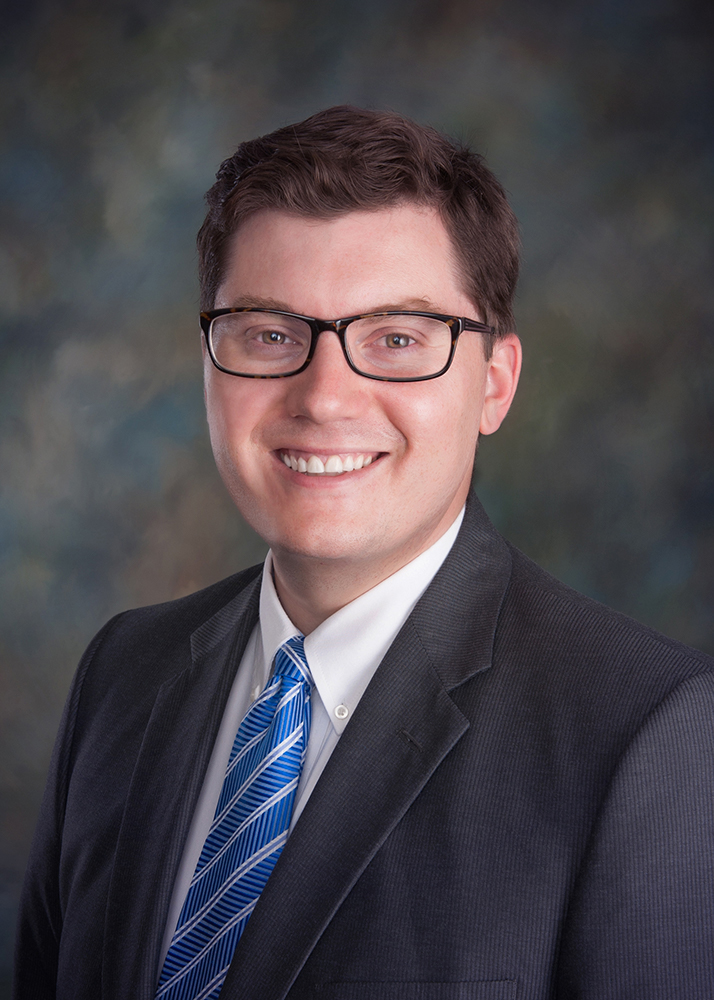
TOPEKA – Kansas Department for Aging and Disability Services (KDADS) Secretary Laura Howard announced today she has appointed Andrew Brown to serve as Commissioner for the agency’s Behavioral Health Services (BHS) Commission.
Brown, who has more than 20 years of experience in human services program management, has served in the role of interim commissioner since October 2018 after starting his career at KDADS as the BHS Prevention Program Manager. He came to KDADS from Headquarters, Inc. in Lawrence, Kan., where he served as executive director. Brown also holds a volunteer position on the City of Lawrence Affordable Housing Advisory Board and previously held several prominent volunteer positions in the industry, including the Governor’s Behavioral Health Services Planning Council Prevention Subcommittee and the Kansas Mental Health Coalition.
“Naming Andy commissioner to lead our behavioral health services programs aligns seamlessly with this agency’s strategic vision of developing a culture of continuous improvement,” said Secretary Howard. “Since being named interim commissioner last year, he has proven time and again his commitment to finding solutions that improve the lives of some of the state’s most vulnerable citizens.”
Brown earned a Bachelor of Applied Sciences in Human Services degree from Washburn University in 2010 and a Master of Social Work, Concentration in Administration, Advocacy and Policy, from the University of Kansas in 2012. He is a 2016 Washburn University Alumni Fellow and a 2015 Leadership Lawrence Alumni.
TOPEKA – The window for accepting Angel Investor Tax Credit Applications has reached its halfway point.
Applications for companies seeking investment through the Kansas Angel Investor Tax Credit (KAITC) program for 2019 will be accepted through Aug. 31. The program offers Kansas income tax credits to qualified individuals who provide seed-capital financing for emerging Kansas businesses engaged in development, implementation and commercialization of innovative technologies, products and services.
The KAITC Program is administered by the Kansas Department of Commerce and designed to bring together accredited angel investors with qualified Kansas companies seeking seed and early stage investment. The purpose of the Kansas Angel Investor Tax Credit act is to facilitate:
The availability of equity investment in businesses in the early stages of commercial development.
Assist in the creation and expansion of Kansas businesses, which are job and wealth creating enterprises.
Applications for certification will be accepted only for Kansas businesses in the seed and early stage rounds of financing.
Companies must meet the following criteria to be certified as a Qualified Kansas Business:
The business has a reasonable chance of success and potential to create measurable employment within Kansas.
In the most recent tax year of the business, annual gross revenue was less than $5 million
Businesses that are not Bioscience businesses must have been in operation for less than five years; bioscience businesses must have been in operation for less than 10 years.
The business has an innovative and proprietary technology, product, or service.
The existing owners of the business have made a substantial financial and time commitment to the business.
The securities to be issued and purchased are qualified securities.
The company agrees to adequate reporting of business information to the Kansas Department of Commerce.
The ability of investors in the business to receive tax credits for cash investments in qualified securities of the business is beneficial, because funding otherwise available for the business is not available on commercially reasonable terms.
Each applicant must sign a Qualified Company Agreement with the Kansas Department of Commerce.
Certification of companies must meet mandates established by Kansas statute to allow accredited Angel Investors to receive the Kansas Angel Investor Tax Credit. This year, the application fee has been reduced from $750 to $500.
 KDWPT
KDWPT