We have a brand new updated website! Click here to check it out!

Kansans are key to development of groundbreaking depression drug esketamine

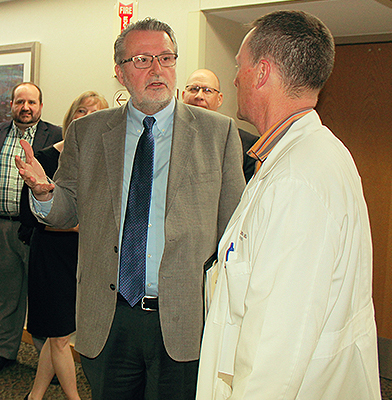
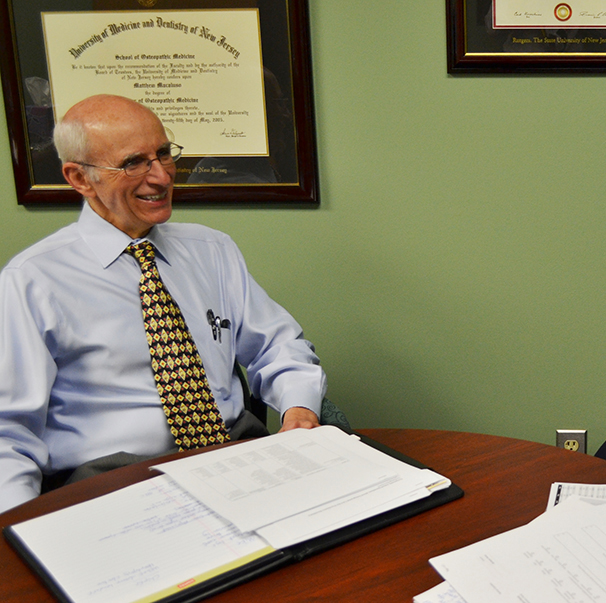
Sheldon Preskorn, M.D., psychiatry professor at KU School of Medicine-Wichita, talks with Matthew Macaluso, D.O., associate professor of psychiatry at KU School of Medicine-Wichita. Both played a pivotal role in the research and development of esketamine, a new treatment for depression.

By JOE STUMPE
KU School of Medicine-Wichita

WICHITA – The most promising new treatment for depression in decades owes a debt to Wichita and its KU School of Medicine campus.

The drug, called esketamine, is being marketed as a nasal spray under the name Spravato. Approved for use by the FDA in March, esketamine has been shown to help a significant percentage of people who don’t respond to existing antidepressants, which all work on monoamine – also called biogenic amine – neurotransmitters such as serotonin, norepinephrine and dopamine. In contrast, Spravato works via a new mechanism on a new transmitter system, glutamate.

“This medicine works via a different mechanism. That mechanism produces meaningful effects in approximately 60 percent of patients not meaningfully helped by existing antidepressants and within 24 hours,” said Sheldon Preskorn, M.D., a psychiatry professor at KU School of Medicine-Wichita who has helped in the development and now the launch of the drug. “It’s really quite different.”

About a third of the people suffering from depression – several million in the United States alone – aren’t helped by monoamine antidepressants such as Prozac or Zoloft.

“We’ve been working with those (drugs) for 50 years because that is all we’ve had up to the FDA approval of Spravato,” Preskorn said.

Preskorn knows the history, having led or participated in psychopharmacology research since the late 1970s. During a 25-year period, he took part in the development of every antidepressant and antipsychotic drug brought to market in the United States.

“I did one of the earliest studies showing that drugs of (esketamine’s) nature worked,” Preskorn said, referring to a study published in 2008. “It wasn’t esketamine, but it showed that this mechanism of action worked in patients with otherwise treatment-resistant depression.” That study, conducted in Wichita, has been cited more than 400 times in the world’s medical literature.

Preskorn also taught Wayne Drevets, M.D., the physician scientist who led drug development work for Janssen Research & Development, the subsidiary of Johnson & Johnson that won FDA approval to market esketamine. Drevets is a graduate of KU School of Medicine, as is Preskorn.

“He’s a native of Wichita, went to Collegiate High and graduated from medical school at KU in Kansas City,” Preskorn said. “He was a medical student of mine and then a resident of mine when I was on the faculty at KU in Kansas City and then Washington University” in St. Louis.

At Janssen, Drevets, as a vice president of the company, oversees the development of new treatments for depression and other mood and anxiety disorders.

Drevets was motivated to train as a psychiatrist by observing friends who struggled with depression, according to a profile on the Janssen website. He began his research career looking at the effects of existing medicines on the brain. At the time, researchers did not know where in the brain to look for abnormalities that affect emotional behavior. Today, imaging technology allows scientists to see the differences in a person’s brain when they are having symptoms.

The profile quotes Drevets as saying he believes the practice of psychiatry has lagged behind what is now known of the brain, and that’s the main reason he moved into the pharmaceutical industry.

“I wanted to help develop new treatments that would make a difference for patients in the clinic,” he said. Preskorn said he recognized that innovative spirit in Drevets as a medical student and resident.

In addition to Preskorn and Drevets, there is another important KU contributor to the approval of esketamine: Matthew Macaluso, D.O., an associate professor of psychiatry at KU School of Medicine-Wichita and a graduate of its residency program. Macaluso was principal investigator for a portion of the pivotal clinical trials conducted here that led to FDA approval of esketamine. An assistant dean for research and director of the psychiatry residency program, Macaluso also leads the Center for Clinical Research at KU Wichita.

During the course of about three years, Macaluso studied patients whose depression had not responded adequately to at least two therapeutic trials of different existing monoamine antidepressants. The patients were given doses of esketamine twice weekly for one month, and then the frequency of dosing was decreased with some patients receiving the drug only every two weeks.

“We saw good responses to the drug in most but not all the patients,” Macaluso said. “Many of the individuals in the study told us it was a life-changing treatment for them. These were people who had lost interest in life, had less energy and were chronically ill – truly suffering.”

Esketamine has an interesting history. Ketamine – which contains both esketamine and arketamine – was introduced as anesthetic in Germany in 1997. Ketamine showed signs of acting as an antidepressant, leading to research on its use for that purpose. Ketamine is also used by veterinarians as a tranquilizer and has been abused as a party drug nicknamed “Special K.” It is a controlled drug that can only be administered in a medical office.

The same is true of esketamine, which also distinguishes it from other depressants. It works on a chemical in the brain called glutamine, which is a different mechanism of action than drugs such as Prozac and Zoloft.

“Historically, most antidepressant drugs work on what are called biogenic amines – chemicals in the brain like serotonin, norepinephrine and dopamine,” Macaluso said. “Dr. Preskorn earlier studied a novel drug that worked on a different chemical called glutamate. Since then, there has been keen interest in the development of such drugs for patients with depressive illness, which is not responsive to monoamine antidepressants.”

Spravato is now FDA approved to be taken in conjunction with a daily oral monoamine antidepressant, which is how the studies were conducted that led to FDA approval. In addition to reducing depression, a “floating” or tranquilizing sensation is often felt. Some patients have reported dissociation, dizziness and other side effects.

FDA approval was based on research showing that esketamine treated depression where other drugs had not worked and prevented its recurrence. Preskorn said clinical trials are not always representative of how new treatments do in the “real world” of clinical practice, but he is optimistic.

Macaluso said “unfortunately” some psychiatrists may be reluctant to prescribe esketamine because it’s related to a drug “people have abused over the years.” Patients should be screened for a history of substance use disorder or risk for developing the same, he noted.

But Preskorn believes the fact that “it works well for patients who have not benefited from other treatments” will override that concern for many psychiatrists, other health care providers and their patients.

He was one of three psychiatrists picked by Janssen to serve as a panel on the initial broadcast launch presentations about esketamine across the country, reaching over 11,000 health care providers.

“To me, that shows there is a great deal of interest in this treatment,” Preskorn said.
Governor’s message regarding tax reform

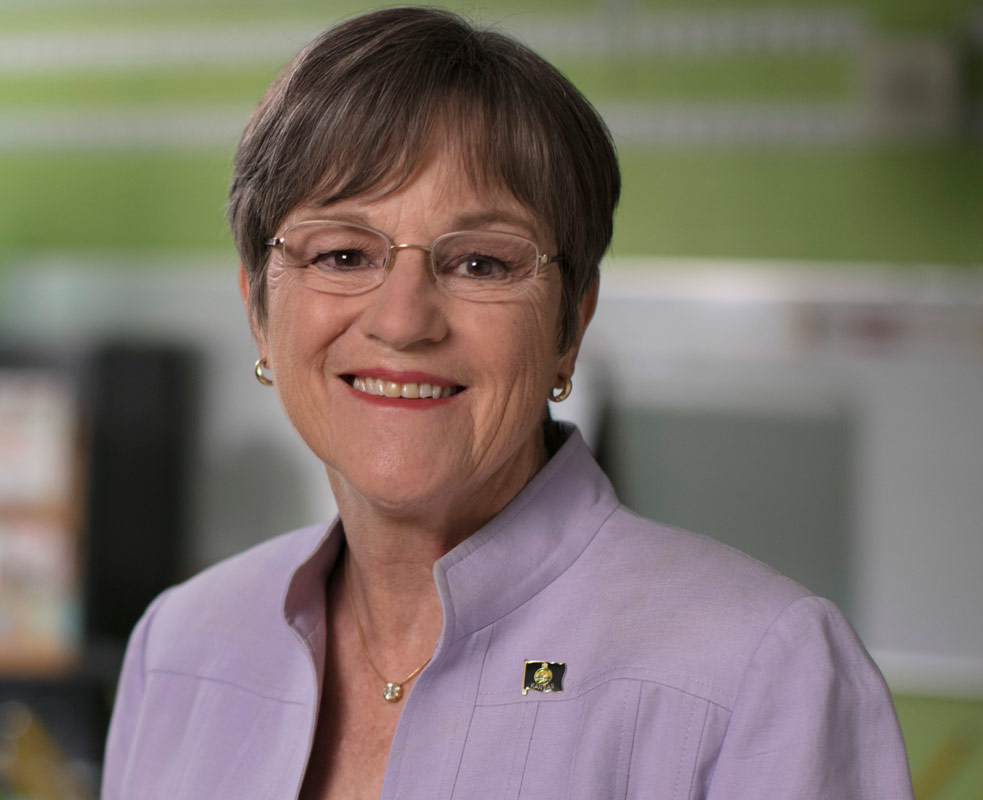
Laura Kelly (D), Kansas Governor

OFFICE OF GOV.

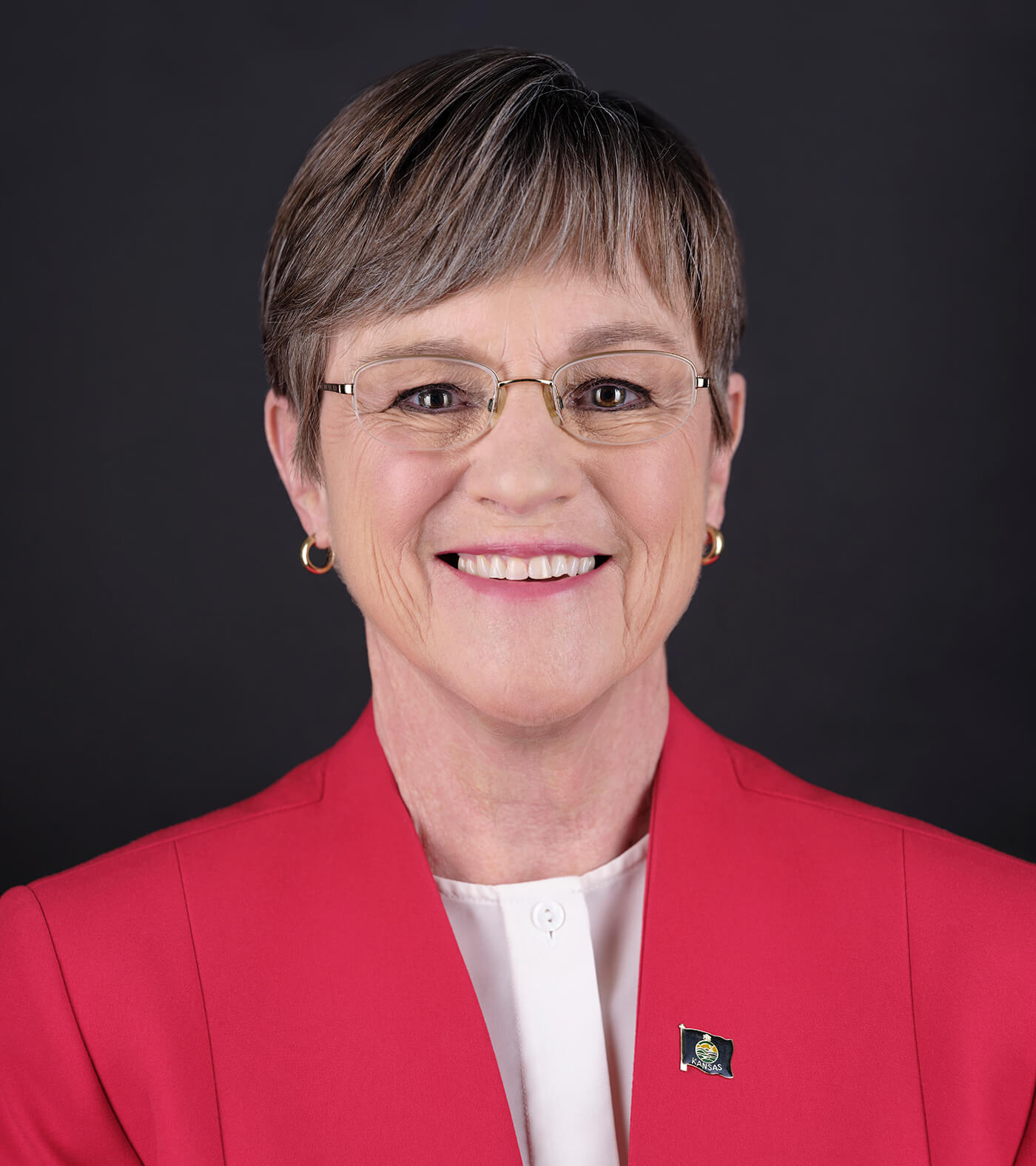
TOPEKA – The following message is from Governor Laura Kelly regarding tax reform:

“Time and again over the last several years, Kansas has made impulsive, poorly reviewed, sweeping changes to tax policy. With the exception of the original Brownback tax experiment, all of these recent changes were enacted out of dire emergency. And, unlike other high priority issues that have been studied repeatedly over the last five years, a thorough review of Kansas’ tax code in the wake of the Brownback failure has never been done.

“In recent weeks, I asked my administration to begin outlining a plan to facilitate this process. Twenty-seven states have convened tax study commissions over the last decade. While each state approaches it differently, they all agree that lawmakers must exercise due diligence before overhauling their tax structures. Kansas should follow this example.

“Like any smart business, state government should consider fundamental questions before pursuing major tax changes, including: what kind of revenue stream is needed to provide services like healthcare, public education, and public safety – both now and into the future? What parts of our tax code are antiquated or unfair? What are the consequences – intended or unintended – of any proposed changes to the tax code?

“One of my top priorities for tax reform has always been to lower Kansas’ unacceptably high tax on food. I’d like to provide meaningful tax relief to those who need it most, and ultimately all Kansans. I’d like to restructure our tax code to be more sustainable over time, so that it can provide certainty to both businesses and families. We should take a balanced approach that goes hand in hand with rebuilding our state’s rainy day fund. This would position us to offer refunds to taxpayers in years of plenty, but cover deficits during economic downturns. And, I believe we are long overdue for a review of how we can ensure our tax code truly incentivizes economic growth.

“I welcome lawmakers’ ideas and involvement. Nonpartisan economists, tax policy experts, and business leaders should also be at the table. Above all, I believe this discussion should be guided by a thoughtful, data-driven, big-picture vision for Kansas – not by a hasty attempt to achieve an immediate political victory.

“Kansas lawmakers have invested a tremendous amount of time debating tax reform over the last five years. I agree that tax reform provides an opportunity to reshape Kansas for the better, and my job as governor is to make sure we get it right this time. I look forward to working collaboratively and thoughtfully with stakeholders to achieve that goal in the future.”

Lt. Gov. Rogers highlights importance of Medicaid expansion to rural prosperity

Lt. Gov. Lynn Rogers with Hays Med’s Dr. Jeff Curtis April 9 in Hays.

The following remarks are from Lt. Governor Lynn Rogers regarding the results of his Rural Healthcare Tour:

Hello, thank you all for coming today.

Since launching the Office of Rural Prosperity’s Rural Healthcare tour in February, Governor Kelly, KDHE Secretary Lee Norman and I have collectively toured more than 25 healthcare facilities. We’ve met with chambers of commerce, healthcare providers, business owners, faith leaders, families and community members across the state – from Liberal to Marysville and Pittsburg to Atwood.

(RELATED CONTENT: Rogers toured Hays Medical Center April 9.)

During this tour, there was a consistent and resounding message no matter where we traveled — Medicaid expansion would absolutely help each of their communities.

It would create new jobs, invest new money into the local economy, and would reimburse healthcare facilities for care they already provide that would otherwise be uncompensated.

Expansion would give healthcare facilities the necessary resources to upgrade diagnostic equipment to provide better local healthcare. And it would allow them to more competitively recruit and retain quality healthcare staff.

In Council Grove, hospital administrators at Morris County told me they had just lost a doctor, and that they’re afraid that if the state doesn’t expand Medicaid they could lose more.

The fear of providers leaving for higher paying jobs in nearby expansion states like Nebraska or Colorado is very real to communities on the state’s border. Goodland Regional Medical Center is just a short 30-minute drive from the hospital in Burlington, Colorado.

And healthcare facilities in southwest Kansas – like Garden City and Dodge City – told me about wanting to invest in educational facilities to address their provider shortfall but said it was a challenge while being burdened with millions in unreimbursed care.

The Governor shared a story from her tour of Horizon’s Mental Health Center in Hutchinson. The services they are providing– in their local schools, correctional facilities, and across their communities – could all be enhanced if the legislature expanded Medicaid. And you’ll get a chance to hear that first-hand from their CEO Mike Garrett here shortly.

I don’t have to remind you that four rural hospitals have closed in the past three years – each citing the state’s failure to expand Medicaid as being partially responsible for their closing. And while we cannot guarantee that Medicaid expansion will save every rural hospital, we are certain that it has the most positive and immediate benefit of anything the state can do.

The economic impact of a hospital closure is greater than a cursory glance would expect. In a rural community, healthcare accounts for 20% of a local economy, and just one physician generates 26 jobs.

Given the economic impact of healthcare, the fact that 30% of our state’s rural hospitals are considered financially vulnerable is cause for concern. Across the state over 85% of our hospitals currently have a negative operating margin.

And in the five years that Kansas has gone without expansion we have lost over $3 billion dollars in tax revenue – money Kansans have paid to the federal government, that should have been used here but has gone to other states.

We not only have an economic imperative to expand Medicaid, we have a moral imperative as well.

Nearly 150,000 Kansans fall in the coverage gap. They are hardworking – often underemployed – Kansans who don’t make enough money to afford quality health insurance but have incomes that are too high to qualify for Medicaid. And many of them live in rural Kansas.

Unfortunately, two members of Senate Leadership – both in majority urban districts I should add – are blocking a vote on expansion despite it being supported by 77% of Kansans. They are suggesting that now is the time to study the issue, and that discussion can begin next year. But after five years of discussion in Kansas and more than 300 national studies showing its effectiveness, the time for discussion is over. It is time for Kansas to join the 36 other states who have already expanded their Medicaid Programs.

This should not be a partisan fight or a means to keep a political score. It is about people’s lives.

The Senate will be back Wednesday for the annual wrap-up session.

The Governor and I are calling on the Senate to hold a vote on Medicaid expansion.

Since rolling out our plan to expand Medicaid nearly 100 days ago, we talked to Kansans — Republicans, Democrats, and Independents alike – and they’ve told us that Medicaid expansion can’t wait until next year. It simply costs Kansas too much money and too many lives.

They’ve contacted their legislators, they’ve gotten engaged in the process, and they’ve said they are done waiting. It is time for the Legislature to listen to the people.

On behalf of rural Kansans, I’m asking Senate leaders to show compassion for their constituents.

Lynn Rogers (D) is the Kansas Lieutenant Governor.

Gov. prioritizes Corrections enhancements in budget amendment

Kansas Governor Laura Kelly (D)

OFFICE OF GOV.

TOPEKA – In an effort to address the prison crisis, Governor Laura Kelly added over $30 million to improve the safety, compensation and conditions in the Department of Corrections through her Governor’s Budget Amendment released Tuesday.

“When I took office in January, we found that numerous agencies were facing challenges far worse than we thought, especially the Department of Corrections,” Kelly said. “Our prisons were overcrowded, understaffed and in crisis. I’ve added significantly more funding to start addressing these issues immediately.”

On February 12, 2019, Kelly declared an emergency in the El Dorado Correctional Facility due to serious staffing shortages. The Kelly Administration has been working since then to put together a comprehensive plan to address these issues. Additional funding will provide a pay increase of correction officers, funds to ease prison capacity, buy new stab vests for officers, and increase funding to treat Hepatitis C.

“Corrections officers and staff have stood strong on the front lines in this crisis, but we must give them the support and compensation they deserve,” said Kelly. “I want to thank the employees for their hard work and commitment to public safety through this challenging time. Help is on the way.”

The Governor also adjusted the human service caseloads based on the consensus caseload estimates for FY 2019 and 2020 in the Department for Children and Families, Department for Aging and Disability Services, and the Department of Health and Environment.

Also included in the Governor Budget Amendments were enhancements to the Office of Information Technology Services for modernization, additional funding for the Board of Indigents’ Defense Services, a transfer of funds to settle litigation with the Insurance Department, funds to cover a revenue shortfall at the Osawatomie State Hospital, repayment for the Children’s Health Insurance Program (CHIP) Bonus, correction to the KPERS-School Employer Contribution, additional funding for disasters and other funding adjustments.

Read the full Governor’s Budget Amendment  memo.

Susan G. Komen Kansas & Western Missouri name new CEO & Exec. Dir.

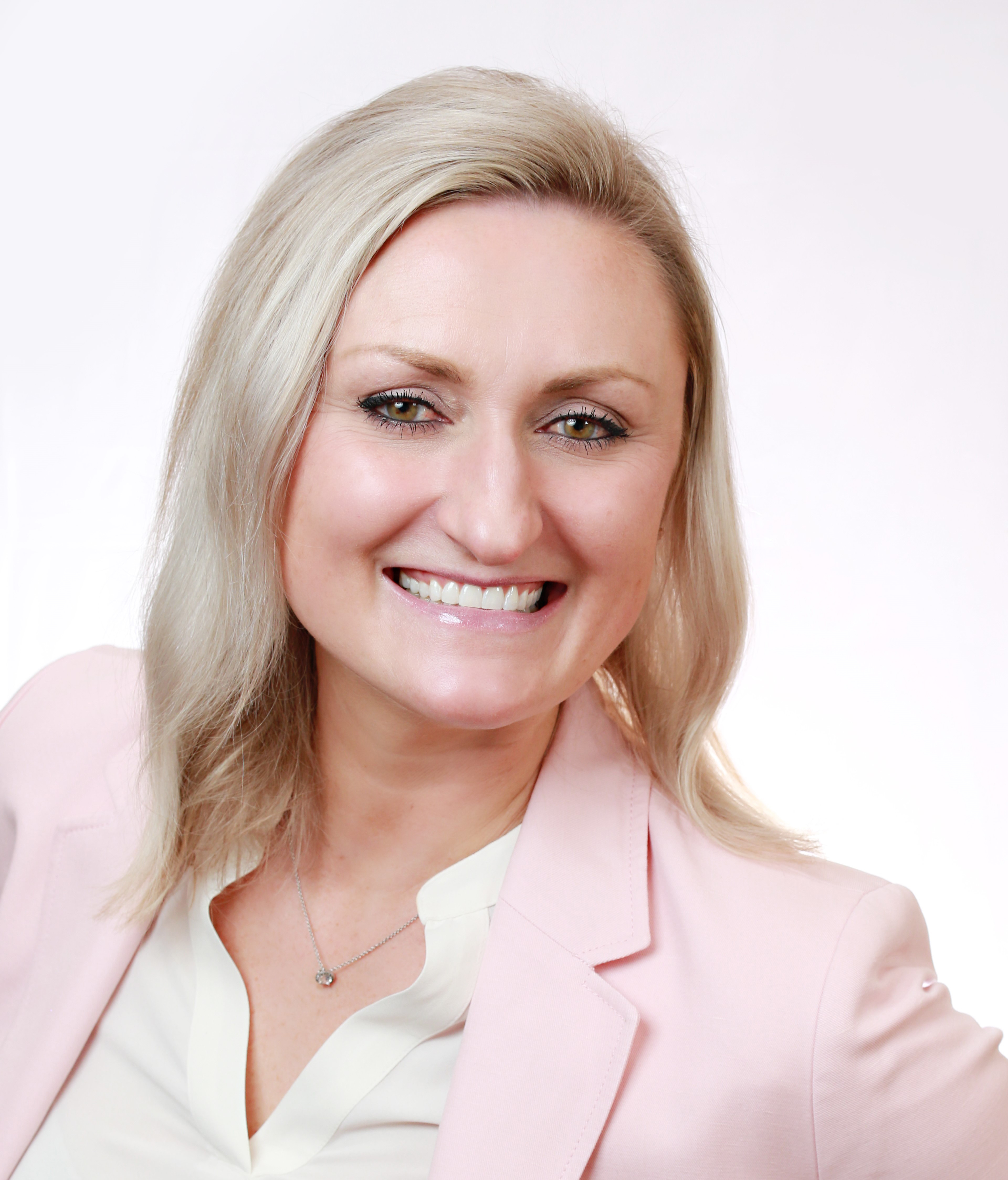
Erica Terry

KOMENKSWMO

LEAWOOD – Susan G. Komen Kansas & Western Missouri Board of Directors announced that they have selected proven development executive and cancer advocate Erica Terry as CEO and Executive Director. Terry begins her role on April 29, 2019.

Terry joins Komen from The Nelson-Atkins Museum of Art where she served as Director, Membership & Corporate Partnerships. Prior to that, she built her career at cancer-related organizations including Saint Luke’s Foundation, LIVESTRONG, and The University of Kansas Cancer Center.

The search for a new permanent CEO began in November of 2018 when Susan G. Komen Greater Kansas City and Susan G. Komen Kansas affiliates merged to become Susan G. Komen Kansas & Western Missouri. Komen affiliates have invested more than $27.5 million in breast health programs in the 112-county Kansas and Missouri service area to date.

Terry will be the newly merged affiliate’s first permanent leader, focusing on the effort to continue increasing impact in existing service areas and to begin implementing expansion of efforts to underserved areas throughout the state.

Kristin Cargin, Board President, led the search with the executive committee, recruitment firm Fenaroli and Associates and the support of the full board.

“We conducted a comprehensive regional search and it led us to a native Kansan who brings experience working in the Greater Kansas City area and throughout the State of Kansas,” said Cargin. “Her Midwestern roots, combined with the work she has done with mission-driven organizations, her proven success in development and her passion for the fight against cancer perfectly positions her to help us save more lives and ultimately end breast cancer forever.”

As part of her personal mission to end cancer, Terry founded and served as president of Tour de BBQ, an annual fundraising bike ride to support young adults with cancer. Other board positions have included Gilda’s Club Kansas City, Leukemia & Lymphoma Society – Kansas City Chapter and Kansas City Cancer Partnership.

“I couldn’t be more humbled, honored and thankful for the opportunity to lead this important organization as we expand our impact, save lives, and achieve Komen’s Bold Goal to reduce breast cancer deaths by 50% in 2026. Achieving this will not happen if we wait for someone else to do it. We can meet this goal with thoughtful planning, strategic partnerships across the region, and collaborative work to ensure nobody has to suffer from this devastating disease,” said Erica Terry.

Dr. Roy A. Jensen, director of The University of Kansas Cancer Center, said that he is absolutely delighted that Terry has been selected for this position. “Erica combines extensive experience in the non-profit world with a longstanding and deeply felt passion for cancer advocacy. I can’t think of anyone who would be better suited to lead this great organization,” commented Dr. Jensen.

Terry holds a Bachelor of Arts and Master of Arts in Political Science from the University of Kansas. She has served as a political activist, partnering with former Kansas State Senator Barbara Allen on the breast cancer license plate and Fred Logan on the Johnson County Education Research Triangle.

About Susan G. Komen®
Susan G. Komen is the world’s largest breast cancer organization, funding more breast cancer research than any other nonprofit outside of the federal government while providing real-time help to those facing the disease. Komen has set a Bold Goal to reduce the current number of breast cancer deaths by 50% in the U.S. by 2026. Since its founding in 1982, Komen has funded more than $988 million in research and provided more than $2.2 billion in funding to screening, education, treatment and psychosocial support programs serving millions of people in more than 60 countries worldwide. Komen was founded by Nancy G. Brinker, who promised her sister, Susan G. Komen, that she would end the disease that claimed Suzy’s life. That promise has become Komen’s promise to all people facing breast cancer. Visit komen.org or call 1-877 GO KOMEN. Connect with us on social at ww5.komen.org/social.

About Susan G. Komen® Kansas & Western Missouri
Komen Kansas & Western Missouri is working to better the lives of those facing breast cancer in their local communities. Through signature events like the More Than Pink Walk and BigWigs, Komen Kansas & Western Missouri has invested more than $27.5 million in breast health programs in their 112-county Kansas and Missouri service area and has helped contribute to the more than $988 million invested globally in researchFor more information, call 816.842.0410, visit komenkswmo.org or behindtheribbon.org. Connect with us on social media: Facebook, Twitter or Instagram.


Free business development workshop for minorities/women

KDC

TOPEKA –  The Minority and Women Business Development Office of the Kansas Department of Commerce will host a Workshop for Minority, Woman and/or Disadvantaged Business Enterprise Certification Programs on May 15.

Those interested in DBE/MBE/WBE Certification will be able to hear more about the application process and potential benefits of certification at the workshop.

DBE/MBE/WBE Certification Workshop

Wednesday, May 15, 2019

10:00 a.m. to 12 p.m.

Kansas Department of Commerce

1000 SW Jackson, Ste. 100

Topeka, KS 66605

(Curtis State Office Building)

Attendance is FREE, but registration is REQUIRED. Space is limited so sign up early!

Click on the following link to register.

https://www.kansascommerce.gov/programs-services/minority-women-business-development/minority-and-women-business-certification-workshop/

The deadline to apply is Fri., May 10.

Gov. Kelly’s first 100 days in office

Kansas Governor Laura Kelly (D)

OFFICE OF GOV.

TOPEKA – One hundred days into her tenure as the 48th Governor of Kansas, Laura Kelly is reflecting on her accomplishments, highlighting successes and addressing the unfinished business of passing Medicaid expansion.

“When I gave my inaugural address on January 14, I stood in front of three banners with the words: equality, education and opportunity,” Kelly said. “These are the principles that have guided my first 100 days in office. And they are the principles that will guide us as we work to invest in our future and grow our economy. ”

In addition to the accomplishments outlined below, Kelly followed through on her promise to appoint a highly-qualified, bipartisan cabinet of Kansas leaders focused on rebuilding state agencies decimated by previous administrations.

“I was elected to rebuild Kansas and we’re already making progress,” Kelly said. “My team has increased transparency and accountability in our government and restored responsible, commonsense leadership that addresses the priorities of Kansas families.”

Kelly has taken significant steps towards stabilizing the state’s budget and investing in key priorities, like schools and roads. However, one critical issue is left unfinished: Medicaid expansion. In her fifteenth consecutive Kansan to Kansan weekly video, shared on Facebook earlier today, she called on Senate leadership to stop blocking progress on Medicaid expansion.

“We’re halfway there – but that’s not good enough. When the legislature returns on May 1st, they need to vote on Medicaid expansion,” Kelly said. “Over 77 percent of Kansans want expansion to happen. The Senate President and Majority Leader need to stop playing games with taxpayers’ health care and get it done. Two of my biggest town halls were in their districts and the response was overwhelming and undeniably in favor of expansion. Kansans are counting on us.”

100 days rebuilding Kansas

Day 1:
On her first full day in office, Governor Kelly signed Executive Order 19-02, reinstating protections to state employees who are gay, lesbian, bisexual or transgender.

Day 4:
Kelly submitted a balanced budget to the Kansas Legislature nearly three weeks ahead of schedule; a budget that paid down debt, invested in key priorities like schools, highways and Medicaid expansion, and provided the state with the largest ending balance in twenty years – all without a tax increase.

Day 15:
Kelly introduced a bipartisan plan to expand Medicaid on Kansas Day.

Day 32:
Kelly joined Secretary of Transportation Julie Lorenz in announcing plans to invest $160 million in Kansas’ transportation system, as part of the Governor’s FY 2020 budget. This included four new projects from the T-Works program.

Day 39:
Lt. Governor Lynn Rogers launched the Rural Healthcare Tour, as part of building the Office of Rural Prosperity. As of today, he has visited seventeen communities across Kansas: Emporia, Marysville, Garden City, Hutchinson, McPherson, Dodge City, Hays, Russell, Ottawa, El Dorado, Council Grove, Goodland, Abilene, Leavenworth, Junction City, Chanute and Pittsburg.

Day 42:
Kelly announced new transparency initiatives at the Department for Children and Families, designed to improve the agency’s efforts to locate children who are absent or have run away.

Day 53:
Kelly signs Senate Bill 9 which repaid $115 million debt to our state retirement system.

Day 82:
Kelly squarely established herself as the ‘education governor’ by signing a bipartisan school funding plan into law. The education plan, if approved by the Kansas Supreme Court, could bring an end to decades of legislative debates and legal challenges surrounding education funding. This followed the signing of Executive Order 19-03 in January, establishing the Governor’s Council on Education and the restoration of the previous administration’s cuts to the Children’s Initiatives Fund.

Day 85:
Kelly completed four town hall discussions during the 2019 legislative session. In total, over 15,000 Kansans attended these town halls in-person or online via Facebook live.

Day 99:
Kelly signed Executive Order 19-07, establishing the Kansas Complete Count Committee, in support of a statewide strategy that ensures every Kansan is counted in the upcoming census. The data collected in the census will inform how the federal government distributed much-needed funding for Kansas roads, schools, hospitals, emergency services and much more.

Day 100:
As of this day, Kelly has signed over 100 proclamations and her constituent services team has opened nearly 2,000 cases on behalf of hardworking Kansans. Of those opened cases, 1,800 have been closed.

Gov. signs legislation providing housing protections for domestic violence survivors

OFFICE OF GOV.

TOPEKA – In an effort to assist domestic violence survivors, Governor Laura Kelly signed Senate Bill 78 Monday providing protection for Kansans who must unexpectedly leave a rental arrangement.

“Kansans dealing with abusive domestic situations don’t always have time to plan their next move,” Kelly said. “When they need to leave a dangerous situation quickly, this legislation ensures landlords can’t discriminate, can’t evict, and can’t charge unreasonable fees for breaking a lease.”

Senate Bill 78 creates certain rights or benefits under an insurance policy on residential real estate and protections related to housing for victims of domestic violence, sexual assault, human trafficking, or stalking. Under the law, landlords cannot deny housing or evict someone for being a victim, if they otherwise qualify. Victims who must leave the property immediately will not be liable for future rent if certain conditions are met. This legislation will become effective upon its publication in the Kansas Statute Book.

“We must do all we can to encourage women and men to leave abusive relationships,” Kelly said. “These are our friends and neighbors and they need our support.”

Governor Kelly also signed:

Senate Bill 15
Amends public health provisions relating to behavioral sciences regulatory board professional licensure, naturopathic doctor scope of practice and adult care home licensure and receivership. This legislation takes effect upon publication in the Kansas Register.

Senate Bill 70
Amends law concerning temporary permits to serve liquor for consumption on premises; amends law concerning common consumption areas; amends law related to the issuance of licenses by the Division of Alcoholic Beverage Control, Department of Revenue; creates law related to delivery of alcoholic liquors within the state and required reporting of such deliveries; amends the Liquor Control Act to allow for producers of certain fermentative products to sell wine made at a farm winery; and designates the official Kansas red and white wine grapes. This legislation takes effect upon publication in the Kansas Register.

Miller appointed KDWPT Asst. Secretary

Mike Miller

KDWPT

TOPEKA – Mike Miller has been selected to be Assistant Secretary for Wildlife, Fisheries and Boating for the Kansas Department of Wildlife, Parks and Tourism (KDWPT). He replaces Keith Sexson, who retired last December after more than 50 years with the department. Miller will assume his new duties on Monday, April 22, 2019.

“Mike has been an invaluable member of our team for more than three decades. He has been involved in almost every aspect of the department and has a wealth of knowledge and experience to bring to his new role,” said Brad Loveless, KDWPT Secretary. “He is a great communicator and is well-respected by all who know him. I am looking forward to working closely with him as we grow our programs and serve our constituents.”

“I am humbled and excited to be a part of Secretary Loveless’ vision for KDWPT’s future,” Miller said. “Current Wildlife, Fisheries and Boating staff are as talented and dedicated as any I’ve seen, and I look forward to working with them to carry on the amazing legacies of previous assistant secretaries.”

Miller has worked for KDWPT for more than 35 years. He grew up in Greensburg and graduated from Kansas State University with bachelor’s degrees in Journalism and Graphic Design in 1982. After a short stint with the El Dorado Times newspaper, he was selected to be the wildlife illustrator for the Kansas Fish and Game Commission and Kansas Wildlife magazine.

He went on to serve as the magazine’s associate editor, editor, and his current position of chief of the Information Production Section, overseeing production of the magazine, all hunting and fishing regulation pamphlets, atlases and brochures and social media presence. In addition to his information duties, Miller also served as a special assistant to the Assistant Secretary, managing various special programs and committees, including Pass It On, a hunter recruitment and retention program.

Miller is an avid angler and hunter. He and his wife of 37 years, Lisa, make their home in Pratt where he will continue to work in the KDWPT Pratt Operations Office.

KCC offers tips on what to look for when hiring a limo or bus service

KCC 

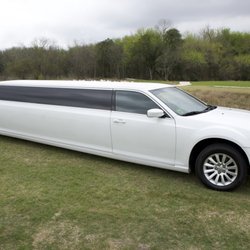
TOPEKA – Limousines and party buses are popular modes of transportation for proms, weddings and other special events. If your spring or summer plans call for limo or bus transportation, the Kansas Corporation Commission (KCC) encourages you to do a little research before booking.

The KCC, the agency that regulates motor carriers in the state, recommends that you check to be sure the transportation company you are considering has operating authority. That means they meet the applicable federal and state requirements for safety, insurance, operations and driver training.  Services operating within the state are also required to file their current tariffs or rates with the KCC. Those can be found on the KCC’s website.

“Planning your next limousine, party bus or charter bus trip is an important decision. Take a moment to ensure the company you select has the appropriate State and/or Federal operating authority and a safe operating history. Looking before you book will help you have a safe and satisfying experience,” said Mike Hoeme, KCC Transportation Director.

There are several places to obtain more information about passenger carriers. Here are a few helpful links:

Find rates – https://kcc.ks.gov/transportation/transportation-quick-links/passenger-tariffs
Check safety record – https://safer.fmcsa.dot.gov/ (see company snapshot)
Verify Insurance coverage –
https://li-public.fmcsa.dot.gov/LIVIEW/pkg_carrquery.prc_carrlist

Passenger carrier and bus safety information –
https://www.fmcsa.dot.gov/safety/passenger-safety/passenger-carrier-and-bus-safety


Kansas joins The Skillful State Network

KDC

TOPEKA – Kansas has joined The Skillful State Network, a Markle Foundation initiative.

Governor Laura Kelly, along with the governors of California, Connecticut, Kentucky, Michigan, Minnesota, Missouri, and Pennsylvania have joined the founding states in the Network’s efforts to create a labor market in which skills learned anywhere are valued and people can rapidly and affordably access the information and training needed for good jobs in the digital economy.

Entering its second year, the Skillful State Network fosters collaboration among innovative governors from states large and small, coast to coast and across the political spectrum. The governors in the Skillful State Network have made workforce development a state priority and are committed to acting on proven practices that enable their residents and employers to thrive.

“This is important moment of change for the Kansas economy,” Governor Kelly said. “We must work together to ensure workers have the skills they need to compete in a modern, digital economy. I look forward to collaborating with the Skillful State Network and partner states to transform our labor market and grow our economy.”

“The Skillful State Network acts on the urgent need for leadership to bring the talent of Americans into the rapidly changing digital economy. Governors are joining together to break down the barriers keeping too many people from finding good careers,” said Zoë Baird, CEO and President of the Markle Foundation. “With bipartisan gubernatorial leadership from 26 states across the country, we are giving people greater power in the labor market to pursue rewarding careers.”

The Skillful State Network launched in 2018 to drive transition to labor markets in which skills are valued as well as degrees, and people can access the tools and build the skills necessary to thrive in today’s digital economy. Members share innovative ideas and proven practices each can adopt to achieve workforce goals and growth, for example, effectively aligning education with industry; providing robust data on skills needed to jobseekers; and training employers on skills-based practices to find talent from other sectors or with informal training. The Network is enabling a systems-level change in the labor market.


Skillful State Network Members
Arkansas Gov. Hutchinson
California Gov. Newsom
Colorado Gov. Polis
Connecticut Gov. Lamont
Delaware Gov. Carney
Illinois Gov. Pritzker
Indiana Gov. Holcomb
Kansas Gov. Kelly
Kentucky Gov. Bevins
Massachusetts Gov. Baker
Michigan Gov. Whitmer
Minnesota Gov. Walz
Missouri Gov. Parson
Montana Gov. Bullock
New Jersey Gov. Murphy
North Carolina Gov. Cooper
North Dakota Gov. Burgum
Ohio Gov. DeWine
Pennsylvania Gov. Wolf
Rhode Island Gov. Raimondo
Tennessee Gov. Lee
Utah Gov. Herbert
Vermont Gov. Scott
Virginia Gov. Northam
Washington Gov. Inslee
Wisconsin Gov. Evers
For more information about member state involvement, quotes from the governors and examples of workforce initiatives, please visit here.


The Network is grounded in Skillful’s work in Colorado and Indiana, where Skillful works directly to align the efforts of the state, employers, educators, and local workforce boards behind a mutually reinforcing strategy. Drawing on its on-the-ground operations, Skillful produced the Skillful State Playbook, a step-by-step guide to help states build a skills-based labor market, which includes tools and resources for implementation. One signature initiative currently operating in Colorado and Indiana, the Skillful Coaching Corps (SCC), is an upskilling program for career coaches. Applying tools and training from the Corps, coaches are better equipped to help job seekers and incumbent workers learn what skills are in demand and how to demonstrate or obtain those skills. The Skillful State Network continues to draw key learnings and practices from Skillful Colorado and Skillful Indiana, and supports transformation at a scale and pace not possible through individual state actions alone.

“We are thrilled to welcome the eight new member states to the Skillful State Network, as well as the newly elected governors from founding member states Colorado, Ohio, Tennessee, Illinois, and Wisconsin. The importance of this issue and the value of the Network transcends changes in administration and even party,” said Beth Cobert, CEO of Skillful. “Workforce development is a nonpartisan issue as every state confronts helping workers transition to digital economy jobs. These new voices will strengthen this already forward-thinking group in this our second year.”

Network members will continue to share assets, foster partnerships, and hone methods of engagement within their labor markets. The free and public availability of the Skillful State Playbook supports the open sharing of key learnings and practices. Skillful State Network members may draw from and contribute tools to the Playbook.

All interested states are invited to join the Network by contacting Skillful CEO Beth Cobert at [email protected], (212) 713-7633.

Download the Skillful State Playbook here.

Find more information about Skillful here.


About Skillful

Skillful, a non-profit initiative of the Markle Foundation, is dedicated to enabling all Americans – particularly those without a four-year college degree – to secure good jobs in a changing economy. Skillful, in partnership with Microsoft, is developing skills-based training and employment practices in collaboration with state governments, local employers, educators and workforce development organizations. With its partners, Skillful is working to create a labor market in which skills are valued, and people can more easily access the information and education they need to keep pace with technology’s impact on work. Skillful currently operates in two states, Skillful Colorado and Skillful Indiana, bringing investment, training, tools and innovative methods to augment local workforce development efforts. It formed and facilitates the Skillful State Network, a collaboration among 26 state governors to accelerate the development and deployment of effective skills-based practices to transform their labor markets. Skillful is grateful for support provided by Lumina Foundation and Walmart, and its partnerships with the states of Colorado and Indiana, Purdue University and Purdue Extensions and many great local organizations committed to strengthening their local workforce and creating better opportunities for all.

About The Markle Foundation

The Markle Foundation works to realize the potential of technology to achieve breakthroughs in addressing some of the nation’s most pressing issues. Markle challenges itself and diverse partners to deploy their varied expertise to identify solutions and achieve systemic change. Today as advanced technology and automation change the very nature of work, Markle’s priority is advancing solutions toward a skills-based labor market that will enable Americans to transition to the opportunities of the digital economy. Markle’s workforce initiatives include Skillful and the Rework America Task Force. They follow Markle’s success in creating policy and technology architecture that has enabled improvements in healthcare, national security and access to the Internet. For more information, visit markle.org, follow @MarkleFdn and @ReworkAmerica on Twitter, and read our book, America’s Moment.


KU institute designated lead agency of Kansas’ State Data Center

KU NEWS SERVICE

LAWRENCE — The University of Kansas Institute for Policy & Social Research (IPSR) has been designated the lead agency of the State Data Center for the state of Kansas. In this role, IPSR — under the leadership of Xan Wedel — will work with a network of other Kansas data centers to find out what data users need and how to connect them to U.S. Census Bureau resources.

The State Data Center Program is one of the U.S. Census Bureau’s longest and most successful partnerships. This cooperative program between the states and the U.S. Census Bureau was created in 1978 to make data available locally to the public through a network of state agencies, universities, libraries, and regional and local governments. The State Data Center network provides training and technical assistance to local governments, the business community, researchers and other local stakeholders in their use of Census Bureau data for research, administration, planning and decision-making.

The State Data Centers also provide the U.S. Census Bureau with valuable feedback on data use, the operational aspects of decennial and economic census and survey programs, and the various federal-state-local partnership programs that support U.S. Census Bureau activities. For example, Wedel will review housing counts to make sure newly built homes and group housing like residence halls and nursing homes are accurately counted in the upcoming 2020 census.

In several ways, this designation formally acknowledges IPSR’s longstanding service to Kansas and the U.S. Census Bureau. IPSR has been a coordinating agency in the Kansas State Data Center since the program’s inception and expanded this role to become the Business & Industry Data Center for the state in March 2009.

Wedel, who has worked at IPSR since 1999, worked on efforts to prepare for the census and disseminate data after both the 2000 and the 2010 counts. Wedel was also elected to the National State Data Center steering committee in 2005 and served as secretary and chair during her three-year term.

Further, IPSR coordinates several initiatives that promote the use of census data by local stakeholders. IPSR has been producing the Kansas Statistical Abstract annually for more than 50 years. The Kansas Statistical Abstract is a compendium of state and local data covering state, county and city-level data on topics such as population, housing, education and energy. In addition, IPSR’s work as a U.S. Economic Development Administration University Center — under the leadership of School of Business lecturer and entrepreneurship program director Wally Meyer and IPSR associate researcher Genna Hurd — promotes the use of census data. Meyer and Hurd, along with regional development organizations, have developed a regional data portal available to the public.

Gov. explains decision on HB 2209

Kansas Governor Laura Kelly (D)

OFFICE OF GOV.

TOPEKA – The following message is from Governor Laura Kelly regarding House Bill 2209:

House Bill 2209 makes sweeping changes to healthcare policy in Kansas. After long and careful deliberation – including in-depth discussions with both opponents and proponents — I continue to harbor serious reservations about this legislation. I believe it is fundamentally wrong to deny health coverage to anyone because they have a pre-existing condition. It troubles me that only two other states in the nation have implemented a model similar to this bill, making the long-term impact uncertain. And I am disappointed that the Kansas Insurance Department chose not to engage with the Legislature to ensure the final product included basic consumer protections and regulatory safeguards. Therefore, as a matter of principle, I cannot sign House Bill 2209.

I also fundamentally believe that governing demands a relentless pursuit of common ground. Proponents of House Bill 2209 brought this legislation forward because healthcare costs far too much. Our rural communities need help. Kansas farmers and ranchers face historic challenges in the wake of declining farm income, severe weather, and a global trade war. They openly acknowledge that this bill will not solve all the complex problems plaguing our healthcare system. In their opinion, an “all of the above” approach stands the best chance of helping the greatest number of Kansans. On these points, I wholeheartedly agree.

With that larger vision and shared goal in mind, I will allow House Bill 2209 to become law without my signature. New ideas always carry a certain level of risk. I believe the potential risks of this legislation can be mitigated if they are coupled with a stable, secure, proven healthcare option: Medicaid Expansion.

In the last decade, Medicaid Expansion has been thoroughly vetted from every imaginable angle, with over 300 studies confirming its effectiveness and necessity. We know with certainty that it will strengthen our economy, save taxpayer dollars, and provide healthcare to roughly 150,000 Kansans. A majority of the Kansas Legislature already voted for my proposal in 2017 or publicly promised to support Expansion in their 2018 campaigns. Over 70 percent of states – with both Republican and Democratic governors – have expanded Medicaid. And 77 percent of Kansans want us to do the same.

Unfortunately, leaders in the Kansas Senate continue to prioritize their own political ambitions over the health and security of Kansas families and hospitals. Despite the will of both their chamber and their state, these three Senate leaders remain devoutly committed to partisan obstructionism.

I will never govern in this manner. My priority will always be the people of Kansas, and I allow House Bill 2209 to become law as a demonstration of my genuine commitment to compromise. I challenge legislators to join me in this good-faith effort, meet me halfway, and enact Medicaid Expansion before the 2019 legislative session adjourns.

Laura Kelly is the governor of Kansas.


Copyright Eagle Radio | FCC Public Files | EEO Public File