TOPEKA – Encouraging Kansas National Guard members to participate in peer counseling sessions, Governor Laura Kelly signed House Bill 2365 in an official signing ceremony today, exempting any notes or records of National Guard members’ counseling sessions from the Kansas Open Records Act (KORA).
“Mental health matters – for civilians and guard members alike. It’s important that we do all we can to decrease the stigma around mental health and encourage guardsmen and women to seek the necessary help,” Kelly said. “This is an issue of great importance to me personally and I’m proud to sign this legislation into law.”
Kelly was joined by Major General Lee E. Tafanelli, mental health representatives from the Kansas National Guard, and legislators at the signing ceremony.
“We must work together to expand access to affordable healthcare and mental healthcare for our men and women in uniform,” Kelly said.
House Bill 2365 amends the law concerning the peer support counseling session communication privilege within the Code of Civil Procedure. By adding references to National Guard members throughout the section, their records would be inadmissible and not subject to disclosure or discovery in judicial or other proceedings. This legislation will become effective upon its publication in the Kansas Statute Book.
Governor Kelly also ceremonially signed House Bill 2123 at the event. This legislation was officially signed on April 2, 2019 and amended the Kansas National Guard Education Assistance Act.
The governor signed four additional bills yesterday, bringing the total number of bills signed in the 2019 Legislative Session to 42, with one being vetoed. By law, the Kansas governor has 10 calendar days to sign bills into law, veto bills or allow bills to become law without her signature.
House Bill 2040
Designates a portion of United States highway 75 as the John Armstrong Memorial Highway and a bridge on United States highway 77 as the SGT Kevin A. Gilbertson Memorial Bridge. This legislation will become effective upon its publication in the Kansas Statute Book.
House Bill 2084
Amends the Kansas 911 Act, including making changes to the membership of the 911 Coordinating Council. This legislation will become effective upon its publication in the Kansas Statute Book.
House Bill 2085
Clarifies that if a rural water district has available capacity, the board of the district must adhere to the benefit unit reinstatement requirements in continuing law. Also, the bill increases the maximum repayment period from 20 years to 40 years for loans provided by the Secretary of Health and Environment to municipalities for the payment of all or part of a project associated with a public water supply system. This legislation will become effective upon its publication in the Kansas Statute Book.
House Bill 2144
Amends the law related to community college student fees and enacts the Community College Taxpayer Transparency Act. The bill includes findings and conclusions generally noting the structure and financing of community colleges; the duty of transparency owed by community colleges to property taxpayers and students of community colleges; and reaffirming the students and taxpayers of community colleges as the priority in financial decisions, reporting processes, and transparency measures of community colleges. The bill takes effect on and after July 1, 2020.
TOPEKA – The Kansas Department of Commerce is excited to announce 2019 Small Business Procurement Day.
A celebratory event will be held on Tuesday, May 7, 2019 from 9:00 a.m. – 3:00 p.m.at the Capitol Plaza Hotel in Topeka.
This free event will provide an opportunity for small businesses to connect with federal agency buyers and contracting officers to determine contracting and procurement opportunities. There will also be a one-on-one Agency-Vendor Engagement Session and training session to learn about resources that will be helpful to the growth and development of small businesses in the procurement market space, including Contracting 101 and FedBid/GSA Purchasing.
Lieutenant Colonel Robert Bartruff, Commander of the 923rd Contracting Battalion (CBN)/Mission and Installation Contracting Command (MICC) will lead the morning welcome. Secretary of Commerce David Toland will join him in providing welcoming remarks.
“Small businesses are the heart and soul of the Kansas economy,” Secretary Toland said. “The Department of Commerce is thrilled to be able to help this state’s small business community grow. Entrepreneurship is alive and well in Kansas, and we’re proud to help foster that spirit across the state.”
Organizations planning to attend the event include Ft. Riley Contracting Command, Whiteman Air Force Base 509th Contracting Squadron, Kansas Army and Air National Guard, McConnell Air Force Base, the Kansas Department of Commerce, MICC Office of Small Business Programs, City of Topeka, U.S. Department of Agriculture, GSA Department of Small Business and the Small Business Administration. Agency participation from Federal, State and local entities is currently still available.
If your organization would like to be included, please contact Kristi Dunn at [email protected] for further information.
The Lead Agency for this event has been the 923rd CBN/MICC-Fort Riley office headquartered at Fort Riley, KS. Other partners and co-sponsors include the Kansas Procurement Technical Assistance Center (KS PTAC), Greater Topeka Partnership, GO Topeka-Entrepreneur Minority Business Development (EMBD), the Kansas Department of Commerce, Office of Minority and Women Business Development and Wichita State University. This is a regional event that is open to all small businesses and contracting organizations.
All categories of small business are invited to attend. To register for Procurement Day, visit this link.
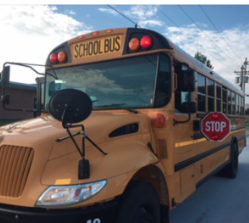
Ray Alvarez remembers the summer he couldn’t make ends meet driving children to school.
“I did qualify for food stamps,” the Olathe school bus driver said. “And yes, I accepted them. My income was so low.”
Alvarez has driven buses off and on for a decade. The financial crisis back then upended his livelihood as a mortgage broker, he says.
He and other drivers urged a panel of state senators recently to consider letting them apply for unemployment during the 70 or so days each year when schools are closed for the summer. The bill stalled in committee.
When Kansas school districts contract with private companies for janitors, food service workers, bus monitors and more, those employees can seek unemployment benefits if they can’t find work during the offseason.
Bus drivers can’t. That’s because of a decades-old carve-out in state law that state officials couldn’t explain. The Kansas Department of Labor checked on 10 nearby states and found eight let privately employed school bus drivers apply for unemployment. Two don’t.
Advocates of dropping the state’s carve-out argue it isn’t fair — nor helpful at a time when bus drivers are in short supply here and nationally, and jobless rates remain exceptionally low.
Mimi Horn has driven for the Lawrence school district for five years and says new employees — who earn less and are less likely to snag a coveted summer school route — struggle especially.
Even during the school year, many drivers can count on only a few hours of work each day, making it hard to cover rent, utilities or other bills.
“Two hours in the morning, two hours in the afternoon.” Drivers, Horn said, “have to not pay something in order to pay the other. Rob Peter to pay Paul.”
Could unemployment benefits help?
Starting pay for Lawrence bus drivers is $15 an hour. Pay at Horn’s level of experience is closer to $16. Raises top out after 13 years at $18.
‘I’ve seen some of them, in the summertimes they go to the food banks. They have to rely on food stamps.’
A Teamsters union representative said the company that Lawrence Public Schools contracts with, First Student, has repeatedly raised pay to entice more applicants.
The question is whether letting drivers apply for unemployment during the summer might help companies hire and retain them in Kansas. (The proposed change wouldn’t affect drivers employed directly by public school districts, who still wouldn’t qualify for reasons related to a federal law.)
Sen. Oletha Faust-Goudeau, a Wichita Democrat, urged her fellow senators to think again if they imagine retirees who don’t want a full-time gig will do the driving.
“More and more individuals who are bus drivers transporting our most precious cargo to and from schools — that is their main livelihood,” she said at a legislative hearing. “I’ve seen some of them, in the summertimes, they go to the food banks. They have to rely on food stamps.”
First Student, which lobbied for the bill, says turnover is higher among its drivers in Kansas than in states where its drivers can seek summertime unemployment benefits.
The company brought more than 20 drivers from Minnesota to pick up routes in Wichita that lacked drivers at the start of this school year in August. It raised starting pay to $16 in September.
That helped, a spokeswoman for the company said by email, but “we do believe the bill would further help.” Right now, drivers who quit when school ends often mention the need for summer work.
The unemployment change faces opposition from the Kansas Chamber, the state’s influential business lobby. Taxes paid by businesses fuel the state unemployment fund.
“How do we ensure parity and fairness with the rest of the business community?” Lobbyist Kristi Brown asked senators at a hearing. “When you’re asking a certain group that you anticipate will be a seasonal position to be able to withdraw from that fund, I think there needs to be an expectation for the company that employs them to be paying in appropriately.”
Brown warned against drawing from a once ailing fund that the state fought to make healthy.
Lawmakers sympathetic to the drivers’ plight argued the state would take that into account.
Companies contribute more or less into the state’s unemployment system based on factors such as the size of their payrolls and how often their employees end up on the benefits.
And when a person seeks benefits, the Kansas Department of Labor considers how they became unemployed, how long they worked, whether they’re actively looking for work or turning down jobs, and other details, before paying out.
What about paying drivers year-round?
A representative for First Student told senators the company spends $3,000 to train each new employee, and more just to find them. For every 10 applicants, only two get hired. Hurdles include earning a specialized license and passing a background check for criminal and traffic violations.
Some senators wondered whether the company should explore other options, such as keeping more drivers on its summer payroll to save on recruiting and training.
‘Have you done the cost analysis, if you just simply paid them for 72 days?’
“Have you done the cost analysis,” Topeka Republican Eric Rucker asked, “if you just simply paid them for 72 days?”
First Student says letting employees apply for unemployment would be cheaper, even given that the company would need to pay higher taxes into the state’s unemployment fund.
Moreover, First Student, said if it compensated drivers year-round, that would show up in the price it charges districts.
Celia Llopis-Jepsen is a reporter for the Kansas News Service, a collaboration of KCUR, Kansas Public Radio, KMUW and High Plains Public Radio covering health, education and politics. You can reach her on Twitter @Celia_LJ.
TOPEKA – The Kansas Water Authority (KWA) will meet Thursday, April 18 at the Abilene Civic Center, 201 NW 2nd Street in Abilene, Kansas. The meeting will begin at 10 a.m.
For additional meeting information visit the Kansas Water Office (KWO) website, www.kwo.ks.gov or call (785) 296-3185 or (888) 526-9283 (KAN-WATER).
If accommodations are needed for persons with disabilities, please notify the KWO at least five working days prior to the meeting.
As the state’s water office, KWO conducts water planning, policy coordination and water marketing as well as facilitates public input throughout the state.
The agency prepares the KANSAS WATER PLAN, a plan for water resources development, management and conservation.
CAWKER CITY – The Kansas Department of Wildlife, Parks and Tourism (KDWPT) has embarked on a three-year walleye study at Glen Elder Reservoir, and biologists want anglers to be aware of the project.
Data collected during the study will give anglers and biologists a better understanding of what makes walleye tick in this lake. Throughout the study, KDWPT district fisheries biologist Scott Waters will follow the movements of adult walleye using telemetry to evaluate mortality patterns, movement, home range, and habitat selection.
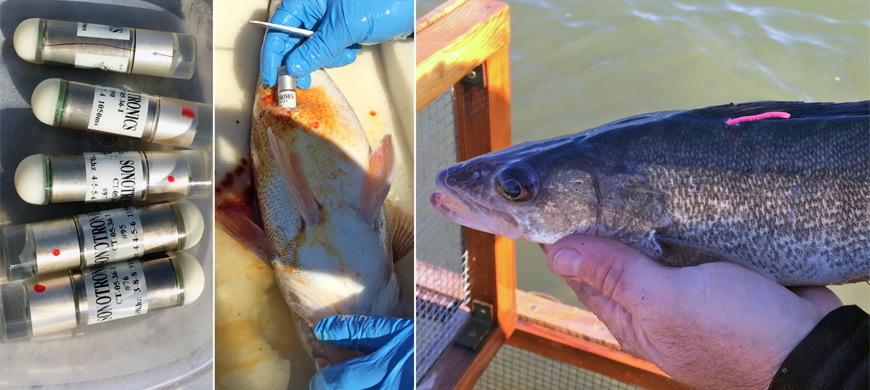
Ultrasonic transmitters were implanted in 27 walleye last fall and another 33 will receive transmitters in April. An equal number of males and females will be targeted, and not all study fish will be longer than the 18-inch minimum length limit.
The fish are collected using trap nets and gill nets and brought to shore. Each fish is placed in an anesthetic bath for several minutes before surgery. A 1.5-inch incision is made in the abdominal wall, and after the sex is determined, a 22-gram ultrasonic transmitter is placed in the abdominal cavity. Three sutures and glue are used to close the incision and an antibiotic is given to prevent infection. Once the fish regains equilibrium and resumes normal behavior, it is released.
Each fish is also tagged with a pink, 3-inch Floy tag in the dorsal fin to alert anglers who catch them. The tag contains the fish’s identification number, the KDWPT contact number, and a message about the $100 reward given for the return of the transmitter if the fish is kept. Not all tagged fish are of legal size, and short fish should be returned to the water with the tag intact. Anglers are encouraged to carefully measure the fish and report the length and location of catch to the park office. Anglers who harvest legal fish are encouraged to call or stop by the office to return the internal transmitter for the $100 reward. The angler may keep the fish and Floy tag.
Manual tracking will be conducted at least two times each month with more frequent tracking conducted during certain periods of the year. Once a fish is located, water depth and temperature, GPS location, and the identification number will be recorded. Angling mortality will be determined by tag returns, natural mortality will be determined when the transmitter shows no movement over time, and fish emigration will be detected using a stationary receiver. Daily movement patterns will also be studied by following a subsample of fish over a 24-hour period.
KDWPT biologists need anglers’ help with this study, which is unique for the state of Kansas and will provide answers about walleye life history that will help biologists better manage this important sport fish. Updates will be provided throughout the study to help anglers learn more about daily and seasonal walleye movement patterns and habitat preferences.
TOPEKA – Governor Laura Kelly signed 16 bills into law this week, bringing the total number of bills signed during the 2019 Legislative Session to 35, with one being vetoed. By law, the Kansas governor has 10 calendar days to sign bills into law, veto bills or allow bills to become law without her signature.
Senate Bill 60
Amends the statutes related to licensing of real estate brokers and the Kansas Real Estate Commission. This legislation will become effective on July 1, 2019.
Senate Bill 68
Prohibits a city from requiring a wireless services provider or wireless infrastructure provider to enter into a franchise ordinance for the provision of wireless services. This legislation will become effective upon its publication in the Kansas Statute Book.
Senate Bill 69
Substitute for SB 69 directs the Legislative Coordinating Council to authorize a study of retail rates of Kansas electric public utilities. The purpose of the study is to provide information that may assist future legislative and regulatory efforts in developing electric policy that includes regionally competitive rates and reliable electric service. The bill requires the first and second parts of the study to be made available on the Kansas Corporation Commission’s website by January 8, 2020, and July 1, 2020, respectively. This legislation will become effective upon its publication in the Kansas Register.
Senate Bill 71
Reauthorizes the Postsecondary Technical Education Authority by eliminating the sunset date of June 30, 2019. The bill also requires the Authority to make an annual report to the Legislature on the performance of its functions and duties. This legislation will become effective on July 1, 2019.
Senate Bill 77
Requires the Department for Children and Families to offer services to children with sexual behavior problems, along with the child’s family. Such services will be voluntary, unless DCF determines there will be a high risk of future sexual behavior problems by the child if the child or family refuses services. This legislation will become effective upon its publication in the Kansas Statute Book.
Senate Bill 82
Amends provisions of the State Banking Code relating to certificate of existence, voting rights for conversion to a state charter, and the method of delivery for certain notices. This legislation will become effective on July 1, 2019.
Senate Bill 97
Authorizes registration of certain rental vehicles in fleets and issuance of permanent license plates to reflect that registration. The bill requires such registration to be submitted electronically. This legislation will become effective on January 1, 2020 and upon its publication in the Kansas Statute Book.
Senate Bill 105
Authorizes a city to determine the start date of a regular term of office for a city officer by resolution of the city. In law regarding city elections, the bill requires the start date be on or after December 1 following certification of the election and no later than the second Monday in January following certification of the election. If the city does not establish an alternative date, the bill specifies such term will begin on the second Monday in January.
This legislation was signed in an official bill signing ceremony on Monday, April 8, and will become effective upon its publication in the Kansas Statute Book.
Senate Bill 128
Amends laws related to the minimum number of safety drills required to be conducted in schools each school year. The bill requires the State Fire Marshal to adopt rules and regulations requiring administrators of public and private schools and educational institutions, except community colleges, colleges, and universities, to conduct at least four fire drills, two tornado drills, and three crisis drills each school year. This legislation will become effective on July 1, 2019.
Senate Bill 199
Establishes the AO-K to Work Program, allowing certain adults to earn high school equivalency credentials by participating in career pathway oriented post-secondary classes. The provisions of the Program apply to all adult education programs in Kansas. This legislation will become effective on July 1, 2019.
House Bill 2101
Makes several amendments and technical updates to the laws governing credit unions and related credit union procedures and designates Article 22 of Chapter 17, Kansas Statutes Annotated, as the State Credit Union Code. This legislation will become effective on July 1, 2019.
House Bill 2125
Requires the holder of a driver’s license who is operating a motor vehicle to promptly deliver, rather than display, the driver’s license upon demand of any officer of a court of competent jurisdiction, any peace officer, or any examiner or officer of the Division of Vehicles, Department of Revenue. The requirement applies when the driver’s license is in the licensee’s immediate possession at the time of the demand. This legislation will become effective on July 1, 2019.
House Bill 2178
Amends the law concerning the duty of an operator to mark the tolerance zone around an underground facility within the Kansas Underground Utility Damage Prevention Act. This legislation will become effective upon its publication in the Kansas Register.
House Bill 2188
Makes the City of Atchison responsible for the maintenance and repair of all watershed lakes, dams, and other projects of the White Clay Watershed District No. 26, on and after January 1, 2020. Additionally, the bill dissolves the District on January 1, 2020, and makes the City the District’s successor.
This legislation was signed in an official bill signing ceremony on Tuesday, April 9 and will become effective upon its publication in the Kansas Statute Book.
House Bill 2191
Amends the law concerning the execution of search warrants. Specifically, the bill states that warrants issued after July 1, 2019, for electronically stored information, electronic devices, or media capable of storing electronically stored information located in Kansas will authorize the transfer of such information, devices, or media for examination and review anywhere within the state or outside the state at any time after the seizure, unless otherwise specified by the warrant. This legislation will become effective on July 1, 2019.
House Bill 2215
Authorizes the Kansas State Fair Board to establish a 501(c)(3) nonprofit corporation. The purpose of the nonprofit corporation is to receive gifts, donations, grants, and other moneys and engage in fundraising projects that benefit the Kansas State Fair. The board of directors of the nonprofit corporation will consist of the members of the executive committee of the Fair Board, the General Manager of the Kansas State Fair, and other directors designated by the Fair Board. This legislation will become effective upon its publication in the Kansas Statute Book.
Ruslan Ivanov loved being a public defender. What he didn’t love was the way his work constantly followed him — at home, with friends and family, even on vacation.
On one trip to Colorado, he stood in front of a breathtaking mountain view. And started thinking about a case.
“I thought about, ‘I need to do something. Is there something that I forgot? Is there something that I’m missing?’” he said. “I still thought about the individuals that I encountered and their life situations … too much of that is maybe detrimental in one’s job as an attorney, but I still thought about it.”
From 2015 to 2018, Ivanov was an attorney for the Kansas State Board of Indigents’ Defense Services, the state agency that provides criminal defense to people who can’t afford their own lawyers. He worked in Wichita and Topeka, mostly handling drug cases, assaults, thefts and weapons possession.
The job was an invaluable legal education, Ivanov said, but not one he could keep doing forever. He typically juggled between 60 and 90 cases at once and sometimes worked seven days a week. Often, he had to track down and interview witnesses himself, a task typically performed by an investigator — but his office only had one investigator between two dozen attorneys.
“The caseload is large,” he said. “If you’re preparing for particular hearings, you may be thinking about several of them, all at the same time.”
Ivanov ended up quitting in early 2018, along with 22 of his colleagues who left the agency that fiscal year.
That’s a resignation rate of 24 percent, the highest the Board of Indigents’ Defense Services has seen since its creation in 1982, said the agency’s executive director, Pat Scalia. She declined multiple requests for an interview, but she told state lawmakers in February that several public defender offices had to stop taking new cases because they were so overwhelmed. To hire and retain staff, she argued, the agency desperately needs more money.
“The agency is in crisis,” she said. “I’m asking that the salaries of public defenders be adjusted to match the pay scale that is now in place by our sister state of Missouri.”
Low salaries
Scalia asked lawmakers for an additional $498,547 in next year’s budget to fund public defender salaries, saying the money would “get our current staff close” to Missouri salaries.
Currently, Kansas public defenders with 10 or fewer years of experience make a maximum of $59,850 a year. When they reach 20 years of experience, they make $68,665. Chief defenders make $78,750.
Salaries for defenders in Missouri start at $46,992 but increase to more than $70,000 after a few years of experience.
Private attorneys, meanwhile, can charge hundreds of dollars an hour.
Blair Loving, a former public defender now in private practice, said he didn’t feel underpaid while working at the Western Regional Public Defender Office in Garden City. But his new job allows him more control over how much money he makes and when. When he was a public defender at the state’s office in Garden City, he didn’t make any overtime, no matter how long he worked.
“Regardless of how quickly and how successfully I completed the cases, that’s what I was going to get,” he said. “There’s no incentive for public defenders other than their personal conscience and their affinity for their clients.”
Blair Loving quit his job as a public defender in Garden City in November 2017. His office still hasn’t found someone to replace him, instead relying on a contract with a private attorney. (Photo courtesy Blair Loving)
Yet Loving felt under-compensated in other ways, especially compared to prosecutors, who are employed by city and county governments. His state health insurance was so expensive and covered his family of six so poorly that they had to switch to the insurance his wife received working for Garden City.
“The biggest detriment to staying long term was knowing that the benefits were not going to really be improving at all,” he said. “It would be a no-brainer to want to switch to a county or to a city position.”
Large caseloads
At one point, Loving managed 68 cases at once. He remembers a colleague juggling more than 80.
“Continually performing at 100 percent with a 200 percent workload,” he said, “it’s eventually gonna catch up to you.”
There were no measures of performance, Loving said. In an email, the executive director of the agency said she doesn’t keep track of how many cases end in acquittals, plea deals, convictions, dismissals or other types of outcomes.
Nor are there safety checks, Loving said, for possibly missing important information due to distraction or sleep deprivation.
“There is no Department of Transportation that’s going to come down and go, ‘Well, wait a minute, you made this attorney work for 13 hours this day, and so that’s going to decrease his performance level and that’s not safe for his clients,” Loving said. “The court says, ‘tough.’”
To balance their workloads and long hours, public defenders sometimes ask judges for more time between court proceedings, said Rosalie Joy, a vice president of the National Legal Aid and Defender Association.
“The defendants themselves are very much impacted,” she said, “by the fact that there aren’t enough to attorneys to go around.”
It’s common for public defender agencies to rely on contracts with private attorneys to fill in the gaps and to take on cases that might pose conflicts of interest, Joy said. But those attorneys may not specialize in criminal defense, so they may not have the same skills or resources as a full-time public defender.
“There is a risk and a great concern,” she said, “that they might not either be equipped with the right competencies, or that the system doesn’t give them that opportunity.”
According to an annual report to lawmakers, the Kansas Board of Indigents’ Defense Services assigns cases to private counsel when public defenders have a conflict of interest, or when an area of the state is so sparsely populated “it is not cost effective to open a public defender office.” A map shows that only 25 of the state’s 105 counties had full-time public defenders available last year.
Out of more than 31,000 cases in fiscal year 2018, the agency handed almost 15,000 to private attorneys who were paid $70 an hour. The average cost per case was $865. For full-time, salaried public defenders, the cost per case was $609.
Scalia told lawmakers that so far this fiscal year, 400 cases that normally would have gone to public defenders were instead assigned to private counsel because of heavy workloads, costing the state an extra $130,000.
Open jobs
In an email, Scalia said the state is trying to recruit more defenders by posting the jobs on the state website and on free online job boards. She said her agency also recruits through the state’s law schools. Most vacancies are filled within a month.
Offices in Salina and Junction City, however, have still been unable to fill vacancies for many months. The public defender office in Olathe is also struggling, she said. So far this year, 16 out of 93 defenders have resigned.
There isn’t much reason for defenders to stay after the early stages of their career, said Loving, who quit his job at the Western Regional Public Defender office in November 2017.
“I knew that there was really no opportunity for advancement other than punching a clock for a certain number of years,” he said. “I wanted to be able to see the fruit of my labors. And with public defense, you just don’t.”
More than a year after he left, Loving’s old office still hasn’t hired someone new. Instead, it relies on a contract with a private attorney.
“That kind of money is perfect for a brand new attorney with no wife and no kids and no mortgage,” he said. “They’ve got to fix their budget so that it incentivizes people with experience, not just brand-new law students.”
Nomin Ujiyediin is a reporter for the Kansas News Service, a collaboration of KCUR, Kansas Public Radio, KMUW and High Plains Public Radio covering health, education and politics. You can send her an email at nomin at kcur dot org, or reach her on Twitter @NominUJ.
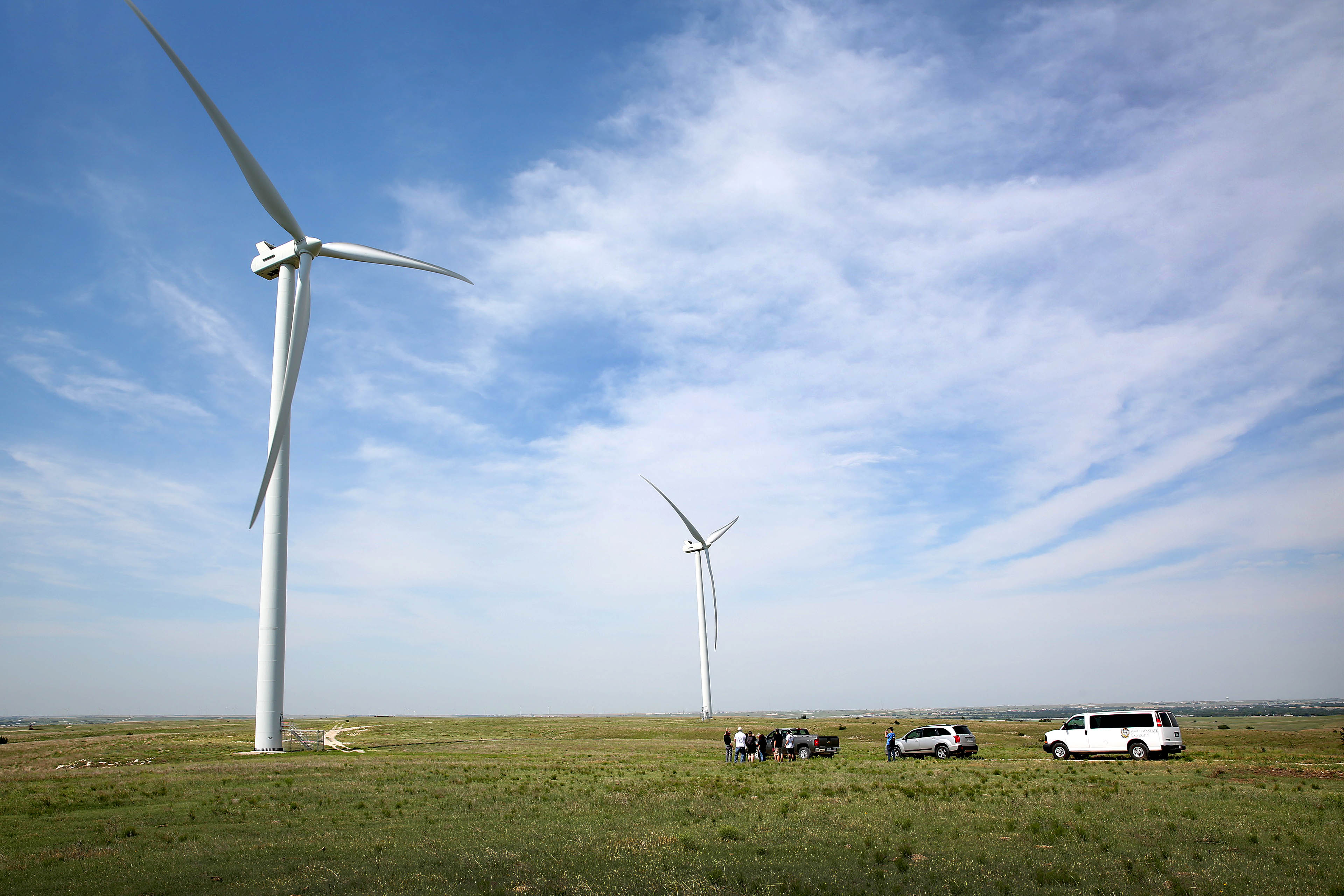
TOPEKA – In an effort to raise awareness of clean energy activity in Kansas, Governor Laura Kelly is highlighting the American Wind Energy Association’s 2018 Annual Market Report.
The report, released Tuesday, shows that Kansas is now the number one producer for wind energy production as a share of total electricity generation. Kansas surpassed Iowa to claim the top spot, with 36.4% of the state’s total electricity produced by wind power in 2018.
“The State of Kansas must continue to prioritize renewable energy and the many benefits that come with it. I’m pleased to see that Kansas has continued to increase its wind energy production,” Kelly said. “The data shows we’re moving in the right direction.”
Below are Kansas rankings in other wind-based areas based on the 2018 data:
• 4th in Wind Generation (19,295 GWh)
• 5th in Installed Wind Capacity (5,653 MW)
• 5th in Cumulative Wind Investment ($10.5 billion)
• 6th in Wind Capacity Additions (543 MW)
Estimated annual state and local tax Payments by Wind Projects in Kansas for 2018 totaled nearly $28 million, while estimated annual lease payments to landowners by wind projects totaled between $15-$20 million.
“Renewable energy is a major industry in Kansas, and wind energy, alone, accounts for a huge portion of the Kansas economy,” David Toland, Secretary of the Kansas Department of Commerce, said. “We look forward to seeing the wind energy industry continue to grow in our state. There’s no shortage of wind in Kansas, and we’re happy to put it to good use.”
Kansas is home to a major wind turbine nacelle production plant in Hutchinson, with only two others currently operating in the U.S.
Several national companies purchase Kansas wind energy (from existing wind farms and new projects under construction), including Google, Yahoo!, Microsoft, Target, T-Mobile, Brown-Forman, Kohler, Iron Mountain and Royal Caribbean Cruise Lines.
MANHATTAN — The deadline to register for the 2019 session of the American Legion Boys State of Kansas Leadership Academy is just around the corner — Monday, April 15. However, if those interested in the program miss the deadline, the program will continue to take registrations through Monday, May 26, as space allows. The event, which will be in its 82nd year, will be held Sunday, June 2, through Friday, June 7, at Kansas State University in Manhattan.
The ALBSKLA is for young men who will enter their senior year of high school in the fall of 2019. It provides a relevant, interactive, problem-solving experience in leadership and teamwork that develops self-identity, promotes mutual respect and instills civic responsibility. Boys State is a “learning by doing” political exercise that simulates elections, political parties and government at the state, county and local levels, providing opportunities to lead under pressure, showcasing character and working effectively within a team. It’s also an opportunity to gain pride and respect for government and the price paid by members of the military to preserve democracy.
The cost to attend the Boys State of Kansas program is $325; however, in most instances, sponsors pay for the majority of the fees, with the delegate or his family paying a $50 applicant fee. Those wishing to attend the program should visit https://kansasboysstate.com/ to register.
Potential sponsors, such as American Legion posts, civic organizations, businesses, clubs and interested individuals, or those with questions, should contact Troy Fowler, ALBSKLA director of operations, at [email protected].
The American Legion Boys State of Kansas Leadership Academy is an interactive simulation that teaches high school seniors-to-be the value of democracy and civic duty. Participants form mock governments and campaign for positions at the city, county and state levels. After the elections, participants find out firsthand the difficult decisions made daily by those in government through a series of challenging simulations. Delegates, nominated to attend by their high school counselors and other influential people in their lives, are sponsored by American Legion posts and various civic organizations from across the state. All delegates demonstrate outstanding leadership qualities in student government, athletics and/or other activities.
The Boys State program was founded by Legionnaires Hayes Kennedy and Harold Card in Illinois in 1935, and was first held in Kansas two years later in Wichita. The Kansas program moved to the University of Kansas in Lawrence in 1963 and remained there until 1991. The following year, it moved to its current location at Kansas State University in Manhattan. For more information about the American Legion Boys State of Kansas Leadership Academy, visit https://kansasboysstate.com/ or https://ksbstate.org/.
TOPEKA – Brad Loveless was confirmed by the Senate Friday as Secretary of the Kansas Department of Wildlife, Parks and Tourism (KDWPT). Governor Laura Kelly appointed Loveless in January 2019.
“Secretary Loveless is an experienced, respected leader of conservation and environmental programs in Kansas,” said Gov. Kelly. “I look forward to working with him to foster responsible stewardship of our natural resources and promote the state’s fantastic travel destinations and outdoor recreation opportunities.”
“I am grateful to Governor Kelly for the chance to lead an organization that I greatly respect and have worked with for many years,” said Secretary Loveless. “I have had the pleasure of getting to know many previous secretaries as well as the biologists, land managers and administrative staff. They’re great people and I look forward to working with them to serve this wonderful state.”
Loveless joined the department after a 34-year career with Westar Energy where he was most recently the senior director of environmental conservation and sustainability. Prior to that position, he was director of biology and conservation programs and earlier held environmental management positions at Wolf Creek Nuclear Operating Corporation. He also served as a leader of Westar’s Green Team, an active volunteer group of employees and retirees that helps with habitat improvement, environmental access and education, and enhancement of sensitive species.
A fisheries biologist by training, he is an avid angler, hunter and beekeeper.
PRATT – During the public hearing portion of its March 28 meeting, the Kansas Wildlife, Parks and Tourism (KDWPT) Commission voted on several items, to include greater flexibility in hunting equipment and approving 2019-2020 big game season dates. However, the first order of business during the public hearing session may have outdoor enthusiasts excited for an entirely different reason. Commissioners approved staff recommendations to eliminate a $10 fee previously associated with obtaining a duplicate license or permit. Beginning in early May, KDWPT customers who require a replacement license or permit will be able to reprint any license or permit purchased online for free or simply pay a $2.50 fee through a license vendor.
Other items voted on and approved by the Commission include:
Allowing hunters to use lures, decoys (except live decoys) and calls (to include electronic calls) when hunting rabbits, hares and squirrels
Designating tumble-upon-impact bullets as legal equipment for hunting big game
Moving the resident either-species deer and elk permit application deadlines to the second Friday in June, coinciding with the firearm antelope application deadline
Hunting season dates approved at the March 28 meeting are as follows:
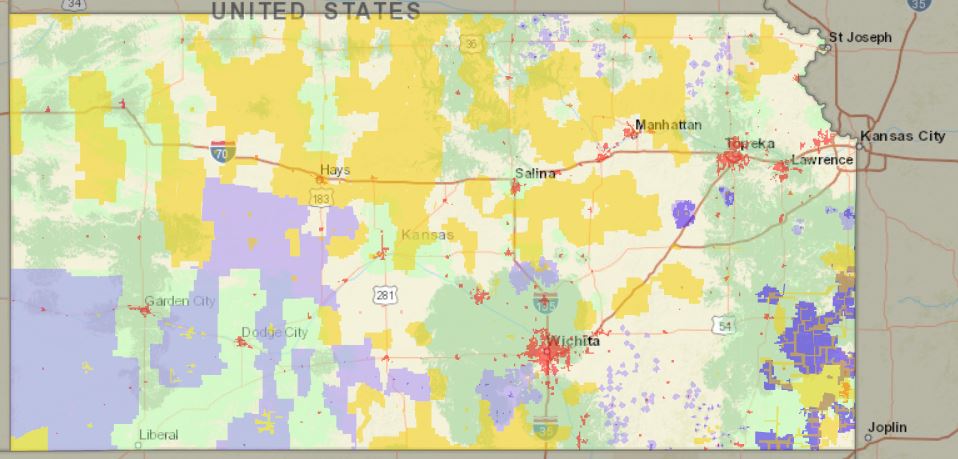
TOPEKA – Governor Laura Kelly and Lt. Governor Lynn Rogers announced today the completion of the first iteration of a broadband availability map for the State of Kansas. Rogers announced the map at the Rural Opportunities Conference in Dodge City yesterday. The map was made possible through a grant from the Information Network of Kansas (“INK”) Board of Directors.
“High speed broadband access is no longer a luxury, and unfortunately, there are still many areas throughout Kansas without adequate access to quality, affordable advanced broadband services,” Governor Kelly said. “Gaining public feedback and input on this map is an important step that my administration will be taking to identify and close broadband coverage gaps across the state.”
The map indicates where there are areas served and unserved by many of our participating broadband service providers. The map can be accessed at: https://connectednation.org/kansas/interactivemap.
“Improving broadband access is key to growing rural Kansas and ensuring businesses and families can thrive,” said Lt. Governor Rogers. “We must ensure that every Kansan, no matter where they live, has access to the critical infrastructure needed to connect and participate in the 21st century economy.”
Broadband coverage was reported on a voluntary basis by the state’s broadband service providers.
Starting this month, Connected Nation will deploy network engineers across the state to validate the data reflected on the map, guided by feedback received from the public. Connected Nation will then update the map based on its findings in July. The public is encouraged to submit feedback via a form that can be accessed here: https://connectednation.org/kansas/feedback.
“I hope the public will take time to provide feedback during this mapping process as we work to develop more effective approaches to closing the digital divide, which continues to persist in our rural communities,” Governor Kelly continued. “Our goal is to leverage the knowledge developed so that we are able to target resources more effectively and make Kansas one of the most connected states in the nation.”
Feedback may be submitted via computer, tablet, or mobile phone. Persons submitting feedback are encouraged to provide a short description of the issue and enter the address where the issue can be found. A screenshot detailing the area in question will automatically be submitted if an address is provided under Section 2, which will aid the network engineers and mapping team in pinpointing the problem.
WEEKLY OVERVIEW
It was a busy three day work week in the Senate as we worked a few dozen bills and prepared for the final week of regular session next week. At this point in the session, Conference Committee work has begun to gear up and we anticipate votes on Conference Committee reports as they are prepared and sent out for votes. A Conference Committee is a small, bipartisan and bicameral committee that works to smooth out the differences between the House’s and Senate’s version of a similar bill. Once the Conference Committee comes to a compromise, the committee’s version of the bill will be sent to both the House and the Senate for a final vote, before advancing the bill to the Governor’s desk. Governor Kelly has now signed 3 bills into law this session and 3 are on her desk awaiting action. By law, the Kansas governor has 10 calendar days to sign the bill into law, veto the bill or allow the bill to become law without their signature.
FLOOR ACTION
DISSOLVING THE WHITE CLAY WATERSHED DISTRICT NO. 26: House Bill 2188 would make the City of Atchison responsible for the maintenance and repair of all watershed lakes, dams, and other projects of the White Clay Watershed District 26.
TRANSFER OF TUBERCULOSIS CONTROL PROGRAM DUTIES: House Bill 2201 would transfer the powers, duties, and functions of the Tuberculosis Control Program from the Kansas Department for Aging and Disability Services (KDADS) to the Kansas Department of Health and Environment (KDHE).
DELAYING KPERS MEMBERSHIP ELIGIBILITY: Senate Bill 210 would delay the Kansas Public Employees Retirement System (KPERS) membership eligibility by two years for employees employed in direct support positions in Community Developmental Disability Organizations. An employee would become a member of KPERS on the first day of the payroll period coinciding with or following completion of a two-year training period.
AMENDING REQUIREMENTS FOR KTA AND THE SECRETARY OF TRANSPORTATION: Senate Substitute for House Bill 2007 would amend requirements for tolled projects of the Kansas Turnpike Authority (KTA) and the Secretary of Transportation.
AMENDING THE KANSAS 911 ACT: House Bill 2084 would revise the Kansas 911 Act and repeal three outdated statutes not included in the Act.
REQUIREMENTS FOR REINSTATEMENT OF A RURAL WATER DISTRICT: House Bill 2085 would clarify if a rural water district (RWD) has available capacity, the board of a RWD must adhere to the benefit unit reinstatement requirements in current law. The bill also increases the maximum repayment period from 20 years to 40 years for loans provided by the Secretary of Health and Environment to municipalities for the payment of all or part of a project associated with a public water supply system.
UPDATING STATE CREDIT UNION STATUTES: House Bill 2101 would make several amendments and technical updates to the laws governing credit unions and related credit union procedures and designate Article 22 of Chapter 17.
AMENDING THE REVISED KANSAS CODE FOR THE CARE OF CHILDREN: House Bill 2103 would amend the revised Kansas Code for the Care of Children and enact statutory provisions to enable the state to meet the requirements of the federal Family First Prevention Services Act.
AMENDMENTS RELATING TO DRIVING UNDER THE INFLUENCE: House Bill 2104 would amend the statute governing tests related to driving under the influence (DUI), effective July 1, 2019, to amend the oral and written notice a law enforcement officer must provide when requesting a person take such a test. Specifically, the bill would clarify in such notice that refusal to submit to and complete the test or tests will result in suspension of the person’s driving privileges for a period of one year and test failure will result in suspension of the person’s driving privileges for a period of either 30 days or one year. The bill also would amend the statute governing preliminary screening tests related to DUI to remove provisions stating a person operating or attempting to operate a vehicle in Kansas is deemed to have given consent to such tests, setting forth the required notice when a person is requested to take such test, and stating refusal to take and complete such test is a traffic infraction.
ACCOUNTING TREATMENT OF CERTAIN DERIVATIVE INSTRUMENTS OF FIXED INDEX ANNUITIES: House Bill 2177 would create law permitting life insurance companies that offer fixed index annuities (FIAs) to utilize an alternative methodology accounting for FIA hedging and associated reserves.
REVISING THE WORKING AFTER RETIREMENT PROVISIONS OF KPERS: House Bill 2203 would revise the working-after retirement provisions of the Kansas Public Employees Retirement System (KPERS) by adding staff employed by the Kansas academies of the U.S. Department of Defense STARBASE Program to the list of exemptions.
INCREASING REGISTRATION FEES FOR ELECTRIC & HYBRID VEHICLES: Senate Substitute for House Bill 2214 would add vehicle registration fees of $100 for all-electric vehicles and $50 for motor vehicles that are conventional electric hybrid and plug-in electric hybrid vehicles. The new fees would be effective on and after January 1, 2020.
AUTHORIZING THE KANSAS STATE FAIR BOARD TO CREATE A NONPROFIT CORPORATION: House Bill 2215 would authorize the Kansas State Fair Board to establish a 501(c)(3) nonprofit corporation.
CHANGING THE REQUIREMENTS TO BEGIN PRODUCTION ON DISTINCTIVE LICENSE PLATES: House Bill 2246 would amend requirements for distinctive license plate development and for continuing distinctive license plates and would add several new distinctive license plates to be issued on and after January 1, 2020. The bill would add military branch license plates and three license plates for which royalty fees would be paid: proud educator license plates, Alpha Kappa Alpha license plates, and Knights of Columbus license plates.
REQUIRING A DULY ORDAINED MINISTER OF RELIGION TO REPORT CHILD ABUSE: Senate Bill 218 would amend law related to mandated reports of child abuse. The bill would add duly ordained ministers of religion to the list of persons required to report suspected child abuse. The bill would specifically state ordained ministers would not be required to violate penitential communication privilege to make such a report. Continuing law requires listed persons to make a report when such person has reason to suspect that a child has been harmed as a result of physical, mental, emotional, or sexual abuse, or neglect. Willful and knowing failure to make a required report is a Class B misdemeanor.
AMENDING LICENSE AND RENEWAL APPLICATION FEES FOR INSURANCE THIRD PARTY ADMINISTRATORS: Senate Bill 228 would amend license and renewal application fees and establish an annual report fee in the Third Party Administrators Act.
AMENDING PROVISIONS RELATING TO ADULT CARE HOME LICENSURE: Senate Bill 232 would amend the Adult Care Home Licensure Act regarding the application for licensure, financial solvency, and receivership of adult care homes. The bill would require the application for a license to operate an adult care home include evidence of access to sufficient working capital necessary to operate an adult care home and include a list of current or previously licensed facilities in Kansas or outside the state in which an applicant has or previously had any ownership interest in the operations or the real property of the facility.
CONTINUING THE 20 MILL STATEWIDE LEVY FOR SCHOOLS: Senate Bill 235 would continue the 20 mill statewide levy for schools and exempt certain portions of property used for residential purposes from such levy.
AMENDING THE DEFINITION OF SERVICE-CONNECTED IN THE KANSAS POLICE AND FIREMEN’S RETIREMENT SYSTEM: House Bill 2031 would revise the definition for “service-connected,” as that term is used to determine death and disability benefits in the Kansas Police and Firemen’s Retirement System. The bill would add bloodborne pathogens.
PROVIDING SALES TAX AUTHORITY TO CERTAIN COUNTIES: House Bill 2033 would retroactively ratify the results of a 2017 election in Finney County seeking to increase that county’s tax by 0.3 percent and would clarify the county has such rate authority.
REVOKING SPOUSAL INHERITANCE RIGHTS UPON DIVORCE: House Bill 2038 would create law within the Kansas Probate Code providing for the automatic revocation of certain inheritance rights of a former spouse or former spouse’s relatives upon divorce.
DESIGNATING A PORTION OF US HIGHWAY 75 AS THE JOHN ARMSTRONG MEMORIAL HIGHWAY: House Bill 2070 would designate the portion of US-75 from the junction of US-75 and NW 46th Street in Shawnee County to the junction of US-75 and I-70 as the John Armstrong Memorial Highway and would remove this portion of US-75 from designation as the Purple Heart/Combat Wounded Veterans Highway. The bill also would designate bridge No. 018-011 on US77 in Cowley County as the SGT Kevin A. Gilbertson Memorial Bridge.
ALLOWING CERTAIN LIGHT SCREENING MATERIAL ON MOTOR VEHICLE WINDOWS: House Bill 2087 would amend the Uniform Act Regulating Traffic on Highways regarding sun screening devices on motor vehicle windows. The bill would authorize the installation of a clear, colorless, and transparent material on a vehicle’s windshields, side wings, side windows, or rear windows if certain conditions are met.
ALLOWING KPERS BOARD MEMBERS TO DEVELOP CERTAIN POLICIES: House Bill 2119 would authorize the Kansas Public Employees Retirement System (KPERS) Board of Trustees to develop policies and procedures to procure goods and services based upon sound business practices and in accordance to the Professional Services Sunshine Act.
REQUIRING OPERATORS OF A MOTOR VEHICLE TO PROMPTLY DELIVER DRIVER’S LICENSE UPON DEMAND BY OFFICER: House Bill 2125 would require the holder of a driver’s license who is operating a motor vehicle to promptly deliver, rather than display, the driver’s license upon demand of any officer of a court of competent jurisdiction, any peace officer, or any examiner or officer of the Division of Vehicles of the Department of Revenue.
ALLOWING THE KBI TO PARTICIPATE IN THE KANSAS DROP ACT: House Bill 2140 would allow agents of the Kansas Bureau of Investigation (KBI) to participate in the Kansas Deferred Retirement Option Program (DROP) of the Kansas Police and Firemen’s Retirement System, which is currently authorized for troopers, examiners, and officers of the Kansas Highway Patrol (KHP). The sunset date for the program would be extended from January 1, 2020, to January 1, 2025.
REQUIRING COMMUNITY COLLEGES TO PUBLISH CERTAIN TAXPAYER AND STUDENT TRANSPARENCY DATA: House Bill 2144 would amend law related to community college student fees and enact the Community College Taxpayer Transparency Act. The bill would include findings and conclusions generally noting the structure and financing of community colleges; the duty of transparency owed by community colleges to property taxpayers and students of community colleges; and reaffirming the students and taxpayers of community colleges as the priority in financial decisions, reporting processes, and transparency measures of community colleges.
PROVIDING SALES TAX AUTHORITY FOR WABAUNSEE COUNTY: House Bill 2160 would make a number of changes to local sales tax authorization statutes and create a sales tax exemption for certain coins and bullion.
AUTHORIZING THE STATE BOARD OF REGENTS TO SELL TWO PIECES OF PROPERTY: House Bill 2168 would authorize the Kansas Board of Regents to sell two pieces of property on behalf of Kansas State University and one on behalf of the University of Kansas, with the proceeds from the funds deposited to the restricted use account of the respective universities to be used for deferred maintenance.
ALLOWING FOR WIDER VARIETY OF AGRICULTURAL PRODUCTS IN THE PRODUCTION OF WINE: House Bill 2223 would revise the Liquor Control Act to allow for producers of certain fermentative products to sell wine made at a farm winery. The farm wine would be required to meet the minimum Kansas content requirements. A vineyard permit would be renamed a producer license, which would be available to producers of grapes, with not less than 100 vines; ripe fruit, or berries, not less than 1,000 pounds; or honey, not less than 100 pounds. If the producer licensee also has a cereal malt beverage license, the producer would be allowed to sell beer not exceeding 6.0 percent by volume, as authorized by the Kansas Cereal Malt Beverage Act. The bill would allow a producer licensee to prohibit a person from possessing alcoholic liquor or cereal malt beverage not purchased on the licensee’s premises.
INCREASING PERMIT FEES FOR OVERSIZED VEHICLES: Senate Substitute for House Bill 2225 would increase fees for certain permits authorizing oversize or overweight vehicles to operate on designated routes and would require registration of escort vehicle companies.
ALLOWING ATVS TO CROSS FEDERAL OR STATE HIGHWAYS: House Bill 2248 would authorize operation of all-terrain vehicles (ATVs) and work-site utility vehicles to cross a federal highway or a state highway. The bill also would authorize a person engaged in agricultural purposes to operate an ATV or work-site utility vehicle on a federal highway or state highway outside the corporate limits of any city under certain conditions.
ENACTING THE KANSAS TAXPAYER PROTECTION ACT: Senate Bill 104 would enact the Kansas Taxpayer Protection Act, enact the Golden Years Homestead Property Tax Freeze Act, allow disabled veteran renters to claim the property tax refunds under the current Homestead Property Tax Refund Act, and allow individual income taxpayers to claim the expense deduction.
INCREASING PENALTIES FOR THE ABUSE OF A CHILD AND INVOLUNTARY MANSLAUGHTER: Senate Bill 108 would amend the penalties for the crimes of involuntary manslaughter and abuse of a child and a mitigating factor for sentencing when a victim is an aggressor or participant in the criminal conduct associated with a crime of conviction.
SCRAP METAL THEFT REDUCTION ACT: Substitute for Senate Bill 219 modifies the Scrap Metal Theft Reduction Act (Act). The bill would establish the Scrap Metal Data Repository Fund (Fund) in the State Treasury, to be administered by the Director of the Kansas Bureau of Investigation (KBI). Moneys credited to the Fund would be expended for the administration of the duties, functions, and operating expenses incurred and will make the KBI responsible for establishing and maintaining the database. The review deadline and sunset date for a Kansas Open Records Act exception for the information maintained in the database is extended until July 1, 2024. An outdated database report requirement is replaced with a requirement that the Attorney General submit annual reports on or before February 1, beginning in 2020, regarding the implementation, administration, and enforcement of the Act. The report is then submitted to the President of the Senate, the Speaker of the House of Representatives, and the Senate and House Committees on Judiciary. Requirements in a statute related to information a seller of regulated scrap metal must provide and the dealer’s register of such information requires the seller’s telephone number be provided and included in the register; remove a requirement that a legible fingerprint be obtained from a seller if the seller uses an official governmental document for a country other than the United States to meet certain requirements; allow a copy of a card or document already in a dealer’s register to suffice for subsequent transactions; remove civil penalties for failure to comply with these requirements; and remove a provision making these requirements unenforceable from June 1, 2017,to January 1, 2020. Removed is the criminal history records check and fingerprinting requirements for persons filing for registration. Effective January 1, 2020, the registration and registration renewal fees at “not more than $500.”
RECOGNITION OF TRIBAL COURT JUDGMENTS: House bill 2039 creates law that district courts shall extend full faith and credit to orders, judgments, and other judicial acts of tribal courts of any federally recognized Indian tribe, pursuant to Kansas Supreme Court rules.
ESTABLISHING A COMMERCIAL INDUSTRIAL HEMP PROGRAM: Senate Substitute for House Bill 2167 would require the Kansas Department of Agriculture (KDA), in consultation with the Governor and Attorney General, to submit a plan to the U.S. Department of Agriculture (USDA) regarding how the KDA will monitor and regulate the commercial production of industrial hemp within the state, in accordance with federal law. The bill would establish the Commercial Industrial Hemp Program and create the Industrial Hemp Regulatory Commission, and the Hemp Processor License.
KANSAS UNDERGROUND UTILITY DAMAGE PREVENTION ACT: House Bill 2178 modifies law concerning the duty of an operator to mark the tolerance zone around an underground facility within the Kansas Underground Utility Damage Prevention Act (KUUDPA). The definition of “operator” changes to specify an electric public utility would not be considered an operator of any portion of an underground facility that is on another person’s side of the point where ownership of the facility changes from the electric public utility to another person. On or after July 1, 2019, the notification center must notify any person or excavator requesting identification of the location of underground facilities that utilities are only required to identify the location of utility-owned facilities and not the location of privately-owned facilities.
EXECUTION OF A SEARCH WARRANT FOR ELECTRONICALLY STORED INFORMATION: House Bill 2191 adjust law concerning the execution of search warrants. Specifically stated is warrants issued after July 1, 2019, for electronically stored information, electronic devices, or media capable of storing electronically stored information located in Kansas would authorize the transfer of such information, devices, or media for examination and review anywhere within the state or outside the state at any time after the seizure unless otherwise specified by the warrant.
WAVIER OR REDUCING DRIVER’S LICENSE REINSTATEMENT FEES: House Bill 2211 alters the law concerning driver’s license reinstatement fees. Specifically, it would allow a person who is assessed a driver’s license reinstatement fee and surcharge as provided by continuing law to petition the court to waive payment of such fee and surcharge.
CREATING A CRIME VICTIMS COMPENSATION DIVISION: House Bill 2290 would create and amend law concerning the Office of the Attorney General and amend law concerning payment of claims and defense expenses pursuant to the Kansas Tort Claims Act.
PROVIDING FOR CONFIDENTIAL COMMUNICATIONS OF KANSAS NATIONAL GUARD MEMBERS IN PEER SUPPORT COUNSELING SESSIONS: House Bill 2365 revises law concerning the peer support counseling session communication privilege within the Code of Civil Procedure by adding National Guard members to the statute.
CONFIRMATIONS
Mark Burghart, Secretary of the Department of Revenue and Julie Lorenz, Secretary of Transportation (KDOT) were confirmed by the Senate by a vote of 38-1.
Visitors from Senate District #36
Two senior classes from home visited Topeka and the Capitol this week sponsored by Farm Bureau – Rock Hill School from Jewell County and Russell School from Russell County. Seniors from Northern Valley were recognized in the Senate along with their teacher Jason Dibble. Each class was able to tour the building and climb the 296 steps to the top of the dome.
Thank You for Engaging
Thank you for your calls, emails, and letters regarding your thoughts and concerns about happenings in Kansas. As always, I’ll keep you updated on the activities of the Senate while we continue through the last week before the break this spring. Visit the Legislative website at www.kslegislature.org to ‘listen in live’ to the Senate which will be in session each day this week at 10:00AM.
Thank you for the honor of serving you!
Senator Elaine Bowers
Kansas State Capitol Building
Room 223-E
300 SW 10th St.
Topeka, KS 66612 [email protected]
785-296-7389
Elaine Bowers, R-Concordia, is the 36th Dist. state senator and serves as the Senate Majority Whip. The 36th Senate District includes Cloud, Jewell, Lincoln, Mitchell, Osborne, Ottawa, Republic, Rooks, Russell, Smith and Washington counties and portions of Marshall and Phillips counties.
 OFFICE OF GOV.