We have a brand new updated website! Click here to check it out!

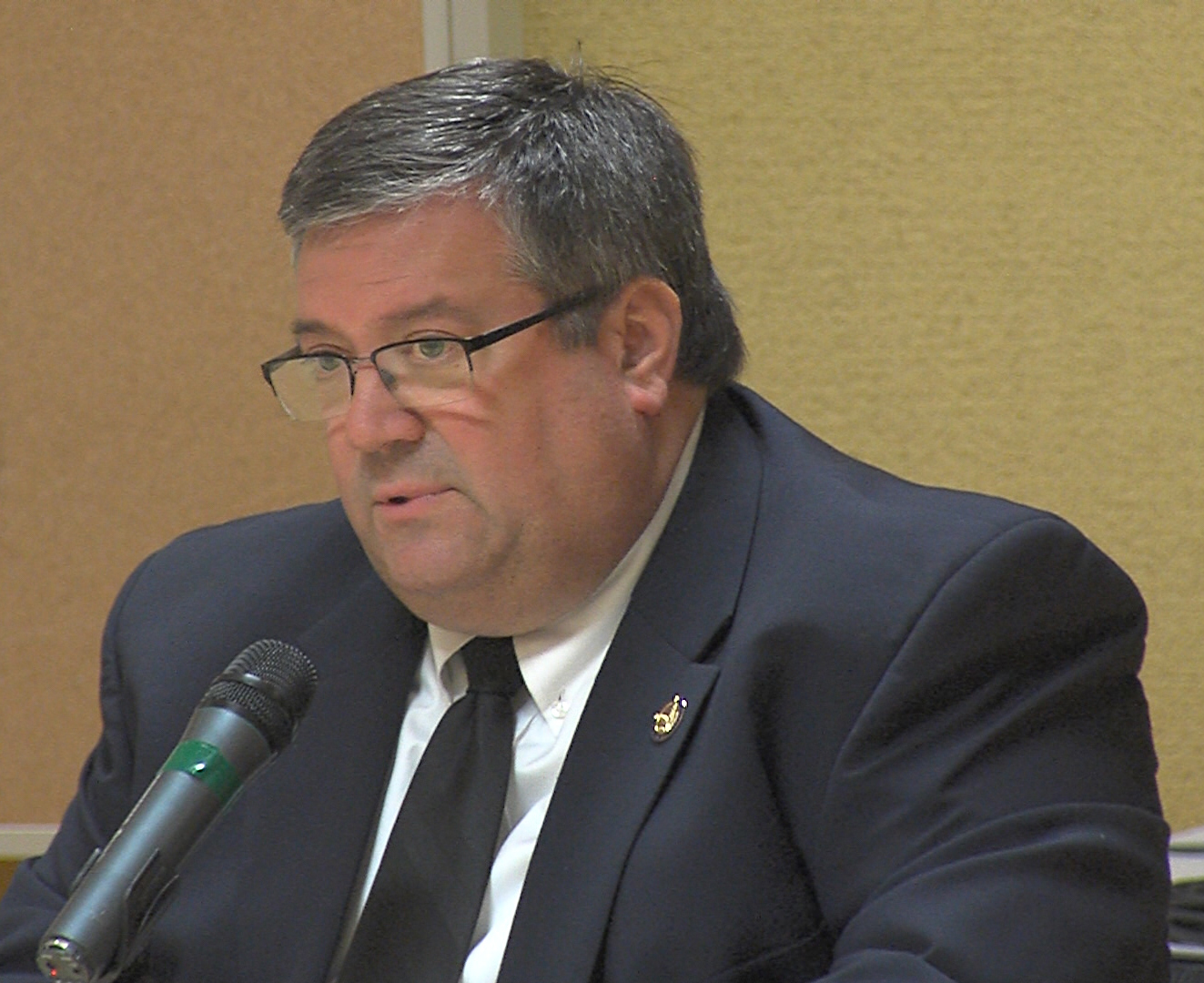
BILLINGER: Senate Update April 1

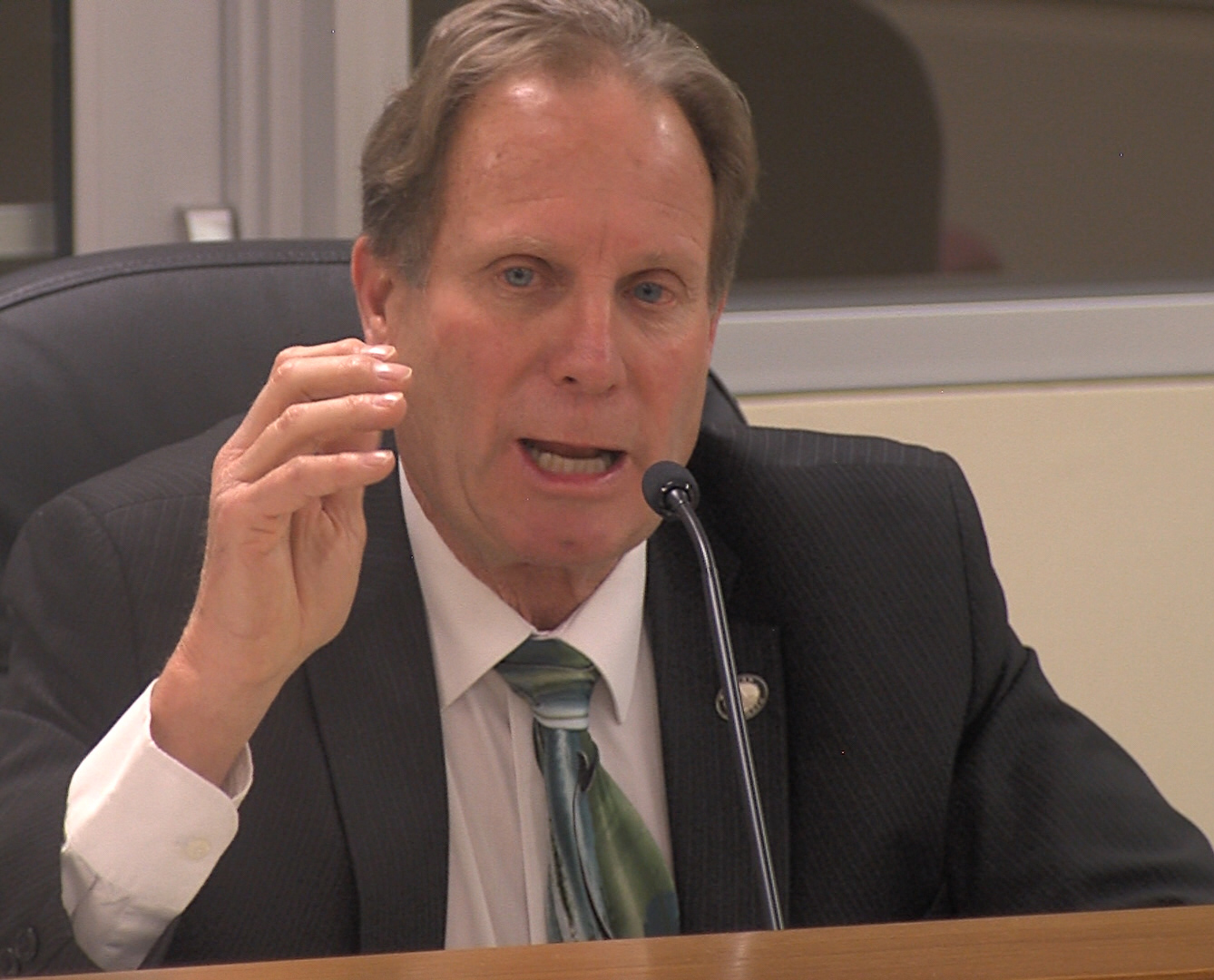
Sen. Rick Billinger (R-Goodland), 40th Dist.

This last week was a busy week. The Senate passed 42 bills in 3 days.

Governor Kelly raises income taxes on middle class families and small businesses as well as large corporations that do business in foreign countries. When Governor Kelly vetoed SB 22 she broke several campaign pledges including no tax increases and lowering sales tax on food. We will vote to override the Governor this week.

Some of the bills of particular interest to our district are:

HB 2160 passed the Senate last week. This bill will allow Thomas, Russell, Wabaunsee, Dickinson and Jackson counties the authority to place on the ballot and vote on increasing their local sale tax for county projects. The Thomas County project is the new Justice Center.

S Sub HB 2167 will establish a commercial industrial hemp program. This bill will require the Kansas Department of Agriculture, in consultation with the Governor and Attorney General, to submit a plan to the U.S. Department of Agriculture regarding how the KDA will monitor and regulate the commercial production of industrial hemp within the state, in accordance with federal law. In addition, the bill would establish the Commercial Industrial Hemp Program, make changes to the Industrial Hemp Research Program, create the Industrial Hemp Regulatory Commission, create the Hemp Processor License, establish prohibitions on specific products, establish sentencing guidelines, and establish waste disposal requirements.

There is a lot of interest in Kansas for both growing and processing industrial hemp. I attended a hemp conference in Denver, CO this weekend that included over 200 exhibitor booths that displayed product, processing equipment, seed sales, and other manufacturing possibilities. I attended as many breakout sessions as time would allow. I was told there were over 3,000 people in attendance including a few from the 40th Senate district.

The Senate passed SB 235 which will continue the 20-mill statewide levy for schools and exempt certain portions of property used for residential purposes from such levy.

To help offset the fuel tax the State does not currently receive on electric and hybrid vehicles S Sub HB 2214 was passed. This bill will add a vehicle registration fee of $100 for all electric vehicles and $50 for motor vehicles that are conventional electric hybrid and plug-in electric hybrid vehicles. These new fees will go into effect 1-1-20.

HB 2215 will authorize the Kansas State Fair Board to establish a 501(c)(3) nonprofit corporation. The purpose of the nonprofit corporation would be to receive gifts, donations, grants and other moneys and engage in fundraising projects that benefit the Kansas State Fair. The board of directors of the nonprofit corporation would consist of the members of the executive committee of the Fair Board, the General Manager of the Kansas State Fair and other directors designated by the Fair Board.

I am honored and grateful to represent the 40th Senate District of Kansas. Please do not hesitate to contact me by e-mail at [email protected] or call me with your questions and concerns. My office number is 785-296-7399 or my cell is
785-899-4700. If you are in Topeka stop by my office at 236-E.

Sen. Rick Billinger, R-Goodland, is the Kansas state senator for the 40th District, which includes Cheyenne, Decatur, Ellis, Gove, Graham, Logan, Norton, Rawlins, Sheridan, Sherman, Thomas, Trego and Wallace counties as well as portions of Phillips County.

New tool to humanely manage prairie dog populations launches

WILDEARTH GUARDIANS

DENVER — WildEarth Guardians (WEG) and the Prairie Dog Coalition of the Humane Society of the United States this week released a tool for communities interested in creating prairie dog management plans, preventing conflict, and conserving these keystone species.

The guide covers everything from prairie dog ecology, to the role of state and federal agencies in conserving prairie dogs, to the components of a conservation plan. It also covers barrier installation and best practices for relocation. The guide is intended for local governments and stakeholders.

“Prairie dogs are a key part of the prairie ecosystem,” said Taylor Jones, endangered species advocate for WildEarth Guardians. “This guide provides communities with the tools they need to protect wildlife and wild lands by protecting prairie dogs.”

“For years, concerned citizens and wildlife managers have asked for a next step to manage prairie dogs to reduce conflict and offer non-lethal options. This is that document,” said Lindsey Sterling Krank, director of the Prairie Dog Coalition of the Humane Society of the United States. “We were fortunate to have assistance from Pam Wanek, who is a fourth generation Coloradoan and prairie dog expert who contributed significantly to the work.”

Prairie dogs are one of the most controversial and widely misunderstood native wildlife species in North America.

Since early European migration onto the North American grasslands, prairie dogs have been celebrated as an essential keystone species for healthy grasslands ecosystems, but also vilified and in some locations managed as destructive rodent pests. Human-caused threats stemming from crop agriculture, livestock grazing, energy development, residential and commercial development, prairie dog shooting, poisoning campaigns and plague (an introduced disease) have caused the five species of prairie dogs to disappear from an estimated 87 to 99 percent of their historic range, depending on the species.

Prairie dogs are a key species to nine other species, such as hawks, owls, foxes and ferrets, and many others depend on prairie dogs for food, or their burrows for shelter. “If we want all these Great Plains species to survive, we need healthy prairie dog populations,” Jones said.

Since most species of prairie dog are not protected under federal or state law, local communities can play an important role in prairie dog conservation by including prairie dogs in their planning processes. The guide introduces many options for non-lethal management, including advanced planning, development agreements, barrier installation and relocation.

“Every acre of prairie dog towns conserved is a win for these social and intelligent animals,” concluded Jones.

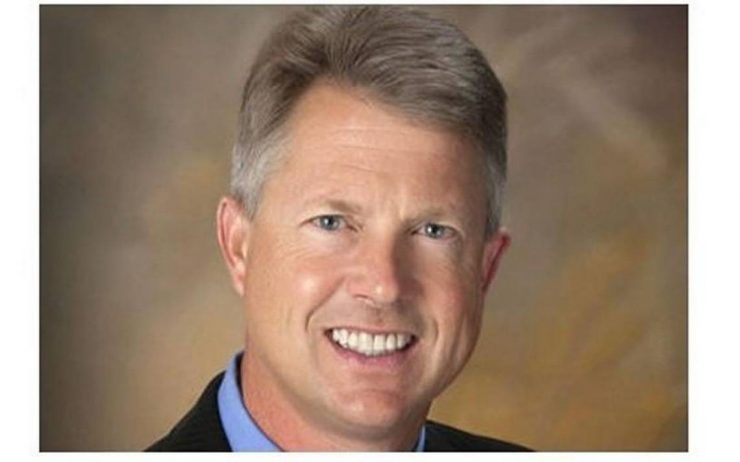
MARSHALL: Doctor’s Note March 25

Dr. Roger Marshall, R-Great Bend, is the First District Kansas Congressman.

Friends,

It seems spring has finally arrived in Kansas and I have enjoyed the opportunity to get back to the district and catch up with folks during our town halls and round-table discussions. Last weekend I met with the leadership team at Seward County Community College to learn how they are developing education programs to meet the workforce needs of western Kansas and held town halls in six different counties in southwest Kansas.

Fort Riley Excellence Award
Fort Riley has always stood as a symbol of excellence and leadership and last week the Army recognized those efforts and awarded Fort Riley the Bronze Medal for the 2019 Army Communities of Excellence Award.

This prestigious award, which recognizes the progress of management across all components within the Army installations including leadership, analysis and knowledge management, workforce and operations, comes on the heels of national recognition for the work being done at Irwin Army Community Hospital at Fort Riley.

I am honored to represent the men and women who serve our country and believe this honor validates the division’s motto of “No mission too difficult, no sacrifice too great, duty first.”

Brazil to Open Quota for U.S. wheat
Last week, President Trump met with Brazil’s new President, Jair Bolsonaro, to lay the groundwork for a new partnership between our two countries. The leaders made a number of trade-related commitments, including the announcement that Brazil will implement a Tariff Rate Quota (TRQ), allowing for the annual importation of 750 thousand tons of American wheat at a 0% rate.

The agreement for a duty-free TRQ on wheat exports to Brazil is something our wheat farmers have spent over a decade fighting for and I was proud to join them in this fight.

I recently led a letter with a number of my colleagues to Chief Agricultural Negotiator Gregg Doud, a native of the Big First, requesting that the TRQ issue be a top priority for these negotiations, and I was very pleased to see Ambassador Doud and President Trump come through for our producers back home.

KU Republicans

KU College Republicans
It’s always exciting to meet with college students and discuss the future of our country. Last week I had the opportunity to speak with members of the University of Kansas College Republicans, I shared with them my work on bi-partisan legislation to make colleges and technical schools eligible for the USDA’s Community Foods Projects grants that help nonprofits address hunger. We also had good discussions surrounding the students’ hopes for impactful but pragmatic approaches to fixing our broken healthcare system and innovative solutions to clean energy production.

I was impressed with the students’ understanding of the issues and solutions and hopes to make a positive change in their communities.

Harvesters helping Kansas Food Banks
Food banks play an important role in many communities across the Big First and the state. The success of this service is largely due to the volunteers and organizations like Harvesters in Kansas City that supplies these food banks with the resources they need to care for their local families.

Early last week I had the opportunity to tour Harvesters and learn just how many people and volunteer hours it takes to keep the operation going. The facility hosts more than 200 volunteers a day and in 2018 Harvesters provided more than 52.5 million pounds of food to its 26-county distribution area, including pinto beans grown by the farmer-owners of 21 Century Bean in Sharon Springs, Kan.

Our family has a long history of volunteering at our local food bank, and I continue to support food banks across my district as I believe they provide an essential service for our communities.

The Crisis in Venezuela
President Trump has continued his efforts towards the goal of seeing the tyranny of the Maduro regime come to an end, and I want it to be known that I fully support him in these efforts. The good people of Venezuela continue to be oppressed by the Maduro regime in what is well beyond a humanitarian crisis. I send my prayers to those suffering and pledge all the support I can give in congress.

For more on my position on the crisis in Venezuela please see my Op-Ed on the subject.

Passing of Dick Nichols
Last week we mourned the passing of former Congressman Richard “Dick” Nichols. The WWII veteran and fellow Rotarian was a proud husband, father, and grandfather and a mentor to me as I made my way to Congress.

He served one term in the U.S. House of Representatives, serving the 5th Congressional District before it was lost following the 1990 census. He returned to banking but continued to guide and support elected officials at all levels.

Our deepest sympathies go out to his family as they mourn the loss of a great man.

Response to the Opioid Crisis
Last week the Department of Health and Human Services released their second installment of State Opioid Response grants. Kansas received $2,112,683 to expand treatment and reduce opioid overdose-related deaths through prevention and recovery initiatives for those suffering from addiction.

This funding will expand access to treatment that has been proven to work by focusing on medication-assisted treatment coupled with appropriate social support. As a nation, we are continuing to tackle this crisis head-on, and we are starting to produce results! That is due primarily to our communities, law enforcement, first responders, and our legislators all working together to address this deadly epidemic.

Dr. Roger Marshall, R-Great Bend, is the Kansas First District Congressman. 

Wichita restaurant owner named KS Small Business Person of the Year

SBA

WASHINGTON, D.C. – Administrator Linda McMahon, the head of the U.S. Small Business Administration, announced the 2019 Small Business Persons of the Year winners from the 50 states, the District of Columbia, Puerto Rico, and Guam. Each of the winners have been invited to attend ceremonies in Washington, D.C. on May 5-6 where they will be honored with their individual award. During the ceremonies, SBA will announce the 2019 National Small Business Person of the Year from the 53 winners from across the U.S. and territories.

“I am delighted to recognize the 53 winners from across the country as they gather in our nation’s capital,” McMahon said. “Entrepreneurs are the innovators who take risks on ideas, invest in their communities, and create jobs. Their skills and creativity not only support their own families, but they also make our neighborhoods and cities vibrant places to live and work, fueling our overall economic strength. These small business owners best represent the nation’s 30 million small businesses and I look forward to welcoming the winners to Washington, D.C. in May when they are officially honored for their accomplishments.”

Kurt Schmidt, Picasso’s Pizzeria, Wichita

The SBA’s 2019 Kansas Small Business Person of the Year is Mr. Kurt Schmidt, the president and owner of Picasso’s Pizzeria, Inc. in Wichita.

National Small Business Week will be observed May 5-11 with events around the country. SBA Administrator Linda McMahon will be making stops in Washington, D.C., Florida, Texas, and Utah.

2019 Small Business Persons of the Year Winners
ALABAMA
Alana Parker, President
Rocket City Drywall & Supply
Huntsville, AL

ALASKA
John Tatham, President
Janet Tatham, Vice President
Shelley Bramstedt, Secretary/Treasurer
PIP Printing of AK
Anchorage, AK

ARIZONA
Jennifer Herbert, Chief Executive Officer
Jeff Herbert, Chief Strategic Officer
Superstition Meadery LLC
Prescott, AZ

ARKANSAS
April Broderick, Majority Owner/President
A&A Fire and Safety Company
Sherwood, AR

CALIFORNIA
Jeffrey Perry, President
All Industrial Tool Supply
Huntington Beach, CA

COLORADO
Rick Schmidt, President and CEO
Tipping Point Solutions
Centennial, CO

CONNECTICUT
Joyce Reynolds, President
Jerardo Reynolds, Vice President
Reynolds Welding and Fabrication
Windsor, CT

DELAWARE
Donald Chupp, President and CEO
Fireside Partners
Dover, DE

DISTRICT OF COLUMBIA
Paul Abbott, Owner
Laura Abbott, Co-Owner
Life of Riley
Washington, DC

FLORIDA
Jeff Turbeville, Owner/CEO
Sunshine Peanut Company
Jacksonville, FL

GEORGIA
Rebecca Lamont, President & Founder
Jeff Lamont, Director of Operations
Pathways Behavioral Consulting
Marietta, GA

GUAM
Richard Chan, President
Mika Gibson, Vice President
Archway
Tamuning, Guam

HAWAII
Rolf Klein, CEO
Alvin Bongolan, COO
Hawaii Energy Systems
Aiea, HI

IDAHO
Nate Bondelid, President
Tek-Hut
Boise, ID

ILLINOIS
Cornelius Damon Griggs, President/CEO
GMA Construction Group
Chicago, IL

INDIANA
Casey Wright, CEO
NinjaZone & Wright Gymnastics
Greenwood, IN

IOWA
Brad Barber, CEO, Co-Founder
Angie Barber, COO, Co-Founder
Cabin Coffee Franchising
Clear Lake, Iowa

KANSAS
Kurt Schmidt, President/Owner
Picasso’s Pizzeria
Wichita, KS

KENTUCKY
Paul Isenberg, Owner/Founder
Smart Start Child Care
Bowling Green, KY

LOUISIANA
LTC Danny Blanks, USAR-Ret. Member/CEO
Barlow Cook, Member/CCO
James Washington III, Member/CFO
Pontchartrain Partners
New Orleans, LA

MAINE
Janie Wang, Owner/Member
Modernist Pantry
Eliot, ME

MARYLAND
Zhensen Huang, CEO
Precise Software Solutions
Rockville, MD

MASSACHUSETTS
Swati Elavia, President
Monsoon Kitchens
Shrewsbury, MA

MICHIGAN
Kathleen Eberle, President/CEO
NPO Transportation
Southfield, MI

MINNESOTA
Christine Lantin, President
Maud Borup
Plymouth, MN

MISSISSIPPI
Jennifer Sutton, D.S., D.V.M., President
Jeffrey Sutton, B.S., D.V.M., Secretary/Treasurer
Gulf Coast Veterinary Services
Biloxi, MS

MISSOURI
Carol Espinosa, Principal
Freedom Interiors
Kansas City, MO

MONTANA
Devon Davidson, President/Owner
MARS of Billings
Billings, MT

NEBRASKA
Leon Weiland, President/Owner
Jean Weiland, Partner/Secretary/Treasurer
Weiland Doors
Norfolk, NE

NEVADA
Elena Ledoux, CEO
Nargiza Mukhutdinova, General Manager
Superb Maids
Las Vegas, NV

NEW HAMPSHIRE
Hale Cole-Tucker, President and Co-Founder
Erica Cole-Tucker, Vice President, Operations and Co-Founder
Tucker Restaurant Group
New London, NH

NEW JERSEY
Carl Fisher, CEO
Karen Froberg-Fejko, President
Bio-Serv and Radon Supplies
Flemington, NJ

NEW MEXICO
Emile Gonzales, President
G2i, LLC
Albuquerque, NM

NEW YORK
Christopher Bren, Member
William Freedman, Member
Todd Stewart, Member
Picture Farm II, LLC
Brooklyn, NY

NORTH CAROLINA
Steven Ceccarelli, CEO/President
Farm Fresh Produce
Faison, NC

NORTH DAKOTA
Troy Derheim, President
Derheim Inc.
Harwood, ND

OHIO
Kristen Bailey, Co-Founder & CEO
Sweets and Meats
Cincinnati, OH

OKLAHOMA
Michael Van Eaton, President
Cacy Van Eaton, Vice President
Susan Van Eaton, Secretary-Treasurer
Van Eaton Ready Mix
Shawnee, OK

OREGON
Marshall Doyle, President
Cal-Cert Company
Clackamas, OR

PENNSYLVANIA
Ethan Wendle, Co-Founder and CEO
Matthew Chverchko, Co-Founder and COO
DiamondBack Automotive Accessories
Phillipsburg, PA

PUERTO RICO
Marie Rosado Collado, President
Angel Rosado, Vice President
3A Press Corp.
Lajas, Puerto Rico

RHODE ISLAND
Justin Oakley, Owner/Occupational Therapist
Michael Vieira, Owner, MA & RI Licensed Contractor
Oakley Home Access
Narragansett, RI

SOUTH CAROLINA
Adam Huneau, Owner, Founder and CEO
Alodia’s Cucina Italiana
Lexington, SC

SOUTH DAKOTA
Derek DeGeest, President
DeGeest Steel Works
Tea, SD

TENNESSEE
Larry Schmittou, President
L&S Family Entertainment
Hendersonville, TN

TEXAS
Christi Bond, Co-Founder/President
Ragan Bond, Co-Founder/Vice President
Independence Coffee
Brenham, TX

UTAH
Vivien Bohme, Owner and CEO
Fernanda Bohme, Owner and Designer
Bohme
Sandy, Utah

VERMONT
Steven Gagner, Owner/Founder
14th Star Brewing Company
St. Albans, VT

VIRGINIA
Roberto Ortiz, President/CEO
AVMAC, LLC
Chesapeake, VA

WASHINGTON
Ross Black, Founder/CEO
Simple Box Storage
Lynden, WA

WEST VIRGINIA
Michael Mills, Managing Principal
Mills Group
Morgantown, WV

WISCONSIN
Stacy Tuschl, President
The Academy of Performing Arts-Oak Creek and Franklin
Oak Creek, Wisconsin

WYOMING
Ryan Gregory, President
Wyoming Roofing
Sheridan, WY

Use of portable blinds on public lands to be discussed by KDWPT

KDWPT

PRATT – The Kansas Wildlife, Parks and Tourism Commission will conduct a public meeting on March 28, 2019, at the Capitol Plaza Hotel, Emerald Rooms, in Topeka. The public is encouraged to attend the meeting, which will begin at 1:30 p.m. Time will be set aside for public comment on non-agenda items at the beginning of both the afternoon and evening sessions.

The first items for discussion in the afternoon include a report on agency fiscal status, a 2019 legislative session update, and tourism update. The General Discussion session will start with the redrawing for one Commissioner Big Game Permit, followed by discussions on: fees, threatened and endangered species regulations, an update on upland birds, and backcountry access passes.

Workshop Session items – items that will be voted on at a future Commission meeting – include U.S. Coast Guard navigation rules, unmanned aerial vehicles (drones), e-licensing, e-bicycle use on trails and in parks, public land regulations, furbearer regulations, webless migratory bird regulations, waterfowl regulations, deer season on Fort Riley, and antelope season.

The Commission will recess by 5 p.m. and reconvene at 6:30 p.m. to conduct a Public Hearing and vote on the following items:

  • Removing fees for duplicate licenses
  • Squirrel hunting regulations; use of calls
  • Public lands regulations; use of portable blinds
  • Hunting, fishing, furharvesting license and state park permits; removing requirement for trail pass
  • Elk; open season, bag limit and permits
  • Big game regulations; legal equipment and taking methods
  • Big game permit applications; adjusting resident permit application periods
  • Deer season; open season, bag limit and permits

The Commission will also hear deer permit allocations for Secretary’s Orders.

If necessary, the Commission will reconvene at 9 a.m. at the same location, March 29, 2019, to complete any unfinished business. Should this occur, time will again be set aside for public comment on non-agenda items.

Information about the Commission, as well as the March 28, 2019 meeting agenda and briefing book, can be downloaded at ksoutdoors.com/KDWPT-Info/Commission/Upcoming-Commission-Meetings.

Live video and audio streaming of the meeting will be available at ksoutdoors.com, and live updates of the Public Hearing will be tweeted on the Kansas Department of Wildlife, Parks and Tourism’s (KDWPT) Twitter account, @KDWPT.

If notified in advance, the Department will have an interpreter available for the hearing impaired. To request an interpreter, call the Kansas Commission for the Deaf and Hard of Hearing at 1-800-432-0698. Any individual with a disability may request other accommodations by contacting the KDWPT Commission secretary at (620) 672-5911.

The next KDWPT Commission meeting is scheduled for Thursday, April 25, 2019 at the Colby Community Building, 285 E. 5th St., in Colby.

Kansas celebrates water in observance of World Water Day

KWO

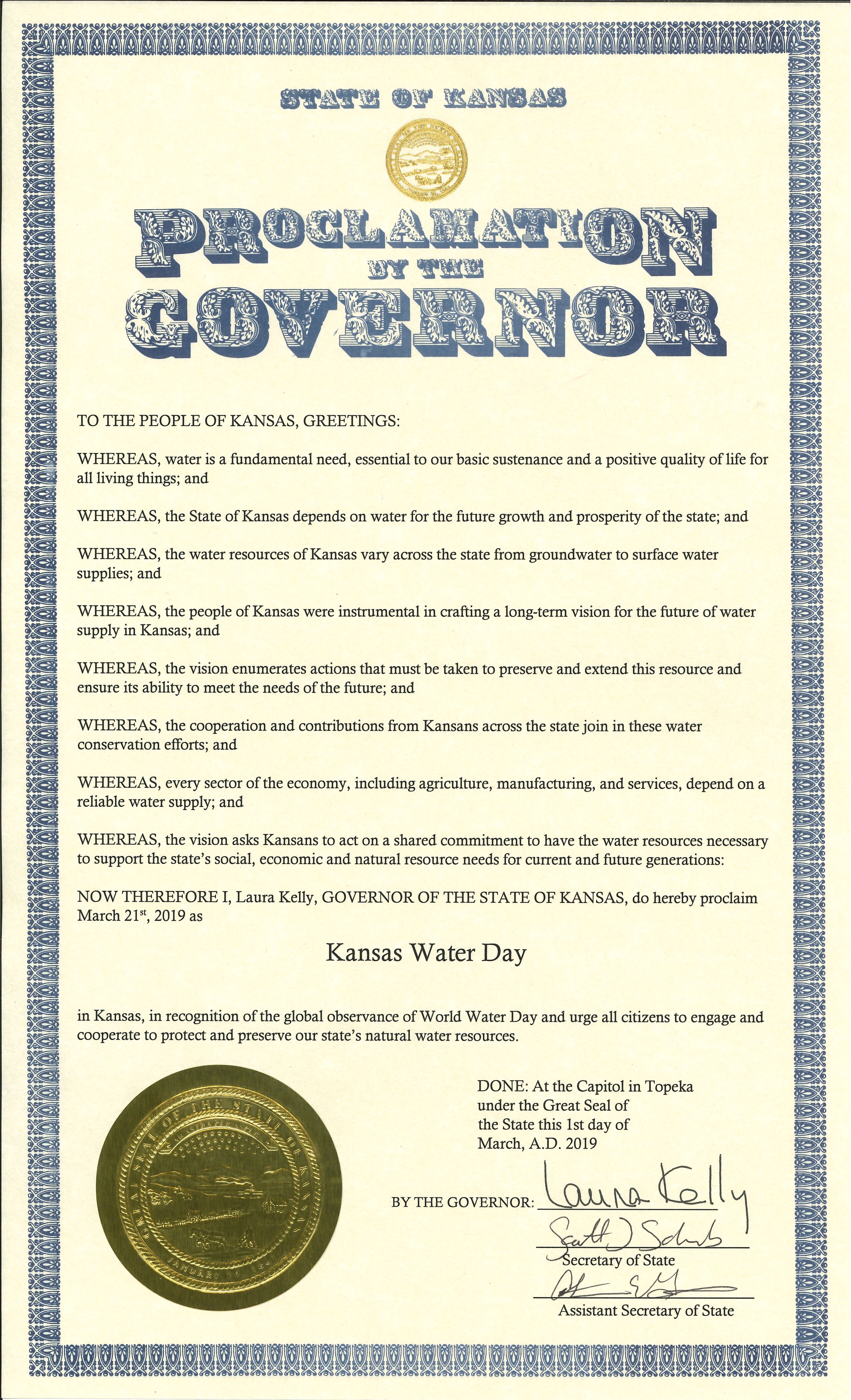
TOPEKA – Today the Kansas Water Office (KWO) along with the Kansas Department of Agriculture, Kansas Department of Health and Environment and Kansas Department of Wildlife Parks and Tourism as cohosts celebrated Kansas Water Day at the state capitol in Topeka in observance of World Water Day on March 22.

A proclamation was signed declaring today as Kansas Water Day. Agencies and partners shared with legislators and others in the capitol information about the different water resources and management of it throughout the state. Additional sponsors of the event included WaterOne and Burns & McDonnell.

While Kansas depends on both ground and surface water supplies, the future of Kansas’ growth and prosperity depends on this vital resource. Kansans all across the state were instrumental in developing the Long-Term Vision for the Future of Water in Kansas, and we encourage everyone to continue to act on a shared commitment to have the water resources necessary to support the state’s social, economic and natural resource needs for current and future generations.

As the state’s water office, KWO conducts water planning, policy coordination and water marketing as well as facilitates public input throughout the state.

The agency prepares the KANSAS WATER PLAN, a plan for water resources development, management and conservation.

KU doctor appointed to national Advisory Committee on Immunization Practices

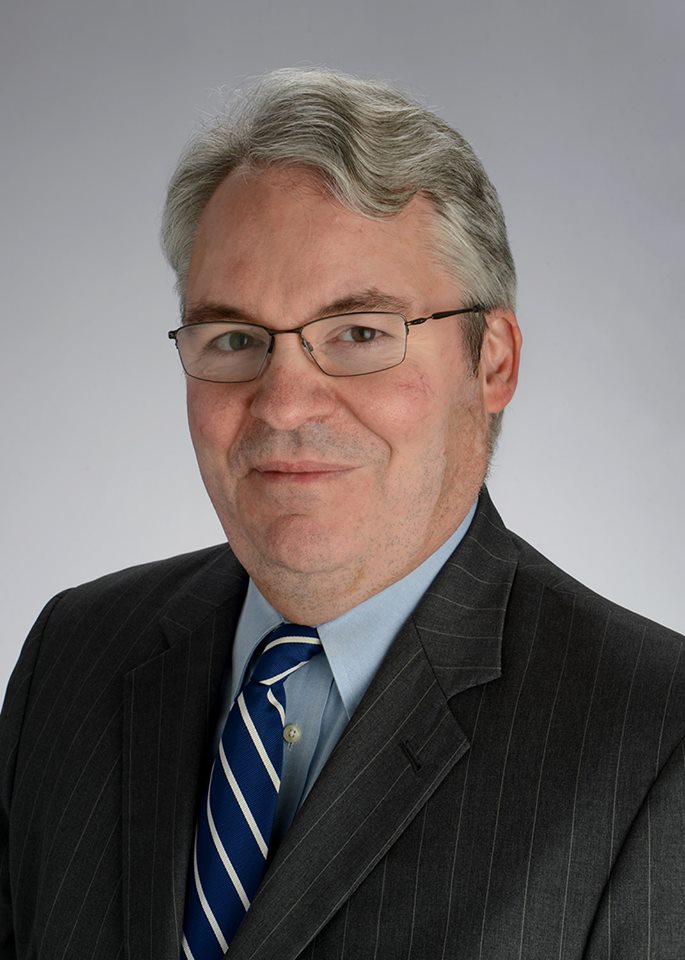
Kevin Ault, M.D.

KU NEWS SERVICE

KANSAS CITY – Kevin Ault, M.D., professor and division director in the University of Kansas Department of Obstetrics and Gynecology, has been appointed to the Advisory Committee on Immunization Practices (ACIP) by Health and Human Services Secretary Alex M. Azar II. This federal committee is part of the Centers for Disease Control and Prevention and formulates vaccine policy for the United States. Dr. Ault will serve a four-year term.

Previously, Dr. Ault had been the liaison member from the American College of Obstetricians and Gynecologists to the ACIP. He is the second ob-gyn physician to be appointed to this committee in the past 50 years.

RAHJES REPORT: March 18

Rep. Ken Rahjes (R-Agra), 110th Dist.

Hello from Topeka!

It was great to be home over the weekend and see the sun. Our hearts go out to our livestock producers who have had one challenge after another during calving season. But you will not find a more resilient group of folks than those involved in agriculture. Things are ramping up in Topeka, but it looks like this first year of the biennium will be one with out many issues being acted on. One of the issues that is working towards a vote is K-12 school finance.

Last Wednesday, the K-12 Education Budget Committee received an informational briefing on HB 2395. The bill addresses school finance, as well as a number of education policies. The education policies reflect language from bills heard earlier in the session. The bill contains supplemental appropriations for the Department for FY 19, based on the Governor’s recommendations. Appropriations are also included for FY 20, including for the 6 primary funding sources for school districts: State foundation aid; supplemental state aid; special education services aid; capital outlay state aid; capital improvement state aid; and KPERS employer obligations.

Appropriations are also included for: the ACT/Workkeys assessments; professional development for elementary teachers in identification of dyslexia and effective reading interventions; Teach for America; ABC early childhood intervention pilot program; and continuation of the safe schools grants.

Targeting funding for at-risk students; students with behavioral health concerns; dyslexia: The bill also contains a new weighting for behavioral health intervention. This weighting expands the mental health intervention team pilot program from 2018 SB 423. All districts would be eligible to participate. To receive the weighting, a school district must hire a behavioral health liaison for each school included in the program. Approximately $20 million is appropriated for this weighting. The weighting is 0.5 for each student attending a qualified school. The bill also adds 0.026 to the at-risk weighting of each school district. The additional moneys are to be expended only for at-risk evidence-based programs, such as Job’s for America’s Graduates—Kansas (JAG-K). The bill also extends the Legislative Task Force on Dyslexia for an additional three years.

Cash Reserves, Accountability provisions: The bill requires school districts to spend down a portion of their unencumbered balances. If their average monthly unencumbered balance is greater than 15%, the district would be required to spend the difference between that balance and 15% of their operating budget. Capital outlay and capital improvement cash balances are excluded from the calculation. The bill also contains provision to create performance accountability for the state, each school district, and each school. The reports are to be 1-page annual reports on student performance on state assessment, college and career readiness metrics, and the Kansans Can standard. Additionally, the Department will prepare annual longitudinal reports on student achievement, along with annual financial accountability reports. The bill also establishes uniform internet publication requirements, requiring that the Department and each district provide a displayed link on their websites.

Bullying Prevention: The bill creates the Legislative Task Force on Bullying Prevention in Public Schools. The Task Force would meet up to 6 times during FY 20 and twice during FY 21, with reports made to the 2020 and 2021 Legislature. The bill also contains the Kansas Hope Scholarship Act (KHSA), which allows student victims of bullying to participate in a scholarship program to transition to a new school, including a private school. The scholarships would cover the costs of attending a new private school. To be eligible for the program, a student must report they are a victim of bullying. An investigation, made within 30 days of incident being reported, must contain a determination that bullying occurred and who the victim is. If it is decided to transfer the student to another school, school district, or private school, KHSA provides that a certain percentage of the current year BASE aid amount is transferred from the KHSA fund to the student’s account (based on student’s grade level). If the student transfers to another school district, then the State Board is directed to adjust the school district’s state foundation aid.

Additional considerations: The bill amends current law regarding transportation requirements. Under the bill, a school district would be required to provide transportation to students living less than 2.5 miles from their school if there is no safe pedestrian route and if there is no additional cost to the district to provide that transportation. Other provisions address the bonding authority, special education excess cost, requiring a study on computer science and personal financial literacy courses, and the abolishment of the Mineral Production Education Fund.

There are many moving parts to the House version of K-12 spending we will see what survives. The Senate has proposed the Governor’s recommendations on school funding without many of these enhancements.

On Thursday, March 14th, the Senate concurred with the changes the House made to SB 22 with a vote count of 24-16. The House added provisions to reduce the food sales tax and the fix the loophole concerning internet sales tax collections, which will protect our brick and mortar stores, and passed the bill on March 8th with a vote of 76-43.

SB 22 is currently on its way to Governor Kelly’s desk. She will have ten days after receiving the bill to act. She has the option of signing the bill, allowing the bill to become law without her signature, or veto the bill.

Early last week, the House adopted HR 6016, a resolution recognizing the Kansas Small Business Development Center’s 2019 Businesses of the Year. Eight Emerging Businesses of the Year and eight Existing Businesses of the Year award recipients were chosen by the Kansas SBDC’s regional directors and staff. It was great to be on hand when Lost Creek German Shepherds from Clayton was recognized as one of the 2019 Emerging Businesses of the Year. Taylor and John Meitl are doing a fantastic job…Lead On!

The other 2019 Emerging Businesses of the Year are: ArtForms Gallery in Pittsburg, owned by Sue Horner, Janet Lewis, Ruth Miller, and Sylvia Shirley; Ellen Plumb’s City Bookstore in Emporia, owned by Marcia Lawrence; Gravity Wellness Center in Garden City, owned by Kristi Schmitt; Leeway Franks in Lawrence, owned by Lee and K. Meisel; Norsemen Brewing Company in Topeka, owned by Jared and Emily Rudy and Adam and Melissa Rosdahl; Safely Delicious in Overland Park, owned by Lisa Ragan; and Triple Threat Ag Services in Conway Springs, owned by Aaron, Allen, Paul, and Phillip Lange.

The 2019 Existing Businesses of the Year are: Angela’s Wellness Center, LLC in Elkhart, owned by Angela Willey; Bolling’s Meat Market & Deli in Iola, owned by Cara Bolling Thomas; Dod Installations in Wichita, owned by Wilt and Tina Dod; Floyd’s Inc. in Emporia, owned by John and Ruth Wheeler; Good Energy Solutions in Lawrence, owned by Kevin Good; LaCrosse Furniture Co. in LaCrosse, employee-owned; The Winged Lion in Manhattan, owned by Ralph Diaz; and Wolcott Foods in Kansas City, owned by Ron Tilman.

If you come to Topeka during the session, my office is in Room: 149-S. My phone number is (785) 296- 7463 and email is: [email protected] and you can always try my cell number is (785) 302-8416.

It is my honor to serve you in the Kansas House of Representatives.

Rep. Ken Rahjes (R-Agra), is the 110th state representative and chairman of the Higher Education Budget Committee. House District 110 includes Norton and Phillips counties as well as portions of Ellis, Graham, and Rooks counties.

KDA announces Specialty Crop Block Grant opportunity

KDA

MANHATTAN — The Kansas Department of Agriculture is accepting applications for the 2019 Specialty Crop Block Grant Program. Funds for the program are awarded to the agency by the U.S. Department of Agriculture’s Agricultural Marketing Service. The funds are in turn granted to projects and organizations that promote the competitiveness of specialty crops.

The purpose of the Specialty Crop Block Grant Program is to enhance the competitiveness of specialty crops. Specialty crops are defined by the USDA as “fruits, vegetables, tree nuts, dried fruits, horticulture, and nursery crops, including floriculture.”

Each state that submits an application that is reviewed and approved by the Agricultural Marketing Service is to receive an estimated base amount of $201,973.63 plus an amount based on the average of the most recent available value of specialty crop cash receipts and the acreage of specialty crop production in the state. In 2018, Kansas received $348,848.12 for the grant program. In 2019, it is expected that Kansas will receive approximately $373,500.

Applications will be evaluated by a team of external reviewers. The team will rate proposals on their ability to successfully promote specialty crops in Kansas and make a positive impact on the Kansas economy. Those recommendations will be submitted to the Kansas Secretary of Agriculture, who will make the final awards.

Applications are due to KDA no later than 5:00 p.m. on April 19, 2019. For more information about the Specialty Crop Block Grant program or to complete the 2019 application, go to the KDA website at agriculture.ks.gov/SpecialtyCrop or contact Peter Oppelt, KDA economist, at 785-564-6726 or [email protected].


KDWPT: Buy spring turkey combo before April 1 and save

KDWPT

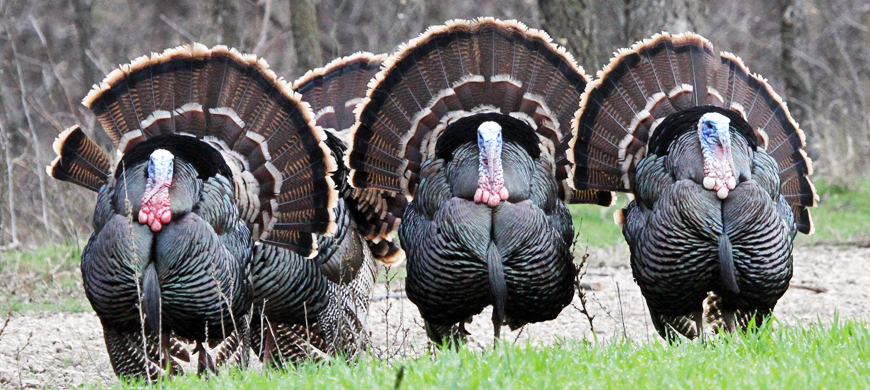
PRATT – Counting the days until Kansas’ spring turkey season? Buy your permits and tags in March and you can also count the money you’ll save. Through March 31, residents and nonresidents can save by purchasing their Spring Turkey Combo permit, which includes a spring turkey permit and a turkey game tag.

The turkey permit allows the taking of one bearded bird. The game tag allows for a second and can only be purchased after a turkey permit is purchased.

Youth turkey permits are valid in all of Kansas’ six turkey management units. All other turkey permits and game tags available over the counter are valid in turkey units 1, 2, 3, 5 and 6. A limited number of adult permits for Unit 4 (southwest) were allocated through a drawing.

Take a look at these savings!

  • Resident Spring Turkey Combo – $37.50; if purchased separately – $27.50 and $17.50
  • Resident Youth Spring Turkey Combo – $12.50; if purchased separately – $7.50 for each
  • Resident Landowner/Tenant Spring Turkey Combo – $20; if purchased separately – $15 and $17.50
  • Nonresident Spring Turkey Combo – $87.50; if purchased separately – $62.50 and $32.50
  • Nonresident Youth Spring Turkey Combo – $22.50; if purchased separately – $12.50 each
  • Nonresident Landowner/Tenant Spring Turkey Combo – $45; if purchased separately – $32.50 each

Unless exempt, a valid hunting license is required in addition to the turkey permit and game tag: resident hunting license: $27.50, nonresident hunting license – $97.50, and nonresident youth hunting license ­– $42.50.

The 2019 spring turkey season runs April 1-16 for youth and hunters with disabilities and April 8-16 for archery. The regular season is April 17-May 31.

Spring Turkey Combos, turkey permits, game tags and hunting licenses can be purchased at the more than 600 license outlets across the state and online at www.kshuntfishcamp.com. Find everything you need to know about spring turkey hunting in Kansas at www.ksoutdoors.com.

New book features untold stories of plaintiffs in Brown v. Board of Education

KU NEWS SERVICE

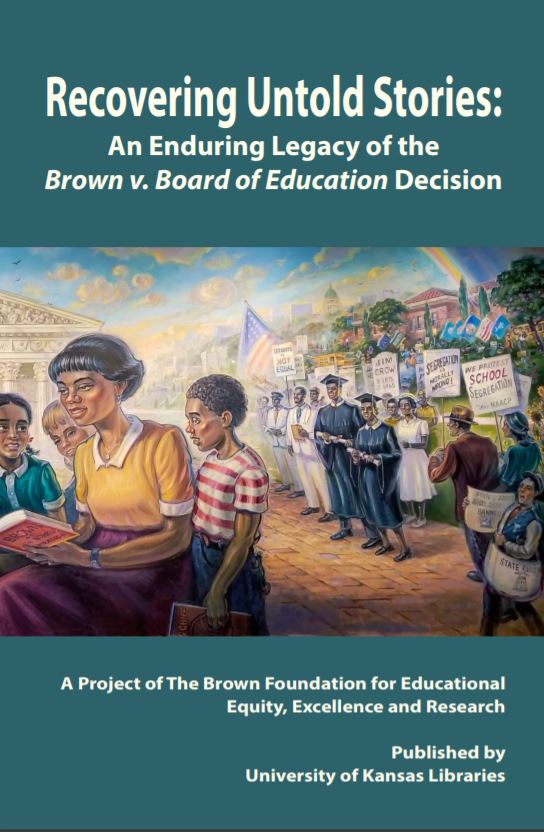
LAWRENCE — The Hall Center for the Humanities at the University of Kansas and the Brown Foundation for Educational Equity, Excellence and Research have released a new book, “Recovering Untold Stories: An Enduring Legacy of the Brown v. Board of Education Decision.”

The landmark Supreme Court decision finding segregation of public schools unconstitutional placed Topeka at the epicenter of civil rights history. Yet the full legal citation is Oliver L. Brown, et. al. vs. the Board of Education of Topeka.

The new book’s focus is on the “et. al.”: It captures the first-person narratives of individuals who were plaintiffs or descendants of plaintiffs represented in the five cases — Delaware, Kansas, South Carolina, Virginia and Washington, D.C. — that were consolidated by the U.S. Supreme Court in the decision.

In the instance of Brown v. the Board of Education, “et. al.” relegated several hundred men, women and children to what can be characterized as “legal wasteland,” rendering them largely unknown. The book uncovers and publishes some of their stories to provide a glimpse into the role of ordinary people who found themselves in the center of an extraordinary historic milestone.

Individuals involved in the cases participated in a series of in-person workshops in 2017 convened by the Brown Foundation onsite at the National Museum of African American History and Culture in Washington, D.C.

The workshops were facilitated by Cheryl Brown Henderson, founding president of the Brown Foundation, and four University of Kansas scholars: Deborah Dandridge, curator of African American Experience collections, Kenneth Spencer Research Library; John Edgar Tidwell, professor of English; Darren Canady, playwright and associate professor of English, and Vincent Omni, graduate teaching assistant in the Department of English. Workshop participants were guided through the process of writing a first-person narrative.

The results of their work are contained in this collection of essays, within which each person shares personal experiences, or those of their parents, offering a better understanding of the risk, challenge and courage of blacks who refused to be denied constitutional rights in the era of “Jim Crow” laws.

In his 1994 book, “Crusaders in the Courts: How a Dedicated Band of Lawyers Fought for the Civil Rights Revolution,” Jack Greenberg, member of the NAACP Legal Defense Fund’s legal team in Brown, poignantly refers to the numerous individuals who are embedded within the legal shorthand “et. al.”:

“Before lawyers can win cases, there have to be clients willing to stand up for their rights. The American blacks who proved willing to fight segregation and discrimination were organized for the most part by the National Association for the Advancement of Colored People (NAACP), in an environment hostile to change in the kind of justice afforded blacks.”

E-book layout and design were completed by Pam LeRow, digital media services, KU Libraries. KU Libraries also published the book. The project was funded in part by the Hall Center for the Humanities and the Walton Family Foundation.

The book is available online or can be obtained on demand as a print copy.

New Dep. Dist. Engineer for Corps of Engineers, Kansas City District

Bryan Smith

USACE

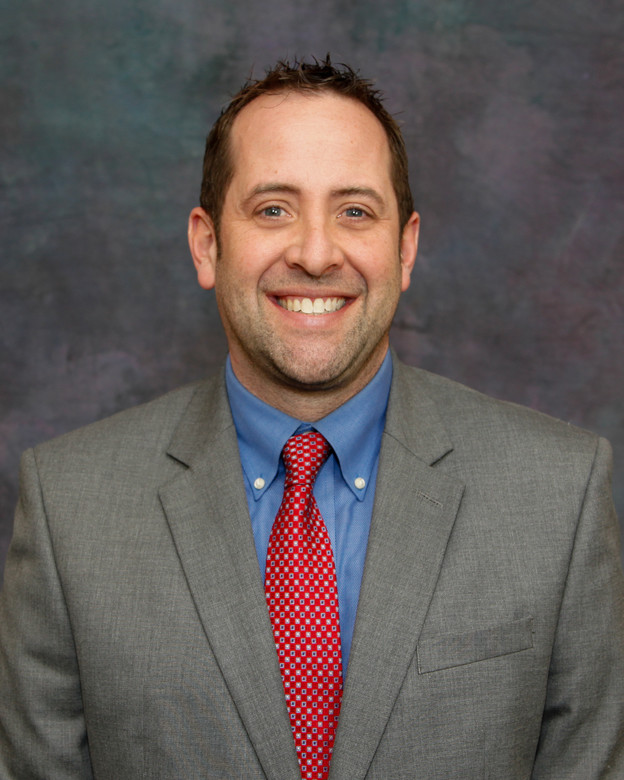
KANSAS CITY, Mo. – The U.S. Army Corps of Engineers (USACE), Kansas City District has announced Mr. Bryan Smith as the new Deputy District Engineer, Chief, Planning, Programs and Project Management.

Smith has worked for the Kansas City District for twenty years and has extensive knowledge in military programs, civil works and infrastructure operations and maintenance. As the Kansas City District’s senior civilian, Smith will oversee civil works, military construction and environmental programs for the district.

“The Kansas City District is committed to providing quality products and superior customer satisfaction around the globe and I am honored to serve the nation in a different role as the Deputy District Engineer for the Kansas City District,” said Smith. “These are exciting times in the Heartland as we have taken on new work and are executing five large-scale programs exceeding over $2 billion over the next few years. Our team of professionals are well-trained in several mission areas and am confident we will continue to deliver outstanding products while sustaining and delivering all our routine work.”

Smith believes in strong stakeholder relationships and will assist the district commander in continuing to strengthen current relationships and establish new connections in the Heartland.

“Communication is key. We have a strong history of great relationships and I plan to keep those and build upon them. A priority I have is engaging with Missouri River basin stakeholders and working together to meet the challenges of tomorrow. I will also work to sustain our relationships with our military customers in Missouri and Kansas, ensuring we are benefiting the warfighter.”

Smith is a licensed Professional Engineer and a Certified Project Management Professional.

Smith received a Bachelor of Science degree in Civil Engineering from Iowa State University and a Master of Science degree in Civil Engineering from the University of Kansas.

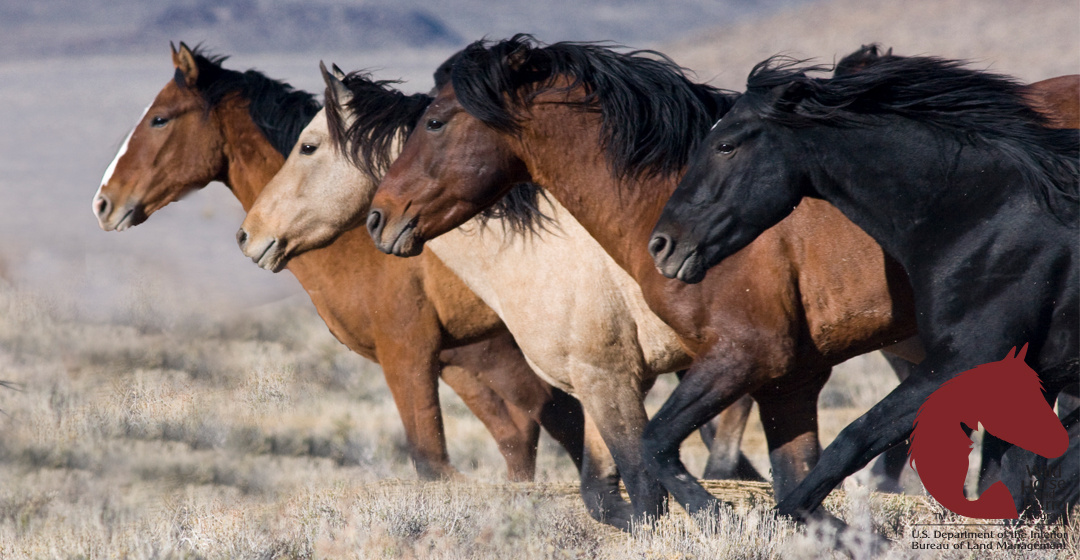
BLM seeks bids for new off-range pastures for wild horses and burros

BLM

WASHINGTON— The Bureau of Land Management (BLM) announced Tuesday that it is seeking contractors for off-range pastures to provide a free-roaming environment and quality care for wild horses removed from Western public lands. The BLM will award multiple contracts that can accommodate 200 – 5,000 head of wild horses, with a four-year or nine-year renewal option. All contracts require supplemental feed for a minimum of four months to ensure that animals maintain a quality body condition throughout the dormant months.

Bids will be accepted from the following states through May 3, 2019: Colorado, Idaho, Kansas, Montana, Nebraska, Nevada, North Dakota, Oklahoma, Oregon, South Dakota, Texas “Panhandle” (only north of Hwy 82 and 84), Utah, Washington and Wyoming. The area west of the Cascade Mountain. Range in Oregon and Washington is excluded.

Applicants who are new to conducting business with the government must first obtain a Duns and Bradstreet number at www.dnb.com and then register at www.sam.gov/  to respond to the solicitation. No fee is involved. The solicitation describes what to submit to the BLM and where to send it. To obtain the contract solicitation: (1) Go to www.fedconnect.net;

(2) Click on “Search Public Opportunities”;

(3) Under Search Criteria, select “Reference Number”;
(4) Enter the solicitation’s reference number “140L0119R0002;

(5) Click Search” and once the solicitation’s information appears, download the information on the right.

For assistance, please contact Kemi Ismael at (202) 912-7098 or [email protected]. Ms. Ismael can assist with general questions. A list of frequently asked questions is available at:  www.blm.gov/whb.

As of March 1, 2018, the wild horse and burro population on public lands was estimated at 82,000 animals, which is more than triple the number of animals the land can support in conjunction with other legally mandated land uses. To learn more about the wild horse or burro program, visit https://blm.gov/whb

Copyright Eagle Radio | FCC Public Files | EEO Public File