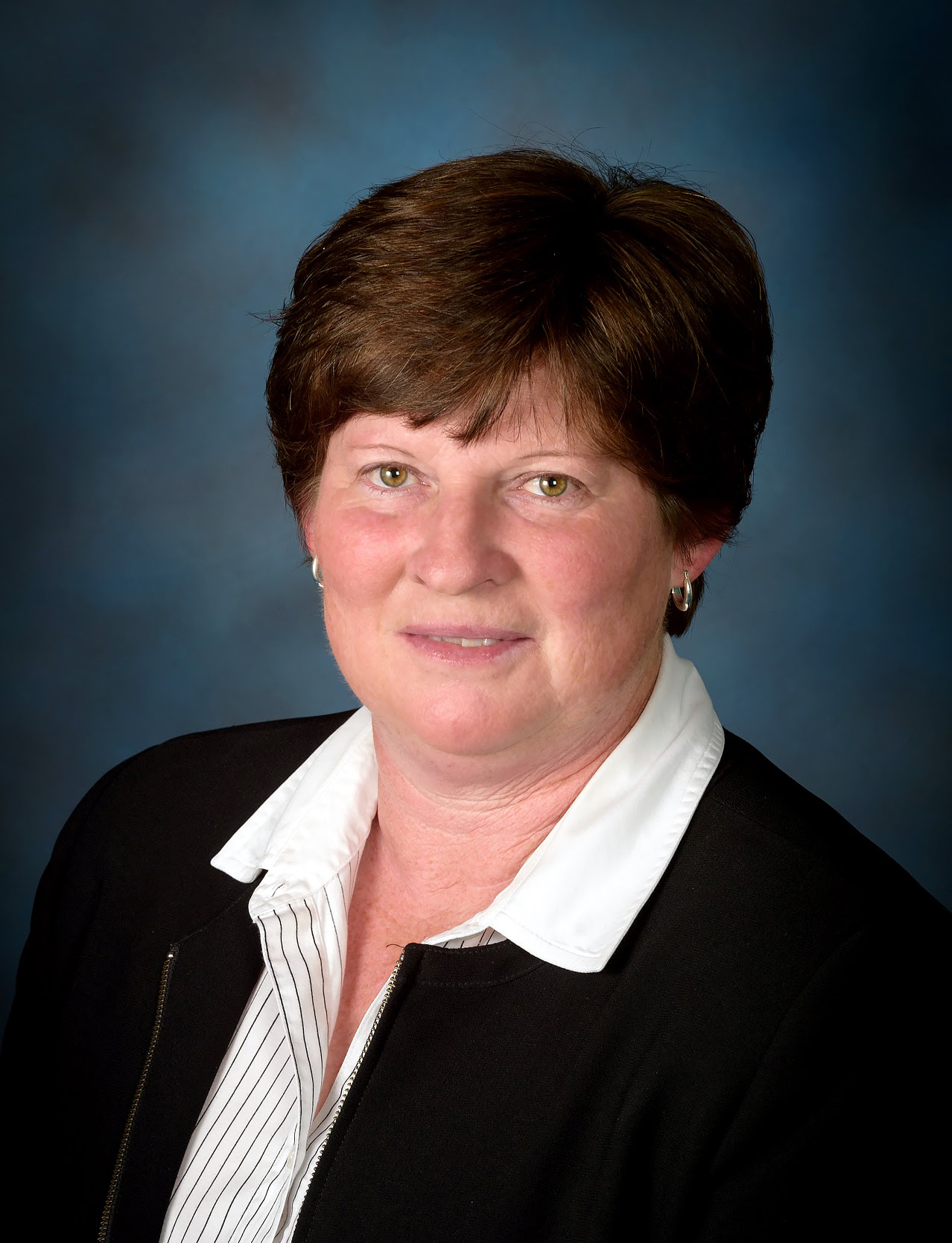
TOPEKA – Beverly Mortimer, vice president of programming for Jobs for America’s Graduates-Kansas, has been selected to participant in the 91st Joint Civilian Orientation Conference (JCOC 91) hosted by the U.S. Secretary of Defense.
Mortimer was nominated by State Senator Elaine Bowers (District 36, R-Concordia) who participated in the 2018 conference.
The JCOC program is the oldest and most prestigious public outreach and full immersion program in the Department of Defense.
As a JCOC participant, Beverly Mortimer will spend several days at the Pentagon and military installations, engaging with senior military officials and U.S. Service members. Mortimer will gain a better understanding of the roles and mission of the U.S. Armed Forces, their skills, capabilities and equipment employed in defense of our nation.
The JCOC program directly links to the Department’s Know Your Military (#KYM) initiative, which is designed to help close the growing civilian-military divide by educating the American public about their military. “We are so proud of Bev and excited that she has been selected to participate in this prestigious program. As head of programming for JAG-K, getting to know our military will help our organization learn more about the career opportunities within the United States military,” said Chuck Knapp, JAG-K president and chief executive officer.
The objective of the JCOC public liaison program is to:
Educate and inform participants about the strength and readiness of the U.S. Armed Forces through personal observation of Army, Marine Corps, Navy, Air Force, and Coast Guard operations.
Provide a better understanding of the rewards and challenges of military service.
Provide the American public opportunities to obtain a better understanding of national defense policies and programs through the eyes of those JCOC participants who have spent time with their military.
The 91st JCOC is scheduled for June 2019. More information about the conference can be found at https://jcoc.osd.mil/.
TOPEKA – The Kansas Department of Health and Environment (KDHE) has added a new data set to its online health data query tool, Kansas Information for Communities (KIC). Emergency department data from the state’s general hospitals is now available on the KIC page.
“Using KIC, individuals and policy makers will be able to see the diagnoses that bring almost 900,000 residents to emergency departments at Kansas hospitals,” said KDHE Acting Secretary and State Health Officer Lee A. Norman, M.D. “This information can provide an insight into the injuries and illnesses affecting Kansans, many of which are preventable.”
Using the KIC emergency department data, individuals will be able to produce statistics on the number of ED visits by county, race, ethnicity, sex and various diagnosis categories. The diagnosis codes are grouped using a clinical classification software developed by the Agency for Healthcare Research and Quality. The same categories are used in the hospital discharge or inpatient diagnoses that are reported in the KIC hospital discharge query tool.
KIC can produce counts, rates and age-adjusted hospital ED or inpatient rates. Other data sets contained in KIC include hospital discharge procedures, births, deaths, pregnancies, cancer and population. Data used in KIC is deidentified with some small counts or unreliable rates suppressed.
The KIC web site also hosts a variety of other statistics, data and resources. The URL is https://kic.kdheks.gov.
TOPEKA – Registration is open for this year’s Kansas Rural Opportunities Conference in Dodge City.
The Kansas Department of Commerce hosts this conference annually to provide useful information about rural Kansas living, as well as to engage in a dialogue with rural Kansans to determine how the Department can bolster its efforts to improve the well-being of rural communities in the state.
The Conference will take place at the Boot Hill Casino & Conference Center in Dodge City on April 2-3.
New Commerce Secretary David Toland will be kicking off the conference and Lt. Governor Lynn Rogers will discuss the Office of Rural Prosperity. Lt. Governor Rogers and Secretary Toland will provide insight to community development efforts.
“The Kelly Administration is committed to ensuring that all Kansans have a high quality of life, regardless of their zip code,” said David Toland, Acting Secretary of the Kansas Department of Commerce.
“The Rural Opportunities Conference is a forum for learning about programs that can support and enhance rural communities, as well as an opportunity for residents to tell us their vision for the new Office of Rural Prosperity, which will be headed by Lieutenant Governor Rogers. Whether a business owner, local official, or just an everyday resident concerned about their community, the Rural Opportunities Conference is the place to be in April.”
Four members of the 6888th (Photo courtesy U.S. Dept. of Defense)
OFFICE OF SEN. MORAN
WASHINGTON – U.S. Senator Jerry Moran (R-Kan.) today, on International Women’s Day, announced that the women of the 6888th Central Postal Directory Battalion were awarded a Meritorious Unit Commendation (MUC) by the Department of the Army on February 20, 2019 for the unit’s exceptionally meritorious performance during World War II. Sen. Moran sought the unit award on behalf of the women who served in the 6888th to recognize their service during their deployment to Europe.
The 6888th Central Postal Directory Battalion – the “Six-Triple-Eight” – was an all-black, all-female unit that served at home and in Europe during World War II, where they sorted and routed mail for millions of American service members and civilians.
“I am pleased to announce the awarding of the Meritorious Unit Citation to the 6888th Central Postal Directory Battalion for their service during World War II,” said Sen. Moran. “This unit arrived in theater and successfully sorted and routed millions of pieces of mail for servicemembers and civilians sent by their loved ones with the expectation that they would be delivered. As we celebrate Black History Month and the start of Women’s History Month, it is important we pause to recognize the contributions and service of this historic unit.”
“It is a privilege to celebrate the women of the 6888th Central Postal Directory Battalion, who served as the first and only Black -American unit in the Women’s Army Corps to deploy overseas during WWII,” said Commander of U.S. Army Human Resources Command Major General Jason Evans. “Their service was of notable distinction as they cleared over a million pieces of mail, ensuring the delivery and boosting the morale of troops fighting in the European Theater. It is a tremendous honor to recognize the accomplishments and sacrifices of these women by awarding them the Meritorious Unit Commendation. The legacy of the 6888th will continue to inspire Soldiers today and for many more years to come as they take their rightful place in history.”
“This is very exciting and most gratifying for the women of 6888th Central Postal Directory Battalion and their families,” said retired Navy Commander and Chairman and Project Director for the 6888th Memorial Committee Carlton Philpot. “These women had a direct impact on the lives of so many at home and in the European Theater of Operations. If a letter was sent to and from the European Theater of Operations between 1943-1946, these women probably sorted and redirected it. The efforts of these women greatly enhanced the morale of those in Europe and at home. After waiting nearly 74 years, I’m sure I speak on behalf of so many when I say that many are very thankful for all of Senator Moran’s support and effort in getting these women this long overdue recognition they earned and deserve.”
More information about a Meritorious Unit Commendation can be found here.
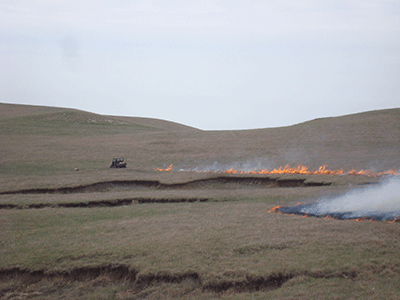
TOPEKA – The Kansas Department of Health and Environment (KDHE) reminds Kansans that March and April are a time when large areas of the state’s Flint Hills rangeland are burned. These burns help preserve the tallgrass prairie, control invasive species such as Eastern Red Cedar and Sumac and provide better forage for cattle. Prescribed burning minimizes risk of wildfires and is effective in managing rangeland resources. Smoke from the burns can influence the air quality of downwind areas. The use of smoke management techniques is vital to reduce impacts.
KDHE activated the Kansas smoke modeling tool on March 1, prior to widespread burning in the Flint Hills. The computer models use fire data and current weather conditions to predict the potential contribution of smoke to downwind air quality problems. On average there are approximately 2.3 million acres burned in the Flint Hills of Kansas and Oklahoma each year.
“We encourage ranchers and land managers to take advantage of this smoke modeling resource to spread out their burns more effectively and mitigate potential air quality impacts,” said Douglas Watson, meteorologist at the KDHE Bureau of Air. “For burns to be safe and effective, weather and rangeland conditions must be ideal. Many landowners will burn at the same time when such conditions are met. Air pollutants from the burns can affect persons in the Flint Hills and can be carried long distances to more populated areas,” said Watson.
Prescribed burns release large amounts of particulate matter and substances that can form ozone. Particulate matter and ozone can cause health problems, even in healthy individuals. Common health problems include burning eyes, runny nose, coughing and illnesses such as bronchitis. Individuals with respiratory issues, pre-existing heart or lung diseases, children and elderly may experience worse symptoms.
Steps to protect your health on days when smoke is present in your community include:
Healthy people should limit or avoid strenuous outdoor exercise.
People with respiratory or heart related illnesses should remain indoors.
Help keep indoor air clean by closing doors and windows and running air conditioners with air filters.
Keep hydrated by drinking lots of water.
Contact your doctor if you have symptoms such as chest pain, chest tightness, shortness of breath or severe fatigue.
For more information about the burning in the Flint Hills, the Flint Hills Smoke Management Plan, the April burn restrictions and the smoke modeling tool, please visit https://www.ksfire.org.
A Hutchinson water tower near SW Bricktown Park. Residents near the park renamed their neighborhood SW Bricktown when they were one of the city’s “featured neighborhoods” targeted for community improvement and engagement.
By MADELINE FOX Kansas News Service
Hutchinson building official Trent Maxwell recalls the city, years back, inspecting the home of a woman whose gas had been shut off for nearly a year.
“She was using one burner on the electric stove to heat water to bathe her little kids,” he said.
The woman finally got fed up and called city officials. She’d held off, she said, because her landlord threatened to land her in jail if she summoned inspectors. That wasn’t true. But she believed the threat.
“No one,” Maxwell said, “should have to live like that.”
Those kinds of situations, as well as a run of house fires, prompted Hutchinson city officials to pass a rental inspection program in 2015. Every rental in the city limits would have to be registered, and city inspectors would go through every rental property once every three years.
But landlords said the city overstepped, infringing on tenants’ right to privacy and holding landlords to a higher standard than homeowners.
Mary Marrow, an attorney at the Public Health Law Center, said it’s not a privacy issue.
“This is a business,” she said of housing rentals. “We have standards about what (are) acceptable living conditions.”
In 2016, though, the Kansas Legislature sided with landlords.
A law signed that year protected landlords from mandatory inspections of the inside of their rentals. It also blocked what’s commonly called “inclusionary zoning,” where a certain percentage of new development is set aside for below-market-rate housing.
“That pretty much cut us off at the knees,” said Steve Dechant, a Hutchinson city council member and landlord who supported the regulations.
Steve Dechant, a landlord and member of the Hutchinson City Council, gestures to properties in his neighborhood. Dechant supported a 2015 policy that required interior inspections of all of the rental properties in the city. (Photos by Madeline Fox, Kansas News Service)
For the state law’s supporters, though, Hutchinson still has the necessary tools to keep its tenants safe. The city’s still been inspecting rentals, but only from the outside. If inspectors want to get inside, they still can, with a warrant or written permission from the tenant.
Maxwell said the benefit of the law, though, is that landlords couldn’t blame their tenants if inspectors came sniffing around.
“It gave kind of a neutral way for the unit to be inspected,” Maxwell said. “The tenant was not going to be at fault.”
Tenants who call in a code violation are legally protected from retaliation by their landlords, said Luke Bell, who represented the Kansas Association of Realtors during the bill’s passage in 2016.
“These inspections are arguably being done in favor of the tenant,” he said. “So if the tenant doesn’t want the inspection, should they be forced to agree to it?”
Marrow, the attorney, said that overstates the city’s control. City inspectors give landlords a heads-up before coming over, and the landlords notify their tenants — they’re not knocking down doors with no warning.
“(Inspection policies are) about protection of renters,” said Marrow, “who, first of all, might not know that there’s a safety violation there, and may not be in a position to do anything about it if there is.”
Still, officials in some Kansas cities say even tenants who know there’s a problem, and that they’re protected from landlord retaliation, might be hesitant to summon inspectors. That could trigger condemnations, which means evictions, which means a rush to find another place for a similar price.
The inspections may have felt like government overreach to some. To others, restricting inspections and price controls at the state level feels like Topeka policymakers stepping on cities’ ability to work out what makes the most sense in their area.
“It’s good to have more tools, rather than less, to deal with whatever problems come up,” said Andrea Boyack, a law professor at Washburn University.
Boyack favors the inspection restrictions in the 2016 state law, which she said protects tenants’ privacy. But she objects to the part of the bill that stops local officials from insisting that developers include affordable units in their housing developments.
Kansas hasn’t seen skyrocketing rents in the same way as some other places, like the burgeoning tech hubs of San Francisco and Seattle. As housing there became more in-demand, and at least some people could pay sizable rents, the market moved with them. Landlords charged what the market could bear.
In Reno County, home to Hutchinson, a minimum-wage worker would have to put in 62 hours a week to make a one-bedroom at fair market rent. That presumes they’re working regular hours every week, but many entry-level jobs have irregular hours.
That puts Reno County’s rental costs below the state as a whole, where workers have to earn $11.20 per hour to afford a one-bedroom apartment. Again, that assumes a full workweek every week, with no unpaid days off. Kansas’ two-bedroom average rent outstrips all its neighbors except Colorado, where Denver-area prices and ski resort towns drive up prices.
Blocking price controls leaves cities without a powerful, if often controversial, tool to make sure housing costs fall in line with earning power.
“You’re taking those tools off the table for local governments,” Boyack said.
But Bell said mandating that, for example, 30 percent of units rent at cheaper rates just means the cost gets passed on to everyone else.
“That developer or that apartment complex owner, they’re going to have to make that up somewhere,” he said. “All it does is it raises the cost of housing for the other 70 percent to control the cost of housing for the 30 percent.”
He said developers might also just avoid projects entirely if building for below-market rents makes it harder for them to recoup investments. Landlords, too, might shy away from renting out properties if they’re subjected to regular mandatory inspections.
When cities can’t force developers to build affordable housing, nonprofits step in. In Reno County, home to Hutchinson, Interfaith Housing and Community Services is trying to connect renters to the safe, good-quality housing it rents out for less than 30 percent of a client’s income.
“We absolutely don’t lack for applicants in any of our programs,” said Clint Nelson, director of housing development at Interfaith.
Interfaith also has a program to give homeowners money for repairs and upgrading. The city has zero-interest loans for home repairs in some of its “featured neighborhoods” — often struggling areas where the recreation and planning departments are working with residents to build community pride and fix up common spaces.
Amy Allison, Hutchinson’s senior city planner, said the loan program and other city-sponsored home-improvement are geared more toward owner-occupied homes now. They may expand that to rentals.
Hutchinson officials are mostly trying to figure out how to grapple with the city’s aging housing and the possible risks it could provide to residents who struggle to find affordable places to live. They’re also trying to not run afoul of the 2016 restrictions passed by the state legislature.
The city’s scaled-back three-year inspection program sunsets this December. After that, the city council will have to decide if it wants to continue mandatory exterior inspections, or even take a crack at getting back into all the rentals’ interiors in a way that doesn’t run afoul of the 2016 state law.
“The goal of the program to begin with,” said Maxwell, “was to find those properties that are just unsafe — that no one should be living in — and if they’re too not feasible to fix, we should take them off the market.”
Madeline Fox is a reporter for the Kansas News Service, a collaboration of KCUR, Kansas Public Radio, KMUW and High Plains Public Radio covering health, education and politics. You can reach her on Twitter @maddycfox.
TOPEKA – The Kansas Department of Commerce is accepting grant applications for youth services. Up to five grants will be awarded to eligible entities to provide innovative services to eligible in-school and out-of-school youth.
The grant period of performance is June 1, 2019 through December 31, 2020.
Eligible respondents include:
Local workforce development boards
Public not-for-profit organizations with 501(c)(3) status
Public or private schools
Unified school districts
Community and technical colleges
Community-based organizations
Faith-based organizations
Other entities with a demonstrated capacity for fiscal integrity, a history of successfully providing services to youth and the ability to meet performance accountability measures will be considered, as well. Additional consideration will be given to applications proposing services to youth in rural areas.
Successful projects will serve in-school and/or out-of-school youth ages 14 to 24, and will provide:
Services designed to prepare participants for employment
Pre-employment skills training
Employment credentials
Work-place learning
As well as other activities which improve participants’ employment readiness and workplace skills.
The Department of Commerce will be accepting applications through 4:00 PM on April 30, 2019 and will host a pre-bid conference at 2:30 PM on March 25, 2019.
The new lab-on-a-chip’s key innovation is a 3D nanoengineering method that mixes and senses biological elements based on a herringbone pattern commonly found in nature, pushing exosomes into contact with the chip’s sensing surface much more efficiently in a process called “mass transfer.” (Credit: Yong Zeng)
KU NEWS SERVICE
LAWRENCE — A new ultrasensitive diagnostic device invented by researchers at the University of Kansas, The University of Kansas Cancer Center and KU Medical Center could allow doctors to detect cancer quickly from a droplet of blood or plasma, leading to timelier interventions and better outcomes for patients.
The “lab-on-a-chip” for “liquid biopsy” analysis, reported today in Nature Biomedical Engineering, detects exosomes — tiny parcels of biological information produced by tumor cells to stimulate tumor growth or metastasize.
“Historically, people thought exosomes were like ‘trash bags’ that cells could use to dump unwanted cellular contents,” said lead author Yong Zeng, Docking Family Scholar and associate professor of chemistry at KU. “But in the past decade, scientists realized they were quite useful for sending messages to recipient cells and communicating molecular information important in many biological functions. Basically, tumors send out exosomes packaging active molecules that mirror the biological features of the parental cells. While all cells produce exosomes, tumor cells are really active compared to normal cells.”
The new lab-on-a-chip’s key innovation is a 3D nanoengineering method that mixes and senses biological elements based on a herringbone pattern commonly found in nature, pushing exosomes into contact with the chip’s sensing surface much more efficiently in a process called “mass transfer.”
“People have developed smart ideas to improve mass transfer in microscale channels, but when particles are moving closer to the sensor surface, they’re separated by a small gap of liquid that creates increasing hydrodynamic resistance,” Zeng said. “Here, we developed a 3D nanoporous herringbone structure that can drain the liquid in that gap to bring the particles in hard contact with the surface where probes can recognize and capture them.”
Zeng compared the chip’s nanopores to a million little kitchen sinks: “If you have a sink filled with water and many balls floating on the surface, how do you get all the balls in contact with the bottom of the sink where sensors could analyze them? The easiest way is to drain the water.”
To develop and test the pioneering microfluidic device, Zeng teamed with a tumor-biomarker expert and KU Cancer Center Deputy Director Andrew Godwin at the KU Medical Center’s Department of Pathology & Laboratory Medicine, as well as graduate student Ashley Tetlow in Godwin’s Biomarker Discovery Lab. The collaborators tested the chip’s design using clinical samples from ovarian cancer patients, finding the chip could detect the presence of cancer in a minuscule amount of plasma.
“Our collaborative studies continue to bear fruit and advance an area crucial in cancer research and patient care — namely, innovative tools for early detection,” said Godwin, who serves as Chancellor’s Distinguished Chair and Endowed Professor in Biomedical Sciences and professor and director of molecular oncology, pathology and laboratory medicine at KU Medical Center. “This area of study is especially important for cancers such as ovarian, given the vast majority of women are diagnosed at an advanced stage when, sadly, the disease is for the most part incurable.”
What’s more, the new microfluidic chips developed at KU would be cheaper and easier to make than comparable designs, allowing for wider and less-costly testing for patients.
“What we created here is a 3D nanopatterning method without the need for any fancy nanofabrication equipment — an undergraduate or even a high school student can do it in my lab,” Zeng said. “This is so simple and low-cost it has great potential to translate into clinical settings. We’ve been collaborating with Dr. Godwin and other research labs at The KU Cancer Center and the molecular biosciences department to further explore the translational applications of the technology.”
According to Zeng, with the microfluidic chip’s design now proven using ovarian cancer as a model, the chip could be useful in detecting a host of other diseases.
“Now, we’re looking at cell-culture models, animal models, and also clinical patient samples, so we are truly doing some translational research to move the device from the lab setting to more clinical applications,” he said. “Almost all mammalian cells release exosomes, so the application is not just limited to ovarian cancer or any one type of cancer. We’re working with people to look at neurodegenerative diseases, breast and colorectal cancers, for example.”
On KU’s Lawrence campus, Zeng worked with a team including postdoctoral fellow Peng Zhang, graduate student Xin Zhou in the Department of Chemistry, as well as Mei He, KU assistant professor of chemistry and chemical engineering.
This research was supported by grants from National Institutes of Health, including a joint R21 (CA1806846) and a R33 (CA214333) grant between Zeng and Godwin and the KU Cancer Center’s Biospecimen Repository Core Facility, funded in part by a National Cancer Institute Cancer Center Support Grant (P30 CA168524).
WASHINGTON – The Federal grazing fee for 2019 will drop to $1.35 per animal unit month (AUM) for public lands administered by the Bureau of Land Management and $1.35 per head month (HM) for lands managed by the USDA Forest Service. This represents a decrease from the 2018 Federal grazing fee of $1.41 per AUM.
An AUM or HM—treated as equivalent measures for fee purposes—is the use of public lands by one cow and her calf, one horse, or five sheep or goats for a month. The newly calculated grazing fee was determined by a congressional formula and takes effect March 1, 2019. The fee will apply to nearly 18,000 grazing permits and leases administered by the BLM and nearly 6,500 permits administered by the Forest Service.
The formula used for calculating the grazing fee was established by Congress in the 1978 Public Rangelands Improvement Act and has remained in use under a 1986 presidential Executive Order. Under that order, the grazing fee cannot fall below $1.35 per AUM/HM, and any increase or decrease cannot exceed 25 percent of the previous year’s level.
The annually determined grazing fee is established using a 1966 base value of $1.23 per AUM/HM for livestock grazing on public lands in Western states. The figure is then calculated according to three factors—current private grazing land lease rates, beef cattle prices, and the cost of livestock production. In effect, the fee rises, falls, or stays the same based on market conditions.
“The BLM and Forest Service are committed to strong relationships with the ranching community and work closely with permittees to ensure public rangelands remain healthy, productive working landscapes,” said Brian Steed, BLM Deputy Director for Programs and Policy. “Fifty percent of the collected grazing fees deposited into the U.S. Treasury are returned to the Range Betterment Fund for on-the-ground range improvement projects. Portions of collected fees are also returned to the states for use in the counties where the fees were generated.”
The grazing fee applies in 16 Western states on public lands administered by the BLM and the Forest Service. The states are: Arizona, California, Colorado, Idaho, Kansas, Montana, Nebraska, Nevada, New Mexico, North Dakota, Oklahoma, Oregon, South Dakota, Utah, Washington, and Wyoming. Permit holders and lessees may contact their local BLM or Forest Service office for additional information.
The BLM manages more than 245 million acres of public land located primarily in 12 Western states, including Alaska. The BLM also administers 700 million acres of sub-surface mineral estate throughout the nation. The agency’s mission is to sustain the health, diversity, and productivity of America’s public lands for the use and enjoyment of present and future generations. Diverse activities authorized on these lands generated $96 billion in sales of goods and services throughout the American economy in fiscal year 2017. These activities supported more than 468,000 jobs.
WICHITA, Kan. (AP) — Teen drivers in Kansas, Missouri and Oklahoma might see more law enforcement officers near their schools in the next two weeks.
The Kansas Highway Patrol says law officers plan their annual special traffic enforcement to encourage teen drivers to wear seatbelts. The campaign will run from Monday to March 8.
Kansas patrol Col. Mark Bruce says the “High Visibility Seat Belt Enforcement Campaign” involves troopers working with local law enforcement agencies to education and enforce the use of seat belts.
The patrol said in a news release that last year, nearly half of all Kansas teens who died in traffic crashes were not wearing seat belts.
TOPEKA – While there has been attention in the media recently related to outbreaks of measles in multiple states, the Kansas Department of Health and Environment (KDHE) can verify that there are no current outbreaks of measles in Kansas. There have been five outbreaks of measles in the United States reported in 2019 in the following states: New York (three outbreaks, including one in New York City and two in other counties), Washington and Texas. These outbreaks are linked to travelers who brought measles back from other countries such as Israel and Ukraine, where large measles outbreaks are occurring.
“The majority of people who have developed measles in these outbreaks have not been vaccinated against measles, or have not completed the recommended measles vaccine series,” said KDHE Acting Secretary and State Health Officer Lee A. Norman, M.D. “While measles was declared eliminated in the United States in 2000, measles is still common in many parts of the world including some countries in Europe, Asia, the Pacific, and Africa. Travelers with measles continue to bring the disease to the United States. Measles can spread in the United States when it reaches a community in this country where groups of people are unvaccinated. The Centers for Disease Control and Prevention (CDC) encourages vaccination before traveling internationally,” said Dr. Norman.
Most people in Kansas are fully vaccinated against measles. To protect against the potential of outbreaks in the state and to protect those who are too young to be vaccinated or are unable to be vaccinated because of certain health conditions, KDHE encourages all people in Kansas to be fully vaccinated. The CDC recommends that children be vaccinated with a two-dose series of Measles Mumps and Rubella (MMR) vaccine at 12 – 15 months of age and an additional dose of MMR at 4 – 6 years of age. Other children and adolescents who have no history of vaccination are recommended to receive two doses of MMR at least four weeks apart. Adults born after 1957 who have no history of vaccination are recommended to receive one dose of MMR.
“When people get vaccinated, they are protecting themselves and their community. This concept is called herd immunity. It is an important reason for you and your family to get vaccinated — so you can help keep yourselves and your community healthy. Germs can travel quickly through a community and make a lot of people sick. If enough people get sick, it can lead to an outbreak. But when enough people are vaccinated against a certain disease, there are fewer germs in the communities, and when people are exposed to them, they are much less likely to become infected — and the entire community is less likely to get the disease,” said Dr. Norman.
Through herd immunity, even people who cannot get vaccinated will have some protection from getting sick. In this situation, if a person does get sick, there is less chance of an outbreak because it is harder for the disease to spread.
KANSAS – The certified public accounting firm of Adams, Brown, Beran & Ball, Chartered (ABBB) has jointly released the results from the 2019 ABBB/Leading Edge Alliance National Manufacturing Outlook Survey. The survey asked about manufacturing companies’ performance in 2018, managers’ expectations for 2019, and the strategies that high-performing manufacturers find most effective.
“This report helps us to prepare solutions that will lead to growth for our own manufacturing clients,” said Julie Wondra, CPA, Partner & Manufacturing Industry Leader. “With this great insight and data, we are able to position our clients for success in the coming year.”
Eight out of ten U.S. manufacturers expect to grow sales this year, buoyed by their optimism about the strength of regional, national and global economies, according to the 2019 National Manufacturing Survey Report prepared by Leading Edge Alliance (LEA), a global association of 220 accounting and consulting firms.
“Across the board, manufacturers are optimistic about the regional economy, sector growth, and increasing revenue expectations in 2019,” the report states. “Looking ahead, manufacturers expect raw materials, labor costs, lack of available talent and competition to be significant hurdles in 2019. The tariffs implemented by President Trump provide productivity issues; however, an increase in spending on Big Data and business intelligence are delivering innovative technology for minimizing productivity concerns.”
More than 350 manufacturing executives participated in the survey, which includes respondents who produce industrial/machining, transportation/automotive, construction, food and beverage, and other products.
2019 Survey Highlights
Growth: 81% of manufacturers expect their revenue to increase in 2019, and 61% expect their overall sector to expand in 2019.
Economy: Optimism for the regional, national and global economies has increased by more than 12 percentage points over the last two years.
Priorities: Manufacturers’ top three priorities are growing sales, improving profitability and addressing the workforce shortage.
Challenges: Most manufacturers (52%) cited labor/talent as their greatest barrier to growth, followed by competition (34%) and profitability (25%).
The survey identified three key growth strategies manufacturers will use to keep their companies on a growth track: Technology, mergers and acquisitions, and talent management.
Technology: Manufacturers plan to leverage technology as key to solving productivity concerns; 76% said that they will investigate/prioritize cybersecurity in 2019, and 43% said they will prioritize Big Data/ERP/IoT.
M&A: More manufacturers are considering a merger/sale or acquisition in 2019; 21% expect to acquire another business in 2019 and 16% are in the pre-planning stage of a merger or acquisition.
Talent: Faced with a growing labor shortage, manufacturers have turned to a range of tools to improve hiring and retention with 62% increasing compensation, 39% implementing retention strategies and 35% using internal training programs.
To view the full National Manufacturing Outlook and Insights report, visit www.abbb.com/resources.
Adams, Brown, Beran & Ball, Chartered provides a wide range of traditional and non-traditional CPA and consulting services to clients throughout Kansas, including agriculture organizations, construction companies, feed yards, financial institutions, governmental and not-for-profit organizations, manufacturers, medical practices, oil and gas companies, professional service firms, real estate companies and small businesses. Founded in 1945, today the firm maintains 13 office locations throughout the state. For more information about Adams, Brown, Beran & Ball, please visit www.abbb.com.
About LEA Founded in 1999, LEA Global/The Leading Edge Alliance is the second-largest international association in the world. It is a high-quality alliance of 220 independently owned accounting and consulting firms focused on accounting, financial and business advisory services. LEA Global firms operate from 620 offices in 110 countries, giving clients of LEA Global firms access to the knowledge, skills and experience of 2,313 partners and 21,355 staff members. For more information, visit www.leaglobal.com.
TOPEKA – The Kansas Department of Health and Environment (KDHE) recently released the report Selected Special Statistics: Stillbirths and Infant Deaths, Kansas, 2017. Despite having the lowest number of infant deaths ever in Kansas, the state’s infant mortality rate (IMR) edged up by one-tenth of a point in 2017. The 2017 IMR was 6.0 infant deaths per 1,000 live births compared to the 5.9 infant deaths per 1,000 live births in 2016.
“In 2017 217 resident infant deaths occurred, six less than 2016,” said KDHE Acting Secretary and State Health Officer Lee A. Norman, M.D. “However, when combined with a 4.2 percent decrease in the number of births in 2017, the infant mortality rate went up.” said Dr. Norman.
(Click to enlarge)
Other key findings of the report include:
Prematurity was the leading cause of death for Black non-Hispanics, accounting for 27.2% of the infant deaths in to this population group doe 2013 to 2017, Congenital anomalies were the leading causes for White non-Hispanics and Hispanics any race.
For 2013-2017 infant deaths, over two thirds (68.7%) died in the neonatal period.
Of linked birth-infant deaths during 2013-2017 where birthweight was known, almost one fourth (23.4%) of infants weighed less than 500 grams, slightly over a fourth (25.1%) of infants weighed 500-1499 grams, and 16.4% of infants weighed 1500-2499 grams.
Of the linked birth-infant deaths during 2013-2017 where gestation was known, almost four out of five infants (79.8%) were born premature or early term.