We have a brand new updated website! Click here to check it out!

Expanded KanCare benefits for quitting tobacco

NAMI-KS

TOPEKA – As anyone who has smoked or used other tobacco products knows, it is hard to stop.

“It’s the hardest thing I’ve ever tried to do.”

“I’ve tried and tried, and I just can’t quit.”

“I quit once for six months, but then I started up again when my dad died.”

These thoughts likely are all familiar to anyone who has used tobacco.

But did you know chances for successfully stopping tobacco use increase if medications and counseling are used together?

That is why a newly expanded program for KanCare patients is exciting news for people who want to quit and stay quit.

For the first time, KanCare is covering quit smoking medications and counseling, for multiple quit attempts per year. These include:

  • Tobacco cessation medications, including the nicotine patch, gum, lozenge, inhaler, nasal spray, Chantix or Zyban
  • Combinations of cessation medications, like the patch and gum
  • Counseling services, from a health care provider, to support patients while they try to quit.
  • For as many times as it takes you to find the right combination and quit for good

This means if you don’t succeed the first time, it doesn’t end there. With the help of your health care provider, it is possible to try more than one option.

If you are still looking for a reason to quit, try these:

  • Your health and appearance will improve
  • More money and time to do the things you want to do
  • Your loved ones

For KanCare patients who use tobacco, ask your health care provider about the expanded benefits today. Chances are better than ever that this time the quit will be for good.

An information card about the expanded benefits can be downloaded here for providers and their patients.  Contact [email protected] to order a supply of these information cards.

KDWPT welcomes new leader

Brad Loveless, KDWPT Secretary

KDWPT

TOPEKA – Governor Laura Kelly has named Brad Loveless to be Secretary of the Kansas Department of Wildlife, Parks and Tourism (KDWPT). His appointment was effective January 14, 2019.

Loveless is familiar to many Kansans and to KDWPT staff as a leader in conservation and environmental programs. He comes to the department from a 34-year career with Westar Energy where he was most recently the senior director of environmental conservation and sustainability. Prior to that position, he was director of biology and conservation programs and earlier held environmental management positions at Wolf Creek Nuclear Operating Corporation. He is perhaps most well-known as one of the leaders of Westar’s Green Team, an active volunteer group of employees and retirees that has been helping with habitat improvement, environmental access and education, and enhancement of sensitive species for 30 years.

“During my career, I have had the pleasure of working closely with KDWPT staff on many occasions,” Loveless said. “They are dedicated and hard-working, and I look forward to helping them manage the state’s natural resources and promote all the wonderful outdoor and travel experiences that Kansas offers.”

In 2013, Loveless was awarded the Kansas State Forester’s Award for Community Forestry. In 2009, he was recognized by the Kansas Wildlife Federation as Wildlife Conservationist of the Year and by the Kansas Association for Conservation and Environmental Education as their Strickler Award winner for Environmental Education. He is an avid hunter, angler and beekeeper.

Nominations open for Governor’s Exporter of the Year

KDC

TOPEKA  – The Kansas Department of Commerce is still accepting nominations for the Governor’s Exporter of the Year Award through the 25th of January.

Kansas businesses are a global force, with goods and services being sought from Kansas internationally.  The annual Kansas Governor’s Exporter of the Year Award proudly celebrates the outstanding Kansas companies that excel in exporting and building relationships with companies around the world. We encourage you to nominate a successful Kansas business for the year 2019’s awards program.

Qualifications considered include:

  • Number and/or percentage increase in jobs due to international activities
  • Innovations in global marketing
  • Number of export destinations
  • Effective use of international distributors
  • Long-term international strategies and prospects for future growth
  • Commitment to the state and local community
  • Foreign language promotional material and general promotional activities
  • Trade shows and/or international expositions

Benefits of this award include:

  • All finalists will be invited to attend the Team Kansas Awards Banquet where top businesses from across the state are recognized and the award-winning company will receive the trophy.
  • The Governor will make a site visit to the award-winning company to honor its management and workforce team.
  • The award-winning company will receive a membership in Kansas International Trade Coordinating Council (KITCC) that selects the award finalists and winner.
  • Recognition of export achievement which can be incorporated into marketing/advertising campaigns
  • Extended networking opportunities

The Nomination Process:

Any Kansas company engaged in exporting is eligible to be nominated for the 2019 Kansas Governor’s Exporter of the Year Award. Please visit https://kansascommerce.gov/GovernorsExporteroftheYear to nominate a business. Self-nomination is also welcomed. All nominations must be received no later than 5:00 p.m. on January 25, 2019.

Nominations can be emailed to April Chiang at [email protected]

Nominations can also be mailed or faxed to:

Kansas International Trade Coordinating Council

c/o Kansas Department of Commerce, April Chiang

1000 S.W. Jackson St., Suite 100

Topeka, KS 66612-1354

Tel:  (785) 296-5473

Fax: (785) 296-3490

Information on Kansas Exporting:

Kansas exports totaled $11.25 billion in 2017. Compared with last year’s data, exports increased by $1.07 billion, representing a 10.5 percent surge. A similar trend can be observed on the national level where U.S. exports experienced a 6.6 percent growth.

Deadline extended for National Career Development Poetry & Art Contest

KDC

TOPEKA – The Kansas Department of Commerce is extending the deadline to participate in the 53rd NCDA Annual Poetry and Art Contest, an initiative of the National Career Development Association, to February 1, 2019.

The contest theme is “Using Careers to Break Barriers, Empower Lives & Achieve Equity.”

The National Career Development Association promotes career development through its annual celebration of National Career Development Month. Every November, career development professionals are encouraged to celebrate with career related activities including the annual Poetry and Art Contest.

Entries will be judged on how they celebrate and inspire career development with a positive tone while emphasizing the national theme.

Please submit any entries to [email protected] by February 1, 2019

Submissions may also be sent by mail to:

Kansas Department of Commerce, Poetry and Art Contest

1000 SW Jackson St., Suite 100, Topeka, Kansas 66612

Please include name and eligibility category from the options below.

ELIGIBILITY

Every adult and student enrolled in school is eligible, as well as adult practitioners who are not in school. Contest divisions areas include:

o   Primary – grades K-2

o   Intermediate – grades 3-5

o   Middle – grades 6-8

o   Senior – grades 9-12

o   Adult Student – ages 18 and older, enrolled in school

o   Open Adult – ages 18 and older (student teachers, parents, professionals, etc.)


REQUIREMENTS FOR POEMS

Poetic Form: Acceptable poetic forms, e.g. cinquain, free verse, diamante, haiku, limerick, metered, rhyming, blank verse

Size: Submit each poem on a single sheet of paper 8.5″ x 11″ in 12-point font.

REQUIREMENTS FOR ART

Lettering: Simple bold lettering is preferred. Captions are to be used to convey the theme, attract attention, and to achieve goals of clarity, vigor and originality. All lettering will be considered part of the design.

Media:

Category 1 (C1): Standard use of ink, pencil, poster paints, magic marker, acrylics, and oils.

Category 2 (C2): Use of photos, clipart, graphic art software, collage, cut and pasted paper, and mixed media.

Size: All art must be created in 8.5″ x 11″ format, including matte, to be eligible.

All state award winners will be notified and sent to NCDA by Feb. 20, 2019

The winning entries for each division will be recognized on the NCDA website in May 2019 and displayed at the Annual Global Career Development Conference in June. National winners will also receive a special certificate and a congratulatory gift from the NCDA

Moran cosponsors TRICARE Reserve Improvement Act

OFFICE OF SEN. MORAN 

WASHINGTON – U.S. Senator Jerry Moran (R-Kan.) – member of the Senate Committee on Veterans’ Affairs – this week cosponsored the TRICARE Reserve Improvement Act, which extends TRICARE eligibility to all National Guardsmen and Reservists, regardless of their civilian occupation.

“Members of our nation’s National Guard and Reserves have sacrificed for this country and stand ready to serve at all times,” said Sen. Moran. “I’m proud to support legislation that would provide a choice in healthcare coverage for servicemembers who also work in the federal government, making certain their decision to enter both military and public service does not limit their access to benefits they have earned. The brave men and women who honorably serve our country deserve the best our nation has to offer, and I will continue to work to make certain they have the flexibility to choose the healthcare plan best for them.”

Under current law, federal employees who serve in the National Guard or Armed Forces Reserve are prohibited from participating in TRICARE Reserve Select (TRS). This disparity creates a financial incentive for transitioning service members to take their skillset and credentials away from the federal government, and penalizes those who choose to serve their country in a civilian capacity. It also limits the effectiveness of TRS as a recruiting tool within the public sector.

This legislation was introduced by U.S. Senators Steve Daines (R-Mont.) and Joe Manchin (D-W.Va.), and is also cosponsored by U.S. Senators Jacky Rosen (D-Nev.), Mike Crapo (R-Idaho), John Hoeven (R-N.D.), Doug Jones (D-Ala.), John Boozman (R-Ark.), Jon Tester (D-Mont.) and Shelley Moore Capito (R-W.Va.).

Keen elected Kansas Corporation Commission chair

Dwight Keen, KCC chairman

KCC

TOPEKA  – At today’s annual Kansas Corporation Commission Organizational Meeting, Commissioner Dwight D. Keen was elected to serve as Chairman of the Commission. Keen was appointed to the KCC by Governor Colyer on April 7, 2018 to a four year term, which expires March 15, 2022.

“We will remain dedicated to enhancing the public safety and well-being of Kansans through our commitment to delivering results that advance the public interest,” said Keen in accepting the Chairmanship.

Commissioner Keen has experience in business, law and government. His prior legal, finance and business experience includes serving as a securities attorney with the National Association of Securities Dealers, Inc. (presently FINRA) in Washington, D.C.; serving as the Senior Financial Analyst and Counsel to the Director of Corporation Finance for a large money center bank in New York City;  practicing corporate and securities law with two prominent Wichita law firms; and serving as Chairman of the Board of Directors of the Kansas Independent Oil and Gas Association. From 1998 to 2010, Keen was an Adjunct Professor of Business for the Graduate School at Friends University in Wichita where he taught five graduate level business courses.

Commissioner Keen’s prior state government service includes: serving for six years as Kansas Securities Commissioner; serving two terms as a Commissioner on the Kansas Commission on Veterans’ Affairs; and serving one four year term as a member of the Kansas Board of Tax Appeals. Keen presently serves as the Kansas representative to the Interstate Oil and Gas Compact Commission and is a member of NARUC, serving on the Gas Committee.

Commissioners are appointed by the Governor and serve staggered four-year terms. State law provides that no more than two of the three commissioners may belong to the same political party. The Commission acts as an independent regulatory agency with authority to render judgments and decisions on regulated utilities.

The KCC regulates the state’s electric, natural gas, telecommunications, oil and gas, and transportation industries with the responsibility of ensuring safe, adequate, and reliable services at reasonable rates for the citizens of Kansas.

Moran introduces bill to help prevent seniors losing money to scams

OFFICE OF SEN. MORAN

WASHINGTON – U.S. Senators Jerry Moran (R-Kan.) – chairman of the U.S. Senate Commerce Subcommittee on Manufacturing, Trade, and Consumer Protection – and Bob Casey (D-Penn.) – ranking member of the U.S. Senate Special Committee on Aging – introduced the Stop Senior Scams Act to ensure retailers, financial institutions and wire transfer companies have the resources to train employees to help stop financial frauds and scams on seniors.

“Our nation’s seniors are among the most vulnerable consumers in this digital age—mistakenly falling victim to scammers that steal their money, identity and dignity,” said Sen. Moran.

“This legislation would bring key industry and government leaders together to make certain we are doing all we can to protect seniors. I’m proud to introduce this widely-supported, bipartisan bill with Senator Casey that would provide resources, materials and programs on fraud prevention.”

“Far too many older Americans have been targeted and victimized by scam artists who steal more than $3 billion annually from seniors,” said Senator Casey. “These criminals coerce and threaten legal action against our elder loved ones if ‘payment’ is not made immediately, often through a wire transfer or gift card. The Stop Senior Scams Act is a common sense proposal that would help stop a payment before it is made so seniors don’t lose one more penny to a fraud or scam.”

The bipartisan Stop Senior Scams Act was introduced during a Senate Aging Committee hearing this morning on fighting elder fraud. The bill would create a federal advisory council to develop educational materials for retailers, financial institutions and wire transfer companies to use to train employees on how to spot and stop financial scams at the point of sale.

This legislation is endorsed by AARP, Amazon, Best Buy, Consumer Federation of America, Consumers Reports, MoneyGram, National Consumers League, National Retail Federation, Retail Industry Leaders Association, Target, Walmart and Western Union.

If you or a loved one receives a suspicious call, hang up the phone immediately and contact the Aging Committee’s toll-free Fraud Hotline at 1-855-303-9470.

Items to note:

  • A summary of the legislation can be found here.
  • Full text of the legislation can be found here.

Clark appointed Deputy Sec. of KDC

KDC

TOPEKA – The Kansas Department of Commerce is announcing today that Patty Clark will serve as Deputy Secretary of KDC.

Clark has spent her career in public service with an emphasis on rural policy and government operations. Clark served both the Graves and Sebelius Administrations in the Kansas Department of Commerce, first as Division Director for Ag Marketing and Community Development and then as Deputy Secretary. She served as State Director for USDA Rural Development and most recently returned to the Kansas Leadership Center as Vice-President, later becoming Acting President from September 2017 through March 2018.

“Patty will make an excellent Deputy Secretary,” said Acting Department of Commerce Secretary David Toland. “Her years of public service speak for themselves. She is a real leader and will bring a wealth of experience to both the job and the Department.”

Kansas contest for top birders

KDWPT

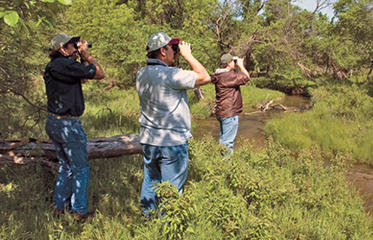
PRATT – Think you know your Kansas birds? Prove it. Keep track of the number of different species you see between Jan. 1, 2019 and Dec. 31, 2019 and enter the 2019 Kansas Birding Big Year contest, hosted by the Kansas Department of Wildlife, Parks and Tourism (KDWPT). But you’d better bring your A-game. Last year, the winner recorded more than 300 species!

Participants of all skill levels may compete in three age groups: youth (17 and under), adult (18-64), and senior (65 and up). Winners in each category will receive great prizes that may include prints of Rob Penner ink drawings, gift cards and more.

Participation Guidelines
1. Participants must register online at https://ksoutdoors.com/Services/Wildlife-Diversity/2019-Kansas-Birding-Big-Year on or before April 1 to be part of the 2019 contest.

2. Participants must read and abide by the set of rules governing the competition (also available at ksoutdoors.com). These rules are adapted from the American Birding Association Recording Rules and Interpretations and include the Code of Birding Ethics. Breaking or disregard for these rules will disqualify the participant from the competition.

3. Participants are required to log their data into the online service, eBird, available on the Cornell University website, www.ebird.org. Each participant will need to create an individual profile, with sign-in and password to begin submitting their sightings.

4. Participants will need to submit a running total list of observed species quarterly to the program coordinator . This is to help track progress and provide quality control. The program coordinator and competition committee have final say on list totals. Dates for submissions are June 30, September 30 and December 31.

5. Winners in each category will be determined by a committee selected by the program coordinator. Winners will be notified and prizes will be awarded in mid-January of the following calendar year. Categories are defined as:

Youth – 17 and under
Adult – 18-64 (3 skill levels: Novice, Intermediate and Advanced)[KR[1]
Senior – 65 and up

6. Prizes will be awarded based on availability and appropriateness per division, as determined by program coordinator and competition committee.

For more information, visit ksoutdoors.com.

Unit 4 Spring Turkey Permit deadline Feb. 8

KDWPT

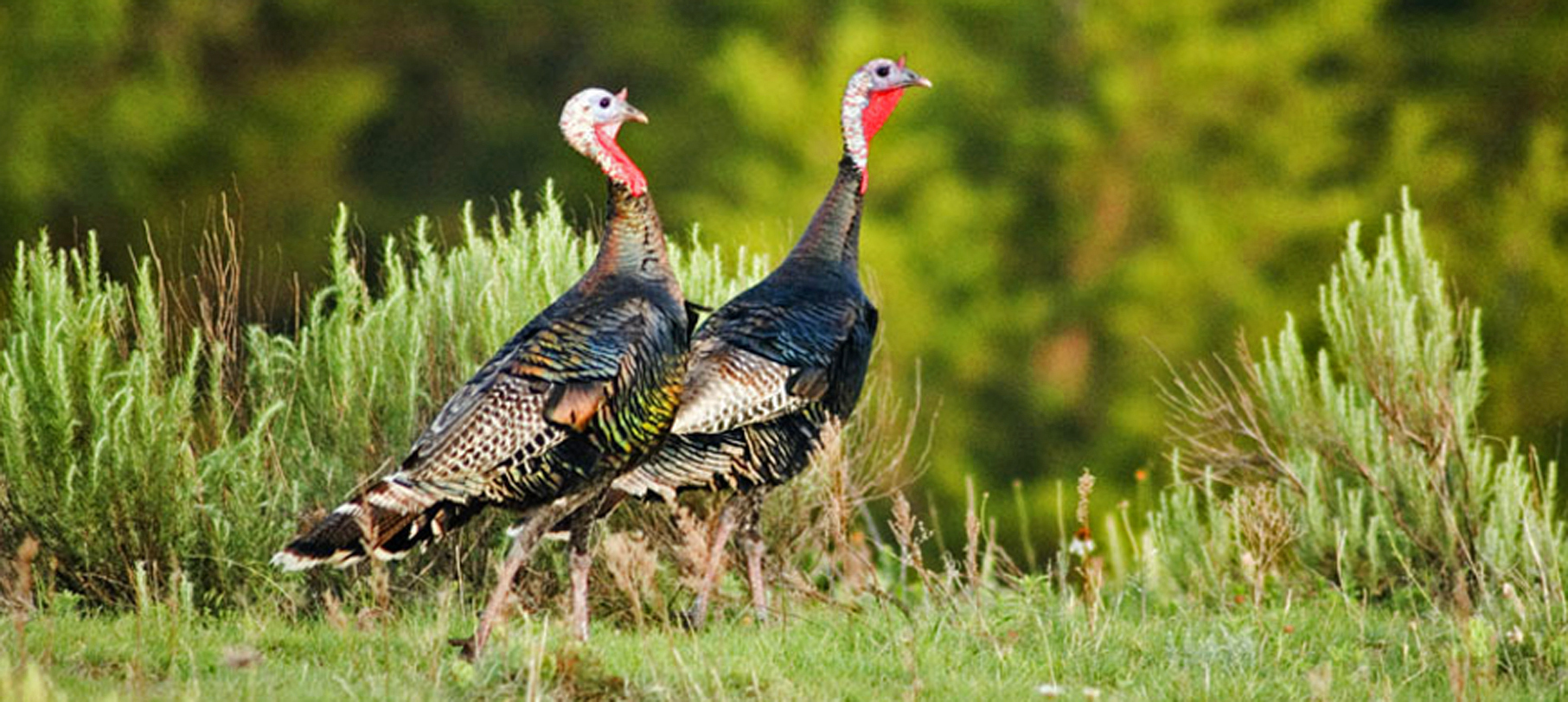
PRATT – Five hundred spring turkey permits are allocated for Kansas residents in Turkey Management Unit 4, which covers the southwestern quarter of Kansas. While spring turkey permits in all other units are available over the counter and online, Unit 4 permits are issued through a lottery drawing and the deadline to apply is Friday, Feb. 8, 2019. To apply for a Unit 4 spring turkey permit, visit ksoutdoors.com and click “Hunting,” “Fees, Licenses & Permits,” then “Turkey.” Resident youth spring turkey permits, which may be purchased over the counter or online, are valid statewide, so residents age 15 and younger do not need to enter the Unit 4 draw.

The permit fee is $32.50, which includes the application fee. Unsuccessful applicants will receive a refund check for the permit price ($26) and be issued a preference point. Hunters may elect not to apply for a permit and only purchase a preference point for $6.50. Only one point may be obtained per year.

The Unit 4 spring turkey permit is also valid in adjacent Units 1, 2 and 5. Applicants have the option of applying for a Unit 4 combo permit at a reduced price, but the second turkey game tag will only be valid in Units 1, 2, 3, 5 and 6.

Unit 4 Spring Turkey Application Fees

  • General Application: $32.50
  • Landowner/Tenant Application: $20.00
  • General Combo Permit/Game Tag Application: $42.50
  • Landowner/Tenant Combo Permit/Game Tag Application: $25.00
  • Nonresident Tenant Application: $37.50
  • Nonresident Tenant Combo Permit/Game Tag Application:  $50.00
  • Preference Point only: $6.50

Any individual who has purchased a spring turkey permit is eligible for a second turkey game tag that is valid in Units 1, 2, 3, 5 and 6 ONLY.

All other spring turkey permits and game tags are sold over-the-counter and online at ksoutdoors.com.

The 2019 Kansas spring turkey season will open April 1-16 for youth and hunters with disabilities, April 8-16 for archery hunters, and April 17-May 31 for the regular season.

For more information on spring turkey hunting, visit ksoutdoors.com or call 620- 672-5911.

Minority and Women Business Spotlight introduced

Camo Cross Dog Training, Topeka

KDC

TOPEKA – The Women and Minority Business Development office of the Kansas Department of Commerce announces the start of the Minority and Women Business Spotlight program.

The purpose for the program is to highlight Kansas small, minority and women-owned businesses. To be eligible, applicants must be small, minority and/or woman owned businesses headquartered in Kansas.

Every month, one business will be selected for the Spotlight. That business will be featured on Kansas Commerce social media and KansasCommerce.gov. The selected company will be featured in an article on KansasCentral.com.

“It is our goal to feature Kansas minority and/or women-owned businesses through our spotlight to assist in their growth and development,” said Rhonda Harris, Director of the Office of Minority and Women Business Development for the Kansas Department of Commerce. “By bringing awareness to these companies and the services and products they provide, we hope to promote a broader outreach to potential customers that may be able to utilize the services offered.”

Applications can be filled out online at https://www.kansascommerce.gov/FormCenter/MWBD-Spotlight-Nomination-Form-31/Nomination-Form-81

The first business to be highlighted is Camo Cross Dog Training in Topeka, KS. The feature can be found at https://www.kansascommerce.gov/1205/Camo-Cross-Dog-Training

Questions about the Spotlight program should be directed to:

Rhonda Harris at [email protected] or calling 785-296-3425.

State issues fish consumption advisories for 2019

KDHE

TOPEKA – The Kansas Department of Health and Environment (KDHE) and the Kansas Department of Wildlife, Parks and Tourism (KDWPT) are issuing fish consumption advisories for 2019. The advisories identify types of fish or other aquatic animals that should be eaten in limited quantities or, in some cases, avoided altogether because of contamination.  General advice and Internet resources are also provided to aid the public in making informed decisions regarding the benefits as well as the risks associated with eating locally caught fish from Kansas waters.

Definitions: 

Bottom-feeding fish:  buffalos, carp, carpsuckers, catfishes (except blue and flathead catfish), sturgeons, and suckers. 

Predatory fish: black basses, blue catfish, crappies, drum, flathead catfish, perches, sunfish, white bass, wiper, striper, walleye, saugeye, and sauger. 

Shellfish: mussels, clams, and crayfish. 

General Population: Men and women 18 years of age or older. 

Sensitive Populations:  Women who are pregnant, may become pregnant, or are nursing and children age 17 or younger.

Meal size (skinless fish fillets before cooking):

Adults and Children age 13 and older = 8 ounces

Children age 6 to 12 = 4 ounces

Children younger than 6 = 2 ounces


Statewide Advisories 

Kansas recommends the following consumption restrictions because of mercury in fish: 

  1. Sensitive Populations should restrict consumption of all types of locally caught fish, from waters or species of fish not specifically covered by an advisory to one meal per week because of mercury.
  1. Largemouth, smallmouth, and spotted bass (black basses):
  • Sensitive Populations should restrict consumption of these species to one meal per month because of mercury.
  • General Public should restrict consumption of these species to one meal per week because of mercury.

Waterbody specific advisories for all consumers 

Kansas recommends restricting consumption of bottom-feeding fish to one meal per week from the following location because of polychlorinated biphenyls (PCBs): 

  1. Cow Creek in Hutchinson and downstream to the confluence with the Arkansas River (Reno County);
  2. The Kansas River from Lawrence (below Bowersock Dam) downstream to Eudora at the confluence of the Wakarusa River (Douglas and Leavenworth counties);
  3. The Little Arkansas River from the Main Street Bridge immediately west of Valley Center to the confluence with the Arkansas River in Wichita (Sedgwick County).

Kansas recommends restricting consumption of bottom-feeding fish to one meal per month from the following location because of PCBs: 

  1. K-96 Lake in Wichita (Sedgwick County). 

Kansas recommends not eating specified fish or aquatic life from the following locations: 

  1. The Arkansas River from the Lincoln Street dam in Wichita downstream to the confluence with Cowskin Creek near Belle Plaine (Sedgwick and Sumner counties); bottom-feeding fish because of PCBs.
  2. Shoal Creek from the Missouri/Kansas border to Empire Lake (Cherokee County); shellfish because of lead and cadmium.
  3. The Spring River from the confluence of Center Creek to the Kansas/Oklahoma border (Cherokee County); shellfish because of lead and cadmium.
  4. Antioch Park Lake South in Antioch Park, Overland Park (Johnson County); all fish because of the pesticides dieldrin, heptachlor epoxide, chlordane, and dichlorophenyltrichloroethanes (DDTs).
  5. Arkalon Park Lakes in Liberal (Seward County) – Kansas recommends not eating fish or other aquatic life because the lakes are sustained solely by treated municipal wastewater.

General advice for eating locally caught fish in Kansas

  1. Sensitive populations should consider restricting their total mercury intake for both supermarket fish and locally caught species.  Concerned parents and other persons may wish to consult with a physician about eating fish and mercury exposure.
  2. Mercury exposure can be reduced by limiting the consumption of large predatory fish.  Larger/older fish of all types are more likely to have higher concentrations of mercury.
  3. Avoid the consumption of fish parts other than fillets, especially when eating bottom-feeding fish.  Fatty internal organs tend to accumulate higher levels of fat-soluble contaminants such as chlordane and PCBs than fillets.
  4. Consumers can reduce their ingestion of fat-soluble contaminants such as chlordane and PCBs by trimming fat from fillets, and cooking in a manner in which fat drips away from the fillet.
  5. Avoid subsistence level (relying on wild-caught fish for daily nutritional needs) fishing activities in large rivers within or immediately downstream of large urban/industrial areas and wastewater outfalls.  Fish in these areas are more likely to contain traces of chemical contaminants.
  6. Kansas recommends not eating fish or aquatic life from surface waters sustained solely by municipal or industrial wastewater because of unknown, yet potentially present pathogens, metals, organic chemicals or other emerging contaminants.  This advisory includes consumption of any aquatic life present in wastewater outfalls, waste treatment lagoons or stormwater detention ponds.
  7. In waterbodies where watches or warnings related to harmful algae blooms have been applied, fish should be consumed in moderation and care taken to only consume skinless fillets.  Avoid cutting into internal organs and rinse fillets with clean water prior to cooking or freezing.

Internet resources from KDHE, KDWPT, EPA, FDA, and the American Heart Association

To view the advisories online and for information about KDHE’s Fish Tissue Contaminant Monitoring Program please visit our website at: https://www.kdheks.gov/befs/fish_tissue_monitoring.htm

For information about harmful algal blooms, including current watches and warnings, visit this KDHE website: https://www.kdheks.gov/algae-illness/index.htm

For information about fishing in Kansas including licensing, regulations, fishing reports and fishing forecasts please visit the KDWPT fishing website:   https://ksoutdoors.com/Fishing

For general information about mercury in fish, national advisories, and advisories in other states please visit this EPA website: https://www2.epa.gov/choose-fish-and-shellfish-wisely

For information regarding personal care products and pharmaceuticals in fish please visit this EPA website:  https://www.epa.gov/fish-tech/pilot-study-pharmaceuticals-and-personal-care-products-fish-tissue

For information about the health benefits vs. the risks of including fish in your diet please visit this American Heart Association website: https://www.heart.org/HEARTORG/GettingHealthy/NutritionCenter/Fish-101_UCM_305986_Article.jsp

For technical information regarding the EPA risk assessment methods used to determine advisory consumption limits please visit: https://www2.epa.gov/fish-tech

Kan. CDBG has funding for community swimming pools

KDC

TOPEKA – The Kansas Department of Commerce announces its Community Development Block Grant (CDBG) Program now enables communities to apply for funding that can be used to construct a swimming pool.

There are many benefits for a community to consider constructing an outdoor city swimming pool – both for lifestyle and health benefits. Swimming pools offer a means of social interaction, relaxation and stress relief. They give an opportunity for residents to participate in aerobic, yet low-impact exercise. Finally, ADA-approved pool helps people in the community who have special needs.

To be eligible, the proposed facility must include a single pool of water with no elaborate extras, such as lazy rivers, slides or splash parks. The pool can include a maximum of two diving boards. Facilities may be designed to allow for extra features in the future but cannot be part of the application.

For a community to be eligible, it must have population of 500 to 25,000. The maximum grant amount is $1,000,000. The application has a deadline of May 15, 2019. The City must still meet the LMI requirements, and a 60/40 match is required (60% CDBG funds and 40% local funds).

For more details and to download the grant application, visit KansasCommerce.gov/cdbg. Questions should be directed to Linda Hunsicker, CDBG Specialist, at (785) 215-4484 or [email protected].

Copyright Eagle Radio | FCC Public Files | EEO Public File