TOPEKA – Governor Laura Kelly officially proclaimed Oct. 6-12, 2019, as Fire Prevention Week in Kansas. The Office of the State Fire Marshal (OSFM) and Safe Kids Kansas teamed up with the National Fire Protection Association (NFPA) — the official sponsor of Fire Prevention Week™ for more than 90 years — to promote this year’s Fire Prevention Week campaign, “Not Every Hero Wears a Cape. Plan and Practice Your Escape!” The campaign works to educate everyone about the small but important actions they can take to keep themselves and those around them safe.
In Kansas, there were 2,621 home fires in 2018, which accounted for 33 deaths and 189 injuries.
NFPA statistics show that in 2017 U.S. fire departments responded to 357,000 home structure fires in the United States. These fires caused 2,630 fire deaths and 10,600 fire injuries. On average, seven people died in a fire in a home per day during 2012 to 2016.
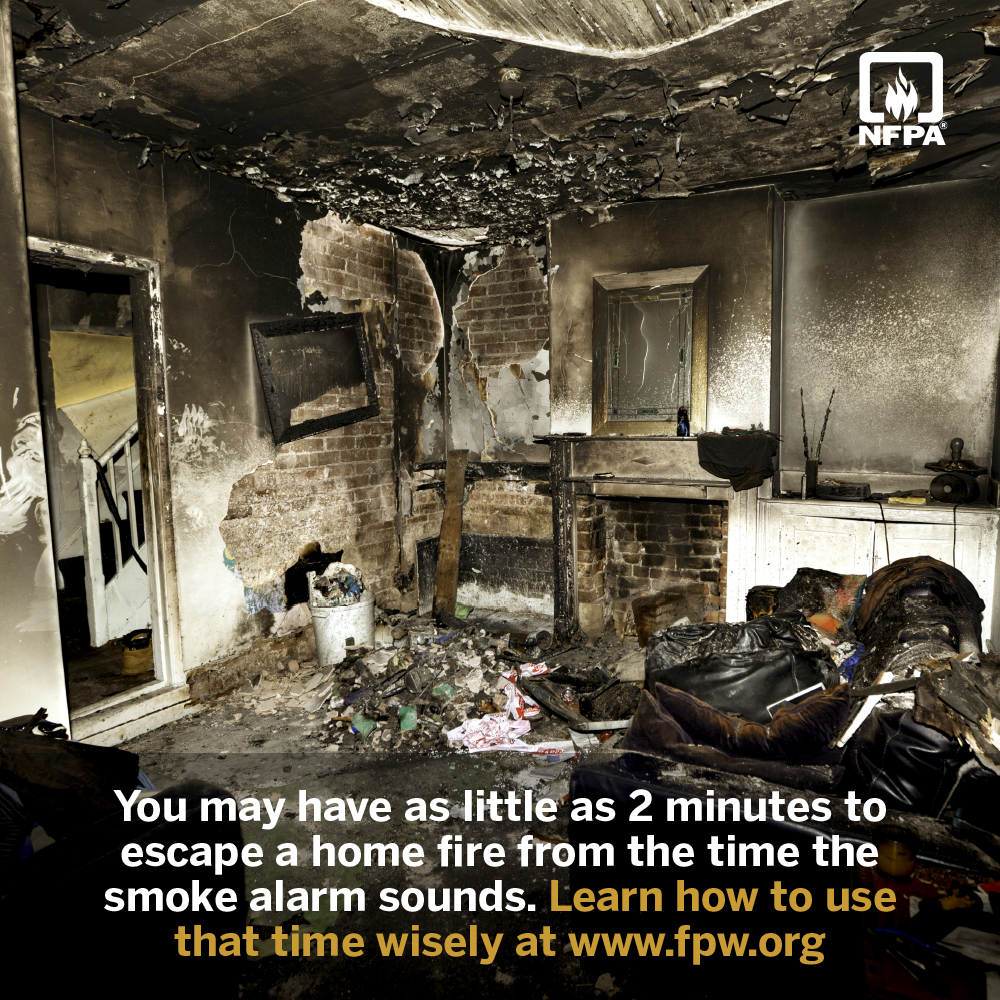
Today’s home fires burn faster than ever. In a typical home fire, you may have as little as one or two minutes to escape safely from the time the smoke alarm sounds. Knowing how to use that time wisely takes planning and practice.
While many are focusing on home fires, these messages apply to virtually any location.
“Situational awareness is a skill people need to use wherever they go,” Doug Jorgensen, Kansas State Fire Marshal, said. “No matter where you are, look for available exits. If the alarm system sounds, take it seriously and exit the building immediately.”
While people feel safest in their home, it is also the place people are at greatest risk to fire, with four out of five U.S. fire deaths occurring at home. That over-confidence contributes to a complacency toward home escape planning and practice.
The Office of the State Fire Marshal recommends Kansans should practice their home fire escape drill at least four times a year, during the day and at night. They should also teach children to escape on their own in the event an adult cannot help them.
“Everyone in the home should know how to call 9-1-1 or the local emergency number from a cell phone or a neighbor’s phone, and they should practice using different ways out,” Jorgensen said.
Safe Kids Kansas would like to remind families that Saturday, Oct. 12, is Home Fire Drill Day. This is an opportunity to plan, talk about and practice your fire plan with all your family members, especially young children, so they know what to do when they hear a smoke alarm.
“Teach children to get low and get out when they hear the smoke alarm,” Cherie Sage, Safe Kids Kansas, said. “A child who has practiced getting out of the home and to a safe meeting spot will have a better chance of getting out of danger safely during a real emergency, so practice your escape plan regularly as a family. “
To learn more about this year’s Fire Prevention Week campaign, “Not Every Hero Wears a Cape. Plan and Practice Your Escape!” and home escape planning, visit https://fpw.org.
LAWRENCE — We’ve entered the golden age of legal nonsense.
“It’s a problem partly because of a lack of knowledge, but partly just a feeling people have that the courts won’t help them. And they’re looking for anything to fix that,” said Colin McRoberts, a lecturer with the University of Kansas School of Business.
McRoberts’ article “Tinfoil Hats and Powdered Wigs: Thoughts on Pseudolaw” can be found in this month’s Washburn Law Journal. The piece probes why a rise in legal scams and frauds is gumming up the court system and harming those gullible enough to be duped.
“For a long time, we’ve had weird, unusual, damaging and predatory legal ideas. But for a long time they grew in tiny little communities that communicated by word of mouth or newsletter. Now it’s online. And now you get much weirder ideas building on top of weird ideas that have always been there.”
Colin McRoberts
A Harvard Law School graduate and former litigator, McRoberts became immersed in the wacky underground community of pseudolaw when he embarked on the 2016 Conspira-Sea Cruise.
“This a cruise by conspiracy theorists for conspiracy theorists,” said McRoberts, who joined writers from Popular Mechanics and Jezebel as the other observing skeptics.
“You spend a couple thousand bucks, which I crowdfunded, and get to listen to a week’s worth of people talking about psychic vampires, Hillary Clinton is a shape-shifting alien, secret ways to avoid paying income tax and all kinds of that stuff.”
The trip also introduced him to Winston Shrout, whose unforgettable name is matched by the unforgettable tales McRoberts divulges about the man in his article. In “Tinfoil Hats,” he describes Shrout as “a prolific lecturer and self-declared Earth delegate to the interdimensional Galactic Round Table. He is also a felon and currently a fugitive from justice.”
This convicted tax dodger capped a weeklong excursion on the Pacific Ocean by telling a room full of rapt theorists that he worked with the Queen of the Fairies to move the international dateline from London to France because it would disrupt international transactions.
McRoberts said, “It was bizarre because I’d watched him sell consulting services, DVDs and books to people on this cruise the whole week. And here was the finale where all the speakers provide their quick high points. And I thought, ‘This is the end of a scam.’ Because the people who are paying to have a private consulting side are now seeing him talk about the Queen of the Fairies. How can they go home and keep sending in money?
“But when I looked around the room, people were nodding and into it.”
The nature of how and why individuals could be so susceptible to this type of wild misinformation became the real revelation for McRoberts. He equates it to the “boiled frog” concept, where progressive exposure to distorted reality takes people to places they never would have gone previously.
McRoberts reveals the informal legal term that embodies this skewed subset: “replacement law.”
“It’s the idea that there is an alternative universe of law,” he said. “That’s the universe where my birth certificate makes me a literal vessel, like a ship, instead of a person. And there is a law saying that. There’s not. It’s the attempt to take that fake universal law and staple it to the real world, without ever bothering to find out whether it’s true.”
While the tinfoil crowd is unquestionably hilarious on the surface, there is plenty of genuine erosion beneath. This type of pseudolaw leaves a trail of casualties.
“If somebody goes to court for not paying taxes because they fell for pseudolaw, and they defend themselves in the tax fraud charges using pseudolaw, they get hurt. And we think of them as the villain in the case — but maybe they were just desperate and fell for some professional guru’s sales pitch. Yet that person never gets in trouble,” he said.
McRoberts contends this is because people viewed as “goofballs” are considered a low priority for law enforcement. In fact, in order for litigious perpetrators to be held accountable, they typically have to stop paying taxes.
That’s what happened to Shrout.
The self-proclaimed “sovereign citizen” mailed more than 1 quadrillion dollars in fake “International Bills of Exchange” to a bank, claiming the U.S. Treasury would honor them. Instead, the government brought him to trial and sentenced him to 10 years for numerous charges, primarily tax evasion. In March, he neglected to turn himself into authorities and is now a wanted man (which hasn’t stopped him from posting his seminars online).
“The reason pseudolaw has grown to be a problem is that people try it, and it fails. But they don’t understand why it failed because the court never explained it or because they don’t have any access to legal understanding and education. So they only know it failed, but not why. And they attribute that to the same shadowy conspiracies that have been plaguing them the whole time,” McRoberts said.
The lawyer wonders why, rather than indulge in pseudolaw, they can’t simply study actual law.
“Why don’t they take the same classes lawyers and judges take?” he said. “And I have yet to find anybody who would even consider taking one of those classes.”
McRoberts started at KU less than a month ago, but his wife has worked nearly four years as a professor in anthropology at the university. Prior to his higher education career, he was a consultant with his own firm, Vasher McRoberts, and with the SAB Group. The Texas native was also a litigator with the Chicago office of Steptoe & Johnson.
His academic expertise is in legal persuasion.
McRoberts admits sometimes it’s tricky to determine what appears more absurd: a tinfoil hat or a powdered wig.
He said, “If you give an average person a page of real law and a page of pseudolaw, it’s kind of hard to tell the difference. They both look ridiculous.”
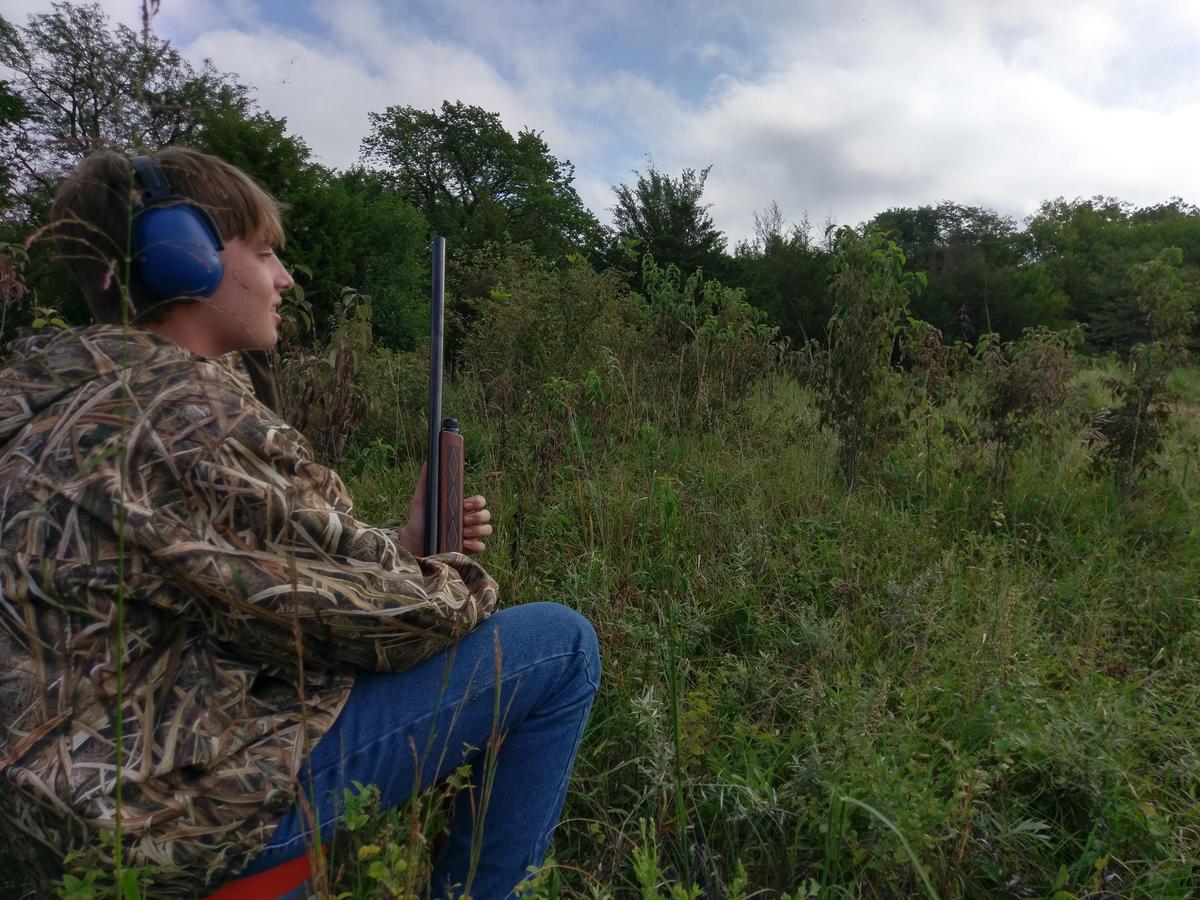
A flight of doves breaks above the tree line. Fourteen-year-old Robert Goodall fires his shotgun. The birds continue on their path unharmed.
“Never shoot at the bird,” Robert’s grandfather, Richard Funk, said. “Always in front of it.”
Robert enjoys going hunting when his grandfather asks him to go along. But the morning’s been slow. He’d prefer something a little more exciting, like football.
“Dove hunting — you’re kind of just sitting there,” Robert said. “In football, you get to go hit people.”
Hunters come to Kansas from across the country for a shot at the state’s deer, elk and turkey. But older Kansas hunters are setting down their rifles, and guided youth hunts — Kansas’ go-to method for attracting the next generation of hunters — aren’t stopping the decline among the next generations.
So the state is now working on a plan that focuses on what it stands to lose: 60% of Kansas’ conservation dollars (the rest comes from taxes on firearms and ammunition sales).
“We’re at that point where it’s like, hey, the bells and whistles are going off,” said Tim Donges, president of the Kansas branch of Quality Deer Management, a nonprofit hunting organization. “We’ve got a problem.”
Hunting’s decline and the results
More Americans are spending time outdoors, according to the U.S. Fish and Wildlife Service. Additional fishing lines are being cast. Would-be wildlife photographers are growing in numbers. But 2 million fewer hunters took to the field between 2011 and 2016.
Kansas has remained popular for out-of-state hunters, with the total number of licenses and permits more than doubling over the past two decades to over 150,000 total. In-state, though, hunting licenses have declined about 14%.
Hunting licenses of all kinds contribute about $28 million to the state’s conservation coffers. Out-of-state licenses cost more, and their popularity has made up for having fewer Kansas hunters. But 2019 was the first in five years where non-resident sales decline, showing there is not a guaranteed way of covering the cost of identity and protecting endangered Kansas species.
Hunting advocates blame several factors: There’s the other entertainment options competing for kids’ attention, from sports to Netflix. Plus, more Kansans live in cities, which requires a road trip to bag a buck.
Yet the biggest concern hunting advocates point to is a lack of public hunting land, the same thing that draws out-of-state hunters in. That is to say, a vacationing hunter with money can lease a ranch owner’s property, giving himself or herself a large stretch of open land.
But less than two percent of Kansas land is free and open to the public, according to the Kansas Department of Wildlife and Tourism. That’s less than nearly every other state.
“The state behind us is Rhode Island, so it’s not great,” said Brad Loveless, secretary of the Kansas Department of Wildlife and Tourism.
The mainstay won’t stay
For years, Kansas encouraged younger hunters by taking kids out on guided hunts. Organized trips could break down the access barrier created by the limited amount of public hunting land. Mentors passed down hunting knowledge to kids whose parents didn’t participate in the sport. And the state figured that early exposure may lead to a lifelong interest.
It worked for 27-year-old Justin Saathoff: He killed his first deer on a youth hunt at Evergy’s Jeffrey Energy Center in Saint Mary in the northeast part of Kansas.
Justin Saathoff (right) leads a youth dove hunting event in September at the Jeffrey Energy Center near Saint Mary.
Saathoff, now a labor relations specialist at Evergy, gives back by leading youth hunts.
“Somebody does not have a true understanding of what hunting is until they actually go do it themselves,” Saathoff said.
Still, the youth numbers are declining. Hunting advocates say part of the problem is that it often takes several hunts to get someone hooked. Recruits can spend hours in the field without a guarantee of excitement or anything to show for the effort. For experienced hunters, that wait is worth it.
“It takes more than one time for somebody to understand what it takes to go out and hunt and be successful,” said Jim Pitman, a district biologist for the National Wild Turkey Federation. “We need to be putting mentors with these people that can take them out multiple times.”
That requires a lot of volunteer hours and mentors. Evergy says it’s not short of mentors willing to lead the hunts, but younger guides like Saathoff are the exception. Mentorship programs are starting to see the same problem that hunting at large faces — the need to find young replacements.
The next steps
Past recruitment efforts emphasized the importance of continuing Kansas’ grand hunting heritage. “Carry on the tradition” is the subtitle for Kansas’ previous hunter recruitment plan, which was created in the 1990s under former Gov. Bill Graves. Funding the state’s conservation efforts came second.
“I don’t know that it’s ever going to be as popular as soccer or football,” said John Ritchey, the Kansas director for the conservation group Ducks Unlimited. “But there is a deep tradition and heritage that follows hunting that would be the saddest thing if it were to disappear.”
“My dad and brothers hunted, and I didn’t necessarily feel welcome to go out with them even though they invited me.”
So, while continuing the youth hunt tradition, the state is looking to flip that by leading with the conservation message.
Last year, Kansas hired 23-year-old Tanna Fanshier to be the Department of Wildlife and Tourism’s new hunting recruitment coordinator. She said the traditionalist message doesn’t work for the young Kansans she’s trying to recruit, and is betting causes like protecting wildlife will reach their ears.
“We’re kind of the ‘Go Fund Me’ generation,” Fanshier said. “We want to give our money to something that’s important to us.”
The department is looking to attract groups they know have historically been underrepresented in Kansas’ hunting scene. New women-only hunting education events will be led by women instructors.
“My dad and brothers hunted, and I didn’t necessarily feel welcome to go out with them even though they invited me,” Fanshier said.
Plus, Kansas is looking at starting gear-rental programs at colleges so students don’t have to have the money to buy or the space stash hunting equipment.
Kansas is also taking inspiration from other movements, like farm-to-table. Think field-to-fork: a way to encourage urban-dwelling Kansans to get some of their food from hunting for the same reasons they eat local. Fanshier has experimented with going to farmers’ markets to give away samples of meat gathered from a hunt, showing shoppers that game doesn’t have to taste gamey.
The full recruitment plan is about six months off. The overall goal isn’t to get the number of Kansas hunters back to where it was 50 years ago, Fanshier said. It’s keeping tradition alive, the conservations coffers filled and having urban dwellers spend a little less time in the city and more time connecting with the Kansas prairie.
Stephan Bisaha reports on education and young adult life for the Kansas News Service. You can follow him on Twitter @SteveBisaha or email him at bisaha (at) kmuw (dot) org. The Kansas News Service is a collaboration of KCUR, Kansas Public Radio, KMUW and High Plains Public Radio focused on the health and well-being of Kansans, their communities and civic life.
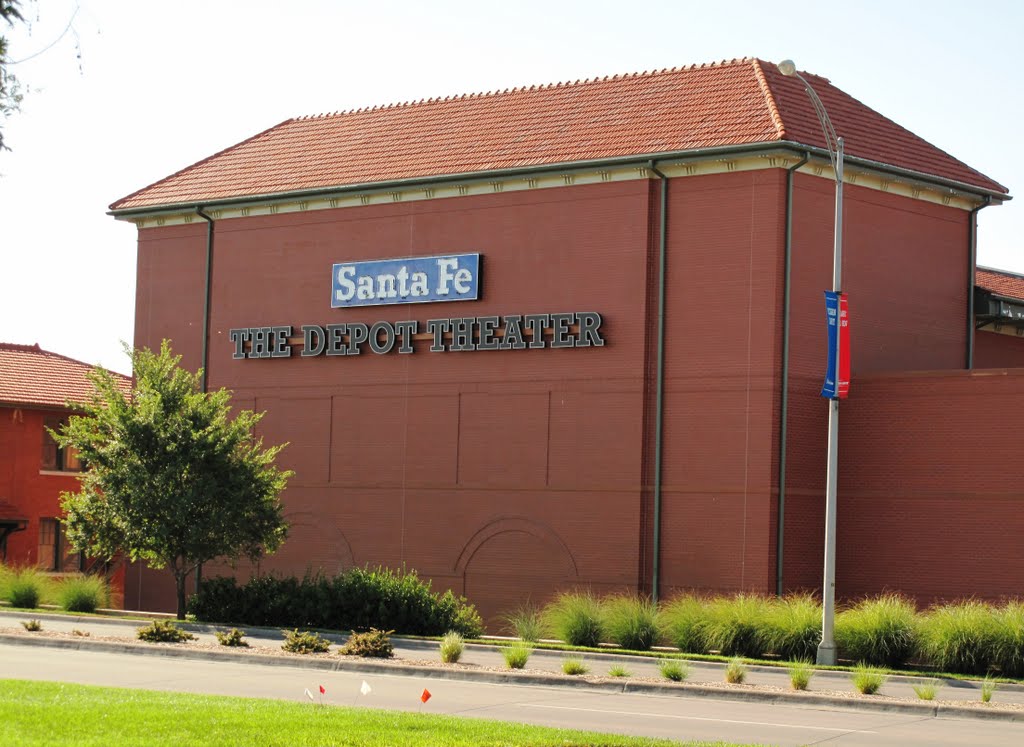
DODGE CITY – It is with great pleasure that the Depot Theater’s board of directors announces a new 2019-2020 season under the artistic direction of Christopher King of Mullinville. King has volunteered to serve and will be the fourth person to lead the theater company established by Don Steele in 1984 as the Boot Hill Repertory Company at the Boot Hill Museum Complex.
Born and raised in Kansas, King’s 35-year theater career includes directing theater programs in New York, Philadelphia, and Kansas City. In addition, he holds directing credits in more than 30 productions including Our Town, Sordid Lives, The Miracle Worker, Joseph and the Amazing Technicolor Dreamcoat, and Fiddler on the Roof.
“I am so honored to follow in the amazing footsteps and traditions of the Depot Theater Company,” said King. “Not only is this an exceptional theater, but the performing arts community, volunteer traditions and the quality of past productions have set a high bar. I look forward to meeting our partners, volunteers, actors and directors, production teams as well as getting to know the region better.”
King recently moved to Mullinville where he is renovating a home. “When I saw that the Depot Theater needed volunteer help, I was more than glad to step up to help ensure the future of performing arts in my adopted region.”
“It is with the utmost respect and appreciation for the tradition of providing high quality theater by actors, directors, technical, costuming and stage crews making up the Depot Theater Company that we announce this new era in theater in southwest Kansas,” said Katie Ruthi, president of the Depot Theater board of directors. “Countless hours of volunteer talent, effort and dedication have filled the Depot Theater and it is inspiring to have Christopher’s volunteer commitment as we build a sustainable future.”
Barbara Straight, president of the Depot Theater Guild and member of the board of directors said “We invite all Company members to continue their involvement with and dedication to the Depot Theater as well as invite community members to join the effort. We’re looking forward to future performances.”
The Depot Theater is housed in the historic Dodge City Union Pacific railroad depot.
Operations of the Depot Theater, 201 E. Wyatt Earp Blvd., were temporarily paused on August 19, 2019, and since that time the board of directors has received an outpouring of support and ideas for future direction. In addition, the board has been conducting intense evaluation toward the goal of reorganizing and refocusing on its mission in order to develop a sustainability plan for the future.
The mission of the Depot Theater is to provide space for theater and performance arts and education to enhance the quality of life for our diverse community. All sponsors, patrons and community partners will be contacted as we move forward with a revised season.
With the support of the Mariah Fund, Kent Stehlik and Kathleen Holt have been working to establish a campaign Get on Board to revitalize and develop a fiscally sound plan for operations. While the event calendar remains in full swing, theater performances will resume before the end of the year with the spring season to be announced in the next few days. The Homestead Haunted House will be the next scheduled event.
As the board of directors continues its revitalization and sustainability plan, all are invited to contribute positive ideas by visiting https://depottheaterco.com/ . The board and constituents of the Depot Theater deeply appreciate your patience as well as your many messages of on-going support.
TOPEKA – The Kansas Department of Commerce’s Office of Minority and Women Business Development will host its 35th Annual Minority and Women Business Awards Luncheon. The luncheon will be held in the Capitol Plaza Hotel’s Emerald Ballroom in Topeka on October 10, 2019, with doors opening at 11:20 am. The event will take place during Kansas Minority Enterprise Development (MED) Week and will recognize 12 minority- and women-owned companies, three individuals and one corporation from across the state for their support and efforts to create new opportunities.
Winner of the Women-Owned Business Service Industry category is Rose
“Minority and women-owned businesses are an integral part of the Kansas economy,” said David Toland, Secretary of the Kansas Department of Commerce. “We greatly value the contributions these businesses and advocates provide to our state, from the jobs they create to the way they enrich communities and lives,” Toland said. “On behalf of Governor Kelly, the Department of Commerce and citizens across the state, thank you for keeping our economy strong and vibrant.”
Brooke Lennington from Topeka’s KSNT will emcee the event and the Washburn Rural High School Jazz Band will provide live music for attendees. Top sponsors of the luncheon include Evergy and Textron Aviation.
Registration for the luncheon is $45 per person or $360 for a table of eight. This event is open to the public, but registration is required and must be submitted by October 1. Please visit KansasCommerce.gov/MEDWeek to register or contact Rhonda Harris, Director of the Office of Minority and Women Business Development, at (785) 296-3425 or [email protected].
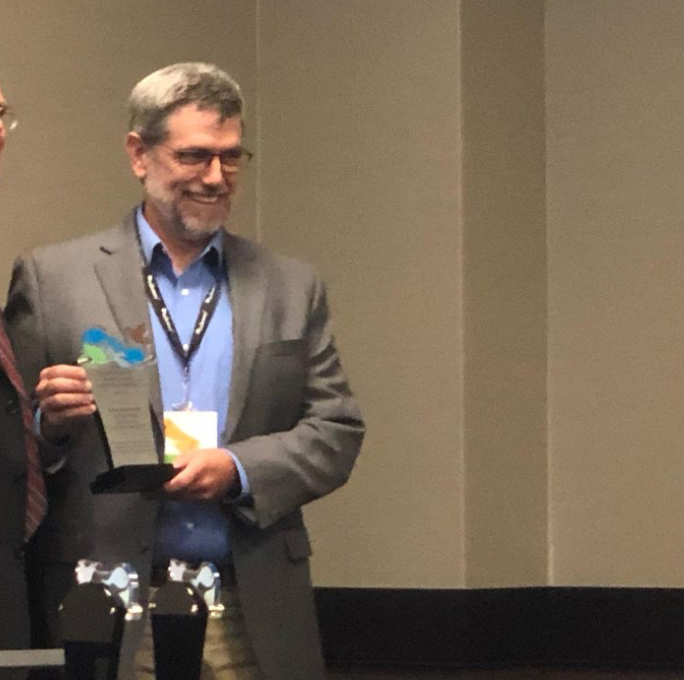
TOPEKA – The Nature Conservancy (TNC) has been honored as two of its employees receive Climate Adaptation Leadership Awards for Natural Resources from the Association of Fish and Wildlife Agencies. The Climate Adaptation Leadership Award, established in 2016, recognizes exemplary leadership by individuals, agencies, businesses, and other organizations to reduce impacts and advance adaptation of the Nation’s vital natural resources and the many people who depend on them in a changing world.
Brian Obermeyer, director of Protection and Stewardship for the Conservancy’s Kansas program, and Chris Hise, associate director of Conservation for the Conservancy’s Oklahoma program, were jointly recognized in the Nongovernmental Organization category for their work creating Site Wind Right, which identifies areas in 17 Midwest states where wind development is unlikely to encounter significant wildlife-related impacts. Projects in low-impact places are also less likely to be delayed or cancelled, resulting in more reliable and efficient renewable energy deployment.
“The Site Wind Right project was truly a team effort, with contributions from Conservancy scientists and GIS staff across the central U.S.,” Hise said. “We sincerely appreciate this award from AFWA.” Hise is a lifelong resident of the Great Plains, and has managed The Nature Conservancy’s conservation efforts in western Oklahoma since 2000.
“The Site Wind Right team, including myself and Mr. Hise, are honored that AFWA recognized the Conservancy’s science-based approach to steer wind energy away from ecologically important habitats and landscapes,” added Obermeyer.
Obermeyer has led the Conservancy’s Flint Hills Initiative for nearly two decades and was recently named director of protection and stewardship for the state.
The Nature Conservancy is a global conservation organization dedicated to conserving the lands and waters on which all life depends. Guided by science, we create innovative, on-the-ground solutions to our world’s toughest challenges so that nature and people can thrive together. We are tackling climate change, conserving lands, waters and oceans at unprecedented scale, providing food and water sustainably and helping make cities more sustainable. Working in 72 countries, we use a collaborative approach that engages local communities, governments, the private sector, and other partners. To learn more, visit www.nature.org or follow @nature_press on Twitter.
In Kansas, the Conservancy has protected 140,000 acres of the state’s most ecologically important lands and waters. To learn more, visit www.nature.org/kansas.
TOPEKA – The Kansas Water Office (KWO) is accepting nominations for the Water Legacy Award as well as the “Be the Vision” recognition to be presented at the Governor’s Water Conference on the Future of Water in Kansas November 7-8 at a new location, the Hyatt Regency in Wichita, Kansas.
The Water Legacy Award recipient will be selected based on significant contributions and lasting impacts on the future of water in the state. Past recipients of the award include: Wayne Bossert in 2015, Joe Harkins in 2016, Pat Sauble in 2017 and David Pope in 2018.
“Be the Vision” recipients, which can be individuals, municipalities, companies or organizations, will be selected as an entity or individual taking extraordinary measures to conserve, reuse or adopt better practices to help ensure the future of our state’s water resources.
The deadline for both of these nominations is October 11. In addition to these awards, student poster research and photo contest entries are being accepted. Each of these will be part of the upcoming conference.
Conference registration is now available online at www.kwo.ks.gov. Conference details, tentative agenda, brochure, speakers, sponsors and hotel information can be found online as well. Deadline to register for the conference is October 24.
The Governor’s Conference on the Future of Water in Kansas is hosted by the KWO and K-State /Kansas Water Resource Institute. Major sponsors for the event include 96 Agri Sales, Inc., Black & Veatch, Burns & McDonnell and Great Lakes Dredge & Dock.
People with autism performed a precision grip-force test like this one while being scanned inside an MRI machine. (Credit: Life Span Institute/Leilani Photographs)
KU NEWS SERVICE
LAWRENCE — A new study in the Journal of Neurophysiology by researchers at the University of Kansas Life Span Institute is the first to look at functional brain activity in people with autism spectrum disorder (ASD) while they performed precision visuomotor behavior — in this case, a grip-force test.
The authors found new evidence sensorimotor changes in people with autism involve abnormal cortical and subcortical organization “that may contribute to key clinical issues in patients.”
People with autism performed a precision grip-force test while being scanned inside an MRI machine. They watched a display containing two horizontal bars set against a black background. The subjects controlled the bars in specific ways by pressing a device in their right hand. So did a control group of people without ASD.
“In areas of the brain for dynamically incorporating and adjusting your motor behavior based on information you’re receiving, those circuits were deficient,” said lead author Kathryn Unruh, a postdoctoral researcher at KU’s Life Span Institute and Kansas Center for Autism Research and Training (K-CART). “But then we also show that people with autism are potentially compensating for those deficits by using other areas of the brain.”
While ASD is diagnosed based on deficits in social-communication skills and the presence of certain restricted and repetitive behaviors, those are difficult for researchers to objectively measure, as opposed to brain activity during visuomotor tasks, Unruh said.
“Motor behaviors are deficient across individuals with autism, regardless of their level of functional ability,” she said. “Sometimes it may look like something very subtle in their eye movements that you would never be able to see without special equipment. It could look like handwriting problems or sometimes could also look like having problems with more general motor coordination, like playing sports.”
The precision grip test used by the researchers allowed them to isolate and examine one task and its associated brain activity as they measure differences among 20 subjects with ASD and 18 without.
“We’re able to quantify this very precisely,” Unruh said. “Trying to put a number on someone’s social ability or their communication — it is very difficult. So, this is an attractive way of measuring behavior. Here, we’re getting a much closer approximation of what the brain is actually doing.”
Senior author Matt Mosconi, director of K-CART, an associate scientist in the Life Span Institute and associate professor in the Clinical Child Psychology Program at KU, said in ASD patients sensorimotor problems can be frustrating for them, and they often go overlooked because communication and behavioral issues are the things others usually focus on.
“Sensorimotor issues, or difficulties coordinating and controlling our movements, are common in ASD and often a major source of frustration as they affect many of our daily activities,” he said. “Studying sensorimotor issues is therefore important for understanding the diverse challenges experienced by individuals with ASD.”
Not only did the study show the brain is organized differently in individuals with ASD in terms of its function for basic sensorimotor behaviors, but these functions can differ between people with autism.
“Importantly, as we know every individual with ASD shows different sets of skills and challenges, we also found differences in brain organization varied across our individuals highlighting the importance of testing measures of brain function in relation to different behaviors, rather than just relying on simple comparisons of individuals with ASD and individuals without ASD,” Mosconi said.
The researchers found ASD patients’ ability to rapidly integrate multisensory information and precisely adjust motor output is compromised. Further, reduced ability “to maintain steady-state levels of sensorimotor output may contribute to multiple developmental issues affecting social-communication abilities and cognitive processing.”
Along with Unruh and Mosconi, authors of the new study are Laura Martin of the Hoglund Brain Imaging Center and Department of Preventive Medicine and Public Health at KU Medical Center, Grant Magnon of the University of Pittsburgh, David Vaillancourt of the University of Florida and John Sweeney of the University of Cincinnati.
The researchers are actively seeking individuals with ASD and individuals without ASD ages 10-35 years for ongoing NIH-funded studies of sensorimotor behavior and brain function. Contact [email protected] for more information.
MANHATTAN — The Kansas Department of Agriculture has funds available for the national Organic Certification Cost Share Program (OCCSP). Through this program, farms, ranches and businesses that produce, process or package certified organic agricultural products may be reimbursed for eligible expenses.
The purpose of the OCCSP is to defray the costs of receiving and maintaining organic certification under the National Organic Program. The program allows state agencies to provide reimbursement to certified organic operators for up to 75% of the operation’s total allowable certification costs, up to a maximum of $750 per certification scope. Scopes include the areas of crops, livestock, wild crops and handling (i.e., processing).
The U.S. Department of Agriculture Farm Service Agency administers two organic certification cost share programs, and awards the OCCSP funds to eligible state agencies that serve as administering entities who work directly with organic operations to reimburse organic certification costs. The current period of qualification for organic operations seeking reimbursements is from Oct. 1, 2018, through Sept. 30, 2019, and applications will be accepted through December 15, 2019, or until all funds are expended, whichever comes first.
KDA is committed to serving all Kansas farmers, including lending support to those who wish to market and sell their products as certified organic. For more information, go to the KDA website at agriculture.ks.gov/organic or contact KDA economist Peter Oppelt at [email protected] or 785-564-6726.
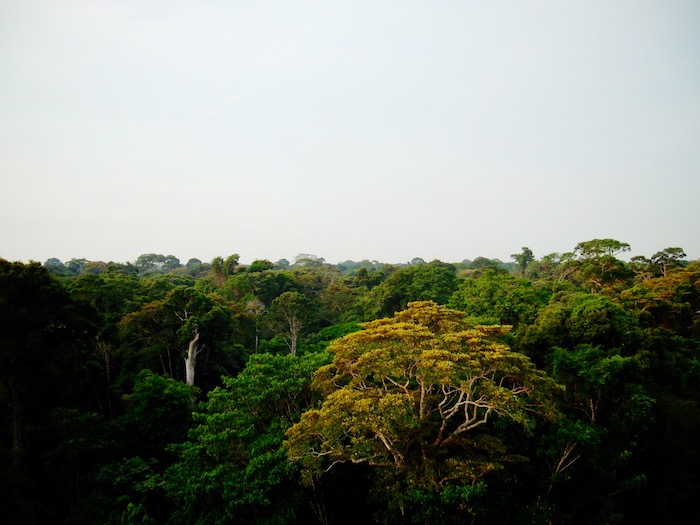
LAWRENCE — Throughout August and early September 2019, media around the world have reported on the extensive forest fires ravaging Brazil’s Amazon rainforest. Much of the concern stems from the Amazon’s significance to regulating the world’s climate. According to the Associated Press, the Amazon absorbs 2 billion tons of carbon dioxide every year — about 5% of global emissions. Thus, fires in the region eat away at this carbon-absorbing capacity while at the same time adding carbon to the air through burning.
Gabriel de Oliveira
A recent study in the peer-reviewed journal Ecohydrology headed by University of Kansas researcher Gabriel de Oliveira gives important context to the fires burning big swaths of the Amazon today, most of which were set intentionally by farmers and ranchers to convert forest into land suitable for grazing animals or growing crops. The researchers sought to discover how these changes to land cover affect the exchange of water and heat between the surface of the Amazon and the atmosphere overhead.
“This is the first study to examine the biosphere-atmosphere interactions in the Amazon with such high spatial resolution satellite imagery,” said de Oliveira, a postdoctoral researcher in the Department of Geography & Atmospheric Science at KU. “We tried to understand the impacts of land-cover changes and deforestation in general. When you clear-cut the forests, and you convert it either to pasture or agriculture — or cut the forest, but for some reason don’t plant anything and then have a type of vegetation called ‘secondary succession’ — our idea was to try to understand how that impacts energy, like the radiative fluxes and water fluxes, or evaporation in general.”
In the paper, de Oliveira and his colleagues analyzed information from both satellites in space and weather stations on the ground in the Amazon. With data from the Advanced Spaceborne Thermal Emission and Reflection Radiometer (ASTER) and Large‐Scale Biosphere‐Atmosphere Experiment in Amazonia (LBA), they examined surface energy and water changes over different land‐cover types in one wet year and one drought year in eastern Rondônia state, Brazil. The team also found statistically significant differences in several important measures prior to and after one year of deforestation.
“Using NASA satellite images with high spatial resolution (15m) obtained by the ASTER sensor in Rondônia state, in the south-western Brazilian Amazon, we found that deforestation and consequent transition to pasture or agriculture to grow soybean tend to increase in two to four times the soil and air temperatures in the region,” de Oliveira said. “We also observed an approximately three times higher evapotranspiration over forested areas in comparison with nonforested areas.”
The researchers discovered significant variances between areas on opposite sides of the Ji-Paraná River, one side of which had suffered more deforestation than the other side, located within the Jaru Biological Reserve protected area. They measured spatial variation of albedo (or the fraction of the incident sunlight that the surface reflects), net radiation (or the total energy, derived from sunlight, that’s available at the surface), soil and sensible heat fluxes (or how much heat is transferred from the surface to the atmosphere), and evapotranspiration (the process by which water is transferred from the land to the atmosphere by evaporation from the soil and by transpiration from plants).
De Oliveira, who was raised in Brazil, said the rest of the world depends on the Amazon region to help moderate global climate.
“It’s important because it’s the largest rainforest in the world,” he said. “Precipitation in the tropics, all the water fluxes that go on in the tropics, affect the whole world. The Amazon has a very important role in that. There’s no other area in the world like the Amazon’s unique ecosystem. It’s pretty fascinating. I’m from South Brazil, a totally different environment than the Amazon. You could compare it with Kansas. But when I started studying for my master’s degree, my adviser told me, ‘You’re going to work in the Amazon rainforest.’ And I told her I’d never been there. But I spent two months in the rainforest doing research. And of course, you know, I fell in love. I’m very passionate about the Amazon and have been there so many times since then, so I have a lot of experience and stories of things that have happened there.”
The KU researcher cautioned that although forest fires in the Amazon have received attention in the media this year, the fires happen to a greater or lesser degree every year.
“Fires in the Amazon happen every year during the dry season,” de Oliveira said. “We have agricultural areas, areas that were deforested in the past — but in order to clear the area for the next year, or to make the soil a little bit better for the next year, they set a fire. They claim they’re only setting fire to burn agricultural lands. But sometimes the fire gets out of control, and it plays a part in more deforestation. Fires get out of control in agricultural land and reach the forest and burn the forest. But these fires happen in the Amazon every year, so it’s pretty straightforward. The worst years were in 2005, 2010 and 2015 because of severe drought events. Everything was really dry, and the fires would get out of control. There are no natural fires in the Amazon. They’re all set by human beings.”
De Oliveira’s co-authors on the study were Nathaniel Brunsell, professor and chair of KU’s geography & atmospheric science department; Elisabete Moraes, Yosio Shimabukuro, Celso von Randow and Luiz E.O.C. Aragao of the Brazilian National Institute for Space Research; Thiago dos Santos of the University of Michigan and Renata de Aguiar of the Federal University of Rondônia.
TOPEKA – For many outdoor enthusiasts, any day they can spend hunting or fishing is a day to celebrate. Now there is one more reason to observe our hunting and fishing opportunities. Governor Laura Kelly has proclaimed Saturday, September 28 as National Hunting and Fishing Day in Kansas to celebrate Kansas’ sportsmen and women and to recognize the many and varied social, cultural, economic, and ecological benefits of our time-honored traditions of hunting and angling.
Kansans have enjoyed a rich and storied tradition of hunting and angling since before Kansas became the 34th state in January 1861. The state’s sportswomen and men were among the first conservationists to support establishing the predecessors of the Kansas Department of Wildlife, Parks and Tourism (KDWPT) to conserve fish, wildlife and their habitat. Through their license fees, outdoor enthusiasts have funded state efforts to provide for healthy and sustainable natural resources.
Upon realizing that license fees alone were insufficient to restore and sustain healthy fish and wildlife populations, sportsmen and women supported self-imposed federal excise taxes on firearms, ammunition, fishing equipment and motorboat fuel to raise additional conservation funds. To this day, wildlife conservation in Kansas and other states is funded primarily by sportswomen and men, through this American System of Conservation Funding – a “user pays – public benefits” approach that is widely recognized as the most successful model of funding fish and wildlife management in the world.
In fiscal year 2018 alone, Kansas’ sportswomen and men generated more than $32 million in license and permit fees through this system to support the conservation efforts of the KDWPT. What’s more, Kansas’ 527,000 hunters and anglers support the state’s economy through spending more than $629 million while engaged in their pursuits which supports more than 9,331 jobs and generates $69 million in state and local taxes.
National Hunting and Fishing Day was established in 1972 to celebrate and recognize hunters and anglers for their immense contributions to fish and wildlife conservation, and to our society. The KDWPT is grateful for the passion of hunters and anglers in supporting the state’s conservation programs that provide sustainable habitats benefitting all the species of wildlife and fish that Kansans enjoy.
MANHATTAN — The Kansas Department of Agriculture will be one of 15 states participating in a functional exercise the week of Sept. 23-26 focused on the states’ plans for African swine fever (ASF) response and mitigation. The functional exercise, led by the U.S. Department of Agriculture, will test participants’ abilities to respond to a simulated animal disease event.
KDA conducts an annual statewide exercise to practice the state’s response plan to a foreign animal disease event, typically with a simulation of foot-and-mouth disease. This month’s multistate exercise is focused instead on ASF, which has been confirmed in China and several other countries in eastern Asia, but has not occurred in the United States. Members of the KDA Division of Animal Health have been actively working with federal partners, state agencies of neighboring states, and representatives from the pork industry to enhance the state’s response plan with specific focus on ASF.
This four-day functional exercise, which will be based out of KDA headquarters in Manhattan, will enable KDA and its partners in other state agencies, federal and local government, industry, university and 14 other states to practice this response plan.
The functional exercise will attempt to simulate a real-world response as much as possible, including actual veterinarian testing and laboratory results, along with planning and resource coordination, disease mitigation, public educational information, and permitted movement to allow continuity of business for non-infected operations.
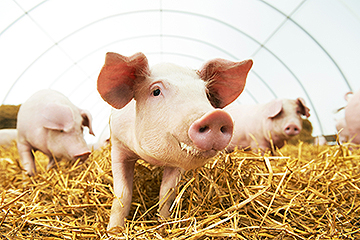
African swine fever is a highly contagious virus that affects pigs, causing high fever, loss of appetite and vomiting, and usually resulting in death. Other livestock species are not susceptible to ASF. There are no human health risks from ASF; it does not affect humans and is not a public health threat. An ASF outbreak in the United States would, however, have the potential to cause enormous economic losses not only to pork producers but to the entire production chain as well as to consumers.
For more information about the multistate ASF exercise, contact KDA at 785-564-6700. Media wishing to monitor the exercise should contact KDA director of communications Heather Lansdowne at [email protected] or 785-564-6706 for more information.
LAWRENCE — The tobacco industry has a history of targeting young people in its advertising to attract new customers. As vaping and electronic cigarettes have grown in popularity, advertisers are up to the same old tricks. New research from the University of Kansas shows that not only do those advertising tactics work, but young people also fail to question information touted in those ads.
Adolescents are the target market for e-cigarette advertisers as drawing in young customers is key to the industry’s business model. While research has examined how young people view e-cigarettes, or how high school youths view advertising, little attention has been paid to how such ads target adolescents. Researchers conducted five focus groups with 39 youths ages 12-17 who don’t use e-cigarettes to find out how they viewed the ads. The findings reflect three key themes:
The ads motivate nonsmokers to use e-cigarettes.
There was a fascination with the technical and emotional appeal of the products.
When searching for information about e-cigarettes, there was very little validation of information.
Yvonnes Chen, KU Associate Professor, School of Journalism
Yvonnes Chen, associate professor of journalism & mass communications; Chris Tilden, research project manager at KU’s Center for Public Partnerships & Research, and Dee Katherine Vernberg of the Lawrence-Douglas County Health Department conducted the focus groups and published their findings in the journal Psychology & Health. The study was funded by a Centers for Disease Control Community Health Grant.
“When e-cigarettes were just starting, people were curious how and why they existed and how they work. But now that they are increasingly popular, we want to know more about their advertising and marketing,” Chen said. “Research has skimmed over the advertising factors, especially as they relate to adolescents’ intent to use them.”
Participants said advertising for e-cigarettes made them want to try the products. They pointed to multiple flavors, the idea that they were a safe alternative to traditional cigarettes and the way they made vaping look cool as the main reasons. Multiple respondents said the ads mentioned they were healthier than cigarettes, leading them to believe they would not get addicted.
“These e-cig companies steal the entire playbook from the tobacco industry,” Chen said. “You see the ‘cool factor,’ the sex appeal and all the same tactics cigarette companies used in advertising. But before now we haven’t looked at how those approaches are perceived by adolescents.”
Respondents also indicated a fascination with the technical and emotional appeal of the commercials. Several pointed out the appeal of the e-cigarettes themselves, their sleek design, batteries and packaging to look like flash drives or “Lord of the Rings” branding were appealing.
“I saw a magazine ad for high-end e-cigarettes, marketing them as a more classy alternative to cigarettes. They were highlighting features and technologies they had, like how long the battery lasted. So it was making it seem fancy — special vapor technology,” one participant said.
Others recalled special effects used in the ads, such as how Blu, one of the most popular brands, had black-and-white commercials highlighting only the color of the e-cigarette.
The emotional appeal was front and center, with participants reporting they perceived social benefits like increased friendships or health benefits including a safer alternative to traditional tobacco, help in quitting smoking or the absence of secondhand smoke.
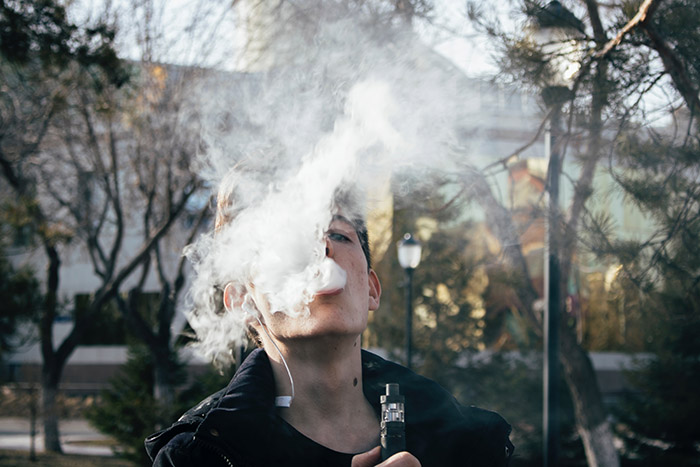
The third theme showed that when adolescents search for information on e-cigarettes, there was little verification of the information they found. The majority reported youths their age learn about e-cigarettes through search engines and social media platforms. Participants cited YouTube and Instagram demonstration videos on blowing smoke rings and other vaping tricks. When asked if they searched for specific information, the adolescents reported they searched for information on ingredients, if they contained nicotine, health effects, how to obtain them and price. While some said they found “very scientific” information, others said they mostly found information aimed at justifying use.
While the findings show that adolescents remember specific aspects of the ads, their comments lacked skepticism, suggesting the influence of the ads is even more effective on adolescents than older audiences. The results, when taken with the industry trend of increasingly using digital and mobile media for product promotion, show that e-cigarettes and marketing should be regulated by the FDA, researchers argued. While such regulation does not currently exist, media literacy campaigns designed to help adolescents better understand targeted messages and encourage critical thinking would be beneficial.
“The ads were all about being designed so they would be remembered by the viewers. And the e-cigarette industry is very aware of that and very good at it,” Chen said. “I think this adds to a growing body of research and adds support for researchers urging the FDA to take swift action to regulate e-cigarettes.”
 OSFM
OSFM