We have a brand new updated website! Click here to check it out!

Gov. Colyer speaks at 30th anniversary of Spitak earthquake in Armenia  

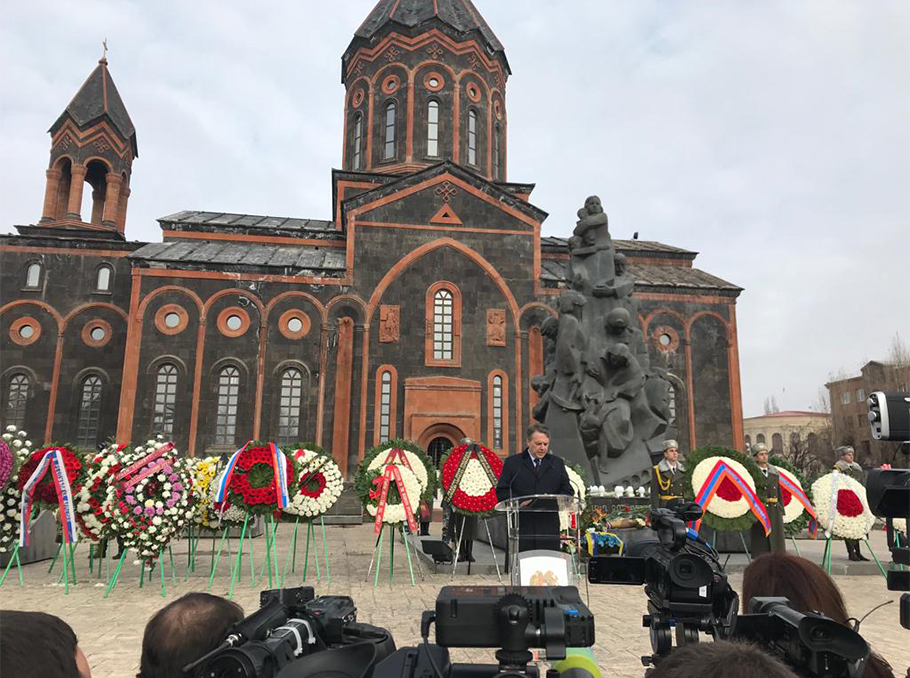
Kansas governor Jeff Colyer speaks at the 30th anniversary of the Spitak earthquake in Armenia.

OFFICE OF GOV.

TOPEKA – Governor Jeff Colyer spoke Friday at an event commemorating the 30th anniversary of the Spitak earthquake in Armenia, a disaster Gov. Colyer assisted with as a medical first responder in 1988.

Gov. Colyer was sent to Armenia by then President Ronald Reagan after the earthquake hit. He was one of the first medical responders to arrive in the country after the 6.8 magnitude earthquake destroyed Spitak within 30 seconds, killing 25,000 people and injuring nearly 140,000 people.

“The disaster I saw 30 years ago was tragic, and through the tragedy the Armenian nation showed courage and resilience,” said Colyer.

“Many lives were lost, and many other lives were changed that day. It is important that as humanitarians we always answer the call for help when others need it.”

Kansas Adjutant General Maj. Gen. Lee Tafanelli also attended the commemoration with Gov. Colyer.

Kansas and Armenia first established a bilateral affairs agreement in June 2003. Fifteen years later, the partnership continues to foster strong relations between the United States and the Republic of Armenia.

Kansas and Armenia enjoy an enduring relationship built upon mutual understanding, trust and genuine friendships shared across and throughout our forces. Collaborative efforts between Kansas and Armenia have paved the way for the modernization of the Armenian Armed Forces in the areas of defense reform, enhanced interoperability, defense education reform and civil emergency planning.

“These types of partnerships are critical to international security cooperation,” said Tafanelli.

“The United States is most successful when it partners with friends and allies to achieve mutual security goals. Armenian peacekeepers have trained alongside Kansas Guardsmen as a result of the State Partnership Program, and many other enduring relationships have been developed benefiting both Armenia and the United States.”


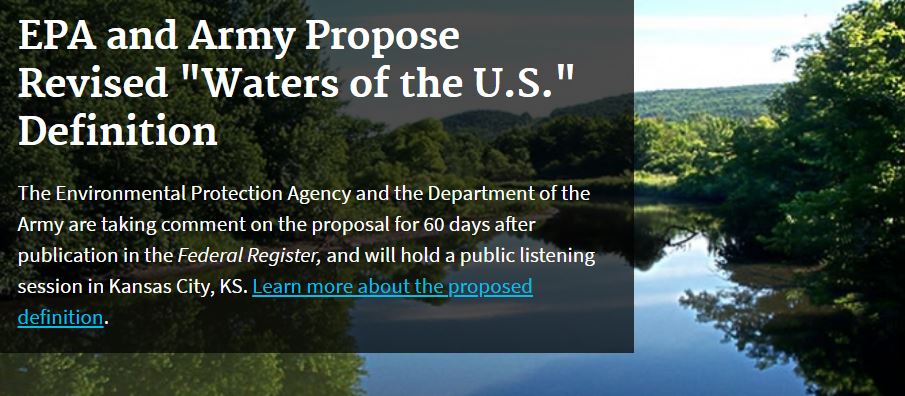
EPA and Army propose new “Waters of the United States” definition

EPA

WASHINGTON — Today, the U.S. Environmental Protection Agency (EPA) and the Department of the Army (Army) are proposing a clear, understandable, and implementable definition of “waters of the United States” that clarifies federal authority under the Clean Water Act. Unlike the Obama administration’s 2015 definition of “waters of the United States,” today’s proposal contains a straightforward definition that would result in significant cost savings, protect the nation’s navigable waters, help sustain economic growth, and reduce barriers to business development.

“Our proposal would replace the Obama EPA’s 2015 definition with one that respects the limits of the Clean Water Act and provides states and landowners the certainty they need to manage their natural resources and grow local economies,” said EPA Acting Administrator Andrew Wheeler. “For the first time, we are clearly defining the difference between federally protected waterways and state protected waterways. Our simpler and clearer definition would help landowners understand whether a project on their property will require a federal permit or not, without spending thousands of dollars on engineering and legal professionals.”

The agencies’ proposal is the second step in a two-step process to review and revise the definition of “waters of the United States” consistent with President Trump’s February 2017 Executive Order entitled “Restoring the Rule of Law, Federalism, and Economic Growth by Reviewing the ‘Waters of the United States’ Rule.” The Executive Order states that it is in the national interest to ensure that the nation’s navigable waters are kept free from pollution, while at the same time promoting economic growth, minimizing regulatory uncertainty, and showing due regard for the roles of Congress and the states under the Constitution.

“EPA and the Army together propose this new definition that provides a clear and predictable approach to regulating ‘waters of the United States.’ We focused on developing an implementable definition that balances local and national interests under the Clean Water Act,” said R.D. James, Assistant Secretary of the Army for Civil Works. “I have heard from a wide range of stakeholders on Clean Water Act implementation challenges. This proposed definition provides a common-sense approach to managing our nation’s waters.”

The agencies’ proposed rule would provide clarity, predictability and consistency so that the regulated community can easily understand where the Clean Water Act applies—and where it does not. Under the agencies’ proposal, traditional navigable waters, tributaries to those waters, certain ditches, certain lakes and ponds, impoundments of jurisdictional waters, and wetlands adjacent to jurisdictional waters would be federally regulated. It also details what are not “waters of the United States,” such as features that only contain water during or in response to rainfall (e.g., ephemeral features); groundwater; many ditches, including most roadside or farm ditches; prior converted cropland; stormwater control features; and waste treatment systems.

The agencies believe this proposed definition appropriately identifies waters that should be subject to regulation under the Clean Water Act while respecting the role of states and tribes in managing their own land and water resources. States and many tribes have existing regulations that apply to waters within their borders, whether or not they are considered “waters of the United States.” The agencies’ proposal gives states and tribes more flexibility in determining how best to manage their land and water resources while protecting the nation’s navigable waters as intended by Congress when it enacted the Clean Water Act.

Robust, publicly accessible data is also a key component of common-sense, cost-effective environmental protection. In response to requests from some states, EPA and the Army are exploring ways the agencies can work with our federal, state, and tribal partners to develop a data or mapping system that could provide a clearer understanding of the presence or absence of jurisdictional waters.

The agencies invited written pre-proposal recommendations and received more than 6,000 recommendations that the agencies have considered in developing this proposal. The agencies listened to those directly affected by the regulations, and this proposal balances the input the agencies received from a wide range of stakeholders.

The agencies will take comment on the proposal for 60 days after publication in the Federal Register. EPA and the Army will also hold an informational webcast on January 10, 2019, and will host a listening session on the proposed rule in Kansas City, KS, on January 23, 2019.

More information including a pre-publication version of the Federal Register notice, the supporting analyses and fact sheets are available at: https://www.epa.gov/wotus-rule.

Report: Kansas may be facing demographic changes

KDHE

TOPEKA –  The Kansas Department of Health and Environment (KDHE) has posted the Kansas Annual Summary of Vital Statistics, 2017 online at https://www.kdheks.gov/phi/as/2017/Annual_Summary_2017.pdf.

The annual report may suggest Kansas is facing demographic changes.

“The Annual Summary of Vital Statistics summarizes key demographic and health information gathered from vital event records registered in 2017,” said Lou Saadi, State Registrar and Director Bureau of Epidemiology and Public Health Informatics. “Since the data collected represents the entire population of the State, it serves as an excellent source for policy makers, program managers and the public to assess and study the health of Kansans.”

The report documents:

  • slowing population growth and an aging population
  • continuing declines in the number and rate of births
  • total fertility rates below the replacement rate
  • decreases in the rate of natural increase,
  • decreases in marriage rates
  • decreases in teen pregnancy

Other trends being noted for 2017 included:

  • homicides in the state increased by 21 percent
  • suicides increased by 6.3 percent
  • unintentional injuries increased by 7.2 percent

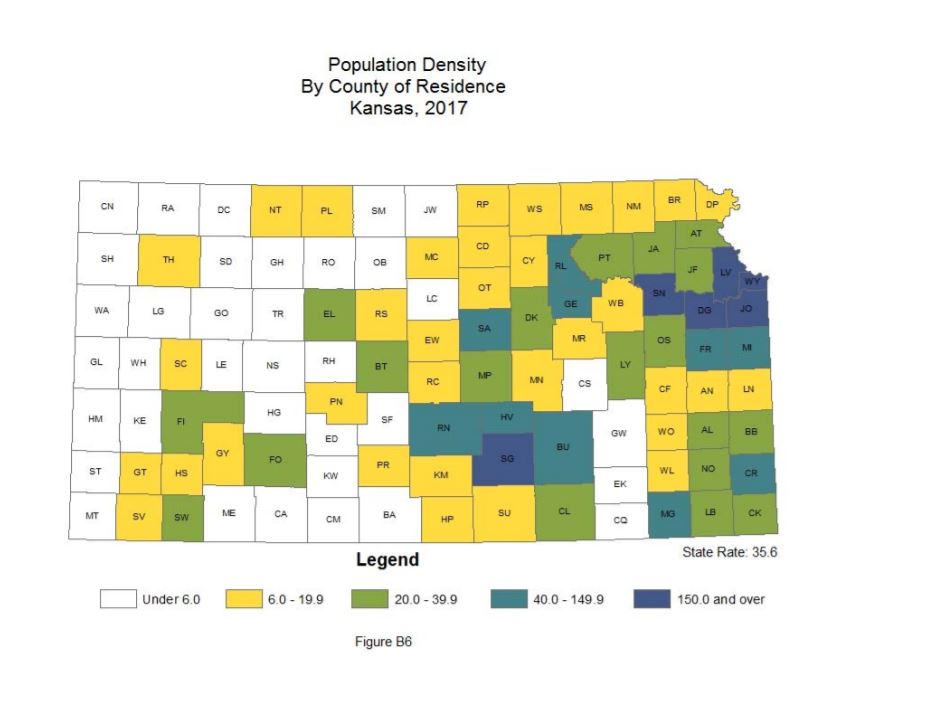
Kansas’s total population as of July 1, 2017 was estimated at 2,913,123, an increase of 5,834 (0.2%) from the estimate of Kansas’s total population as of July 1, 2016 (2,907,289) released in 2017. The median age of Kansans in 2017 was 36.6 years, a 4.0 percent increase from the median age of 35.2 in 1998. The median ages for men and women were 35.4 and 37.9, respectively.

There were 36,464 live births to Kansas resident mothers in 2017. The most recent year with fewer live births was 1976, when there were 35,278 live births. The birth rate in 2017 was 12.5 births per 1,000 population, the lowest rate since Kansas began statewide recording of vital events in 1912.

The 2017 birth rate of 12.5 births per 1,000 population is the lowest birth rate on record. The rate is part of a birth rate decrease that began in 2008.

One element of the decline in childbearing in recent years is due to factors generally considered desirable: teen pregnancy rates have declined from 32.4 pregnancies per 1,000 young women in the 10-19 age-group in 1998 to 12.7 per 1,000 in 2017.

In 2017, the state’s rate of natural increase was 3.3 persons per 1,000 population, a decrease of 19.5 percent from 4.1 per 1,000 population in 2016, and the lowest rate of natural increase in the past twenty years. The rate of natural increase is the birth rate minus the death rate.  A negative value for rate of natural increase would mean the insufficient births are occurring to replace the number of people dying in the state. Over the past 20 years (1998-2017), the rate of natural increase has fluctuated between a maximum of 6.3 persons per 1,000 population (2007) and a minimum of 3.3 persons per 1,000 population (2017).

The Kansas total fertility rate (TFR) in 2017 was 2,053 births per 1,000 women of childbearing age. The Kansas TFR has been below the replacement rate of 2,100 for each of the last five years. Total fertility rate is the number of children who would be born per 1,000 women if women were to pass through the childbearing years bearing children according to the current distribution of age-specific fertility rates.

Deaths in Kansas, 26,725, represented a 2.3% increase from the 26,129 deaths in 2016. Increases in 2017 over 2016 were noted for selected causes:

  • Suicide, 512 in 2016 to 544 in 2017, up 6.3 percent;
  • Homicide, 148 in 2016 to 179 in 2017, up 21.0 percent;
  • Unintentional Injury, 1,468 in 2016 to 1,573 in 2017, up 7.2 percent.

Heart disease with 5,636 deaths was the leading cause of death in 2017, followed by cancer, chronic lower respiratory diseases, unintentional injuries, and stroke.

In 2017, 17,274 marriages occurred in Kansas, a decrease of 3.8 percent from the 2016 total of 17,948 marriages. The Kansas marriage rate in 2017 was 5.9 marriages per 1,000 population. This rate was 4.8 percent lower than the 6.2 marriages per 1,000 population recorded in 2016, and was the lowest rate recorded for the state of Kansas in the last twenty years (1998–2017). For the entire period, Kansas marriage rates have been lower than U.S. marriage rates.

The annual summary does not attempt to determine causes for these trends, as it is a summary of events recorded by the KDHE Office of Vital Statistics. Factors impacting the state’s demography cannot be discerned from vital event records.

Kansas Information for Communities in a query tool the public can use to look at specific birth and death outcomes and prepare statistics.  The web location is https://kic.kdheks.gov/
 

🎥 USACE: Water safety is a concern year round

USACE

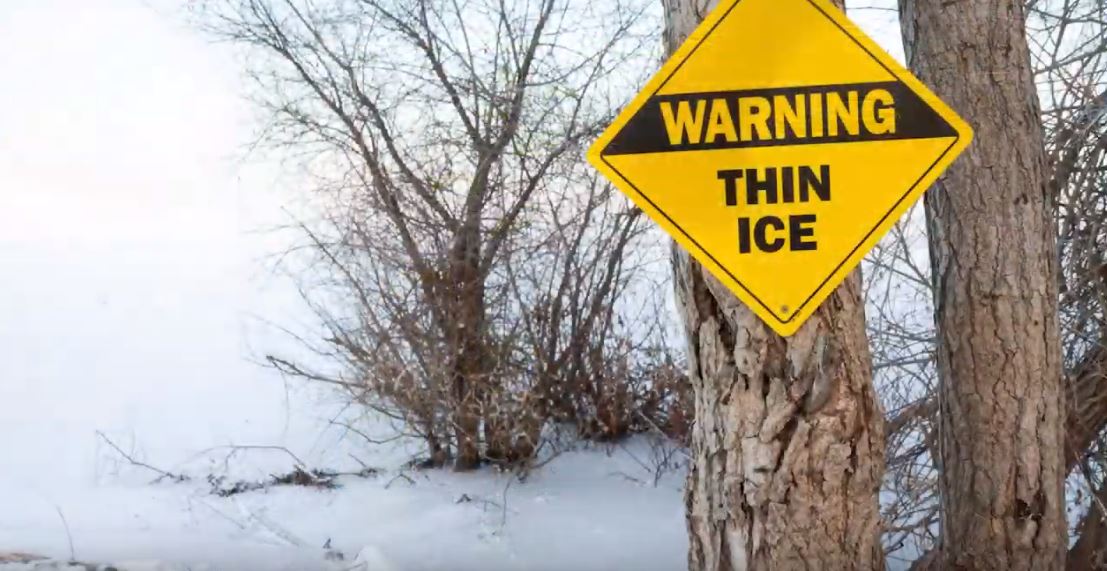
KANSAS CITY – The U.S. Army Corps of Engineers, Kansas City District urge caution when recreating on or near water this winter. No matter the season, water safety is a year-round concern. We want to remind you that safety is for all seasons.

“We urge you to consider your safety and that of others when recreating at a lake or river this winter,” says Col. Douglas Guttormsen, commander of the Kansas City District. “Weather conditions in the heartland are unpredictable and directly affect the condition of ice on the water. Don’t risk it.”

  • Before heading outdoors, make a plan, pack accordingly and know the risks.
  • Dress appropriately for the water temperature not the air temperature because you could find yourself capsized, or thrown from a boat.
  • Life jackets save lives and should be worn at all times by anyone in a boat, including those waterfowl hunting or fishing.

Do you know what might happen if you were exposed to cold water? You could find yourself unable to swim in a short amount of time as your arms and legs go numb and you lose the ability to rescue yourself. Many suspected drowning victims actually die from cold water immersion instead of hypothermia. Hypothermia is still something that you should be aware of.  It is a condition in which the body loses heat faster than it can produce it.

Listen to the tips and information provided by the Kansas City District’s commander and park ranger in the cold water immersion safety video below.

For additional information on water safety or cold water immersion, visit www.pleasewearit.com.

🎥 Kan. Supreme Court: Raw marijuana smell can support residential search

The Kansas Supreme Court has ruled for the first time regarding raw marijuana smell emanating from a residence in probable cause for a search by law enforcement.

KS SUPREME CT.

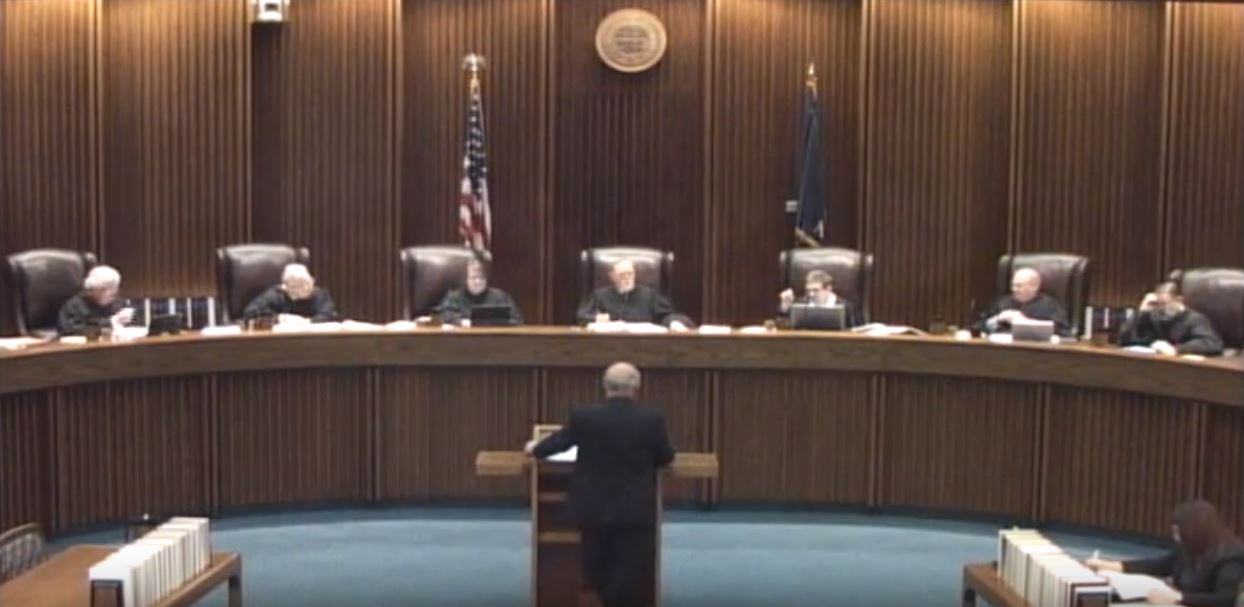
TOPEKA – A divided Kansas Supreme Court has ruled that the smell of raw marijuana coming from a residence, when combined with other circumstances, can supply probable cause to support a residential search by police.

This ruling is the first time the court addressed the issue and settled a conflict between Court of Appeals decisions.

The Supreme Court affirmed Lawrence resident Lawrence C. Hubbard’s misdemeanor convictions of possession of marijuana and possession of drug paraphernalia in Douglas County District Court.

Police officers testified they smelled the strong odor of raw marijuana while standing at Hubbard’s apartment door questioning him about another matter. They directed the occupants to leave the apartment while they applied for a search warrant. The officers conducted a security sweep to preserve evidence, and then waited for a judge to issue the warrant. It was during that search they found 25.07 grams of raw marijuana in a Tupperware container inside a safe, a small amount of marijuana on a partially burnt cigarillo in the living room, and several bongs, which were clean and had no marijuana residue.

Hubbard challenged the officers’ ability to smell raw marijuana at his doorway. The district court disagreed, noting the officers’ experience in detecting the odor. Hubbard also argued the officers needed to be qualified as expert witnesses to give their opinions about what they smelled.

In affirming the conviction, the Supreme Court split 4-3. The majority noted Kansas has recognized for several years that the odor of marijuana detected by an officer trained and experienced in identifying the smell provided probable cause to search a vehicle. In applying those same principles to a residential search, the majority noted an officer’s testimony about smelling the odor of an illegal substance was simply part of the circumstances that a court considers when deciding if there is probable cause to believe a crime is being committed or that the residence contains evidence. In rejecting the argument that officers needed to be qualified as experts, the majority opinion, written by Justice Dan Biles, observed, “We are not dealing with sommeliers trying to identify a white wine as a Loire Valley Chenin Blanc.”

The dissent, written by Justice Carol Beier, and joined by Justices Eric Rosen and Lee Johnson, agreed with Hubbard that the officers needed to be qualified as expert witnesses.

Below is the oral argument video.


.

Deadline near for Kansans seeking individual health insurance

KID

TOPEKA – Ken Selzer, CPA, Kansas Commissioner of Insurance, is reminding Kansans that the deadline to sign up for individual health insurance plans for 2019 is December 15.

The federal government established the time period, the Commissioner said, and it applies to Affordable Care Act (ACA)-compliant plans sold on and off the federal online marketplace, www.healthcare.gov.

“When applying for coverage on the marketplace Kansans should be aware that subsidies are available based on income,” Commissioner Selzer said, “to offset the cost of coverage. Subsidies are not available if coverage is purchased off the marketplace.”

“Also, it is important to understand how the policy you purchase works from a network perspective,” said Commissioner Selzer. “Not all plans are available in all Kansas counties. Talk to your doctors, other providers or your insurance company to find out if specific medical providers are part of the insurance health plan network you choose.”

For more information, read the Department’s “2019: Overview of the Health Insurance Market in Kansas,” which is located on the department’s website at https://www.ksinsurance.org/documents/healthlife/health/KID-Issue-Brief.pdf .

Artists sought for National Career Development Poetry & Art Contest

KDC

TOPEKA – The Kansas Department of Commerce is partnering with the National Career Development Association (NCDA) to participate in the 53rd NCDA Annual Poetry and Art Contest.

The contest theme is “Using Careers to Break Barriers, Empower Lives & Achieve Equity.”

The National Career Development Association promotes career development through its annual celebration of National Career Development Month. Every November, career development professionals are encouraged to celebrate with career related activities including the annual Poetry and Art Contest.

Entries will be judged on how they celebrate and inspire career development with a positive tone while emphasizing the national theme.

ELIGIBILITY

Every adult and student enrolled in school is eligible, as well as adult practitioners who are not in school. Contest divisions areas include:

o    Primary – grades K-2

o    Intermediate – grades 3-5

o    Middle – grades 6-8

o    Senior – grades 9-12

o    Adult Student – ages 18 and older, enrolled in school

o    Open Adult – ages 18 and older (student teachers, parents, professionals, etc.)


REQUIREMENTS FOR POEMS

Poetic Form: Acceptable poetic forms, e.g. cinquain, free verse, diamante, haiku, limerick, metered, rhyming, blank verse

Size: Submit each poem on a single sheet of paper 8.5″ x 11″ in 12-point font.

REQUIREMENTS FOR ART

Lettering: Simple bold lettering is preferred. Captions are to be used to convey the theme, attract attention, and to achieve goals of clarity, vigor and originality. All lettering will be considered part of the design.

Media:

Category 1 (C1): Standard use of ink, pencil, poster paints, magic marker, acrylics, and oils.

Category 2 (C2): Use of photos, clipart, graphic art software, collage, cut and pasted paper, and mixed media.

Size: All art must be created in 8.5″ x 11″ format, including matte, to be eligible.

All state award winners will be notified and sent to NCDA by Feb. 20, 2019.

The winning entries for each division will be recognized on the NCDA website in May 2019 and displayed at the Annual Global Career Development Conference in June. National winners will also receive a special certificate and a congratulatory gift from the NCDA.

Please submit any entries to [email protected] by January 14, 2019.

Submissions may also be sent by mail to:

Kansas Department of Commerce, Poetry and Art Contest

1000 SW Jackson St., Suite 100, Topeka, Kansas 66612

Christmas Cash website launched for unclaimed property

TOPEKA–At the beginning of this season of giving, Kansas State Treasurer Jake LaTurner has launched a website with the hopes of helping Kansans find a little Christmas cash they didn’t know they had.  The division of Unclaimed Property in the Kansas State Treasurer’s Office began accepting claims at www.ChristmasCash.ks.gov.

There is currently over $350 million dollars in unclaimed property being held by the state of Kansas.

“The average claim for many Kansans is about $225, which for most of us would go a long way at Christmas time, whether for giving to our favorite charity, paying off bills, or buying something for a loved one,” said Kansas State Treasurer Jake LaTurner. “We want to make Christmas easier for as many Kansans as we can, and we encourage them to go to our website and see if they might be one of the many with unclaimed property waiting to be found.”

Claims can be made for both individuals and businesses through the site.  Some claims require more processing time than others. The department plans to fulfill as many requests as possible prior to the Christmas holiday, but requests claims be made before December 15th in order for them to have their best chance at fulfilling them before Christmas Day.

More information on filing and receiving claims can be found on the website: www.ChristmasCash.ks.gov.

Kansas’ firearm deer season ends Sunday

KDWPT

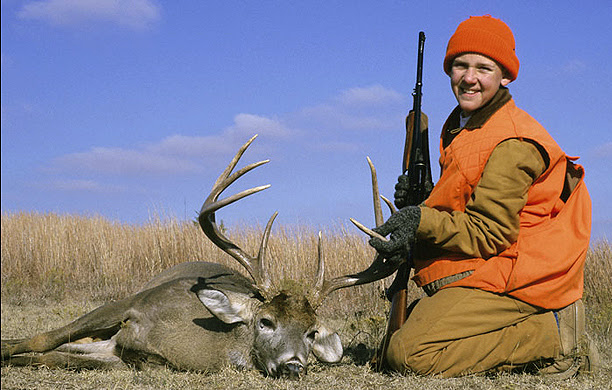
PRATT – One of Kansas’ more popular hunting traditions, the firearms deer season, is underway. Kicking off Nov. 28, 2018, the statewide season will run through Dec. 9, 2018.

During these 12 days, hunters with Firearm or Any-season deer permits may pursue deer with any legal equipment, including any centerfire rifle and handgun; any gauge shotgun using slugs; muzzleloading rifle, musket, or pistol .40 caliber or larger; and archery equipment. All deer permits are valid during the firearm season; however, unit, species, antlerless and equipment restrictions listed on the permit are in effect. In addition to their deer permits, all hunters, unless exempt by law, must also have a Kansas hunting license. Hunters with archery permits must use archery equipment and hunters with muzzleloader permits must use muzzleloaders or archery equipment.

During the firearm season, all deer hunters must wear hunter orange clothing consisting of an orange hat and an orange vest that shows 100 square inches from the front and 100 square inches from the back. Camouflage orange clothing is legal if the required number of square inches of orange is visible.

If you are a resident hunter and have yet to purchase a permit, you may do so at any license vendor or online at ksoutdoors.com. During the firearm season, hunters must possess a permit that allows the harvest of an antlered deer before they are eligible to purchase antlerless permits. Permits are valid the same day of purchase. And if you purchase your permit online, remember to print your permit and carcass tag when your transaction is complete.

Hunters should remember that all deer must be tagged before moving the carcass from the field. Any deer taken with a whitetail antlerless-only permit (WAO) must be transported with the head attached to the carcass. However, if a hunter desires to bone out a deer taken with a WAO permit in the field, the deer can be registered electronically through the internet using photos taken at the harvest sight. Electronic registration is only required if you want to bone out the carcass and transport it without evidence of antlerless status attached. To electronically register your deer, visit programs.ksoutdoors.com and click “Electronic Deer Check-in.”

For more information on current regulations, consult the 2018 Kansas Hunting and Furharvesting Regulations Summary, or visit ksoutdoors.com and click “Hunting,” then “Big Game,” then “Deer.”

Public hearing scheduled for proposed animal health regulations


MANHATTAN — A public hearing will be conducted at 10:00 a.m. on Tuesday, Dec. 11, 2018, to consider the adoption of proposed regulations within the Animal Facilities Inspection Program. The hearing will be held in room 124 on the first floor of the Kansas Department of Agriculture, 1320 Research Park Dr. in Manhattan.

Due to the passage of HB 2477 by the 2018 Kansas Legislature, KDA’s AFI program is proposing amendments to K.A.R. 9-18-6, 9-18-9, and 9-18-28. The primary changes made to the Pet Animal Act by HB 2477 include increasing the fee caps for licensed facilities, adding fees for no-contact inspections and follow-up inspections due to failed inspections (re-inspection fees), removing the ability to provide notice prior to inspections, and removing the fees for the licensure of pet animal foster homes. In addition to these changes, the AFI program has also proposed amendments that more clearly outline the routine inspection policy.

The regulations can be found at the KDA website, agriculture.ks.gov/ProposedRegs. Written comments can be submitted prior to the hearing at that webpage as well.

All interested persons may attend the hearing and will be given the opportunity to express comments orally on the adoptions of the proposed regulations during the hearing. In order to give all parties an opportunity to present their views, it may be necessary to request that each participant limit any oral presentation to five minutes. Persons who require special accommodations must make their needs known at least five days prior to the hearing. For more information, including special accommodations or a copy of the regulations, please contact Ronda Hutton, 785-564-6715.


Insurance, Securities agencies part of financial literacy program for inmates, families

KID

TOPEKA — The Kansas Insurance Department and the Office of the Kansas Securities Commissioner are sponsoring a program to help federal penitentiary inmates and their families improve their financial literacy.

The “Read to Me, Dad” project is a pilot program that provides inmates at the United States Penitentiary in Leavenworth, KS, with financial education on a variety of topics.  Classes take place over a four-week period and are taught by volunteer professionals. More than 20 inmate fathers and grandfathers signed up to participate, according to Ken Selzer, CPA, Kansas Commissioner of Insurance, and Shannon Santschi, Director of Investor Education at the Securities Office.

“Fathers haven’t forgotten about their financial obligations that will need to be addressed upon release,” said Commissioner Selzer. “The men participating in ‘Read to Me, Dad’ are eager to gain knowledge and insight into budgeting, saving, banking and improving their credit. The program also provides children and grandchildren of inmates an opportunity to connect with their parents or grandparents through financially-themed literature. This program fosters literacy and financial capability in vulnerable populations in an effort to break the cycle of incarceration.”

Volunteer professionals have been recruited through the MoneySmart KC network and the Kansas Insurance Department. Modules from the Federal Deposit Insurance Corporation’s Money Smart financial education program provide the foundation of the financial course.  Following the financial course completion, inmates will read and video-record two financially-themed stories for their children.  The accompanying books for the children are being provided by the Federal Reserve Bank of Kansas City.

“‘Read to Me, Dad’ provides a financial education service to both inmates and their children,” said Santschi. “It is a program that connects positive ideas within the family. So far the response to the program by inmates has been very positive — most men are asking for more opportunities to learn about managing their money.”

For more about the program, email [email protected].

KDHE: Carbon monoxide: The invisible hazard in your home

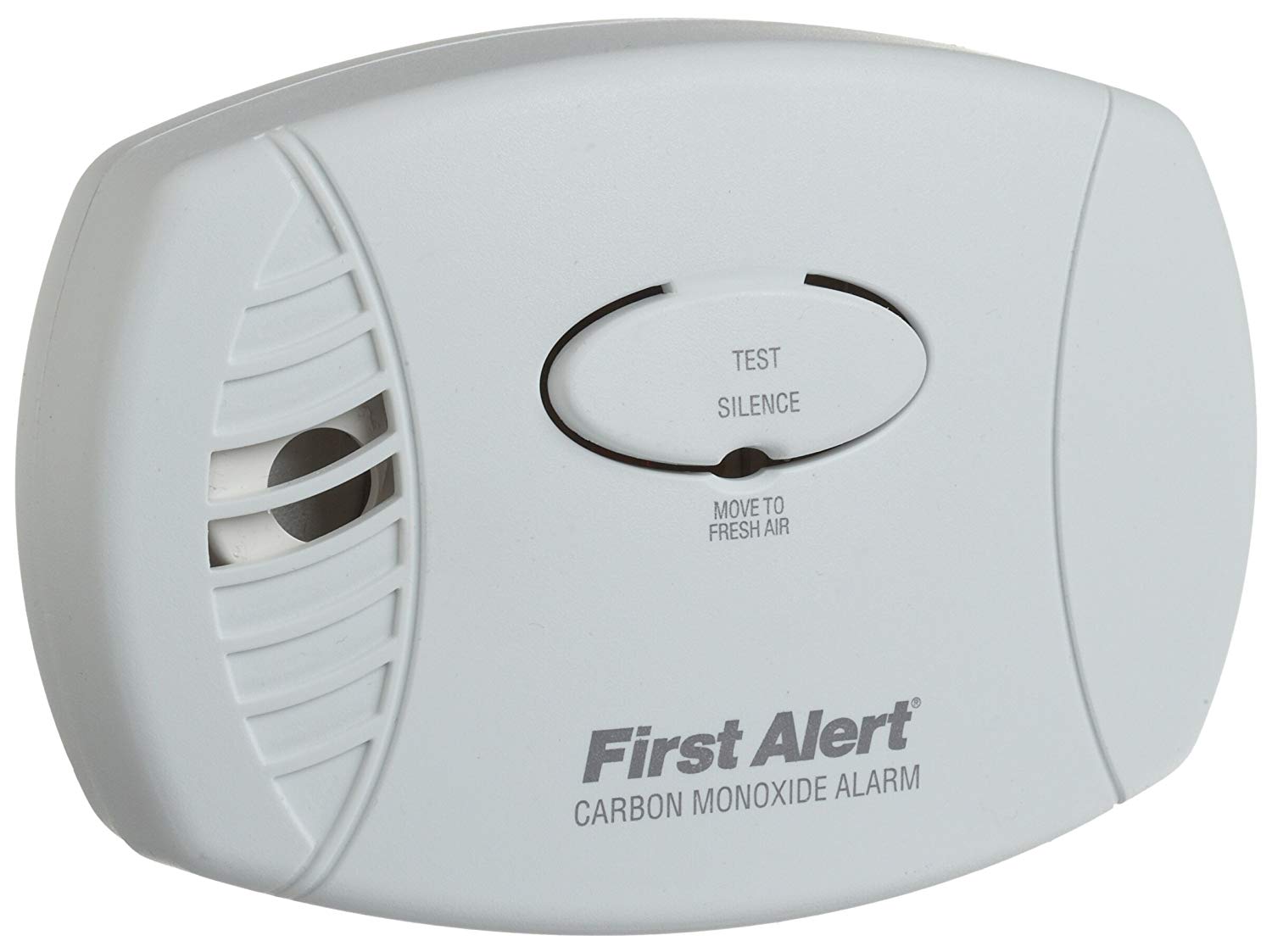
Carbon monoxide detector
KDHE

TOPEKAThe arrival of colder weather means more homes will be turning up the heat with fuel-burning appliances. These appliances include furnaces, ovens, space heaters, generators, indoor grills and fireplaces that can unknowingly cause dangerous levels of carbon monoxide (CO) to build up in the home.

According to the Centers for Disease Control and Prevention, from 2010 to 2015, an average of 374 people died each year from unintentional carbon monoxide poisoning in the United States. In Kansas, from 2011 to 2015, there were annually an average of 146 emergency department visits, 22 hospitalizations and 12 deaths due to unintentional carbon monoxide poisoning. On May 11, KDHE updated regulations for the reporting of notifiable disease conditions, adding CO poisoning to Kansas’ list of reportable diseases.

“KDHE will use the reported information to better understand the circumstances of CO poisonings that occur in public settings in Kansas,” said Dr. Farah Ahmed, KDHE Environmental Health Officer and State Epidemiologist. “This additional information will be used to determine if there are any potential interventions that partners can help devise to reduce the risk of another CO poisoning event in the public location.”

“CO is known as the invisible killer because it is colorless and odorless,” said Cherie Sage, Safe Kids Kansas. “The symptoms of CO poisoning are similar to those of common winter ailments, like the flu. Without a CO alarm in your home, your family can be poisoned without even realizing it’s happening.” CO poisoning can happen suddenly or cause poisoning over a longer amount of time.

CO alarms cost approximately $20 and can be purchased at most hardware and retail stores.

Tips to protect your family from CO poisoning:

  • Prevent CO buildup in the first place—make sure heating appliances are in good working order and used only in well-ventilated areas. Don’t run a car engine or any other gas-powered tool in the garage, even with the garage doors open. If you need to warm up your vehicle, move it outside first.
  • Install alarms in the hallway near the bedrooms in each separate sleeping area and on every level of the home. Keep alarms at least 15 inches from all fuel-burning appliances.
  • Follow manufacturer’s directions for installation, testing and using CO alarms. There are many options and styles to choose from, including hardwired, combination smoke and CO alarms, and battery operated. When you check your smoke alarm batteries each month, check the batteries on your CO alarms at the same time.
  • Never use an oven or gas range for heating.
  • Only use portable generators, gas camp stoves and charcoal grills outside with proper ventilation. They cannot be used indoors, inside of a garage or enclosed porch.
  • If more than one person in the home suddenly feels ill for no apparent reason, or if a CO alarm goes off, get everyone outside immediately and call 911 from a pre-arranged meeting place. Pay attention to pets, sometimes they will show signs of illness first. Don’t go back inside until the fire department or gas company says it is safe.

“Early detection can mean the difference between life and death when it comes to CO poisoning,” said State Fire Marshal Doug Jorgensen. “CO alarms, along with smoke alarms, are one of the best ways to provide protection in your home for your family.”

The Kansas Office of the State Fire Marshal, through its Get Alarmed, Kansas program, is working with fire departments across the state to deliver and install free smoke alarms, which include CO detection. For more information on Get Alarmed, Kansas, visit, www.GetAlarmedKS.org. For more information about CO poisoning, visit www.safekids.org, or call the Poison Control Hotline at 800-222-1222.

Medicaid pilot program to speed up eligibility decisions for older adults

KDHE

TOPEKA The Kansas Department of Health and Environment (KDHE) and Prefix Health Technologies are launching a pilot program to speed up the process of determining Medicaid eligibility for Kansas older adults who seek coverage for long-term care (LTC).

“KanCare is working to improve the customer experience for applicants, and the Prefix Health solution has the potential to be a key part of that effort,” said KDHE Secretary Jeff Andersen. “We are excited to partner with Prefix Health to bring a data-driven, transparent approach to improving the determination process.”

Delays in Medicaid eligibility determinations often leave LTC providers to bear the expense of a resident’s care for months before the facility can be paid.

“Kansas LTC providers care for some of the most vulnerable members of our society. We welcome this step toward reducing these unnecessary delays in reimbursing them for doing so,” said Cindy Luxem, CEO/President, Kansas Health Care Association. “Streamlining this process and identifying areas where more information is needed gives LTC facilities more control in the process, enabling them to sustain this vital work.”

The Prefix Health solution leverages powerful data retrieval and machine learning technologies to quickly access and analyze data from secure, trusted third-party sources, such as banks and other financial institutions. This expedited digital approach reduces the information-gathering burden on residents and their families while providing additional usability and security.

“We are eager to partner with the KDHE Division of Health Care Financing on this pilot,” said Steve Grant, CEO, Prefix Health. “Improving this process will benefit residents, LTC facilities, and KanCare, putting Kansas on the road to assuring a stable, financially secure LTC sector that can meet the challenges of an aging population.”


Copyright Eagle Radio | FCC Public Files | EEO Public File