We have a brand new updated website! Click here to check it out!

Track Chair Program designed for outdoorsmen with disabilities

KDWPT

PRATT – Accessibility, a barrier to outdoor participation for many with disabilities, shouldn’t keep anyone from enjoying the outdoors. The Kansas Department of Wildlife, Parks and Tourism (KDWPT) is launching an all-new program – Adaptive Sportsmen of Kansas (ASK) – to ensure that hunters and anglers with disabilities have a new option for safely getting around outdoors.

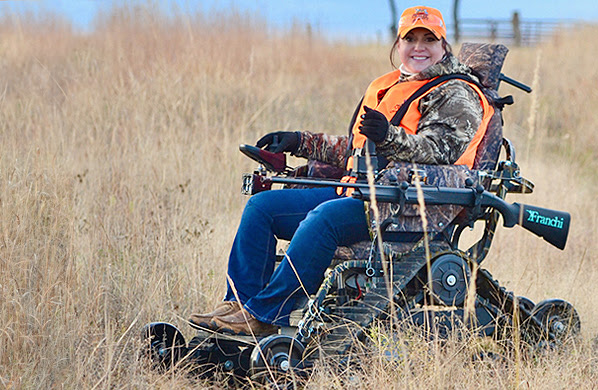
KDWPT has secured eight electric, all-terrain track chairs that will be made available on a first-come, first-served basis at pre-approved events. Each chair, which is controlled by a joy stick on the right armrest, is camouflaged and equipped with several useful accessories, including a gun holder, fishing rod holder, LED headlight, and utility box for storage. Operators can also sit comfortably using the chair’s head rest, padded armrests and flip-out foot rest, all while having peace of mind they’re secure, thanks to the chair’s front stabilizer wheels and four-point harness.

“There are a lot of sportsmen out there who want to be hunting and fishing, but they just can’t get to where they need to. And it’s time we did something to fix that,” said Todd Workman, KDWPT Assistant Secretary for Administration.

What started as just an idea earlier this year has since blossomed into a fully-fledged program, backed by the support of Bushnell Optics and the National Wild Turkey Federation. Workman hopes other conservation-based organizations will see the value and impact of this program and consider helping it grow.

“I’m excited to begin working with conservation groups and people who need these chairs,” said ASK program coordinator, Jessica Rice. “We want these chairs in the field, helping people enjoy the outdoors.”

Anyone wanting to learn more about reserving chairs or donating to the ASK fund can contact Rice at [email protected] or (913) 278-2362.

Additional information on the program can also be found at https://ksoutdoors.com/Outdoor-Activities/Track-Chairs-ASK-Program.

KS Winter Weather Awareness Day is Nov. 15

AGD

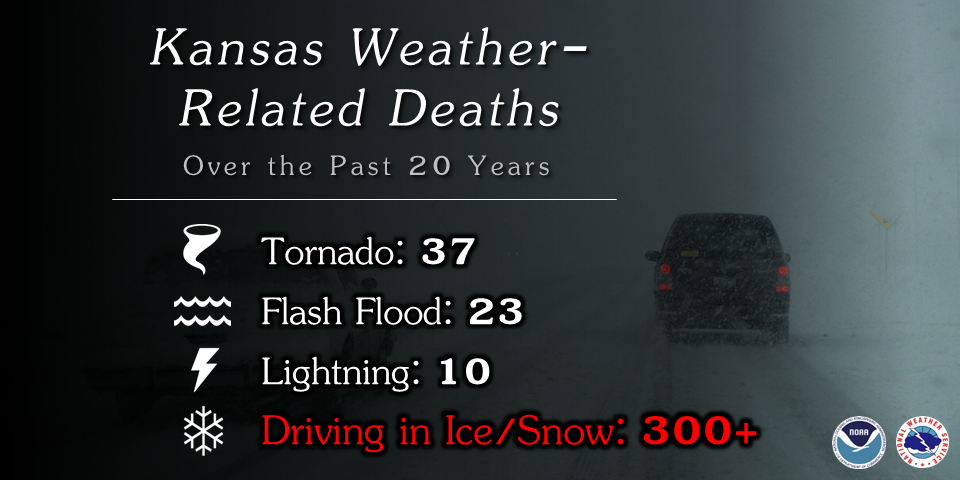
TOPEKA – Winter Weather Awareness Day in Kansas is Thursday, Nov. 15. That day would be an ideal time for Kansans to take stock of their emergency supplies and review their home emergency plan.

A home emergency supply kit should include enough nonperishable food and water for each person to survive for a minimum of seven days, a safe alternate heat source, blankets, flashlights and batteries, a battery-operated weather radio, essential medicines, and other items needed for health and comfort should the power go out.

Vehicles should be equipped with emergency kits, too, particularly if you are planning to travel long distances. These kits should include weather appropriate clothing; bottled water for everyone; nonperishable, high-energy snack items; flashlights and batteries; a battery-operated radio; blankets; a compact snow shovel; extra medications; signal flares and other emergency supplies to allow you to survive until help can arrive. It is also advisable to fill your gas tank before you start on a journey, check engine fluid levels and tire pressure, and make sure cell phones are fully charged.

Emergency plans and preparations should also include family pets. During winter storms, bring outdoor pets inside, if possible, or ensure that they have a draft-free enclosure with straw type bedding that is large enough to sit and lie down, but small enough to hold their body heat if they must remain outside. Always make sure that your pets have access to food and non-frozen water.

For information on winter weather and how to prepare, go online to www.weather.gov/top/winterprepare.

Wreaths Across America advances its mission to Normandy

WAA

Wreaths Across America (WAA) announces that it has been granted permission by the French authorities, on the basis of phytosanitary guarantees provided by the United States Department of Agriculture (USDA) to place 9,387 Maine-made, balsam veterans’ wreaths on Saturday, Dec. 1, 2018, on the headstones of all U.S. service members laid to rest at Normandy American Cemetery and Memorial, located in Colleville-sur-Mer, France.

The cemetery is one of 14 permanent American World War II military cemeteries on foreign soil. The government of France granted use of the land, in perpetuity. United States President Dwight D. Eisenhower and French President René Coty dedicated the cemetery on July 18, 1956.

This is the first time WAA – whose mission it to Remember the fallen, Honor those that served, and Teach the next generation the value of Freedom – has sent U.S.-made balsam wreaths to be placed on foreign soil. The December wreath-laying event is a joint collaboration between the Normandy American Cemetery and American Battle Monuments Commission (ABMC) and will include ceremonial wreath placements on each of the five D-Day invasion beaches, at Pointe Du Hoc, and include a Canadian Wreath presentation.

“The mission of the American Battle Monuments Commission is to honor the service, achievements and sacrifices of our U.S armed forces in two World Wars. It closely parallels the mission of the Wreaths Across America organization — to Remember, Honor and Teach,” said Scott Desjardins, Superintendent, Normandy American Cemetery. “The Normandy American Cemetery is proud and pleased to be the first ABMC cemetery to have been chosen to attempt this important endeavor. As we approach the 75th anniversary of the D-Day landings, conducted to establish a foothold in Western Europe to free it from tyranny, the Wreaths Across America organization storms the beaches of Normandy to establish a foothold and commemorate the sacrifice made by the men and women who never returned home and are now memorialized in our sites.”

The veterans’ wreaths are being gifted to WAA as a donation from its founder, Morrill Worcester. It has long been a dream of his to one day place a wreath in honor of every U.S. veteran laid to rest, worldwide. “When I began placing wreaths at Arlington National Cemetery in 1992, I could never have imagined that this idea would impact people around the world the way it has,” said Worcester. “To know that WAA will be able to place a wreath for each of those veterans and say their names out loud is truly incredible, and I am so honored to be able to help this effort however I can.”

The transportation of nearly 9,500 fresh balsam veterans’ wreaths from Maine to Normandy requires a massive and coordinated effort, and this complex transport would not be possible without the generous in-kind support of global supply chain management company CEVA Logistics, the transatlantic cargo capacity of United Airlines, and the over-the-road transport provided by Metropolitan Trucking.

“Our goal at Wreaths Across America is to honor and remember all those who served and sacrificed for the freedoms we as Americans enjoy every day,” said Wayne Hanson, chairman of the board of directors, Wreaths Across America. “To be given the opportunity and support needed to advance our mission to Normandy is truly a gift and we intend to continue to move forward until one day, all U.S. veterans laid to rest are honored.”

In 1992 in Harrington, Maine, wreath maker Morrill Worcester sought to turn a surplus of 5,000 holiday wreaths into an opportunity to pay tribute to our country’s veterans. With the help of then Maine Senator Olympia Snowe, Worcester arranged for the wreaths to be placed at Arlington National Cemetery. The tradition continued on for more than a decade before national attention spurred the start of the 501c3 Wreaths Across America in 2007. Since then, the program has grown in scope, touching the lives of thousands of veterans’ families and volunteers in every state across the country. In 2017 alone, Wreaths Across America and its national network of volunteers laid over 1.5 million veterans’ wreaths at 1,433 locations in all 50 U.S. states, at sea, and abroad.

This year, National Wreaths Across America Day is Saturday, Dec. 15, 2018. At least 1,500 participating locations across the country will host wreath-laying ceremonies, all run by dedicated volunteers. To learn more about how to sponsor wreaths or volunteer in your own community, please visit www.wreathsacrossamerica.org.
Kansas ranked among highest nationally for antibiotic prescriptions

KDHE 

TOPEKA – Since 2013, the Centers for Disease Control and Prevention (CDC) has recognized a threat to antibiotic resistance and has begun working with many partners across the state and nation to safeguard the effectiveness of antibiotics. In an effort to promote awareness of this important initiative, Governor Jeff Colyer has designated Nov. 12-18 Use Antibiotics Wisely Week.

Kansas Department of Health and Environment (KDHE) Chief Health Officer, Dr. Greg Lakin, says health professionals, patients and their loved ones need to be informed and only prescribe or use antibiotics when appropriate.

“The general public, health care providers, health care facility administrators, veterinarians, food producers and policy makers can all play a part in ensuring that antibiotics are only used when truly needed and likely to be effective,” Dr. Lakin said.

In Kansas, a broad range of individuals, professionals and organizations are working together to adopt best practices to help stem the inappropriate use of antibiotics. A statewide advisory group is assisting KDHE in spearheading this effort.

According to data from the CDC, the total number of antibiotic prescriptions written in Kansas ranked among the highest nationally. In 2015, more than 900 antibiotic prescriptions were written per 1,000 individuals statewide.

Antibiotic awareness does not mean stopping the use of antibiotics; it means changing the way antibiotics are prescribed and used today—when necessary and appropriate.

Since the 1940s, antibiotics have been used to treat patients who have bacterial infections, greatly reducing the number of related illnesses and deaths. But now, more than 75 years later, antibiotics have been overused and misused to the point that the infectious organisms the antibiotics are designed to kill have adapted to them, making the drugs less effective, according to the CDC.

The CDC finds that more than one-third of all antibiotics prescribed or otherwise used in the United States are either unnecessary or the antibiotic does not match the germ. Antibiotics are not needed for viruses, such as colds, most sore throats and many sinus infections.

Especially during the cold and flu season when viruses are prevalent, the public can do its part by recognizing that antibiotics are likely not the right medicine. Antibiotics can fight infections and save lives when used to fight the right germ, at the right time and for the right duration.

More than two million people in the United States get infections that are resistant to antibiotics, and each year, at least 23,000 people die as a result. If drug-resistant germs keep growing, and if we lose the effectiveness of antibiotics, we may also lose our ability to treat patients who need them.

(Click to enlarge)

Here are ways you can help:

  • Do not request that your doctor prescribe antibiotics.
  • Antibiotics may have side effects. When your doctor says that you do not need an antibiotic, taking one may do more harm than good.
  • Only take antibiotics that are prescribed for you and take the whole course as directed. Do not share or use leftover antibiotics. Antibiotics treat specific types of infections. Taking the wrong medicine may delay correct treatment and allow bacteria to multiply.

To learn more about antibiotic resistance, visit https://UseAntibioticsWisely.com.

SELZER: Kansans should increase diabetes awareness

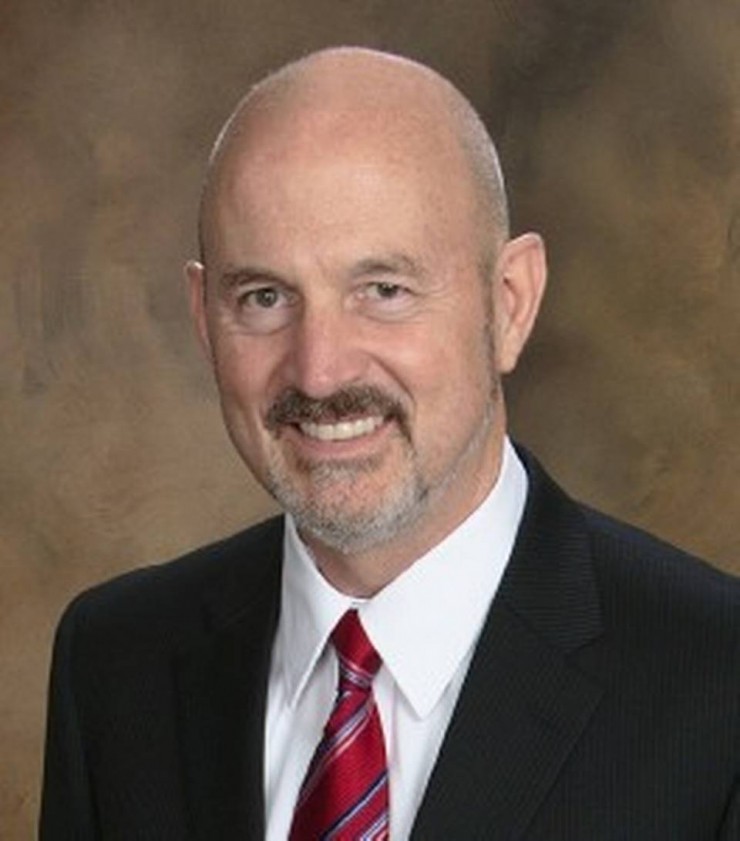
Ken Selzer, Kansas Insurance Commissioner

I urge all Kansans during National Diabetes Month in November to increase their knowledge of diabetes and the ways that it can be managed to reduce the negative impact on a person’s life. Watching for the signs, conferring with your medical provider and engaging in a healthy lifestyle could contribute to reduced risks and costs of this disease.

According to the American Diabetes Association, a total of 30.3 million American adults have diabetes, with 7.2 million of those undiagnosed. In 2015, the association said, 84.1 million Americans age 18 and older had prediabetes, which is a warning sign that their blood glucose level (blood sugar level) is higher than normal, but not high enough to be considered diabetes.

Other warning signals of potential diabetic problems include increased thirst, increased hunger, dry mouth, frequent urination or urinary infections, unexplained weight loss, fatigue, blurred vision and headaches. Left unchecked, diabetes can lead to increased risk of heart disease, stroke, eye problems and blindness, kidney disease and leg or foot amputations, medical experts say.

“With the onset of those warning signs, Kansans would be wise to seek counsel from their medical providers,” Commissioner Selzer said. “Medical experts say diabetes can be a manageable condition with proper medication, diet and exercise. However, ignoring the warning signs could put people at greater risk of deteriorating health and financial hardships down the road.”

Nine out of 10 people with diabetes have Type 2 diabetes, according to the Centers for Disease Control and Prevention. With Type 2 diabetes, a person’s body cannot use its own insulin well and cannot keep blood sugar at normal levels. With Type 1 diabetes, a person’s body does not make any insulin and has to receive injections every day.

For more diabetes information, go to www.diabetes.org, the website of the American Diabetes Association.

Ken Selzer is the Kansas Insurance Commissioner.

Public comment begins for BLM/BIA resource management plan for Kansas, Oklahoma, Texas  

BLM

Norman, Okla. – The Bureau of Land Management’s (BLM) Oklahoma Field Office, in coordination with the Bureau of Indian Affairs Eastern Oklahoma Regional Office and Bureau of Indian Affairs Southern Plains Regional Office, has released for public comment a revised framework for how certain public lands will be used in parts of Oklahoma, Kansas and Texas.

The document, called the Oklahoma, Kansas, and Texas Draft Environmental Impact Statement/Draft Resource Management Plan and Bureau of Indian Affairs Integrated Resource Management Plan, addresses resource management issues, resource data, laws, regulations, and policies applicable to the public lands under the jurisdiction of the BLM and BIA.  The BLM invites the public to participate in the planning process by providing comments on the draft plan during a 90-day public comment and review period, which begins Nov. 9.

Taken together, the two draft plans enable the agencies to manage land in a planning area that comprises 15,100 acres of BLM-managed public land and 4,810,900 acres of federal sub-surface mineral estate; 394,200 surface acres and 2,033,500 sub-surface mineral estate acres within the BIA Eastern Oklahoma Region; and 457,500 surface acres and 632,000 sub-surface mineral estate acres within the BIA Southern Plains Region.  The BIA trust lands include multiple tribal jurisdictional boundaries.

This planning effort will update management decisions in existing plans for vegetation, fish and wildlife, energy and minerals, lands and realty and other issues.  In addition, the document will facilitate future BLM and BIA environmental analysis and permitting of Indian and tribal mineral development.

Copies of the Draft Joint EIS/BLM RMP and BIA IRMP are available for review at the following BLM offices: Oklahoma Field Office, 201 Stephenson Parkway, Suite 1200, Norman, Oklahoma, and the New Mexico State Office, 301 Dinosaur Trail, Santa Fe, New Mexico.  The draft plan and supporting information is available online at: 
https://www.blm.gov/programs/planning-and-nepa/plans-in-development/new-mexico/oklahoma-rmp

The BLM will host a series of public meetings to provide information and answer questions about the Draft Joint EIS/BLM RMP and BIA IRMP.  These meetings will be announced at least 15 days in advance through public notices, media releases, and/or mailings.

Comments will be accepted through Feb 7, 2019.  Comments can be submitted via the web address above, or by mail to: BLM Oklahoma Field Office, Attn.: Patrick Rich, RMP Team Lead, 201 Stephenson Parkway, Suite 1200, Norman, Okla., 73072.

For more information on the planning process, please contact Patrick Rich, Oklahoma Field Office RMP Team Lead, at 405-579-7154.

About the Bureau of Land Management

The BLM manages more than 245 million acres of public land located primarily in 12 Western states, including Alaska. The BLM also administers 700 million acres of sub-surface mineral estate throughout the nation. The agency’s mission is to sustain the health, diversity, and productivity of America’s public lands for the use and enjoyment of present and future generations. Diverse activities authorized on these lands generated $96 billion in sales of goods and services throughout the American economy in fiscal year 2017. These activities supported more than 468,000 jobs.

Commerce Dept. accepting nominations for 2019 Governor’s Exporter of the Year

KDC

Kansas exports totaled $11.25 billion in 2017. Compared with last year’s data, exports increased by $1.07 billion, representing a 10.5 percent surge. A similar trend can be observed on the national level where U.S. exports experienced a 6.6 percent growth.

Kansas businesses are a global force, with goods and services being sought from Kansas internationally.

The annual Kansas Governor’s Exporter of the Year Award proudly celebrates the outstanding Kansas companies that excel in exporting and building relationships with companies around the world. We encourage you to nominate a successful Kansas business for the year 2019’s awards program.

Qualifications considered include:

  • Number and/or percentage increase in jobs due to international activities
  • Innovations in global marketing
  • Number of export destinations
  • Effective use of international distributors
  • Long-term international strategies and prospects for future growth
  • Commitment to the state and local community
  • Foreign language promotional material and general promotional activities
  • Trade shows and/or international expositions

Benefits of this award include: 

  • All finalists will be invited to attend the Team Kansas Awards Banquet where top businesses from across the state are recognized and the award winning company will receive the trophy
  • The Governor will make a site visit to the award winning company to honor its management and workforce team
  • The award-winning company will receive a membership in Kansas International Trade Coordinating Council (KITCC) that selects the award finalists and winner
  • Recognition of export achievement which can be incorporated into marketing/advertising campaigns
  • Extended networking opportunities

The Nomination Process: 

Any Kansas company engaged in exporting is eligible to be nominated for the 2019 Kansas Governor’s Exporter of the Year Award. Please visit https://kansascommerce.gov/GovernorsExporteroftheYear to nominate a business. Self-nomination is also welcomed. All nominations must be received no later than 5:00 p.m. on January 25, 2019.

April Chiang

Nominations can be emailed to program manager April Chiang at [email protected]

Nominations can also be mailed or faxed to:

Kansas International Trade Coordinating Council 

c/o Kansas Department of Commerce, April Chiang 

1000 S.W. Jackson St., Suite 100 

Topeka, KS 66612-1354

Tel:  (785) 296-5473 

Fax: (785) 296-3490 

KDHE: 11.5% of adult Kansans have been diagnosed with cancer

KDHE

TOPEKA –The Kansas Department of Health and Environment (KDHE) recognizes 2018 Cancer Awareness Day, Nov. 7, by urging women and men of all ages to talk with their doctors about recommended screenings for cancer. Eligible women may receive free breast or cervical cancer screenings through KDHE’s Early Detection Works program.

“Cancer screenings are critical for men and women who are 40 to 64 years old,” said Suzanne Duckworth, RN, BSN, Early Detection Works Nurse Manager. “Early Detection Works offers breast and cervical cancer screenings for all eligible women. Today is the perfect time to get screened. Even if you don’t qualify for free services, you should call your doctor and ask about recommended cancer screenings—they could save your life.”

KDHE cancer survivors and supporters were encouraged to observe Cancer Awareness Day by wearing the color associated with the cancer they have battled or a love one has experienced.

Approximately 11.5 percent of Kansas adults aged 18 years and older had ever been diagnosed with cancer. KDHE supports the Kansas Cancer Partnership, a statewide coalition that is dedicated to reducing cancer disease and death through prevention, when possible, and routine cancer screenings, when appropriate. Resources for cancer survivors and their loved ones can be found athttps://kscancerpartnership.org/Cancer-Survivor-Resources. Resources highlight items needed by cancer survivors and their loved ones, including information on day-to-day needs, wellness, support, material needs and community.

The Kansas Cancer Partnership actively recruits members from across the state. Membership is open to organizations and interested individuals (e.g., cancer survivors, nurses, community volunteers, patient navigators) with special expertise and commitment to reducing the human and economic impact of cancer in Kansas. Their next meeting is Jan. 22, 2019, at the Historic Fire Station # 2 in, Topeka. Those who are unable to attend the full member meeting can consider joining one of their regional coalitions in north central, south central, and southeast Kansas, with a fourth starting in southwest Kansas soon.

Find out if you qualify for free breast and cervical cancer screenings, by calling Early Detection Works, at 1-877-277-1368. Learn how you can support efforts to cure cancer at www.cancer.org.

KDA offers pre-application for Industrial Hemp Research Program

Industrial hemp crop

KDA

MANHATTAN — In April, the Kansas legislature passed Senate Bill 263 to enact the Alternative Crop Research Act and charged the Kansas Department of Agriculture with implementing the Industrial Hemp Research Program. This fall, KDA requests that individuals who are considering participation in the Industrial Hemp Research Program in Kansas in 2019, whether as a grower, distributor or processor, submit a Pre-Application and Pre-Application Research Proposal.

The Pre-Application is voluntary, and it is not an application for a license; anyone who plans to participate in the spring will still need to obtain a license through the official application process after the regulations become effective. Those who submit a Pre-Application with a Pre-Application Research Proposal will have an opportunity for the Industrial Hemp Research Advisory Committee to informally review the research proposal to determine the likelihood of its approval when the regulations are effective. In addition, those who submit the Pre-Application will get direct notification as soon as the full research license application process is available.

The Pre-Application is not the full research license application; there is no fee requirement or fingerprint-based state and national criminal history record check requirement to submit the Pre-Application, although both will be required with the research license application when it becomes available. In the Pre-Application Research Proposal, potential growers, distributors or processors will be asked to explain in detail the research they plan to conduct in their participation in the Industrial Hemp Research Program in Kansas.

The regulations that will guide the Industrial Hemp Research Program are still in the midst of the approval process as outlined on KDA’s industrial hemp webpage. A public hearing will be held soon, which will be one of the last steps prior to the adoption of the regulations.

The deadline for submission of the Pre-Application and Pre-Application Research Proposal is December 1, 2018. The Pre-Application forms and additional instruction — along with much more information about the new Industrial Hemp Research Program in Kansas — can be found at agriculture.ks.gov/industrialhemp.

DCF announces new child welfare providers

DCF

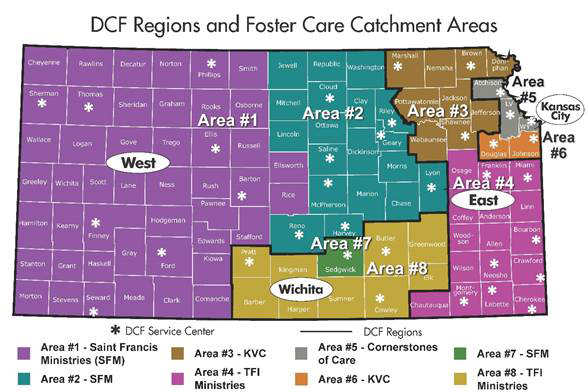
TOPEKA – Kansas Department for Children and Families (DCF) Secretary Gina Meier-Hummel is pleased to announce the new child welfare grantees. The new Case Management grant was divided into eight catchment areas, whereas in the current structure, there are only four catchment areas. The new Case Management providers are:

  • Catchment Area 1—Saint Francis Ministries (previously known as Saint Francis Community Services)
  • Catchment Area 2—Saint Francis Ministries
  • Catchment Area 3—KVC Kansas
  • Catchment Area 4—TFI
  • Catchment Area 5—Cornerstones of Care
  • Catchment Area 6—KVC Kansas
  • Catchment Area 7—Saint Francis Ministries
  • Catchment Area 8—TFI

The Family Preservation grant catchment areas will continue to align with the four DCF Regions—West, Wichita, Kansas City and East. The new Family Preservation providers are:

  • West Region—Eckerd Connects
  • Wichita Region—Eckerd Connects
  • East Region—Eckerd Connects
  • Kansas City Region—Cornerstones of Care

Currently, there are two providers providing both Case Management and Family Preservation services to the entire state. Moving forward, there will be four Case Management providers and two Family Preservation providers.

DCF posted the child welfare RFP’s May 31, which included substantial changes from the current child welfare contracts. DCF developed the improved child welfare grants to address known issues within the Kansas foster care system after receiving input from the public, legislators and stakeholders.

“The new child welfare grants include substantial changes—we are putting Kansas children and families first and emphasizing contractor accountability and oversight,” DCF Secretary Gina Meier-Hummel said. “We carefully designed the new grants to positively change the landscape of child welfare in Kansas, and just as purposefully, we chose providers we believed would best serve the needs of children and families.”

DCF awarded the new child welfare grants following an extensive and robust review process. Two internal DCF teams, consisting of DCF staff from across the state, analyzed and blind-scored each bid submission offsite for three days at the end of August. The agency then entered negotiations with bidders in September, and continued internal discussions into October.

As part of the bid process, each applicant was required to submit a six-month transition plan in order to establish a seamless changeover and continuity of services for Kansas children and families. In addition, DCF has formed internal oversight teams to help support the current and future providers as they transition. The agency is also seeking feedback, both internally and externally, from those who have experienced a contract change before to ensure a smooth transition. To share suggestions, concerns or thoughts, visit https://www.dcf.ks.gov/Agency/pubcomments/Pages/Child-Welfare-Grant-Transition.aspx.

“I am confident that services to Kansas children and families will improve with the new child welfare grants because we have removed conflicts of interest and increased competition, bringing more providers to the table to provide quality, timely services,” Governor Jeff Colyer said. “These new grants will serve as the foundation for enacting true reform in Kansas child welfare.”

Transitions will start January 2019 and the new providers will begin serving Kansas children and families July 1, 2019.

MARSHALL: Doctor’s Note Nov. 3

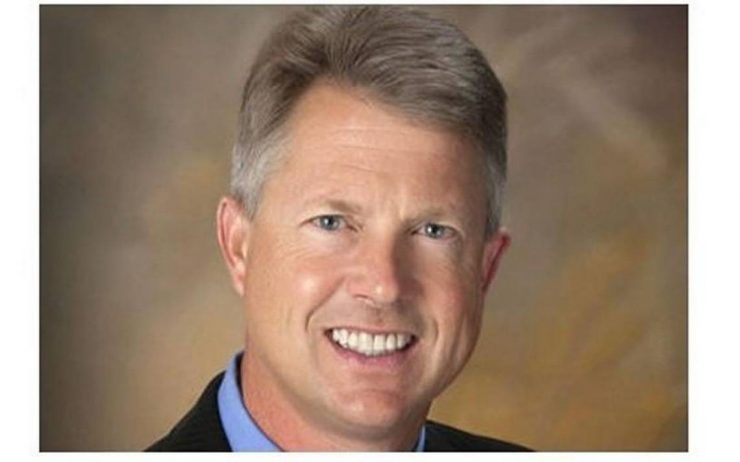
Dr. Roger Marshall, R-Great Bend, is the Kansas First District Congressman.

Friends,

This week I was honored to join KSU and Sen. Moran in welcoming our USDA Secretary Sonny Perdue to the wheat state. It is always great to have the leading voice on Ag in the White House meeting with Kansans.

While I wholeheartedly understand the tough times our producers have been up against, I know that Sec. Perdue, myself, and other Ag leaders are fighting hard in Washington to secure new markets, and see this Farm Bill to the finish line.

In other news, Friday the Department of Labor released the October jobs numbers. The economy added 250,000 jobs in October, up from 118,000 in September, and the unemployment rate came in at 3.7 percent, the lowest since 1969! The unemployment rate in Kansas has fallen by 0.8 percent to their lowest level since 1999.

There’s no denying that this Congress and Administration has unleashed this economy with our pro-growth policies. I am working around the clock to make sure our Farm economy also reaps these same economic benefits.

Lastly, I hope you all had a safe Halloween, trick or treating with your loved ones. My grandson surely enjoyed the candy and treats in their superhero costumes!

KSU welcomes USDA Sec. Perdue
It was a pleasure to welcome U.S. Agriculture Secretary Sonny Perdue back to Manhattan on Thursday as the featured speaker for the esteemed Kansas State University Landon Lecture Series.

Secretary Perdue shared the lessons and principals he learned growing up on a farm in Georgia, which included: stewardship and responsibility; trust and faith; and optimism. Today he uses those same guiding principals to serve our nation’s farmers and ranchers. In his lecture, he reiterated his commitment to making the USDA more user-friendly and effective to better serve its rural customers.

The USDA’s work has a significant impact on my district, for both farmers and the numerous rural communities across the Big First. I couldn’t be more proud of the work he has done and continues to do at the USDA.

Rolling back the red tape on our nursing homes
During my time as a physician in Great Bend, Kansas, I saw the struggles many skilled nursing facilities (SNFs) were facing due to illogical and burdensome regulations. One particular regulation has kept SNFs from training new Certified Nursing Assistants (CNAs) – an already depleted workforce. This rule mandated if facility accumulates fines over $10,000, whether or not those fines had anything to do with their CNA training program, CNAs could not be trained there.

While it is absolutely important to monitor the quality of care for our loved ones in these nursing facilities, providing these practices with an adequate workforce is just as crucial for their safety and comfort. I am honored to have signed onto HR 6986, the Nursing Home Workforce Quality Act, that will update these regulations and ensure a strong CNA workforce in our assisted living facilities.

Dr. Roger Marshall, R-Great Bend, is the Kansas First District Congressman.

SELZER: 2019 health insurance enrollment has changes

Ken Selzer, Kansas Insurance Commissioner

TOPEKA — With the 2019 health insurance open enrollment period just beginning, those seeking plans for next year should know that three important changes are taking place.

There will be no penalty for not having minimum essential coverage. Before, consumers would pay a penalty if they were not enrolled in a health plan. Beginning Jan. 1, 2019, that tax penalty will be reduced to nothing. If consumers don’t have major medical health insurance for the 2019 coverage year, they will be on their own for major health care costs, but they won’t be penalized at tax time.

Short-term, limited duration options may offer lower premiums, but they won’t cover as much. Short-term, limited duration insurance is not available through the federally-facilitated Kansas marketplace, but Kansans may see it offered elsewhere. These short-term plans allow for coverage to fill temporary coverage gaps.

While they’re typically cheaper than the marketplace and other individual market health plans, there are usually limited benefits, broader exclusions and higher levels of consumer cost-sharing. Before signing up for a short-term plan, it’s important to think through what health care services you and your family may need and check whether those services are covered.

There will be more direct enrollment options. This means you might sign up for a marketplace plan even without visiting HealthCare.gov. You might use an insurer’s website or a third-party website.

These sites might offer you other types of coverage too, so look closely to know what you’re buying. Remember, you can always go online to HealthCare.gov if you want to be sure to get the protections offered in the marketplace plans.

More Information

If you have questions about the health insurance marketplace in Kansas, contact the Consumer Assistance Division at the Kansas Insurance Department by calling 800-432-2484 or by using the chat feature on the department’s website, www.ksinsurance.org.

The open enrollment period for health insurance runs from Nov. 1, 2018 to Dec. 15, 2018.  Those who purchase 2019 coverage during that time period will have coverage beginning Jan. 1, 2019.

Ken Selzer is the Kansas Insurance Commissioner.

Quivira National Wildlife Refuge hosts celebration of cranes Nov. 3

KDWPT

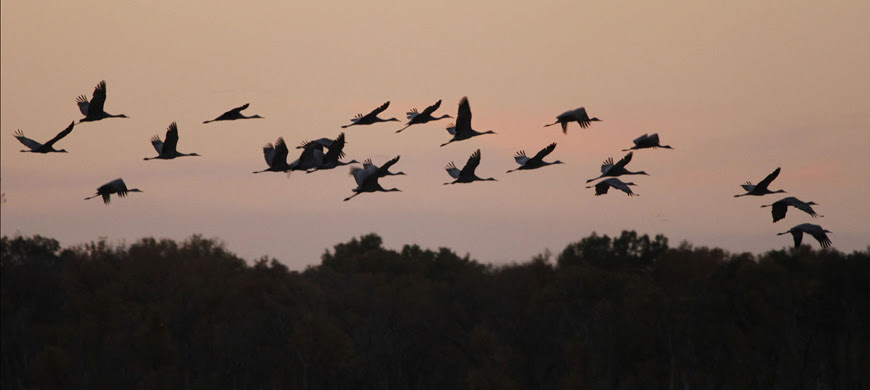
TOPEKA – One of America’s top wildlife-watching events is happening now in central Kansas, as huge clouds of sandhill cranes, along with a few endangered whooping cranes, pass through and rest during their annual southward migration. This amazing spectacle will be observed on Saturday, Nov. 3, during the “Celebration of Cranes” at Quivira National Wildlife Refuge (NWR) in Stafford County. Audubon of Kansas is sponsoring the event and invites anyone interested to view and learn about cranes with the help of expert guides.

“Basically, we’re wanting to draw attention to Quivira at this very special time of the year,” said Ron Klataske, Audubon of Kansas director. “It’s a time when one can rely on there being thousands of sandhill cranes at Quivira. It’s also one of the very few places where one has a reasonably good chance of being able to see whooping cranes. It may be at a distance, but it’s always such a special event when you get to see one.”

As they have for centuries, sandhill cranes are currently migrating from nesting grounds in Alaska and northern Canada to wintering grounds in southern U.S. and Central America. Tens of thousands pause for several weeks in central Kansas at the world-class marshes at Quivira NWR, Cheyenne Bottoms Wildlife Area  and the Nature Conservancy’s Cheyenne Bottoms Preserve in Barton County. The mid-continent population of sandhill cranes was estimated at more than 1 million birds last spring in surveys on the Platte River in Nebraska; a record. With numbers like that, viewing opportunities at staging areas can be fantastic.

Whooping cranes, which number just more than 400 in the wild, are doing the same. A large percentage of those birds will stop in Kansas during migration, and several have already been spotted at Quivira NWR this fall.

Every year some of America’s top wildlife photographers and bird-watchers make long treks to enjoy both species at the refuge. Still, Klataske said it’s rare to see a dozen vehicles on Quivira when the birds are in.

He is hoping guided van tours will make a wildlife-watching trip to Quivira easier for the public. Experienced guides will take guests to pre-scouted spots to show them the birds, and give valuable advice on how the public can come back and enjoy such wildlife shows on their own at Quivira.

“These days we have so many families and kids who just don’t get out and experience nature,” said Klataske. “That’s a shame because we have some very, very fine places where people can go enjoy watching wildlife in Kansas. It’s free and it’s actually very easy once you learn where and when. If we’re going to keep these places, like Quivira, it’s important that people learn to cherish them, and to support them.”

Saturday’s tours begin at 8 a.m., from the Quivira Headquarters/Visitors Center. The refuge is about 30 miles west of Hutchinson, a few miles north of Highway 50, with signage pointing the way. Klataske requests people RSVP at [email protected], so enough tour vans can be available. All is free.

Tours are scheduled for two hours. Late in the day Saturday, Klataske and others will gather on the refuge’s Wildlife Drive, by the Big Salt Marsh, to watch the sandhills return in sizable flocks silhouetted against the sunset. When it’s dark, he’ll stay a bit longer to listen to the loud sounds of thousands of calling sandhill cranes and geese in the darkness.

“It’s such a wonderful experience, it really is, that usually only a very few serious birders ever get to enjoy,” he said. “We’re really hoping we can change that by sharing. Ideally, this will become an annual event. There’s no question it’s more than special enough for that.”

Copyright Eagle Radio | FCC Public Files | EEO Public File