We have a brand new updated website! Click here to check it out!

KLA Convention: Sustainability from the rancher’s perspective

KLA

TOPEKA – Speakers scheduled to appear at the Kansas Livestock Association (KLA) Convention in Wichita will talk about creating an animal traceability system before a crisis arises, defining sustainability from the rancher’s perspective, the cattle market outlook and a new digital consumer guide called Chuck Knows Beef. The convention will take place November 28-30 at the Wichita Hyatt and Century II Convention Center.

World Perspectives Consulting Projects Manager David Gregg will talk about how the U.S. has an opportunity to proactively develop an industry-driven animal traceability system without being forced into doing so by a disease outbreak. This is in contrast to most of the world’s major beef exporting countries, which were forced to adopt a system in response to a disease event. With 61% of all beef exported around the world coming from a country with some form of animal identification, the U.S. currently is working at a disadvantage with export customers. Gregg’s presentation will come during Beef Industry University (BIU), sponsored by the Farm Credit Associations of Kansas.

Dr. Brad White

Continuing the BIU discussion on traceability, Beef Cattle Institute (BCI) Director Brad White and BCI Program Manager Cassie Kniebel, collaborators with Kansas-based CattleTrace will discuss how the pilot project is structured and provide an update on cattle scanned to date. The two-year project involves an end-to-end disease traceability system beginning with cow-calf producers and ending at the beef processing plant.

Cassie Kniebel

White City rancher Debbie Lyons-Blythe will be on the BIU program to talk about the cattle industry’s key role in sustainability discussions. She and others have provided input on behalf of cow-calf producers and feeders as part of the U.S. Roundtable for Sustainable Beef.

During a session sponsored by Elanco, CattleFax Chief Executive Officer Randy Blach will provide a cattle and beef market outlook. The veteran market analyst will take a top-to-bottom look at beef industry economics, from feed and energy costs to exports and beef demand.

Veteran sportscaster and Smith Center native Mitch Holthus will be the keynote speaker at the Cattlemen’s Banquet. Holthus will draw on his experiences as the voice of the Kansas City Chiefs since 1994 to share inspirational stories with lessons that translate to business and life. His appearance is sponsored by Zoetis and Micro Technologies.

The Consumer Trends Forum, sponsored by the Kansas Soybean Commission, will highlight timely beef checkoff activities. Kansas Beef Council Director of Nutrition Abby Heidari will explain how checkoff-funded research is being shared with health influencers who consult with millions of patients on a regular basis. NCBA Senior Executive Director of Brand Marketing Season Solorio will discuss the recent launch of Chuck Knows Best, the all-knowing digital beef expert powered by Google Artificial Intelligence.

KLA members will review existing policy and consider new resolutions during committee and council meetings at the convention. Among policy issues expected to be discussed are a state constitutional amendment on K-12 education funding, animal disease traceability and authority for the Kansas Department of Agriculture Division of Animal Health to address animal neglect cases. Final policy consideration will come during the general KLA membership meeting at the end of the convention.

The KLA Trade Show will feature livestock products and services on display for producers, as well as being the site for many social events and meals at the convention. A barn party will close out the trade show schedule, with entertainment by the hard-rocking country group Lucas Maddy and the Kansas Cartel. The band’s appearance is sponsored by Merck Animal Health and Kansas Feeds.

Schedule and registration information is available on www.kla.org or in the November/December Kansas Stockman. All livestock producers are welcome to attend.

ABOUT KLA

KLA works to advance members’ common business interests on legislative, regulatory and industry issues affecting producers at both the state and federal levels. The association’s work is funded through voluntary dues dollars paid by its members.

Navigators emphasize comparison shopping for Health Insurance Marketplace 

KAMU

TOPEKA — Sixty-two Navigators in the Cover Kansas network of certified assisters are ready for Open Enrollment in the Health Insurance Marketplace, which will be November 1 through December 15, 2018. Navigators provide free, in-person assistance that includes reviewing eligibility for financial assistance, comparing health insurance plans and helping consumers enroll in the coverage of their choice. 

As in years past, there are changes in the availability of some plans in the Marketplace, so Kansans are encouraged to schedule an appointment with a Cover Kansas Navigator by visiting coverks.org/search or calling 2-1-1.“People need to select a plan and enroll by December 15 and – due to the large number of people needing to enroll within 45 days – we encourage Kansans to get enrolled sooner rather than later,” said Debbie Berndsen, Cover Kansas Navigator Project Director.

Kansans do not need to wait to schedule an appointment with a Navigator – visit coverks.org/search or call 2-1-1 today.   

Kansas are encouraged to compare the plan options at healthcare.gov/see-plans prior to their appointment with a Navigator. Existing Marketplace enrollees should have received letters from their insurance company and from the Centers for Medicare & Medicaid Services (CMS) explaining the changes in health insurance plan availability for Kansans in 2019.  These letters should be reviewed carefully. If existing enrollees don’t take action by December 1, they will be automatically enrolled in the same or similar coverage. Existing enrollees should check to ensure their income and dependent information is up-to-date on Healthcare.gov.   

Kansans without an offer of health insurance from an employer are encouraged to make an appointment with a certified Navigator. Financial assistance – in the form of Advanced Premium Tax Credits or Cost Sharing Reductions – may be available to help lower out-of-pocket costs associated with Marketplace plans. 

Enrolling in health insurance can be overwhelming, but Cover Kansas Navigators are here to help year-round. Coverks.org helps consumers find a Navigator, schedule appointments online in some areas, and provides a checklist of what is needed to enroll. Kansans also can enroll by visiting Healthcare.gov or calling the Health Insurance Marketplace at 800-318-2596. 

Follow the Cover Kansas team on Facebook and Twitter to learn more about their work to improve access to health care and health insurance literacy year-round.

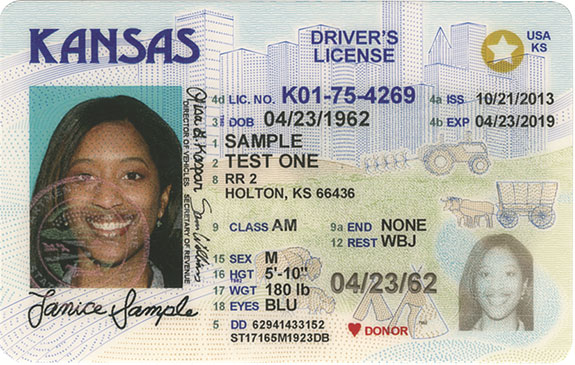
Driver’s license office schedule changes this week

KDOR

TOPEKAThe hours of operation for most driver’s license office in Kansas will change starting Monday.

The new hours are 8 a.m. to 5 p.m. Monday through Friday beginning this Monday, October 29. Under the previous schedule, offices statewide were closed Mondays.

“This is just one of the changes to driver’s license operations we are rolling out in addition to mobile renewals and faster service in the offices,” Director of Vehicles David Harper said.

The last day for Saturday hours for offices in Topeka, Overland Park, Mission, Olathe, Wichita, Derby, and Andover is tomorrow, October 27. Those offices will be open 7:30 a.m. to 11:15 a.m.

Driver’s and ID holder who want a Real ID should use the document checklist to make sure they have everything they need before visiting the office.

KS National Guard Hall of Fame inductions Nov. 4

KNG

TOPEKA – The Kansas National Guard will be adding three new names to its roster of distinguished Guardsmen during an induction ceremony for the Kansas National Guard Hall of Fame Nov. 4.

The ceremony will take place at Ramada Hotel and Convention Center, 420 E 6th St., Topeka, beginning at 2 p.m.

This year’s inductees are retired Col. Wayne L. Cline, Topeka, the late retired Col. James E. Trafton, Kansas City, Kansas, and retired Chief Master Sgt. Danny M. Roush, Lyndon.

“These nominees are stellar examples of what it means to be a member of the Kansas National Guard,” said Maj. Gen. Lee Tafanelli, the adjutant general. “Throughout their careers, they exemplified the kind of dedication and leadership that makes the Kansas National Guard the proud and honorable organization it is.”

Col. Wayne L. Cline

Retired Col. Wayne L. Cline’s career covered more than 36 years of service that included branch qualification in field artillery, engineering, transportation and aviation. Cline enlisted in the Kansas National Guard in 1953 and completed Officer Candidate School in 1959, commissioning as a second lieutenant. Over the course of his career, he served in numerous leadership positions. As an aviator, he was instrumental in implementing a phase maintenance program for the CH54A helicopter that was adopted worldwide. He was the first KSARNG aviator to fly helicopters in instrument weather conditions and developed a comprehensive instrument training program for all of the other aviators.

Col. James Trafton

Retired Col. James Trafton began his military career in 1971 as a private and served in a reconnaissance platoon with the 1st Cavalry Division in Vietnam, where he was awarded the Combat Infantryman’s Badge. Trafton graduated from Officer Candidate School in 1982 and was commissioned as an engineer officer in 1984. He branch transferred to infantry in 1991 and served in several leadership positions, including command of the 2nd Battalion, 137th Infantry. He led the battalion during its deployment for Operation Iraqi Freedom in 2005, overseeing more than 1,300 combat patrols with units dispersed throughout Baghdad, Kirkuk, Mosul, Ramadi, Irbil and Basra, Iraq. At the time of his retirement in 2008, he was Kanas Army National Guard Strength Management Officer. He was inducted into the Kansas National Guard Officer Candidate School Hall of Fame in August 2009. Trafton died in April 2010 from injuries sustained in a traffic accident.

Chief Master Sgt. Danny Roush

Retired Chief Master Sgt. Danny Roush joined the Kansas Air National Guard in 1973, enlisting into the 190th Civil Engineer Squadron. During a career that spanned almost 40 years, Roush served the Kansas National Guard in many capacities, including journeyman electrician, interior electric shop noncommissioned officer in charge, exterior electric shop supervisor, squadron first sergeant, electrical superintendent, facility manager and civil engineer manager. Roush deployed twice in his career, first to Jeddah, Saudi Arabia, in 1990 and to Kirkuk, Iraq, in 2005.

Keep your Trick-or-Treaters safe from scary injuries

KDHE

TOPEKA – On Halloween, ghosts and ghouls may give you a fright, but real dangers, like pedestrian accidents, falls, burns and poisonings are a scary reality. Safe Kids Kansas, the Kansas Department of Health and Environment, the Office of the State Fire Marshal and the Kansas Traffic Safety Resource Office (KTSRO) remind families to keep safety in mind during fall festivities to ensure your trick-or-treaters enjoy a safe holiday.

On average, children are more than twice as likely to be hit by a vehicle and killed on Halloween than on any other day of the year. Drivers need to slow down and be extra alert, especially in neighborhoods, as there will be more children on the streets and sidewalks—and those kids may be focused on gathering candy and the excitement of the holiday rather than being careful while crossing streets.

“Review safety rules with your kids before they leave the house,” said Cherie Sage, Safe Kids Kansas. “Trick-or-treaters are often out when it’s dark, and it’s more difficult for drivers to see them. Children younger than 12 should not cross streets alone on Halloween without an adult or older responsible teenager. While it’s a good idea for children to have a cell phone with them in case of an emergency, remind them to pay attention to their surroundings, and not be distracted from hazards because they are texting or talking on the phone.”

Parents and kids should also be careful with candy. It’s hard to resist the temptation to dive right into treats, but it is best to check sweets for signs of tampering before children are allowed to eat them. Only eat treats in original and unopened wrappers.

According to the National Fire Protection Association, during the five-year period from 2009-2013, decorations were the item that first ignited in an estimated 860 reported home structure fires per year. Nearly half of those fires in homes happened because decorations were too close to a heat source. Forty-one percent of these incidents were started by candles. These fires caused an estimated average of one civilian death, 41 civilian injuries and $13 million in direct property damage per year.

With Halloween just a few days away, follow these tips to ensure your trick-or-treaters have a fun and safe holiday.

Decorating Safely

  • Choose costumes and decorations that are flame-resistance or flame-retardant, and avoid placing flammable materials such as hay bales, corn stalks and paper decorations near a heat source, including light bulbs and heaters.
  • Keep exits clear of decorations and props so nothing blocks escape routes.
  • Use battery-operated candles in jack-o-lanterns and when decorating pathways and yards.
  • Set a reminder to blow out any candles and unplug lights.
  • Use a single extension cord that is the right length for your outdoor lights and decorations. Do not connect multiple cords.
  • Teach your children who are going to parties and haunted houses to look for the exits and have a way out in case of an emergency.

Walk Safely

  • Cross the street at corners, using traffic signals and crosswalks.
  • Look left, right and left again when crossing and keep looking as you cross.
  • Put electronic devices down and keep heads up and walk, don’t run, across the street.
  • Teach children to make eye contact with drivers before crossing in front of them.
  • Always walk on sidewalks or paths. If there are no sidewalks, walk facing traffic as far to
    the left as possible. Children should walk on direct routes with the fewest street crossings.
  • Watch for cars that are turning or backing up. Teach children to never dart out into the street or cross between parked cars.

Trick or Treat with an Adult

  • Children under the age of 12 should not be alone at night without adult supervision. If kids are mature enough to be out without supervision, they should stick to familiar areas that are well lit and trick-or-treat in groups.

Keep Costumes Both Creative and Safe

  • When choosing a costume, stay away from long trailing fabric. Purchase only ones that are labeled flame-resistant or flame-retardant.
  • Decorate costumes and bags with reflective tape or stickers and, if possible, choose light colors.
  • Choose face paint and makeup whenever possible instead of masks, which can obstruct a child’s vision.
  • Have kids carry glow sticks or flashlights to help them see and be seen by drivers.
  • When selecting a costume, make sure it is the right size to prevent trips and falls.

Drive Extra Safely on Halloween

  • Slow down and be especially alert in residential neighborhoods. Children are excited on Halloween and may move in unpredictable ways.
  • Take extra time to look for kids at intersections, on medians and on curbs.
  • Enter and exit driveways and alleys slowly and carefully.
  • Eliminate any distractions inside your car so you can concentrate on the road and your surroundings.
  • Drive slowly, anticipate heavy pedestrian traffic and turn your headlights on earlier in the day to spot children from greater distances.
  • Popular trick-or-treating hours are 5:30 p.m. to 9:30 p.m., so be especially alert for kids during those hours.

For more tips on how to keep kids safe on Halloween and throughout the year, visit www.safekids.org.

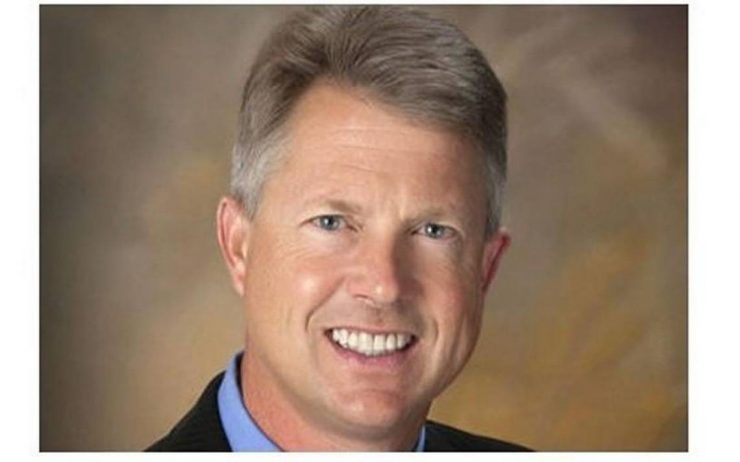
MARSHALL: Doctor’s Note Oct. 27

Dr. Roger Marshall, R-Great Bend, is the First District Kansas Congressman.

Friends,

This week we have much to be thankful for. I, for one, am thankful for the hardworking men and women of our law enforcement institutions and their efforts to catch the perpetrator who sought to harm our nation’s public servants. This behavior will not be tolerated, and I am confident that law enforcement officials will bring them to justice. Moving forward, we must maintain order and respect for one another regardless of political affiliation. We cannot let fear and anger overcome our humanity.

I am also thankful for the recent rise in real wages for low-income workers. This week’s economic reports show that wages for the bottom 10% of full-time wage and salary workers have averaged 4.9% annual growth over the past four quarters. The number of applications for unemployment benefits dropped last week, especially amongst women. For the last two decades, the share of prime-aged women participating in our labor force has been in decline, but we have begun to see a reversal of this trend over the past three years. Our strong economy has brought labor-force participation among women aged 25 to 54 up to 75.2%.

Current-dollar personal income increased $180.4 billion in the third quarter, with personal savings resting at $999.6 billion. Deregulation and tax reform are bringing millions of jobs and opportunities back to those who need them most!

Disaster Relief
Last Friday, President Trump announced a Federal Disaster Declaration for counties in Kansas impacted by the major weather events over Labor Day weekend. The severe storms consisting of straight-line winds, and flooding which hit Riley, Clay and Marshall Counties, damaged people’s homes, buildings and businesses, and the local infrastructure. The President’s disaster declaration allocates federal funds, on a cost-sharing basis, to aid in the recovery and reconstruction of these communities. This will certainly help in the rebuilding process, but it is critical that we also recognize our state and local emergency response teams who assisted during the storms and floods, and have continued to help residents and property owners during this challenging time of clean up and repair.

Bringing Order to the Border

On Thursday, President Trump firmly stated that the Honduran migrant caravan will not be allowed to enter the country illegally. Secretary of Defense, James Mattis, is expected to order 800 American troops to reinforce vulnerable areas along the border. Regardless of political affiliation, it is clear that our current immigration laws are broken. As elected officials, we must set aside partisan bickering and develop a solution to this urgent crisis. I have sympathy for those working to enter the U.S., but we are a country of laws that must be upheld. Without national security and clearly defined borders, our country would cease to exist.

A Prescription for Hope
This week, President Trump signed the most significant measure against a single drug crisis in history! Having been classified as a national Public Health Emergency earlier this month, I am thrilled to see we are tackling the Opioid Crisis head-on. H.R. 6, known as The Substance Use-Disorder Prevention that Promotes Opioid Recovery and Treatment (SUPPORT) for Patients and Communities Act, fights drug trafficking on our borders, improves access to treatment centers, and educates prescribers, as well as veterans, on the addictive properties of certain drugs. Of course, there is still much work to be done on the state level, but this is a major leap towards creating healthier American communities.

World Polio Day
October 25th was World Polio Day: a fantastic opportunity to renew our promise to every child who suffers from this debilitating disease. This year’s theme, Bold Steps to End Polio, focused on the tremendous progress that has been made in creating a polio-free world. Developing countries such as Nigeria have gone two years without new diagnoses, while others such as Afghanistan and Pakistan only encountered 22 cases in the past year. The World Health Organization, in conjunction with its partners in the United Nations Children’s Fund, Rotary International, the Bill & Melinda Gates Foundation, and U.S. Centers for Disease Control, will continue working alongside governments and frontline health care workers to annihilate polio for good.

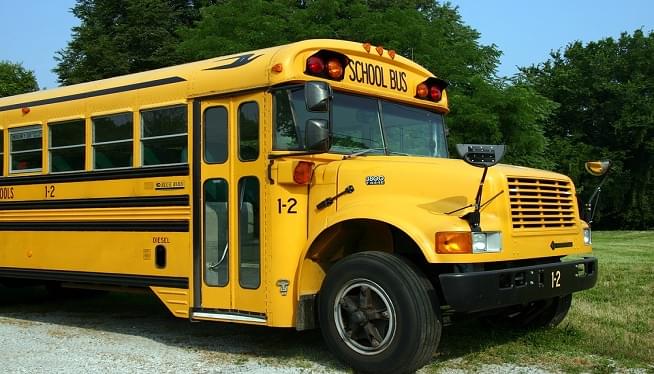
EPA school bus rebate program to reduce diesel emissions

EPA

LENEXA – Earlier this month, the U.S. Environmental Protection Agency (EPA) announced over $9 million available nationwide in rebates to replace older diesel school buses through EPA’s Diesel Emissions Reduction Act (DERA) funding. The new and retrofitted buses will reduce pollutants that are linked to health problems such as asthma and lung damage.
School buses travel over 4 billion miles each year, providing the safest transportation to and from school for more than 25 million American children every day. However, diesel exhaust from these buses has a negative impact on human health, especially for children, who have a faster breathing rate than adults and whose lungs are not yet fully developed.
The 2018 School Bus Rebate Program will offer over $9 million to public and private fleet owners for the replacement of old diesel school buses with new buses certified to EPA’s cleanest emission standards. EPA will award selected applicants up to $20,000 per bus for scrapping and replacing old buses.
Applicants can apply for rebates between $15,000 and $20,000 per bus to replace buses with engine model years of 2006 and older with new buses powered by 2017 or newer model year engines. Eligible replacement school buses may operate on diesel, gasoline, battery, or alternative fuels such as natural gas or propane.
Eligible entities include:
  • Regional, state, or tribal agencies that have jurisdiction over transportation and air quality, including school districts and municipalities
  • Private entities that operate school buses under a contract with an entity listed above
  • Fleets with up to 100 school buses may submit one rebate application listing up to 10 buses for scrappage and replacement
  • Fleets with more than 100 school buses may submit up to two rebate applications, each listing up to 10 different buses for scrappage and replacement
Selections are made through a lottery process, with at least one selectee from each state/territory represented in the applicant pool. The deadline to apply is Nov. 6, 2018. For more information, visit: https://www.epa.gov/cleandiesel/clean-diesel-rebates.
This is the sixth rebate program to fund cleaner school buses offered under DERA appropriations, which has supported nearly 25,000 cleaner buses across the country for America’s schoolchildren. For more information about the DERA program, visit: www.epa.gov/cleandiesel.

Chance of colliding with a deer in Kansas is 1 in 130

KID

TOPEKA — The reality of driving on Kansas roads and highways from now through spring is the possible encounter with a deer, according to Ken Selzer, CPA, Kansas Commissioner of Insurance.

“The national statistics concerning deer-vehicle crashes are sobering,” Commissioner Selzer said. “Kansas is one of the top 20 states in frequency of deer-vehicle mishaps, even though the chances have decreased over the past two years.”

According to State Farm Insurance, which tracks national deer crash information:

  • The chance of a driver having a vehicle collision with a deer in Kansas is approximately 1 in 130.
  • Nationwide, from July 1, 2017 to June 30, 2018, there were 1.33 million deer-related vehicle accidents.
  • The national average cost per vehicle claim from a deer-vehicle collision hovers around $4,300, a number that grows each year.
  • Iowa, Missouri and Arkansas have higher frequencies of deer mishaps than Kansas, with Oklahoma, Nebraska and Colorado showing a lower frequency than the Sunflower State.

“To be proactive, Kansas motorists should check with their insurance agents to find out the type of vehicle accident coverage their policies have,” Commissioner Selzer said. “Deer accidents are usually covered under a person’s comprehensive coverage, not collision coverage. You will have to pay your deductible amount in order to receive your company’s coverage. However, if you have liability only for your vehicle coverage, you will probably have to cover the damage repairs out of your own pocket.”

When a vehicle-deer crash occurs, Commissioner Selzer urges Kansas drivers to consider the following:

  • Contact your insurance agent or company quickly to begin the claims process.
  • If you do hit a deer and are uncertain whether the animal is dead, keep your distance. You might be dealing with an injured, wild animal with sharp hooves.
  • If the deer is blocking the roadway and poses a danger to other motorists, you should immediately report the incident to the local law enforcement agency.
  • Stay alert, always wear your seat belt and drive at a safe, sensible speed for conditions.
  • Watch for the reflection of deer eyes and for deer silhouettes on the shoulder of the road.
  • Do not rely exclusively on devices such as deer whistles, deer fences and reflectors to deter deer.
  • When driving at night, use high-beam headlights when there is no opposing traffic. The high beams will illuminate the eyes of deer on or near a roadway.
  • Brake firmly when you notice a deer in or near your path, but stay in your lane. Many serious accidents occur when drivers swerve to avoid a deer and hit other vehicles or lose control of their cars. Potentially, you will risk less injury by hitting the deer.
  • If you see one deer, it is likely there are more nearby.
  • If the deer stays on the road, stop on the shoulder, put on your hazard lights and wait for the deer to leave the roadway; do not try to go around the deer while it is on the road.

“If you do have a deer encounter and need some assistance with your vehicle claim, our Consumer Assistance Representatives at the Kansas Insurance Department can help,” said Commissioner Selzer. “Call us at 800-432-2484, or use the online chat feature at our website, www.ksinsurance.org.”

November 12-16 to be Kansas Apprenticeship Week

KDC

TOPEKA – The week of November 12-16 has been named Apprenticeship Week in the State of Kansas. This is being done to recognize the value and importance of the statewide Registered Apprenticeship Program in meeting the workforce needs of Kansas employers. The Registered Apprenticeship is an industry-driven model that combines on-the-job learning with job-related instruction leading to increasing levels of measurable skill attainment and wages.

There are presently 1928 registered apprentices in Kansas receiving both on-the-job training and paid employment from 257 employers, with the numbers growing weekly. Through this program, apprentices receive on-the-job training from an experienced mentor for at least a full year, providing a living wage while training for a career position. They also earn credentials which can be carried forward throughout their careers. At the same time, employers benefit by meeting their growing need for a trained workforce, experience lower turnover costs and higher productivity, and reduce their costs for recruiting personnel.

Apprenticeship Week will begin with a ceremony in Wichita, featuring a speech from the Mayor, on November 13. In early November, Governor Jeff Colyer, M.D., will be on-hand to present the Governor’s proclamation and speak about the benefits of Registered Apprenticeships toward meeting the workforce needs of Kansas employers.

Kansas raises awareness of stillbirths

KDHE

TOPEKA – More than 200 babies are stillborn each year in Kansas. The Kansas Department of Health and Environment (KDHE) is committed to helping families prevent this tragedy, which according to the Centers for Disease Control and Prevention (CDC), puts families at greater risk of Post-Traumatic Stress Disorder, depression, loss of productivity and makes them four times more likely to get divorced.

Governor Jeff Colyer has designated October as Stillbirth Awareness Month. The annual awareness campaign comes just after the launch of a new initiative in Kansas to prevent stillbirths, called Count the Kicks.

“We are partnering with health care providers, midwives and doulas, county health departments, birthing hospitals, community groups and others to ensure that all women know the importance of counting their baby’s movements daily in the third trimester,” said KDHE Secretary Jeff Andersen. Throughout October KDHE and partners will been honoring Stillbirth Awareness Month by talking about our efforts to prevent loss due to stillbirth with the Count the Kicks campaign.”

Count the Kicks is a proven stillbirth prevention public health campaign that empowers expectant parents to track their baby’s movements in the third trimester and has the potential to save 60 babies every year. The campaign encourages families to contact a physician if they notice a reduction in fetal movement, so medical attention can be sought before it’s too late. 

The Kansas Count the Kicks campaign was launched in August and has proven to be impactful. More than 100 orders for materials have been submitted; more than 1,000 Kansans have visited the Count the Kicks website; more than 100 Kansans have “liked” Count the Kicks on Facebook; and more than 350 Kansas moms have downloaded the free Count the Kicks app to track movements.

Through KDHE, providers can order FREE Count the Kicks educational materials at www.countthekicks.org and start using these materials in their practices right away. Moms everywhere can download the FREE Count the Kicks app, which is available in the Google Play and iTunes online stores. The app, available in English and Spanish, allows expectant moms to monitor their babies’ movement, record the history, set a daily reminder, count for single babies and twins.

The Kansas Count the Kicks campaign is supported by KDHE with funding through the Health Resources and Services Administration (HRSA), of the U.S. Department of Health and Human Services (HHS), under grant number #B04MC31488 and title Maternal and Child Health Services.

SELZER: Should you strengthen your cybersecurity?

Ken Selzer, Kansas Insurance Commissioner

The amount of information reportedly stolen from computer and technology users across the United States points out the need for Kansans to strengthen their technology security skills.

October is National Cybersecurity Awareness Month. What better time to increase your online vigilance to make sure your personal information is kept secure. 

National cybersecurity experts suggest the following guidelines for computer and smart device consumers as they work to strengthen their privacy with connected technologies.

·         Set strong passwords and do not share them with anyone. Set them with at least eight characters, including letters, numbers and symbols.

·         When using unfamiliar websites, be sure the URL begins with “https.” The “s” at the end indicates it is a secure site.

·         Keep your operating system, browser, and other critical software optimized by installing updates, including antivirus and anti-spyware updates.

·         Limit the amount of personal information you post online, and use privacy settings to avoid sharing information widely.

·         Be cautious about what you receive or read online—if it sounds too good to be true, it probably is. Also, if a message sounds out of character for the sender, or includes nothing but a link in the body of an email, it may be suspicious.  Check with the person who purportedly sent you the message to make sure it is legitimate.

·         Limit the type of business you conduct on public Wi-Fi networks.  Avoid doing your online shopping from an Internet café. Do business with credible companies, and devote one credit card with a small credit line to online purchases. 

·         Finally, and maybe most importantly, check your homeowners or identity theft insurance policies for the level of coverage you have in case of a cyberattack on your devices. 

Even with protection and enforcement activities from the federal government, cyber vigilance needs to begin at home. Knowing some common-sense precautions can keep you and your personal information safer. 

For more about National Cybersecurity Awareness Month and other tips for protecting your information, go to www.staysafeonline.org .

Ken Selzer is the Insurance Commissioner of Kansas

SBA small business lending momentum continues

SBA

WASHINGTON – The U.S. Small Business Administration announced FY18 lending numbers showing that it guaranteed over $30 billion to small businesses that otherwise would not have had access to capital.

“We are providing tools, resources and access to capital for America’s 30 million small businesses, and our FY18 numbers bear that out,” SBA Administrator Linda McMahon said. “SBA’s 7(a) and 504 loan programs have never been more dynamic, easy to use and accessible—helping small businesses succeed and thrive. Our loan programs in FY18 continue to show strong performance, and we believe the President’s tax cuts and deregulatory actions will help more small businesses grow and prosper in the coming year.”

In FY18 there were approximately 60,353 7(a) loans made, with a total dollar amount of $25.37 billion. The 7(a) program is SBA’s flagship program, which offers guarantees on loans to small businesses of up to $5 million on reasonable terms and conditions. 7(a) loans are commonly used for acquiring land, purchasing equipment, or working capital.

The SBA’s 504 loan program had another year of high performance for lending, with 5,874 loans made for a total dollar amount of over $4.75 billion. In FY18 SBA launched the 25-year Debenture, which offers an extra 60 months of financing at a fixed rate for small businesses. Since its introduction in April, over 1,000 debentures had been sold by the end of September.

“The 25-year Debenture is designed to help free up cash flow and offer fixed rates in a rising interest rate environment for 504 borrowers and we are pleased to see over $1 billion has been disbursed in less than six months,” Associate Administrator for SBA’s Office of Capital Access William Manger said.

In FY18 there was significant growth in the SBA’s smaller loans, including a record volume of dollars lent in the Microloan and Community Advantage Programs. Specifically, over 5,000 loans were approved for over $72 million in the Microloan program and over 1,000 loans for over $150 million in SBA’s Community Advantage program.

The SBA continued to innovate and improve processes by leveraging enhanced technologies. Lender Match is an SBA technology platform that gives entrepreneurs the ability to complete a quick online form, without registration or cost, and be connected with an approved SBA lender within 48 hours. To date, Lender Match has generated 3.6 million leads on behalf of small businesses to our lenders and over 160,000 unique borrowers have been contacted by lenders with financing options.

Another technological innovation was the development of the SBA’s Franchise Directory which was launched this year and has resulted in an over 50 percent increase in eligible franchise brands. There are currently 3,192 brands on the Franchise Directory. When the directory was first published in October 2017 there were only 2,034 brands. In FY18, SBA has seen a year over year increase of over 21 percent in 7(a) and 504 dollars going to franchises.

For more information about SBA’s loan programs, lending activity in the Wichita District which includes western Kansas, plus financial assistance and other services, visit www.sba.gov.


About the 7(a) and 504 loan programs

The 7(a) loan program is the SBA’s primary program for providing financial assistance to small businesses and offers guarantees on loans to small businesses of up to $5 million on reasonable terms and conditions. 7(a) loans are commonly used for acquiring land, purchasing equipment, or working capital. The CDC/504 loan program helps small businesses acquire fixed assets to promote economic development in the form of long-term fixed rate financing for fixed assets on reasonable terms. Under this program, the SBA authorizes CDCs (Certified Development Companies) to provide financing to small businesses with the help of third-party lenders (typically banks). The maximum loan amount is generally $5 million; however, certain eligible energy-efficient or manufacturing projects may qualify for more than one 504 loan up to $5.5 million each.

About the U.S. Small Business Administration

The U.S. Small Business Administration makes the American dream of business ownership a reality. As the only go-to resource and voice for small businesses backed by the strength of the federal government, the SBA empowers entrepreneurs and small business owners with the resources and support they need to start, grow or expand their businesses, or recover from a declared disaster. It delivers services through an extensive network of SBA field offices and partnerships with public and private organizations. To learn more, visit www.sba.gov.

KS Supreme Court accepting comment on proposed changes to complaints against judges

OJA

TOPEKA—The Kansas Supreme Court is accepting public comment on proposed changes to Rules 602 through 627 relating to complaints against judges.

Through the proposed amendments, the court seeks to create a clearer and more comprehensive complaint process for the benefit of both complainants and judges.

The court will accept comment until 5 p.m. Monday, December 17, 2018. Comment may be made by email to [email protected] with “Rules 602-627” in the subject line.

The proposed amended rules ares available for review on the Kansas Supreme Court website at www.kscourts.org under the heading What’s New.

Rules 602 through 627 govern the Commission on Judicial Qualifications and its role helping the Supreme Court exercise its responsibility in judicial disciplinary matters. The Supreme Court created the commission in 1974 under authority granted by Article 3 of the Kansas Constitution.

Judges are guided by the Kansas Code of Judicial Conduct, which establishes standards for ethical conduct by judges and judicial candidates. The code’s guidance is to help judges maintain the highest standards of judicial and personal conduct, and to provide a basis for regulating their conduct through disciplinary procedures.

Copyright Eagle Radio | FCC Public Files | EEO Public File