We have a brand new updated website! Click here to check it out!

New peer support program for families of children with special needs

KDHE

TOPEKA  Families of children with special needs benefit from the care and support that can only be offered by others who have shared their experience.

The Kansas Department of Health and Environment (KDHE) and the Special Health Services Family Advisory Council (SHS-FAC) announce a new peer-support initiative in Kansas that will enable individuals and families who have similar experiences to communicate and gain support from one another, by sharing ideas, resources and strategies to meet the needs of their children.

“The program offers participants the opportunity to express their grief, concerns and questions, without feeling judged,” said Heather Smith, KDHE Special Health Services Director. “We know that peer support is one of the strongest measures of individual/family support.”

Implementation of the network will occur in three phases, Support Peer Recruitment, Support Peer Training, and Peer Matching. We are actively recruiting Support Peers—those who has navigated various service systems, have experience with advocating for a loved one or themselves, and have learned lessons that can be shared with others. It does not take specialized training, specific experience with services or systems, or any kind of degree to be a Support Peer. It simply takes a caring individual who has a desire to help others and shares experiences with caring for a child with special health care needs.

In the next phase, Support Peers will provide training on confidentiality, communication, active listening and helping families who are dealing with loss, grief or fear. Training will take place in-person and online through November and December. The final phase, Peer Matching, will take place in early 2019, and begin matching those looking for supports with the trained Support Peers recruited.

Two existing programs are part of the initial launch, the Kansas Special Health Care Needs program and the Kansas School for the Deaf, to connect families of children served through these programs with peer supports.

Supporting You will be administered by KDHE’s Special Health Services Section, within the Bureau of Family Health. The network has been developed by the SHS-FAC, which will provide oversight to monitor consistent practices and fidelity among partnering organizations, ultimately ensuring that participating programs are meeting the needs of the families served through the network.

More information can be found on the Supporting You website at www.supportingyoukansas.org or by contacting Heather Smith, Special Health Services Director, at 785-296-4747 or [email protected].
 

Workers comp insurance rate decreases for 5th straight year

KID

TOPEKA – For the fifth consecutive year, many Kansas business owners will pay less for workers compensation insurance again in 2019, according to Ken Selzer, CPA, Kansas Commissioner of Insurance.

“With another rate decrease, Kansas companies will potentially have more money to grow their businesses,” said Commissioner Selzer. “This happens because they will pay less to cover medical claims costs and lost wages for job-related injuries and deaths.”

The decreases affect many of the approximately 70,000 Kansas businesses that pay workers compensation insurance.

The 2019 rate filing for the workers compensation rate shows a decrease of 6.4 percent in the voluntary base rate and a decrease of 10.8 percent for assigned risk workers compensation rates.

Adding together the rate decreases Kansas business owners saw from 2015 through 2018 and now for 2019, the cumulative rates will have dropped almost 45 percent in the voluntary base rate and nearly 50 percent in the assigned risk rate.

“Voluntary workers compensation base rates are used by all insurance companies writing workers compensation in the competitive market,” said Heather Droge, Director of the Property and Casualty Division at the Kansas Insurance Department. “Assigned risk rates are used for insured businesses in the Kansas Assigned Risk Plan, a state organization for those businesses who are unable to obtain coverage in the competitive market.”

“It’s important to remember that the decreases are only an average,” Commissioner Selzer said.  “That means that an individual employer may see a larger decrease, no change in their rates, or an increase, depending on the employer’s own industry, claims experience and payroll. Many of our state’s businesses will see a positive outcome because of the decrease. It’s a win-win for both businesses and potential employees.”

In Kansas, 67 percent of workers compensation benefit distribution goes to pay medical claims, and 33 percent goes to indemnity claims, according to statistics from the National Council on Compensations Insurance, Inc. (NCCI).

The 2019 NCCI filing applies to all insurance carriers writing workers compensation policies for businesses in the state.  The Kansas Insurance Department staff approved the new filings for a Jan. 1, 2019, effective date.

NCCI prepares workers compensation rate recommendations and manages the nation’s largest database of workers comp information.

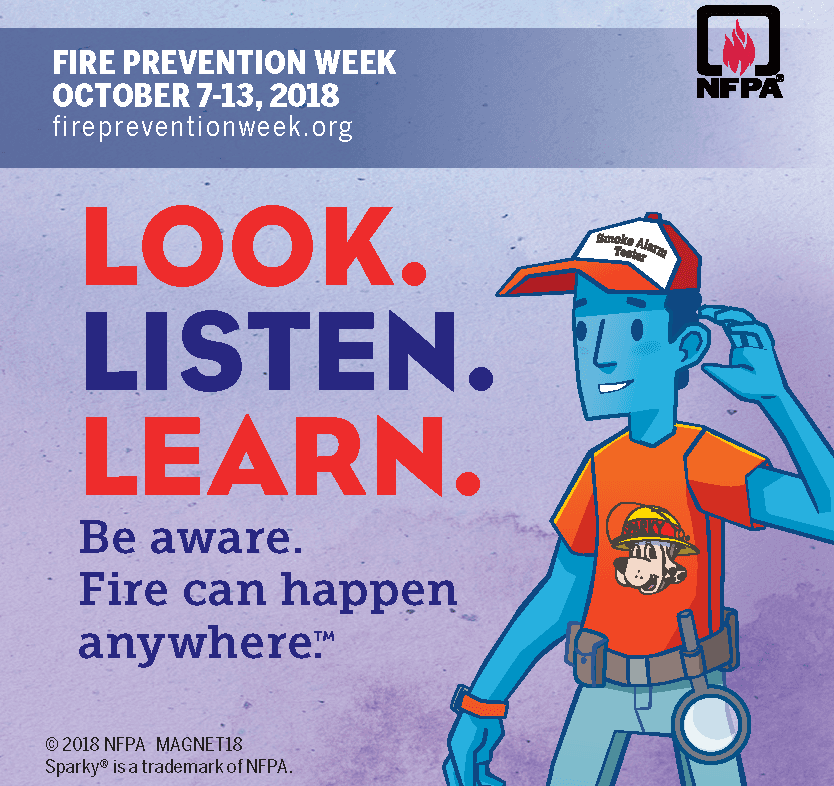
Oct. 7-13 is Fire Prevention Week in Kansas  

OSFM

TOPEKA – Governor Jeff Colyer officially proclaimed Oct. 7-13, 2018, as Fire Prevention Week in Kansas.

The Office of the State Fire Marshal (OSFM) and Safe Kids Kansas teamed up with the National Fire Protection Association (NFPA) — the official sponsor of Fire Prevention Week™ for more than 90 years — to promote this year’s Fire Prevention Week campaign, “Look. Listen. Learn. Be aware. Fire can happen anywhere™,” which works to educate the public about basic but essential ways to quickly and safely escape a home fire.

In Kansas, 100 percent of civilian fire deaths in 2017 occurred in residential structure fires, and there were 2,589 residential fires in Kansas in 2017, resulting in 18 deaths and 214 injuries.

NFPA statistics show that the number of U.S. home fires has been steadily declining over the past few decades. However, the death rate per 1000 home fires that are reported to fire departments was 10 percent higher in 2016 than in 1980.

While people feel safest in their home, it is also the place people are at greatest risk to fire, with four out of five U.S. fire deaths occurring at home. That over-confidence contributes to a complacency toward home escape planning and practice.

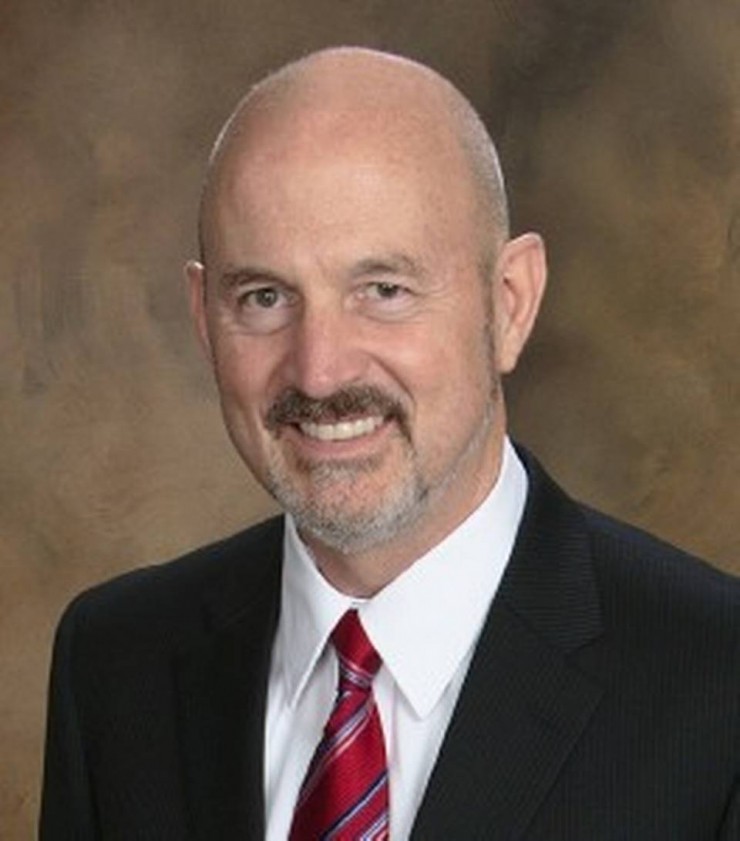
“We know that people often make choices in fire situations that jeopardize their safety or even cost them their lives,” Doug Jorgensen, State Fire Marshal, said. “We need to do a better job of teaching people about the potentially life-saving difference escape planning and practice can make and motivating them to action.”

Safe Kids Kansas reminds families that Saturday, Oct. 13, is Home Fire Drill Day. This is an opportunity to plan, talk about and practice your fire plan with all your family members, especially young children, so they know what to do when they hear a smoke alarm.

“Teach children to get low and get out when they hear the smoke alarm,” Cherie Sage, Safe Kids Kansas, said. “A child who has practiced getting out of the home and to a safe meeting spot will have a better chance of getting out of danger safely during a real emergency , so practice your escape plan regularly as a family.”

Jorgensen says this year’s “Look. Listen. Learn.” campaign highlights three steps people can take to help quickly and safely escape a fire.

  • Look for places fire could start.
  • Listen for the sound of the smoke alarm.
  • Learn two ways out of every room.

While OSFM, Safe Kids Kansas and NFPA are focusing on home fires, these fire safety messages apply to virtually anywhere.

“Situational awareness is a skill people need to use wherever they go,” Jorgensen said. “No matter where you are, look for available exits. If the alarm system sounds, take it seriously and exit the building immediately.”

For more information about Fire Prevention Week activities in Kansas, visit firemarshal.ks.gov. To learn more about this year’s Fire Prevention Week campaign, “Look. Listen. Learn.” and home escape planning, visit firepreventionweek.org.

SELZER: Insurance Matters Oct. 2018

Ken Selzer, Kansas Insurance Commissioner

As we enter the last quarter of 2018, Kansans have been fortunate to have the statewide estimated non-flood storm damages for the year be at the lowest level in the past 10 years. With low storm damage estimates come the correspondingly low number of claims filed.

We always appreciate the calm that comes with a less-than-normal severe weather year. But it is unwise to think that this year begins a new normal for severe weather activity. The statistics say that we will once again, at some future point, be faced with storm damage losses more typical of those caused by Kansas weather events. It is still wise to make sure that you know how to maneuver the claims process successfully when the need arises.

With a little preparation, resolving a claim with your insurance company does not have to be a frustrating, time-consuming process. Being prepared with and keeping track of the information your insurance company needs to process the claim is critical. What you do before making the claim will help in reducing the time between the insurance incident and the resolution of your problem.

Kansans should consider the following ideas to assist with the claims process.

Know your policy. Understand what your policy says. Because it is a contract between you and your insurance company, you need to know what is covered, what is not and what your out-of-pocket costs are.

File claims as soon as possible. Call your agent or your company’s claims hotline as soon as possible. Your policy might require that you make the notification within a certain time frame.

Provide complete, correct information. Be certain to give your insurance company all the necessary information. If your information is incorrect or incomplete, your claim could be delayed.

Keep copies of all communications. Whenever you communicate with your insurance company, be sure to document the communications. With phone calls, include the date, name and title of the person you spoke with and what was said. 

Ask questions. If there is a disagreement about the claim settlement, ask the company for the specific language in your policy that is in question. Find out if the disagreement is because you interpret the policy differently. If your claim is denied, make sure you have a letter from the company explaining the reason for the denial — including the specific policy language that caused the denial.

Don’t rush into a settlement. If the first offer your insurance company makes does not meet your expectations, talk with your local insurance agent or seek other professional advice.

Document auto/homeowners temporary repairs. Auto and homeowners policies might require you to make temporary repairs to protect your property from further damage. Document any damaged personal property for an adjuster to inspect. If possible, take photographs or videotape the damage before making the repairs. Your policy should cover the cost of these temporary repairs, so keep all receipts.

Don’t make permanent repairs. A company might deny a claim if you make permanent repairs before the damage is inspected. If possible, determine what it will cost to repair your property before you meet with an adjuster. Provide the adjuster any records of improvements you made to the property, and ask him/her for an itemized explanation of the claim settlement offer.

Seek accident and health claims details. Ask your medical provider to give your insurance company details about your treatment, condition and prognosis. If you suspect your provider is overcharging, ask the insurance company to audit the bill, and verify whether the provider used the proper billing procedure.

Contact the Kansas Insurance Department (KID).  If you continue to have a dispute with your insurance company about the terms of the claims settlement, contact the KID Consumer Assistance Hotline at 1-800-432-2484, or go to the website, www.ksinsurance.org, to use the Chat feature to make contact with one of our Consumer Assistance Representatives.

Remember, you can get a claim resolved quicker if you have the consumer know-how to fast track the process.

Ken Selzer, CPA, is the Insurance Commissioner of Kansas.

🎥 Sen. Moran applauds passage of long-term FAA agreement

OFFICE OF SEN. MORAN

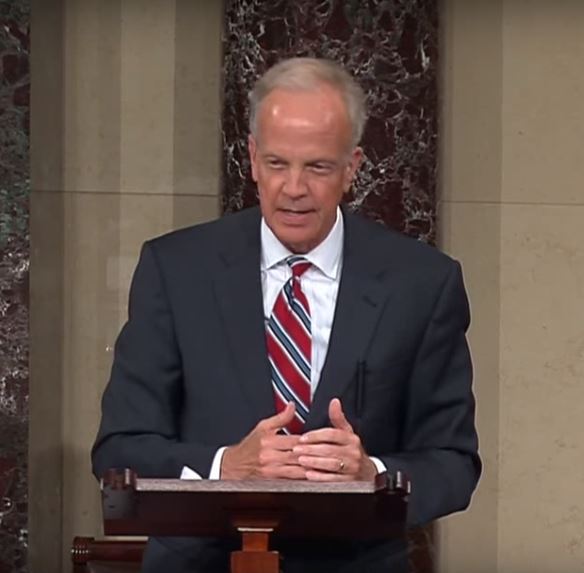
WASHINGTON – U.S. Senator Jerry Moran (R-Kan.) – member of the Senate Committee on Commerce, Science, and Transportation; member of the Aviation Operations, Safety and Security Subcommittee; and co-chair of the Senate Aerospace Caucus – today applauded the passage of the FAA Reauthorization Act of 2018H.R. 302, by a 93-6 vote in the Senate. This legislation will provide critical reforms and a five-year extension to the Federal Aviation Administration’s (FAA) authority.

Last week, the House of Representatives passed this legislation on a vote of 398-23.

The bill will now go to President Trump’s desk for signature, making this five-year authorization the longest enacted since 1982. 

“After years of negotiations, this long-term, bipartisan and bicameral FAA extension is welcome news for travelers, aerospace manufacturers and industry innovators,” said Sen. Moran. “Not only does this reauthorization elevate the over 40,000 Kansans who make a living manufacturing, operating and servicing the aircraft industry, but it includes important provisions I championed to close the aviation skills gap and to bring more women into this field.” 

“I have been a vocal opponent of misguided proposals to privatize our nation’s air traffic control system, and I am pleased this extension does not include any of these controversial provisions,” continued Sen. Moran. “ATC privatization threatens access to airspace for all but the largest cities with largest airports, causing significant harm to the long term economic viability of rural America. I will continue to advocate instead for proposals that provide greater protections for the general aviation industry and small airports nationwide that are so critical to connecting Americans in rural communities with the rest of the world. Overall, this legislation will make airline travel smoother, safer and more transparent for all Americans.” 

More on the FAA Reauthorization Act, H.R. 302, here: 

·         H.R. 302 bolsters aviation manufacturing by streamlining the aircraft certification process. These reforms will strengthen U.S. aviation sales and exports, help bring new safety technology to market and more effectively utilize the resources of the FAA and general aviation industry. In addition, the FAA Aircraft Registry office is exempted from closure during a government shutdown that would otherwise prevent the delivery of newly manufactured aircraft.

·         H.R. 302 reauthorizes the FAA Center of Excellence for Advanced Materials at Wichita State University. Advanced materials research at WSU has played a critical role in the evolution and integration of aircraft materials and technologies by providing invaluable research to validate the safety and integrity of new aircraft to the general public.

·         H.R. 302 helps close the skills gap in the aviation workforce. Sen. Moran is an original cosponsor of legislation, included in the FAA bill in its entirety, to create a pilot program within the FAA through which grants would be authorized to support technical education and career development. The grants would encourage collaboration between businesses, schools and local government to develop innovative workforce development programs supported by all three types of entities to help close the skills gap in the aerospace industry, which is struggling from a shortage of skilled workers.


Craghead serves as interim KDWPT Secretary

Linda Craghead

KDWPT

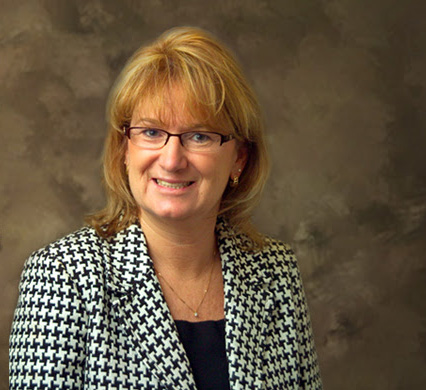
PRATT ­– Linda Craghead, who served as Assistant Secretary of State Parks and Tourism for the past seven years, is now leading the Kansas Department of Wildlife, Parks and Tourism (KDWPT) as Interim Secretary. Craghead was appointed to the position by Governor Jeff Colyer, M.D. on August 27, 2018. Former KDWPT Secretary, Robin Jennison, took over as general manager of the Kansas State Fair on September 24.

Prior to coming to KDWPT, Craghead worked for the agriculture industry giant, Cargill, Inc. After returning to her home state, Linda served as an economic development consultant and site coordinator for the annual Symphony in The Flint Hills – a unique outdoor concert held in the heart of Kansas’ iconic Flint Hills, drawing upwards of 7,000 guests from all over the world.

“The state of Kansas has so many great things to offer,” said Craghead. “I’m excited to have this opportunity and look forward to serving the people of the great state of Kansas in this new role.”

Craghead, who lives in Alma, graduated from Kansas State University with a bachelor’s degree in Animal Sciences and Agriculture.

KDHE receives funding for maternal behavioral health

KDHE

TOPEKA – The Kansas Department of Health and Environment (KDHE) has received a new Health Resources and Services Administration (HRSA) five-year grant focused on maternal behavioral health through expansion of services, including telehealth. The more than $600,000 annual grant—Safeguarding Two Lives: Expanding Early Identification & Access to Perinatal Mental Health and Substance Abuse Screening, Treatment and Referral—will support the Kansas Connecting Communities (KCC) program.

“We are proud and excited to receive this very competitive grant,” said KDHE Secretary Jeff Andersen. “The fact that only six other states were funded for this demonstrates the effectiveness of KDHE’s vision, work, progress and proposed plan to support Kansas mothers and families.”

KCC is a collaborative effort between KDHE Title V Maternal and Child Health, the Kansas Department for Aging and Disability Services and several key state and local partners to improve the mental health and well-being of pregnant and postpartum women through increased screening, referral, treatment and recovery support services. KCC will increase statewide access (with a regional approach) to screening, assessment and treatment for maternal depression and substance use disorders.

For the initial pilot program, KCC will be implemented in 10 southeast Kansas counties, utilizing a phased approach to launch across the state. The project has five overarching goals developed around increasing capacity and improving mental and behavioral health screening and services for pregnant and postpartum women in our state. Goals include: developing and disseminating training and toolkits; utilizing telehealth and/or community resources; developing service coordination across providers; provide behavioral health and substance use services; and align state and local partnerships.

The more than $3 million, five-year grant for the project runs from 2018 to 2023.

Key partners include local health departments, community mental health centers with support from the Association of Community Mental Health Centers, Central Kansas Foundation, Heartland Telehealth, Project ECHO, University of Missouri-Kansas City (UMKC) Screening, Brief Intervention, and Referral to Treatment (SBIRT) program, and Wichita State University Community Engagement Institute. A comprehensive process and outcome evaluation conducted by the University of Kansas Center for Public Partnerships and Research will ensure accountability through quality improvement and performance monitoring throughout this five-year project.

The Health Resources and Services Administration is an agency of the U.S. Department of Health and Human Services. It is the primary federal agency for improving access to health care services for people who are uninsured, isolated or medically vulnerable.

Company information for 2019 Kansas health insurance market released

KID 

TOPEKA, KS – Kansas consumers will have their choice of up to three health insurance companies, depending on where they live, when open enrollment begins Nov. 1, according to the Kansas Insurance Department. 

Blue Cross and Blue Shield of Kansas, Medica Insurance Company, and Ambetter from Sunflower Health Plan will offer plans in 2019. The three companies signed agreements with the federal government to offer 23 total individual marketplace plans online through www.healthcare.gov. Also, all three companies will offer plans outside of the online marketplace as well.  

The Blue Cross and Blue Shield of Kansas plans are available in all Kansas counties except Johnson and Wyandotte. Medica will have plans available in all counties, and the Ambetter from Sunflower Health Plan coverage is available in Johnson, Wyandotte, Miami and Leavenworth counties.     

The federal government has indicated that consumers will be able to “window shop” for all plans on the federal website prior to November 1, 2018, the official date for 2019 open enrollment to begin. 

“During open enrollment, Kansans need to evaluate whether to enroll in coverage, stay on their current policies, if available, or enroll in different policies,” said Ken Selzer, CPA, Kansas Commissioner of Insurance. 

Commissioner Selzer said it is also important for consumers to understand the network requirements of the various plans and to check that all of their providers of medical services are in the plan’s network. In addition, consumers should be aware that the types of policies companies sell may change from year to year. 

Open enrollment for the 2019 plan year ends December 15, 2018.  The open enrollment period is for coverage purchased on the healthcare.gov platform as well as for policies purchased offline. 

Kansans have likely heard about Short Term Limited Duration policies and Association Health Plans (AHPs). These types of plans offer other options for Kansans who are seeking health insurance coverage, according to the Commissioner.  

“We know that consumers will have questions about open enrollment,” Commissioner Selzer said. “We will assist callers through our Consumer Assistance Division by answering questions they have or by referring them to the proper agencies for help.” 

The department’s Consumer Assistance Hotline is 800-432-2484. Questions can also be answered through the department’s online chat feature at www.ksinsurance.org.

Federal grant helps Kansas expand K-TRACS drug monitoring 

U.S. ATTORNEY FOR KS 

KANSAS CITY – A $736,313 grant from the Department of Justice will help Kansas expand its K-TRACS prescription drug monitoring program, U.S. Attorney Stephen McAllister said today.  

The Kansas Board of Pharmacy, which operates K-TRACS, will receive the money. The grant comes from a justice department program aimed at helping law enforcement and public health officials across the nation address prescription drug and opioid misuse. 

The Centers for Disease Control and Prevention estimate that 72,000 Americans died last year from drug overdoses.

“We are facing the deadliest drug crisis in American history,” said U.S. Attorney General Jeff Sessions. “We’ve never seen anything like it.” 

Stephen McAllister, U.S. Attorney for the District of Kansas, said: “Kansans and all Americans need to understand that opioid addiction is a national public health emergency. Tens of thousands of people every year are disappearing into a whirlpool of addiction, bankruptcy, divorce and death.” 

The Kansas Board of Pharmacy will use the money to develop a public awareness campaign for K-TRACS, to conduct an audit of K-TRACS records and to hire a special investigator who will use K-TRACS data to identify suspicious and harmful prescribing patterns.

KDHE, CDC recommend flu vaccine by end of Oct.

KDHE

TOPEKA – Influenza season is rapidly approaching in the United States and Kansas. While activity remains low, influenza cases have already been reported to the Kansas Department of Health and Environment (KDHE).

Although the flu vaccine can vary in how well it works, it is the best way to prevent flu illness and serious flu complications, including those that can result in hospitalization and death. The Centers for Disease Control and Prevention (CDC) recommends receiving the vaccine before influenza activity begins in your community, ideally by the end of October.

“The influenza vaccine is recommended for nearly everyone six months of age or older. Being vaccinated against influenza is especially important for anyone at high risk of complications, including babies and young children, pregnant women, older persons and people with certain chronic conditions,” said Dr. Farah Ahmed, State Epidemiologist, KDHE. “Getting vaccinated also protects people around you, so getting vaccinated is important for persons caring for young children and those caring for persons with medical conditions that put them at a higher risk of severe complications.”

Depending on the severity of the influenza season, 5-20 percent of the population may get influenza each year. Symptoms of influenza include fever, dry cough, extreme tiredness and muscle aches. Complications can include pneumonia, ear and sinus infections and dehydration; influenza may also worsen other chronic conditions.

In addition to receiving the flu vaccine, the following actions are recommended to help stop the spread of germs and prevent respiratory illnesses like the flu:

  • Wash your hands.
  • Avoid close contact with people who are sick.
  • Stay home when you are sick.
  • Cover your mouth or nose when coughing or sneezing.

2017-2018 Influenza Season Statistics

During the peak of the 2017-18 influenza season in Kansas, approximately 12 percent of all health care visits in sentinel clinics were due to influenza-like illness. Influenza or pneumonia contributed to or was the direct cause of almost 1,600 deaths among Kansas residents during the 2017-18 influenza season. More information on influenza surveillance in Kansas for the 2017-18 season can be found at https://www.kdheks.gov/flu/surveillance.htm.

For information about receiving the influenza vaccine, please contact your health care provider or your local health department.

Visithttps://www.cdc.gov/flu/index.htm for more information on influenza.

Ad hoc committee presents recommendations on municipal court practices

LKM

TOPEKA  —  An ad hoc committee appointed by the Kansas Supreme Court a year ago to review bonding practices, fines, and fees of Kansas’ municipal courts presented its recommendations at a news conference Sept. 19.

The 18 committee members were appointed by Chief Justice Lawton Nuss in an order signed September 6, 2017. Of the 18 members, 16 are municipal judges, one a city attorney, and the General Counsel from the League of Kansas Municipalities.

The Supreme Court directed the committee to study current municipal court practices, examine the practices in other courts across the country, and recommend best practices for Kansas municipal courts.

The committee’s report offered 18 recommendations. It was delivered to the judicial administrator of the Office of Judicial Administration and to the executive director of the League of Kansas Municipalities, as spelled out in the Supreme Court order.

To prepare the recommendations the committee formed four subcommittees and each was assigned an area to study: bonds; enforcement; fines and fees; and indigency. The full committee also met five times over the last year.

Brenda Stoss, who chaired the ad hoc committee, is a municipal judge in Salina and New Cambria. She said the report is the first comprehensive look at municipal court practices statewide.

“The recommendations are important for municipal courts across the state as well as for the residents of Kansas who appear before those courts,” Stoss said.

The recommendations are similar to those proposed in national discussions of bonding practices, fines, and fees in that they focus on procedural fairness, but they also reflect the range of Kansas municipal courts in terms of size and number of cases processed each year.

The committee’s recommendations range from improving communication with defendants to studying more thoroughly the use of pretrial bail risk assessments. They also emphasize the need to adhere to due process and equal protection requirements to ensure the economically disadvantaged are not adversely affected.

Brad Ralph of Dodge City represented the city attorney viewpoint on the committee. He is also a member of the Kansas House of Representatives.

“Our municipal courts are so often the one and only contact many Kansans have with the court system. The effort by this committee—and its resulting recommendations—was and is a demonstration that our municipal courts work extremely hard to not only serve their judicial function but also to solve problems for our residents in a fair and equitable manner at every stage of those proceedings,” Ralph said.

Plans are already in place to present the committee’s report and its recommendations to interested statewide groups.

Erik Sartorius, executive director of the League of Kansas Municipalities (LKM), said city attorneys will review the report at their annual meeting in October, and the League plans to fulfill the recommendation that it conduct periodic surveys of municipal court fine schedules and make the information available to all municipal courts.

“Reviewing systems and programs in search of efficiencies is a common function within government,” said Sartorius. “What this review did—and what sets it apart from others—is it considered whether the municipal court system acts in an equitable way for individuals, rather than just efficiency. We look forward to sharing the committee’s findings with our members and seeking ways to ensure that ‘equal treatment under the law’ remains a hallmark of municipal courts.”

The report is also on the agenda for municipal judges continuing judicial education next spring, said Nancy Dixon, the judicial administrator.

“The Office of Judicial Administration works with the municipal judges education committee to plan and deliver educational programs that meet continuing judicial education requirements. The purpose of this judicial education is to reduce court delay, promote fair and efficient management of court proceedings, and support the administration of justice,” Dixon said.

The Office of Judicial Administration and the League of Kansas Municipalities plan to continue examining each of the recommendations and considering next steps.

There currently are 394 municipal courts in Kansas, and 234 municipal judges. Some judges serve more than one municipal court. In fiscal year 2017, Kansas municipal courts processed more than 350,000 cases. Fiscal year 2018 data are not yet published.

The Kansas Supreme Court has general administrative authority over all courts in Kansas, although municipalities are responsible for funding city courts and appointing and paying judges. The Office of Judicial Administration implements the rules and policies of the Supreme Court and oversees the operation and administration of the judicial branch.

ABC unveils streamlined alcoholic beverage label registration

KDOR

TOPEKA — Kansas alcohol manufacturers and out of state suppliers will soon have a more efficient way to register beverage brands and renew liquor permits, the Kansas Alcoholic Beverage Control announced earlier this week.

The system improvements, which go live October 1, will allow wineries, microdistilleries, microbreweries, and manufacturers to renew their license or permit and their brand labels in the same web interface. Previously, brand registration required a separate transaction on a different system for each beverage label a manufacturer produced.

“We are so pleased to offer a more intuitive way for alcohol beverage manufacturers to do business with the State of Kansas,” Alcoholic Beverage Control Director Debbi Beavers said. “This is a substantial improvement that will require less time and money from the manufacturers.”

The enhancements feature a cart where manufacturers can register multiple labels at once under a single, streamlined checkout process.

The improvements will also feature a newly reduced convenience fee structure that will be a cost saving to businesses. While the $25 per label fee is required by law to remain in place, the system enhancement will eliminate the label processing fee. Instead, manufacturers will pay a 2.5 percent credit card processing fee, or a $1.50 bank draft fee.

Kansas has 107 in-state alcoholic beverage manufactures and 1,136 out of state suppliers that register a approximately 52,000 labels with the Division of Alcoholic Beverage Control every year.

Federal grants expand DCF services to Kansas families

DCF

TOPEKA Kansas Department for Children and Families (DCF) Secretary Gina Meier-Hummel is excited to announce that the agency recently received two new federal grants that will allow the agency to continue to build strong, healthy families in Kansas.

The Administration for Children and Families (ACF) has awarded Kansas a $250,608 Kansas Kinship Grant through the federal Promoting Safe and Stable Families program. DCF will be utilizing the funding from this grant to develop an intensive Kinship Navigator Program in Kansas. The Kinship Navigator Program will connect kinship caregivers to resources, programs and services and will provide much-needed assistance and support to kinship caregivers.

The Kinship Navigator Program will be included in the Kansas Family Network Support grant, which is currently in the bid submission process. The Kansas Family Support Network will focus on providing direct support to parents and kinship caregivers through prevention and intervention services. By making small shifts within families, they can have an enormous impact on Kansas child welfare outcomes, such as out of home placement rates and lengths of stay in foster care.  The Kansas Family Network Support grant will take effect July 1, 2019.

“I am extremely excited about the Kinship Navigator Program because it allows us to fill a gap that existed previously and provide quality, necessary support and services to parents and kinship caregivers in Kansas,” Secretary Gina Meier-Hummel said. “This program is aimed at reducing stress on families and reducing disruptions in the caregiver process. This is great news for the children and families of Kansas.”

DCF’s Economic and Employment Services (EES) division also received a new, substantial three-year grant this week that allows the agency to develop and implement a phone application for Supplemental Nutrition Assistance Program (SNAP) clients. The SNAP recipients will be able to contact their career navigator directly through the phone app, as well as set and track appointment dates with their career navigator, see upcoming workshops, access community resources, etc.

The Process and Technology Improvement Grant, received from the United States Department of Agriculture Food and Nutrition Services (USDA), will work in conjunction with GOALS: A Program of HOPEWorks, to connect SNAP recipients to employment and training opportunities.

“We want to connect with and assist Kansas families as much as possible. By developing this phone app, EES can be more readily available to SNAP recipients,” EES Director Sandra Kimmons said. “This is a great opportunity to improve engagement in SNAP work program services, which will ultimately help more Kansas families achieve self-sufficiency.”

The Process and Technology Improvement Grant, which totaled $1,475,303, takes effect immediately and will run through September 2021. To learn more about SNAP or GOALS: A Program of HOPEWorks, visit www.dcf.ks.gov.

Copyright Eagle Radio | FCC Public Files | EEO Public File