PRATT – Two Kansas Department of Wildlife, Parks and Tourism (KDWPT) publications hunters anxiously wait for each summer are now available: The 2018 Kansas Hunting and Furharvesting Regulations Summary, and the 2018 Kansas Hunting Atlas. Both publications are available online at www.ksoutdoors.comand are being shipped to hundreds of license vendors and KDWPT offices around the state beginning this week. Hunters can also request mailed copies by calling (620) 672-5911.
New this year, the hunting atlas includes both fall and spring Walk-in Hunting Access areas (in previous years, these were two separate publications), so hunters are encouraged to hold on to their atlas through the 2019 spring turkey season.
The hunting summary includes regulations such as methods of take, season dates, bag and possession limits, as well as a list of public wildlife areas. One section features color photographs and range maps for popular game species. And there is also contact information for game wardens listed by the counties they patrol.
The hunting atlas includes maps showing all WIHA areas – private land leased by KDWPT and opened to public hunting – and state and federal public wildlife areas. More than 1 million acres of WIHA lands are mapped in the atlas, so opportunities abound. And soon, Garmin GPS and Google Earth files will be available for download, making finding a place to hunt even easier.
All WIHA properties are marked with signs showing the lease dates, which start either Sept. 1, Nov. 1, or April 1, and end either Jan. 31, March 31, or May 31. All Kansas hunting rules and regulations still apply on these properties, and accessing a WIHA area prior to or after the lease dates shown is prohibited.
To download electronic versions of either the 2018 Kansas Hunting and Furharvesting Regulations Summary or the 2018 Kansas Hunting Atlas, visit ksoutdoors.com. Whether you decide to keep them on your phone, laptop, or hardcopies in the truck, no hunter Kansas should be without them.
WICHITA – As students return to school, Girl Scouts of Kansas Heartland is inviting all K-12 girls to sign up for Girl Scouts and lead the way like a G.I.R.L. (Go-getter, Innovator, Risk-taker, Leader) in their community and make the world a better place.
Girl Scout troops are forming across Kansas and preparing for an exciting year of girl-led adventures that help girls tap into their potential and develop the courage, confidence and character they need to be tomorrow’s leaders. When girls sign up for Girl Scouts on kansasgirlscouts.org, they can find troops in their area, including troop meeting times, in our online troop catalog.
In July, Girl Scouts launched 30 new badges available exclusively for girls ages 5–18 that further enhance our one-of-a-kind Girl Scout learning experiences, and also address some of society’s most pressing needs, such as cybersecurity, environmental advocacy, mechanical engineering, robotics, computer science, and space exploration. In a safe all-girl space, Girl Scouts develop critical soft skills, including problem-solving, teamwork and perseverance, as well as hard skills, preparing them to enter the workforce equipped to succeed and to take action in their communities and beyond for a better world. Today’s youth are more vocal than ever about the change they want to see, and Girl Scouts are the most equipped with the skills needed to make a real impact. The results are proven: girls who participate in Girl Scouts are more than twice as likely to exhibit community problem-solving skills as girls who don’t (57 percent versus 28 percent).
The unique Girl Scout environment provides fun, exciting, and essential learning experiences through which girls develop skills they will utilize in their future careers and personal and civic lives; the KPMG Women’s Leadership Studyof more than 3,000 professional and college women shows that early exposure to leadership has a significant impact on a woman’s perceptions of her ability to lead. Additionally, 76 percent of women today wish they had learned more about leadership and had more leadership opportunities while growing up, demonstrating how imperative it is for girls and volunteers to join Girl Scouts.
“Girl Scouts is the only organization for girls with the expertise and reach to provide girls across Kansas and our nation with cutting-edge programming to empower them to dream big, gain hard and soft skills and become strong, confident leaders. We provide an all-girl, safe, supportive environment, in which girls can develop the skills and aptitudes to thrive in the 21st century as workforce ready adults,” CEO of Girl Scouts of Kansas Heartland, Liz Workman said.
Girls in grades K–5 can now earn badges in:
Environmental Stewardship, through which girls learn how to respect the outdoors and protect it.
Cybersecurity, introducing girls to age-appropriate online safety and privacy principles, information on how the internet works, and how to spot and investigate cybercrime (funded by Palo Alto Networks).
Space Science, enabling girls to channel their inner NASA scientist as they learn about objects in space and how astronomers conduct investigations (funded by NASA’s Science Mission Directorate and led by the SETI Institute).
Mechanical Engineering, through which girls in grades 4 and 5 design paddle boats, cranes, and balloon-powered cars, learning about buoyancy, potential and kinetic energy, machines, and jet propulsion.
The new programming for girls in grades 6–12 includes:
Environmental Stewardship badges, Girl Scout’s first-ever badge series focused on environmental advocacy. Girls prepare for outdoor experiences and take action on environmental issues (funded by the Elliott Wildlife Values Project).
Badges that teach girls how to program, design, and showcase robots, completing the suite of Robotics badges GSUSA first introduced for grades K–5 last year.
The College Knowledge badge for Girl Scouts in grades 11 and 12, the first badge completely dedicated to college exploration. By showing girls how to research the admissions process, financial aid, and other factors, the badge fills a specific need that girls asked for—and that many do not have support for outside Girl Scouts.
Two Girl Scout Leadership Journeys: Think Like a Programmer (funded by Raytheon) provides a strong foundation in computational thinking and the framework for Girl Scouts’ first ever national Cyber Challenge, coming in 2019. The Think Like an EngineerJourney exposes girls to design thinking to understand how engineers solve problems. The programming aims to prepare girls to pursue careers in fields such as cybersecurity, computer science, and robotics.
These new badges not only provide all Girl Scouts in elementary school the opportunity to delve into hands-on engineering experiences, but also prepare girls to pursue careers in fields such as cybersecurity, computer science, robotics and more.
The skills and experiences girls develop through Girl Scouting positively affects all areas of their lives. Research shows Girl Scouts do better than their non-Girl Scout peers in the classroom and are more likely to seek careers in STEM, law and business – industries in which women are underrepresented. And the benefits of Girl Scouting are not exclusive to any specific demographic, meaning no matter where girls live, their age, or their background, Girl Scouts can help them unleash their full potential and excel in all aspects of life.
TOPEKA –In 2016, there were more than 300 drug-poisoning deaths in Kansas, and approximately half of those involved a prescription or an illicit opioid. Although Kansas is below the national average for fatal opioid overdoses, the opioid crisis is an emerging threat that remains a priority for the state to address. The Kansas Prescription Drug and Opioid Advisory Committee has developed a four-year plan to provide help to those affected and empower professionals with the strategies they need to reduce prescription drug and opioid misuse, abuse and associated adverse health outcomes.
“Kansas has an opportunity to address the opioid crisis proactively through federal programs and collaborative strategic planning with stakeholders. We convened the Kansas Prescription Drug and Opioid Advisory Committee to carry out this critical project,” said Dr. Greg Lakin, medical director at the Kansas Department of Health and Environment (KDHE).
The role of the Kansas Prescription Drug and Opioid Advisory Committee is to develop and implement a coordinated, multi-disciplinary statewide strategic plan to provide a comprehensive approach to the opioid crisis in Kansas. The Kansas Prescription Drug and Opioid Advisory Committee is facilitated by DCCCA, Inc., with joint support from KDHE and the Kansas Department for Aging and Disability Services (KDADS). This blue-ribbon panel is comprised of more than 80 professionals from 42 organizations across the state. These partnerships include representatives from community organizations, professional associations, State agencies, educational organizations and health systems.
The Kansas Prescription Drug and Opioid Advisory Committee recently published the Kansas Prescription Drug and Opioid Misuse and Overdose Strategic Plan 2018-2022, with the overarching goal of identifying and implementing prevention and intervention efforts around prescription drug and illicit opioid abuse, thereby decreasing fatal and non-fatal overdose rates in Kansas.
“Publishing the Kansas Prescription Drug and Opioid Misuse and Overdose Strategic Plan is an important step in developing a sustainable, systematic approach to addressing the opioid crisis in Kansas,” said KDADS Secretary Tim Keck. “The strategic plan will guide stakeholders at both the state and local level with the implementation of prevention and response strategies for prescription drug and opioid misuse and overdose.”
This strategic plan was developed around five priority areas: Prevention, Provider Education, Treatment and Recovery, Law Enforcement, and Neonatal Abstinence Syndrome (NAS). The goals, objectives, and strategies in the plan are driven by Kansas-specific data, support best practices, and aim to address multiple levels of impact. This document is located on the KDHE Prescription Drug Overdose/Misuse Prevention webpage: https://www.preventoverdoseks.org.
The document may be downloaded in full or in part from the website, which also includes information regarding the Kansas Prescription Drug and Opioid Advisory Committee as well as Kansas-specific epidemiological data. A limited quantity of hard copies will be available by request by emailing [email protected] or by calling 785-296-5795.
This project is supported by the Centers for Disease Control and Prevention’s (CDC) Prescription Drug Overdose: Data-Driven Prevention Initiative and the Substance Abuse and Mental Health Services Administration’s (SAMHSA) Partnerships for Success program.
Dr. Lakin serves on the Kansas Prescription Drug and Opioid Advisory Committee. He also serves as Chair on the Governor’s Substance Use Disorder Task Force, which is in the process of developing recommendations to the Governor to further address this issue. The Kansas Prescription Drug and Opioid Misuse and Overdose Strategic Plan 2018-2022 will serve as a resource for the task force as the members compile their recommendations, due to the Governor by Sept. 1.
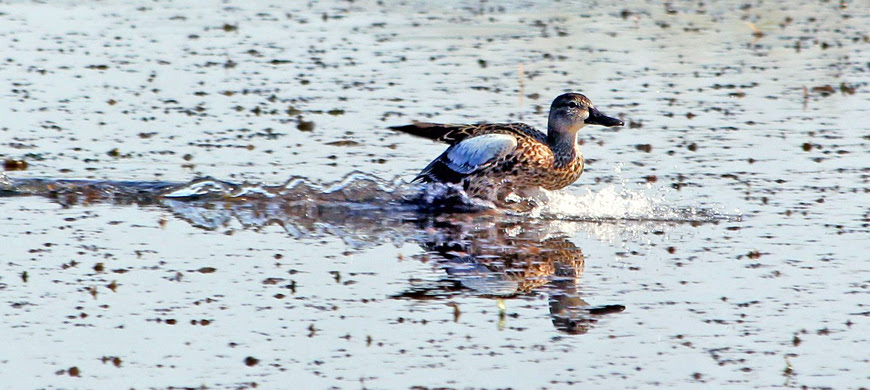
PRATT – Most veteran waterfowl hunters treasure the early teal season that will open in a couple weeks. However, those less familiar with duck hunting are sometimes confused by the early season and wonder why there is such a short season on teal. First, let’s get one thing straight: teal are ducks; they’re the smallest duck species we hunt, and they are legal game during the regular duck seasons. It’s just that in their rush to get to the southern wintering grounds, most teal are long gone by then.
Because so many teal migrate through before traditional duck seasons open, the U.S. Fish and Wildlife Service allows a September teal season, based on the number of adult breeding teal observed on the northern nesting grounds. This year, teal season in the Low Plains Zone (anything east of U.S. Highway 283) is Sept. 8-23, and in the High Plains Zone (anything west of U.S. Highway 283) is Sept. 15-23. The daily bag limit is six teal.
There are two species of teal common in the Central Flyway, blue-winged and green-winged. Bluewings usually migrate earlier than greenwings, and in fact, reports indicate that bluewings are already arriving at Kansas wetlands. Most bluewings are gone by early October, although if the weather is mild, some may show up in hunters’ bags during the opening week of the Low Plains Early Duck Zone’s first segment (Oct. 13-Dec. 31, 2018).
All hunters participating in teal season who are required to have a hunting license must also possess a Kansas HIP permit, $2.50, and State Waterfowl Permit, $10.00. All hunters 16 and older must have a Federal Waterfowl Stamp, $25, which can be purchased at your local U.S. Post Office and any Kansas Department of Wildlife, Parks, and Tourism regional office.
Veteran duck hunters love the early teal season because it’s their first chance to get back to the marsh after a long spring and summer of no duck hunting. Teal are fast, challenging quarry for wingshooters, and teal hunting requires hunters to be particularly focused on species identification. It’s common to have other duck species such as shovelers and wood ducks migrating through in September, and those species are not legal game during the early teal season. It may take some practice and experience for a new hunter to be confident in identifying teal, but that’s all part of the teal challenge. And when conditions are right, teal numbers can build quickly on Kansas wetlands, providing a fantastic waterfowl hunting experience.
For a complete list of waterfowl season dates and regulations, go to www.ksoutdoors.com.
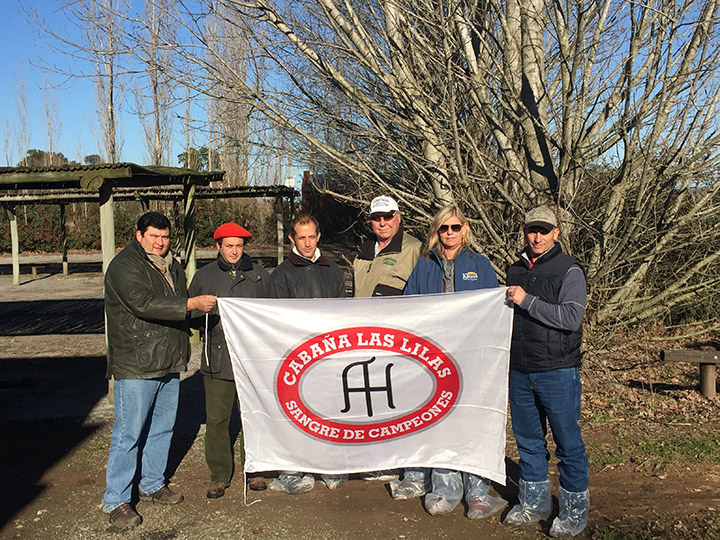
Representatives from the Kansas beef industry were part of a beef genetics trade mission to Argentina in July. Pictured (from left): Fernando Cristani and Tomás Giacomantone with Las Lilas in Argentina, translator Hendrik Jordaan, Lynn Ferguson of Ferguson Angus, Shirley Acedo with KDA, and Craig Iwanski DVM of Central Veterinary Services and JC Ranch LLC.
KDA
MANHATTAN — In late July, the Kansas Department of Agriculture participated in a trade mission to Argentina, where the team attended the La Rural 2018 Exhibition. La Rural has become the most prominent livestock show in Argentina, with more than one million people in attendance. The show supports over 400 commercial exhibitors and 4,500 head of livestock, while acting as the meeting point for producers, professionals and technicians from Argentina and the world.
Representing Kansas on the trade mission were: Lynn Ferguson, Ferguson Angus; Craig Iwanski DVM, Central Veterinary Services and JC Ranch LLC; and Shirley Acedo, KDA agribusiness development coordinator.
The team had the opportunity to see firsthand beef cattle genetics at La Argentina Ranch in Coronel Pringles and Cabana Santa Rita in Saladillo. While there, they also toured animal genetics facilities: CIIADO in Darregueira, Las Lilas in San Antonio de Areco, and Alta Ciale in Capitán Sarmiento. While on the trade mission the participants also met Sonny Perdue, U.S. Secretary of Agriculture, who was visiting Argentina for the G20 Summit.
“I was able to learn about Argentinian operations, business plans and the types of genetics they look for,” said Ferguson. “We were able to share our Angus genetics that are already available in their country through Select Sires, as well as prospective genetics currently being developed at our ranch.”
Iwanski agreed. “This trip raised my awareness more to the global market of the beef industry we are in today, and I gained knowledge of how other parts of the world are affected by this business.”
In the past five years, Kansas has exported roughly $3.4 million in goods to Argentina with the top exports being wine and wheat.
“With the new pro-agriculture government in place in Argentina we are seeing the ag sector rebuilding with cattle numbers growing from 48 million to approximately 53 million,” said Acedo. “This trade mission has provided more opportunities for Kansas purebred beef cattle producers and allied industry to develop relationships with livestock producers in Argentina to increase market opportunities for U.S. and Kansas beef genetics.”
The trade mission was organized by KDA and the U.S. Livestock Genetics Export, Inc. KDA strives to encourage and enhance economic growth of the agriculture industry and the Kansas economy by exploring and expanding both domestic and international marketing opportunities. The Kansas Ag Growth Project identified beef as a key component for state growth. For information on this or other international trade missions, please contact Suzanne Ryan-Numrich at [email protected] or call 785-564-6704.
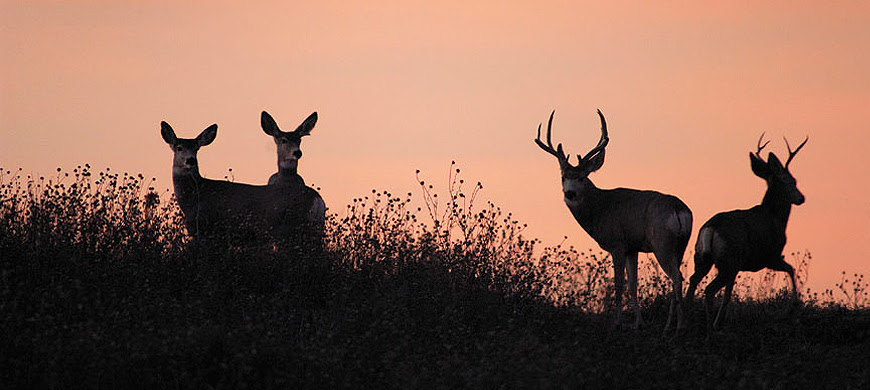
PRATT – One hundred and thirty resident firearm Either-species, Either-sex deer permits are left after the computer drawing was completed in July. The leftover permits are valid during the firearm deer season, Nov. 28-Dec. 9, 2018, in the Eastern Mule Deer Zone, which includes Deer Management Units (DMU) 3, 7, 4, 5, and 16. A limited number of resident-only Either-species, Either-sex permits are allocated through the drawing and allow successful applicants to take a mule deer or white-tailed buck or doe.
The leftover permits are available first-come, first served only through the Kansas Department of Wildlife, Parks and Tourism Operations Office in Pratt. Permits can be purchased over the counter or by calling (620) 672-0728. All other resident deer permits are available for purchase online at www.ksoutdoors.com or over the counter wherever licenses are sold. A hunter may purchase one permit that allows the harvest of an antlered deer. After purchasing that permit, a hunter is eligible to purchase up to five additional Whitetail Antlerless Only permits.
The 2018 deer seasons kick off with the special season for youth and hunters with disabilities – Sept. 8-16; followed by the muzzleloader season – Sept. 17-30; archery – Sept. 17-Dec. 31; pre-rut whitetail antlerless only – Oct. 6-8; and the firearm season – Nov. 28-Dec. 9.
On January 1, 2019, all unfilled permits convert to firearm Whitetail Antlerless Only permits, valid during the extended whitetail antlerless only seasons. Unit restrictions listed on the permit remain in place. The extended seasons include the following: DMUs 6, 8, 9, 10, 16, and 17 – Jan. 1, 2019; DMUs 1, 2, 3, 4, 5, 7, 11, 13, and 14 – Jan. 1-6, 2019; and DMUs 10A, 12, 15 and 19 – and Jan. 1-13, 2019. There is an extended archery whitetail antlerless only season in Unit 19, Jan. 14, 2019. (Unit 10A is Ft. Leavenworth and is only open to active and retired military personnel. Unit 19 is the urban deer management unit.)
All season and permit information, including DMU maps, can be viewed at www.ksoutdoors.com.
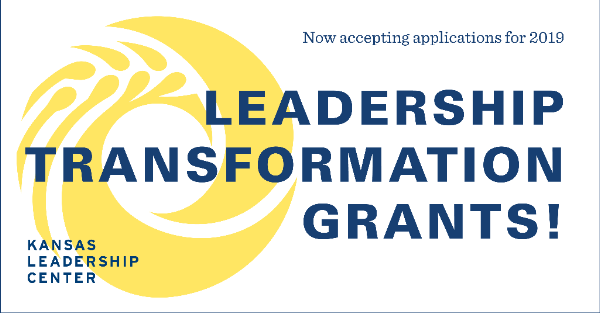
WICHITA – Each year, the Kansas Leadership Center provides 1,500 scholarships to civically engaged organizations across the state to participate in KLC’s leadership programs. This is one way we work toward developing stronger, healthier, more prosperous communities throughout our state.
We’re seeking partners for our 2019 Leadership Transformation Grants who aspire to spread a culture of leadership through their organization or community. These grants allow participation into KLC’s core programs, which teach that leadership is an activity — not a position — and that anyone within an organization can exercise leadership effectively. These programs offer a framework by which organizations can share a common language and skills to approach their challenges.
Eligible organizations are those that:
1) Have individuals who have already experienced KLC’s leadership training,
2) Show an ability to recruit 20-40 participants into KLC leadership training,
3) Have the support of senior authority to spread a culture of leadership throughout their organization.
Some types of groups we could imagine applying:
Education: School districts, school support organizations, school boards Community-minded business organizations: Civic clubs, business associations, chambers, rotary clubs Government: City, Count, State entities Nonprofits: Community foundations, coalitions, United Ways, Faith: Churches, district level entities, collaborative faith alliances
Application for the 2019 Leadership Transformation Grants are open until Aug. 31, 2018. Interested in learning more? Watch these videos first. If you still have questions, contact Ashley Longstaff at [email protected].
TOPEKA — The New Dance Lab, a partnership between The Kansas Creative Arts Industries Commission and Johnson County Community College, is accepting applications for 2018.
The New Dance Lab will allow a select group of established and aspiring dance professionals (age 18+) throughout the state of Kansas the opportunity to participate in an intimate one on one and small group professional development experiences in one of the following areas:
The Choreographic Process and How to Create Work:Christian Denise, choreographer based in Chicago, will provide insight on drawing inspiration from around you to influence your aesthetic as a choreographer. He will also discuss the struggles and obstacles in the transition from dancer to choreographer. For more information on Mr. Denise, visit www.christiandenise.com.
Making a Career as a Choreographer: Annabelle Lopez Ochoa, international choreographer based in Amsterdam, Netherlands, will discuss the ins and outs of developing a choreography career. For more information on Ms. Ochoa, visit www.annabellelopezochoa.com.
One-on-Ones with Choreographers, Dancers and Studio Owners: Darrell Grand Moultrie, New York-based choreographer and master teacher, will share his expertise in one-on-ones with topics based on the applicant selected. For choreographers, he would share how to navigate a career, present your work, work with dancers to get their best work, and market yourself. With dancers, he would discuss how to launch a career following school, doing research and why it’s important, and how to stay on track with goals. For studio owners, he would talk about how to stay excited and connected to your artistic side. For more information on Mr. Moutrie, visit www.darrellgrandmoultrie.com.
Movement and Social Activism: Lauri Stallings, Atlanta-based choreographer, artist and organizer, would meet with a group of up to ten people to share how choreography can be used as a toolbox for place-keeping, empathy building, and celebration. For information on Ms. Stallings, visit www.lauristallings.org.
Participants will also have the opportunity to observe a rehearsal conducted by the corresponding choreographer and receive a pair of complimentary tickets to the New Dance Partners premiere showcase on September 21 or 22, 2018.
“This lab seeks to provide an opportunity for artistic development through meaningful contact with national choreographers and to raise the profile of dance in the region,” says Peter Jasso, Director of the Kansas Creative Arts Industries Commission. “We welcome Kansas applicants from all backgrounds and dance disciplines.”
A small travel stipend may be available for accepted applicants from outside the Johnson County area. Applications are due by August 28, with notification by August 31. Applicants must be 18 years of age or older. Workshops will be scheduled individually with participants to take place the week of September 17, 2018.
TOPEKA – To meet Nebraska’s legal obligation to increase the flow of the Republican River into Kansas, the Central Nebraska Public Power and Irrigation District has proposed creating a connection in Nebraska between the Platte River Basin and the Republican River Basin. After entering northcentral Kansas, the Republican River feeds into Lovewell Reservoir and Milford Reservoir before joining the Kansas River near Junction City. The Republican River also connects with several other waterways in northcentral Kansas.
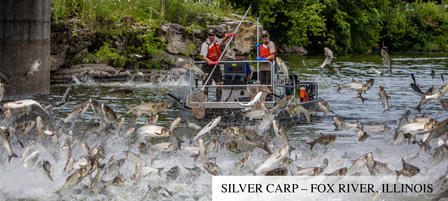
The State of Kansas opposes this project because invasive Asian Carp and White Perch in the Platte River could enter the Republican River (along with other nuisance species) if the two rivers are connected. As a result, the project could severely impact Kansas’ sportfish and native aquatic species, water-based recreation, tourism and the state’s fishing economy. There is no evidence that those two species currently live in the Republican River.
Asian Carp can grow to more than 40 inches long and weigh more than 50 pounds. One Asian Carp species, the Silver Carp, is known to leap up to 10 feet in the air when boats or personal watercraft pass over. They pose a risk of serious injury to boaters and skiers who may find themselves surrounded by dozens of large, heavy fish leaping wildly from the water. Asian Carp and White Perch also compete with sportfish, so Kansas’ $210,000,000 recreational fishing industry would be at risk from declines of sportfish such as bass, crappie and walleye. Asian Carp are filter-feeders that compete with other fish for food and space. They are prolific breeders, grow fast and can quickly become the predominate fish species in a lake or river. In other states, some lakes with Asian Carp have experienced sportfish population declines of more than 80 percent with corresponding damage to their fishing and tourism economies.
White Perch are native to the east coast of the United States, and they can produce overpopulated, stunted populations in reservoirs. Stunted White Perch are too small to be sought after by anglers and can be so numerous that they can clog cities’ water intakes if there is a die-off. In addition, these fish eagerly eat the eggs of other fish species.
Changes to the Republican River could also impact critical habitat for the Shoal Chub and Plains Minnow which are threatened species in Kansas. Both species release their eggs into flowing water where they would be susceptible to being eaten by White Perch.
To comment on this proposed project, submit written comments to: Department of Natural Resources, P.O. Box 94676, Lincoln, Nebraska 68509-4676. Your written comments must be received by 5 p.m. August 16, 2018. Be sure to include:
1) The application number about which you are commenting (A-19594)
2) An indication that your comment is offered under Option 1 (written comment)
3) Your name, address, and contact information
4) Your written comments
For complete information on submitting your comments, see A-19594 NOTICE.pdf at:
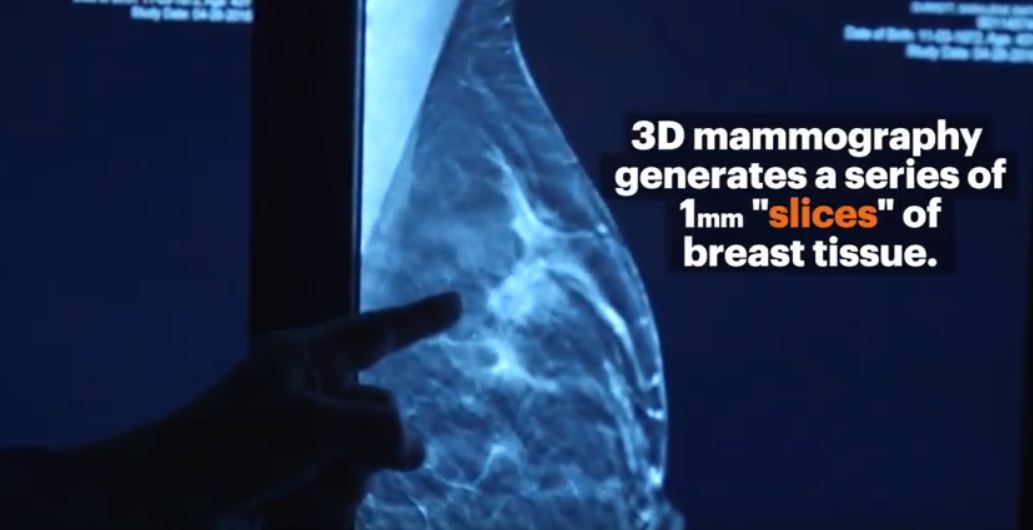
TOPEKA – The Kansas Insurance Department will require Kansas health insurance carriers to cover three-dimensional mammograms for women as the standard of care for breast exams beginning in 2019, according to Clark Shultz, Assistant Commissioner.
“We will be issuing a bulletin that directs health insurance companies to cover this procedure as a matter of course,” Assistant Commissioner Shultz said. “This modern technology is providing physicians with great opportunities to diagnose and treat breast cancer more quickly.”
Traditionally, two-dimensional mammograms were covered under health insurance plans, but three-dimensional coverage often required the policyholder to pay the additional cost.
“This is a win-win for both the patient and the physician,” Assistant Commissioner Shultz said. “It is taking advantage of modern healthcare technology at no additional cost to the patient.”
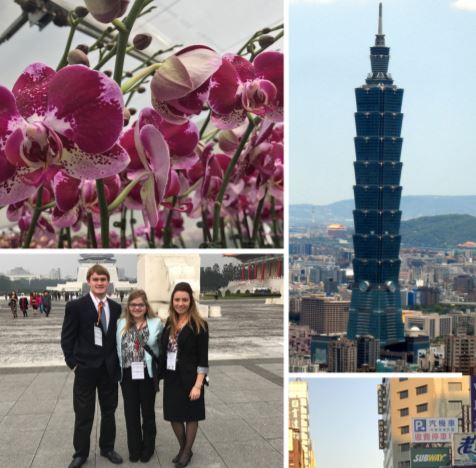
MANHATTAN — The 2018 Taiwan Agricultural Youth Exchange Program is currently accepting applications from high school seniors or college freshmen who are passionate about agriculture and are interested in representing Kansas in a week-long exchange program October 28 through November 4, 2018.
Each year the National Taichung Agricultural Senior High School in central Taiwan hosts students from the Midwest for this program. The Kansas Department of Agriculture coordinates the selection and participation of Kansas students, who will tour agricultural facilities and businesses in Taiwan and learn about Taiwanese agriculture.
“The Taiwan Agricultural Youth Exchange Program gave me the opportunity to experience differences in agriculture and culture by completely immersing myself in them,” said Katie Lybarger, 2017 program participant.
“The Taiwan Agricultural Youth Exchange Program is a tremendous opportunity for students who have an interest in agriculture,” said Suzanne Ryan-Numrich, international trade director for KDA. “Students are able to return from Taiwan with a broader understanding of international agriculture and the role that exports play in their local communities.”
Two students will be selected to represent Kansas. To be eligible to apply, students must be a high school senior or college freshman at least 18 years of age with a strong Kansas agricultural background and must have a valid U.S. passport and be willing and able to pay airfare costs.
Applications must be submitted by August 31. Students interested in applying can find more information at agriculture.ks.gov/AgEd. The Taiwan Agricultural Youth Exchange Program is coordinated by KDA with support from the Kansas FFA Association and Kansas 4-H.
For more information, contact Robin Blume, KDA education and events coordinator, at [email protected] or 785-564-6756.
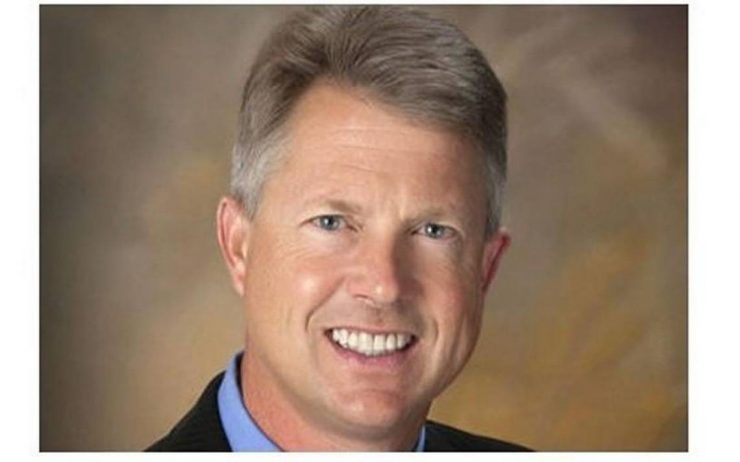
Dr. Roger Marshall, R-Great Bend, is the First District Kansas Congressman.
Friends,
I want to thank everyone for their continued support for our team! We have a jam-packed August, and if we haven’t already, we’ll soon be in a community near you! Yesterday we kicked off our Community Coffee tour in Meade County. Thank you to all who joined for coffee and conversations! Today the tour continues I’ll be stopping in Herington today and Ashland on Monday.
It’s clear from yesterday’s conversations that Kansans continue to express concerns about the cost of health care. Health care remains a top priority for me – it’s what I have done all my life. I, too, have been disappointed by Congress’ inability to pass major health care legislation during this 115th Congress, and even more disappointed in our lack of focus on controlling costs through transparency, innovation, and consumerism. I promise that I will continue to move the ball on this and advocate for necessary reforms.
Click HERE to see the full Community Coffee schedule.
I hope to see you on the road!
1st Infantry Division Commanding General John Kolasheski
Visit to the Big Red One for #VictoryWeek
I was honored to spend time at Fort Riley this week, helping troops celebrate Victory Week and the decades of success and leadership of one of the Army’s oldest divisions, the Big Red One. Victory week is an annual celebration encouraging camaraderie on the base. Each soldier competes with their unit in team sports like, flag football, softball, and soccer to earn points towards “the cup.” At the end of the week, the points are counted, and the unit with the highest
points wins the Commander’s Cup.
During my time at the base, I had the opportunity to meet with 1st Infantry Division Commanding General, John Kolasheski.Major General Kolasheski was most recently Deputy Chief of Staff for U.S. Armed Forces Command at Fort Bragg, North Carolina, and has previously served two tours of duty with the 1st Infantry Division. It’s an honor to get to know and work with the 1st Infantry Division Commanding General, Kolasheski and discuss his vision and how we can help Fort Riley and the 1ID soldiers who serve our country.
Fort Riley
I also enjoyed visiting with community members at an evening barbecue and speaking with soldiers about their experiences at Fort Riley. I am proud of this Congress’ ongoing support for our military and the continued push to rebuild our armed forces, increase pay, and boost funding to provide the resources our men and women in uniform need to keep us safe.
While at Fort Riley this week, I also had the opportunity to tour the Advanced Turbine Engine Army Maintenance (ATEAM) Program. This program at the Marshall Army Airfield is home to the state of the art turbine engine rebuilding program. The ATEAM has almost quadrupled the lifecycle of the AGT 1500 engine from the early 1990s. This program’s unmatched expertise and technical skills are invaluable. This team does excellent work at reducing fleet sustainment costs and increasing readiness both here and abroad.
Taking care of our Vets
My district is home to seven Veterans Administration (VA) community-based outpatient clinics (CBOC) that provide health care services to veterans utilizing the VA healthcare program. This week I toured the Junction City and Dodge City CBOCs to learn more about the services and physicians that provide care for our veterans.
This Congress is dedicated to taking care of our veterans; in fact, the House recently funded the VA the largest amount in history. The purpose of significantly increasing our funding to the VA is that our clinics, like those in my district, have the staff and resources necessary to provide care for our veterans.
Officials at both locations noted that additional funds would go a long way with increasing staff and growing outreach efforts to ensure all veterans, no matter their age or location, receive the health care they need and deserve. Our veterans deserve timely, quality health care and should have the opportunity to have a say in their care.
USD 443 Superintendent Dr. Fred Dierksen and Vice Principal Jacque Feist
Gearing up for school, focusing on safety
As kids prepare to go back to school, they gear up with their supplies and are anxious to see old friends and make new ones. But for parents across the district, some are stricken with worry for their child’s safety.
As a father of four, it breaks my heart to see the lack of certainty of our children’s safety in public spaces. This week, I spoke with USD 443 Superintendent Dr. Fred Dierksen, and Vice Principal Jacque Feist about
Dodge City’s efforts and initiatives to ensure a safe environment for all students.
We discussed securing entryways, completing drills and making hotlines available to both students and teachers for tips on unusual or aggressive behavior.
I am a cosponsor of the Student, Teachers, and Officers Preventing (STOP) School Violence Act, which passed the House in March, and the Securing Our Schools (SOS) Act. These pieces of legislation provide our students, educators, and law enforcement officers with the resources to report and better understand the warning signs. We must identify threats and prevent violence with training, coordination, and intervention, and I’m proud to support legislation that addresses these issues.
Airports help rural areas stay competitive
Home to the Air Capital of the world, Kansas as a whole, heavily relies on our aircraft industry. Across the Big First we have six airports that are vital to the long-term prosperity of our district. Communities like Moundridge are using their airports as an economic development opportunity to diversify and grow their local economies.
Southwind Global Aviation, Moundridge
This week I toured Southwind Global Aviation, located at the Moundridge municipal airport. The company contracts with Textron Aviation to deliver planes manufactured in Independence, Kan., to customers around the world. Because of Southwind’s success, Moundridge officials are in the planning phase of a runway expansion project that would allow the company to bring in larger jets for delivery. As part of the project, the community would add additional hangar space for new companies and individuals wanting to call Moundridge home.
Airports are a vital component to keeping our rural areas competitive, and I’m proud to see communities like Moundridge utilize their infrastructure assets for economic growth.
“Year of the Tree”
2018 is the “Year of the Tree,” for Rotary Clubs across the country. I joined my hometown Rotary club this week in its tree dedication ceremony. The Great Bend Rotary dedicated a Ginkgo tree for the year’s theme.
North end of Barton County Court House Square, Great Bend
In 1940, Boy Scout Troop #110 planted a Ginkgo tree near the Barton County Courthouse that was also sponsored by The Great Bend Rotary Club. Today there are three known Ginkgo trees in Great Bend. One Ginkgo tree is located at the corner of 16th Street and Jackson, one is at 2611 Broadway, and one is at the north end of the Barton County Court House Square.
The dedication was led by my friend Lee Musil, President of the Great Bend Rotary. Dr. Franklin Reinhardt, an original member of the #110 Boy Scout Troop, joined us for the occasion. I was glad to be a part of this dedication with some of my hometown friends, one of the many perks of being back home in the First District.
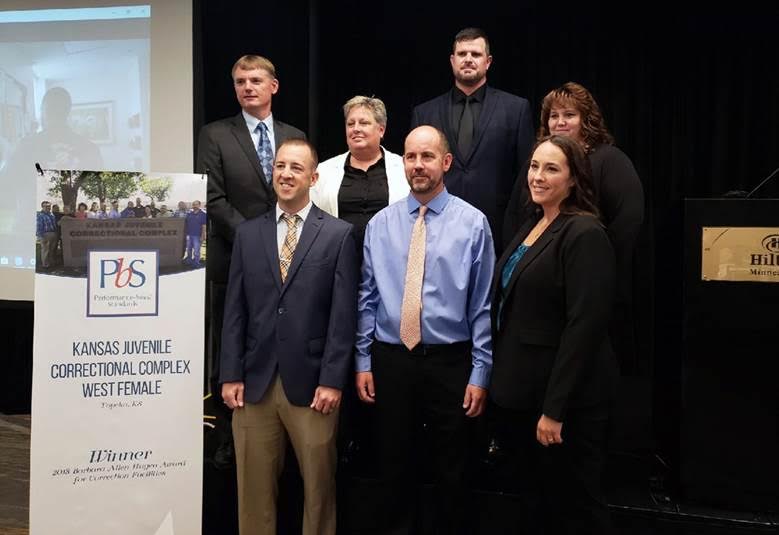
L-R: Randy Bowman, KDOC Deputy Secretary of Juvenile Services, Dustin Karr, KJCC Deputy Superintendent, Georgia Becker Scheve, KJCC PbS Site Coordinator, Jay Logan, KJCC Behavioral Health Coordinator, Matthew Baldwin, KJCC Juvenile Corrections Officer, Megan Milner, KJCC Acting Superintendent and KDOC Juvenile Services Division’s Director of Community Based Services, and Dauna Herman, KJCC Corrections Counselor.
TOPEKA – Kansas Juvenile Correctional Complex (KJCC) is garnering national accolades for a program aimed at reducing the number of female offenders requiring interventions for suicidal or self-harming behaviors.
Based on the program’s success, KJCC was announced Friday as the corrections’ recipient of the 2018 Barbara Allen-Hagen Award, the highest honor given by Performance-based Standards (PbS). PbS is an initiative by the Council of Juvenile Correctional Administrators that provides national standards for juvenile justice agencies, facilities and residential care providers.
KJCC received the award Aug. 3 during the PbS State/Agency Coordinators Training and Awards Night ceremony in Minneapolis. Established in 2007 to honor retired federal Office of Juvenile Justice and Delinquency Prevention employee Barbara Allen-Hagen, the award recognizes implementation of best practices that result in positive outcomes for youth, staff and families.
The Topeka juvenile facility set out to improve its suicide precaution protocols in 2012 when KJCC’s number of female youth with suicidal behavior without injuries rose nearly eight times above the average of other PbS-aligned facilities. By April of 2018, KJCC’s average dropped to zero. Similarly, the facility’s monthly average of hours that female offenders were isolated in their rooms due to being on crisis level fell from nearly 524 hours in 2015 to slightly more than 10 hours in 2018.
“Winning the Barbara Allen Hagen award means everything to us as a facility,” said Georgia Becker Scheve, KJCC’s PbS site coordinator. “It showcases and acknowledges all of the hard work and dedication that the staff, as a team, put in.”
The KJCC’s behavioral health team worked to improve three deficit areas in its suicide prevention program: staff training, suicide assessment and detection and intra-facility communication and collaboration.
Aside from increasing access to behavioral health services, KJCC implemented daily behavioral health contacts with each youth and instituted weekly multi-disciplinary team meetings to discuss youth who may be at risk and formulate plans for intervention.
However, Becker Scheve credited KJCC’s success in large part to a change in the overall culture of the facility. Offenders realized long-term suicide precaution placements were no longer needing to take place and staff became better equipped to identify and manage youth with suicidal and self-harming behaviors, she said.
Every KJCC employee now receives eight-hour juvenile justice training that emphasizes warning signs, procedures and interventions for working with youth at-risk of attempting suicide.
“At KJCC, we strive to be the best facility we can for our youth and staff, and with this award – it shows that we are well on our way to achieving just that,” Becker Scheve said.

 KDWPT
KDWPT