We have a brand new updated website! Click here to check it out!

Good fishing getting better in Kansas

KDWPT

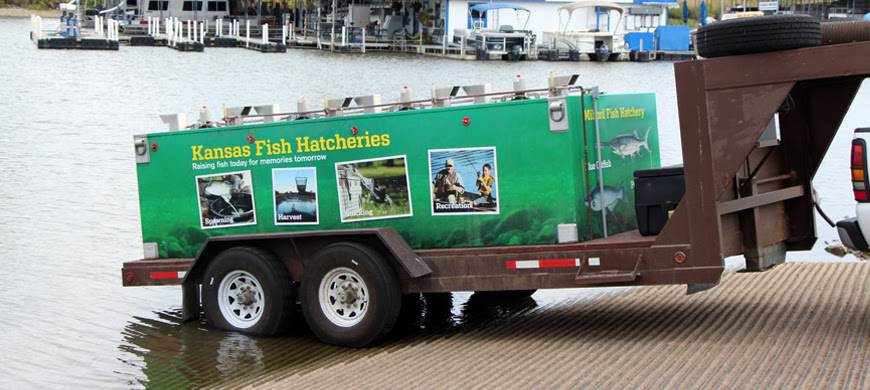
PRATT – If you’ve looked at Kansas’ 2018 Fishing Forecast or followed the Weekly Fishing Reports at ksoutdoors.com, you know that Kansas anglers have enjoyed amazing fishing this year. But have you ever wondered how this happens? The revenue from the fishing license you purchase, along with funding from the federal Wildlife and Sport Fish Restoration Program (WSFR), pays for the operation of four fish hatcheries operated by the Kansas Department of Wildlife, Parks and Tourism (KDWPT).

Kansas hatcheries at Meade, Pratt, Milford and Farlington have produced more than 100 million sport fish already stocked into Kansas waters this year.

Sport fish may be stocked as fry (less than one-half inch long), fingerlings (1-3 inches long), intermediates (6-8 inches long), or adults, depending on stocking requests, available pond/raceway space and workforce resources available. Fisheries biologists use data gathered through sampling efforts, angler and creel surveys and consider lake conditions when making annual stocking requests.

In 2018, the following sport fish have been stocked for your enjoyment in public waters in Kansas:

Bluegill/green sunfish hybrid – 7,885 adults and 541 fingerlings
Black crappie – 17,898 fry
Bluegill ­– 28,111 fingerlings
Channel catfish – 1,403 adults, 169,195 fingerlings, 30,224,453 fry (317,465 intermediate channel catfish will this fall)
Grass carp (sterile) – 890 intermediates
Hybrid black crappie – 25,000 fry
Largemouth bass ­– 476,171 fingerlings, 240 intermediates, 805,906 fry
Wiper – 140,563 fingerlings, 8,409,300 fry
Redear sunfish – 77,173 fingerlings
Sauger – 28,451 fingerlings, 1,975,000 fry
Saugeye – 132,158 fingerlings, 9,664,600 fry
Smallmouth bass – 4,133 fingerlings
Striped bass – 1,100,000 fry
Walleye – 73,183 fingerlings, 56,172,720 fry

If you purchased a trout stamp this year, you helped with the purchase of 58,591 rainbow trout that were stocked into more than 30 designated trout waters across the state between Jan. 1 and April 15, 2018. And a new schedule of trout stockings will begin Nov. 1, 2018 when the trout season re-opens.

In addition to the channel catfish raised at our hatcheries, KDWPT also purchased 76,000 catchable-sized channel catfish from private hatcheries in Kansas. These fish were stocked into lakes enrolled in the Urban Fishing Program, which provides high-quality fishing opportunities close to home for anglers living in our larger cities.

Of course, revenue from license sales and WSFR fund much more ­– including management and research activities, law enforcement, grounds maintenance, habitat enhancement and education. WSFR funding for fisheries programs comes from excise taxes on fishing equipment, boats and motors, and motorboat fuel. It is allocated to the states based, in part, on the number of licensed anglers in each state.

License and WSFR revenue has not only supported the programs necessary to have safe, productive and enjoyable fishing opportunities in Kansas, it’s also resulted in more than 109 million fish stocked into Kansas waters so far in 2018. And more fish will be stocked this summer and fall.

Kansas fishing is good and getting better.
KDA announces state drought assistance initiative

KDA

MANHATTAN — The Division of Conservation at the Kansas Department of Agriculture is pleased to announce the availability of funds to assist landowners with their efforts to mitigate the impact of drought.

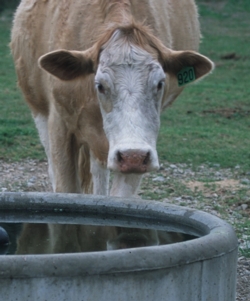
The Livestock Water Supply Financial Assistance Initiative will provide financial assistance for livestock water supply wells, pipeline and tanks installed after June 1, 2018, and before the announcement of the Environmental Quality Incentives Program (EQIP) Drought Initiative by NRCS on July 24, 2018.

The State Conservation Commission took action on July 31, 2018, to approve the initiative for these qualifying drought mitigation efforts that took place prior to the NRCS EQIP Drought Initiative. Eligible areas will be the same as for the federal initiative.

Additional program details can be found at agriculture.ks.gov/DOC-assistance. Applications must be made through local conservation districts, and questions should be addressed to local conservation districts as well. Contact information for districts can be found at agriculture.ks.gov/conservation.

Governor’s office receives grant for statewide broadband mapping project

OFFICE OF GOV.

TOPEKAThe Information Network of Kansas (“INK”) Board of Directors has approved a $300,000 grant request by Governor Jeff Colyer, M.D. to complete a Statewide Broadband Mapping project.

The project, which will be undertaken by non-profit Connected Nation in partnership with the Governor’s Office, will prepare a statewide broadband map of wireline and wireless coverage. This map will provide the Statewide Broadband Expansion Planning Task Force, created when Governor Colyer signed Sen. Sub. for House Bill No. 2701 into law, with a snapshot of broadband coverage in the state. The map will assist the Task Force in its efforts to identify and close broadband coverage gaps in Kansas.

“Access to quality broadband services is vital for Kansas communities to compete for jobs and people, and we can’t improve what we don’t measure,” said Governor Colyer. “Producing this statewide broadband map positions our state for long-term growth in the rapidly expanding digital economy and helps us ensure that all Kansans are benefiting from these new opportunities.”

Connected Nation will produce a granular statewide broadband availability map through a data collection process in collaboration with the state’s broadband service providers, for use by the general public and the Task Force.  Connected Nation will also collect public feedback on the initial draft of the map and will deploy engineers into the field to validate service availability (or the lack thereof) based on the feedback received in order to improve the map over time.

“Just as roads, bridges, water systems, and the electrical grid serve as critical infrastructure today, so, too, is fast and reliable broadband access,” said Brent Legg, Vice President of Government Affairs at Connected Nation.  “Unfortunately, information collected on broadband at the federal level isn’t accurate or granular enough to effectively guide policymaking and get broadband to the areas that need it.  Governor Colyer recognized this need, and thanks to INK’s grant, we will now have the resources to identify and map the areas that still lack service across Kansas.”

In addition to tackling a number of broadband-related issues, the Task Force will evaluate and provide input to the mapping process based on preliminary feedback and results of Connected Nation’s work later this year.

“As Co-Chairs of the Statewide Broadband Expansion Planning Task Force, we strongly commend Governor Colyer for his initiative with this grant application and are excited to hear about the funding of the vital statewide broadband mapping project. This map will assist the Task Force as we work to expand broadband infrastructure and increase statewide access to broadband services for our fellow Kansans,” stated Senator Rob Olson and Representative Joe Seiwert, who also both chair their respective legislative chamber’s telecommunications issue committees.

Governor Colyer selected Rich Felts, President of Kansas Farm Bureau (KFB), as his at-large appointment to the Task Force.

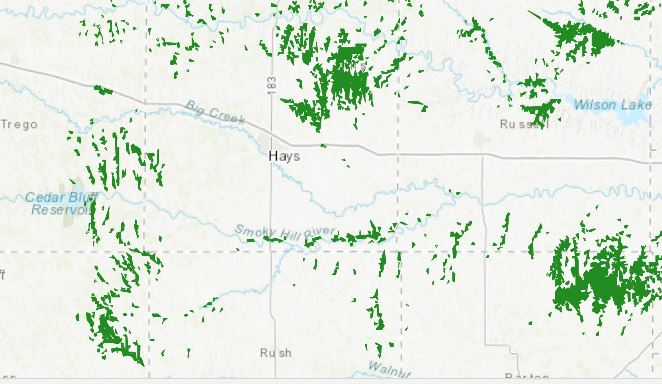
Mobility Fund II Initial Eligible Areas map

KFB was recently granted a waiver from the Federal Communications Commission (FCC) to challenge its Mobility Fund Phase II (MFII) eligibility map, which will determine where $4.53 billion in subsidies for LTE broadband service buildout will be directed across the country over the next 10 years. KFB is working with their members and Kansans from all over the state to conduct speed tests to show the need to increase the number of eligible areas in Kansas (see www.kfb.org/ConnectingKansas).

“Kansans in every county of the state know where the shortcomings on broadband connectivity reside,” KFB President Rich Felts said. “Having an up-to-date map that accurately reflects areas that lack connectivity in both wired and wireless broadband will allow for future broadband development to improve public safety, and enhance agricultural technology, education, telemedicine and economic vitality.”

In June, the Governor’s Office received another grant from the INK Board in the amount of $225,000 to conduct professional mobile service drive testing and file its own challenge to expand eligible areas under the FCC’s MFII program. Alongside KFB, the Governor’s Office will dispute areas that are currently considered ineligible for MFII buildout support. If the challenge is successful, it could potentially unlock millions of dollars in MFII support for LTE service buildout in rural Kansas. The Governor’s Office will be working with Connected Nation to administer the drive-testing process in targeted areas believed to have limited or no cellular service today.

Also in June, Governor Colyer appointed Stanley Adams as Director of Broadband Initiatives at the Kansas Department of Commerce to work on continuing to identify broadband needs and solutions across Kansas—focusing heavily on broadband access issues facing many rural areas across the state.

“It’s critical that we have good data to understand where gaps in broadband coverage exist, with a level of detail sufficient to develop effective strategies that will result in all Kansans having access to the high quality broadband services needed to grow our economy and enhance our competitiveness” stated Mr. Adams.

The first draft of the statewide broadband availability map will be ready by December 31.  Challenges to the FCC’s MFII eligibility map are currently due on August 27, although FCC Chairman Ajit Pai has signaled that the agency may extend the deadline to November 27.

Kansas meets federal work participation rate

DCF

TOPEKA The Kansas Department for Children and Families (DCF) is pleased to announce, Kansas met the federal work participation rate for both overall and two-parent families for FY 2017, according to a recently-released letter from the Office of the Administration of Children and Families, a division of the United States Department of Health and Human Services (HHS). The participation rate measures how many adults are actively working toward preparing and searching for work. These activities include short-term vocational training, job searching and readiness training, high school or GED education and employment.

“We want to walk alongside Kansans in need, offer them support and serve as the spring board that propels families to become self-reliant and prosperous,” Secretary Gina Meier-Hummel said. “We positively impact thousands of lives every year, helping to build stronger, more successful families.”

According to the Office of Family Assistance, the U.S. Department of Human Services (HHS) issues TANF state work participation rates, which measure how well states engage families receiving assistance in certain work activities during a fiscal year. A state must meet either an overall (or “all families”) and a two-parent work participation rate or face a potential financial penalty.

DCF administers the public assistance programs in Kansas—including Temporary Assistance for Needy Families (TANF) and Supplemental Nutrition Assistance Program (SNAP).

“The recent letter from the ACF confirms what we have known—the HOPE Act is working and families are benefitting from its common-sense reforms,” Governor Jeff Colyer said. “We are empowering more families to gain employment and set them on a path of self-reliance.”

These successes are evident in the day-to-day lives of clients. In March 2018, a single mother applied for TANF. At the time of applying, she was unemployed, but met with her EES career navigator and completed a self-sufficiency agreement to work with a placement provider. Child care assistance was provided, transportation allowance was issued and other services were discussed.

The client expressed interest in renewing her cosmetology license, so EES paid for her to renew her license. In May, she reported that she is successfully employed as a Salon Manager. While her income placed her over the guidelines for TANF and SNAP, she continued to receive child care assistance.

This client recently expressed her gratitude for DCF and her career navigator:

“Thank you so much for all your help!!! You are amazing and have made what was a difficult time in my life, so much easier. You are so friendly, easy to work with, and I just can’t thank you enough for your time and dedication that you put into my case. I have come across several people at your office and none as caring, or willing, to do a good job as you have been and have done. I am very appreciative of you! Thank you so much!” 

In addition to administrating public assistance programs in Kansas, DCF also funds numerous poverty-prevention programs focused on creating prosperous, healthy families.

One such program, Jobs for America’s Graduates-Kansas (JAG-K), is a multi-year program for students in grades seven through 12, that offers tools to successfully transition students into postsecondary school, the military or directly into the workforce with marketable skills.

JAG-K is primarily funded through Temporary Assistance for Needy Families (TANF) dollars. Funds are available through an annual federal block grant.

In 2017, JAG-K had a 98 percent graduation rate. This program has steadily and consistently helped remove barriers to success for youth in danger of dropping out of school.Kansas adopted the program in 2013.

The Kansas Reading Roadmap (KRR) is another DCF program funded primarily through TANF. KRR is a reading initiative, focused on literacy and poverty-prevention across the state. In one semester, KRR decreased the number of students struggling to read by 46 percent.

To learn more about public assistance programs or poverty-prevention programs in your area, please visit www.dcf.ks.gov

Longtime KNEA General Counsel to retire

KNEA

TOPEKA – Since 1979, whenever public education became the focus of a policy initiative or debate, David Schauner would train his eye upon the issue. Indeed, the duties of the position of KNEA General Counsel are many- from representing the largest professional association in Kansas to representing individuals and arguing before the Kansas Legislature and Kansas Supreme Court.

Schauner has served as the KNEA General Counsel for over 39 years, having created the legal services program that significantly enhanced the legal and professional rights of Kansas educators.

David Schauner

In announcing his retirement, Schauner looks back on four decades of improving the rights of educators and making Kansas schools a better place for teachers and students. When asked about the highlight of his career he replied, “giving teachers a meaningful voice in their daily professional life.” As a native Kansan, Schauner applied his considerable talent and skill to a career as an educator and as an attorney for educators. When scholars look upon the history of litigation around public education in Kansas, David Schauner is and will always be a legend.

“The value our legal department brings to our organization is immeasurable and replacing David Schauner is an almost impossible task,” said Kevin Riemann, KNEA Executive Director.

“Kansas NEA is fortunate to have the perfect candidate ready to assume the role of General Counsel. Marjie Blaufuss brings almost three decades of experience working for KNEA as a staff attorney.”

Also a native Kansan, Blaufuss earned a Bachelor of Arts in psychology from Emporia State University and taught students with severe disabilities before attending law school at the University of Kansas. Blaufuss worked as a research attorney at the Kansas Court of Appeals prior to joining KNEA.

World opera premiere in Kansas features history of kaleidoscope

OPERA KANSAS

WICHITA – Opera Kansas is proud to announce Anthony Green’s Mr. Brewster’s Invigorating Invention as the winner of the the Zepick Modern Opera Competition.

The competition seeks short operas in English that have a STEAM theme (Science, Technology, Engineering, Art and Mathematics)​ that can be used in the Kansas public school system. The Opera Kansas production will be the world premiere of this fascinating new opera that focuses on science and the composer behind the invention.

Sir David Brewster (Photo courtesy National Galleries of Scotland)

Mr. Brewster’s Invigorating Invention is about the history and science of the kaleidoscope. Sir David Brewster was a Scottish physicist who invented the kaleidoscope in 1816. Soon millions of kaleidoscopes were in homes across the world. He has been called ” the father of modern experimental optics.” This production will use creative digital media in bringing the science and colors of the kaleidoscope to life.

The music of Anthony R. Green (b. 1984) ranges from works for solo instruments and voice to large scale ensemble pieces and multimedia productions. His works have been performed and featured in festivals in over 20 countries, as well as broadcast on national, international, and online streaming radio.

An active pianist, Green has worked with student and professional composers alike for premieres or performances of new music. He has performed across the USA, as well as in the United Kingdom, the Netherlands, France, Cyprus, Israel, Germany, and South Korea.

When not composing or performing, Green is the associate artistic director of Castle of our Skins, a Boston-based concert and education series organization dedicated to celebrating Black artistry through music. He received a Bachelor of Music degree from Boston University, and a Master of Music degree from the New England Conservatory, and has been a resident artist at Escape to Create (Florida), the
Virginia Center for the Creative Arts, the Kimmel Harding Nelson Center for the Arts (Nebraska), the Visby International Centre for Composers (Sweden), Space/Time at Cove Park (Scotland), atelier:performance (Germany), and the Bemis Center for Contemporary Arts (Nebraska).

The world premiere will be held at the Wichita Center for the Performing Arts, 9112 East Central, August 25., at 7 p.m.

Actions announced to alleviate long lines for KS driver’s license

OFFICE OF GOV.

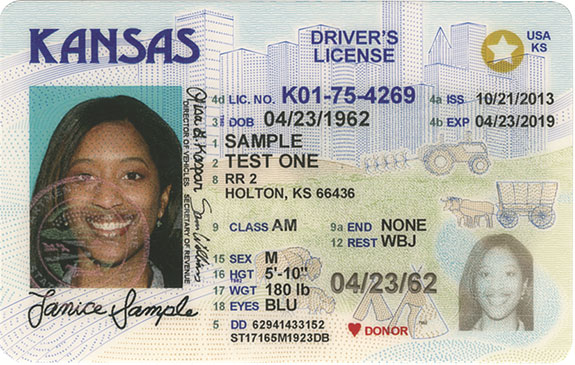
TOPEKA – Governor Jeff Colyer and the Department of Revenue have announced three new actions designed to alleviate long lines in driver’s license offices.

“Effective July 20, we are moving to end our relationship with QFlow and will replace them with a more effective line management system that better meets our expectations and those of the people it serves,” Governor Colyer said. “I look forward to getting a new system in place quickly that will offer Kansas credential holders a more effective way to get into offices across the state.”

The search for a new queuing system is already underway.

Governor Colyer also indicated that easier access to driver’s license services would soon be available with the expected October launch of the ability to process renewals through the iKan mobile application. When this new service is launched, it will significantly reduce traffic at DMV offices by allowing Kansans to renew their driver’s licenses from their computer or mobile phone.

“This is a long-envisioned move and we are working hard to get it off the ground as quickly as possible,” Governor Colyer said. “It’s vital that we modernize our technology to ensure that Kansans have access to government services in a way that is safe, convenient, and easy to use.”

Governor Colyer and Secretary Williams also announced additional service hours at the Mission and Olathe driver’s license offices. Both offices will now process customers for an additional 14 hours per week, with new hours from 7 a.m. to 5:45 p.m. Monday through Friday until August 20. Service will also be available on Saturday 7:30 a.m. to 11:15 a.m.

“I appreciate Secretary Sam Williams and his team of driver’s license examiners and managers who have stepped up to offer expanded hours,” Governor Colyer said. “I’m thankful for the way everyone involved is invested in coming together to solve this problem and working to provide the best possible service to Kansans.”

Johnson County residents will also have the option to visit a temporary setup at the new tax office in the Rosana Square shopping center at 7600 W. 119th St. Suite A, Overland Park, KS. That temporary space should be available in the next two weeks.

The space for a third Johnson County office is currently under contract negotiations.

(Click to enlarge)

Governor Colyer also urged Kansans to get familiar with the option of Real ID, and to use the Real ID checklist before going in to the office.

“The federal government requires additional documentation to obtain a Real ID driver’s license. While this new credential does take a bit more time, ensuring sure you know which documents are required beforehand can help speed things up.”

The Real ID checklist is found at ksrevenue.org/realid.

DCF computer camps help youth in foster care prepare for adulthood

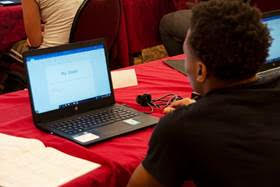
A youth in foster care receives instructions on how to use his laptop.

DCF

TOPEKA – Hundreds of young people age out of the Kansas foster care system each year. Many of them leave with a lack of support systems and resources to start their lives as independent adults. In an effort to get them started on the right foot, the Kansas Department for Children and Families (DCF) recently offered several computer camps across the state, where the youth (ages 16 to 20) receive free computers and instruction.

“We want all youth in care to be supported and thrive,” DCF Secretary Gina Meier-Hummel said. “Each year we hold these camps to help ensure that youth aging out of the foster care system have the right tools to succeed.”

The first camp was held Monday, July 9, in Wichita. A second camp was held Wednesday, July 11, in Overland Park, and the final camp took place Friday, July 13, in Topeka. The camp includes eight hours of instruction on word processing, spreadsheets and Power Point applications to prepare them for employment, managing personal finances and pursuing post-secondary education. Youth also learn how to search and apply for work and complete job applications. One assignment during the camp involves developing a personalized budget. Instructors also educate participants on internet safety and security.

All camp participants received a laptop, two-year warranty, printer, mouse and a laptop backpack.

At the end of the camp, participants receive a laptop, two-year warranty, printer, mouse and a laptop backpack. This year, 142 young people participated in the computer camps.

“The youth that participate in these camps are not only given technology, but they are armed with the necessary tools to navigate adulthood. To ensure that all youth aging out of the foster care system receive all the necessary supports and services, we encourage youth to enroll for our Independent Living services,” said Prevention and Protection Services (PPS) Director Patricia Long.

This initiative is paid for by the federal Chafee grant, which is 80 percent federal funds, with a mandatory 20 percent State General Funds match. This is the 14th year for the camp.

Additional services are offered to youth who age out of foster care, through the DCF Independent Living program:

  • Financial support for post-secondary education and/or certified training programs
  • Room and board assistance
  • Transportation costs
  • Books and materials related to education
  • Leadership opportunities
  • Medical services through the age of 26.

To be eligible for Independent Living services, young people must have been in foster care after age 15 and likely to age out of care, graduated from high school or completed their GED while in foster care, or had a finalized adoption or guardianship placement after the age of 16.


Kansas Firefighter Recruitment and Safety Grant applications now open

OFFICE OF KS FIRE MARSHAL 

TOPEKA  – The application period for the 2018 Kansas Firefighter Recruitment and Safety Grant (KFRSG) is now open until the grant deadline of October 1, 2018. The grant is made possible with the state of Kansas budget passed by the State Legislature and signed by Governor Jeff Colyer.

This year, the previous grant budget of $200,000 has been doubled to $400,000, to assist volunteer and part-time fire departments across the state with firefighter safety and recruitment.

Grants issued through the KFRSG program will cover the costs of safety gear for firefighters and physical examinations for firefighters whose physicals are not covered by their departments. It will also provide funds for the purchase of new washer-extractor machines used to clean bunker gear following a fire, with further funds available for the creation of Explorer programs to attract youth volunteers into the fire service.

Volunteer and part-time fire departments face recruitment and retention challenges because they do not have the funding to provide safety equipment. Without new equipment provided by the recruiting fire department, potential volunteers are faced with not only donating their time but also providing their own safety gear, sharing gear with others, or doing without.

Safety gear which can be purchased through this grant program based on a proven and demonstrated need, includes bunker or wildland gear, to include: coat, pants, helmet, gloves, hood and boots; and new masks for Self-Contained Breathing Apparatus (SCBA) units for new department members.

This grant program not only addresses safety of firefighters, but their health as well. The OSFM provides grants to local firefighters to assist in paying for physical examinations not otherwise covered by their departments. A physical examination by a doctor could identify underlying health issues and, hopefully, decrease the number of health-related deaths.

The OSFM also uses grant funds to purchase and strategically place washer-extractor machines throughout the state. It is vital to the health of firefighters to properly clean bunker gear following a fire to prevent the transfer of carcinogens, particulates and biohazards to firefighters, and those they serve. Further, as more and more particles attach to protective gear and chemicals remain on clothing, the gear gradually loses its effectiveness – putting firefighters at increased risk.

A key goal for the KFRSG program is firefighter recruitment, which provides funding for the start of Explorer programs. These programs offer a great way for local fire departments to give the youth of their area an opportunity to explore both career and voluntary opportunities in the fire service.  All fire departments will be able to apply for funding to cover the Explorer program or the National Volunteer Fire Council National Junior Firefighter Program initiation fees up to $500, plus a $100 start-up fund.

Grant applicants must be established and recognized volunteer or part-time Kansas fire departments in good standing with OSFM (must be current with NFIRS reporting) or a firefighter in good standing with their local fire department. All safety gear purchased through the program would become the property of the requesting department and not of the individual for whom it was requested.

Applications are available at www.firemarshal.ks.gov/KFRSG. The deadline for submission to receive funds through the KFRSG is Oct. 1, 2018. Grant funding will be available on a first-come, first-serve basis.

Report: Sports gambling won’t be slam dunk for Kansas budget

A court ruling has cleared the way for more states to legalize sports betting, but it may not provide much revenue to government.
(File photo/KCUR)
 
Kansas News Service

new report finds legalizing sports gambling could boost revenue for states like Kansas, but any windfall is likely to be brief.

Sports gambling began to tempt lawmakers after a U.S. Supreme Court ruling legalized it earlier this year. The report released Thursday from the Pew Charitable Trusts said sports book likely won’t be a magic pill to cure state budget issues.

Mary Murphy, one of the authors of the study, said tax collections from sports betting may not be new revenue. Rather, it’s likely to be money cannibalized from places such as casinos and the tax proceeds they generate. That’s based on past experiences when gambling has been expanded.

“States could experience short-lived gains followed by downward pressure on revenue as more and more states legalize,” she said.

Because there’s currently very little legal sports gambling, Murphy said it’s hard to estimate what the financial impact of sports betting could be. However, she said states shouldn’t count on a major bonanza.

“The revenue streams will likely be small,” she said.

That’s because sin taxes overall make up a small percentage of state revenues. The report found in Kansas they account for 3.3 percent and in Missouri it’s 4.9 percent. Those numbers include alcohol, tobacco and gambling taxes.

Kansas lawmakers considered bills this year that would have created a framework for sports betting , but they ultimately didn’t pursue legislation.

When the Supreme Court knocked down the federal ban on sports gambling, Republican Senate President Susan Wagle hailed the ruling as a victory for state’s rights.

“The legalization of sports betting will help diminish illegal gambling operations and allow states to bring their regulations into the 21st century,” she said in a statement. “I am confident the Kansas Legislature will act appropriately to regulate sports betting next year.”

Marijuana is another issue on the minds of some state lawmakers. The Kansas Legislature, with a strong block of conservatives, seems unlikely to approve legalization. But the number of other states legalizing medical and even recreational marijuana has grown rapidly in recent years.

Murphy said neighboring Colorado has seen significant, although volatile, revenues from recreational marijuana. Monthly taxes and fees totaled around $2 million in early 2014 and were around $21 million in April 2017.

States that are early to the party may be able to cash in on tourism dollars as people visit to sample legal pot, but that buzz is likely to fade over time.

“As their neighbors … legalize recreational marijuana, the early adopters may see fewer tourism dollars,” Murphy said.

Stephen Koranda is Statehouse reporter for Kansas Public Radio, a partner in the Kansas News Service. Follow him on Twitter @kprkoranda.

KDA food safety resources now available in Chinese

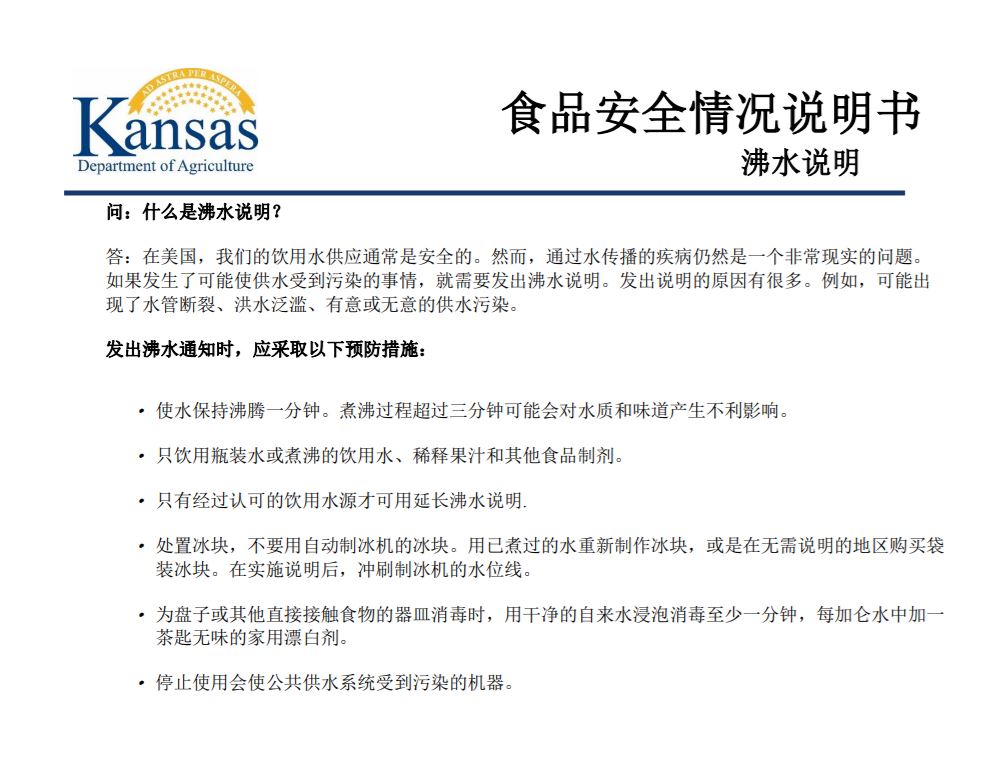
KDA Boil Water Advisory in Chinese

KDA 

MANHATTAN — In an effort to expand educational service to retail food establishments, the Kansas Department of Agriculture’s food safety and lodging program (KDA-FSL) has translated 46 “Focus on Food Safety” fact sheets into Chinese.

KDA-FSL provides many food safety educational materials for consumers, food workers, and the food industry as part of their mission to help ensure a safe food supply, promote public health and safety, and provide consumer protection. Language barriers can inhibit compliance with the Kansas Food Code, and inspectors have needed additional training tools to help overcome these language barriers.

The “Focus on Food Safety” fact sheets are a valuable resource for retail establishments, like restaurants and grocery stores, and are provided during and after inspections as instructional assistance to staff when a restaurant’s procedures are not in compliance. Several years ago, KDA-FSL translated the fact sheets into Spanish, which has served as a useful tool for food safety operators across the state.

The Chinese translations were made possible through a partnership with the K-State Confucius Institute and its associate director, Shijun Yan, who has also served in an advisory capacity as KDA-FSL works to expand educational materials. In addition to the translations, the K-State Confucius Institute has partnered with KDA-FSL to provide Chinese culinary classes throughout the state, with an emphasis on food safety, as well as Focus on Food Safety seminars with Chinese translation which will be held in Manhattan on August 27 and in Overland Park on August 29.

The “Focus on Food Safety” fact sheets can be found in Chinese, Spanish and English atagriculture.ks.gov/FSLeducation, along with a variety of other food safety educational materials. For more information about food safety in Kansas, contact the food safety and lodging program at 785-564-6767 or at [email protected].

First Kansas Workforce Innovation and Opportunity Conference this fall

KDC

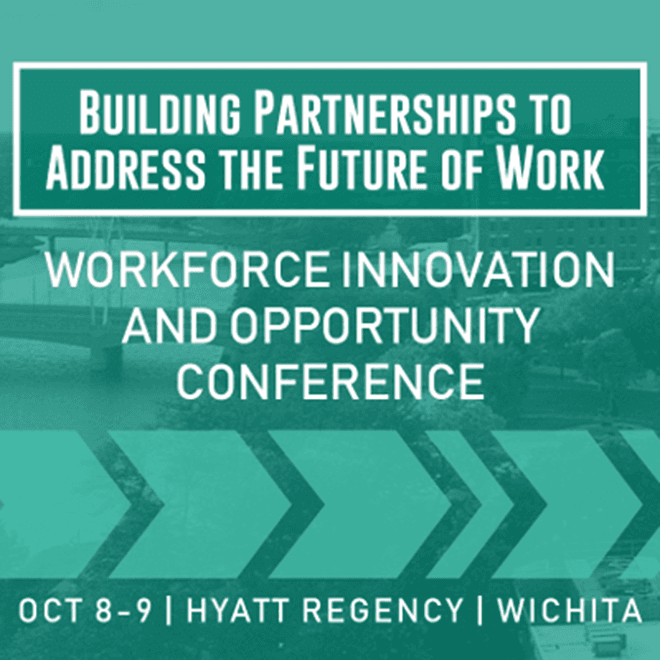
TOPEKA – The Kansas Department of Commerce, KANSASWORKS, Kansas Department for Children and Families, and the Kansas Board of Regents are currently planning the first annual Workforce Innovation and Opportunity Conference in Kansas. This conference will aim to enhance and improve workforce development solutions in the state. The conference is scheduled for October 8-9, 2018 at the Hyatt Regency Hotel in Wichita.

This engaging and interactive conference will afford an opportunity for employers, educators, economic development professionals, and community leaders to come together with state and local officials to discuss the unique challenges of meeting the growing workforce needs in the state.

The keynote speaker for the 2018 conference will be Dr. Michael Wooten, Acting Assistant Secretary & Deputy Assistant Secretary for Community Colleges with the U.S. Department of Education – Office of Career, Technical and Adult Education. Dr. Wooten provides leadership, direction and management for over $2 billion in initiatives supporting career and technical education, adult education, correctional and re-entry education and community colleges.

The conference will be organized into four unique tracks:

  • Developing the Future Workforce
  • Developing a Talent Pipeline
  • Engaging Business Resources
  • Enhancing Career Pathways

Session topics including Recruiting and Retaining Talent, Future Workforce Skills, The Gig Economy, Generations in the Workplace, and many more.

“Our Kansas economy is very diverse and ever-evolving, requiring our state and education leaders to consider how best to develop a workforce with the skills required by employers,” said Mike Beene, Director of Employment Services at the Kansas Department of Commerce. “The Workforce Innovation and Opportunity Conference will not only be a great opportunity to hear from national and state thought-leaders on how workforce needs are being addressed across the country and state, but also participate in a constructive dialogue among Kansans on how to successfully overcome talent recruitment and development challenges.”

The cost to register for the two-day conference is $100 and can be completed online at KansasCommerce.gov. The website will also include the full conference schedule, speaker biographies and hotel information as they become available.

Kansas Creative Arts Industries Commission announces grants

KDC

TOPEKA — The Kansas Creative Arts Industries Commission is now accepting applications for its two main grant categories, The Strategic Investment Program and The Arts Integration Program.

The Strategic Investment Program recognizes the important role creative organizations play in building and sustaining cultural and economic vibrancy in Kansas. By funding a variety of professional and organizational development opportunities that impact cultural programming, these grants support initiatives that use the arts to enhance community vitality, revitalize neighborhoods, generate local business, create and preserve job opportunities and impact tourism.

The Arts Integration Programs support the role the arts play in all levels of education, community service, and workforce development. This program provides funding for educational institutions, arts organizations, and community service non-profits to use the arts to increase student success, foster creative thinking, develop critical job skills, and enhance community development.

The first deadline for application submission is September 7, 2018 for projects taking place Oct. 1, 2018 – June 30, 2019. The second deadline for application submission is January 7, 2019 for projects taking place Feb. 1, 2019 – Dec. 31, 2019.

STRATEGIC INVESTMENT PROGRAM

Strategic Investment Program grants are awarded in three categories:

  • Organizational Development: This category provides funding for professional development opportunities for Kansas based arts organizations that help strengthen business practices, increase organizational viability and promote long term sustainability.
  • New and Expanded Works: This program provides funding for new or significantly expanded productions, exhibitions, programs or events by Kansas-based nonprofit arts organizations. Projects should either be an entirely new type of program for the organization designed to diversify its services or an expansion of an existing program designed to significantly enhance the quality of current offerings.
  • Equipment and Technology: This program provides funding to purchase equipment, materials, and/or technology upgrades to expand or improve an applicant’s organization.

Applicants for a grant under the Strategic Investment Program must make a compelling case as to why this particular self-identified activity or opportunity was selected, how it will have a substantial impact on their work and community, and how it will enhance the national reputation of Kansas.

Guidelines and additional information can be found here:
https://kansascommerce.gov/707/Strategic-Investment-Program

ARTS INTEGRATION PROGRAM

Arts Integration Programs are awarded in three categories:

  • Visiting Artists: This category provides funding for eligible organizations to engage and deepen the impact of arts programming on local and underserved audiences through exposure to and interaction with professional visiting arts. Presenters may book artists in any discipline, not just in performing arts. Projects should strive to integrate an arts discipline into non-arts content areas; help interpret an exhibition, performance, or presentation; and support community development goals and objectives. Booking artists on the Kansas Touring Roster allow for a $1,000 credit for the applicant organization: https://www.kansascommerce.gov/705/KS-Roster

o    Note: KCAIC will review applications for roster inclusion in early March. Please check the website at that time for an expanded list and encourage qualified artists to apply. In addition, Visiting Artists grants featuring roster artists will be accepted and reviewed year round up to 30 days prior to proposed activities.

  • Integrated Arts Education: This category supports new or expanded educational programming that integrates arts learning into non-arts curriculum and content areas to address emerging technologies, areas of skills shortages, STEM curricula, workforce readiness, and increase student performance.
  • Innovative Partnerships: This category supports innovative programming between arts organizations and non-arts organizations to impact a variety of community and/or economic development goals. Arts organizations are encouraged to partner with other community entities (hospitals, prisons, etc.) to develop arts-centered programs that address community needs such as public health, transportation, tourism, unemployment, aging, corrections, etc.

Guidelines and additional information can be found at https://kansascommerce.gov/666/Arts-Integration-Program

To review the application process, as well as program and category specific policies and guidelines visit KansasCommerce.gov/CAIC. Applications can be submitted online at https://kansascaic.submittable.com .

Grants will be reviewed by peer panel and awarded at the quarterly commission meeting in April.

All grants are made possible through a partnership with the National Endowment for the Arts and are subject to KCAIC and NEA standards and regulations.

For more on the Kansas Creative Arts Industries Commission go to KansasCommerce.gov/caic.

Copyright Eagle Radio | FCC Public Files | EEO Public File