Jehovah’s Witnesses are inviting the public to attend their annual regional convention at the Pinnacle Bank Arena in Lincoln, Nebraska. The three-day event will take place Friday, July 6, Saturday, July 7, and Sunday, July 8, 2018. The program begins each day at 9:20 a.m. and is free of charge.
The three-day program consists of 54 presentations that will include talks, audio dramas, interviews, and short videos. Additionally, a feature film entitled The Story of Jonah—A Lesson in Courage and Mercy will be shown on the final day of the convention program at 1:50 p.m. Each day, the morning and afternoon sessions will be introduced by music videos prepared specifically for the convention.
“Be Courageous!” is the theme of the convention. People of all ages are dealing with more anxieties and fears than ever before. It takes courage to face these pressures. Practical advice that is contained in the Bible will be featured.
A peak attendance of 6,000 is anticipated.
On Thursday, July 5, volunteers from Iowa, Kansas, Nebraska and South Dakota will be preparing the Pinnacle Bank Arena for our many visitors. Chairs will be arranged on the arena floor, a stage with large wall monitors will be assembled, and a baptism pool will be set up. Also, audio and video equipment will be connected to the Pinnacle Bank Arena system, enabling everyone to hear and see the program clearly.
All sessions are open to the public and free of charge.
Additional information and a program of the entire event can be found at www.jw.org.
TOPEKA – The Sunflower Foundation Board of Trustees has awarded a $200,000 grant to the Center for Practical Bioethics to identify strategies aimed at detecting, addressing and preventing elder abuse in Kansas. Kathy Greenlee, Vice President of Aging and Health Policy at the Center, will oversee the grant.
Over the next 12 months, Greenlee will engage consumers and advocates, as well as state and national experts, to identify best practices and develop strategies and recommendations to address and prevent elder abuse in Kansas.
Kathy Greenlee
As Vice President of Aging and Health Policy at the Center, her work focuses on advance directives and end of life planning, health care reform, strengthening community organizations and raising awareness about elder abuse. During her career, Greenlee has worked on programs and policies at the local, state, national and international level. Prior to joining the Center, Greenlee had a 25-year career in public service. In 2009, she was appointed U.S. Assistant Secretary for Aging by President Obama. She served in that position until July 2016.
Before leaving for Washington, Greenlee spent 18 years in Kansas state government. Among the positions she held was Secretary of Aging, Long-Term Care Ombudsman, General Counsel of the Kansas Insurance Department, and Assistant Attorney General.
“Kathy has been a pioneer in raising awareness about elder abuse and reforming and strengthening systems to support seniors,” says Billie Hall, President and CEO of the Sunflower Foundation. “She brings to this project a unique mix of seasoned experience, well-established relationships with a vast network of local, state and national partners, and a passion to prevent what is a very challenging and complex issue.”
Much like the rest of the country, the percentage of the population over 65 years old is growing and, in Kansas, the median age continues to rise. According to the National Elder Mistreatment Study (NEMS), nearly one in 10 Americans over the age of 60 have experienced abuse, neglect or exploitation. But these numbers only reflect the cases reported. Experts believe that there are a significant number of cases that go unreported each year. Many communities – and states – lack the support networks necessary to easily identify and report elder abuse.
Greenlee says the primary goal of this project is to identify strategies for addressing both prevention of and response to elder abuse. This will be accomplished, in part, by developing a set of research-based recommendations to strengthen and advance the work already underway in Kansas. “With the support and funding from the Sunflower Foundation, I am thrilled to be able to lead an intensive research project – Addressing Aging Challenges in Kansas – which focuses on elder abuse and aging in Kansas.”
The final report will be released next year. For more information about this initiative, please contact Sunflower Foundation President and CEO Billie Hall at 785-232-3000 or [email protected].
TheSunflower Foundation was formed in 2000 as part of a settlement between Blue Cross and Blue Shield of Kansas, the Kansas attorney general, and the Kansas insurance commissioner. The Foundation’s mission is to serve as a catalyst for improving the health of all Kansans by directing resources to grant programs, special initiatives, and related activities that help people and communities achieve and maintain optimal health. The nine-member Board of Trustees governs the foundation’s work and oversees the long-term goals of the foundation. Eight of the members are appointed by the attorney general, and one member is appointed by Blue Cross and Blue Shield of Kansas. The voluntary trustees serve three-year terms and can serve up to three terms.
The Center for Practical Bioethics is a nonprofit, free-standing and independent organization nationally recognized for its work in practical bioethics. For more than 30 years, the Center has helped patients and their families, healthcare professionals, policymakers and corporate leaders grapple with difficult issues in healthcare and research involving patients. The Center does not wait to be called upon. Our vision and mission require us to be proactive — to call attention to ethical issues and to develop programs, policies and publications that address them.
WICHITA – Women for Kansas will host its Showing Our Strength Convention, Aug. 31 and Sept. 1 in Wichita. Registrations for the event, which will be held at the Drury Plaza Broadview Hotel and the Orpheum Theater, are now being taken.
The convention will open with a reception, from 4-7 p.m., at the hotel, where participants will be entertained by Robin Macy, Kansas Troubadour, and guitar-slinger husband, Kentucky White, whose anthems pay homage to the Good Earth. Participants will then walk-five blocks to the Orpheum to hear the keynote speaker, Greg Palast.
Palast, who has been called “the most important investigative reporter of our time,” is a Puffin Foundation fellow in investigative reporting. The author of two New York Times bestsellers, which are also motion pictures, The Best Democracy Money Can Buy and The Best Democracy Money Can Buy: The Case of the Stolen Election, Palast is a critic of Kansas’ recent voter policies.
Another featured speaker, Kansas author, Sarah Smarsh, will present during the luncheon on Saturday. Her focus will be how to talk to people with differing opinions, learned lessons she reveals in her soon-to-be-released book, Heartland: A Daughter of the Working Class Reconciles an American Divide.
Numerous other speakers will address Kansas policies and legislation, including Heidi Holliday, Kansas Center for Economic Growth; Davis Hammet, Loud Light; Annie McKay, Kansas Action for Children; Judy Sherry, Grandmothers Against Gun Violence, and Micah Kubic, the ACLU. Sandrine Lusk and Claudia Amaro will address immigration issues.
The Saturday convention will conclude with a banquet and candidate debates for governor and secretary of state. Jeff Jarman, Director of the WSU Elliott School of Communication, will moderate; Jim McLean, Kansas Press Service, and Dena Sattler, editor of the Garden City Telegram, will pose questions.
“Our first statewide Convention, in 2014,” said Lynn Stephan, Convention Committee, “was attended by 470 women from across Kansas. They left so inspired and motivated that this year we expect to fill up in a very short period of time.”
The $189 cost for the Convention includes a welcome reception, admission to the Greg Palast event at the Orpheum, a T-shirt and goodie bag, lunch, snacks, and the closing banquet. A block of rooms is reserved at the Drury. To register, go online to Women for Kansas.org. If you have questions, contact Jan at [email protected].
The vision of Women for Kansas is to restore integrity, transparency, fiscal responsibility and balance to Kansas by electing moderates to public office. Their mission is to recruit, motivate and educate women who will actively participate in the process of electing moderates to public office who will advocate for moderate policies.
TOPEKA — The Kansas Department of Commerce Office of Minority and Women Business Development is accepting nominations for Kansas minority and/or women-owned businesses, advocates, young entrepreneurs, and corporations. These nominations celebrate National Minority Enterprise Development (MED) Week, October 14-20, 2018. Nominees and winners will be recognized at the annual Kansas Minority and Women Business Awards Luncheon to be held on October 11, 2018, at the Capitol Plaza Hotel in Topeka.
“Minority and women-owned businesses are essential drivers of our Kansas economy, and this special awards ceremony will honor the tremendous accomplishments of these amazing entrepreneurs in our state,” said Robert North, Interim Secretary for the Kansas Department of Commerce.
The deadline to nominate a business or individual is June 15, 2018. Online nomination forms can be accessed at KansasCommerce.gov/MEDweek.
FSC, Inc.- Overland Park (Professional Service Firm)
Toronto Lumber Company – Toronto (Retail Firm)
Sage Restoration LLC – Overland Park (Service Industry Firm)
International Express Trucking, Inc. – Kansas City (Supplier/Distributor Firm)
Kansas Minority-Owned Businesses
Recyclable Materials Relocating, LLC – Kansas City (Construction Firm)
Quik Tek Machining, LLC – Wichita (Manufacturing Firm)
LaborMax Staffing KC Metro – Kansas City (Professional Service Firm)
Paleterias Tropicanas – Kansas City (Retail Firm)
Project Fitness LLC DBA Project Fitness CrossFit – Garden City (Service Industry Firm)
Sarin Energy Solutions – Overland Park (Supplier/Distributor Firm)
Minority Business Advocate
Sandra Olivas, Bank of Labor – Kansas City
Women Business Advocate
Debra Kunz, Center for Deliberate Growth™ – Mission
Young Entrepreneur
Paul Kaster, Crooked Branch Studio – Leawood
Corporation of the Year
Textron Aviation – Wichita
About the Kansas Department of Commerce Office of Minority and Women Business Development
The Office of Minority and Women Business Development provides assistance in business management, identifying resources for financing and establishing contacts in the public and private sectors. The office is responsible for certifying minority- and women-owned businesses as small disadvantaged businesses for procurement and subcontracting opportunities.
TOPEKA – Abuse of adults may take on numerous forms, including physical, emotional or sexual abuse, self-neglect or neglect by a caregiver and financial exploitation.
In FY 2018, the Kansas Department for Children and Families (DCF) has received approximately 16,468 calls regarding abuse and neglect of this vulnerable population, and more than 7,300 investigations have been assigned.
Adult abuse affects individuals 18 and older who are unable to protect themselves. This includes older adults and persons with disabilities.
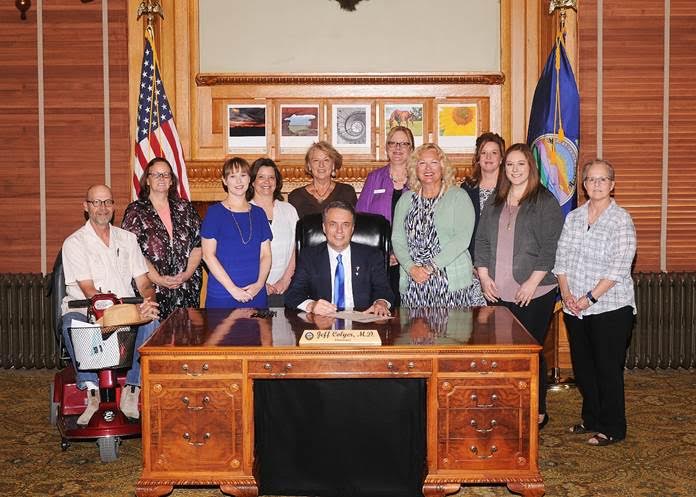
To call attention to this issue, Governor Jeff Colyer signed a proclamation last week declaring June Adult Abuse Awareness Month.
“When someone thinks of DCF, child welfare is often at the forefront of their minds, but these adults are just as vulnerable, and in need of our assistance,” Secretary Gina Meier-Hummel said. “As the population ages, there are more individuals in need of adult protective services, and we have to be ready to offer them a helping hand.”
DCF Adult Protective Services (APS) helps protect older adults from being taken advantage of, as well as to ensure they are taking care of themselves. To promote adult abuse awareness, the public is invited to wear purple on Friday, June 15.
The State of Kansas takes seriously this issue. Since FY 2011, DCF has added Adult Protective Specialist positions to the Adult Protective Services program. It has increased training and outreach efforts and is now better equipped to serve vulnerable adults.
Since 2011, DCF and other State agencies, community providers and advocates have played an active role in positive change by serving on the APS Advisory Committee. They provided direction on a strategic plan to combat adult abuse. The plan includes six goals, including improving services, increasing staff knowledge, improving tracking and monitoring through data sharing and more.
“Every Kansan has the responsibility to report suspected abuse. This vulnerable population deserves our support and protection,” Governor Colyer said. “If you see something, say something.”
Kansans can report abuse by calling the DCF Kansas Protection Report Center, which is available 24 hours per day, seven days a week, at 800-922-5330. Another option would to submit a report online at www.dcf.ks.gov/services/pps/Pages/KIPS/KIPSWebintake.aspx.
TOPEKA – The federal Department of Health and Human Services’ Administration for Community Living has awarded the Kansas Department for Aging and Disability Services (KDADS) a three-year grant to expand and improve the services the state provides to individuals with traumatic brain injury (TBI).
KDADS will use the $150,000-a-year grant to create and strengthen a system of services and supports that maximizes the independence, well-being and health of Kansans with TBI in collaboration with the Brain Injury Association of Kansas and Greater Kansas City, the National Association of State Head Injury Administrators and other key stakeholders.
The objectives of this project are to increase representation of people affected by TBI on Kansas’ TBI Advisory board, develop an annual State TBI Action Plan, develop a TBI Registry, increase enrollment of at least 30 people onto TBI Medicaid waiver, conduct annual seminars and educational events that increase knowledge and build capacity for advocacy, and create a sustainability plan to maintain and expand services in the future.
“We expect this project to result in an increased number of individuals with TBI receiving services under the state’s 1915(c) Medicaid waiver for TBI, which currently serves about 425 individuals,” KDADS Secretary Tim Keck said. “Another aim of this project is to educate people experiencing TBI, and the public, about brain injuries and to make them aware of the community resources available to support them.”
Kansas’ TBI Medicaid waiver provides a range of services and supports to individuals with TBI and their families with the aim of ensuring that individuals can remain in their homes and be as independent as possible in a safe, healthy environment. The HCBS/TBI program serves individuals who would otherwise require institutionalization in a TBI rehabilitation facility. The TBI waiver is designed to be a rehabilitative program for consumers to receive therapies and services that enable them to rely less on supports as their independence increases.
In 2018, the Kansas Legislature enacted a law requiring that the TBI Medicaid waiver cover children and people with acquired brain injuries as well as those with traumatic brain injury. Kansas is in the process of renewing federal approval for its TBI waiver and the proposed new waiver will include children and individuals with acquired brain injuries as required. The waiver is due for renewal in July of 2019. If approved by the Centers for Medicare and Medicaid Services (CMS) Kansas will become the first state in the nation to establish a rehabilitation program for children who have a brain injury.
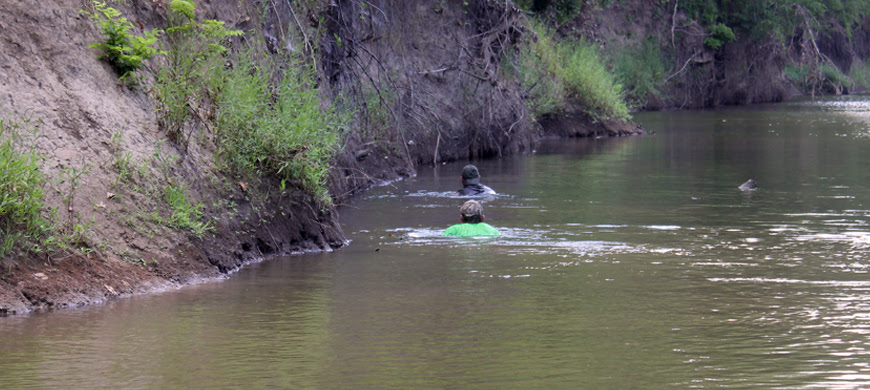
PRATT – There’s a reason you don’t see anglers lining up by the masses on opening day of handfishing season: it’s not for everyone. Blindly reaching into a dark crevice or undercut bank bare-handed, with the intent of luring out a formidable flathead is considered “fun” only by those with enough grit to accept the challenge. Think you have what it takes to handfish? Put yourself to the test June 15-Aug. 31 during the 2018 Kansas handfishing season.
Once you’ve made the commitment to participate in the season, you’ll need a fishing license and handfishing permit ($27.50).
Make sure to stick only to areas where handfishing is allowed: the Arkansas River; the Kansas River, from it’s origin to the downstream confluence with the Missouri River; and all federal reservoirs, from 150 yards beyond the dam to the upstream end of federal property.
You’ll need to familiarize yourself with the rules, too. Only flathead catfish may caught by hand. And its called “handfishing” season for a reason – anglers who are handfishing can’t use hooks, snorkeling or scuba gear, or any man-made device except a stringer. And man-made objects, such as barrels or tubs, can’t be used to attract fish, either. It’s just you, the fish, and the dark, recessed hole it’s lurking in.
Once you feel a fish, the next challenge is figuring out how to work your hand into its mouth and grip its lower jaw to bring it to the surface. This is where you’ll need all the vigor you can muster.
If you make it this far, and get a fish to the surface, grab a quick pic and send it back unless you plan on keeping it. The daily creel limit on flatheads is five.
It’s not a season for everyone, but with enough grit and vigor, you just might be up to the challenge.
For more information on handfishing in Kansas, consult the 2018 Kansas Fishing Regulations Summary, available wherever licenses are sold and at www.ksoutdoors.com.
PRATT –The Kansas Department of Wildlife, Parks and Tourism recently conducted its annual lottery draw for nonresident deer permits and results are now available. Out of the 18 deer units that nonresident hunters could apply for, three have a limited number of leftover permits. One-hundred and twenty-six permits are available in Unit 16, 49 permits are available in Unit 17, and 72 permits are available in Unit 18.
Leftover permits can be purchased online at www.kshuntfishcamp.com beginning at 12:01 a.m., July 9 on a first-come, first-served basis.
To view a map of Kansas’ Deer Management Units and review hunting regulations and 2018 season dates, visit ksoutdoors.com, click on “Hunting,” then “What to Hunt.”
WASHINGTON – This week, the U.S. Environmental Protection Agency (EPA) is finalizing a rule to add a category of thirteen specific nonylphenol ethoxylates (NPEs) to the Toxics Release Inventory (TRI). This addition ensures the most up-to-date information is easily accessible to the public.
“We are taking an important step to provide communities with additional information about toxic chemicals being released to the environment,” said EPA Administrator Scott Pruitt. “By making information about industrial management of toxic chemicals available to the public, community members, researchers, industrial facilities, investors, and government agencies can make more informed decisions that impact human health and the environment.”
The finalized rule, which received public comment, is effective for the 2019 TRI reporting year with the first reporting forms due July 1, 2020. Facilities that meet TRI reporting thresholds will begin collecting information on January 1, 2019.
A valuable tool for communities, industry, and government to track chemical releases across the country, the TRI enhances knowledge about chemicals in the environment through understandable, interactive online charts and maps. This transparent database of information promotes progress towards the overall goal of responsibly managing chemicals and reducing toxic releases.
Background
NPEs are nonionic surfactants used in a wide variety of industrial applications and consumer products such as adhesives, wetting agents, emulsifiers, stabilizers, dispersants, defoamers, cleaners, paints, and coatings. Short-chain NPEs are highly toxic to aquatic organisms, and longer-chain NPEs, while not as toxic as short-chain NPEs, can break down in the environment to short-chain NPEs and nonylphenol, both of which are highly toxic to aquatic organisms.
TRI collects and tracks the management of listed toxic chemicals that may pose a threat to human health and the environment. The database includes annually reported information on chemicals released to the environment and otherwise managed through recycling, treatment, and recovery. The information submitted by facilities, which is compiled and made available to the public, helps support informed decision-making by companies, government agencies, non-governmental organizations and the public. TRI also creates a strong incentive for companies to reduce pollution and be good neighbors in their communities.
TOPEKA– Governor Jeff Colyer, M.D. today announced the appointment of Stanley Adams as Director of Broadband Initiatives at the Kansas Department of Commerce.
Mr. Adams, who previously served as Director of Statewide Broadband Initiatives with the Department of Commerce from 2010 to 2015, will work on continuing to identify broadband needs across Kansas – focusing heavily on broadband access problems facing many rural areas across the state.
“Closing the digital divide between rural and urban Kansas is vital, not just for the residents of those rural communities but for businesses considering locating there,” said Governor Colyer. “Mr. Adams is an expert in the issues surrounding broadband access throughout Kansas and having him onboard to spearhead broadband initiatives will improve the lives of Kansans while helping revitalize our rural communities.”
Over 930,000 Kansans live in rural communities, which is equivalent to over thirty-two percent of the state population. Providing high-speed internet service to the residents of these areas is both critical for improving their lifestyles as well as enhancing economic development efforts to attract new industry to start and grow in rural Kansas.
“It’s difficult to run a successful business of any size – from a local doctor to a large manufacturing plant – without access to high-speed broadband,” said Mr. Adams. “To reverse the population decline in many rural areas, we must be proactive in increasing broadband access across the state.”
This past legislative session, Governor Colyer signed legislation creating a broadband task force focused on mapping locations across the state with problematic broadband access and developing plans to address those needs. Mr. Adams will collaborate with this task force to update those maps which display the level of broadband speed that is available in areas across the state.
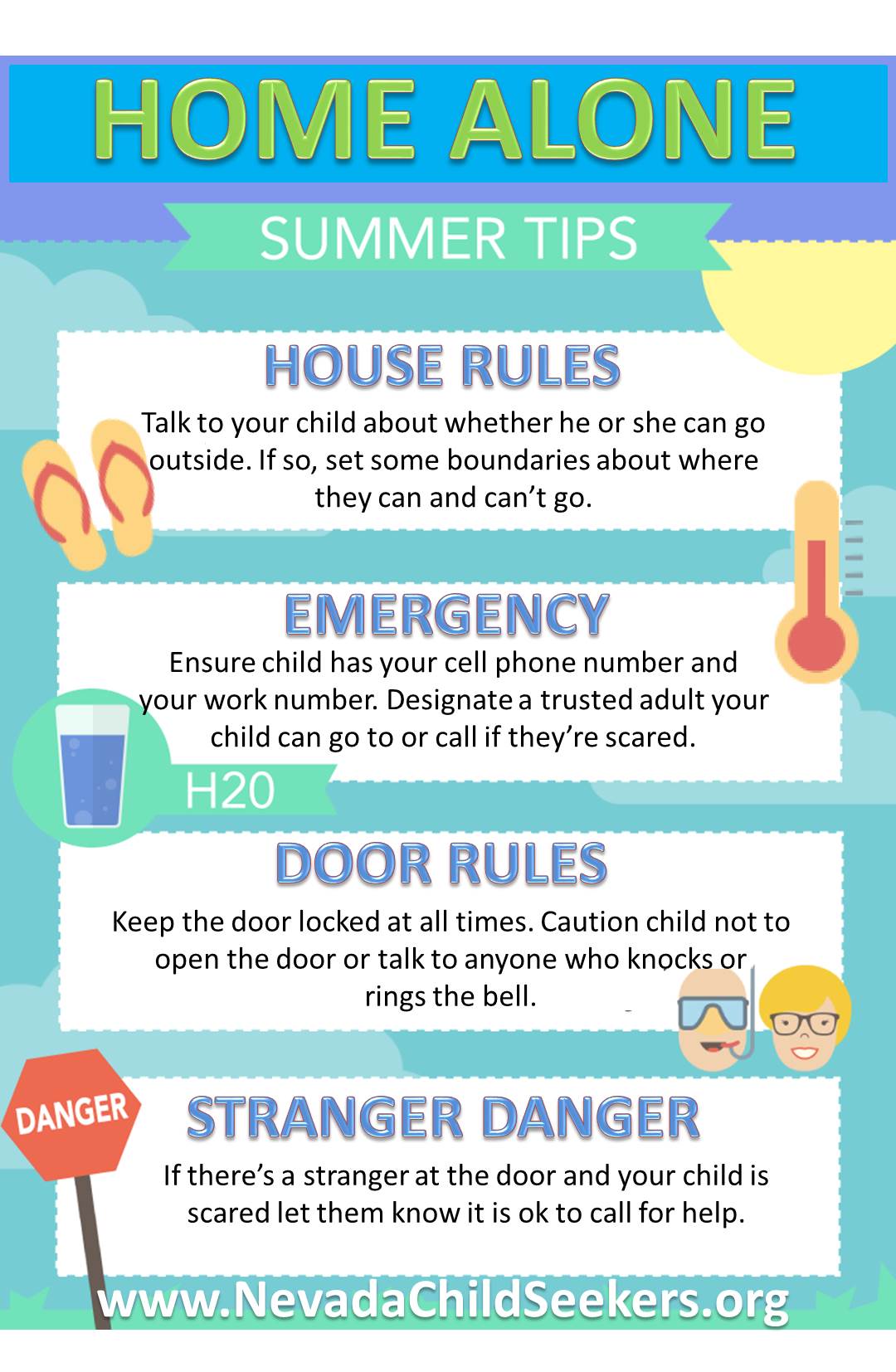
TOPEKA – The summer months mean a welcomed break from school for Kansas kids, but they also signal a shift in the family’s daily routine. Families may be considering leaving children home alone during the summer, instead of opting for a sitter.
Safe Kids Kansas, the Kansas Department for Children and Families (DCF) and the Kansas Department of Health and Environment (KDHE) have some tips on how to decide if your child is ready to be home alone. And if you decide to keep the kids home, we have some important advice on keeping them safe.
“Developmentally, children are generally ready to be home alone around the age of 12 or 13,” said Cherie Sage, State Director of Safe Kids Kansas. “However, children develop at different rates, so use your own discretion to determine your child’s maturity level and capabilities. For example, if you have an impulsive 13-year-old who is a big risk taker, you might be hesitant to leave him/her alone. On the other hand, a thoughtful 11-year-old, who has a good track record of following household rules might be ready. Most states, including Kansas, don’t have regulations or laws about when a child is considered old enough to stay at home alone or babysit another child.”
DCF has some general guidelines to help you make the decision when your child is ready to be home alone:
Age—Young children through age six, should never be left alone for even a short period of time. Kids six to nine can be left alone for only short periods of time, depending on their level of maturity. Children 10 and older can be left alone, depending on other factors.
Length of time alone—Consider whether your child is ready to spend the whole day alone or if only a couple of hours is more appropriate.
Maturity—Consider your child’s ability to fend for himself/herself and your child’s level of common sense. Certainly, children with developmental disabilities and emotion issues should be monitored closely.
Knowledge of emergency preparedness—Ask your child if he/she knows what to do in the event of a fire, tornado, stranger at the door, etc. Ask “what ifs”.
Availability of adults—Children must know how to reach a responsible adult at any point in the day for any reason, even if it’s just to provide reassurance if the child becomes fearful.
Insecurity—Children should feel comfortable with the idea that they will be home alone. The more fearful they are, the less likely they will be able to respond appropriately to emergency situations.
Behavior—Children who misbehave, vandalize, steal, intimidate neighbors, set fires or are a danger to themselves need close supervision.
“If you are unsure whether your child is ready to stay home alone, it is best to be cautious and take all measures necessary to ensure child safety,” DCF Secretary Gina Meier-Hummel said. “Never assume your child is ready because he/she seems old enough.”
Each year, more than 3 million kids, ages 14 and under, get hurt at home—and more than 2,000 children die from unintentional injuries in the home. Fire, suffocation, drowning, choking, firearm and poisoning are among the top leading causes of unintentional home injury death for this age group.
“Teach your children about hazards around the home, and make sure they know what to do in an emergency,” says Sage. “The first time your kids stay home alone, it should be for a short time and you should be nearby.”
Safe Kids Kansas also recommends parents take the following precautions to ensure your child’s safety:
Carry a cell phone and keep it turned on. Make sure your children know where you will be and what time you will return. In addition to your cell phone number, post emergency numbers (police, fire, EMS, doctor and the poison control hotline, 800-222-1222) and a friend or neighbor’s number by every phone in the home. Teach your child their home address so they can tell emergency personnel where to dispatch assistance, if necessary.
Prepare a snack or meal in advance — preferably one that does not need to be heated. If your children will need to cook, remind them never to leave an oven or stove unattended while cooking and to turn it off when they are finished.
Make sure potentially poisonous or hazardous household items are locked up out of reach — especially medications, matches, lighters, weapons and cleaning products.
Review your family’s emergency plans and make sure your children know what to do if the smoke alarm or carbon monoxide detector goes off. Practice two escape routes from each room.
Review and practice plans for other types of emergencies, such as severe weather. Ensure they know where to go for emergency shelter.
Show your children where you keep your first aid kit and how to use basic first aid supplies.
TOPEKA – The U.S. Department of Health and Human Services (HHS) released final summary enrollment data on April 3, 2018, for the fifth open enrollment period of the federally facilitated health insurance marketplace created by the Affordable Care Act (ACA).
Despite a shortened enrollment period and general uncertainty about the future of the Affordable Care Act (ACA), enrollment in the Kansas marketplace was essentially unchanged in 2018 (98,238 compared to 98,780 in 2017).
The average monthly premium for a health insurance plan on the Kansas marketplace in 2018 was $624, an increase of $148 (31.1 percent) from 2017.
However, more than four in five (83.0 percent) Kansans who enrolled in the marketplace received financial assistance in the form of Advanced Premium Tax Credits (APTCs).
The APTC available in 2018 to help offset the cost to low/moderate-income Kansans was $555 per month, an increase of $177 (46.8 percent) from 2017. The net impact was a $25 reduction in the average monthly premium, after the APTC, paid by those receiving APTCs (from $110 in 2017 to $85 in 2018, a reduction of 22.7 percent.)
The Kansas Health Institute (KHI) delivers objective information, conducts credible research, and supports civil dialogue enabling policy leaders to make informed health policy decisions that enhance their effectiveness as champions for a healthier Kansas. Established in 1995 with a multiyear grant from the Kansas Health Foundation, KHI is a nonprofit, nonpartisan educational organization based in Topeka.
Bruce Affolter accepts the President’s “E” award for excellence in exporting on behalf of Clay Center’s GT Manufacturing president, Dennis Pedersen. Secretary of Commerce Wilbur Ross presents the award along with 1st Dist. Congressman Roger Marshall (R-Great Bend).
OFFICE OF REP. MARSHALL
WASHINGTON D.C – GT Manufacturing, Clay Center, is one of 42 companies to receive the President’s “E” award for excellence in exporting.
The award is given to American businesses who have demonstrated a superior commitment to increasing and promoting exports.
Bruce Affolter accepted the award on behalf of the company’s president, Dennis Pedersen. Secretary of Commerce Wilbur Ross presented the framed award for President Trump, along with First Dist. Congressman Roger Marshall (R-Great Bend).
Since 1953, GT Manufacturing has manufactured quality grain dryers, which have been sold across the world. Affolter said what sets their product apart is their quality and service, as well as their reasonable pricing.
“It’s a prestigious award, that shows that our hard work is paying off. People around the world are continuing to buy our product, and that alone as a company is beneficial because we can grow the community as well,” Affolter said.
Today the small business that employees 40 people in Clay Center, Kan. and is a worldwide leader in the batch grain dryer field. Their driers are sold in 83 countries across six different continents.
Earlier this month Congressman Marshall toured GT Manufacturing in Clay Center where he met with the employees and saw firsthand the manufacturing and assembly process.
Rep. Marshall and GT Manufacturing’s Pedersen discuss the businesses success and the efficiency of their product in the video below.