-
drinking water treatment and distribution projects
-
wastewater conveyance and treatment projects
-
enhanced energy efficiency projects at drinking water and wastewater facilities
-
desalination, aquifer recharge, alternative water supply, and water recycling project
-
drought prevention, reduction, or mitigation projects
Category: State
Bats with White-nose Syndrome detected in Kansas

KDWPT
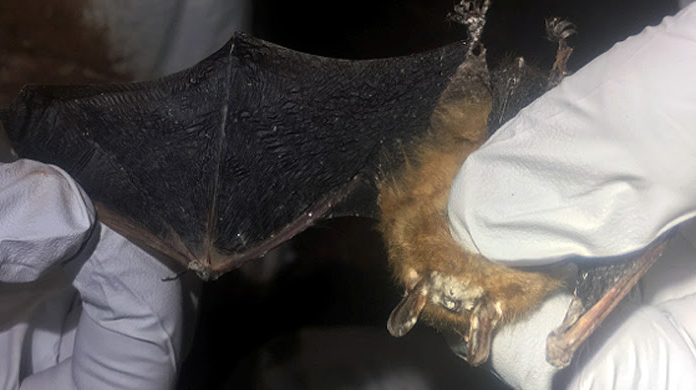
PRATT – White-nose syndrome (WNS), a fungal disease that affects hibernating bats, has recently been confirmed in Kansas – the 32nd state to confirm the presence of the disease.
Several dead bats, collected during cave surveys in Cherokee County in southeast Kansas and Barber County in southcentral Kansas, tested positive for the disease. Surveys were conducted between February 14 and March 1, and samples were tested by the U.S. Geological Survey (USGS) National Wildlife Health Center in Madison, Wis.
WNS is not known to pose a threat to humans, pets, livestock, or other wildlife and fish. The fungus that causes WNS is spread through bat-to-bat contact, but not all bat species are affected equally.
WNS is named for the white fungal growth often observed around the nose of infected bats. The fungus can invade the skin of hibernating bats and cause damage to the wings. It also induces unusual behaviors, such as bats prematurely leaving hibernation, using up fat reserves necessary to survive winter – when conditions are harsh and food (insects) scarce – resulting in death.
WNS was first detected in New York in 2007 and has since killed millions of bats in states and Canadian provinces where it has been found. States surrounding Kansas, including Missouri, Nebraska, and Oklahoma, have also detected either the fungus that causes WNS or the disease itself.
“Detection of white-nose syndrome in a new state underscores the critical importance of work to develop tools for early detection and rapid response to this devastating wildlife disease,” said USGS scientist Anne Ballmann. “The USGS will continue working with resource managers to help conserve imperiled bat species.”
In 2014, the Kansas Department of Wildlife, Parks and Tourism (KDWPT) began working with private landowners to enter caves, survey bats and check for the fungus. No positive test results were found until this year. Biologists with KDWPT’s Ecological Services Section, alongside other scientific groups, will continue survey efforts, but they’ll need the help of willing landowners to locate and enter bat caves.
Of the more than 1,000 species of bats around the world, 15 have been found in Kansas. Big brown bats are the most common and widespread species in the state and live here year-round. WNS has not been documented in big brown bats in Kansas. Big brown bats can eat about one-third of their weight each night while feeding on insects. Collectively, bats play a vital role in the Kansas ecosystem by consuming millions of insects each year, including agricultural pests and mosquitoes. Studies indicate bats have saved U.S. farmers billions of dollars in pest control services.
While there is no known cure or treatment for WNS, wildlife experts encourage those who enter bat caves to follow decontamination protocols to help reduce and/or prevent further spreading of the fungus. Suggested decontamination protocols can be viewed at https://www.whitenosesyndrome.
Information about white-nose syndrome can be found at www.whitenosesyndrome.org. For more information about WNS in Kansas, e-mail Pounds at [email protected] or [email protected].
DCF creates position to address human trafficking

DCF
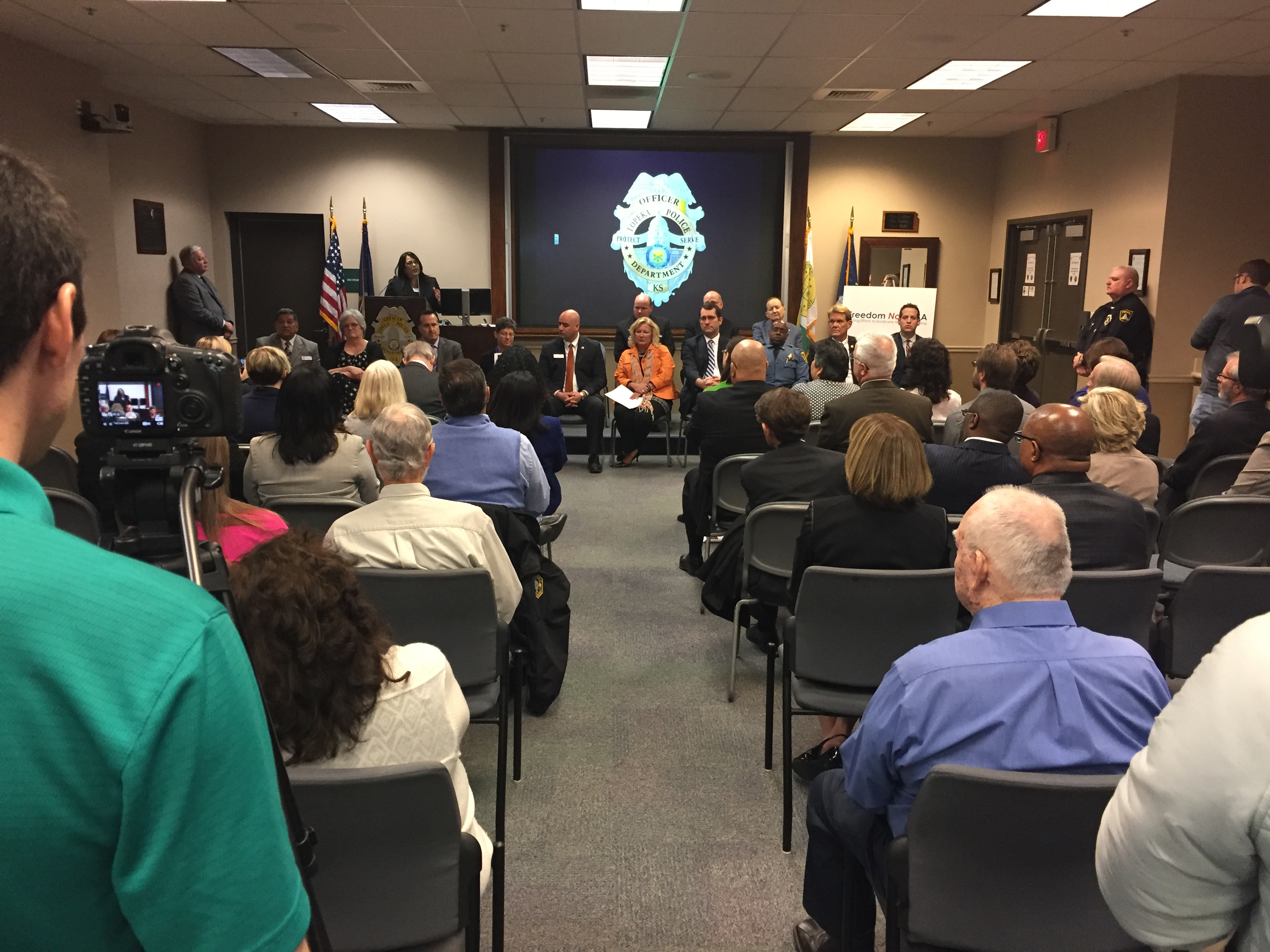
TOPEKA – Kansas Department for Children and Families (DCF) Secretary Gina Meier-Hummel is pleased to announce the creation of a new position within the agency to specifically address the human trafficking of children in Kansas. The position was announced Thursday, during a news conference in Topeka, at which city of Topeka and Shawnee County leaders unveiled a joint resolution to combat human trafficking in northeast Kansas.
“We know there is a great need for collaboration on this important issue,” Secretary Meier-Hummel said. “This modern-day form of slavery is a reality in every corner of our state, and as we work to address the safety needs of child victims, we need a united effort to prevent human trafficking and develop a comprehensive response to the problem.”
The Anti-Human Trafficking Coordinator position will be within DCF’s Prevention and Protection Services division, in Topeka. The individual hired will be responsible for leading the agency’s initiative to strengthen the comprehensive response and service system for youth in DCF care who are victims of human trafficking or are at risk. The position involves direct coordination with the Kansas Attorney General’s Office and law enforcement. Data will be collected and analyzed to ensure effective response.
“Human trafficking is a problem that goes unseen for most of us, yet it affects so many,” Governor Jeff Colyer said. “I appreciate Secretary Meier-Hummel’s commitment to tackling this problem, and I look forward to the positive impact it will have on our state.”
From March 2014 to December 2017, DCF helped 285 suspected child victims of human trafficking.
Secretary Meier-Hummel is focused on working with government entities, communities and others to combat human trafficking. As part of the news conference, details about a grassroots-level initiative were announced. Freedom Now is an anti-human trafficking effort led by Topeka Rescue Mission Executive Director Barry Feaker.
“We appreciate the participation from DCF on this monumental initiative,” Feaker said. “At the Topeka Rescue Mission, we have seen first-hand the tremendous impact this evil has on the lives of innocent children, and we will no longer stand for it. We expect our local effort to expand statewide and beyond as residents begin to realize that this is an issue that affects all of us, and we all have a role to play in stopping it.”
In addition to the new position, DCF also has staff members who sit on the State’s Human Trafficking Advisory Board. DCF also has staff on the Freedom Now board. Learn more about the Anti-Human Trafficking Coordinator position at the Kansas Department of Administration website, State Employment Center. Those who suspect human trafficking involving a minor should call 1-800-922-5330.
Abortions in Kansas down slightly in 2017
TOPEKA – The Kansas Department of Health and Environment (KDHE) has published a report titled Abortions in Kansas, 2017, Preliminary Report. The total number of abortions reported in 2017, 6,782, is 0.4 percent fewer than reported in 2016, 6,810. In-state residents slightly outnumbered out-of-state residents, 3,405 reports to 3,377.
State law requires that physicians and hospitals report abortions they perform to KDHE.
The Woman’s Right-to-Know Act requires physicians who perform abortions to provide informed-consent information to a woman 24 hours before an abortion procedure and to certify to KDHE the number of informed-consents obtained annually.
This report is a preliminary analysis of these data as collected by the KDHE Bureau of Epidemiology and Public Health Informatics. It is comprised of two PDF file sections: data summary and appendices. The report can be viewed online at https://www.kdheks.gov/phi/abortion_sum/2017_Preliminary_Abortion_Report.pdf.
State launches “My (Re)Employment Plan” workforce program
OFFICE OF GOV.
TOPEKA – In an effort to match unemployed job seekers with Kansas employers looking to hire workers, Governor Jeff Colyer, M.D., is proud to announce the state of Kansas has launched “My (Re)Employment Plan,” a program that blends enhanced workforce services with personal responsibility to get Kansans back to work faster.
The collaboration between the Kansas Department of Labor, Kansas Department of Commerce and the KANSASWORKS Workforce System will provide enhanced reemployment services to Kansans who are unemployed and looking for work. The program, called “My (Re)Employment Plan” connects unemployment recipients with workforce service professionals in their area. Unemployed Kansans who are receiving benefits will be provided, free of charge, personalized job search assistance, including:
- Creation of a personalized “My (Re)Employment” Plan that focuses on goals and accountability
- Skills assessment to match interests and skills with occupations
- Resume, interview, and networking assistance
- Labor market information highlighting current in-demand jobs
To emphasize the importance of a planned, dedicated job search to match unemployed workers with jobs, individuals who fail, without good cause, to participate in this free of charge service will lose unemployment benefits until such time as they can demonstrate a reasonable job search. The program is designed to help people achieve their reemployment goals and to reduce time spent on unemployment.

Kansas jobseekers assigned for My (Re)Employment Plan services will be referred to one of 21 KANSASWORKS facilities throughout the state. Participants will be notified by mail around the midpoint of their unemployment claim. The notification will provide appointment details, including where and when the jobseeker will receive services, and the steps they need to take to better prepare for a successful job search.
“Kansas is experiencing low unemployment and Kansas businesses are ready to hire qualified workers,” said Governor Jeff Colyer. “The My (Re)Employment Plan program will connect unemployed job seekers with the 48,000 job openings at businesses across the state.”
“Workforce needs is one of the top concerns of the Kansas business community. The Kansas Chamber and its members appreciate the increased focus on getting Kansans back to work when there are thousands of open jobs and employment is at near record highs,” stated Alan Cobb, President and CEO of the Kansas Chamber.
“Kansas SHRM supports efforts to connect unemployed individuals with job opportunities. A planned job search that emphasizes the importance of networking and access to quality job search tools will benefit both those looking for employment and employers,” said Shelbye Smith, State Council Director of Kansas SHRM.
“NFIB’s latest Small Business Economic Trends survey found that ‘quality of labor’ is the No. 1 problem facing America’s small-business owners,” NFIB State Director Dan Murray said. “The My (Re)Employment Plan Workforce Program is welcome news to Kansas small businesses that are struggling to find qualified applicants to fill must-needed jobs.”
“I know all the Local Workforce Development Boards in Kansas are constantly hearing from employers seeking talent and this initiative will assist in connecting job seekers to the large number of career opportunities available throughout Kansas,” said Keith Lawing, CEO, Workforce Alliance of South Central Kansas.
“The Associated General Contractors (AGC) of Kansas, which is recognized as the ‘Chamber of Commerce of the Kansas Construction Industry,’ applauds Governor Colyer’s focus on workforce development for Kansas. This is a key issue, as the construction industry in the state needs 8-10,000 new workers over the next few years to meet demand that is driven by an enhanced state economy and the retirement of our baby boom generation of workers,” stated Mike Gibson, AGC of Kansas Executive Vice President.
“This commonsense initiative by Governor Colyer couldn’t come at a better time for our state’s employers, especially those in advanced manufacturing,” added Gary Plummer, President and CEO of the Wichita Regional Chamber of Commerce. “We’re excited about the future prospects in this high paying industry sector and creating a pathway to connect those needing work with those firms that need workers is a wise and welcome program.”
KDADS requests applications for Kansas Prevention Collaborative grants
TOPEKA – The Kansas Department for Aging and Disability Services (KDADS) on March 23 announced the release of new Requests for Applications (RFAs) for the Kansas Prevention Collaborative-Community Initiative (KPCCI).
Communities across Kansas are eligible to apply for one-year planning-phase grants that will help assess community prevention needs, build local capacity and plan prevention efforts. Communities that have previously completed a KPCCI planning-grant cycle will be eligible to apply for a three-year implementation-phase grant, which will support their prevention efforts and build their capacity to apply for federal Drug-Free Communities funding.
Grantees will use these funds to address the problems of underage drinking and produce sustainable system changes in their communities.
The grant initiative is designed to allow communities to address local alcohol and other drug use concerns, but also to explore how behavioral health concerns, such as suicide, problem gambling and depression, can impact youth and adult drug use. Communities will utilize the Strategic Prevention Framework model designed by the Substance Abuse and Mental Health Services Administration (SAMHSA) to assess their local needs, build capacity and create a plan during this planning phase.
KDADS Secretary Tim Keck recognized the importance of addressing substance abuse concerns locally and in an integrated fashion, “KDADS remains committed to supporting prevention efforts at the local level in Kansas. We lose too many of our youth to behavioral health problems tied to substance use, problem gambling and suicidal behavior.”
“These Community Initiative grants are one part of our statewide prevention system. KDADS’ Behavioral Health Services Commission works with partners to provide training, technical assistance, communication, support and evaluation services to communities across the state. We encourage communities to get involved with behavioral health prevention efforts and become part of the Kansas Prevention Collaborative,” said Andy Brown, Prevention Program Manager at KDADS.
The communities awarded new KPCCI planning grants will receive $15,000 in prevention funding and be supported in their planning efforts by KDADS and its partners in the Kansas Prevention Collaborative (KPC). New KPCCI implementation grant recipients will receive $185,000 in prevention funding over three years. Total awards for all KPCCI grantee cohorts next year will be $602,000.
About the Kansas Prevention Collaborative
The Kansas Prevention Collaborative was created in 2015 in an effort to integrate and innovate behavioral health prevention efforts. A partnership of several different state, educational and provider agencies, the KPC’s goal is to expand prevention efforts to be more inclusive of mental health promotion, suicide prevention and problem gambling education and awareness, as well as to increase the availability of resources to adequately fund local-level prevention and promotion strategic plans. For more information, see https://www.kdads.ks.gov/commissions/behavioral-health/consumers-and-families/services-and-programs/kpc.
The KPC’s website can be viewed here: https://kansaspreventioncollaborative.org.
Gov. Colyer proclaims April “Safe Digging Month”
TOPEKA – Governor Jeff Colyer, M.D. recently issued a proclamation declaring the month of April as “Safe Digging Month” in Kansas. The proclamation, in concurrence with National Safe Digging Month, reminds Kansans to call 811 before starting any outdoor digging projects.
The Kansas Corporation Commission, Kansas One-Call, the Kansas Pipeline Association, the Common Ground Alliance, and Governor Colyer are encouraging excavators and homeowners to call 811 before they begin digging projects to prevent injuries, property damage, and inconvenient outages. A utility line is damaged by digging once every six minutes nationwide, and one-third of those incidents are caused by failure of the professional excavator or homeowner to call 811 before digging.
When dialing 811, callers are connected to Kansas One-Call, which notifies the appropriate utility companies of the intent to dig. Calls are taken 24 hours a day, seven days a week. Requests can also be entered at www.kansasonecall.com. Excavators and homeowners are required to make a request at least two working days in advance of beginning a digging project. Professional locators are then sent to the requested digging site to mark the approximate locations of underground lines with flags or spray paint. Once lines have been accurately marked, digging can begin.
Every digging project, no matter how large or small, requires a call to 811. There is no charge to have utility lines marked. The depth of utility lines varies, and there may be multiple lines in a common area. Some utility lines are buried only a few inches below the surface, making them easy to strike during shallow digging projects. Installing a mailbox, landscaping, putting in a fence, and building a deck are all examples of digging projects that necessitate a call to 811 before starting.
Learn more about 811 and Safe Digging Month by visiting: www.call811.com. More information about Kansas One-Call is available at: www.kansasonecall.com.
Sen. Moran recognized for Alzheimer’s advocacy

OFFICE OF SEN. MORAN
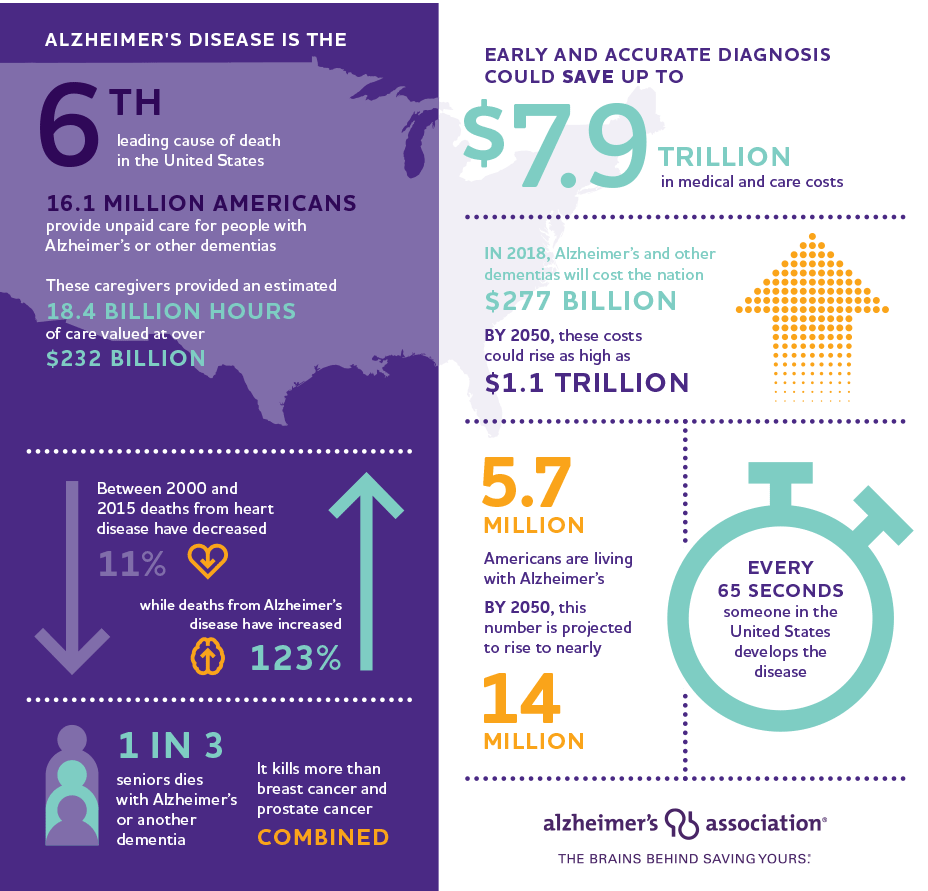
WASHINGTON — U.S. Senator Jerry Moran (R-Kan.) was recently awarded the inaugural Dennis Moore Alzheimer Champion Award, named in honor of former Kansas Congressman Dennis Moore, by the Alzheimer’s Association of Central and Western Kansas. Sen. Moran was presented this award at the first-ever Alzheimer’s Association of Central and Western Kansas Memory Gala in Wichita, which raised more than $384,000 for Alzheimer’s research.
“Senator Jerry Moran is a tireless advocate for those living with Alzheimer’s disease and for their caregivers,” said Dennis and Stephene Moore. “We appreciate that he recognizes that as Democrats and Republicans we must put our partisan views aside and move forward together to further research and find a cure for this disease.”
“Senator Moran was nominated and recognized by the CWKS board of directors as someone who has been a true advocate for the mission of the Alzheimer’s Association,”said Alzheimer’s Association of Central and Western Kansas Board of Directors Secretary Dr. Stephen Benson. “He has shown that Alzheimer’s affects many and does not discriminate based on political party. His work has been instrumental in our efforts for an effective treatment or cure.”
“Dennis and I served together in Congress for 12 years and I have the greatest respect for and Stephene, which is why I’m so honored to receive this award in his name,” said Sen. Moran. “I am grateful to the Moore family and the Alzheimer’s Association of Central and Western Kansas for recognizing my work – I will continue advocating for Alzheimer’s funding and research.”
As a member of Senate Appropriations Committee, the Congressional Task Force on Alzheimer’s Disease and co-chair of the Senate NIH Caucus, Sen. Moran has worked to increase Alzheimer’s research funding by more than $400 million in FY16 and FY17 and continues advocating for another $400 million increase for FY18.
Gov. celebrates vocational rehabilitation counselors

DCF
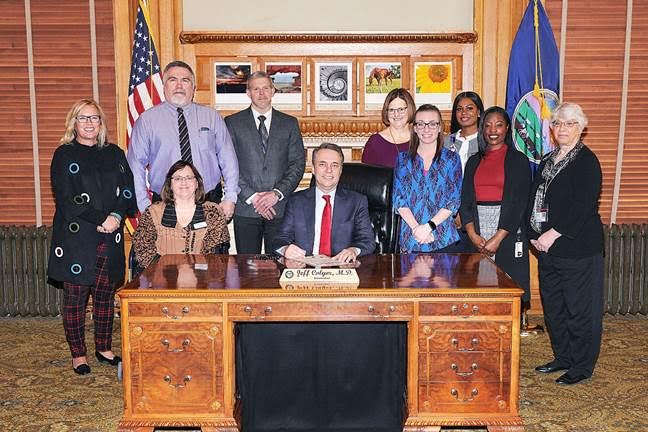
TOPEKA – Recognizing the career potential of people with disabilities and affirming the importance of work in the psychological well-being of these individuals, Governor Jeff Colyer signed a proclamation earlier this month highlighting the work that vocational rehabilitation counselors do to empower Kansans with disabilities. March is Vocational Rehabilitation Counselor Appreciation Month.
On March 1, at the State Capitol Building, Topeka, Governor Colyer met with several Kansas Department for Children and Families (DCF) vocational rehabilitation counselors to thank them for their service and to learn more about the accomplishments of DCF’s Vocational Rehabilitation (VR) division.
“The work that Vocational Rehabilitation Counselors do is vitally important because they are lifting up some of the most vulnerable Kansans and giving them purpose and hope,” Governor Jeff Colyer said.
DCF’s Acting Rehabilitation Services Director, Peg Spencer, shared some of the successes of the agency with Governor Colyer, stating that the agency has assisted more than 14,535 Kansans with disabilities become employed in the past 10 years. These clients are now filling positions in high-demand jobs, such as registered nurses, accountants, teachers and software developers.
James Tucker, Vocational Rehabilitation Counselor, Overland Park, said that VR services help level the playing field for people with disabilities and assist them to gain employment.
Angela Roberson, Vocational Rehabilitation Counselor, Topeka, said that she had client who is deaf and was receiving disability benefits, but that she wanted to work as a warehouse associate.
“We worked hard, and now she is successfully employed working as a warehouse associate, making $14 an hour,” said Roberson. “She was able to get off disability and receive health benefits through her employer. She loves her job, and Vocational Rehabilitation Services even helped her get hearing aids to help her at her job.”
DCF currently employs 68 counselors who provided services for 10,149 Kansans in fiscal year 2017. Approximately 75 percent of those who achieved employment through the VR program report their wages as their primary source of income, an indicator of the decrease of reliance on public assistance.
“It is so encouraging to hear about how these counselors are playing an integral part of their clients’ lives,” DCF Secretary Gina Meier-Hummel said. “I appreciate their dedication, because they work day in and day out to empower Kansans with disabilities to realize their full potential and help them gain competitive employment.”
Senate passes Sen. Moran’s bill to provide disabled VA veteran employees additional paid leave
WASHINGTON – The U.S. Senate unanimously passed S. 899, a bill authored by Senators Jerry Moran (R-Kan.), Mazie K. Hirono (D-Hawaii) and Jon Tester (D-Mont.) – members of the Senate Veterans Affairs Committee – to ensure veterans with a disability rating of 30 percent or higher who are hired by the VA in critical medical positions can access additional paid sick leave during their first year on the job for the purposes of receiving medical care related to their service-connected condition.
“The Senate took important steps today to help service-disabled veterans better transition into the federal workforce and civilian life,” said Sen. Moran. “This legislation builds on the Wounded Warriors Federal Leave Act to make certain veterans who sustained wounds or injuries while defending our nation can take time off to seek medical treatment without impacting their livelihood or paycheck. Veterans in Kansas and across the country with service-related disabilities have earned greater flexibility in the workplace to receive the care they need, and I urge my colleagues in the House to quickly pass this sensible legislation.”
“This is common-sense legislation that will ensure the VA’s disabled veteran employees receive the same additional paid sick leave that is available to other federal agency employees,” said Sen. Hirono. “The Senate today affirmed how important it is to eliminate barriers our disabled veterans face to continue serving our country at the VA as this critical agency works to fill tens of thousands of vacancies at its medical facilities in Hawaii and across the country.”
“Veterans looking to serve their fellow veterans by working at the VA should not have to choose between a paycheck or a doctor’s appointment,” said Sen. Tester. “This bipartisan bill strengthens workforce protections for our veterans and establishes better working conditions for those who fought for our freedoms.”
Since the Wounded Warriors Federal Leave Act – led by Sen. Moran – became law in November 2016, 104 hours of additional paid sick leave has been available to newly hired service-disabled veterans for positions in the federal government. The law currently applies to most federal agencies, but personnel occupying certain VA medical positions are not currently eligible.
S. 899 will ensure all newly hired VA physicians, physician assistants, registered nurses, chiropractors, podiatrists, optometrists, dentists and expanded-function dental auxiliaries who are service-disabled veterans will not have to face the added financial hardship of taking unpaid leave to receive necessary medical treatment. With this benefit expanded to these VA medical positions, disabled veterans may be more incentivized to apply and fill the more than 18,000 vacancies for medical personnel across the VA health system, including 118 vacancies in Kansas.
The VA Veteran Transition Improvement Act is supported by the American Legion, Veterans of Foreign Wars (VFW), National Association of VA Physicians and Dentists (NAVAPD), Nurses Organization of Veterans Affairs (NOVA), Paralyzed Veterans of America (PVA), Disabled American Veterans, American Federation of Government Employees (AFGE), National Federation of Federal Employees (NFFE), Service Employees International Union – National Association of Government Employees (SEIU-NAGE), and the Federal Managers Association (FMA).
Sen. Moran introduces bipartisan legislation to stabilize, improve Postal Service
WASHINGTON – U.S. Senators Jerry Moran (R-Kan.), Claire McCaskill (D-Mo.), Tom Carper (D-Del.) and Heidi Heitkamp (D-N.D.) today introduced The Postal Service Reform Act of 2018: Improving Postal Operations, Service, and Transparency to stabilize, preserve and improve the Postal Service – an essential part of our nation’s infrastructure and economy.
The financial condition of the Postal Service, which operates at the center of a $1.4 trillion industry and employs more than seven million people, has been deteriorating for years. Despite the Postal Service setting a record on Dec. 18, 2017, when it delivered more than 37 million packages – the most packages delivered in a single day in their over 200-year history – the Postal Service saw a net loss for the first quarter totaling $540 million. In addition to reporting net losses for the 11th year in a row and defaulting on its legally mandated multi-billion-dollar retiree health prefunding payments yet again, the Postal Service also, for the first time, missed payments it owes to the federal retirement system in 2017 – for a combined total of $6.9 billion. For years, the onerous pre-funding schedule for future retiree healthcare obligations has put the Postal Service in a place where it must cut costs – often at the price of service – and ultimately prevents the Postal Service from investing in the infrastructure it so desperately needs.
The Postal Service Reform Act of 2018 includes comprehensive reforms that would put the Postal Service on firm financial footing, stabilize and improve service performance, allow for the development of new products and services, and enhance transparency.
“The U.S. Postal Service has a significant history in Kansas – dating back to the Pony Express – and it continues to play a vital role in the American economy, especially in Kansas’ rural communities,” said Sen. Moran. “Rural America depends on a reliable Postal Service. USPS’s deteriorating financial condition threatens its future and the well-being of the communities it serves. In order to provide certainty for rural America and protect taxpayers, Congress must act to put the Postal Service on a more sustainable path. This bipartisan legislation would provide some much needed stability, preserving and improving mail services across Kansas and the country.”
“Post office access and efficient service are issues that families and businesses in rural Missouri care about, and we’ve got to do what it takes to ensure the service they’ve relied on for generations stays intact,” said Sen. McCaskill. “This is an issue where we can and should continue to work together across the aisle and I’m committed to doing exactly that.”
“Nearly two and a half centuries after its founding, the Postal Service remains an important part of our everyday lives and plays a vital role in our economy,” said Sen. Carper. “But it continues to lose money at a record pace. Our economy still depends on a healthy and robust Postal Service. It’s our duty in Congress to pave a fiscally sustainable path that will enable this American institution to thrive.”
“There is no substitute for the Postal Service in rural America,” said Sen. Heitkamp. “From receiving daily newspapers and prescriptions, to shipping products around the nation, families and businesses across the country rely on getting their mail on time in an accessible, affordable manner. Congress needs to act now to stabilize the Postal Service and give it the tools it needs to thrive – otherwise it will go insolvent, taking this critical service away from rural communities that need it. Across North Dakota, I’ve heard about problems with mail delivery and service and I’ve pushed for changes from the Postal Service through my Fix My Mail initiative. Now, our bipartisan, comprehensive bill would reform the Postal Service, put it on firmer financial footing, and help improve mail delivery and service in rural communities. Far too often, rural America gets the short end of the stick, and Congress needs to step up and pass our bill so the Postal Service can fully function and remain the great equalizer that enables Americans no matter where they live to get reliable, affordable mail delivery.”
Stakeholders in the industry also support the bill:
“It is vital that Congress act promptly to pass legislation that will ensure affordable, reliable mail service six days a week,” said Don Hall, CEO of Hallmark Cards, Inc. “I applaud the leadership of Senators Carper, Moran, Heitkamp and McCaskill in crafting legislation to achieve that goal and respond to the concerns of leaders in the House of Representatives.”
“The Association of Magazine Media commends Senators Carper, Moran, Heitkamp, and McCaskill for their leadership,” said Linda Thomas Brooks, president and CEO. “The introduction of this bill is an important first step toward securing the future of the American postal system and the many industries that rely on it to do business – including our own.”
“The very broad business mailing community represented by the Coalition for a 21st Century Postal Service endorses the Postal Reform Act of 2018 and appreciates the hard work by the bipartisan sponsors to get to this point. The extreme financial challenges overhanging the Postal Service have been evident and building for a number of years, with a day of real reckoning coming later this year. The industry and other stakeholders have sought help only Congress can give throughout this time to no avail. Now is the time for Congress to act before it must bail out the system with taxpayer dollars or radically shrink it.”
“The United Postmasters and Managers of America (UPMA) applauds the efforts of Senators Carper, Moran, Heitkamp and McCaskill in introducing bipartisan legislation to further the goal of providing financial relief to the U.S Postal Service, helping safeguard a universal postal system, and encouraging innovation,” said UPMA co-presidents Tony Leonardi and Sean Acord. “UPMA looks forward to continue working with these Senators and other members of Congress to sustain the U.S. Postal Service, a proven national treasure.”
“NNA supports the hard work these bill sponsors have done to ensure a reliable and affordable mail service,” said Susan Rowell, publisher of the Lancaster (SC) News, and president of the National Newspaper Association. “Congress has lingered far too long over the needed corrections in postal policy, and as a result the continuation of this service is ever more seriously at risk. Our elected officials know the Postal Service must have a better set of laws for its operation, and they ignore this need at the peril of all of us who rely upon the mail. We strongly urge the Senate to take up this bill and give this proposal, which has bipartisan support, an opportunity to pass this year.”
Over the last several Congresses, Sens. Moran, Carper, Heitkamp and McCaskill have held numerous briefings, roundtables and meetings with members on both sides of the aisle and postal stakeholders to assess the hurdles facing the Postal Service, identify the tools the Postal Service needs to innovate and thrive in the 21st century, and find a way forward on postal reform.
Specifically, the Postal Service Reform Act of 2018:
Increases Sustainability: The Postal Service Reform Act eliminates the existing statutory payment schedule, cancels any outstanding payments, and amortizes payments over 40 years. The bill would also create a new Postal Service Health Benefits Program (PSHBP) within FEHBP, implemented and administered by OPM, for all postal employees and annuitants and require all Medicare-eligible postal annuitants and employees enrolled in the PSHBP to also enroll in Medicare, including parts A, B and D. This is essential for protecting the American taxpayer from a future bailout and for protecting the employees’ benefits in retirement.
Improves and Stabilizes Postal Service and Operations: The price of postage is decreased pursuant to federal court orders last Congress, eliminating the positive revenue stream from the exigent rate case in 2014. As the result of a compromise among the postal community, the bill restores the half of the temporary rate increase while freezing any further rate increases until a new rate system can be finalized by the Postal Regulatory Commission.
Prioritizes the Postal Customer with Service Improvements & Protections: The bill includes strong service reforms that put the postal customer first by improving mail service performance across the country—especially in rural America—while also requiring transparency and enforcement to ensure the Postal Service’s accountability. Service performance would also be stabilized by preserving current service standards for at least 2-years.
Innovates and Modernizes Existing Postal Business Model and Increases Transparency: The bill also allows the Postal Service to introduce new non-postal products and services, ship beer, wine and distilled spirits, and partner with state and local governments in offering government services.
The Postal Service Reform Act also increases transparency of Postal Service delivery results and would require that all delivery and retail performance results are posted in a transparent and user-friendly way.
Kansas Republican Party hires Jim Joice as Executive Director

KRP
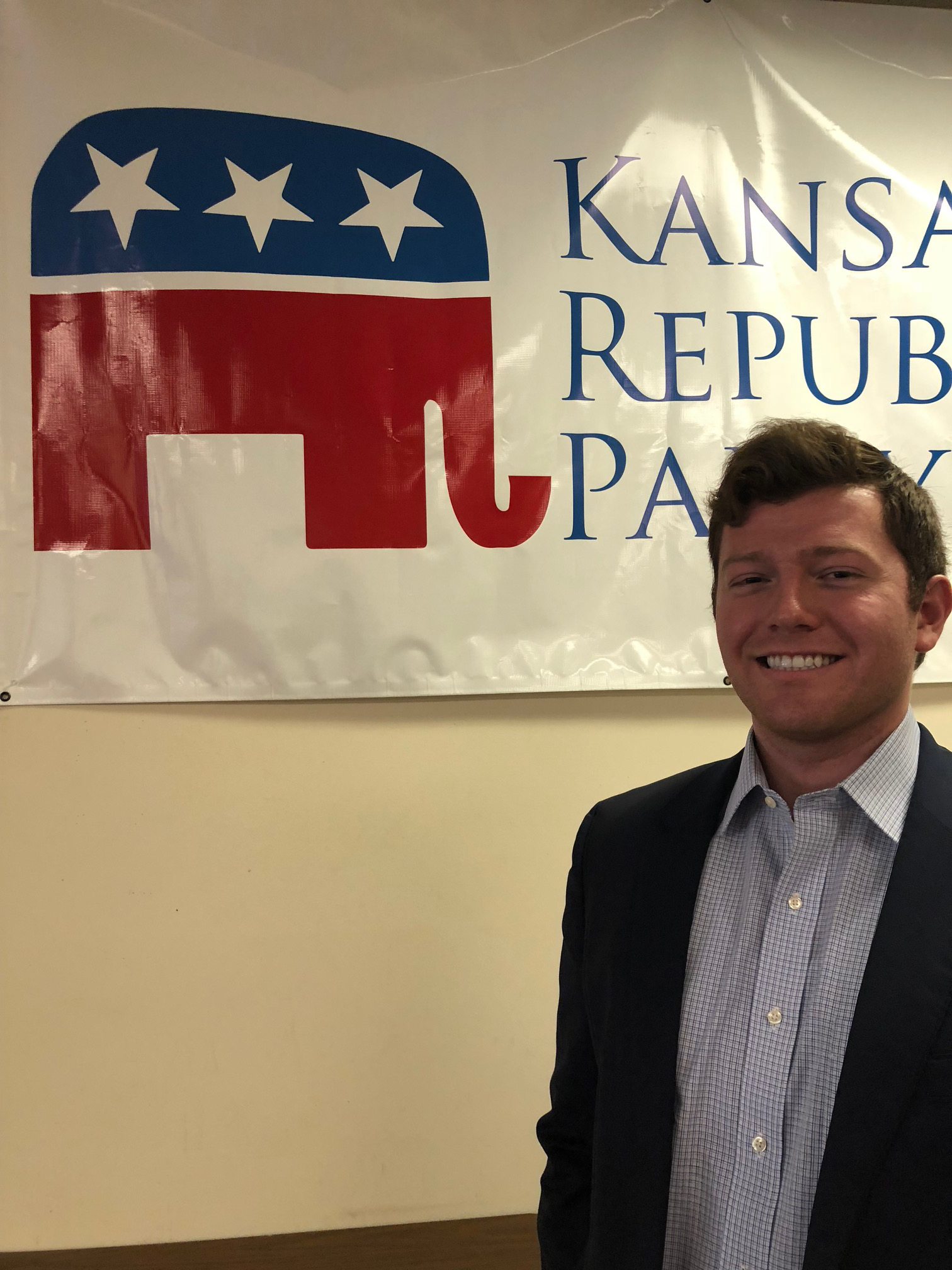
TOPEKA – The Kansas Republican party is proud to announce Jim Joice as Executive Director.
“It’s time to refocus, revamp, and re-engage,” said Chairman Kelly Arnold. “We are all too familiar with the Democrat’s devastating policies, and persistent attacks on our freedoms. We cannot allow them to take control of Congress or Topeka. We cannot become complacent in our recent success. We must continue to promote not only our Republican values, but our Kansas values. Jim Joice’s Kansas campaign and policy experience makes him perfectly suited for this task.”
Joice is a native of Leawood and attended Kansas University. He started his career working for Congressman Kevin Yoder on his official and campaign staff and then served with Kansas Senate Majority Leader Jim Denning’s office. He most recently served as campaign manager for gubernatorial candidate Mark Hutton.
“We will be challenged this year, and in typical Kansas Republican fashion, we will rise to the occasion. We will show up to the polls as a unified Republican party and we will win. We will retain our Congressional stronghold, we will retain residency at Cedar Crest, and we will retain and refill our majorities in the statehouse,” Joice said.
“We will be active on every ballot, top to bottom. One thing is certain, we will not get out worked,” Joice said.
Poisonings and medicine mishaps can happen anywhere, anytime
KDHE
TOPEKA – Did you know that last year nearly 60 percent of the human exposures reported to the Kansas Poison Control Center involved medications or pharmaceuticals? Most over-the-counter and prescription medicines can be helpful when taken as directed. However, when not taken properly, medicines can be harmful, and in some cases deadly. Medication errors can occur at any age, which is why it’s important for everyone to be aware of proper medicine safety.
“Any medication, prescription or over-the-counter, can be poisonous when used in the wrong way, by the wrong person, or in the wrong amount,” said Cherie Sage from Safe Kids Kansas. “Be sure to read labels carefully and follow directions. If you have questions, contact your doctor, pharmacist, or call the Poison Help line for information.”
National Poison Prevention Week is March 18 – 24, 2018.
By taking a few precautions, you can help keep you and your loved ones safe from poison emergencies.
Children – As we know, young children are curious and act fast. Therefore, it’s vital to use and store medicine around children properly:
- Always store medicines up, away, and out of sight of children.
- Read each medicine’s label and always give “as directed” (use the dosing device that comes with the medicine) or as instructed by a physician or pharmacist.
Adolescents – Youth begin to self-medicate around 11 years old (5th and 6th grade), which is why it’s important that parents, teachers, and guardians discuss the safe use and storage of medicines with tweens:
- Learn to read, understand, and follow the Drug Facts label.
- Never share your medicine with someone else or use someone else’s medicine.
- Measure every dose carefully, and always use the dosing device that comes with the medicine.
- Be sure to get permission and guidance from a parent or trusted adult before taking medicines.
- Parents and caregivers can find out how to start the conversation about over-the-counter medicine safety here: https://www.scholastic.com/otcmedsafety/
Adults – Between taking care of their children and parents, many adults forget about the importance of their own medicine safety. However, a few simple steps can help prevent poisonings and overdoses:
- Be prepared for any poison emergency by programming the Poison Help line into your phone, 1-800-222-1222, and placing it somewhere visible in your home.
- Properly getting rid of medicine that you don’t need is especially important if you have children or pets in your home.
- Keep medicines in their original containers and properly labeled. If you have any questions about a medicine or ingredient, call your local poison center.
Older Adults – About one-third of adults 57 years and older use at least 5 different prescription medicines, and most older adults taking prescription medicines are also using over-the-counter medicines, dietary supplements, or both. Due to the increase in medicines, older adults are twice as likely as others to come to emergency departments for adverse drug events and nearly seven times more likely to be hospitalized after an emergency. As more and more patients receive care from more than one provider and even more than one pharmacy to meet their pharmaceutical needs, the patient remains the common denominator. Here’s how older adults can protect themselves from accidental poisonings and overdoses:
- Discuss ALL medications with your doctors and/or pharmacists, including prescription and over-the-counter medicines, and vitamins and supplements.
- Read and follow the directions for each of your medicines and take them exactly as directed.
- Keep a list of ALL medications that you are taking, including prescription and over-the-counter medicines, and vitamins and supplements, and bring the list whenever you go to doctor or drug store.
- Keep your medicines in child-resistant containers and up, away, and out of sight of children.
- If you need glasses, always use them when taking medications. Never take medications in the dark.
- If you experience adverse effects from a medicine or have any questions or concerns about a medicine, call your local poison center immediately at 1-800-222-1222.
For more medicine safety tips, visit safekids.org
Download tips on how to read a drug facts label at https://www.knowyourotcs.org/how-to-read/
About the Kansas Poison Control Center
The Poison Control Center at The University of Kansas Health System is a 24-hour health care information resource serving the entire state of Kansas. The Mission of the Kansas Poison Control Center is to provide immediate comprehensive patient treatment information on toxic exposures, while trying to reduce future poisonings through educational outreach. Be prepared for a poisoning emergency and program the Poison Help line into your mobile telephone today – 1 (800) 222-1222.