We have a brand new updated website! Click here to check it out!

Entries open for Kansas Water Office photo contest

2018 Winner of Grows on Water: Backyard Visitor by Chuck Gibson, Jewell

KWO

TOPEKA – Welcome to the 2019 Kansas Water Office Photo Contest. Kansas is filled with amazing scenery, and photographers like you are the reason everyone can enjoy it’s beauty.

KWO will be accepting photos August 14 through October 11, 2019. Lakes & Landscapes, Sunrises & Sunsets, Grows on Water, Water at Play, Creativity with water and a Youth Division for those 18 and under will be the categories again this year.

See below for more details on the contest, including deadlines, information on the categories and to view past photo winners. Please remember to submit all of the requested information with your pictures.

KWO Photo Contest

Categories

Please remember that water must be visible in all pictures.

Lake/Landscape:   What amazing scenery Kansas can provide us. Whether on the water or off, in the hills or in the plains please share your images here of any and all bodies of water and landscapes during any season.

Sunrise/Sunset:  Kansas has beautiful skies that can be even more beautiful when viewed over water. If you have a photo showcasing the wonders of a Kansas sunrise/sunset taken around water, please submit it to this category.

Grows on water:  Images submitted to this category cover a wide variety of items including livestock, pets, wild animals, irrigation/farming or other items that would grow by using water.

Water at play:  Images submitted to this category should showcase any of your recreational photos whether kayaking/boating, fishing/hunting, swimming, or just plain playing in the water.

Creativity with water:  Seriously….get creative! Did you skip a rock across the water, did you make a giant wave, capture an image of water drops? Use your imagination.

Youth Division – All Things Water:   This division will be submitted and judged separate from the categories above. No category for this division, just anything water related. If you have a photo that showcases water in Kansas and are 18 years old or younger please submit it here.

Eligibility

Only pictures taken in Kansas are eligible to enter the contest. We ask that all photo submissions are not digitally manipulated or enhanced. Photos that have been altered will be disqualified. Photos that have been edited using Instagram filters will not be accepted. Normal cropping, color correction, etc. are acceptable. Please remove watermarks/trademarks before entering.

Judged on creativity and photo composition, winning photos will be used on the department’s website, social media, publications, brochures, and may be displayed around the KWO building. Prior photo submissions to the KWO contest are not eligible for reentry, but photos taken before 2018 are acceptable.

How to Enter

The contest is open to Kansas residents only.

Photo entries should be submitted by emailing high resolution photos to [email protected].

Entries must include:

  • A title and brief description of each photo
  • When and where the photo was taken
  • Photographer’s full name
  • Email address
  • And Category being entered

Judging Criteria

The KWO staff and select Water Authority Member’s will vote on the entries to select fifteen images, the top three from each category. These will then be displayed and voted on at the Governor’s Water Conference in November by conference attendees.

Prizes

The top three photos will be displayed in the Kansas Water Office and Kansas Capitol. The winning photo will be featured at the 2019 Governor’s Conference on the Future of Water in Kansas.

Terms

By submitting photos, the photographer gives the Kansas Water Office permission to use the photos in any publications, social media, websites, displays and other places without payment or other consideration. Additionally, by submitting a photo that includes human subjects, the photographer is indicating that they have obtained full permission from those subjects for the photograph to be used in department medium as well.

Kansas HPV vaccine rates improve significantly

KDHE

TOPEKA – Today, the National Immunization Survey regarding Teens released its annual report for 2018 which shows Kansas is improving in vaccine rates for HPV and MenACWY and remaining consistent with Tdap. This report is available in the Morbidity and Mortality Weekly Report from the Centers for Disease Control and Prevention.

The survey, which is conducted among teens ages 13 to 17, monitors the vaccines received by adolescents, specifically HPV, MenACWY and Tdap.*

“In 2014, Kansas had the lowest coverage in the nation for the HPV vaccine with only 34.4 percent of respondents reporting one or more doses received,” said KDHE Secretary Lee Norman, MD. “I’m very pleased to report that Kansas is now at 62.3 percent coverage in 2018, up significantly from 52.4 percent in 2017.”

Activities that have contributed to the increase in HPV Vaccination coverage, include:

  • Education for vaccine providers throughout the state during Vaccines For Children program site visits
  • Education provided at Kansas Immunization Conferences
  • Development of HPV Toolkit by the Immunize Kansas Coalition funded by the KDHE
  • Multiple partner organizations conducting efforts to increase awareness and importance of the HPV vaccine
  • Focus on the importance of provider recommendation to patients to receive the vaccine

Kansas has seen an average increase in HPV coverage of 6.3 percentage points annually since 2014 while the national average increase has been 4.4.

“One of the most significant factors to successful vaccination against HPV cancer appears to be a recommendation from a medical provider,” Secretary Norman said.

The survey demonstrates that, in Kansas for 2018, of those who received the recommendation from a medical provider, 69.5 percent received the vaccination while only 35.8 percent received the vaccination without a provider recommendation.

The Advisory Committee on Immunization Practices (ACIP) routinely recommends HPV vaccination at age 11 or 12. In addition, ACIP has recently updated their recommendation to include some adults up to age 45 based on the safety and effectiveness of this vaccine against some HPV cancers.[1]

The MenACWY vaccine coverage increased from 72.1 percent in 2017 to 75.3 percent in 2018. This school year, MenACWY has just become a required vaccination for school entry.

*Vaccine Description:

  • Tdap – protects against tetanus, diphtheria and pertussis. Recommended for ages 11-13. Healthy People 2020 target is 80 percent coverage. Kansas 2018 rate is 89.4 percent.
  • MenACWY – protects against certain strains of meningococcal disease. Recommended for ages 11-13 with a booster dose at age 16. Healthy People 2020 target is 80 percent. Kansas 2018 rate is 75.3 percent.
  • HPV – protects against HPV related cancers. Two dose series recommended for ages 11-13. Doses administered six months apart. If first dose is not given before 15th birthday, a three-dose series is needed. Healthy People 2020 target is 80 percent. The Kansas 2018 rate is 62.3 for one or more doses, 40.7 percent.

KU study examines how media frames climate change coverage

(Photo credit: Pexels.com)

KU NEWS SERVICE

LAWRENCE — Climate change is a problem facing countries around the world, but media coverage of the topic differs from one nation to the next. A new study from the University of Kansas shows the way media frame climate change coverage can be predicted by several national factors, yet none tend to frame it as an immediate problem requiring national policies to address the issue.

While richer countries tend to frame climate change coverage as a political issue, poorer countries more often frame it as an international issue that the world at large needs to address.

Hong Vu, KU School of Journalism and Mass Communication

“Media can tell people what to think about. At the same time, framing can have an effect on how people think about certain issues,” said Hong Vu, assistant professor of journalism at KU and the study’s lead author. “Not only can framing have an impact on how an issue is perceived but on whether and how policy is made on the issue. With big data, machine-learning techniques, we were able to analyze a large amount of media climate change coverage from 45 countries and territories from 2011 to 2015.”

Vu and co-authors Yuchen Liu, graduate student at KU; and Duc Vinh Tran of Hanoi University of Science and Technology published their findings in the journal Global Environmental Change. They analyzed over 37,000 articles and considered national factors such as economic development, weather and energy consumption. They reviewed headlines from nationally circulated publications of varying political ideologies that contained the keywords “greenhouse gas,” “climate change” and/or “global warming,” or the local language equivalent.

The most consistent predictor of how the issue was framed was a nation’s gross domestic product per capita.

“We showed that the issue is more politicized in richer countries. In poorer countries, it was framed more as an international issue,” Vu said. “Which makes sense, as poorer countries don’t have the resources that richer countries do to fight it.”

Even when richer countries framed the issue as one they could address with their more plentiful resources, it was often also framed as a political issue and would focus on debate or argument about political approaches as opposed to proposing policy solutions. Media from richer countries also focused more on the science of climate change.

When climate change was framed as an economic issue, it was in countries that had the most severe climates and those that have experienced the most adverse consequences of climate change and natural disasters, loss of life and property, and economic effects.

In terms of social progress framing, richer countries framed the issue in terms of energy policy and use. Those that emit the most carbon dioxide framed content in terms of energy issues, while poorer countries and those that had experienced the most severe climates focused more on natural impact.

The study also used independent nation-level variables from several databases, including the World Bank, the Center for Research on the Epidemiology of Disasters, the Global Carbon Atlas Project and Freedom House, all nongovernment organizations working in development or on climate change.

The authors argue that the international relations frame being the most widely used reflects the fact that climate change is a problem every nation needs to address. Economic effects being second most popular reflects that fighting climate change will have impacts on every economy and that when natural disasters and climate change were discussed, they were nearly always brought forth in an economic sense. They also contend that richer countries framing the issue as political reflects that climate change skeptics in those nations gaining more media prominence and the efforts of multiple groups trying to politicize the issue, influence media agendas and policymaking.

The study helps add to the understanding of media influence on climate change coverage, Vu said. Future work will address questions of framing the topic, if it’s done on local, national or global levels, if communicators suggest solutions, if such solutions are attributed to individuals, businesses or governments and efficacy of proposed solutions. Three decades of communications on the topic show there is not a sense of immediacy in covering the problem and influencing policy.

“As communications researchers we want to know why, if climate change entered public discussion more than 30 years ago and we’ve been covering it as a global problem since, why can’t we slow the warming climate down,” Vu said. “If we want the public to have better awareness of climate change, we need to have media imparting it in an immediate sense. By looking at how they have portrayed it, we can better understand how to improve it, and hopefully make it a priority that is reflected in policy.”

New Chief Information Technology Officer appointed for Kansas

Dr. DeAngela Burns-Wallace

OFFICE OF GOVERNOR

TOPEKA – Governor Laura Kelly has announced Kansas Department of Administration Secretary DeAngela Burns-Wallace will be the new Chief Information Technology Officer for the Kansas Office of Information Technology Services (OITS). The appointment is effective immediately, with the OITS duties done in addition to her work leading the Kansas Department of Administration.

“Secretary Burns-Wallace has the leadership skills and executive experience necessary for a successful Chief Information Technology Officer to possess,” Governor Kelly said. “Our state’s computer systems are vulnerable to both domestic and international security threats. Secretary Burns-Wallace understands these threats and will ensure that our state’s infrastructure is prepared to handle them and keep Kansans’ information secure.”

Prior to joining the Kelly administration earlier this year, Burns-Wallace served as vice provost of undergraduate studies at the University of Kansas. Previously, Burns-Wallace was assistant vice provost for undergraduate studies at the University of Missouri. She earned a bachelor’s degree in international relations from Stanford University, a master’s degree in public policy and international affairs from Princeton University and a doctorate in higher education management from the University of Pennsylvania.

“I’m honored to be selected by Governor Kelly to serve in this important role,” Secretary Burns-Wallace said. “I believe in public service and I look forward to working with Governor Kelly, the Legislature and the OITS and Department of Administration teams to serve the people of Kansas. We must ensure that the state has the IT systems in place to conduct its daily business and maintain the safety and security of our data in today’s ever-changing and interconnected world.”

OITS was created under Governor Sam Brownback. Previously, OITS was known as the Division of Information Systems and Communication (DISC) and was a division of the Kansas Department of Administration. OITS is an independent agency, but the two agencies still maintain close operational relationships in several areas because the transition was never completed.

“The relationship OITS has had with the rest of state government has been challenging, and communication between the agency and its customers has been difficult. This was not the fault of the agency’s previous leadership. It is, however, a direct result of the fact that the previous administration split OITS from the Department of Administration and then failed to properly support the move, convey its mission and get buy-in from the rest of state government,” Kelly said.

Burns-Wallace replaces Lee Allen, who has decided to leave the agency.

“I appreciate the work Lee has done for OITS, and thank him for his service to the State of Kansas,” Governor Kelly said.

Kansas is first state to propose including children in HCBS brain injury waiver

KDADS

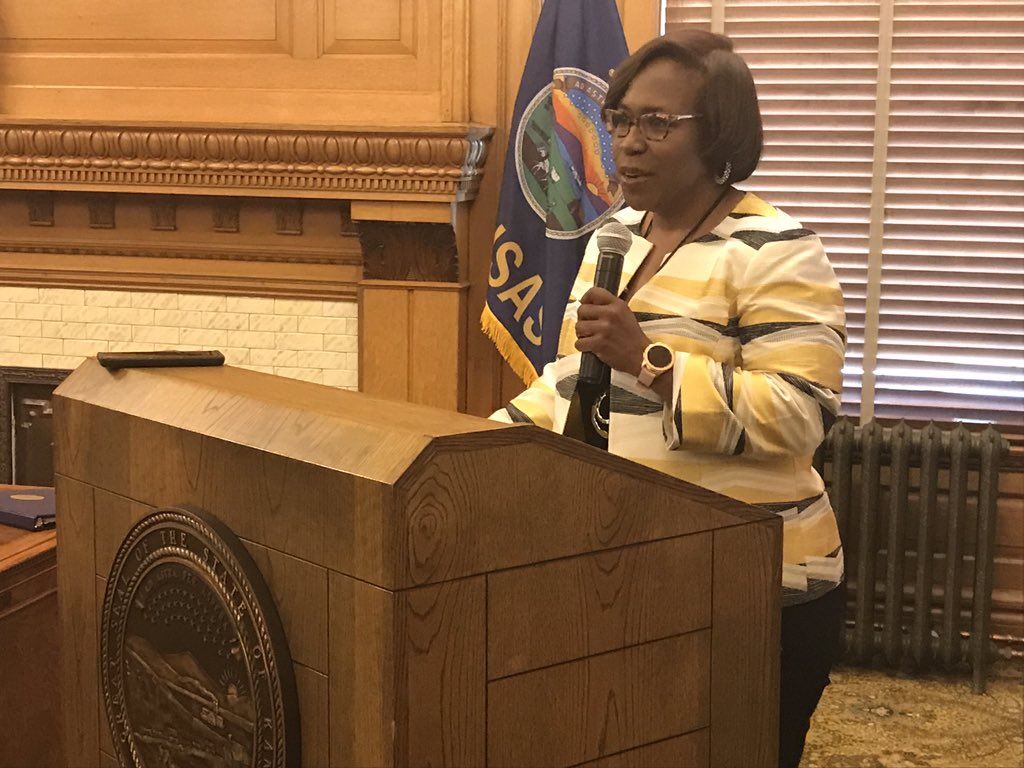
TOPEKA – The Kansas Department for Aging and Disability Services (KDADS) is pleased to announce the federal Centers for Medicare and Medicaid Services (CMS) recently approved its Brain Injury Waiver to include both acquired and traumatic brain injuries for individuals ages 16 years and older.

“Secretary Howard and her team at KDADS have accomplished what is a true collaboration between her agency and interested stakeholders and community partners,” Governor Laura Kelly said. “I believe expanding inclusion for this wavier will positively impact many Kansans and I’m grateful for the time and effort so many people put into making it happen.”

In accordance with a legislative proviso, the expanded waiver makes eligible for services under the traumatic brain injury home and community-based services (HCBS) waiver under the Kansas medical assistance program (KanCare):

1. Individuals with a documented brain injury acquired from a cause not already covered under the traumatic brain injury waiver, including, but not limited to, stroke, brain trauma, infection of the brain, brain tumor, anorexia or other cause; and

2. Individuals of any age who would otherwise qualify for services under the traumatic brain injury waiver but for the individual’s age.

“Working with the legislature and collaborating with partners is part of my team’s commitment to continue the long-standing leadership in home and community-based services people expect from KDADS,” Secretary Howard said. “We will continue to look at and talk about innovative ways to approach waiver renewals from a people-first perspective.”

KDADS plans to submit an amendment to CMS later this year to include children younger than age 16 years. Kansas is the first state to propose including children in its brain injury waiver.

Taiwan Agricultural Youth Exchange accepting applications

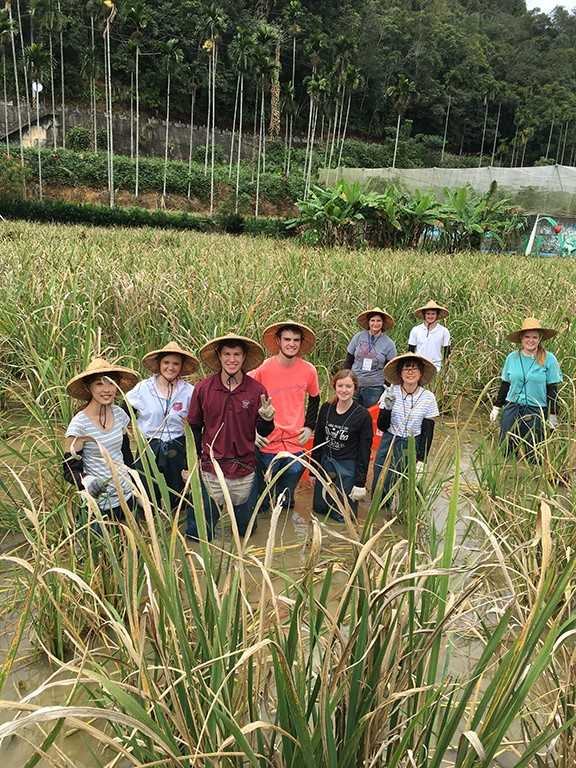
Participants in the 2018 Taiwan Agricultural Youth Exchange Program cut down water bamboo during this hands-on agricultural experience in Taiwan.

KDA

MANHATTAN — The 2019 Taiwan Agricultural Youth Exchange Program is currently accepting applications from high school seniors or college freshmen who are passionate about agriculture and are interested in representing Kansas in a week-long exchange program October 26 through November 3, 2019.

Each year the National Taichung Agricultural Senior High School in central Taiwan hosts students from the U.S. Midwest for this program. Selected students will tour agricultural facilities and businesses in Taiwan and learn about Taiwanese agriculture.

“The entire experience was amazing,” said Sage Collins, 2018 program participant. “Immersing myself in a new culture, experiencing all the aspects of Taiwan and learning about their agricultural practices was an eye-opening experience for me.”

Exports play an important role in Kansas agriculture. According to Euromonitor, Kansas exported over $129 million in agriculture products to Taiwan in 2018, including beef, oil seeds, cereal grains and wheat flour. Globally, exports of agriculture products contributed over $3.6 billion to the Kansas economy in 2018.

Kansas students joined other U.S. students for this visit to the Taiwan mountains in November 2018 as part of the Taiwan Agricultural Youth Exchange Program.

“The Taiwan Agricultural Youth Exchange Program is a tremendous opportunity for students who have an interest in agriculture,” said Suzanne Ryan-Numrich, international trade director for the Kansas Department of Agriculture. “Students are able to return from Taiwan with a broader understanding of international agriculture and the role that exports play in their local communities.”

Two students will be selected to represent Kansas. To be eligible to apply, students must meet the following requirements:

  • High school senior or college freshman.
  • At least 18 years of age by the beginning of the trip.
  • Strong Kansas agricultural background.
  • Valid U.S. passport by time of exchange program selection.
  • Able and willing to pay for airfare costs (approximately $1,000).

Applications must be submitted by August 30 for the student to be considered. Students interested in applying can find more information at agriculture.ks.gov/AgEd.  The Taiwan Agricultural Youth Exchange Program is sponsored by the Kansas Department of Agriculture, the Kansas FFA Association and Kansas 4-H.

For more information, contact Robin Blume, KDA education and events coordinator, at [email protected] or 785-564-6756.

Kansas Lottery transfers more money to state this fiscal year

KS LOTTERY

TOPEKA – The Kansas Lottery is pleased to announce it transferred more revenue to the State of Kansas in Fiscal Year 2019 than in Fiscal Year 2018.

The combined transfer from the traditional lottery and state-owned and operated casino gaming revenue totaled $173.6 million.

The total revenue transferred to the State through traditional lottery game sales was $74.9 million. Revenue transferred from state-owned and operated casino gaming totaled $98.7 million. Kansas Lottery retailers saw record commissions in FY19 of $17.3 million.

Traditional lottery sales in Fiscal Year 2019 were $295.3 million. Lottery sales were 9.79 percent higher than in FY18 when sales were $268.9 million.

“It’s the Kansas Lottery’s mission to engage our players in a fun and secure way while also doing our best to try and maximize a return to the State,” said Kansas Lottery Executive Director Stephen Durrell. “We do that by looking at ways to keep our players interested and excited about our games. The Lottery is continuing to add new games and second-chance promotions that offer unique experiences, and we thank all of our players and retailers for their continued support.”

A portion of proceeds from traditional lottery sales was dedicated to paying for the 272 Lottery vending machines being rolled out to select retailers across the state. The Kansas Lottery avoided interest and financing costs by paying for the vending machines from operating funds.

“Our vending machine roll-out has been methodical as we try to look for the best retailers to maximize the effectiveness of the machines,” Durrell said. “We look forward to the opportunity for increasing our sales and transfer to the state through vending machine sales. Vending machines offer easier access for our players to find their favorite games and takes the burden off our retailers during times of high retail sales.”

The Kansas Lottery also transferred a combined $8.3 million to the Problem Gambling and Addictions Grant Fund. The transfer included $80,000 from traditional lottery games and $8.22 million from state-owned and operated casino gaming, as required by state law.

“The Kansas Lottery values its relationship with the four managers the State contracted with to manage these casinos,” Durrell continued. “The casinos generate millions of dollars for the state and helps the Lottery accomplish its mission by maximizing the State’s revenue.”

Where Does the Money Go?

Traditional Lottery Revenue
Traditional lottery revenue goes into the State Gaming Revenues Fund. On a yearly basis, the first $50 million is divided by a formula which first transfers $80,000 to the Problem Gambling and Addictions Grant Fund. Then 85 percent of the balance is transferred to the
Economic Development Initiatives Fund, 10 percent to the Correctional Institutions Building Fund, and 5 percent to the Juvenile Detention Facilities Fund.

The Economic Development Initiatives Fund supports state programs that create and retain jobs in Kansas. Those include Kansas Department of Commerce programs, Tourism and Parks programs in the Kansas Department of Wildlife & Parks, the Kansas Board of
Regents for vocational education programs, and many more.

Other portions of traditional lottery revenue are specifically appropriated for veterans’ programs and, beginning in Fiscal Year 2020, mental health programs. All other net revenues in excess of $50 million must be transferred to the State General Fund. In Fiscal Year 2020, up to $8 million of the net profits generated from vending machine sales will be directed to mental health programs throughout the state.

Veterans Games
Included in the Fiscal Year 2019 transfer of traditional lottery was $1.2 million from the sale of special $1 and $2 Veterans Benefit instant scratch tickets. Proceeds from the tickets go to state programs benefiting Kansas Military veterans. Some of the programs include Veterans Enhanced Service Delivery Program, National Guard scholarships and Kansas Veterans homes and cemeteries.

Expanded Lottery (Casino) Revenue
The 2007 Kansas Expanded Lottery Act created the Expanded Lottery Act Revenues Fund (ELARF). The State’s share of revenue from state-owned and -operated casino gaming is transferred from the ELARF for purposes of reduction of state debt, state infrastructure improvements and reduction of local ad valorem tax; and/or for other purposes as directed by the Kansas Legislature, such as Kan-Grow Engineering Funds at state universities and the reduction of unfunded actuarial liability of the Kansas Public Employees Retirement
System (KPERS).

Governor appoints two members to Humanities Kansas

OFFICE OF GOVERNOR

TOPEKA – Governor Laura Kelly appointed Brad Allen and Lisa Sisley to Humanities Kansas, which was formerly named the Kansas Humanities Council.

“The Humanities Kansas board is dedicated to ensuring that people across our state have access to programs to help enrich their communities,” Kelly said. “Brad and Lisa are passionate about generating new ideas and strengthening our democracy. They will be a wonderful addition to the team.”

Brad Allen, Lawrence, has worked as the executive director of the Lawrence Public Library for seven years. Previously, he worked as the branch manager and programming coordinator for the Everett Public Library in Everett, Wash. Allen received a master’s degree in Afro-American Studies from the University of Wisconsin-Madison, a Master of Science in library and information science from University of Illinois at Urbana-Champaign and a bachelor’s degree in American studies and psychology from the University of Kansas.

Lisa Sisley, Manhattan, has worked as the principal for New Boston Creative Group, LLC, for 13 years. Previously, she worked as a writer for the dean’s office at Kansas State University’s College of Human Ecology, and owned Lisa Sisley Writing Services. Sisley earned a bachelor’s degree in English literature from Kansas State University.

Humanities Kansas is an independent nonprofit group that works to strengthen civic life by pioneering programming, grants and partnerships to connect communities with history, traditions and ideas. Kansans can visit www.humanitieskansas.org to request a speaker, explore stories about our state, find a humanities-related event nearby and more.

The governor’s appointments to Humanities Kansas are not subject to Senate confirmation.

KU study: Gender roles shape public attitudes about transgender military service

(Photo by iStock)

KU NEWS SERVICE

LAWRENCE — Attitudes toward transgender people have become increasingly scrutinized during the last few years. But those attitudes intersect with actual policy most visibly in the military.

A new research study titled “Public Attitudes on Transgender Military Service: The Role of Gender,” published in the current issue of Armed Forces & Society, examines how cultural opinion affects the shifts in acceptance.

Don Haider-Markel

“It fundamentally shows the values of not only egalitarianism and traditionalism but also the role of sex and gender conformity in shaping these attitudes,” said Don Haider-Markel, professor and chair of political science at the University of Kansas.

Together with KU Associate Professor Patrick Miller, Haider-Markel seeks to establish a more concrete frame of reference for this subject, as well as surveying how it’s both similar and distinct from gay and lesbian concerns.

“Significant portions of the public — around 30 percent — still don’t have clear attitudes on transgender policy-related issues. That itself is important so we get some kind of baseline for analysis. Only in the past seven or eight years did we get the first real national polling data about transgender issues. To even develop some initial measures and predictors of those attitudes is still relatively unique,” said Haider-Markel, whose co-authors also include Daniel Lewis, Barry Tadlock, Andrew Flores and Jami Taylor.

Their initial research hypothesized that “personal experiences with the military and with transgender people, along with values, personality predispositions and religion, are likely to influence individual attitudes.” They tested this using data from a unique 2015 national survey of American adults. The results suggest interactions, opinions on gender roles and religiosity had the most substantial (albeit conditional) effects on viewpoints regarding transgender military service.

Haider-Markel became interested in exploring this topic when he came across an unusual statistic discovered by the Williams Institute at UCLA School of Law: Transgender individuals are more likely to have served or be serving in the U.S. military when compared to the general population.

“Ironically, as an institution, the military is seen as one where gender norms are pretty rigid,” he said. “So it may actually be attractive to some transgender people prior to fully coming out. At the time when people enlisted or went to officer training school, they were perhaps trying to rigidly conform to a gender they had already started to feel uncomfortable with, and they thought the military might help.”

A veteran of the Air Force, Haider-Markel served until 1993. He may not have knowingly served with anyone transgender, but he says that was a genuine possibility.

“When I was 18 and in tech school, I was surprised at the number of male soldiers who on the weekend would leave the base and wear makeup or do other forms of cross-dressing or gender-nonconforming kinds of things,” he said. “But even in the mid-to-late 1980s, that was a big surprise to me.”

This latest research builds on the work of a group that has earned the nickname “Team Kansas.” After producing nine articles on the topic, Haider-Markel’s team published its first book: “The Remarkable Rise of Transgender Rights” (University of Michigan Press, 2018).

“It’s probably the most efficient and effective research team I’ve ever worked with,” he said.

Having spent 22 years at KU, Haider-Markel’s work focuses on public policy and public opinion, with an emphasis on civil rights, criminal justice and counterterrorism.

Earlier this year, the Trump administration reinstated a near-total ban on transgender individuals serving in the military. This was supposedly based on the “tremendous medical costs and disruption” of allowing these troops to serve.

Will Trump’s ban be overturned?

“I don’t know if it will be the next president or if it will be before that,” Haider-Markel said. “But the pathway is difficult to change. We can see these temporary setbacks, but the movement itself is well-established. A march toward full civil rights for LGBT people is just a matter of time.”

Arts in Medicine now accepting applications

KCAIC

TOPEKA  – Arts in Medicine, a partnership between the Kansas Creative Arts Industries Commission (KCAIC) and Emporia State University (ESU), is accepting applications from associations, agencies and organizations that provide medical services to Kansans.

If accepted, art therapy faculty and two second-year graduate art therapy students from Emporia State University will work with the applicant agency to build a medical arts program and schedule that meets the needs of specified populations.

Applicants should be interested in offering patients, clients, or staff art therapy services such as, but not limited to:

  • Group art therapy programming designed to meet the psycho-social needs of patients, care givers or medical personnel
  • Individual art therapy for patients receiving treatment (i.e. cancer treatments or transfusions)
  • Art-based workshops for medical personnel or clinicians in training (stress relief, group bonding, etc.)
  • Arts-based programs at special events (grief camps, open houses, etc.)

Applicants must be Kansas-based institutions, organizations or associations that provide medical services to Kansas residents. Applications are welcome from agencies that serve all age and developmental levels. Art experience and art skills are not necessary.

Applications are due by Sept. 6, 2019. Applications will be reviewed and evaluated by a panel including members of KCAIC, ESU and art therapy professionals.

To submit an application, visit https://kansascaic.submittable.com.

KDA marketing program receives national honor

Gift basket from Sunflower Food Company, Lenexa

KDA

MANHATTAN — The Kansas Department of Agriculture’s trademark program, From the Land of Kansas, was recognized in July 2019 with a national marketing award for its holiday gift box program.

KDA marketing program leaders attended the 99th North American Agricultural Marketing Officials (NAAMO) annual meeting in Philadelphia, where they were selected by their peers as the 2019 Marketing of Excellence winner for the From the Land of Kansas Holiday Gift Box program.

The holiday gift box program was launched in 2017, featuring high-quality products from multiple From the Land of Kansas trademark members packaged into gift boxes to celebrate the unique items available from Kansas businesses. The opportunity was welcomed by From the Land of Kansas members, and the gift boxes were a hit with customers, as the total sales far exceeded the estimates for both years of the program. Holiday gift boxes will be available again this fall at shop.fromthelandofkansas.com.

“We were pleased and honored to be chosen by our peers for this award and to join past recipients who we have long admired and respected,” said Janelle Dobbins, From the Land of Kansas marketing manager. “We have worked hard to build a From the Land of Kansas Holiday Gift Box program that celebrates our members and the wonderful products that Kansas has to offer.”

NAAMO is an international organization of the state and provincial government agricultural marketing officials who provide both domestic and international services to the agriculture and food industries in their states and provinces. An affiliate of NASDA (National Association of State Departments of Agriculture), the purpose of NAAMO is to provide its members with a forum to network, collaborate and share insights to enhance the development, marketing and promotion of North American food and agricultural products.

Gov. appoints two members to Kansas Board of Mortuary Arts

OFFICE OF GOVERNOR

TOPEKA – Governor Laura Kelly appointed Amy Elliott and reappointed Barry Bedene to the Kansas Board of Mortuary Arts.

“Barry and Amy are dedicated individuals, and we are fortunate to have them on our mortuary board,” Kelly said. “I know they will work hard to ensure safe and ethical practices among our state’s licensed embalmers.”

Barry Bedene, Arma, is a licensed embalmer and funeral director, and the owner of Bedene Funeral Home. He is a past president of District Three of the Kansas Funeral Directors Association; a member of the National Funeral Directors Association; served as a board member of the Crawford County Fire District Number Two for more than 20 years; served as a city council member in Arma for four years; and has served on several other boards and commissions. Bedene also served as a member of the Mortuary Arts Board for many years.

Amy Elliott, Lenexa, currently works as a lawyer in her firm, the Law Office of Amy E. Elliott. Previously, she worked as a legal assistant for the law firm Cohen, McNeile & Pappas, P.C. Elliott received a juris doctor, a bachelor’s degree in English and an associate degree in paralegal studies, all from Washburn University.

The board ensures that licensees who work in the practice of embalming perform their services in a manner that provides maximum protection of the health, safety and welfare of Kansans.

Three members of the board must hold an embalmer’s license issued by the state board of mortuary arts, must have five consecutive years of experience in the practice of embalming and must be currently engaged in the practice of embalming in Kansas. The other two members must be a representative of the general public and without an embalming license.

The governor’s appointments to the mortuary arts board are not subject to Senate confirmation.

2019 Prairie Festival upcoming at The Land Institute

Big Barn Lecture at The Land Institute Prairie Festival, Salina

SALINA –  Bill McKibben, well-known environmentalist, author, and co-founder of 350.org will headline The Land Institute’s annual event Prairie Festival September 27-29, 2019.

This year’s event addresses the timely and relevant topic of climate change and will look at how the current model of annual agriculture negatively contributes to the emission of greenhouse gasses. We seek to answer through our research and educational efforts, how we effect positive change to a perennial landscape.

Other presenters include: Eliza Gilkyson, twice Grammy-nominated musician; Ana Porzecanski, director of the Center for Biodiversity and Conservation at the American Museum of Natural History; Carolyn Finney, storyteller and author; Amory Lovins, co-founder of the Rocky Mountain Institute; and Francesca Cotrufo, associate head of the Department of Soil and Crop Sciences at Colorado State University.

The Festival offers a unique opportunity to interact with some of the world’s most compelling authors, thinkers, artists, and advocates focused on agriculture, food, the environment, science, sustainability, and social and environmental justice.

The Institute’s science staff provides research plot tours and an in-depth update on current plant breeding efforts, ecology work, and partnerships.

There will be food trucks, live music, a Friday night barn dance, sunrise yoga, and more. Come to the event that The New York Times called an “intellectual hootenanny” and what has become a remarkable can’t-miss event on the prairie.

For more information about the Festival, please see https://landinstitute.org/news-events/prairie-festival/ or contact us at 785-823-5376/[email protected].

– SUBMITTED –

Copyright Eagle Radio | FCC Public Files | EEO Public File