We have a brand new updated website! Click here to check it out!

$10M returned to Kansans during Kan. Treasurer’s tour

KS TREASURER OFFICE

TOPEKA – Kansas Treasurer Jake LaTurner completed his tour of all 105 counties to promote many of the initiatives and services administered by the Treasurer’s Office. LaTurner kicked off the tour in his hometown of Galena and ended it in Wichita, all in less than 5 months. The Treasurer and his staff provided free unclaimed property searches for Kansans in their home counties.

“We had some great stories throughout the tour,” LaTurner said. “We returned $24,000 to a hospital in South Central Kansas, and $9,000 to an assisted living facility in Southwest Kansas along with 45,000 other claims throughout the state. Every dollar we return to the people of Kansas is a dollar that goes back into their local communities.”

Since July 1 of this year, the Treasurer’s Office has returned over $10.1 million to Kansans, and Treasurer LaTurner and his staff are returning unclaimed property at a record pace.

“Not only did we return over $10 million dollars, but we’ve had over 1.1 million Kansans’ names searched online,” continued LaTurner. “The average return has been $240 and that means something to the LaTurner household, just like it does to most Kansas families.“

For more information on the Kansas State Treasurer’s Office or unclaimed property, please visit www.KansasCash.com, or call 785-296-3171.

Uber reveals cover-up of hack affecting 57M riders, drivers

SAN FRANCISCO (AP) — Uber is coming clean about its cover-up of a year-old hacking attack that stole personal information about more than 57 million of the beleaguered ride-hailing service’s customers and drivers.

The revelation Tuesday marks the latest stain on Uber’s reputation.

The San Francisco company ousted Travis Kalanick as CEO in June after an internal investigation concluded he had built a culture that allowed female workers to be sexually harassed and encouraged employees to push legal limits.

Uber’s current CEO, Dara Khosrowshahi, criticized the company’s handling of the data theft in a blog post that said there’s no evidence the stolen information has been misused.

The heist took the names, email addresses and phone numbers of 57 million riders. The thieves also nabbed the driver’s license numbers of 600,000 Uber drivers.

Kansas regulators to review Westar merger with Great Plains

WICHITA, Kan. (AP) — Shareholders have overwhelmingly approved the proposed merger of Kansas’ largest electric company with a Missouri firm.

Kansas City, Missouri-based Great Plains Energy Inc. and Topeka-based Westar Energy Inc. announced in a news release Tuesday that more than 90 percent of the shares voted at each company approved the transaction.

This revised deal creating a company with a combined equity value of about $14 billion still requires regulatory approval.

Kansas candidates for governor differ on state auditor position

TOPEKA, Kan. (AP) — Two Democrats running for Kansas governor say they support the creation of a statewide office to handle complaints about government practices.

The Wichita Eagle reported that Democrats Josh Svaty and Carl Brewer said they support establishment of a state auditor position after a Kansas City Star editorial on Sunday proposed it. The move is opposed by Republican candidate and Secretary of State Kris Kobach.

Rep. Jim Ward is the House Democratic leader and a candidate for governor. Ward says Kansas needs more government transparency and accountability, stopped short of supporting an auditor.

The Legislature has an auditing arm, but it only investigates issues at the direction of a legislative committee.

Creating such a position would entail a state constitutional amendment requiring approval from two-thirds of the Legislature and most voters.

KDHE receives national accreditation through PHAB

KDHE

TOPEKA – The Kansas Department of Health and Environment (KDHE) announced today that it has achieved national accreditation through the Public Health Accreditation Board (PHAB). The national accreditation program works to improve and protect the health of the public by advancing and ultimately transforming the quality and performance of the nation’s state, local, Tribal, and territorial public health departments. KDHE is one of fewer than 200 health departments that have thus far achieved accreditation through PHAB since the organization launched in 2011. However, hundreds of health departments across the country are preparing to seek accreditation through PHAB, the non-profit organization that administers the national public health accreditation program.

“We are pleased and excited to be recognized for achieving these national standards that foster effectiveness and promote continuous quality improvement,” said KDHE Secretary and State Health Officer Susan Mosier, MD, MBA, FACS. “The accreditation process helps to ensure that the programs and services we provide are as responsive as possible to the needs of our community. With accreditation, KDHE is demonstrating increased accountability and credibility to the public, elected officials and the many partner organizations with which we work.”

The national accreditation program, jointly supported by the Centers for Disease Control and Prevention and the Robert Wood Johnson Foundation, sets standards against which the nation’s nearly 3,000 governmental public health departments can continuously improve the quality of their services and performance. To receive accreditation, a health department must undergo a rigorous, multi-faceted, peer reviewed assessment process to ensure it meets or exceeds a set of quality standards and measures.

“This accreditation represents that the Kansas Department of Health and Environment has been rigorously examined and meets or exceeds national standards that promote continuous quality improvement for public health,” Dr. Mosier said. “By continuing to improve our services and performance, we can be sure we are meeting the public health needs of those we serve as effectively as possible.”

Public health departments play a critical role in protecting and improving the health of people and communities. In cities, towns, and states across the nation, health departments provide a range of services aimed at promoting healthy behaviors; preventing diseases and injuries; ensuring access to safe food, water, clean air, and life-saving immunizations; and preparing for and responding to public health emergencies.

“KDHE joins the growing ranks of accredited health departments in a strong commitment to their public health mission,” said PHAB President and CEO Kaye Bender, PhD, RN, FAAN. “The peer-review process provides valuable feedback to inform health departments of their strengths and areas for improvement, so that they can better protect and promote the health of the people they serve in their communities. Residents of a community served by a nationally accredited health department can be assured that their health department has demonstrated the capacity to protect and promote the health of that community.”

The national accreditation program was created collaboratively over a 10-year period by hundreds of public health practitioners working at the national, Tribal, state, and local levels. Since the program’s launch in September 2011, hundreds of public health departments have applied to PHAB for accreditation, and hundreds of public health practitioners from across the nation have been trained to serve as volunteer peer site visitors for the program.

“Achieving accreditation indicates that KDHE is dedicated to improving and protecting the health of the community by striving to continuously improve the quality of the services it delivers,” said Ray (Bud) Nicola, MD, MHSA, chair of PHAB’s Board of Directors and affiliate professor at the University of Washington School of Public Health in Seattle. “Accreditation also promotes consistency in meeting standards. With an ever-increasing number of health departments now applying for and becoming accredited, you will be able to expect to receive the same quality of public health services wherever you go in the United States.”

About KDHE

KDHE consists of three divisions: Environment, Health Care Finance and Public Health. The Division of Environment has the following six bureaus that work toward Kansans living in safe and sustainable environments: Air, Environmental Field Services, Environmental Remediation, Health and Environmental Laboratories, Waste Management and Water. The Division of Health Care Finance includes Electronic Health Records, Health Information Technology and Health Information Exchange, KanCare, Medicaid Program Integrity, Office of Inspector General, Projections and Informatics, and the State Employee Health Plan. The Division of Public Health has the following six bureaus that work to protect and improve the health of all Kansans: Community Health Systems, Disease Control and Prevention, Epidemiology and Public Health Informatics, Family Health, Health Promotion and Oral Health. There are two support bureaus – Epidemiology and Public Health Informatics and the Kansas Health and Environmental Laboratory – which provide information resource management and laboratory assistance to the other divisions and the general public. The Office of Vital Statistics, within the Bureau of Epidemiology and Public Health Informatics is responsible for registering births, deaths, marriages and divorces and issuing those certificates. Learn more about KDHE at www.KDHEKS.gov.

About the Public Health Accreditation Board

The Public Health Accreditation Board (PHAB), established in 2007, was created to serve as the national public health accrediting body, and is jointly funded by the Centers for Disease Control and Prevention and the Robert Wood Johnson Foundation. The development of national public health accreditation has involved, and is supported by, public health leaders and practitioners from the national, Tribal, state, and local levels. Learn more about PHAB or sign up for the PHAB e-newsletter by visiting www.phaboard.org.

All 105 Kansas counties meet updated EPA ozone standard

KDHE

TOPEKA – The Environmental Protection Agency (EPA) recently announced that the air quality in all 105 Kansas counties meets the most recent ozone standards.

In a letter to Governor Sam Brownback, EPA Administrator Scott Pruitt stated, “This is good news for the citizens of Kansas. I encourage you to continue your efforts to maintain air quality that meets the 2015 ground-level ozone standards.”

The EPA strengthened the National Ambient Air Quality Standards (NAAQS) on October 1, 2015, based on scientific evidence about ozone’s effects on public health and welfare.

The EPA updated these standards to improve public health protection, particularly for at-risk groups which includes children, older adults, people with lung diseases such as asthma and people who are active outdoors. The change is also intended to improve tree, plant and ecosystem health.

KDHE has 20 air monitors across the state and works to protect the public and environment from air pollution.

For updates online, visit the KDHE news website at https://khap2.kdhe.state.ks.us/NewsRelease/nr_index.aspx, the KDHE Facebook page at https://Facebook.com/KDHEnews or the KDHE Twitter page at https://Twitter.com/KDHE.

Glen Elder to host Youth and Women’s Pheasant Hunt

KDWPT

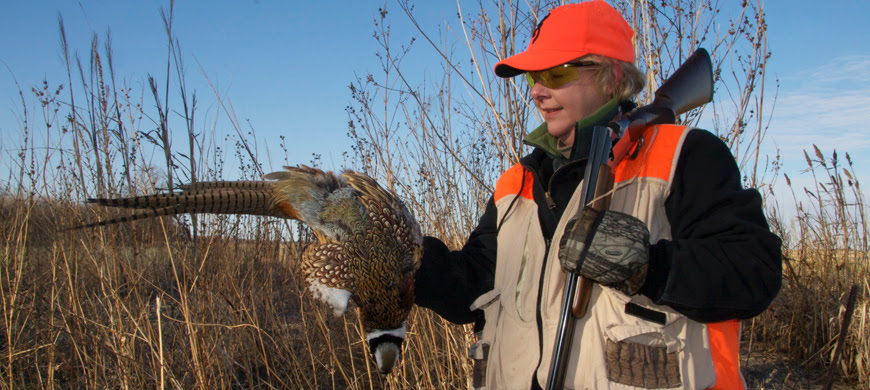
GLEN ELDER ­– The Kansas Department of Wildlife, Parks and Tourism (KDWPT) and sponsoring partners will conduct the 2017 Youth and Women’s Celebrity Pheasant Hunt at Waconda Lake on Saturday, Dec. 9. The event will begin at 7:15 a.m. with breakfast in the Hopewell Church basement at Glen Elder State Park, followed by a pre-hunt safety program. Hunters, guides, and mentors will then spend the remainder of the morning and early afternoon hunting various limited-access refuge areas around Waconda Lake. Lunch will be provided by the Waconda Lake Association.

Youth ages 11-16 and women are eligible to apply for this hunt, which is designed to provide comfortable and positive hunting experiences for new or beginning hunters. Previous hunting experience is not required, and some shotguns and ammunition can be provided for those without equipment. Hunters must apply no later than Nov. 30 by calling the Glen Elder Area Office at (785) 545-3345 between 8 a.m. and 4:30 p.m. Monday through Friday. Forty spots will be available.

A unique aspect of this event is that participants will interact with and hunt alongside a few Hero-Celebrities invited to serve as hunting mentors. Past mentors include former professional athletes, television personalities, and military personnel who have recently returned from deployment.

Participants can practice at wingshooting stations that will be set up west of the KDWPT Glen Elder Area Office. From 1:30 – 4 p.m., the public is welcome to enjoy shooting at the stations.

All participants will receive a commemorative item from the event, as well as additional prizes provided by sponsors.

To conclude the event, a hunters’ banquet and dinner will be held Saturday night. All event participants are invited to attend and will be asked to RSVP for the banquet when they sign up for the hunt.

For more information on this event, or to serve as a volunteer mentor, contact Chris Lecuyer at (785) 545-3345.

Kansas state parks offering free entrance on Black Friday

KDWPT

PRATT – The Kansas Department of Wildlife, Parks and Tourism (KDWPT) has a Black Friday deal that will give your wallet and your mind a rest. How does free sound? This Black Friday, take “free” to a whole new level and free yourself from the shopping chaos by enjoying a Free Park Entrance Day at any Kansas state park on Nov. 24.

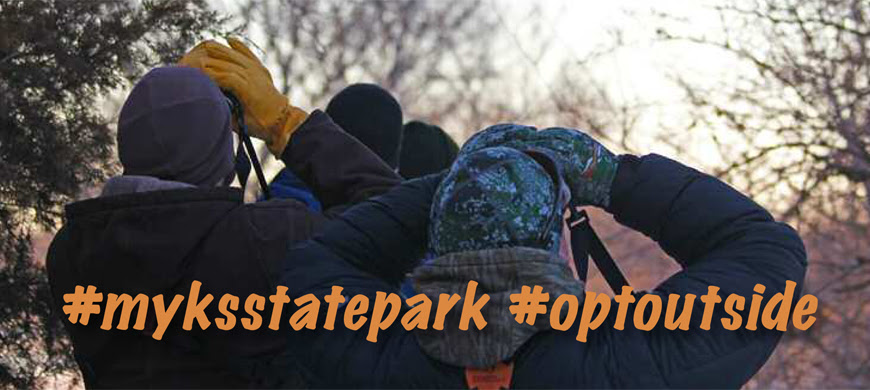
KDWPT state park staff, in partnership with REI, invite you to “OptOutside” and spend this Black Friday outdoors, hiking, biking, or just relaxing at a Kansas state park. Now, you might be asking yourself, “But wouldn’t a retail company like REI want people shopping in their stores on Black Friday?” The answer is no, quite the opposite. REI is closing on Black Friday to encourage everyone to spend the time outdoors instead. KDWPT offices will be closed that day and many staff will also be heading outdoors.

Be a part of this movement by posting a picture of you and your family at one of the 26 Kansas state parks on Black Friday to Instagram or Twitter with the hashtags #myksstatepark and #optoutside and be entered into a drawing for a free cabin stay. Think you can find a better deal than that?

Learn more about Kansas state parks, including information on facility updates, directions and how to make reservations, at ksoutdoors.com/State-Parks.

Opt to go outside this Black Friday and get the best deal of all: the feeling of free.

Task Force: Encouraging possibilities for Doctor of Osteopathy School in Kansas

OFFICE OF GOV.

TOPEKA—The establishment of a Doctor of Osteopathic (DO) school of medicine would increase health care options available to rural Kansas communities according to a new report released by a task force commissioned by Governor Sam Brownback.

Terry Holdren, CEO of the Kansas Farm Bureau, led the task force to study the potential of a DO school of medicine in order to promote high quality health care for all Kansans. The task force met multiple times throughout the summer and fall of 2017 to gather input from numerous individuals and groups with experience in the medical field and knowledge of rural Kansas.

“This is very heartening news, because we need to increase the number of doctors who can care for people across our state” said Governor Sam Brownback. “The creation of a DO school will increase access to healthcare so we can ensure the best options for care even in the most rural areas of our state. Promoting strong medical training programs here is critical to the success and well-being of both our students and our residents.”

Read the full DO Taskforce Report here.

Highlights of the report include specific directions to increase medical training together with physician recruitment and development. The report indicates that recruiting Kansas students early on to offer them a chance to be get their medical degree right here in the state will help keep them on track to stay here and practice medicine upon graduation. The report highlights an existing pool of prospective medical students that could be recruited into a DO school and the opportunity to use federal funds to establish new residency programs in rural Kansas hospitals where they are not currently offered.

“Our young people are the best resource we have, and maximizing that resource means offering them educational options and a reason to stay and provide health care for their communities,” Governor Brownback said. “Establishing more residency programs in rural areas of the state will help medical students put down roots.”

The state of Kansas is currently home to one medical school, the University of Kansas School of Medicine in Kansas City, with additional campus locations in Salina and Wichita.

Shortened enrollment period, potential provider network changes for KS individual health insurance

KID

TOPEKA — Kansas consumers making choices on individual health insurance for 2018 have approximately one month left to make their selections, according to Ken Selzer, CPA, Kansas Commissioner of Insurance.

The shorter open enrollment period for the 2018 plan year began November 1 and ends December 15, 2017. The federal government established the time period, and it applies to plans sold on and off the federal online marketplace.

“It is important to understand how the policy you purchase works from a network perspective,” said Commissioner Selzer. “Not all plans are available in all Kansas counties, although Kansas does have two providers in each county, unlike many other surrounding states. Talk to your doctors, other providers or your insurance company to find out if specific medical providers are part of the insurance health plan network you choose. This could also apply to hospitals and other providers such as labs, specialty physicians or facilities.”

The Kansas Insurance Department does not have the statutory authority to require insurance companies and providers to contract with each other or to make other specific business decisions, such as what type of policies to sell. The federal government established the minimum network requirements.

For more information, read the Department’s “2018: Overview of the Health Insurance Market in Kansas,” which is located on the department’s website at https://www.ksinsurance.org/documents/healthlife/health/KID-Issue-Brief.pdf.

KDA provides marketing resources to farmers’ markets

KDA

MANHATTAN — The Kansas Department of Agriculture has received a U.S. Department of Agriculture Specialty Crop Block Grant to fund the Meet Me at the Market Consumer Recruitment Campaign to provide farmers’ market managers and vendors with resources to increase awareness of specialty crops available at their markets. New materials will be created to help farmers’ markets with promotional activities, and farmers’ markets can apply to receive a stipend to use for promotional events and marketing programs.

Farmers’ markets are a primary point of sale for specialty crops in Kansas. Market managers have identified promoting their market to be a project for growth, but many do not have the funds to do so. Twelve markets will be selected to receive these $3,000 stipends which will help them to reach the public in new ways and increase engagement. Five of those markets will also be recipients of a hosted marketing event. In addition, this campaign will develop new educational materials, marketing templates and tutorials which will be available to all 86 registered farmers’ markets in Kansas.

“This grant is targeted at farmers’ markets which are ready to take their market to the next level and engage more in their communities,” said Lexi Wright, From the Land of Kansas coordinator at KDA. “Our goal is for the marketing stipends and new resources to allow these markets to expand, promote and grow their sales of specialty crop items, connecting consumers with local producers.”

KDA, which serves as the state’s regional farmers’ market authority, promotes and supports farmers’ markets in several ways: through its monthly e-newsletter, Kansas Farmers’ Market Network; at regional farmers’ market workshops; and through the state’s agricultural trademark program, From the Land of Kansas. Farmers’ markets play an important role in providing access to healthy food choices in low income and rural areas, as well as enhancing the local economy. KDA is committed to providing an environment that encourages economic growth of the agriculture industry and serving Kansas farmers, ranchers, agribusinesses and the consumers they serve.

Farmers’ markets can find out and access the application for the marketing stipends on the KDA website at agriculture.ks.gov/marketgrant. The deadline for applications is December 31, 2017.

For more information about farmers’ markets in Kansas or the Meet Me at the Market Consumer Recruitment Campaign grant, please contact Wright at 785-564-6755 or [email protected].

Health officials ask Kansans to help safeguard antibiotics

strong>KDHE

TOPEKA – State and federal health officials are raising public awareness of the need to safeguard the effectiveness of antibiotics. Nov. 13-19, is “U.S. Antibiotic Awareness Week”. Led by the Centers for Disease Control and Prevention (CDC), this one-week observance is intended to raise awareness across the U.S. of antibiotic resistance and the importance of appropriate antibiotic prescribing and use.

Since 2013, the CDC and the Kansas Department of Health and Environment (KDHE) have recognized a threat to antibiotic resistance and have begun working with many partners across the state and nation to improve antibiotic stewardship in communities, in health care facilities, as well as on the farm. KDHE’s Healthcare-Associated Infections and Antimicrobial Resistance Program is now implementing a comprehensive platform statewide.

In Kansas, a broad range of individuals, professionals and organizations are working together to adopt best practices to help stem the inappropriate use of antibiotics. A statewide advisory group is assisting KDHE in spearheading this effort.

According to data from the CDC, the total number of antibiotic prescriptions written in Kansas ranked among the highest nationally. In 2015, more than 900 antibiotic prescriptions were written per 1,000 individuals statewide.

Antibiotic awareness does not mean stopping the use of antibiotics; it means changing the way antibiotics are prescribed and used today – when necessary and appropriate.

Since the 1940s, antibiotics have been used to treat patients who have infections, greatly reducing the number of related illnesses and deaths. But now, more than 75 years later, antibiotics have been used so widely and for so long that the infectious organisms the antibiotics are designed to kill have adapted to them, making the drugs less effective, according to the CDC.

The CDC finds that more than one-third of all antibiotics used in the United States are either unnecessary or the antibiotic does not match the germ. Antibiotics are not needed, for example, for viruses, such as colds, most sore throats, and many sinus infections.

Especially during the cold and flu season when viruses are prevalent, the public can do their part by recognizing that antibiotics are likely not the right medicine. Antibiotics can fight infections and save lives when used to fight the right germ, at the right time, and for the right duration.

More than two million people in the United States get infections that are resistant to antibiotics, and each year at least 23,000 people die as a result. If drug-resistant germs keep growing and if we lose the effectiveness of antibiotics, we may also lose our ability to treat patients who need them.

Here are ways you can help:

  • Ask if tests will be done to make sure the right antibiotic is prescribed.
  • Only take antibiotics prescribed for you; do not share or use leftover antibiotics. Antibiotics treat specific types of infections. Taking the wrong medicine may delay correct treatment and allow bacteria to multiply.
  • Do not save antibiotics for the next illness. Discard any leftover medication once the prescribed course of treatment is completed.
  • Antibiotics may have side effects. When your doctors says you do not need an antibiotic, taking one may do more harm than good.
  • Consult your doctor if any questions arise.

To learn more about antibiotic resistance and U.S. Antibiotic Awareness Week, visit the CDC website at https://www.cdc.gov/antibiotic-use/week/overview.html.

KHI: Advancing behavioral health priorities in community health

KHI

TOPEKA – As Kansas communities continue to initiate health improvement efforts, they often wrestle with how best to engage in behavioral health work given the complexity of the issues and the need for multi-pronged efforts focused on diverse and integrated approaches.

The Kansas Health Institute (KHI) has prepared a resource of practical ideas for advancing behavioral health priorities identified in community health (needs) assessments (CHAs/CHNAs) and community health improvement plans (CHIPs) in Kansas, and it seeks to point readers to examples of how these priorities have been effectively addressed in other communities.

Readers will learn about evidence-based practices related to the following priorities referenced in CHAs/CHNAs and CHIPs:

Mental Health: Access to (affordable) health insurance coverage, provider shortages, access to comprehensive and integrated services, screening and prevention, transportation to access services, and assessment of the need for mental health services in the community.
Substance Abuse: Use of tobacco and tobacco products by adults and youth, access to comprehensive substance abuse programs, use of smokeless tobacco, use of tobacco and tobacco products during pregnancy, use of alcohol products by adults and youth, alcohol-related traffic accidents, use of drugs by adults and youth, and use/abuse of prescription drugs.

READ IT HERE: Report: Advancing Behavioral Health Priorities Identified in Community Health Assessments and Community Health Improvement Plans

The Kansas Health Institute delivers credible information and research enabling policy leaders to make informed health policy decisions that enhance their effectiveness as champions for a healthier Kansas. The Kansas Health Institute is a nonprofit, nonpartisan health policy and research organization based in Topeka, established in 1995 with a multiyear grant from the Kansas Health Foundation.

Copyright Eagle Radio | FCC Public Files | EEO Public File