We have a brand new updated website! Click here to check it out!

Have atlas, will travel

KDWPT

PRATT – The key to a successful upland bird hunting season is flexibility. Scouting and locating new hunting areas will definitely add birds to your bag, and with the 2017 Kansas Hunting Atlas, Kansas State Park Guide, and 2017 Kansas Hunting and Furharvesting Regulations Summary in hand, you have almost infinite possibilities.

Pheasant, quail and greater prairie chickens, for the most part, found good to excellent nesting and brood-rearing conditions this spring and summer, so the hunting forecast is positive. However, as always, there were weather incidents, such as hail, a late-April snowstorm, and heavy rains that affected populations locally. If this happened in an area you usually hunt, traveling just 30 miles could be the difference between disappointment and great hunting.

Check out the 2017 Upland Bird Forecast and you’ll see regional predictions on bird numbers based on spring and summer surveys. Use the atlas to find public hunting areas and Walk-in Hunting Access (WIHA) areas in the good regions. However, even if the area you select has abundant public access, finding good hunting still requires some scouting. A pre-season drive-through can help you pinpoint good fields. Remember that WIHA lands are open only to hunting and only during dates specified in the atlas and on posted signs.

Once you’ve figured out where to hunt, the next step will be figuring out where to stay. Now is the time to make plans. Lodging can be limited in many rural areas of western Kansas, as some motel rooms are often reserved a year in advance during the first two weeks of the season. However, there are other options. Kansas has 26 state parks scattered around the state, and many are right in the middle of some of the best hunting. They are also conveniently located near large public wildlife areas that surround federal reservoirs.

For hunters with an RV, Kansas state parks can be the perfect base camp. Call ahead now to find out what hook-ups are available this winter at the state park you’re considering. Some have heated showerhouses open through the winter. If you don’t have an RV, there are more than 100 cabins available for rent in Kansas state parks. You can learn more about state park cabins and availability at www.ksoutdoors.com.

Deluxe cabins offer full amenities, including heat, air conditioning, a full kitchen and bathrooms. Rustic cabins and yurts offer beds, electricity, and heating and air conditioning. Some Rustic cabins may also have a refrigerator, microwave oven and coffee maker. And all rustic cabins are located near a showerhouse.

If you’re a tent camper, state parks provide ample primitive camping sites. Keep in mind that camping is allowed only in designated areas on public hunting areas.

All of us have at one time or another thought about hunting a different part of the state, either because we’ve heard good things or we just wanted to see new country. This is the year to do it. Grab an atlas and forecast and find a part of the state you’ve always wanted to explore.

’60s-era G.I. Joe action figures, rare comic books, comic art, toys to be auctioned

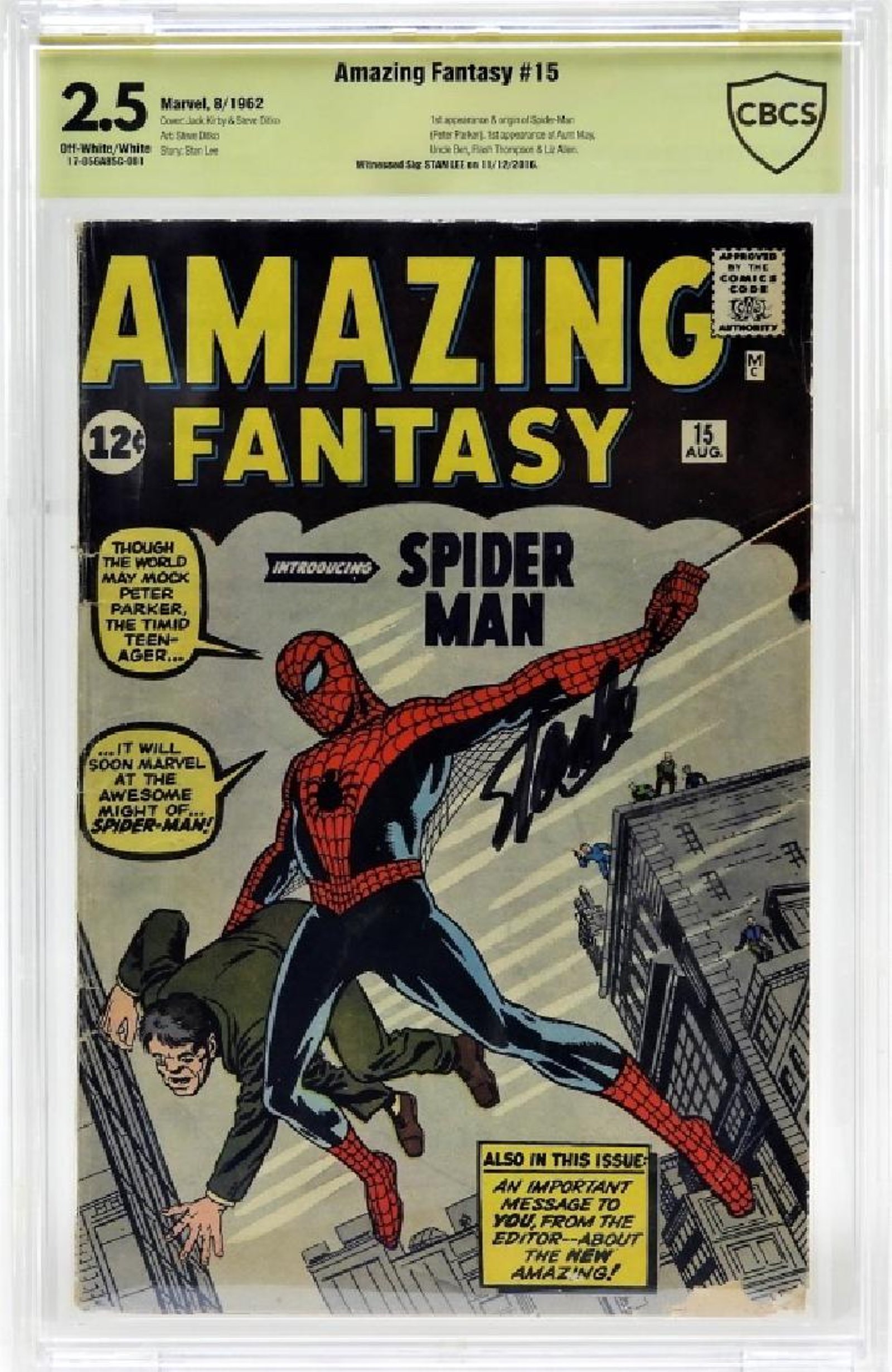
Marvel Comics Amazing Fantasy #15 (Aug. 1962), signed by Stan Lee.

CRANSTON, R.I. – An astounding collection of Hasbro G.I. Joe action figure dolls from the collection of a former Hasbro employee in Rhode Island, plus a copy of Marvel Comics Amazing Fantasy #15 (August 1962, the first appearance of Spider-Man, signed by Stan Lee), plus other rare and highly collectible comics, will headline a Fall Toy, Comic & Comic Art Auction slated for Saturday, Oct. 28th, by Bruneau & Co. Auctioneers, starting at 12 o’clock noon Eastern time.

Over 300 lots of pop culture items, curated from collections across the country, will cross the auction block that day. The sale will be held in Bruneau & Co.’s gallery, at 63 Fourth Avenue in Cranston. Internet bidding will be facilitated by Bidlive.Bruneauandco.com, Invaluable.com, LiveAuctioneers.com and Bidsquare.com. Phone and absentee (left) bids will also be accepted.

A strong candidate for top lot of the auction promises to be the copy of Marvel Comics Amazing Fantasy issue #15 (Aug.1962), signed by legendary comic illustrator Stan Lee and witnessed on Nov. 12, 2016. (est. $8,000-$12,000). The book, graded CBCS 2.5, featured the first appearance and the origin of Spider-Man, along with Aunt May, Uncle Ben, Flash Thompson and Liz Allen.

Hasbro G.I. Joe Action Soldier West Point Cadet equipment set from 1968.

Other expected top performers include a fine example of a Hasbro G.I. Joe Action Soldier West Point Cadet equipment set from 1968, the second release with a solid photo box, factory sealed (est. $800-$1,200); and a circa-1967 Hasbro Action Joe State Trooper uniform, factory sealed in its original Hasbro bag, marked “Made in Hong Kong”, offered only thru Sears (est. $400-$600).

Other G.I. Joe items expected to do well include an individually carded 1964 Action Pilot dress uniform, a factory-sealed Race Car Driver uniform; and a circa 1967 Hasbro Action Marine 7727 Rifle-Rack equipment set, in excellent condition and factory-sealed, with G.I. Joe helmet form sticker, as well as an Action Marine mess kit (est. $600-$900).

“Whether you collect comics, G.I. Joe or Star Wars, there is a rarity offered in every category that’s sure to drive collectors crazy in this auction,” said Travis Landry, Bruneau & Co. specialist and auctioneer. Kevin Bruneau, the company president, added, “It’ll be a great sale, filled with memories that bring a guy like myself right back to his childhood. Surely fun will be had by all.”

The auction will open with over 50 lots of vintage toys, including Hasbro G.I. Joe, Mattel He-Man Masters of the Universe, Bandai Mighty Morphin Power Rangers and Kenner Star Wars.

Featured lots will include a French 1978 Meccano Star Wars 20 Back Ben Obi-Wan Kenobi figure, AFA 85 (est. $1,000-$2,000), an Argentinian 1983 Top Toys Star Wars Return of the Jedi Stormtrooper (AFA 80) and a 1984 factory-sealed He-Man Masters of the Universe Leech action figure made in Mexico and the U.S. (est. $200-$300), the red crossbow variant, graded C8-C8.5.

1992 Bandai Megazord and Dragonzord gift set, made in Japan, factory sealed

Within the vintage toy section will be a collection of unused and AFA-graded Mighty Morphin Power Rangers collectibles, highlighted by a 1992 Bandai Megazord and Dragonzord gift set, made in Japan and in unused dead stock condition, entirely factory sealed (est. ($800-$1,200); and the collection of ‘60s-era Hasbro G.I. Joes from the Rhode Island former Hasbro employee.

Frank Miller’s blank variant sketch of Batman in bust, drawn with cowl and cape.

The second portion of the catalog will feature more than 240 lots of Silver, Bronze, Copper and Modern age D.C. and Marvel comics, to include titles from Action Comics, Adventure Comics, Aquaman, Batman, Captain America, Fantastic Four, Journey Into Mystery, Justice League, Tales to Astonish, Tales of Suspense, X-Force, X-Factor, New Mutants and other rare titles.

Individual comics will feature a copy of Marvel Comics X-Men issue #1 (Sept. 1963), with the first appearance of Magneto and the X-Men, and the X-Men’s origin, signed by Stan Lee with a witness, graded CBCS 5.0 (est. $2,000-$3,000); and a copy of Marvel Comics Avengers issue #1 (Sept. 1963), with the first appearance of the Avengers, graded CBCS 5.0 (est. $2,000-$3,000).

Other comics will include copies of Incredible Hulk issue #181 (CBCS 7.0), Fantastic Four issue #52 (CBCS 6.5), and Amazing Spider-Man issue #14 (CBCS 3.5). Comic art will include works by great illustrators such as Frank Miller, Neal Adams, Craig Rousseau, Norman Lee and others. Frank Miller’s blank variant sketch of Batman in bust, with cowl and cape, drawn on a signed copy D.C. Comics Dark Knight III: The Master Race issue #1, should make $700-$1,000.

Previews will be held on Thursday, Oct. 26th, from 9-5; Friday, Oct. 27th, from noon to 9 pm; and Saturday, Oct. 28th, the date of auction, from 8 am until the start of sale at 12 noon Eastern sharp.

To learn more about Bruneau & Co. Auctioneers and the October 28 toy and comic auction, visit www.bruneauandco.com. To contact Bruneau & Co. via e-mail, use [email protected].

-SUBMITTED-

Get in on goose season

KDWPT

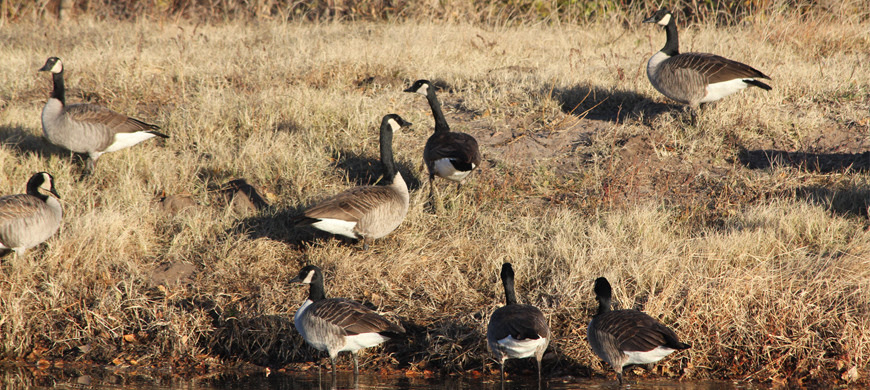
PRATT – If the phrase “save the best for last” was applicable to hunting seasons, goose season just might be “the best.” By the time goose season comes around, most bird hunters have warmed up their dogs on a dove or teal hunt, put a few rounds through their shotgun at the opening of duck season, and are now primed for the big birds – geese.

Canada geese, which include the giant Canadas that can weigh upwards of 12 pounds, and light geese (snows and Ross’) kick off the first of the Kansas goose seasons, followed by white-fronted geese. Seasons details are below.

CANADA GEESE AND BRANT

Oct. 28-29, 2017 and Nov. 8, 2017-Feb. 18, 2018

Area open: Statewide

Daily bag limit: 6 (including Brant)

Possession limit: 18

WHITE-FRONTED GEESE

Oct. 28-Dec. 31, 2017 and Jan. 27-Feb. 18, 2018

Area open: Statewide

Daily bag limit: 2

Possession limit: 6

LIGHT GEESE

Oct. 28-29, 2017 and Nov. 8, 2017-Feb. 18, 2018

Area open: Statewide

Daily bag limit: 50

Possession limit: No limit

LIGHT GEESE, CONSERVATION ORDER

Feb. 19-April 30, 2018

Area Open: Statewide

Daily Limit: Unlimited

Possession Limit: Unlimited

To get in on the 2017-2018 Kansas goose seasons, make sure to have your hunting license, Kansas HIP Permit, State Waterfowl Stamp, and Federal Waterfowl Stamp. For more information on license requirements for waterfowl hunting, including where to buy, visit ksoutdoors.com/Hunting/Applications-and-Fees and select “Waterfowl.” Come the first cold front of the season, you’ll be glad you did.

Equity in ‘Health in All Policies’

KHI

TOPEKA – Kansas has experienced a large increase in minority populations over the last 15 years. It is more important than ever to ensure that all Kansans have access to healthy conditions where they live, learn, work and play.

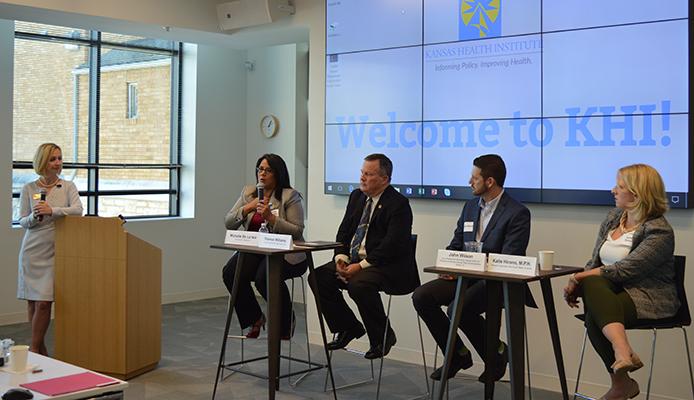
To explore this issue, the Kansas Health Institute (KHI) held a symposium on September 28, 2017, titled Health in All Policies: Where does equity fit in? The event brought together more than 60 stakeholders from across sectors to discuss opportunities for advancing Health in All Policies (HiAP) in Kansas—through the lens of equity.

Read Event Recap: Health in All Policies: Where does equity fit in?

The Kansas Health Institute delivers credible information and research enabling policy leaders to make informed health policy decisions that enhance their effectiveness as champions for a healthier Kansas. The Kansas Health Institute is a nonprofit, nonpartisan health policy and research organization based in Topeka, established in 1995 with a multiyear grant from the Kansas Health Foundation.

Understanding the mental health system in Kansas

KHI

TOPEKA – To assess how well the mental health system in Kansas serves the population, policymakers can consider the need for mental health services as well as the capacity of the current system.

The Kansas Health Institute has prepared a report that provides a brief overview of the mental health system in Kansas, including who it serves, how much it costs, where services are provided, and what barriers prevent people from accessing care.

Key Points:

  • Kansas expenditures for mental health have shifted from 82 percent in inpatient facilities and 18 percent in the community in 1990, to 25 percent in inpatient facilities and 75 percent in the community now.
  • Capacity in state psychiatric hospitals has reduced from more than 1,000 beds in 1990, to 250 beds in 2016 (not including forensic beds, which are reserved for patients who have been charged with or have committed crimes).
  • As of December 2016, there were 97 geographical mental health professional shortage areas (HPSA) identified in Kansas.
  • In 2014, 19.6 percent of Kansans with disabilities did not visit a doctor due to cost.
  • In 2014, there was one behavioral health provider per 550 Kansans (1:550). Behavioral health workforces are as high as 1:200 in Massachusetts to as low as 1:1,200 in Alabama. Nationally, workforces are 1:529.

Read the complete report here.

The Kansas Health Institute delivers credible information and research enabling policy leaders to make informed health policy decisions that enhance their effectiveness as champions for a healthier Kansas. The Kansas Health Institute is a nonprofit, nonpartisan health policy and research organization based in Topeka, established in 1995 with a multiyear grant from the Kansas Health Foundation.

Justice Dept: First ever indictments against Chinese manufacturers of Fentanyl, other opiates

US DOJ

WASHINGTON – The Justice Department announced Tue., Oct. 17, that federal grand juries in the Southern District of Mississippi and the District of North Dakota returned indictments, unsealed yesterday, against two Chinese nationals and their North American based traffickers and distributors for separate conspiracies to distribute large quantities of fentanyl and fentanyl analogues and other opiate substances in the United States.

The Chinese nationals are the first manufacturers and distributors of fentanyl and other opiate substances to be designated as Consolidated Priority Organization Targets (CPOTs). CPOT designations are those who have “command and control” elements of the most prolific international drug trafficking and money laundering organizations.

On Sept. 7, Xiaobing Yan, 40, of China, was indicted in the Southern District of Mississippi on two counts of conspiracy to manufacture and distribute multiple controlled substances, including fentanyl and fentanyl analogues, and seven counts of manufacturing and distributing the drugs in specific instances. Yan, a distributor of a multitude of illegal drugs, used different names and company identities over a period of at least six years and operated websites selling acetyl fentanyl and other deadly fentanyl analogues directly to U.S. customers in multiple cities across the country. Yan also operated at least two chemical plants in China that were capable of producing ton quantities of fentanyl and fentanyl analogues. Yan monitored legislation and law enforcement activities in the United States and China, modifying the chemical structure of the fentanyl analogues he produced to evade prosecution in the United States.

Over the course of the investigation, federal agents identified more than 100 distributors of synthetic opioids involved with Yan’s manufacturing and distribution networks. Federal investigations of the distributors are ongoing in 10 judicial districts, and investigators have traced illegal proceeds of the distribution network. In addition, law enforcement agents intercepted packages mailed from Yan’s Internet pharmaceutical companies, seizing multiple kilograms of suspected acetyl fentanyl, potentially enough for thousands of lethal doses.

On Sept. 20, Jian Zhang, 38, of China, five Canadian citizens, two residents of Florida, and a resident of New Jersey were indicted in the District of North Dakota for conspiracy to distribute fentanyl and fentanyl analogues in the United States, conspiracy to import the drugs from Canada and China, a money laundering conspiracy, an international money laundering conspiracy, and operation of a continuing criminal enterprise.

Zhang ran an organization that manufactured fentanyl in at least four known labs in China and advertised and sold fentanyl to U.S. customers over the Internet. Zhang’s organization would send orders of fentanyl or other illicit drugs, or pill presses, stamps, or dies used to shape fentanyl into pills, to customers in the United States through the mail or international parcel delivery services. Federal law enforcement agents determined that Zhang sent many thousands of these packages since January of 2013.

On Oct. 11, Elizabeth Ton, 26, and Anthony Gomes, 33, both of Davie, Florida were arrested. On Oct. 12, Darius Ghahary, 48, of Ramsey, New Jersey was arrested. Ton, Gomes, and Ghahary are charged with drug trafficking conspiracy in the Zhang indictment.

The investigations of Yan and Zhang revealed a new and disturbing facet of the opioid crisis in America: fentanyl and fentanyl analogues are coming into the United States in numerous ways, including highly pure shipments of fentanyl from factories in China directly to U.S. customers who purchase it on the Internet. Unwary or inexperienced users often have no idea that they are ingesting fentanyl until it is too late. The Centers for Disease Control estimates that over 20,000 Americans were killed by fentanyl and fentanyl analogues in 2016, and the number is rising at an exponential rate.

Zhang was charged with conduct resulting in the deaths of four individuals in North Carolina, New Jersey, North Dakota, and Oregon in 2014 and 2015 and the serious bodily injuries related to five additional individuals.

These recent law enforcement efforts to keep fentanyl and fentanyl analogues from entering the United States were announced by Deputy Attorney General Rod J. Rosenstein; Acting Administrator Robert W. Patterson of the Drug Enforcement Administration (DEA), Acting Deputy Director Peter T. Edge of U.S. Immigration and Customs Enforcement (ICE) and Assistant Commissioner Joanne Crampton of the Royal Canadian Mounted Police (RCMP).

“Zhang and Yan are the first Chinese nationals designated as Consolidated Priority Organization Targets (CPOTs),” said Deputy Attorney General Rosenstein. “CPOTs are among the most significant drug trafficking threats in the world. The defendants allegedly shipped massive quantities of deadly fentanyl and other synthetic opioids to communities throughout the United States, mostly purchased on the Internet and sent through the mail. The chemicals allegedly killed and injured people in several states, and surely caused misery to many thousands of people. Under the leadership of President Trump and Attorney General Sessions, we are taking back our communities by pursuing suppliers of deadly drugs wherever they are located.”

“Xiaobing Yan, Jian Zhang and their respective associates represent one of the most significant drug threats facing the country – overseas organized crime groups capable of producing nearly any synthetic drug imaginable, including fentanyl, and who attempt to hide their tracks with web-based sales, international shipments and cryptocurrency transactions,” said DEA Acting Administrator Patterson. “At a time when overdose deaths are at catastrophic levels, one of DEA’s top priorities is the pursuit of criminal organizations distributing their poison to American neighborhoods. These indictments are a first step; our investigators remain relentless in their pursuit to dismantle these organizations and bring those responsible to justice. DEA, along with our global network of law enforcement partners, will go after these types of criminals wherever they operate.”

“This case began when local police officers responded to what has become an all-too familiar tragedy in the United States: the heroin and fentanyl overdose of two young adults, one who survived and another who did not,” said ICE Acting Deputy Director Edge. “Fentanyl is 50 times more potent than heroin and 100 times more potent than morphine. Drug trafficking organizations that deal in such a deadly game will have to face the combined resources of federal law enforcement agencies and our international partners. ICE Homeland Security Investigations is committed to helping combat this new and growing epidemic.”

“We live in an increasingly global and interconnected world – crime has no borders,” said Assistant Commissioner Crampton. “Law enforcement must respond accordingly by working beyond our borders together to detect and disrupt criminal activity. By fostering a solid integrated and coordinated law enforcement approach, we will continue to disrupt international drug trafficking networks.”

The cases against Yan and Zhang are being investigated by the DEA, ICE Homeland Security Investigations, the Internal Revenue Service Criminal Investigation, the U.S. Postal Inspection Service and the RCMP. Valuable investigative assistance has also been provided by U.S. Customs and Border Protection and the Ministry of Public Security of China. The case against Yan is being prosecuted by Assistant U.S. Attorney John Meynardie in the Southern District of Mississippi. The case against Zhang is being prosecuted by U.S. Attorney Chris Myers and Assistant U.S. Attorney Scott Kerin in the District of North Dakota, along with Trial Attorney Adrienne Rose of the Criminal Division’s Narcotic and Dangerous Drug Section. Substantial prosecutorial assistance has been provided by the U.S. Attorney’s Office in the District of Oregon and the Quebec office of the Public Prosecution Service of Canada.

Both of the indictments are the result of coordinated, multi-agency, multi-national investigations conducted by agents and investigators of the Organized Crime Drug Enforcement Task Forces (OCDETF), and were further supported with national and international coordination led by the multi-agency Special Operations Division (SOD). The OCDETF Program is a partnership between federal, state, local, and international law enforcement agencies. The OCDETF mission is to target the most serious transnational organized crime threats facing the United States, including drug trafficking, weapons trafficking, and money laundering. Prior to the announcement of these indictments, Jian Zhang and Xiaobing Yan were designated as OCDETF Consolidated Priority Organization Targets (CPOTs), and are considered by the United States as some of the most significant drug trafficking threats in the world.

If convicted, Yan faces a maximum statutory penalty of 20 years in prison, a $1 million fine, and three years of supervised release. Zhang faces up to life in prison and $12.5 million in fines. Any sentences will be determined at the discretion of the district courts after considering any applicable statutory factors and the Federal Sentencing Guidelines.

The charges are only allegations; the defendants are presumed innocent until and unless proven guilty beyond a reasonable doubt.

Twenty-one individuals in total have been indicted on federal drug charges in both North Dakota and Oregon as part of the investigation.

Note: The relevant court documents can be found here: Zhang et al Indictment and Yan et al Indictment.

Libertarian Party of KS discusses reforming Kansas drug laws

LPKS

BONNER SPRINGS – Changing the oppressive and costly drug laws in Kansas was discussed, by a diverse group of Kansas citizens, civic leaders and elected officials from across the political spectrum, at a meeting in Bonner Springs, Kansas, Sunday, October 15th. The informational meeting was hosted by the Third District, Libertarian Party of Kansas.

Dr. Micah Kubic, Executive Director of the Kansas ACLU, told those in attendance, over the last 40 years the prison population in Kansas has more than quadrupled, even though crime is at an all time low. Dr. Kubic cited the reason for this exponential increase in Kansas’ prison population is due to simple, non-violent drug offenses. Thirty-five percent of Kansas prisoners have a diagnosed mental illness which is commonly treated with medical cannabis in legal states. Dr. Kubic pointed out, in 2016 Oklahoma citizens voted to defelonize drug possession in order to reduce their prison population and directed the related non-violent offenders into rehabilitation and diversionary programs. The state of Kansas utilizes diversionary programs at half of the national average.

Lisa Sublett, President of Bleeding Kansas Advocates, educated those present on her organization’s pending legislation (SB187 & HB2348) The Kansas Safe Access Act, concerning comprehensive medical cannabis access for Kansas patients. Bleeding Kansas Advocates have lobbied the Kansas legislature and advocated for compassionate treatment of Kansas patients tirelessly over many years. Lisa and Bleeding Kansas Advocates believe, with certainty, the Kansas Safe Access Act is the robust solution called for by State Senator Vicki Schmidt, in an August 26th article by the Topeka Capital Journal, on the opioid-heroin epidemic in Kansas.

Lisa also cited a recent study by researchers at the University of California San Diego finding “hospitalization rates of people suffering from painkiller abuse and addiction dropped on average 23 percent in states that offered medical marijuana. Opioid overdose cases at hospitals in states with legal weed also dropped by an average of 13 percent, the study said.” as reported in a March 28, 2017, Newsweek article.

Kansas State Senator David Haley was the closing guest speaker and he thanked the Libertarian Party of Kansas (LPKS) for not only hosting the event but having the courage to address difficult issues head-on. Senator Haley spoke about his personal experiences as a local prosecutor and how non-violent drug crime prosecution contributes exponentially to prison overcrowding. The state of Kansas is currently considering expanding the Lansing Correctional Facility to house an additional 2000 prisoners. Senator Haley noted support for ending cannabis prohibition in Kansas is a profoundly non-partisan issue, with more than 50% of American citizens currently able to legally consume cannabis as an effective non-life threatening alternative to the current prescription opioid epidemic in America. 2018 is a critical session year for cannabis legislation in Kansas. Senator Haley passionately encouraged constituents all across the state to immediately start contacting their senators & representatives in the Kansas legislature expressing their support to end cannabis prohibition for Kansas citizens.

Jeff Caldwell, LPKS Third District Coordinator, and Kris Logan, LPKS State Chair, addressed the group, sharing personal experiences and the Libertarian Party of Kansas’ plans to continue to fight for liberty-related issues and elect Libertarian candidates in Kansas.

The Libertarian Party of Kansas has often been in the forefront of advocating for major changes in Kansas laws; including in recent years, school choice, second amendment issues, special election laws and agricultural hemp. The party’s current initiatives include civil asset forfeiture reform, ending cannabis prohibition and maximizing individual liberties for all Kansas citizens.

The LPKS live-streamed the entire event on Facebook and that video is available in the party’s Facebook page.

FOR ADDITIONAL INFORMATION CONTACT:
Kris Logan – LPKS State Chair – [email protected] – 913-240-9008 or
Jeff Caldwell – LPKS 3rd District Coordinator – [email protected] – 913-484-8404

Kansas business owners see workers compensation insurance rate decrease again

KID

TOPEKA –Many Kansas business owners will pay less for workers compensation insurance again in 2018, the fourth consecutive year for a Kansas decrease, Ken Selzer, CPA, Kansas Commissioner of Insurance, said today.

“This rate decrease means that many Kansas companies will have more money to grow their businesses,” said Commissioner Selzer. “This happens because they will pay less to fund costs to cover medical claims costs and lost wages for job-related injuries and deaths, and to help fund workplace safety and health programs.”

The decreases affect many of the approximately 65,000 Kansas businesses that pay workers compensation insurance.

The 2018 rate filing for the workers compensation rate shows a decrease of 7.6 percent in the voluntary base rate and a decrease of 5.8 percent for assigned risk workers compensation rates.

Adding together the rate decreases Kansas business owners saw in 2015, 2016, 2017 and now 2018, over a four-year period, the rates will have dropped almost 39 percent in the voluntary base rate and nearly 39 percent in the assigned risk rate.

“Voluntary workers compensation base rates are used by all insurance companies writing workers compensation in the competitive market,” said Heather Droge, Director of the Property and Casualty Division at the Kansas Insurance Department. “Assigned risk rates are used for insured businesses in the Kansas Assigned Risk Plan, a state organization for those businesses who are unable to obtain coverage in the competitive market.”

In Kansas, 65 percent of workers compensation benefit distribution goes to pay medical claims, and 35 percent goes to indemnity claims, according to statistics from the National Council on Compensations Insurance, Inc. (NCCI).

The 2018 NCCI filing applies to all insurance carriers writing workers compensation policies for businesses in the state. The Kansas Insurance Department staff approved the new filings for a Jan. 1, 2018, effective date.

NCCI prepares workers compensation rate recommendations and manages the nation’s largest database of workers comp information.

“It’s important to remember that the decreases are only an average,” Commissioner Selzer said. “That means that an individual employer may see a larger decrease, no change in their rates, or an increase, depending on the employer’s own industry, claims experience and payroll. But, as I said, many of our state’s businesses will see a positive outcome because of the decrease. It’s a win-win for both businesses and potential employees.”

Region 7 EPA administrator returns

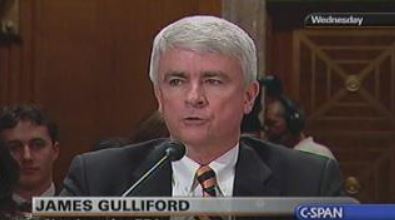
Jim Gulliford (Photo courtesy C-SPAN)

EPA

WASHINGTON – U.S. Environmental Protection Agency (EPA) Administrator Scott Pruitt has announced the appointment of Jim Gulliford of Missouri to become regional administrator for Region 7.

Mr. Gulliford will oversee environmental protection efforts in: Iowa, Kansas, Missouri, and Nebraska. He previously held the position of regional administrator for Region 7 from 2001-2006.

Jim Gulliford most recently held the position of executive director of the Soil and Water Conservation Society where he led the organization from 2009-2016. He was responsible for all operation aspects of the non-profit organization that advocated for conservation professionals and for science-based conservation practices, programs, and policy. The organization’s mission is to foster the science and art of natural resource conservation on working land – land used to produce food, fiber, and other services that improve the quality of life people experience in rural and urban communities.

Prior to joining Soil and Water Conservation Society, Mr. Gulliford spent nearly a decade at EPA. From 2006-2009, he served as EPA assistant administrator for the Office of Prevention, Pesticides, and Toxic Substances where he was responsible for helping protect public health and the environment from potential risks of pesticides and chemicals. Mr. Gulliford also served as director of the Division of Soil Conservation at the Iowa Department of Agriculture and Land Stewardship for 15 years, where he was responsible for the development and management of soil conservation, water quality, and mine regulation for the state if Iowa.

“Jim Gulliford is unquestionably qualified to lead EPA Region 7,” said EPA Administration Scott Pruitt. “Not only has Jim dedicated his entire career to protecting the environment and ensuring healthier outcomes for Americans, but he has already demonstrated to be a competent leader for Region 7 during the Bush Administration.”

His nomination is receiving high accolades from across the region:

Joel Brinkmeyer, CEO, Agribusiness Association of Iowa: “The selection of Jim Gulliford for EPA’s Region 7 Administrator is a great choice by this administration in their efforts to accelerate environmental advancement while enhancing production agriculture. Jim will be able to immediately step up to meet the challenges of the office due to his past successful leadership experience in this same position during the Bush Administration, followed by his experience in Washington DC in the office of Pesticides and Toxic Substances at EPA, and as the CEO for the National Soil and Water Conservation Society. Jim has tremendous understanding of how soil and water resources can best benefit production agriculture, and enhance high quality food production without damaging the environment. In fact, Jim understands that with the right tools and resources, positive impacts can be made to the environment as agriculture continues to improve the technology of modern food production systems. Jim’s strong network of midwestern leaders and the scientific community, combined with his positive work ethic, will enhance working relationships with persons of diverse interests to the benefit of urban and rural citizens alike.

“I look forward to working with Administrator Gulliford through the Agribusiness Association of Iowa, and our members, to bring positive solutions to environmental and production challenges.”

Jim Macy, Director, Nebraska Department of Environmental Quality: “EPA Region 7 will be well served by the appointment of Jim Gulliford. Jim is a strong leader in conservation and will bring a voice of reason and cooperation for Nebraska, Iowa, Kansas, and Missouri. Nebraska DEQ is ready to work with Jim Gulliford to further improve Federal and State relationships in the true spirit of cooperative federalism.”

Rex Martin, Chairman of the Board, Soil and Water Conservation Society: “I have been very fortunate to have worked with Jim for many years including his former roles as EPA Region 7 Regional Administrator, U.S. EPA and as the Executive Director at the Soil and Water Conservation Society. Jim has been successful at applying practical environmental practices on the ground based on sound science while allowing local stakeholder’s real world input to drive those activities. Jim’s strong work ethic, integrity and transparency makes him an excellent choice for this leadership role.”

Steve Taylor, President and Executive Director, Missouri Agribusiness Association: “I am extremely pleased that Jim Gulliford is returning as administrator of EPA Region 7. Over the past three decades, I have worked with Jim on a variety of issues and projects involving water quality and agriculture. Over these years, Jim has been a valuable partner and he has understood the need to keep agriculture profitable as we protected the environment. I look forward to once again working with Jim on the environmental issues that face agriculture today.”

Dr. Wendy Wintersteen, Dean of the College of Agriculture and Life Sciences at Iowa State University: “Jim Gulliford brings a tremendous portfolio of knowledge, experience and highly competent leadership to the position of EPA Region 7 Administrator. His previous service on behalf of EPA allows him to step in and begin the vital responsibilities of the position immediately. Jim understands the complexity of environmental issues and the importance of collaboration and communication with partners and stakeholders. He leads with science to guide and ground his work, and that is a common foundation we share in how progress is made.”

CEP asst. director awarded 40 under 40 award by Midwest Energy News

By DOROTHY BARNETT
CEP

HUTCHINSON – Rachel Myslivy, Climate + Energy Project (CEP) assistant director, has been named one of the Midwest Energy News 40 under 40 award winners.

This program highlights emerging leaders throughout the region and their work in America’s transition to a clean energy economy.

Nominated by CEP Board Chair, Uma Outka wrote, “Rachel is a rising star who stands out as a pioneering young leader in Kansas and the region, advancing the clean energy economy through coalition-building and a diverse set of programs. Rachel is an adept communicator with the ability to bridge partisan barriers to find common ground – a core commitment of CEP that is essential for clean energy policy in the Midwest.”

Rachel Myslivy

Myslivy holds a Master’s in Religious Studies and Environmental Studies from the University of Kansas and Teaching Leadership Certification from the Kansas Leadership Center. She co-founded the Kansas Women’s Environmental Network. As an oral historian and independent filmmaker, Myslivy has produced videos for the Yale Forum on Religion and Ecology and Kansas Rural Center, among others. KU designated her a distinguished young alumni. In 2013, she received KU’s Sustainability Leadership Award, and in 2015, the Kansas Association for Conservation and Environmental Education Award for Excellence in the nonprofit sector.

Read Outka’s recommendation here. Myslivy will be recognized at a reception in Chicago in early November.

Learn more about the 40 under 40 awards and help us congratulate Rachel at CEP’s Ten Year Anniversary on October 27th.

The Climate + Energy Project (CEP) is a non-partisan 501c(3) organization working to reduce emissions through greater energy efficiency and the use of renewable energy. Located in Hutchinson, Kansas, CEP collaborates with diverse partners across the nation to find practical solutions for a clean energy future that provides jobs, prosperity and energy security.

Protect your hunting dog from harmful algae

KDWPT

TOPEKA – For duck hunters and their dogs, wading through mucky water is part of the experience, but one type of “muck” can be especially dangerous for four-legged hunting partners – harmful algae blooms (HAB). A HAB may look like foam, scum or paint floating on the water and be colored blue, bright green, brown or red. This season, if the water appears suspicious or there is decaying algae on the shore, hunters are urged to avoid contact and keep their dogs away. Dogs that swim in or drink water affected by a HAB or eat dried algae along the shore can become seriously ill or die.

Blue-green algae are really a type of bacteria called “cyanobacteria,” which occurs naturally in all of our waters. Under the right conditions, the algae can rapidly increase (bloom) and produce toxins. Although HABs typically begin in May, they can occur through October or later. HABs generally coincide with longer days and warm water temperatures and often flourish in nutrient-laden waters. However, dead algae can wash up on shorelines and in marshy areas and persist for long periods – posing a risk to dogs that eat or drink the algae or ingest it while licking their fur.

Dogs are usually exposed to the toxins by drinking the HAB-affected water. However, they may still be exposed if they walk on, roll in or eat decaying algae along the shore or retrieve a bird with algae on its feathers.

The signs of illness in dogs usually occur within 30 minutes of exposure and include vomiting, diarrhea, lethargy, convulsions, difficulty breathing and general weakness. If your dog has ingested algae, or has any of these signs after exposure, contact your veterinarian immediately as HAB poisoning can quickly lead to death.

People may also become ill after contact with algae-produced toxins. Symptoms vary, depending upon the type of exposure (e.g. direct contact, ingestion, inhalation) but can include rash, vomiting, diarrhea, fever, sore throat, and headache. If you, or your dog, come into contact with algae, rinse the area with clean, fresh water.

The Kansas Department of Health and Environment (KDHE) samples publicly-accessible bodies of water for cyanobacteria when the agency is alerted to a potential HAB. When a HAB occurs, KDHE, in cooperation with the Kansas Department of Wildlife, Parks and Tourism and other lake managers where appropriate, responds by informing the public of these conditions. KDHE does not sample private bodies of water such as farm ponds or livestock watering tanks.

For the most up-to-date list of waters currently experiencing HABs, or to report a suspected HAB not currently listed, visit www.kdheks.gov/algae-illness. Hunters and the general public can also access current lake conditions by calling 1-855-HAB-LAKE (1-855-422-5253).

Smart food labels expanding in U.S.

RESEARCHNESTER

NEW YORK – The global smart food labels market is segmented into technology such as RFID (Radio-Frequency Identification) labels and sensing labels. Additionally, RFID segment is further sub-segmented into low frequency (LF) RFID, high frequency (HF) RFID and ultra-high frequency (UHF) RFID. Moreover, high frequency (HF) RFID segment is projected to showcase a significant growth over the forecast period. Further, the growth of this segment is riding on the back of rising adoption of innovative technology by food industry to provide detail of the food item.

Global smart food labels market is expected to register a 15.2% CAGR over the forecast period. Moreover, the global smart food labels market is projected to expand at a exponential revenue during the forecast period i.e. 2017-2024. The market is expected to expand on the back of rising development of smart infrastructure in developing nations such as China, India and others.

Sensing labels segment by technology is believed to showcase a considerable CAGR during the forecast period. Moreover, North America region accounted the largest market for smart food labels in terms of revenue in 2016. In addition to this, smart food labels market in North America region is expanding due to the presence of major key vendors such as Qliktag. Further, Europe region captured the second largest market of smart food labels owing to rapid urbanization and growing use of digital technology by food manufactures for labeling of food products.

Technological advancement in food labeling

Growing adoption of innovative technology by food industry to provide each and every detail of the food item to its consumer is projected to be the dynamic factor behind the rapid growth of smart food label market. Moreover, rising demand by consumer for proper labeling of food item and growing concern among the consumers regarding food quality are some of the factors propelling the growth smart food label market.

Digitization of Food industry

Spiked penetration of smart technology and robust expansion of smart infrastructure in developed and developing nations are fostering the demand for smart food labels around the globe. Furthermore, guidelines by government to provide labeling on the food item is predicted to bolster the growth of smart food labels market by 2024.

On the contrary, high cost associated with smart food labels is believed to dampen the growth of smart food labels market. Further, less adoption of smart technology in underdeveloped nations is also projected to hinder the growth of smart food labels market.

The report titled “Smart Food Labels Market: Global Demand Analysis & Opportunity Outlook 2024” delivers detailed overview of the global smart food labels market in terms of market segmentation by technology and by region.

Further, for the in-depth analysis, the report encompasses the industry growth drivers, restraints, supply and demand risk, market attractiveness, BPS analysis and Porter’s five force model.

This report also provides the existing competitive scenario of some of the key players of the global smart food labels market which includes company profiling of Qliktag, Smartlabel, Avery Dennison, Labelinsight, Thin Film Electronics ASA, Uwitechnology and ABR. The profiling enfolds key information of the companies which encompasses business overview, products and services, key financials and recent news and developments. On the whole, the report depicts detailed overview of the global smart food labels market that will help industry consultants, equipment manufacturers, existing players searching for expansion opportunities, new players searching possibilities and other stakeholders to align their market centric strategies according to the ongoing and expected trends in the future.


Medicare open enrollment begins October 15

KDADS

TOPEKA – The open enrollment period for Medicare coverage in 2018 begins October 15, 2017, and runs through December 7, 2017.

“Older adults can sign up for Medicare for the first time during this period, and current Medicare consumers can make changes to several aspects of their coverage as well,” said Kansas Department for Aging and Disability Services (KDADS) Secretary Tim Keck. “If you’re already enrolled, this is an opportunity to review your coverage and make adjustments if necessary so it better meets your needs.”

“Earlier this year, CMS announced new policies that support increased flexibility of benefit, allowing Medicare Advantage plans to offer innovative plans that fit the needs of people with Medicare,” Secretary Keck said. “More affordable choices through this patient-centered approach to health care lead to greater health security for those who need it most.”

During open enrollment, those currently enrolled may:
· Switch from original Medicare to Medicare Advantage, or vice versa;
· Switch from one Medicare Advantage plan to another or from one Medicare Part D prescription drug plan to another;
· And if you didn’t enroll in a Medicare Part D plan when you were first eligible, you can do so during open enrollment, although a late enrollment penalty may apply.

If you want to enroll in a Medicare Advantage plan, you must meet some basic criteria:
· You must be enrolled in Medicare Part A and B
· You must live in the plan’s service area
· You cannot have end-stage renal disease (some exceptions apply)

The federal Center for Medicare and Medicaid Services (CMS) estimates that the Medicare Advantage average monthly premium will decrease by $1.91 (about 6 percent) in 2018, from an average of $31.91 in 2017 to $30. More than three-fourths (77 percent) of Medicare Advantage enrollees remaining in their current plan will have the same or lower premium for 2018.

If you’re already enrolled in a Medicare Part D prescription plan or a Medicare Advantage Plan and you don’t want to make changes to your coverage for 2018, you don’t need to do anything during open enrollment, assuming your current plan will still be available in 2018. If your plan is being discontinued and isn’t eligible for renewal, you will receive a non-renewal notice from your carrier prior to open enrollment. If you don’t, it means you can keep your plan without doing anything during open enrollment.

Be aware that benefits and premiums could be changing for 2018. So even if you’re confident you want to keep your current coverage for the coming year, it’s important to understand any changes that may apply and check to make sure your current plan is still the best available option. The available plans and what they cover changes from one year to the next, so even if the plan you have now was the best option when you shopped last year, it’s important to verify that again before you lock yourself in for another year.

Between January 1 and February 14 each year, those enrolled in a Medicare Advantage plan can leave that plan and return to original Medicare. If you leave your plan, you will have until February 14 to enroll in a Part D plan that will begin the first day of the following month that you enroll.

Changes to be aware of for 2018 include:
• 46 Medicare Advantage plans are available
• 100 percent of people with Medicare have access to a Medicare Advantage plan
• 23 Medicare prescription drug plans are available with premiums varying from $20.40 to $155.60
• 75 percent of people with a Medicare prescription drug plan have access to a plan with a lower premium than what they paid in 2017

State-by-State Fact Sheets are now available at https://www.cms.gov/Outreach-and-Education/Reach-Out/Find-tools-to-help-you-help-others/2018-MA-Part-D-Landscape-State-by-State.pdf.

For more information on these changes and other Medicare-related issues, please contact KDADS’ Senior Health Insurance Counseling for Kansas (SHICK), a free program that offers Kansans an opportunity to talk with trained, community volunteers and get answers to questions about Medicare and other insurance issues.

SHICK has counselors throughout the state that can assist people to stay informed on changing conditions in health care insurance. Call 800-860-5260 for this free counseling service.

SHICK counselors receive training on Medicare, Medicare Supplement Insurance, Long-Term Care and other health insurance subjects that concern older Kansans. The counselors do not work for any insurance company, their goal is to educate and assist the public to make informed decisions on what’s best for each individual situation.

Copyright Eagle Radio | FCC Public Files | EEO Public File