We have a brand new updated website! Click here to check it out!

KDHE secretary appointed to federal Defense Advisory Board

KDHE 

TOPEKA – The Secretary of the Kansas Department of Health and Environment, Lee Norman, MD, MHS, MBA, has been selected to serve on the Defense Health Board.

“Secretary Norman will be an integral addition to this board,” said Gov. Laura Kelly. “As a public health advocate and honored service member, he will represent Kansas and Public Health brilliantly.”

The Defense Board is a federal advisory committee that provides independent advice and recommendations to the Secretary of Defense about healthcare policy and research as well as injury and disease prevention and treatment.  It is the mission of the Board to help the U.S. Defense Secretary maximize the health, safety and effectiveness of the U.S. Armed forces service members.

“I am very honored to be asked to serve in this capacity,” Secretary Norman said. “I have spent most of my career working in public health and this appointment is an honor.”

In addition to his role with KDHE, Norman is a lieutenant colonel in the Kansas Army National Guard and the State Surgeon of Kansas.  He has served as a U.S. Air Force senior medical officer, flight surgeon and combat medicine instructor. Norman was appointed as KDHE Secretary by Gov.Kelly on January 7 and unanimously confirmed by the Kansas legislature on March 14, 2019.

Members sought for KanCare Consumer Corps

TOPEKA – The Alliance for a Healthy Kansas is hosting a workshop for individuals interested in joining our KanCare Consumer Corps.

We welcome people from all across Kansas who are uninsured or who have struggled to find or pay for health insurance. Your experiences could help thousands of Kansans get access to affordable health care.

At this workshop, you’ll learn how to speak with legislators and the media as a health care consumer and the best way to share your experiences and health challenges.

Participants will receive travel reimbursement, lunch and a financial award for attending. Out-of-town participants will be lodged in a nearby hotel.

What You’ll Get:

  • Learn how to share your story with legislators and the media
  • Gain skills for giving legislative testimony
  • Guidance on fine-tuning your personal story
  • Travel expenses PAID!
    • Mileage reimbursement for travel to training
    • Paid hotel stay, breakfast and lunch
    • $100 Visa gift card scholarship for attendance

When and Where:

Thursday, Aug. 29
10 a.m. – 2 p.m.
Kansas Leadership Center
325 East Douglas Avenue
Wichita, Kansas 67202

If you have any questions, or for more information, contact Spencer Culver at [email protected]

– SUBMITTED –

Record rain in Kan. leads to state working with KU prof to predict flood levels

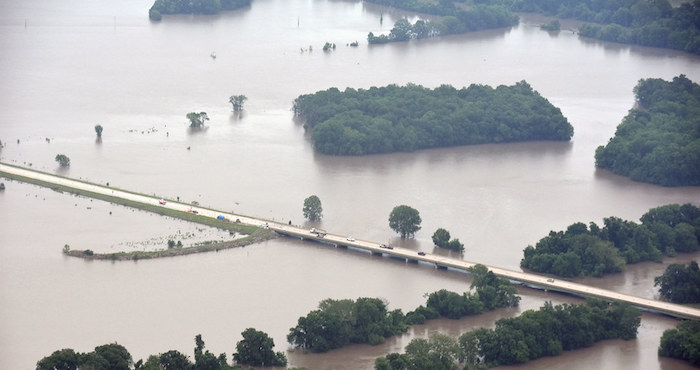
Flooding around the U.S. Highway 169 Neosho River bridge north of Chanute on May 28, 2019. (Photo by Civil Air Patrol – Kansas Wing)

KU NEWS SERVICE

Estimated flood depth grid near the city of Burlington, corresponding to the planned release of 28,600 cubic feet per second from John Redmond Reservoir on May 22, 2019. (Credit: Jude Kastens)

LAWRENCE — When Jude Kastens was developing a new floodplain mapping model more than a decade ago as part of his doctoral dissertation at the University of Kansas, he aimed to address a critical information gap that often hindered officials during major flooding events: the lack of real-time, wide-area predictions for floodwater extent and depth.​

Dependable, detailed inundation estimates are vital for emergency managers to have enough situational awareness to quickly get the right resources and information to flood-impacted communities. In 2007, severe flooding in southeastern Kansas put a spotlight on the lack of timely, reliable projections for floodwater spread.

With heavy rains this spring (May 2019 was the wettest month ever recorded in Kansas), officials at the Kansas Water Office and Kansas Division of Emergency Management worked with Kastens, now a KU associate research professor with the Kansas Applied Remote Sensing Program at the Kansas Biological Survey, to get a more precise read on where floodwaters could rise to, based on his approach to integrating data from elevation maps, stream gauges and National Weather Service river stage forecasts.

“I worked with the Kansas Water Office in May,” Kastens said. “The ground was saturated, and the reservoirs were getting full, and with a lot more rain in the forecast, major flooding across central and eastern Kansas was looking imminent. Some years ago we’d developed this inundation library largely in collaboration with the Water Office and the Kansas GIS Policy Board but had never had the chance to put it through its paces in real time. It was based on the approach that I developed for my dissertation, and we had flood libraries for the greater eastern half of Kansas, based on the gauged stream network. For instance, if you drive south of Lawrence on Highway 59, you’ll see a USGS stream gauge box by the bridge over the Wakarusa River.

There are about 200 gauges in Kansas that collect real-time stream stage information, and in times of flood, the National Weather Service provides stage forecasts several days out for a lot of these. We can take these data and map estimated current or future flooding, between gauges or around one.”

Kastens’ model (called FLDPLN, or “Floodplain”) maps potential inundation as a function of stage height using basic hydrologic principles and gridded elevation data. Because the approach requires so few inputs and little supervision, it has significant advantages for real-time mapping over existing methods such as the more precise but more complicated hydrodynamic models that FEMA uses to map 100-year floodplains.

Working with Kansas officials as historic rainfalls of 2019 threatened several areas of Kansas with flooding, mapping efforts were focused on three critical locations.

“We modeled the Neosho River south of John Redmond Reservoir in Coffey County down to Oklahoma, which is about a 100-mile stretch,” Kastens said. “We also modeled the Neosho and the Cottonwood rivers above John Redmond, centered around Emporia close to where those two rivers come together in Lyon County. The third area was around Salina, where flooding along the Saline River and Mulberry Creek was approaching historic levels.”

When John Redmond Reservoir just above Burlington on the Neosho River was nearly at capacity and the Army Corps of Engineers was planning the release of large volumes of water, Kastens’ efforts helped inform local leaders of the potential flooding extent — and they shared his flood maps with the public.

“Using projected discharge and stage information from the Corps, we modeled Neosho River flooding at Burlington and down through the rest of Coffey County,” Kastens said. “John Redmond was built by the Corps in the early 1960s to provide flood control along the Neosho, but the reservoir flood pool had reached capacity and needed to have some pressure released to avoid compromising the dam. With the Neosho already running high, city managers and commissioners had a lot of concern with how bad it was going to get because the Army Corps was going to have start releasing a very large quantity of water out of the reservoir. I made some maps using Corps projections supplied by the Kansas Water Office and also by the Coffey County GIS coordinator, Cara Mays. It helped greatly that Cara recently completed her master’s thesis at KU using the FLDPLN model to simulate the historic 1951 flood in Burlington, so she was well aware of its capabilities.”

Going forward, Kastens — who did a lot of this work during his free time in the evenings and weekends as a public service — hopes to automate the task of generating flood maps to lessen the workload when streams and rivers threaten to overspill their banks.

“With my other obligations at KBS, a lot of off-the-clock effort was needed to see this through,” he said. “Time is of the essence during major flood events. We need to develop software tools to help automate the mapping process and hand it off to these other agencies so they have the freedom to map whichever scenarios they want. I think our work in May demonstrated the value of our mapping approach, and hopefully we can pull together a project to help us move forward with the automation. So, when that next flood hits, emergency response personnel can just run the models as they see fit. That’s how we always envisioned this thing — we construct the inundation libraries for others to use during flood emergencies or simulations.”

Kastens’ novel approach to flood mapping has proven to be such an improvement, recently he’s worked with a private firm to commercialize the technology and provide services outside of Kansas to emergency management officials and entities with property in flood-prone areas.

“In 2015, we entered an agreement with Riverside Technology Inc. based in Fort Collins, Colorado, working through KU Center for Technology Commercialization to try to commercialize this stuff,” Kastens said. “They did their homework and market research and saw a real opportunity to develop inundation mapping solutions built around our flood libraries. Our contract with Riverside expires next year, so we will just have to see what happens after that. We made sure we carved out Kansas from the agreement, which allows us the freedom to provide direct assistance during flood events like we did in May.”

Kastens likens the projected inundation maps to predicted storm tracks or tornado watch or warning maps.

“They are never perfectly accurate, but then again neither are more sophisticated models. No two floods are the same, and a lot of resources are being expended in the public and private sectors to do what we are already capable of doing cheaply and efficiently right now here in Kansas.”

The Kansas Biological Survey, a KU Designated Research Center, was established at KU in 1911. It houses a diverse group of environmental research and remote sensing/GIS programs. The survey also manages the 3,700-acre KU Field Station, established in 1947; it offers sites for faculty and student study in the sciences, arts, humanities and professional schools.


For kids affected by domestic violence, Kansas program hopes fun can heal trauma

Through outings and conversation, mentors for the Empower Families Kansas Project teach children ages 8 to 18 how to trust adults again. (Walter/Creative Commons 2.0)


Kansas News Service

TOPEKA — Courtney Train spends her days going to nail salons, the pool and the dog park.

As a paid mentor and advocate for children ages 8 to 18 who’ve seen domestic violence at home or experienced it while dating, Train knows quality time — and fun — with a trusted adult can be in short supply for her clients.

So, she talks to them about safer sex. She analyzes media portrayals of relationships. She’s also taken them to the zoo, on college visits and to a county fair art competition.

“The idea of childhood is stolen from them,” Train said. “For them to just play, not have to think about adult issues, it’s really powerful.”

Domestic violence centers across Kansas are often ill-equipped to serve the needs of older children and teens, instead focusing on shelter for adult survivors and the young children they bring with them.

“It’s easy for us to think, ‘Oh, teens aren’t an issue,’” Train said. “It does not seem like there’s a lot of information and support out there.”

But thanks to a pilot project, Train, based in Salina, is one of six mentors at five domestic violence organizations across Kansas who have worked with older children and teenagers over the past two years.

Funded by a federal grant and coordinated by the Kansas Coalition Against Sexual and Domestic Violence, the Empowered Families Kansas Project is trying to fill that gap in Salina, NewtonIolaPittsburg and Garden City.

The coalition said results from the first two years are hard to quantify, but look to be promising. It plans to expand the pilot to cover more of the state over the next year.

The mentors, like Train, help connect children with therapists. Older children receive guidance on career paths. That kind of long-term, individual attention is rare.

“Our services are crisis-oriented,” said Kathy Ray, director of advocacy education and rural projects at the Kansas Coalition Against Sexual and Domestic Violence. “But it’s often short term.”

In surveys, kids involved in the program and their parents say they’ve seen an improvement in grades, emotional control and communication between family members.

Rebuilding trust in adults is crucial, Ray said, because it helps children trust their parents again.

“Those relationships have often been undermined by the batterer, by the abuser,” she said. “So it’s helping to rebuild that communication and relationship with the non-abusive parent.”

Train has mentored about 15 children since she started her role in December 2017. She said she’s taught them to give compliments, play games and trust family again.

“Usually at first, when I start working with the kids, they do not like their sibling. They’re screaming at each other,” she said. “It’s been over a year, and the mom will tell me, ‘Oh my gosh, they’re getting along and it’s a completely different household.’”

It’s common for domestic violence programs across the country to lack services specifically for older children and teenagers, said Baonam Giang of Break the Cycle, a national organization that specializes in combating teen dating violence. Parents often don’t want to admit their children are dating, so they don’t know if they need to seek help.

“We know that young people are dating whether you choose to believe it or not,” he said. “They’re having relationships in school.”

Abuse among teens often manifests in digital form, through cyberbullying or sharing explicit photos without consent. Violence in relationships is especially common for teens whose own parents have been abusive.

That makes relationships with other adults especially important, Giang said.

“It’s really modeling to them what a healthy relationship is that they can see,” he added.

If those lessons are never taught, it can become a cycle, where a child witness to domestic violence can later become a perpetrator. Or the child can suffer from the effects of trauma well into adulthood.

“It’s such a pivotal time in a person’s life,” Train said. “That’s where they decide the types of behaviors that they’ll have, the types of relationships that they’ll get into.”

Nomin Ujiyediin reports on criminal justice and social welfare for the Kansas News Service. Follow her on Twitter @NominUJ or email [email protected].

The Kansas News Service is a collaboration of KCUR, Kansas Public Radio, KMUW and High Plains Public Radio focused on the health and well-being of Kansans, their communities and civic life. 

KDWPT Commission to meet Aug. 15 in Overland Park

KDWPT

PRATT – The Kansas Wildlife, Parks and Tourism (KWPT) Commission will conduct its next public meeting on August 15, 2019 at the University of Kansas Edwards Campus, Best Conference Center, 12600 Quivira Rd. in Overland Park. All are welcome to attend the meeting, which begins at 1:30 p.m., followed by a public hearing at 6:30 p.m. Time will be set aside for public comment on non-agenda items at the beginning of both the afternoon and evening sessions.

During the afternoon session, attendees will hear a report on agency and state fiscal status, and a 2019 legislative session update. Staff will then present information for a general discussion on big game regulations and deer research, outdoor mentors, and microchemistry in fisheries. Then, a series of workshop topics – items that may be voted on at a future commission meeting – will be discussed. Workshop items include electronic licensing, threatened and endangered species regulations, fishing regulations, state park regulations, turkey regulations, and electric bicycles.

Commissioners will recess by 5 p.m. and reconvene at 6:30 p.m. to vote on the following items:

  • Reduction of disabled veteran’s license fees
  • Backcountry access pass
  • Furbearer and coyote management units
  • Otter management units
  • Furbearer season dates and bag limits

If necessary, the Commission will reconvene at 9 a.m. at the same location, August 16, 2019, to complete any unfinished business. Should this occur, time will again be set aside for public comment on non-agenda items.

Information about the Commission, including the August 15, 2019 meeting agenda and briefing book, can be downloaded at ksoutdoors.com/KDWPT-Info/Commission.

If notified in advance, the Commission will have an interpreter available for the hearing impaired. To request an interpreter, call the Kansas Commission for the Deaf and Hard of Hearing at 1-800-432-0698. Any individual with a disability may request other accommodations by contacting the Commission secretary at (620) 672-5911.

The next KWPT Commission meeting is scheduled for Thursday, September 19, 2019 at the Kansas Wetlands Education Center in Great Bend.

Link between women’s gun ownership and increased political participation shown in KU study

Measuring to a paper target on the shooting range. (Photo credit iStock)

KU NEWS SERVICE

LAWRENCE — Politicians pay close attention to the demands of gun owners. They also pay attention to women voters. But little of their focus is aimed at women who are gun owners.

Apparently, that is a big oversight by those seeking public office.

“I wanted to explore the ‘gun gap’ among women,” Alexandra Middlewood said.

“There’s research out there on the political effects of gun ownership, but the effect on women specifically really hasn’t been looked at — especially not in a quantitative way, using survey analysis and data.”

Alexandra Middlewood

Middlewood, who earned her doctorate in political science at the University of Kansas in May, joins KU professors Mark Joslyn and Don Haider-Markel in crafting an article titled “Intersectionality in Action: Gun Ownership and Women’s Political Participation.” It will be published in a forthcoming issue of Social Science Quarterly (now available online).

The article contends that female gun owners display levels of political involvement in gun policy and a greater willingness to engage in discussions about gun control than those who don’t own weapons. Interestingly, the evidence also suggests greater political participation among gun-owning women in matters not related to policy.

Simply put: A woman who owns a gun is more likely to vote.

“A lot of people in politics right now are talking about gun control versus gun rights. If we know who is participating in politics and why they’re participating, and why guns are getting them to engage, it has pretty substantial effects on actual policymaking,” Middlewood said.

To determine these results, Middlewood and her associates accessed Pew Research Center data examining political participation pertaining to gun policy. They then launched their own national survey of nearly 900 gun owners. Integrating a 2016 American National Election Studies survey about behavioral and cognitive forms of political participation completed the process.

“There has been a strong movement among gun groups and businesses to attract more women, but the evidence seems to suggest those efforts have failed,” said Haider-Markel, professor and chair of political science at KU.

“However, if you examine gun ownership since the 1970s, you can see that male gun ownership has declined while female gun ownership has stayed about the same as a percentage of the adult population.”

Specifically, the ratio of women who possess guns has remained stable at 11 percent since 1980, even though ownership among men has dropped from 50 to 33 percent during that same span.

Middlewood cites several factors for this statistic.

“A lot of the reason women will say they own guns is fear of victimization. They also want to feel empowered. They want to feel like they can protect themselves if needed in certain circumstances,” she said.

“There is some significant research that shows when women feel like they’re going to be the victims of crime, or they live in areas where crime rates are increasing, the number of concealed carry permits that women apply for increases.”

Does Middlewood herself own a firearm?

“I do not,” she said. “However, some of the surveys about gun ownership ask, ‘Is there a gun in the house?’ I personally do not own a firearm. But my partner is a police officer, and he owns several. So in certain surveys, I would be considered a gun owner as well.”

A Michigan native, Middlewood spent the last three years at KU earning her doctorate, and she will relocate to Wichita State University this month as an assistant professor of American politics. Her area of expertise is public opinion and political behavior.

She’s already expanded on the politics of gun ownership and gender for her dissertation. She hopes to soon turn this topic into a book.

“The Me Too Movement is becoming stronger and stronger, and it’s what we think of as being a pretty liberal movement. And we think of gun ownership as being associated with conservatism,” Middlewood said. “But the research shows that when women feel victimized, they’re more likely to own a gun. So there may be some unexplored connection there.”

Kansas Firefighter Recruitment and Safety Grant application period open

OFFICE OF KS FIRE MARSHAL

TOPEKA –  The application period for the FY2020 Kansas Firefighter Recruitment and Safety Grant (KFRSG) is now open until the grant deadline of Oct. 1, 2019. The Office of the State Fire Marshal (OSFM) makes this grant possible through its budget passed by the State Legislature and signed by Governor Laura Kelly. This year, $400,000 has been allotted to assist volunteer and part-time fire departments across the state with firefighter safety and recruitment.

“We are pleased that we were able to continue this important grant funding through our budget this year,” Doug Jorgensen, state fire marshal, said. “Some of these smaller departments are the sole providers of fire and rescue response for rural areas in our state. So, it is vital that they have the proper safety gear and recruitment tools to ensure their community’s safety.”

Grants issued through the KFRSG program will cover the costs of safety gear for firefighters and physical examinations for firefighters whose physicals are not covered by their departments. It will also provide funds for the purchase of new washer-extractor machines used to clean bunker gear following a fire, with further funds available for the creation of Explorer programs to attract youth volunteers into the fire service.

We know that volunteer and part-time fire departments face recruitment and retention challenges, because they do not have the funding to provide safety equipment. Without new equipment provided by the recruiting fire department, potential volunteers are faced with not only donating their time but also providing their own safety gear, sharing gear with others, or doing without.

Eligible applicants must be an established and recognized Kansas volunteer/part-time fire department in good standing with OSFM on the National Fire Incident Reporting System (NFIRS) or a volunteer firefighter in good standing with their local fire department. Departments must also participate in the Comprehensive Resource Management & Credentialing System (CRMCS).

Submission requirements and applications are now available at www.firemarshal.ks.gov/KFRSG. The deadline for submission to receive funds through the KFRSG is Oct. 1, 2019.

Gov. Kelly proclaims August ‘Breastfeeding Awareness Month’

KDHE

TOPEKA – At an official signing ceremony, Governor Laura Kelly proclaimed August “Breastfeeding Awareness Month” in Kansas. This proclamation recognizes the importance of breastfeeding for the health and wellbeing of Kansans.

“We are extremely pleased with Governor Kelly’s proclamation which highlights the importance of breastfeeding support for families in Kansas.  This proclamation supports their decision and provides a foundation to build support for the policy and practice changes needed to build a landscape of breastfeeding support in our state.” said Brenda Bandy, Executive Director of the Kansas Breastfeeding Coalition (KBC).

“Kansas recognizes breastfeeding as a public health responsibility and priority,” said KDHE Secretary Lee Norman, MD. “Strides in improved breastfeeding rates have been possible through strong statewide partnerships and community collaboration. We will continue to promote and support breastfeeding as a way protect and improve the health of mothers and infants.”

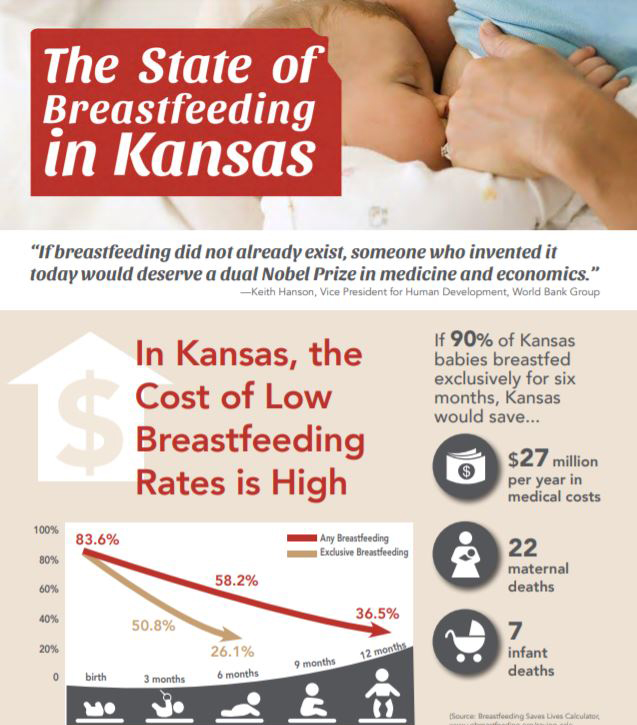
More than 90 percent of families in Kansas choose to breastfeed. Yet despite its importance, only 31 percent of Kansas’ infants are exclusively breastfed during the critical first six months of life. Increased investment in breastfeeding could results in saving an estimated 22 women’s lives each year due to breast cancer, heart disease, diabetes and hypertension.  Investing in breastfeeding could save the lives of seven children, due mostly to Sudden Infant Death Syndrome (SIDS).  And finally, investing in breastfeeding would save Kansas more than $27 million in medical costs each year. [1]

The proclamation stresses the role of every Kansan to make breastfeeding easier in our state.

The Kansas Breastfeeding Coalition has suggested actions various groups and individuals can take to support breastfeeding in the “State of Breastfeeding in Kansas” available at https://ksbreastfeeding.org/wp-content/uploads/2018/09/stateofBFinKS.pdf.

Nominations now accepted for Kansas Health Champion awards

KDHE

TOPEKA – The Governor’s Council on Fitness is now accepting nominations for its annual Kansas Health Champion Awards. Awards are given to individuals and organizations that make an exceptional effort to model, encourage and promote health and fitness in Kansas. The deadline for nominations is September 30. Award recipients will be recognized at the Community Health Promotion Summit on January 30 in Wichita.

“The Kansas Department of Health and Environment is excited to partner in this important initiative to recognize those who make healthy living in our state a priority,” said KDHE Secretary Lee Norman, MD. It’s important that we recognize their efforts and the difference they are making in their communities.”

Nominees shall have demonstrated:

•           Work that goes above and beyond what is expected to model, encourage and promote fitness

•           Work that helps overcome health inequities

•           Sustainable influence or activity

•           Far-reaching health impact

“In addition to promoting effective models for increasing physical activity, nutrition and tobacco-free living for replication by organizations and communities around the state, the awards also allow us the opportunity to honor the outstanding work of one individual and one organization this year,” said Marlou Wegener, Chair of the Governor’s Council on Fitness and Manager of Community Relations, Blue Cross and Blue Shield of Kansas.  Eligible nominees might include an outstanding volunteer, a school, a local community, a newspaper or individual reporter, a local or State policy maker, or an employer, among others.

For more information and to submit a nomination, go to getactivekansas.org and click on the nomination form link. If you have questions about the nomination process, contact Connie Satzler at 785-587-0151.

The Governor’s Council on Fitness advises the Governor and others on ways to enhance the health of all Kansans through promotion of physical activity, good dietary choices and prevention of tobacco use.


Indigenous food sovereignty examined in book by KU prof

KU NEWS SERVICE

LAWRENCE — Sustainability. Locally sourced. Farm-to-table.

These are familiar concepts to Americans who are hoping to improve their eating habits.

But the term that indigenous food activists are also adopting is “food sovereignty,” which refers to healthy and culturally appropriate food generated by a community that oversees the entire process, from production to trade to sustainability.

For Devon Mihesuah, a member of the Choctaw Nation, food sovereignty has taken on an even more personal meaning.

“Tribes are not sovereign and probably never will be. But we still like this term because that is our great goal: to have complete control over production of our food, our environment and our politics,” she said.

Mihesuah, the Cora Lee Beers Price Teaching Professor in International Cultural Understanding at the University of Kansas, has put together a new book titled “Indigenous Food Sovereignty in the United States: Restoring Cultural Knowledge, Protecting Environments, and Regaining Health” (University of Oklahoma Press, 2019). She describes it as “the first comprehensive volume to address the social, political, economic, religious and environmental concerns associated with indigenous food and health.”

Her latest book (which she co-edited with Elizabeth Hoover of Brown University) contains 14 essays addressing topics such as revitalizing ancestral gardens, protecting hunting and gathering rights, climate change, treaty abrogation and racism. Mihesuah penned three of the essays.

“All of the contributors are food and environmental activists, and most of them are not in academia,” she said of the book, which incorporates a multitude of tribal viewpoints from across the country, including Alaska and Hawaii.

Mihesuah hopes the 390-page effort will illuminate and clarify a number of issues involving indigenous food sovereignty, not the least of which is specifying what is actual indigenous food.

“The topic that goes through many of these essays is what does traditionalism mean? What is traditional food?” she said. “And for a lot of native people, that’s fry bread. So we talked about the meaning of true, traditional, pre-contact food and how that is a connection to one’s culture.”

She admits it’s easier to explain what pre-contact food isn’t than what it is.

“It’s not chicken, cows, sheep, goats — so we didn’t have milk, dairy, eggs, cheese. For instance, pre-contact foods are elk, white-tailed deer, turkeys, corn, squash, beans and bison,” she said.

While many assume native foods to be things such as okra, black-eyed peas and watermelon, those are all actually African imports that accompanied the slave trade. Pawpaws, persimmons and black walnuts that can be foraged in Kansas represent some of the actual fare.

“The importance of protecting our natural resources was one of the big themes of this book. And that includes the plants we forage for,” she said.

But she also notes “indigenous” should not be confused with vegan or vegetarian.

“Gardening and farming are very important, but not every tribe has an agricultural tradition,” she said. “Comanches, for example — my husband’s tribe — did not farm. They don’t have memories of seeds. They’re not going to thunder across the plains after bison anymore. So what should they do? What foods do they return to?”

Mihesuah herself has always been health-conscious, having grown up consuming these foods.

“In fact, the first novel I wrote (2000’s “Roads of My Relations”) is based on family stories where the garden was meaningful, even before we (the Choctaw) were removed in the 1830s. So I have kept this same garden going, trying to emulate the one my grandparents had in Muskogee, Oklahoma. And now my kids have learned how,” she said.

Part of the challenge has been getting her own community to adopt such practices, especially following decades of poor eating habits.

“I’ve become a real activist against fry bread, which makes a lot of people angry,” she said. “To me, that’s a symbol of everything that is wrong with the colonized diet tribes have adopted. Obesity, high blood pressure and diabetes have taken over. It’s like a tidal wave. And if you decide you’re going to eat fry bread every day, that’s really symbolic of the problem.”

Mihesuah earned her doctorate in American history from Texas Christian University. She’s written 19 books, including five fictional novels, and served as editor of the American Indian Quarterly for nine years.

A faculty member at KU since 2005, Mihesuah focuses on indigenous methodologies and feminism, American Indian stereotypes and violence in American Indian territory.

Currently, she is also revising and expanding her first cuisine-related book, “Recovering Our Ancestors’ Gardens: Indigenous Recipes and Guide to Diet and Fitness.” This won a special jury award at the Gourmand World Cookbook Awards in 2005.

“We want young native people and older native people to really try to revisit their traditional ways of eating and their food ways, and to engage with those within their tribe who are knowledgeable about it,” Mihesuah said.

“Ultimately, I want indigenous people to become food activists.”

Audubon of Kansas director receives conservation award

Ron Klataske

KDWPT

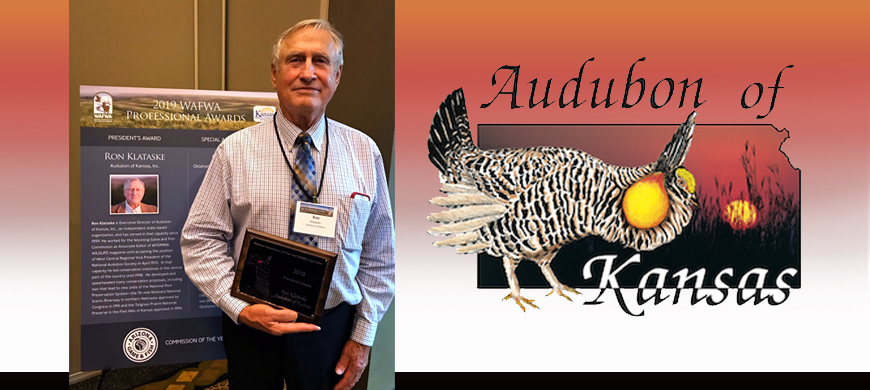
TOPEKA – Ron Klataske, executive director of Audubon of Kansas, was recently honored with the Western Association of Fish and Wildlife Agencies’ (WAFWA) President’s Award in recognition of his long-time commitment to conservation efforts in Kansas, Nebraska and the central Great Plains. Brad Loveless, Secretary of the Kansas Department of Wildlife, Parks and Tourism (KDWPT), acting in his capacity as WAFWA president, presented the award to Klataske at the WAFWA Annual Conference in Manhattan, KS on July 15, 2019.

Klataske has led conservation efforts for 50 years as a representative of the National Audubon Society from 1970 to 1998 and Audubon of Kansas beginning in 1999. Klataske’s portfolio of successful campaigns includes the Tallgrass Prairie National Preserve in the Kansas Flint Hills and the designation of a 76-mile portion of the Niobrara River in Nebraska as a National Scenic River. He was a driving force behind the creation of the Konza Prairie Biological Research Station south of Manhattan, the Tallgrass Prairie in Oklahoma, a trail system using the flood control levees along the Kansas River in Lawrence and the linear trail in Manhattan.

Furthermore, he helped stop proposed dam and diversion projects on Nebraska’s Platte and Niobrara rivers. His efforts preserved the migration stopover locations of the sandhill crane. Every year from late February to early April, hundreds of thousands of sandhill cranes stop along the Platte River on their way northward, creating one of the most majestic migration spectacles in the country. Klataske spearheaded the formation of Nebraska’s crane festival to celebrate this yearly event. The festival will have its 50th anniversary in March 2020 and educates and inspires thousands of visitors each year.

In announcing the award, Loveless noted that Klataske was well-deserving of WAFWA’s President’s Award. “Ron is a great partner to KDWPT, and not because we always agree,” he said. “We sometimes don’t see eye-to-eye, but Ron brings diverse perspectives, visionary ideas and seemingly boundless passion and creativity. We need people like Ron to help us make better decisions. He has created a positive legacy of conservation in the Great Plains and we owe him our gratitude.”

About WAFWA

The Western Association of Fish and Wildlife Agencies (WAFWA) has been advancing conservation in western North America since 1922. It represents 24 western states and Canadian provinces. WAFWA is an expert source for information about western wildlife and supports sound resource management and building partnerships at all levels to conserve native wildlife for the use and benefit of all citizens, now and in the future.

Kansas K-12 schools crisis drill requirement drops to 9 per year

The number of crisis drills for Kansas K-12 schools has dropped from 16 to 9 per year.

OFFICE OF GOV.

TOPEKA – Governor Laura Kelly signed Senate Bill 128 into law on April 10, 2019, changing the number of safety drills K-12 schools in Kansas must perform each year from 16 to nine.

As schools across the state of Kansas know, Senate Bill 109 changed the landscape of how K-12 schools conducted school drills. When Senate Bill 109 passed in 2018, schools were required to change the number and type of drills conducted during the school year. The change required schools to conduct nine crisis drills, four fire drills and three tornado drills during the school year, for a total of sixteen drills per school year. The change was positive in bringing about crisis drills to schools. However, the total number of drills proved to be overwhelming for many school districts.

With that in mind, Senate Bill 128 was introduced to change the number of drills required for schools. The bill changes the total number of drills from 16 to nine. Schools must conduct at least two tornado drills (one in September and one in March), three crisis drills and four fire drills per school year.

Crisis drills should reflect events that have a potential to occur in your school and can include, but are not limited to, things such as a water main break, earthquake, missing student, hazardous spills, intruders, active shooters or medical emergencies.

The new law went into effect July 1, 2019 and will be in effect for the 2019-2020 school year. Updated information and the new K-12 School Drills Form, reflecting the changes in the drill requirements, are posted on our website at https://firemarshal.ks.gov/information-on/schools—usd-k-12.

Governor appoints three members to Capitol Preservation Committee

Kansas capitol building

OFFICE OF GOV.

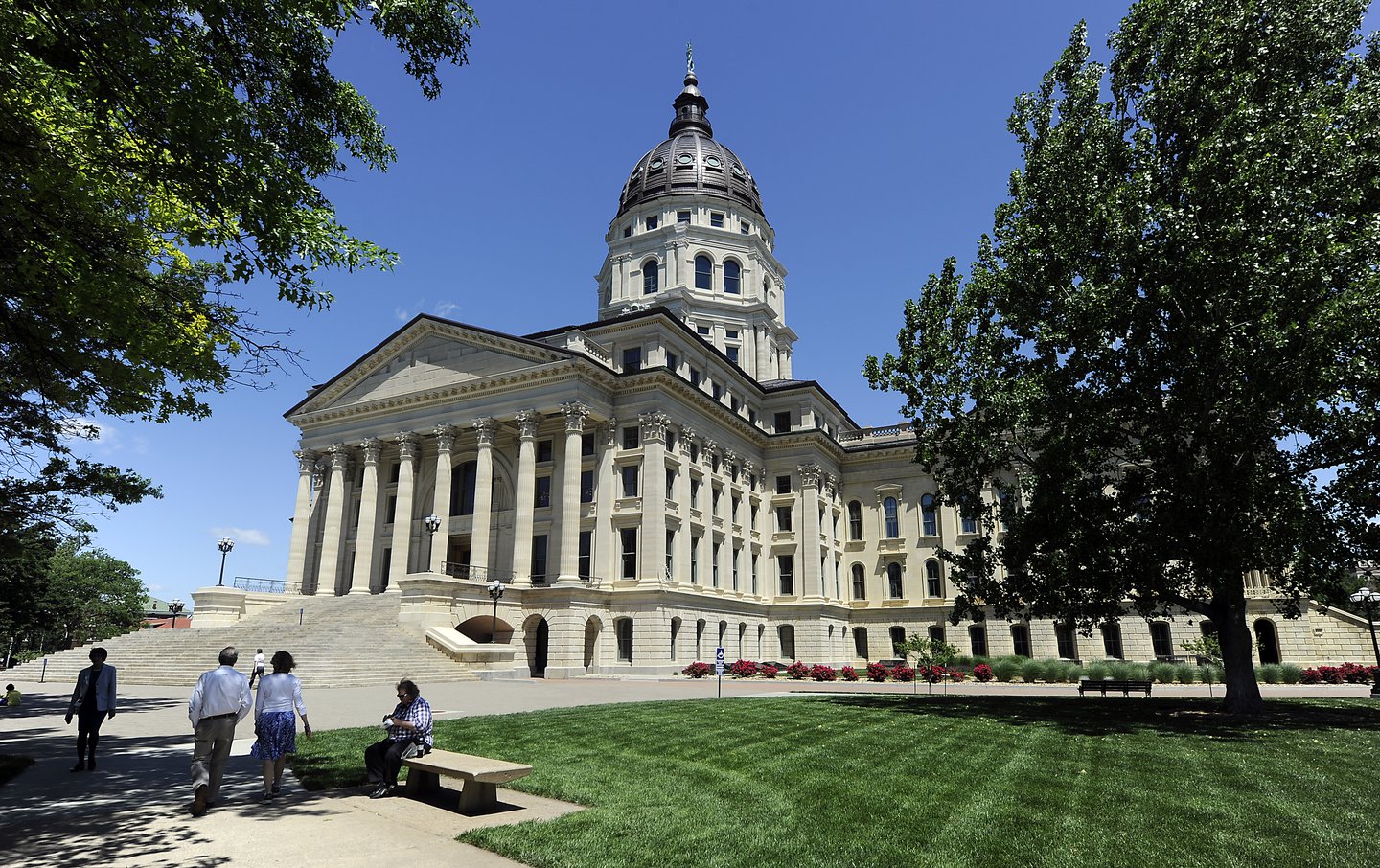
TOPEKA – Governor Laura Kelly appointed Will Lawrence and Sharon Wenger, and reappointed Jennie Chinn to the Capitol Preservation Committee.

“I know the addition of Will and Sharon, and Jennie’s continued service on the Capitol Preservation Committee will guarantee beauty and restoration practices at the Statehouse,” Kelly said. “I am proud to appoint Kansans who have special knowledge regarding the unique history of the building in hopes that they will continue to make this landmark outstanding.”

Will Lawrence, Lawrence, currently serves as chief of staff to the governor. Previously, Lawrence worked as the chief of staff for Kansas Senate Minority Leader Anthony Hensley. He has also worked as an attorney in private practice. Lawrence graduated from Washburn University with a bachelor’s degree in political science and received his juris doctorate from the Washburn University School of Law.

Sharon Wenger, Topeka, currently serves as senior fiscal analyst in the Kansas Legislative Research Department. Previously, Wenger served as the director of the Bureau of Epidemiology, assistant secretary, and assistant to the director of Health at the Kansas Department of Health and Environment. Wenger received her master’s degree in public administration from the University of Kansas and a bachelor’s degree in political science from Kansas State University.

Jennie Chinn, Topeka, will serve as chair of the committee. Chinn is the executive director of the Kansas State Historical Society and has served on the committee for several terms. Previously, Chinn served as education division director and interim executive director of the Historical Society. She graduated from the University of California with a bachelor’s degree in humanities and a master’s degree in folklore and mythology.

The committee approves all proposals for renovation concerning all areas of the state Capitol building, including the Capitol’s visitor center and the grounds surrounding the Capitol. The group works to preserve the proper décor and to assure the art and artistic displays are historically accurate. The group also oversees the reconfiguration or redecoration of committee rooms throughout the building.

Copyright Eagle Radio | FCC Public Files | EEO Public File