We have a brand new updated website! Click here to check it out!

🎥 KDCF: Child support now largely collected and dispersed electronically

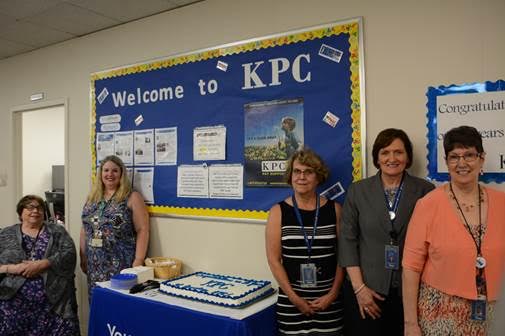
(L to R): DCF Secretary Phyllis Gilmore, Director of Child Support Services Trisha Thomas, KPC staff members Pam Underwood, Gina Hoffman and Jeanette Smith celebrate 10 years of successful KPC operation under YoungWilliams.

KDCF

TOPEKA – This week, the Kansas Payment Center (KPC), Topeka, celebrated 10 years of successful operation. Through a contract with the Kansas Department for Children and Families (DCF), the KPC processes all child support payments in the state.

“The work being done at the Kansas Payment Center is tremendous,” said DCF Secretary Phyllis Gilmore. “The KPC has helped countless children receive the financial support the need and deserve.”

Over the last decade, the KPC has processed more than 20.7 million child support receipts, totaling $4 billion dollars. The company has also answered more than 1.6 million customer service calls.

In September 2013, Kansas became the first state in the nation to fully privatize its child support system. Since the full transformation into a privatized system, cost-effectiveness has substantially increased across the board and multiple achievements have been achieved. Due to increased effective practices and procedures, the KPC has maintained an accuracy rating of 99.99 percent.

Another improvement that has been made is that child support is now largely collected and dispersed electronically. In 2007, the KPC reported that only 27 percent of incoming child support payments were being processed electronically through its payment center, but now more than 66 percent of payments are being processed electronically, ranking Kansas sixth in the nation for all states that do not require payers to remit electronically.

Among other accomplishments achieved in recent years, the KPC created an online portal for individuals and employers to pay using e-check, debit or credit card. Currently, there are nearly 40,000 registered users of this system. Also, within the last year, the KPC has partnered with PayNearMe and MoneyGram to provide convenient methods for non-custodial parents to make cash payments.

You can learn more about the KPC and other child support services available to Kansans at www.dcf.ks.gov.
State Librarian Jo Budler to retire

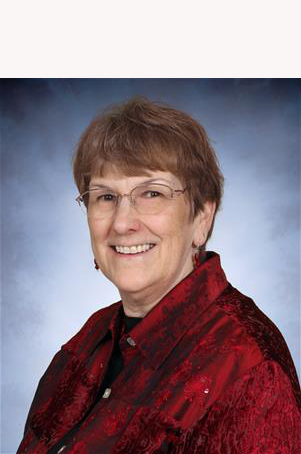
Retiring State Librarian Jo Budler

OFFICE OF GOV.

TOPEKA – Governor Sam Brownback today announced that the State Librarian, Jo Budler, will step down at the end of the month. Budler has served as State Librarian since 2010.

“I am grateful for the wealth of experience Jo has provided to the state,” said Governor Brownback. “Her career has been full of service to our state and many others. We appreciate the hard work and dedication that she has given to Kansans at the State Library.”

Budler was formerly State Librarian of Ohio. She has also served as Deputy State Librarian of Michigan and the Director of Network Services and NEBASE, the State of Nebraska’s Online Computer Library Center network.

“It has been a privilege to serve as State Librarian of Kansas and to work with librarians across Kansas to provide services to all Kansans,” Budler said. “The highlight of my career was being named Librarian of the Year in 2013 for retaining the statewide e-book collection. This would not have been possible without the support of the Attorney General’s office, in particular, Jeff Chaney, and the work of State Library staff.”

Cindy Roupe, incoming State Librarian

Cindy Roupe will take over as State Librarian upon Budler’s retirement. Cindy currently serves as Director of Reference at the State Library.

The State Library of Kansas seeks to improve the lives of Kansas residents by providing resources that increase reading readiness and on-grade reading acuity, improve chances for academic success, help start and grow businesses, assist individuals with employment opportunities and provide lifelong educational opportunities.

Nominations accepted for outstanding minority, women-owned businesses

KDC

TOPEKA–The Kansas Department of Commerce Office of Minority and Women Business Development is accepting nominations for Kansas minority and/or women owned businesses, advocates, young entrepreneurs and corporations. These nominations celebrate Minority Enterprise Development (MED) Week, and nominees will be recognized at the annual Kansas Minority and Women Business Awards Luncheon to be held on Oct. 5 at the Capitol Plaza Hotel in Topeka.

“Minority Enterprise Development Week offers us the opportunity to celebrate the many outstanding minority and women owned business in our state,” said Kansas Commerce Interim Secretary Nick Jordan. “These Businesses make Kansas a better place to live and work by creating jobs and giving back to their communities”

The deadline to nominate a business or individual is Friday, July 14. Online nomination forms can be accessed at KansasCommerce.gov/MEDweek. To request a hard copy of the form, please contact Rhonda Harris at [email protected] or (785) 296-3425. All forms submitted by mail must be postmarked by July 14. Forms can be mailed to Rhonda Harris, Office of Minority and Women Business Development, Kansas Department of Commerce, 1000 S.W. Jackson St., Suite 100, Topeka, KS 66612; faxed to (785) 296-3490; or emailed to [email protected].

The Office of Minority and Women Business Development provides assistance in business management, identifying resources for financing and establishing contacts in the public and private sectors. The office is responsible for certifying minority- and women-owned businesses as small disadvantaged businesses for procurement and subcontracting opportunities.

KHI: Analysis of the U.S. Senate health bill; potential impact in Kansas

KHI

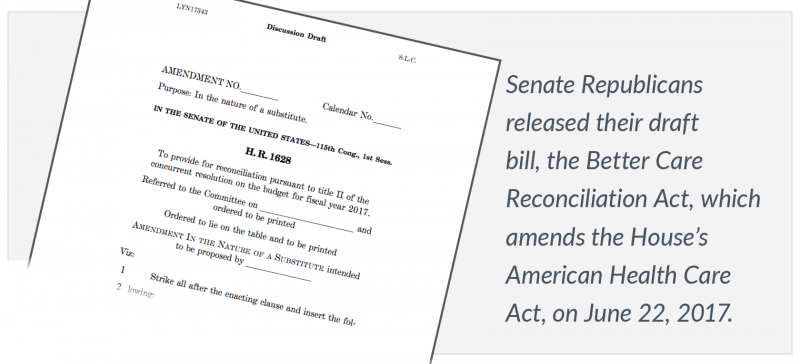
TOPEKA–Kansas Health Institute has developed an issue brief describing the main elements of the U.S. Senate’s proposed legislation to repeal and replace the Affordable Care Act, a bill entitled the Better Care Reconciliation Act (BCRA). The Congressional Budget Office has estimated that compared to current law, the BCRA will result in 22 million more uninsured Americans and will also reduce the federal deficit by $321 billion by 2026. These impacts are primarily the result of ending enhanced federal funding for Medicaid expansion, reducing premium tax credits, eliminating cost-sharing subsidies, and enforcing slower growth in future Medicaid spending.

The brief highlights how the BCRA differs from current law and from the House-passed American Health Care Act (AHCA) and discusses elements of the BCRA that would affect Kansans, including:

  • Repealing both the individual and employer mandates for insurance coverage;
  • Requiring a six-month waiting period for individuals who experience a gap in coverage;
  • Making premium subsidies unavailable to individuals who have access to any employer-sponsored insurance and less generous for some who remain eligible, and ending cost-sharing subsidies after two years;
  • Allowing states to use Section 1332 waivers to waive essential health benefits requirements and other provisions that could affect individuals with pre-existing conditions;
  • Phasing out enhanced federal funding for Medicaid expansion, but proposing to address the “coverage gap” by allowing more low-income people to use tax credits to pay for premiums; and
  • Fundamentally changing how Medicaid is financed by creating hard caps on federal funding.

KHI also has prepared a memo in response to questions about how Medicaid per capita caps proposed in the AHCA and BCRA might affect Kansas.

The analysis shows that if the AHCA version of the caps had been in place in 2015 and 2016, Kansas would have needed to return $79 million in federal funds. The BCRA uses a different Medicaid growth rate than the AHCA to calculate spending targets starting in 2025, and the analysis shows that if that rate had been in place in 2015 and 2016, Kansas would have needed to return $211 million in federal funds.

The Kansas Health Institute delivers credible information and research enabling policy leaders to make informed health policy decisions that enhance their effectiveness as champions for a healthier Kansas. The Kansas Health Institute is a nonprofit, nonpartisan health policy and research organization based in Topeka, established in 1995 with a multiyear grant from the Kansas Health Foundation.

Special hunts provide high-quality hunting opportunities

KDWPT

PRATT – Exclusive access to land not normally open to hunting and above average success rates. Sound like an expensive hunting lease? Well, it’s not. The Kansas Department of Wildlife, Parks and Tourism’s Special Hunts program provides hundreds of such hunts each fall, and there’s no charge. All you have to do is apply.

The program offers hunting opportunities with limited access to public and private land, providing the potential for high-quality hunts and greater harvest rates. Because each hunt is open to a limited number of hunters, applications must be made online, and random drawings will determine who is selected. The application period opens July 15, 2017, and the deadline for First Draw Hunts (hunts occurring in September and October) is 9 a.m., Aug. 14, 2017. The application deadline for Second Draw Hunts (hunts occurring in November, December, January and February) is 9 a.m., Sept. 25, 2017.

Any resident or nonresident hunter may apply. When applying online, hunters will select hunts by species, date and category, which include Open Hunt, Youth Hunt, or Mentored Hunt. All applicants are eligible to apply for Open Hunts, regardless of age or hunting experience. Youth Hunts require parties to include at least one youth 18 or younger, accompanied by an adult 21 or older who may not hunt. Mentored Hunts are open to both youth and novice hunters supervised by a mentor 21 or older who may also hunt. There are more than 500 individual hunting opportunities available for the 2017-2018 hunting seasons.

A random computer drawing will be conducted within one week of the application deadline. Successful applicants will be emailed their hunt permit, as well as area maps and other pertinent information. Hunters are responsible for purchasing necessary licenses and permits required by law.

Special hunts occur on wildlife areas, state parks, private land parcels, a national wildlife refuge, U.S. Army Corps of Engineers areas and even city- or county-owned properties. Hunts are divided by species, equipment and hunt type. Most of the hunts are for deer and upland game, but opportunities are also available for waterfowl, doves, turkey and furbearers.

For more information on the Special Hunts Program, visit ksoutdoors.com and click “Hunting,” then “Special Hunts Information.”

Wolf Creek Nuclear Power Plant targeted for cyberattack; Sen. Moran issues statement

Wolf Creek generating station, Burlington (Photo courtesy Wolf Creek Nuclear Operating Corp.)

WASHINGTON – U.S. Senator Jerry Moran (R-Kan.) issued the following statement regarding reports of cyberattacks targeting nuclear power plants across the country, including Wolf Creek Nuclear Operating Corporation in Burlington, Kansas:

“Reports of cyberattacks on the Wolf Creek Nuclear Operating Corporation in Burlington, Kansas, and other nuclear power plants across the country are deeply concerning and a serious threat to national security.

“Our nation’s energy companies fuel the American economy and must be protected from bad actors trying to disrupt our energy sector networks.

“I am working with the appropriate authorities to learn more about the cyberattacks at Wolf Creek and ways in which our federal government can work more closely with the private sector to protect our critical infrastructure systems from cyberattacks.”

Elk and either-species deer permit applications accepted online through July 14

KDWPT

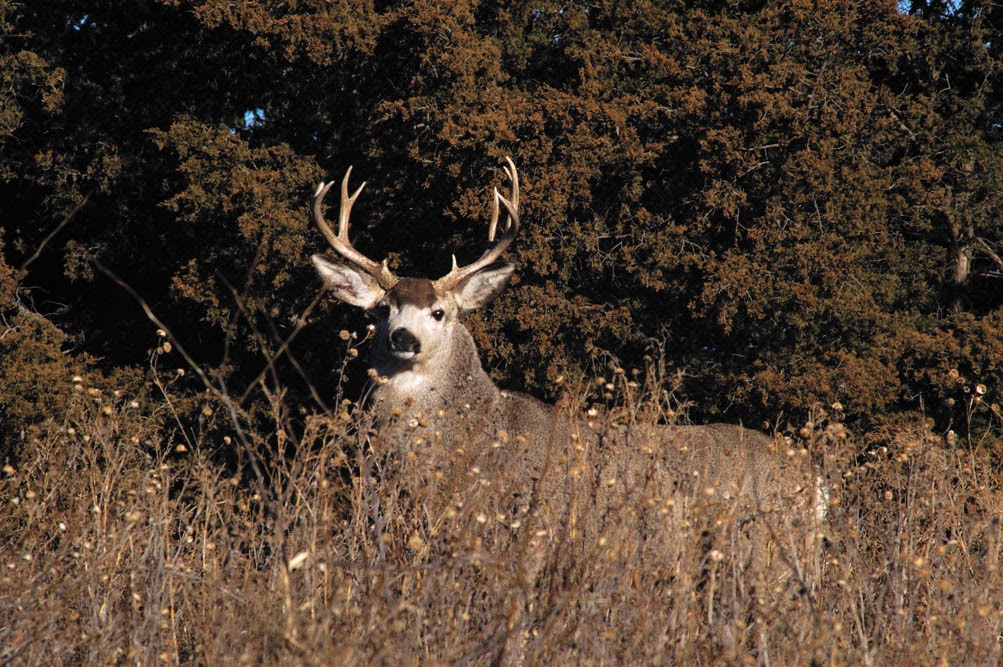
PRATT – The application deadline for limited elk and either-species deer firearm permits is July 14, 2017. Kansas residents are eligible to apply online for one of 12 Either-species Elk permits and 15 Antlerless-only Elk permits allocated for Unit 2a (Ft. Riley). And resident hunters who want to hunt mule deer with a firearm can apply for limited Either-species Deer permits valid in the East or West zone. A hunter who does not wish to hunt this year may purchase a preference point that will count toward a firearm Either-species/Either-sex Deer permit in a future drawing or a bonus point for limited elk permits.

Elk permit applicants only pay the application fee ($12.81) when applying. Successful applicants will be notified by mail and the permit fee will be collected. Unsuccessful applicants will automatically receive a bonus point. Anyone who receives a limited Either-sex Elk permit is not eligible to apply again. Anyone who receives a limited Antlerless-only Elk permit may not apply again for a five-year period. All deer and elk permit applicants can view drawing results online two to four weeks after the application deadline.

To apply or learn more, visit www.ksoutdoors.com and click on “Hunting,” then “Applications and Fees,” or call (620) 672-0728.

SEASONS

Elk seasons for Ft. Riley are: Muzzleloader and Archery – Sept. 1-Sept. 30, 2017; Firearm Season for Either-species elk – Oct. 1-Dec. 31, 2017; Firearm antlerless, first segment – Oct. 1-31, 2017; Firearm antlerless, second segment – Nov. 1-30, 2017; and Firearm antlerless, third segment – Dec. 1-31, 2017.

The firearm deer season is Nov. 29-Dec. 10, 2017. Either-species, Either-sex Deer permits allow the holder to take a mule deer or white-tailed deer, buck or doe.

PERMIT FEES

Deer Firearm Either-species/Either-sex permit: General Resident – $52.50; Resident Landowner/Tenant – $32.50; Resident Youth (15 and younger): $22.50; Nonresident Tenant – $97.50; Preference Point – $11.50

Elk Firearm Either-sex: General Resident – $302.50; Landowner/Tenant – $152.50; Resident Youth (15 and younger) – $127.50; Nonresident Tenant – $152.50; Bonus point – $12.81.

Elk (antlerless): General Resident – $152.50; Landowner/Tenant – $77.50; Resident Youth (15 and younger) – $52.50; Nonresident Tenant – $77.50

Men, children most injured by fireworks in Kansas

KS FIRE MARSHAL

TOPEKA–The Office of the State Fire Marshal with the Kansas Department of Health and Environment and Safe Kids Kansas remind Kansans of the importance of safety around fireworks. Fireworks can be dangerous to both adults and children if not handled properly.

According to the Kansas Syndromic Surveillance Program, in 2016 there were 123 reported fireworks-related injuries. Injuries to hands were involved in 39 percent of incidents and 34 percent involved injuries to the eyes, face and head.

The most common victims of fireworks injuries are adult males and children. According to statistics from the Kansas Fireworks Injury Survey, a voluntary reporting system for Kansas hospitals, adult males represented 40 percent of all reported fireworks-related injuries, with another 40 percent of reported fireworks injuries affecting children under the age of 18.

“While shooting your own fireworks can be a thrill, they can also cause serious injuries and fires if not handled properly,” says Doug Jorgensen, Fire Marshal for the State of Kansas. “The safest approach to enjoying fireworks is to visit public fireworks displays conducted by trained professionals who know how to properly handle fireworks. We want all our Kansas kids to enjoy this summer’s festivities as safely as possible.”

To help the public celebrate safely, the Office of the State Fire Marshal and Safe Kids Kansas offers the following tips for the safe use of fireworks:

· Always purchase high quality fireworks from reliable and legitimate sources
· Always read and follow label directions
· Have an adult supervise all fireworks activities
· Always ignite fireworks outdoors
· Have water nearby
· Never experiment or attempt to make your own fireworks
· Light only one firework at a time
· Never re-ignite malfunctioning fireworks
· Never give fireworks to small children
· Store fireworks in a cool, dry place
· Dispose of fireworks properly
· Never throw fireworks at another person
· Never carry fireworks in your pocket
· Never shoot fireworks in metal or glass containers

In addition, bottle rockets and M80s are dangerous and illegal in the State of Kansas. The use or sale of these banned fireworks is considered a crime under Kansas law.

For more information on fireworks safety, visit FireMarshal.ks.gov/fireworkssafety or SafeKidsKansas.org.

Immigration-related claim against Panda Express settled

WASHINGTON – The Justice Department announced today that it reached a settlement agreement with Panda Restaurant Group, Inc. (Panda Express), a restaurant chain with over 1,800 locations in the United States, including Kansas. The agreement resolves the department’s investigation into whether Panda Express discriminated against non-U.S. citizens in violation of the Immigration and Nationality Act (INA) when reverifying their permission to work.

The department’s investigation concluded that Panda Express unnecessarily required lawful permanent resident workers to re-establish their work authorization when their Permanent Resident Cards expired, while not making similar requests to U.S. citizen workers when their documents expired. The investigation also revealed that Panda Express routinely required other non-U.S. citizen workers to produce immigration documents to reverify their ongoing work authorization despite evidence they had already provided sufficient documentation. The antidiscrimination provision of the INA prohibits such requests for documents when based on an employee’s citizenship status or national origin.

Under the settlement, Panda Express will pay a civil penalty of $400,000 to the United States, establish a $200,000 back pay fund to compensate workers who lost wages due to the company’s practices, train its human resources personnel on the requirements of the INA’s anti-discrimination provision, and be subject to departmental monitoring and reporting requirements.

“Employers should ensure that their reverification practices comply with laws that protect workers against discrimination,” said Acting Assistant Attorney General Tom Wheeler of the Civil Rights Division. “The Justice Department applauds Panda Express for its cooperation during this investigation and its commitment to compensating workers who may have lost wages due to its documentary practices.”

Work-authorized, non-U.S. citizens who lost work at Panda Express between May 31, 2014, and June 28, 2017, due to Panda Express’ documentary practices may be eligible for back pay for the wages they would have earned. For more information, email [email protected].

The division’s Immigrant and Employee Rights Section (IER), formerly known as the Office of Special Counsel for Immigration-Related Unfair Employment Practices, is responsible for enforcing the anti-discrimination provision of the INA. The statute prohibits, among other things, citizenship, immigration status, and national origin discrimination in hiring, firing, or recruitment or referral for a fee; unfair documentary practices; retaliation and intimidation.

For more information about protections against employment discrimination under immigration laws, call IER’s worker hotline at 1-800-255-7688 (1-800-237-2515, TTY for hearing impaired); call IER’s employer hotline at 1-800-255-8155 (1-800-237-2515, TTY for hearing impaired); sign up for a free webinar; email [email protected] (link sends e-mail); or visit IER’s English and Spanish websites.

Applicants or workers who believe they were subjected to different documentary requirements based on their citizenship, immigration status, or national origin; or discrimination based on their citizenship, immigration status, or national origin in hiring, firing, or recruitment or referral, should contact IER’s worker hotline for assistance.

Read the Panda Express Settlement Agreement.

New Kansas income tax withholding tables now available

KDOR

TOPEKA—Withholding tables designating how much income employers should remove from employee paychecks to abide by the retroactive tax increase passed by the 2017 Kansas legislature are now available.

In order to make up for the increased tax liability almost every Kansan owes, KDOR utilized 2018 tax rates in the new withholding tables. This policy decision serves two purposes: to ensure that enough income is withheld from paychecks to catch up for the increased and backdated tax liability in the second half of the year, and also to provide certainty for Kansas employers.

“Adjusting withholding amounts is something every business–no matter how large or small—will have to do because of this new tax law,” said Revenue Secretary Sam Williams. “We made the decision that it was best to address both the retroactivity and the fact that the rates will change again January 1 within these new withholding tables.”

Although the withholding tables are designed to adjust paychecks according to law, Secretary Williams recommends individuals talk to their tax preparer to ensure the amount withheld is sufficient to meet their increased tax liability.

“There are a lot of variables with tax increases. It’s best to be prepared well in advance to ensure it doesn’t destroy your budget,” Secretary Williams said.

The new tax law also places taxes on non-wage business income. Business owners should make estimated tax payments every quarter. The new tax law does not impose penalties or interest for underpayment on both individual and non-wage business income as long as it is paid in full by April 17, 2018. However, it is advisable business owners make the quarterly payments to avoid an enormous tax bill come April.

The official notices that address the new tax law are available here.

Juvenile services reform ‘shows early signs of success’ in Kansas

Joe Norwood, secretary of Kansas Department of Corrections

KDOC

TOPEKA–The Kansas Department of Corrections (KDOC) announced that improvements to the juvenile justice system, based upon reforms enacted in 2016 with Senate Bill 367, generated $12.3 million dollars in FY17 for reinvestment in evidence-based programs for juveniles.

By reducing the use of out-of-home placements, focusing resources on the highest-risk juveniles, and investing in evidence-based alternatives that allow youth to be supervised safely while remaining at home, Kansas is generating the reinvestment opportunities envisioned as part of system reform.

The amount of reinvestment funds generated was announced Wednesday by KDOC Secretary Joe Norwood at a meeting of the Juvenile Justice Oversight Committee – the group formed by SB 367 to oversee implementation of reforms.

“We’re pleased that the number was even larger than anticipated, and will go far toward meeting the goal of effectively holding youth accountable in their homes, with their families,” Norwood told the group. “The changes we’re making allow us to do what the research says works best for juveniles.”

While the law will not be fully in effect for several more years, benefits are already being demonstrated. KDOC closed one of its two juvenile corrections facilities – Larned Juvenile Correctional Complex – in March, as fewer youth were needing to be incarcerated.

Research recently released by the Pew Charitable Trusts projected a reduction in juvenile residential placements of approximately 60 percent by 2022, which would yield additional reinvestment in alternatives to incarceration. (see the full article at https://www.pewtrusts.org/en/research-and-analysis/analysis/2017/06/20/juvenile-justice-reforms-in-kansas-show-early-signs-of-success)

KDA program receives Food Safety Award

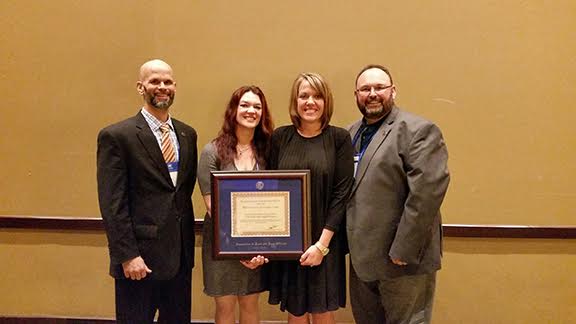
The Kansas Department of Agriculture food safety and lodging program was honored with the Elliot O. Grosvenor Food Safety Award at the recent Association of Food and Drug Officials annual event in Texas. KDA staff accepting the award were: (from left) Adam Inman, assistant program manager; Lisa Lilienthal, food/drug/lodging surveyor; Autumn Schuck, inspection manager; and Steve Moris, program manager.

KDA

MANHATTAN — The food safety and lodging program in the Kansas Department of Agriculture received the 2017 Elliot O. Grosvenor Food Safety Award from the Association of Food and Drug Officials (AFDO) at their annual conference in Houston, Texas, on June 20.

The Grosvenor Award is selected by a panel of judges to recognize outstanding achievements made by food safety programs across the U.S. and in Canada. The award goes to a program that showcases improvement, innovation or sustained high performance. The KDA program was honored due to its commitment to consumer protection and food safety statewide, and in particular for its proactive work in food safety education in the growing cottage food industry.

The KDA food safety and lodging program is responsible for food safety inspections of food establishments, including restaurants, grocery stores, conveniences stores and schools, along with food processors and lodging establishments. Nearly 50 inspectors cover the state of Kansas, promoting public safety by regulating the production and sale of food products in Kansas.

For more information about the KDA food safety and lodging program, contact Steve Moris, program manager, at 785-564-6767 or [email protected], or visit the website at agriculture.ks.gov/fsl.

Olathe Rep. Esau announces candidacy for Sec. of State

OLATHE – Kansas State Representative Keith Esau announced his candidacy Saturday for the Office of Kansas Secretary of State (KSSOS). Esau made his announcement at the annual Olathe Republican Party Picnic and spoke to an enthusiastic crowd.

Esau outlined his priorities for the office – chief among which is information security to ensure the integrity of Kansas elections and business records administered by the KSSOS.

“The KSSOS is charged with a special level of public trust – and requires a special level of competency to achieve and maintain that trust,” Esau noted. “I am the only candidate in this race with 30 years of information technology experience – the experience to confront the modern challenges and threats confronting the duties of the office.”

Esau referenced recent disclosures of cyber attacks on 39 states’ voter registration systems, as well as two successful hacking incidents accessing voter registration systems, illustrating the urgency for bolstering and securing KSSOS information systems.

“While we must continue to be vigilant watching the front door of our polling places by ensuring proper registration and identification of all voters, we must now also keep watch on the back door – defending our election systems from electronic tampering and manipulation,” Esau continued.

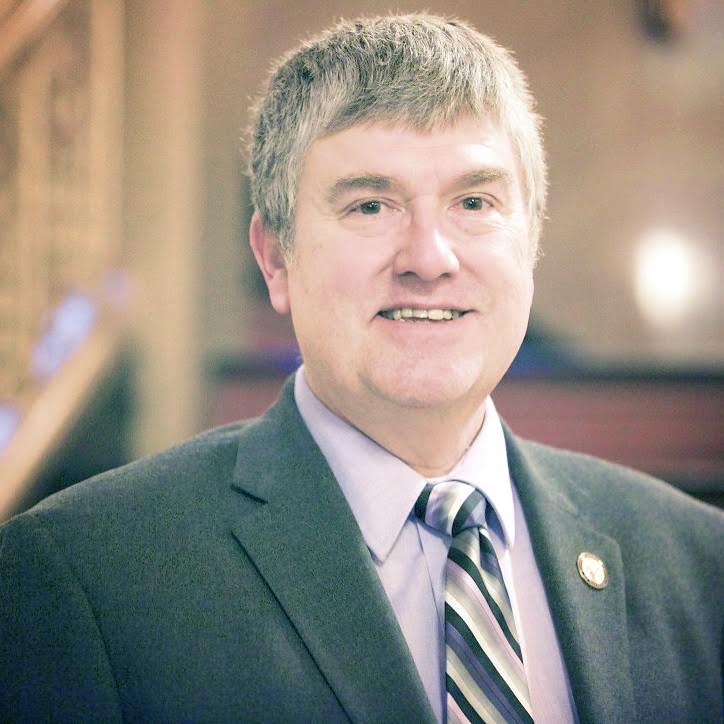
Rep. Keith Esau, R-Olathe

Esau further noted that elections are not the only critical duty of the KSSOS and that much of Kansas commerce is dependent on a trustworthy business filing system maintained by the office.

“I’m an IT guy. When I look at the vast KSSOS records and databases, I don’t see it as some paper-pushing office. It is a vital technology platform critical to the economic health of our state,” Esau said. “In addition to elections, the office facilitates commerce, lending, property rights, and related functions that if attacked or manipulated could wreak havoc on Kansas economy.”

Esau brings a wealth of knowledge to secure the critical information systems maintained by the KSSOS. His 30-year career in information technology as a software developer and systems auditor is augmented by a familiarity with elections and state information systems from his chairmanship of the House Elections Committee and service on the Joint Committee for Information Technology, and the newly formed House Committee on Government Technology and Security.

Keith Esau currently represents Kansas House District 14. He and his wife Charlotte are proud parents of five children and four grandchildren. The Esaus reside in Olathe.

Copyright Eagle Radio | FCC Public Files | EEO Public File