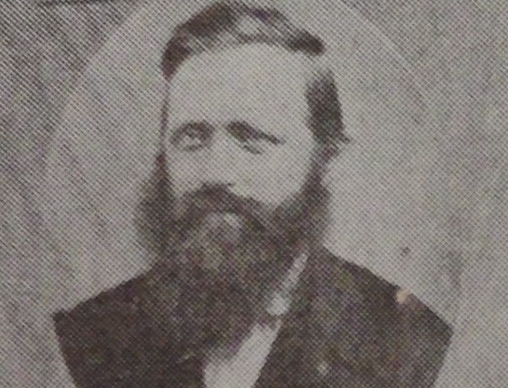
Henry S. Clubb was an Englishman at the forefront of the vegetarian movement in the mid-1800s. He attempted to establish a vegetarian settlement in Kansas in 1856. (Photo public domain)
Vegetarians have their reasons for not eating meat. But “I am an optimist” doesn’t have a regular spot on lists more typically focused on health and environmental benefits.
Optimism was, however, the Englishman Henry Clubb’s rationale more than 100 years ago, when he enticed dozens of people to move to the radical territory of Kansas to start a vegetarian settlement in what is now Allen County.
It didn’t go well.
“Now we all have come! have brought our fathers, our mothers, and our little ones, and find no shelter sufficient to shield them from the furious prairie winds, and the terrific storms of the climate!” wrote a woman from New York named Miriam Colt.
Colt and her family were among those who had given money to Clubb based on his promise that the settlement would be habitable by the time they got there. It took the Colt family more than a month to make the trip. They arrived exhausted, soaked from a spring storm, and were greeted with a meal of hominy, stewed apples, and tea in a wet tent.
“Can any one imagine our disappointment this morning, on learning from this and that member, that no mills have been built,” Colt wrote, “that the directors, after receiving our money to build mills, have not fulfilled the trust reposed in them, and that in consequence, some families have already left the settlement.”
In 1862, Miriam Colt published an account of her participation in the failed vegetarian settlement in what became Allen County, Kansas. (Photo public domain)
“I think it’s way too easy, when you look back on previous times, to kind of laugh and say, ‘What were they thinking, all packing off to Kansas where there wasn’t even a railroad and thinking they could subsist as a vegetarian colony?'” says Kansas City writer Aaron Barnhart.
Barnhart and his partner, Diane Eickhoff, have published several books about the region’s history. They’re now working on the story of Henry Clubb’s settlement; their initial research was based on Colt’s book.
The two have visited the site of Clubb’s outpost just south of what is now Humboldt, Kansas. Barnhart acknowledges that, yes, the town failed, but so did thousands of other pioneer settlements all founded with similar optimism.
“Going to the place where history happened humbles you, and makes you realize that these people were intelligent beings who wanted to change their world and the world around them, and you’ve got to respect that.”
In the mid-1800s, Clubb was certain that vegetarianism was the path to physical and social reform, and hopeful that humans could attain a divinity that carnivorous animals never could.
And Kansas made so much sense as the American epicenter of vegetarianism.
As a journalist, Clubb covered the passing of the Kansas-Nebraska Act of 1854, which allowed residents of a state to determine whether that state would be free or allow slavery.
He saw abolitionists and slavers alike flood the territory in order to shore up their side of the cause before Kansas became a state and declared itself one way or the other.
At the same time, Clubb knew the women’s suffrage movement was strong in Kansas.
The territory was the fulcrum of social change in the center of the nation in the middle of the century. The vegetarian movement fit right in.
Clubb’s settlement was in Osage territory on the banks of the Neosho River. The first intended residents arrived in the spring of 1856 and left that same fall.
Aaron Barnhart and Diane Eickhoff at the site of the 1809 Bible-Christian Church in Salford, England, where Henry Clubb dedicated himself to vegetarianism before moving to the U.S. (Photo courtesy Aaron Barnhart)
At its core, Barnhart says, the movement was not a health or lifestyle decision Clubb and his followers were making, it was an ethical decision.
“When (Clubb) was trying to convey this to small children in the publications he edited over the years, he really boiled it down to these three words: Do Not Hurt,” Barnhart says.
These words are the working title of Barnhart and Eickhoff’s book on the subject. Clubb and his followers might not have harmed animals in the attempted establishment of their settlement, but the people ended up in a whole world of hurt.
Aaron Barnhart spoke with KCUR on a recent edition of Central Standard. Listen to the full conversation here.
TOPEKA – Governor Laura Kelly reappointed Carisa Lyn McMullen to the State Board of Technical Professions.
“We need qualified individuals overseeing engineering, architecture, geology, land surveying and other practices that have a far-reaching impact on our everyday lives,” Kelly said. “Carisa has been a real asset on this board with her extensive knowledge and experience.”
McMullen, Olathe, is a landscape architect and currently serves as the principal at Landworks Studio. She has worked in both municipal and private sectors. McMullen received a bachelor’s degree in landscape architecture from Kansas State University. She has worked on numerous projects including: University of Kansas West Campus Master Plan in Lawrence, the Dwight D. Eisenhower National Airport in Wichita, The Labette Community College Pedestrian Corridor in Parsons, and the Vision Iola Community Master Plan in Iola.
The board registers and licenses engineers, architects, surveyors and landscape architects. The group works to provide maximum protection of the health, safety, and welfare of Kansans by assuring their practice of engineering, architecture, land surveying, landscape architecture and geology in the state is properly carried out.
Per K.S.A 74-7005, each member of the State Board of Technical Professions must be a resident of the state of Kansas. Each term is four years with a limit of three successive terms.
All 13 board members are appointed by the governor. Four members must be licensed engineers, two must be licensed surveyors, three must be licensed architects, one must be a licensed landscape architect, one must be a licensed geologist, and two must be from the general public.
LAWRENCE — As American policymakers and health care providers try multiple approaches to reduce the number of deaths related to the opioid epidemic, treatment facilities are commonly recommended. But there’s a major obstacle: Many facilities that serve individuals with opioid-related needs often won’t accept people who have been prescribed medications to combat the addiction.
University of Kansas researchers have written a study examining why treatment facilities decide whether to accept people on medications to fight opioid addiction and how rejections can be avoided and services streamlined.
Doctors increasingly prescribe medications such as methadone, buprenorphine and naltrexone to help individuals diagnosed with opioid use disorder, or OUD. But KU researchers found many Greater Kansas City area treatment facilities have zero or low acceptance rates for such individuals, for a wide range of reasons.
“Forty percent of the service facilities we tracked either are not willing to serve individuals with OUD, express reservations for serving them or impose more severe monitoring and/or restrictions in order to serve them,” said Nancy Kepple, assistant professor of social welfare and lead author of the study. “Of those, they tended to focus on social services or substance use disorder services only. Facilities providing recovery support services were the most likely to have a zero to low acceptance rate.”
Kepple and co-authors surveyed 360 area treatment facilities to determine their acceptance rates of individuals with OUD who have been prescribed medications to treat the disorder. They established four acceptance levels:
Zero acceptance, which would not accept individuals on medications for OUD
Low acceptance, facilities that accept these individuals with reservations/restrictions
Moderate acceptance, in which such individuals are accepted but their medication use is not monitored onsite
High acceptance, which accepts these individuals and administers/monitors their medication use.
Staff at 89 of the treatment facilities provided researchers with their rationale for whether they accept individuals taking medications for OUD. There was a wide range of responses for facilities not being willing/able to accept individuals using medications for OUD, from facilities staff who said they focused on providing a drug- and alcohol-free living environment to some who said they simply did not have the infrastructure to manage medication use. The study, co-written by Amittia Parker, doctoral student in the School of Social Welfare; Susan Whitmore of First Call Alcohol/Drug Prevention & Recovery; and Michelle Comtois of First Call Alcohol/Drug Prevention & Recovery, was published in the Journal of Substance Abuse Treatment.
While a stigma was attached to the medications at some facilities, others simply lacked the resources to serve individuals taking the medications. Respondents at low acceptance facilities reported they had concerns about how allowance of medications of OUD might affect the therapeutic community. Others reported not having the necessary staff or funding to devote to monitoring the medication use of individuals in their care.
The study grew out of a larger partnership between KU and First Call Alcohol/Drug Prevention & Recovery to find out what services are available to people struggling with opioid addiction in the Kansas City area and to prevent others from facing addiction before the opioid crisis worsens. The findings show that increased federal funding to provide such medications to people with OUD is only addressing part of the problem, Kepple said, and that there should be greater focus on recovery and maintaining life free from addiction, not simply stopping the addiction.
“Policymakers should think about funding services across the spectrum of recovery service, not just funding access to medications to address the opioid epidemic,” Kepple said. “We need to rethink what we prioritize in funding and think about how to more effectively address providers’ fears and beliefs about these medications. If you prescribe someone these medications but don’t provide other services, they could still overdose six months down the road. These medications alone are not a magic bullet; the most effective treatment includes complementary recovery-oriented and recovery support services.”
Individuals who receive medications but do not have access to safe housing or mental health services may be more likely to relapse on opioids, the authors argue. The reasons facilities gave for not accepting individuals on OUD medications are addressable, however, and provide an opportunity for funders and policymakers to help improve collaboration between facilities that build a more supportive service infrastructure, such as connecting stand-alone SUD services providers with local psychiatrists approved to administer and monitor the medications.
“These are all facility-level factors that can be addressed and that could increase services for individuals who are increasingly prescribed these medications,” Kepple said. “Medications for OUD are not going away, so improved understanding and tangible supports would help.”
The authors point out federal funding to provide prescriptions to fight OUD has increased in recent years, as fatalities from the opioid epidemic continue to mount. Ensuring recovery past breaking the addiction and fighting stigma of the medications is key.
“Recovery is not only about sobriety,” Kepple said. “These medications help individuals to stop using opioids and initially maintain recovery. However, to best serve these individuals, we need to have a more holistic view of the entire recovery process.”
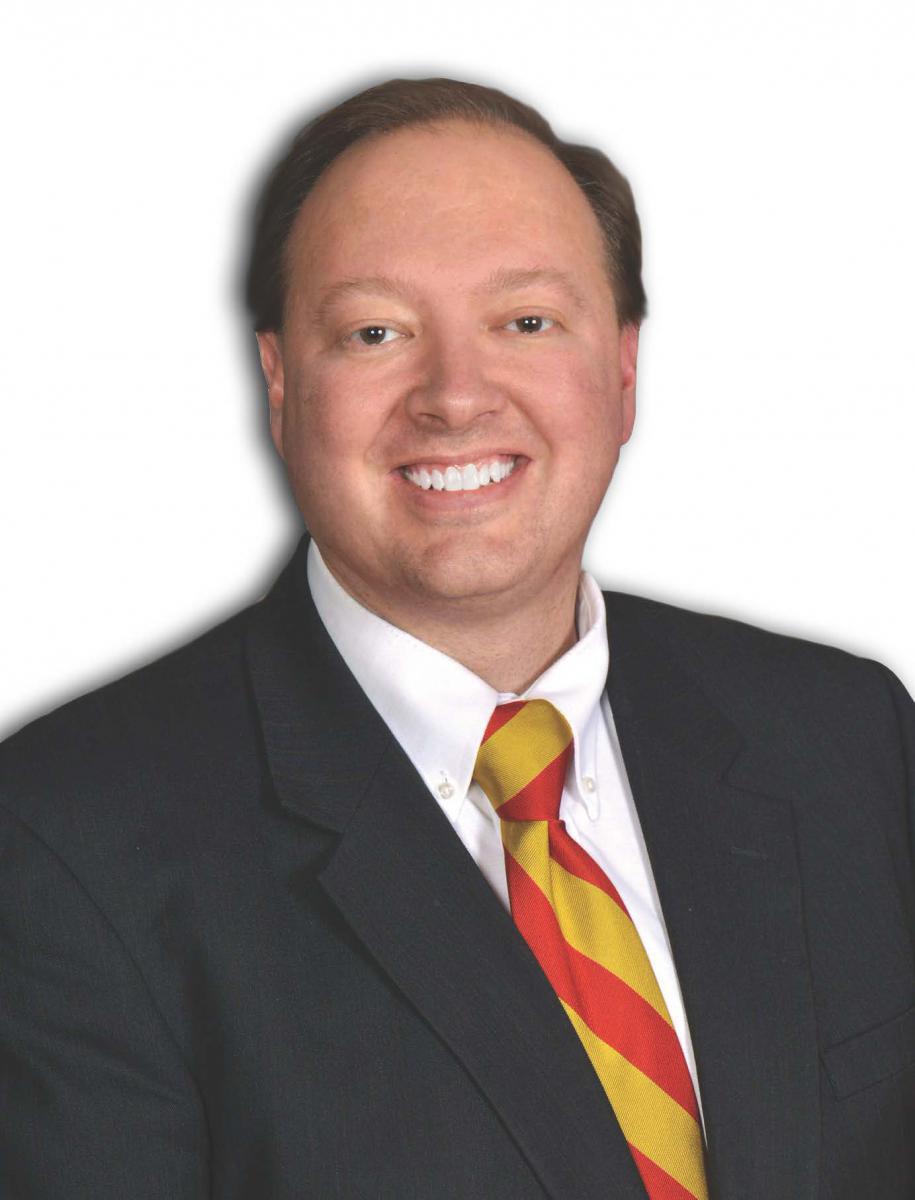
TOPEKA – Governor Laura Kelly appointed David Herndon as Bank Commissioner for the state of Kansas.
The commissioner oversees the Office of the State Bank Commissioner, an office that regulates all state-chartered banks, trust companies, mortgage businesses, supervised lenders, credit service organizations, and money transmitters that do business within the state of Kansas.
“I’m pleased to appoint David to serve as Bank Commissioner,” Kelly said. “His extensive banking and leadership experience makes him an unparalleled choice for this position.”
Herndon, a Shawnee resident, has over 30 years of experience in all phases of management. Currently, Herndon is sole proprietor of CMC Professional Services. Previously, he served as senior vice president at VisionBank. Herndon graduated with a master’s degree in banking from the University of Wisconsin, and a bachelor’s degree in business administration from Baker University.
Per K.S.A. 75-1304, the appointed bank commissioner must have at least five years of experience as an executive officer in a state or national bank located in Kansas. While serving as bank commissioner, the commissioner must not be an officer, voting director, employee or paid consultant of any state or national bank or bank holding company, or any affiliate of a state or national bank or bank holding company, or any other entity regulated by the commissioner.
Herndon will serve as Acting Bank Commissioner pending Senate confirmation.
TOPEKA – Governor Laura Kelly appointed Aaron Otto, Roeland Park, to the Midwestern Higher Education Compact.
“We are excited to have Aaron to represent Kansas in the Midwestern Higher Education Compact,” Kelly said. “Kansas has unique educational needs and deserves a passionate and experienced leader.”
The compact provides greater higher education opportunities and services in the Midwestern region, with the goal of furthering regional access for citizens residing in states in the compact. The compact is headquartered in Minneapolis and member states include: Illinois, Indiana, Iowa, Kansas, Minnesota, Michigan, Missouri, North Dakota, Ohio, South Dakota and Wisconsin.
Governor Kelly also has appointed Otto to the Governor’s Council on Education.
He currently serves as the acting assistant county manager and executive director for the Johnson County Airport Commission. Previously, Otto served as city administrator for Roeland Park and worked in the Kansas State Treasurer’s office as assistant state treasurer. Otto graduated with a bachelor’s degree in political science from Kansas State University and received a master’s degree in public administration from George Washington University.
TOPEKA – Governor Laura Kelly appointed Dylan Evans, Sarah Green, and Kathy Brazle to the Kansas State Fair board.
“The Kansas state fair is an important part of Kansas’ story,” Kelly said. “It’s a cherished annual tradition, and Kansans deserve board members who are passionate about our history and culture. Dylan, Sarah, and Kathy encapsulate this passion.”
The board acts as the showcase of Kansas agriculture, commerce and industry, and is responsible for presenting a format of entertainment and education that appeals to people from all walks of life in Kansas.
The state fair emphasizes the importance of family, education, public and private entities, and Kansas as a whole.
Dylan Evans, Lebo, is the owner of Farmers State Bank of Aliceville and DWE Livestock. Evans received his master’s degree in food science, a bachelor’s degree in animal science and industry, and a bachelor’s degree in food science and industry, all from Kansas State University. He succeeds Steve Abrams.
Sarah Green, Wichita, currently serves as a writer, editor, and strategic consultant, working as an independent contractor. Previously, she served as Local Foods and Rural Outreach Coordinator under the Kansas Department of Agriculture. Green participated in a graduate fellowship through George Washington University in food policy. She received her bachelor’s degree in journalism from the University of Kansas. She succeeds Matthew Lowen.
Kathy Brazle, Chanute, is a retired school administrator. Previously a teacher in Erie, Brazle received her bachelor’s degree in mathematics and physical education from Southwestern College and a master’s degree in physical education from the University of Kansas. Brazle also received an administration certification from Emporia State University. She succeeds Monica Lair.
The governor’s appointments to the state fair board are not subject to Senate confirmation.
TOPEKA – Secretary of Commerce David Toland announced he has reduced the application fee for businesses seeking to participate in the Angel Investor Tax Credit program.
After reducing the application fee from $750 to $500 in February, the Kansas Department of Commerce reduced the fee further to $250, retroactive to July 1, 2019. Applications for companies seeking investment through the Kansas Angel Investor Tax Credit (KAITC) program for 2019 will be accepted through August 31.
The program offers Kansas income tax credits to qualified individuals who provide seed-capital financing for emerging Kansas businesses engaged in development, implementation and commercialization of innovative technologies, products and services.
“The Angel program exists to support small start-up businesses, so it didn’t make sense to charge an application fee that put the program out of reach to the very businesses seeking help,” Toland said. “This is a straightforward, business-friendly move that we hope will encourage more start-ups to apply and make it easier for Kansans to invest in promising new businesses.”
The KAITC Program is designed to bring together accredited “angel” investors with qualified Kansas companies seeking seed and early stage investment. The purpose of the Kansas Angel Investor Tax Credit Act is to help facilitate:
The availability of equity investment in businesses in the early stages of commercial development.
The creation and expansion of Kansas businesses, which are job- and wealth-creating enterprises.
Applications for certification are accepted only for Kansas businesses in the seed and early stage rounds of financing.
Companies must meet the following criteria to be certified as a Qualified Kansas Business:
The business has a reasonable chance of success and potential to create measurable employment within Kansas.
In the most recent tax year of the business, annual gross revenue was less than $5 million
Businesses that are not Bioscience businesses must have been in operation for less than five years; bioscience businesses must have been in operation for less than 10 years.
The business has an innovative and proprietary technology, product, or service.
The existing owners of the business have made a substantial financial and time commitment to the business.
The securities to be issued and purchased are qualified securities.
The company agrees to adequate reporting of business information to the Kansas Department of Commerce.
The ability of investors in the business to receive tax credits for cash investments in qualified securities of the business is beneficial, because funding otherwise available for the business is not available on commercially reasonable terms.
Each applicant must sign a Qualified Company Agreement with the Kansas Department of Commerce.
Certification of companies must meet mandates established by Kansas statute to allow accredited Angel Investors to receive the Kansas Angel Investor Tax Credit.
For more information, visit kansasangels.com or contact:
Rachéll Rowand
(785) 296-3345 Office
(785) 207-4755 Mobile [email protected]
TOPEKA – The Kansas Senate Oversight Committee Monday approved Dr. DeAngela Burns-Wallace, Shawnee, to serve as Secretary of the Kansas Department of Administration and Herman Jones, Berryton, as Superintendent of the Kansas Highway Patrol, along with other appointments to state boards and agencies.
“I appreciate the Senate committee’s action in approving the appointments of Kansans who are all well qualified and committed to public service,” Governor Laura Kelly said. “It’s truly an outstanding group, and I look forward to seeing the work they do in helping to move our state forward.”
Burns-Wallace was the Vice-Provost of Undergraduate Studies at the University of Kansas, and also served as the assistant dean in the Office of Undergraduate Admission at Stanford University.
Before working in education, Burns-Wallace worked for the U.S. Department of State as a management officer in the foreign service in China, South Africa and Washington D.C., experience she says helped prepare her for her new role at the Department of Administration.
“Managing a foreign mission for the U.S. government is a complex set of challenges that touch on logistics, construction, budgeting, HR – these issues also line up closely to the mission of the Department of Administration,” Burns-Wallace said. “I’m excited to start working on some of these issues for the State of Kansas.”
Burns-Wallace holds a dual bachelor’s degree in international relations and African American studies from Stanford University, a master’s degree in public affairs from the Woodrow Wilson School of Public and International Affairs at Princeton University, and a doctorate in education from the University of Pennsylvania.
Herman Jones began his law enforcement career as a police officer with the Emporia Police Department. He then served as a state trooper with the Kansas Highway Patrol from 1982 to 1992. Later, he was an instructor at the Kansas Law Enforcement Training Center.
He returned to the Kansas Highway Patrol as the director of administration from 2000 to 2011. In 2011, he became Undersheriff of Shawnee County, and later was appointed Shawnee County Sheriff in April 2012, elected in November 2012 and re-elected in 2016.
Jones is a graduate of Emporia State University, the Federal Bureau of Investigation National Academy, the Kansas Highway Patrol Academy, and the Kansas Law Enforcement Training Center.
“I’m honored to be Governor Kelly’s choice to serve in this important law enforcement position,” Jones said. “I’ve dedicated my career to public safety and take great pride in working with the men and women of the Kansas Highway Patrol to strengthen our agency and improve public safety across Kansas.”
Additionally, the following appointments by the governor were approved Monday by the Senate Confirmation Oversight Committee:
Cheryl Harrison-Lee, Gardner, Shellaine (Shelly) Kiblinger, Cherryvale, and Jonathan Rolph, Wichita; Kansas Board of Regents
Emily Hill, Lawrence, Kansas Public Employees Retirement System Board of Trustees
Earl Lewis, Topeka, director, Kansas Water Office
Constance Owen, Overland Park, chair, Kansas Water Authority
Joni Franklin, Wichita, Jonathan Gilbert, Dodge City, and Michael Ryan, Junction City; Public Employee Relations Board
Doug Jorgensen, Topeka, State Fire Marshal
Kelly Kultala, Basehor, Kansas Racing and Gaming Commission
Kala Loomis, Lawrence, executive director, Kansas State Gaming Agency
Stephen Durrell, Lawrence, executive director,Kansas Lottery
LAWRENCE — Dec. 7, 1941. The Japanese attack on Pearl Harbor. A date which will live in infamy.
But what few people understand is the attack wasn’t limited to Hawaii, and it didn’t actually end Dec. 7.
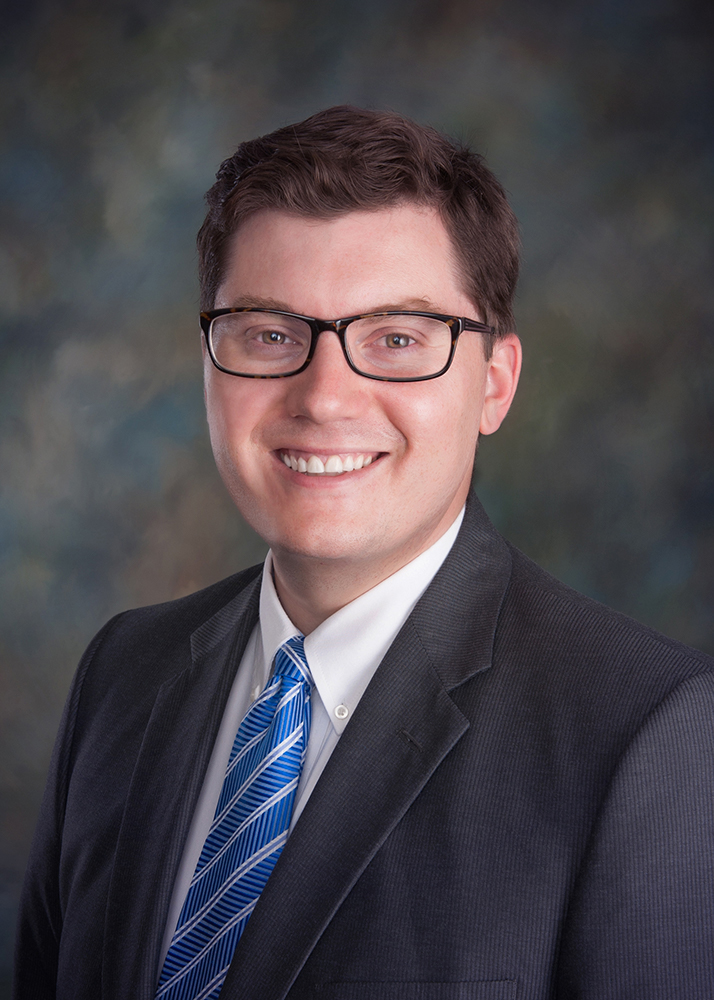
That’s the impetus for a new book titled “Beyond Pearl Harbor: A Pacific History,” which brings together 11 renowned scholars who reinterpret the events, politics, strategy and results of that military campaign and why many of its stories have been overlooked. The book is the brainchild of editors Beth Bailey and David Farber, who are both professors of history at the University of Kansas. And they’re married to each other.
“It wasn’t so clear at the moment that Dec. 7 was a date that would live in infamy,” Farber said. “That was Franklin D. Roosevelt’s summation a day later. In those first 24 hours, Americans were trying to understand, ‘Was this a war on us? The homeland? The Pacific empires of European and Asian countries? Was this a war in which we would even participate?’”
The historians claim that what Americans of today believe to be a galvanizing rallying point is based on a skewed received narrative. It ignores the nearly simultaneous attacks on Guam, Wake Island, Philippines, Thailand, Malaya, Singapore and Hong Kong.
“Newspaper headlines that appeared across the nation before FDR spoke portray the event in all sorts of ways,” Bailey said. “Hawaii isn’t always the most important place. Sometimes it’s not even mentioned. Sometimes the focus is on Guam or the Philippines. That this was an attack on Pearl Harbor, a ‘stab in the back’ — that wasn’t Americans’ initial understanding.”
“Beyond Pearl Harbor,” which will be published July 24 by University Press of Kansas, had its origin several years ago during a conference organized by the couple. Bailey runs the Center for Military, War and Society Studies. Every year she organizes an event, and this one sprung from a gathering on the occasion of the raid’s 75th anniversary.
“We tried to find the best-known international scholars on the various nation-states and colonies involved in the Pacific War. And we asked if they wanted to come to Lawrence, Kansas, to have a conversation,” she said of the group, which included participants from Japan, China, England, Australia and the Netherlands.
After short presentations and conversations, the theme of what would become the book emerged.
“That’s why the university is a great spot,” said Farber, a Chicago native. “We didn’t just read papers to each other and then go away. A dozen scholars came together, spent two hard days thinking out loud with one another and, possibly, rewrote how people will think about the origins of World War II in the Pacific.”
Bailey, a native of Atlanta, said one of her favorites of the 10 essays is titled “American Lives: Pearl Harbor and War in the U.S. Empire” by Daniel Immerwahr of Northwestern University. In it he recounts the strikes on the U.S. territories of Midway, Wake Island, Guam and the Philippines, probing the question, “Why have the Japanese attacks of December 7/8 been metonymically reduced in public memory to a single event?”
Indeed, in the American colony of the Philippines, casualties were in the tens of thousands. The war essentially destroyed Manila.
“The United States didn’t come to the rescue of its own colony because its people were not seen as American,” Bailey said.
Farber added, “It was all about whose lives matter. Why did Filipino lives matter less, for example, than the lives of people in Hawaii?”
The chapter “Pearl Harbor and the Asian Cultural Turn” by Ethan Mark of Leiden University in the Netherlands is Farber’s top pick. Here, Mark explores how the population of the Dutch East Indies (modern Indonesia) reacted.
“The scholar who wrote that piece is a brilliant guy, and he was able to capture that sense of uncertainty in the Asian world through the eyes of Indonesians trying to figure out what’s next,” Farber said. “The nationalists weren’t sure which way to turn. Was Japan the future? Was the United States the future? Which represented the way Asia should go?”
In addition to the introduction and prologue, Bailey and Farber contribute a chapter exploring the different strikes on territories that included ones controlled by other nations.
They write: “Within days of the attack, Americans began to distinguish between their need to restore empires and defend allies in the Pacific and their desire to protect ‘America’ — a term open to debate on racial, geopolitical and historical grounds.”
Beth Bailey and David Farber
Bailey and Farber both came to KU four years ago. She’s an expert in U.S. military, war and society as well as history of gender and sexuality. His expertise encompasses modern U.S. history. They’ve been married for 34 years.
“Scholars today talk about the importance of taking transnational and international approaches to better understand how events connect and affect people across national boundaries,” Farber said.
“Exactly what this conference was about: recreating the origins of World War II by looking beyond each nation-state and seeing the Pacific as the geographical realm of importance. So we think it was a kind of disciplinary breakthrough.”
An excerpt from Hardy’s “2000 Dragons” scroll, taken during a 2012 exhibition at Diverse Works in Houston. (Courtesy Sherry Fowler)
KU NEWS SERVICE
LAWRENCE – Tattoo art icon Don Ed Hardy has come full circle more than once. He’s gone from student of East Asian art history to commercial juggernaut and back to fine art. And even within the fashion world, he’s had a recent comeback after his early 2000s success led to overexposure and backlash.
Sherry Fowler
As a friend of nearly 40 years, University of Kansas researcher Sherry Fowler was there for much of it. That’s partly why she, along with her husband, Dale Slusser, was asked to contribute an essay for the catalog that accompanies the forthcoming Hardy exhibition at San Francisco’s de Young Museum.
“Ed Hardy: Deeper Than Skin” (July 13-Oct. 6) is the first museum retrospective of the man known for elevating the tattoo from its subculture status to an important visual art form. The catalog is edited by curator Karin Breuer and published by Fine Arts Museums of San Francisco in association with Rizzoli Electa.
Fowler, KU professor of the history of art, said she met Hardy through his wife, Francesca Passalacqua, who was her Japanese-language classmate in San Francisco around 1980.
“One day she said, ‘I’ll give you a ride home, but I have to leave early because my husband’s going to be on ‘To Tell the Truth.’ That was a TV game show with three guests on it, two of whom were imposters, all who said that they were someone noteworthy or unusual — in this case the most famous tattoo artist in the United States,” Fowler said. “So I went home and watched the show. And I thought, ‘Well, which one is her husband?’ There were two old, salty sailor types, and then there was this young, cute guy, and I thought, ‘I hope it’s him.’ And it was. Panelist Kitty Carlisle got the answer right.”
Like her, Fowler said, Hardy loved and studied Asian art (he earned a Bachelor of Fine Arts with an emphasis in printmaking from the San Francisco Art Institute), and the couples became friends.
Slusser is associate vice president for development with KU Endowment and is an affiliate of the College of Liberal Arts & Sciences’ Center for East Asian Studies.
Just a few months ago, Hardy asked Fowler to write a catalog essay for the de Young show, and, with Slusser’s help, she agreed. The essay is titled “Drawing Embodied: Ed Hardy’s East Asian Art Connections.”
“The amazing thing about working on somebody who’s alive — you can actually email them and ask them questions,” said Fowler, who usually writes about premodern Japanese art. “But I was there for a lot of it, and I remember these things happening. Although I took care not to put myself in the narrative, I was thinking about it as I wrote.”
For instance, Fowler recalled, she served as interpreter for “the legendary Horiyoshi II” during the 1985 National Tattoo Association Convention in Seattle, an event mentioned in the catalog as one of many important milestones in Hardy’s career.
And while tattoo artists like Horiyoshi II, Horiyoshi III and Sailor Jerry Collins influential on Hardy’s tattoo style, so, too, was his training in East Asian art, Fowler argues in the catalog. It’s also apparent in his printmaking.
For instance, Fowler begins her essay by considering Hardy’s 2007 print titled “Our Gang.” It’s based on a bronze plaque dated to the year 1001 and held in the Tokyo National Museum. She said the central figure, known as Zao Gongen, “is a hybrid Shinto-Buddhist deity. And the print is emblematic of his career because it has so many different things going on, mixing very traditional Asian art with goofy stuff and personal things.”
Among the smaller figures surrounding the deity, Hardy has even depicted himself as a rat offering up a valentine heart to his wife, Fowler said. Fowler knew that among all the figures in the print there were portraits of Hardy and his wife, but she had to confirm with him which ones they were.
Fowler’s essay broaches the topic of cultural appropriation but in this specific case dismisses any bad intent on the part of the artist or any harm to his sources.
“I don’t think his work is for everybody,” Fowler said. “And sometimes I don’t like it when he pushes the envelope too far. But that is provoking. That makes us think and change our minds about certain things.”
Ultimately, Fowler said, it is the passion that undergirds Hardy’s style and technique that has made him a cultural force to be reckoned with.
“He loves art,” she said. “He is so passionate. He’s the kind of person who will get up in the morning and say, ‘I’ve been thinking about art all night; I couldn’t sleep.’ When you’re around him, you feel like you just want to make the most of every moment. You want to see everything. You want to do everything and experience as much art as you possibly can. He’s that kind of magnetic personality.”
While the Hardy show is at the de Young, there is a related show, “Tattoos in Japanese Prints,” at the Asian Art Museum in San Francisco.
“For a long time, there was a big stigma about tattooing, and now it’s everywhere,” Fowler said. “I think museums are making a real effort to connect to people, and so if you can have something historical that makes sense and connects to people’s lives, they will want to learn more about it.”
When the cancer clinic at Mercy Hospital Fort Scott closed in January 2019, cancer patients such as Karen Endicott-Coyan had to continue their treatment in different locations. Endicott-Coyan has a rare form of multiple myeloma and now drives an hour from her farm near Fort Scott to Chanute for weekly chemotherapy injections. (Christopher Smith for KHN)
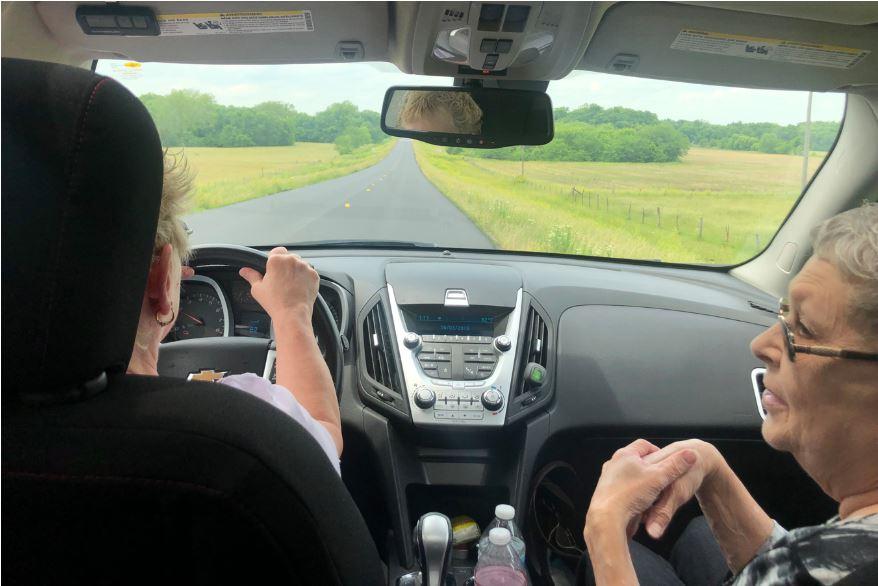
One Monday in February, 65-year-old Karen Endicott-Coyan gripped the wheel of her black 2014 Ford Taurus with both hands as she made the hour-long drive from her farm near Fort Scott to Chanute. With a rare form of multiple myeloma, she requires weekly chemotherapy injections to keep the cancer at bay.
She made the trip in pain, having skipped her morphine for the day to be able to drive safely. Since she sometimes “gets the pukes” after treatment, she had her neighbor and friend Shirley Palmer, 76, come along to drive her back.
Continuity of care is crucial for cancer patients in the midst of treatment, which often requires frequent repeated outpatient visits. So when Mercy Hospital Fort Scott, the rural hospital in Endicott-Coyan’s hometown, was slated to close its doors at the end of 2018, hospital officials had arranged for its cancer clinic — called the “Unit of Hope” — to remain open.
Then “I got the email on Jan. 15,” said Reta Baker, the hospital’s CEO. It informed her that Cancer Center of Kansas, the contractor that operated and staffed the unit, had decided to shut it down too, just two weeks later.
“There are too many changes in that town” to keep the cancer center open, Yoosaf “Abe” Abraham, chief operating officer of the Cancer Center of Kansas, later told KHN. He added that patients would be “OK” because they could get treated at the center’s offices in Chanute and Parsons.
From Fort Scott, those facilities are 50 and 63 miles away, respectively.
For Endicott-Coyan and dozens of other cancer patients, the distance meant new challenges getting lifesaving treatment. “You have a flat tire, and there is nothing out here,” Endicott-Coyan said, waving her arm toward the open sky and the pastures dotted with black Angus and white-faced Hereford cattle on either side of the shoulderless, narrow highway she now must drive to get to her chemo appointment.
Nationwide, more than 100 rural hospitals have closed since 2010. In each case, a unique but familiar loss occurs. Residents, of course, lose health care services as wards are shut and doctors and nurses begin to move away.
But the ripple effect can be equally devastating. The economic vitality of a community takes a blow without the hospital’s high-paying jobs and it becomes more difficult for other industries to attract workers who want to live in a town with a hospital. Whatever remains is at risk of withering without the support of the stabilizing institution.
The 7,800 residents of Fort Scott are reeling from the loss of their 132-year-old community hospital that was closed at the end of December by Mercy, a St. Louis-based nonprofit health system. Founded on the frontier in the 19th century and rebuilt into a 69-bed modern facility in 2002, the hospital had outlived its use, with largely empty inpatient beds, the parent company said. For the next year, Kaiser Health News and NPR will track how its citizens fare after the closure in the hopes of answering pressing national questions: Do citizens in small communities like Fort Scott need a traditional hospital for their health needs? If not a hospital, what then?
Reta Baker, the hospital’s president who grew up on a farm south of Fort Scott, understood that the hospital’s closure was unavoidable. She scrambled to make sure basic health care needs would be met. Mercy agreed to keep the building open and lights on until 2021. And Baker recruited a federally qualified health center to take over four outpatient clinics, including one inside the hospital; former employees were bought out and continue to operate a rehabilitation center; and the nonprofit Ascension Via Christi Hospital in Pittsburg reopened the emergency department in February.
But cancer care in rural areas, which requires specialists and the purchase and storage of a range of oncology drugs, presents unique challenges.
Rural cancer patients typically spend 66% more time traveling each way to treatment than those who live in more urban areas, according to a recent national survey by ASCO, the American Society of Clinical Oncology. Dr. Monica Bertagnolli, a cattle rancher’s daughter who is now chair of ASCO’s board, called this a “tremendous burden.” Cancer care, she explained, is “not just one visit and you’re done.”
ASCO used federal data to find that while about 19% of Americans live in rural areas, only 7% of oncologists practice there.
People in rural America are more likely to die from cancer than those in the country’s metropolitan counties, according to a Centers for Disease Control and Prevention report in 2017. It found 180 cancer deaths per 100,000 people a year in rural counties, compared with 158 deaths per 100,000 in populous metropolitan counties.
The discrepancy is partly because habits like smoking are more common among rural residents, but the risk of dying goes beyond that, said Jane Henley, a CDC epidemiologist and lead author of the report. “We know geography can affect your risk factors, but we don’t expect it to affect mortality.”
From an office inside a former Mercy outpatient clinic, Fort Scott’s cancer support group, Care to Share, continues its efforts to meet some of the community’s needs — which in some ways have increased since the Unit of Hope closed. It provides Ensure nutritional supplements, gas vouchers and emotional support to cancer patients.
Lavetta Simmons, one of the support group’s founders, said she will have to raise more money to help people pay for gas so they can drive farther to treatments. Last year, in this impoverished corner of southeastern Kansas, Care to Share spent more than $17,000 providing gas money to area residents who had to travel to the Mercy hospital or farther away for care.
According to the U.S. Centers for Disease Control and Prevention, cancer kills more people in rural America than in the country’s metropolitan counties — 180 deaths per 100,000 people versus 158 deaths per 100,000 people. (Sara Jane Tribble/KHN)
The group expects to spend more on gas this year, having spent nearly $6,000 during the first four months of 2019.
And the reserves of donated Ensure from Mercy are running out, so Simmons is reaching out to hospitals in nearby counties for help.
With Mercy Hospital Fort Scott closed, the likelihood of residents here dying from their cancer will grow, experts worry, because it’s that much harder to access specialists and treatments.
Krista Postai, who took over the Fort Scott hospital’s four primary care clinics, said it’s not unusual for her staff to “see someone walk in [with] end-stage cancer that they put off because they didn’t have money, they didn’t have insurance, or it’s just the way you are. … We wait too long here.”
‘If they can’t cure me, I’m done’
Art Terry, 71, a farmer and Vietnam veteran, was one of them. Doctors discovered Terry’s cancer after he broke a rib while baling hay. When they found a mass below his armpit, it was already late-stage breast cancer that had metastasized to his bones.
With his twice-weekly chemotherapy treatment available in the “Unit of Hope,” Terry spent hours there with his son and grandchildren telling stories and jokes as if they were in their own living room. The nurses began to feel like family, and Terry brought them fresh eggs from his farm.
“Dad couldn’t have better or more personalized care anywhere,” said his son, Dwight, bleary-eyed after a factory shift.
Art Terry, center, stands for a family photo at the Mercy Hospital Fort Scott cancer unit before its January closure. From left are Terry’s daughter-in-law, Sabrina; granddaughters Aubry and Shaylee; son Dwight; and grandson Blaiton. (Courtesy Dwight Terry)
Terry knew it was difficult to find trustworthy cancer care. The shortage of cancer specialists in southeastern Kansas meant that many, including Mercy Hospital Fort Scott’s patients, counted on traveling oncologists to visit their communities once or twice a week.
Wichita-based Cancer Center of Kansas has nearly two dozen locations statewide. It began leasing space in Fort Scott’s hospital basement in the mid-2000s, the center’s Abraham said. The hospital provided the staff while the Cancer Center of Kansas paid rent and sent roving oncologists to drop in and treat patients.
At its closing, the Unit of Hope served nearly 200 patients, with about 40% of them on chemotherapy treatment.
When Art Terry was diagnosed, his son tried to talk to him about seeking treatment at the bigger hospitals and academic centers in Joplin, Mo., or the Kansas City area. The elder Terry wasn’t interested. “He’s like, ‘Nope,’” Dwight Terry recalled. “I’m going right there to Fort Scott. If they can’t cure me, I’m done. I’m not driving.’”
In the end, as the elder Terry struggled to stay alive, Dwight Terry said he would have driven his father the hour to Chanute for treatment. Gas — already a mounting expense as they traveled the 20 miles from the farm near tiny Prescott, Kan., to Fort Scott — would be even more costly. And the journey would be taxing for his father, who traveled so little over the course of his life that he had visited Kansas City only twice in the past 25 years.
As it turned out, the family never had to make a choice. Art Terry’s cancer advanced to his brain and killed him days before the hospital’s cancer unit closed.
What happens next?
Debbie Endicott, Karen Endicott-Coyan’s sister-in-law, drives to chemotherapy in Chanute. The trip takes an hour on mostly narrow, two-lane highways from Endicott-Coyan’s home south of Fort Scott. ‘You can see there are no gas stations, there is nothing in the way,’ Endicott-Coyan says. ‘There isn’t anything.’ (Sara Jane Tribble/ KHN)
As Endicott-Coyan and her friend Palmer drove to Chanute for treatment, they passed the time chatting about how the hospital’s closure is changing Fort Scott. “People started putting their houses up for sale,” Palmer said.
Like many in Fort Scott, they had both spent their days at the Fort Scott hospital. Endicott-Coyan worked in administration for more than 23 years; Palmer volunteered with the auxiliary for six years.
The hospital grew with the community. But as the town’s fortunes fell, it’s perhaps no surprise that the hospital couldn’t survive. But the intertwined history of Mercy and Fort Scott is also why its loss hit so many residents so hard.
Fort Scott began in 1842 when the U.S. government built a military fort to help with the nation’s westward expansion. Historians say Fort Scott was a boomtown in the years just after the Civil War, with its recorded population rising to more than 10,000 as the town competed with Kansas City to become the largest railroad center west of the Mississippi. The hospital was an integral part of the community after Sisters of Mercy nuns opened a 10-bed hospital in 1886 with a mission to serve the needy and poor. Baker, Mercy Hospital Fort Scott’s president, said the cancer center was an extension of that mission.
The Unit of Hope began operating out of the newest hospital building’s basement, which was “pretty cramped,” Baker said. As cancer treatments improved, it grew so rapidly that Mercy executives moved it to a spacious first-floor location that had previously been the business offices.
“Our whole purpose when we designed it was for it to be a place where somebody who was coming to have something unpleasant done could actually feel pampered and be in a nice environment,” Baker said.
The center, with its muted natural grays and browns, had windows overlooking the front parking lot and forested land beyond. Every patient could look out the windows or watch their personal television terminal, and each treatment chair had plenty of space for family members to pull up chairs.
Karen Endicott-Coyan and her husband, John Coyan, laugh while sitting in their kitchen. John, 74, began showing signs of dementia in 2015. Together, they run a cow-calf operation on 240 acres south of Fort Scott and go to church every Sunday. (Christopher Smith for Kaiser Health News)
When Endicott-Coyan and Palmer arrived at the Cancer Center of Kansas clinic in Chanute in February, things looked starkly different. Patients entered a small room through a rusted back door. Three brown infusion chairs sat on either side of the entry door and two television monitors were mounted high on the walls. A nurse checked Endicott-Coyan’s blood pressure and ushered her back to a private room to get a shot in her stomach. She was ready to leave about 15 minutes later.
The center’s Abraham said the Chanute facility is “good for patients for the time being” and not a “Taj Mahal” like Mercy’s Fort Scott hospital building, which he said was too expensive to maintain. Cancer Center of Kansas plans to open a clinic at a hospital in Girard, which is about 30 miles from Fort Scott, he said.
Some oncology doctors would say driving is not necessary. Indeed, a few health care systems across the country, such as Sanford Health in South Dakota and Thomas Jefferson University Hospitals in Pennsylvania, are administering some chemotherapy in patients’ homes. Oncologist Adam Binder, who practices at Thomas Jefferson in Philadelphia, said “over 50% of chemotherapy would be safe to administer in the home setting if the right infrastructure existed.”
But the infrastructure — that is, the nurses who would travel to treat patients and a reimbursement model to pay for such care within our complex health care system — is not yet in place.
Back in the car, Palmer took the wheel and Endicott-Coyan began planning for future cancer treatments in the void left by Mercy Hospital Fort Scott’s closure. “I put a note on Facebook today and said, ‘OK, I have drivers for the rest of February; I need drivers for March!’”
This is the first installment in KHN’s year-long series, No Mercy, which follows how the closure of one beloved rural hospital disrupts a community’s health care, economy and equilibrium.
Our unclaimed property division at the Kansas State Treasurer’s office takes in millions of dollars in new
property a year. Each piece of property has a story, and it is up to us to use the details we have to help find out who it belongs to. Sometimes, though, that story takes a lot more work to figure out. Money and property can come to us with no name, address, or other important details making it nearly impossible to return the property to the rightful owner. We love it when we can connect the dots and get someone’s property returned to them, whether big or small.
In a case we’ve been working on for the past year, a property came to our office with little identifying
information to help us get it back to its rightful owner.
Last month we received a call from a woman who had been searching for the sale proceeds from her father’s home. It had gone to auction after he passed away, and the money never made it back to her or her brother, both heirs of their father’s estate.
Our unclaimed property division began their skilled work at checking the documentation she had against
county records, last known addresses, and other necessary identifying information.
After a diligent effort on their part, they found the match, and the woman and her brother were successfully reunited with the over $50,000 in cash from the sale of their late father’s home.
Both siblings were very grateful for the work done on their behalf and delighted to finally have the mystery of the missing money solved.
We have over $300-million in unclaimed property still waiting to be claimed and want to encourage Kansans to take a minute to check our website, www.Kansascash.com, and see if any of it belongs to them. Remember, we never charge for searches or returning unclaimed property, so it’s important to be wary of those who do. We’ve returned a record amount to Kansans for the past two years in a row, and would love to have more and more success stories like this one in the year ahead.
TOPEKA – Governor Laura Kelly appointed Dr. Tiffany Anderson to the Postsecondary Technical Education Authority.
“Dr. Anderson is the right choice for this important assignment,” Kelly said. “She’s highly qualified, driven, and knows education at every level, to include higher education.”
Currently, Anderson serves as superintendent for the Topeka public schools district, USD 501. She also served as a school superintendent in Missouri and Virginia. Since 2003, she’s been an adjunct professor in the Department of Educational Leadership for Kansas State University. Anderson received her doctorate and master’s degree in education leadership and a bachelor’s degree in elementary education from Saint Louis University, Mo.
Dr. Anderson currently resides in Overland Park. She succeeds Sabrina Korentager.
The authority is composed of 12 members. Four members are appointed by the Kansas Board of Regents. Three members are be appointed by the governor. One member is appointed by the president of the Senate, and one member is appointed by the speaker of the House of Representatives.
Regarding the governor’s appointments, one represents Kansas business and industry, and two represent the general public.










 That’s the impetus for a new book titled “Beyond Pearl Harbor: A Pacific History,” which brings together 11 renowned scholars who reinterpret the events, politics, strategy and results of that military campaign and why many of its stories have been overlooked. The book is the brainchild of editors Beth Bailey and David Farber, who are both professors of history at the University of Kansas. And they’re married to each other.