We have a brand new updated website! Click here to check it out!

Kansas beef producers participate in trade mission to Costa Rica

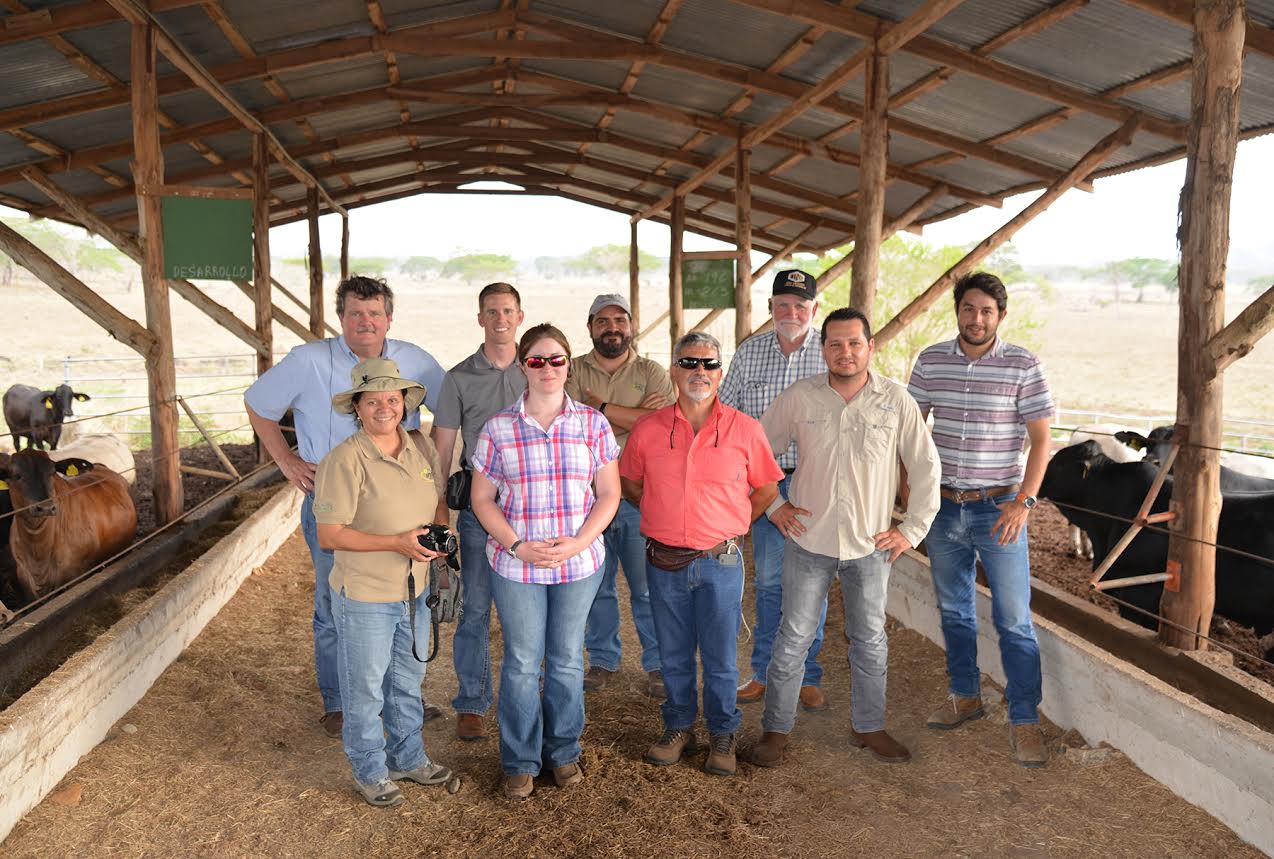
Members of the trade mission delegation toured a working barn on the Gilberto Rojas Ranch in Limonal, Costa Rica. The delegation consisted of David Hobbs (back row, far left), American International Charolais Association; Billy Brown (back row, second from left), Kansas Department of Agriculture; Galen Fink (back row, second from right), Fink Beef Genetics in Randolph, Kansas; and Caitlyn Maloney (front row, second from left), Kansas Department of Agriculture.
KDA

MANHATTAN — This spring, the Kansas Department of Agriculture led a trade mission to Costa Rica to establish and strengthen relationships with Costa Rican beef producers. The KDA delegation of Billy Brown and Caitlyn Maloney was joined by Galen Fink, owner of Fink Beef Genetics in Randolph, Kansas, and project partner David Hobbs, director of activities for the American International Charolais Association.

KDA has partnered with the Costa Rican National Institute of Innovation and Transfer in Agricultural Technology (INTA) to demonstrate the benefits of utilizing U.S. beef genetics in the national herd of Brahman-based cattle. A field day exhibiting the offspring of U.S. Charolais and Red Angus-sired calves was the focal point of the mission, as over sixty Costa Rican cattlemen were in attendance.

Through visits to Costa Rican ranches, genetics centers and academic institutions, the team gained useful insight on industry issues, listened to producers’ needs, made invaluable industry contacts, and solidified existing partnerships. Over the course of the week, the group was presented with numerous partnership opportunities in both the national and private sectors of the beef industry, which helped participants achieve useful insights for the future as the project moves forward.

“[This was] the best meeting INTA has ever put on,” said Fink. “It was in an area where there are a lot more cows, and producers were very serious about what they were doing. Some traveled up to 10 hours to get to the field day. Tour stops were outstanding.”

While U.S. exports of beef and beef products to Costa Rica have increased from $1.7 million in 2009 to $15.1 million in 2016, there has been a sustained decline in the cattle herd in Costa Rica, raising concerns about the sustainability of the local cow herd. “By utilizing U.S genetics through F1 crosses, Costa Rican producers can increase growth, reduce time to harvest, and improve overall efficiency while simultaneously being more environmentally friendly and sustainable,” said Brown, agribusiness development coordinator at KDA.

KDA strives to be a liaison and partner for the entire Kansas agricultural sector from farmers and ranchers to agribusinesses and food establishments and is dedicated to providing support, assistance, and opportunities to enhance Kansas businesses and grow agriculture in Kansas.

The trade mission was funded in part through U.S. Livestock Genetics Export, Inc. If you are interested in participating in upcoming trade missions, please go to agriculture.ks.gov/international or contact Suzanne Ryan-Numrich at [email protected] or call (785) 564-6704.
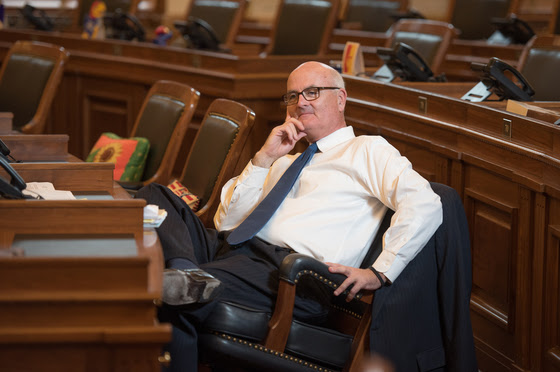
WARD: Our work is done (for now)

Rep. Jim Ward (D-Wichita) is the Kansas House Minority Leader.

After 113 days of legislative business, the Kansas legislature adjourned on Saturday night having finally completed our work on school finance, taxes, and budget.

While it lasted longer than anyone would have preferred, the outcomes were positive.

Below are highlights of some of the 2017 legislative accomplishments that Democrats strongly championed.

  • Ended the Brownback tax experiment and returned tax fairness to Kansas … this important action resulted in Moody’s upgrading the state’s credit rating from negative to stable
  • Restored middle class tax credits for child care, mortgage deductions, property tax deductions, and medical expense deductions
  • Passed gun safety legislation to keep guns out of our mental health institutions, hospitals, and nursing homes (this bill still needs the Governor’s signature)
  • Obtained pay increases for state employees, the first increase many have seen in nearly a decade
  • Increased funding for safety net clinics and community mental health centers
  • Restored funding of the Senior Care Act and Meals on Wheels
  • Rewrote the K-12 finance formula

While the ultimate decision on school finance remains uncertain, significant steps were made to return to per pupil funding with additional dollars for special needs students, all-day kindergarten, and at-risk four-year-old instruction. These are improvements to the formula that will long benefit Kansas children. The bill is waiting for the Governor’s signature. Once signed, it will be sent to the Kansas Supreme Court for their review.

I anticipate the Court will find the legislature did not adequately fund our obligations. The levels of funding in the bill for 2018 are less than we provided schools for instruction during the year of 2009. We have more work to do and could be called back for a special session to address funding levels.

In the meantime, I’m back home in southeast Wichita trying to get caught up on my law practice and my sleep! As always, I appreciate your support, encouragement, and input.

In Memory of Representative Patsy Terrell, District 102

The Kansas legislature was shocked and saddened by the sudden departure of our Democratic colleague Rep. Patsy Terrell of Hutchinson.
The memorial cartoon pictured here by Richard Crowson of The Wichita Eagle is a fitting tribute to the joyous person Ms. Terrell was and her unrelenting commitment to her district and Kansas.

We are going to miss her presence in the legislature, but remain deeply appreciative for the time we had with her. As you may have heard me say, she cast a bright light and touched all who knew her.

Rep. Jim Ward (D-Wichita) is the Kansas House Minority Leader.

How to register your boat in Kansas

KDWPT

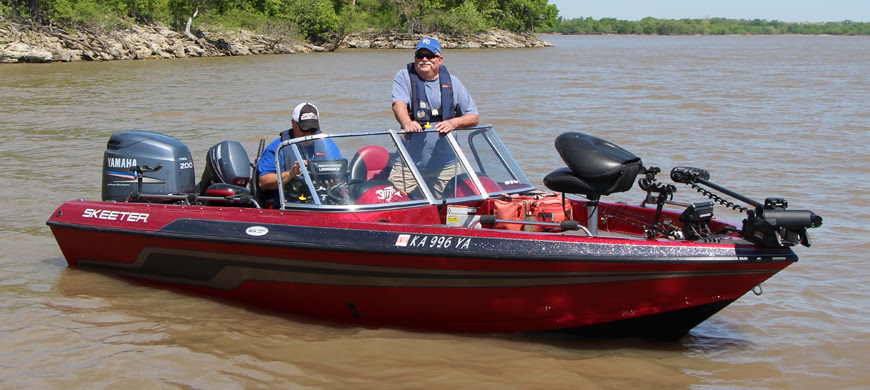
PRATT – Summertime is boating time and with 24 federal reservoirs and more than 200 community lakes, there are plenty of places for Kansans to enjoy being on the water. However, before you make you make your first trip, take a second and make sure your registration is up to date.

All boats powered by gas, diesel, electric motors or sail must be registered and numbered through the Kansas Department of Wildlife, Parks and Tourism (KDWPT) for use on public waters. Boaters can renew their registrations in person at KDWPT state park and regional offices or boat registration agents (a list of agents by county can be found at www.ksoutdoors.com (under “Boating”).

If you sell a boat, you must notify the department in writing within 15 days. If you buy a boat from an individual, an application for registration needs to be submitted accompanied by the previous owner’s certificate of number or a bill of sale and the registration fee. If you buy a boat from a Kansas dealer, the application needs to be submitted with a form STD8 or a bill of sale showing sales tax paid is required. If you buy a boat from an out-of-state dealer, the bill of sale showing sales tax paid is required. If no sales tax was paid, go to your county treasurer and pay sales tax then submit that receipt. Registration applications can be downloaded from the KDWPT website, filled out and mailed in with the registration fee of $32.50 (valid for three years).

The assigned registration number must be painted or permanently attached to each side of the forward, top half of the boat. Numbers must be vertical block characters at least 3 inches tall that read from left to right. A registration decal is issued each time you renew and it includes the year it expires. Instructions on how the registration numbers should appear are available in the Kansas Boating Regulations Summary or online.

Boat registrations expire three years from date of renewal, and KDWPT will send out renewal notices six weeks prior to expiration.

Fees from boat registrations fund boating access, education, and law enforcement programs and also provide match for federal funding. For more information on boat registration, contact your local KDWPT state park or regional office or call (620) 672-5911.

Wichita company named Governor’s Exporter of the Year

KDOC

TOPEKA–The Kansas Department of Commerce is pleased to announce the recipient of the 2017 Governor’s Exporter of the Year Award is Lee Aerospace. The winners were announced on International Trade Day during Business Appreciation Month.

The Governor’s Exporter of the Year award proudly celebrates the successes of Kansas companies that excel in exporting and growing their communities. It encourages the growth of the state’s international commerce by showcasing successful exporters as role models to the Kansas business community. The recipients are prime examples of how exporting is a significant catalyst for company growth and diversification. Twelve Kansas companies were nominated for the 2017 Exporter of the Year award. Finalists included:

· Bergkamp, Inc.-Salina
· KSi Conveyors, Inc.-Sabetha
· Lee Aerospace-Wichita
· Shor-Line-Kansas City

Lee Aerospace started as a small production company in 1989, manufacturing aircraft cabin windows for Boeing, and quickly grew to include multiple aircraft manufacturers. Today, Lee Aerospace is one of the world’s largest manufacturers of aircraft windows for business aircraft. Expanding beyond just aircraft transparencies, Lee Aerospace now has over 250 Kansas employees.

You will find their products worldwide; not only on every aircraft produced in Wichita, but many other aircraft manufacturers as well. The company utilizes international distributors to market their products throughout the world. Not only do they export products, they export services. Lee Aerospace has a staff of licensed technicians, traveling worldwide; inspecting, repairing and installing aircraft windows. They have customers in Australia, Brazil, Canada, China, Columbia, France, Germany, Greece, Kuwait, Mexico, New Zealand, Philippines, Sweden, Thailand, United States, the United Kingdom, and elsewhere.

KDWPT meeting June 22 to be streamed live

KDWPT

PRATT – The Kansas Wildlife, Parks and Tourism (KDWPT) Commission will conduct a public meeting on Thursday, June 22, 2017 in Kansas City at the George Meyn Center, 126th and State Ave. The afternoon session will begin at 1 p.m. and recess at 5 p.m. The evening session will convene at 6:30 p.m. The public is invited to attend both sessions and time will be set aside for public comment at the beginning of each for discussion of non-agenda items.

The afternoon session will begin with a report on the agency and state fiscal status and an update on the 2017 Kansas legislative session. The General Discussion portion of the meeting will include a report on privately-owned cabin permit fees, KDWPT Archery Program update, Kansas National Archery in the Schools Program update and 2018 turkey regulations.

The Workshop Session will include reviews of park regulations, fishing regulations, as well as license expiration dates.

The evening portion of the meeting will convene at 6:30 p.m. for the Public Hearing. Commissioners will vote on recommendations covering exotic dove hunting, as well as deer season dates on military reservations.

If necessary, the Commission will reconvene at the same location at 9 a.m., June 23, 2017, to complete any unfinished business. Information about the Commission, as well as the June 22 meeting agenda and briefing book, can be downloaded at ksoutdoors.com/KDWPT-Info/Commission/Upcoming-Commission-Meetings.

Live video and audio streaming of the June 22, 2017 meeting will be available at ksoutdoors.com. If notified in advance, the department will have an interpreter available for the hearing impaired. To request an interpreter, call the Kansas Commission for the Deaf and Hard of Hearing at 1-800-432-0698. Any individual with a disability may request other accommodations by contacting the KDWPT Commission secretary at (620) 672-5911.

The next KDWPT Commission meeting is scheduled for Aug. 10, 2017 at the Ninnescah Valley Yacht Club in Cheney State Park.

KDA and Commerce Seek Participants for Trade Mission to Brazil

KDA

MANHATTAN — The Kansas Department of Agriculture, together with the Kansas Department of Commerce, is seeking individuals to participate in a trade mission to Brazil. This mission will allow Kansas businesses who have an interest in exporting to Brazil to increase market opportunities. Travel dates are August 7-11, 2017.

“This trade mission is the perfect way to engage the culture and propagate relationships with important trade partners in Brazil,” said Kansas Commerce Secretary Antonio Soave. “We at the Kansas Department of Commerce look forward to cultivating opportunities for the state’s businesses and to spreading the word about the benefits of doing business with Kansas companies.”

“There is great potential for small businesses in Kansas to achieve growth through strategic efforts to explore this export market,” said Kansas Department of Agriculture Secretary Jackie McClaskey. “Brazil is an important export market for Kansas, traditionally ranking as one of our top 10 trading partners.”

Based on 2016 data, Brazil is Kansas’ seventh largest export market, totaling $344 million. Compared with the previous year, Kansas exports to Brazil experienced a 40 percent increase. Top categories for exports are aircraft and parts, alcoholic beverages, bakery, cereals, confectionery, dairy/cheese, electric machinery, high-value consumer oriented products, industrial machinery, meat, pharmaceutical products, and wheat.

This trade mission is funded in part by the State Trade Expansion Program (STEP) grant. The STEP grant is funded in part through a cooperative agreement with the U.S. Small Business Administration and helps Kansas non-exporters to get started and existing exporters to export more. Selected participants will be eligible for travel stipends for airfare and hotel, and will receive a per diem for meals. Participants will be responsible for the cost of other incidental expenses.

Participants of this trade mission will promote the use of Kansas products. All interested Kansas small businesses are encouraged to apply. For more information on the trade mission to Brazil, including instructions on how to apply and application requirements, go to agriculture.ks.gov/international, or contact Suzanne Ryan-Numrich at [email protected] or (785) 564-6704.
Deadline for submitting applications for consideration is June 16, 2017.

Handfishing requires nerves of steel

Flathead catfish

KDWPT

PRATT – Do you have what it takes to go handfishing? You can find out June 15-Aug. 15 during the Kansas handfishing season. Other than a strong grip, handfishing permit and a fishing license, all you really need is nerves of steel because you’ll be reaching into dark crevices and undercut banks to feel around for a hiding flathead catfish, which by the way, might weigh more than a 10-year-old little league shortstop.

Handfishing is allowed only on the Arkansas River; the Kansas River, from it’s origin to the downstream confluence with the Missouri River; and all federal reservoirs, from 150 yards beyond the dam to the upstream end of federal property. In addition to a fishing license, unless exempt, handfishers must also have a $27.50 handfishing permit. Handfishers may not use hooks, snorkeling or scuba gear, or any man-made device except a stringer. Man-made objects, such as barrels or tubs, may not be used to attract fish.

Once a fish is felt, a handfisher must try to work a hand in its mouth and grip the fish’s lower jaw to bring it to the surface, which is just about as difficult as it sounds, especially on big fish. And then there’s the mental aspect of handfishing – wondering what else may be lurking in the dark underwater recesses. That’s where the nerves of steel come in handy.

Only flathead catfish are allowed to be caught handfishing and the daily creel limit is five. For more information about handfishing and other types of fishing, consult the 2017 Kansas Fishing Regulations Summary, available wherever licenses are sold and at www.ksoutdoors.com.

🎥 Sens. Moran, Roberts applaud Senate resolution commemorating Big Red One’s 100th anniversary

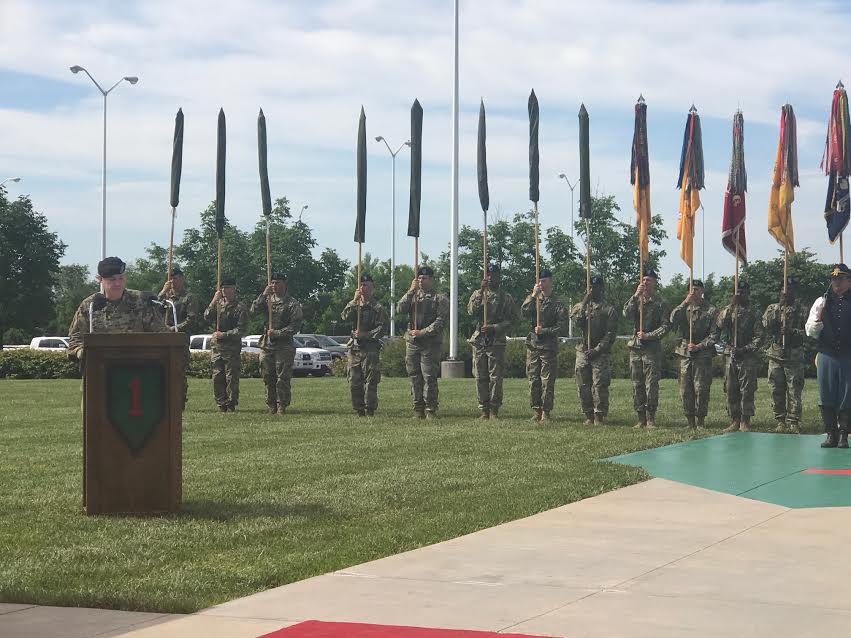
Fort Riley and 1ID Acting Senior Commander Brigadier General Patrick Frank at Thursday’s ceremony. (Photo courtesy JC Post)

OFFICE OF SEN. MORAN

WASHINGTON – U.S. Senators Jerry Moran (R-Kan.) and Pat Roberts (R-Kan.) this week applauded Senate passage of their resolution, S. Res. 115, to formally recognize the 100th anniversary of the First Infantry Division – officially nicknamed “The Big Red One” – based at Fort Riley, Kan. The division was organized on June 8, 1917. U.S. Representative Roger Marshall of the First Dist. (R-Great Bend) has introduced a companion resolution, H. Res. 267, in the U.S. House.

“Since 1917, Big Red One soldiers have fought bravely and sacrificed to protect our nation from global threats,” said Sen. Moran. “On the 100th anniversary of the First Infantry Division, we honor the efforts of all who have served and continue to serve in the Big Red One to defend so many lives, protect our American ideals and preserve freedom for all.”

“Known around the world for their heroism and their distinctive ‘Big Red One’ shoulder patch, the U.S. Army’s First Infantry Division has led our fighting forces and protected our nation from threats around the world for 100 years,” said Sen. Roberts. “I am proud to introduce this resolution to recognize the valiant efforts of these men and women in uniform and to honor those of the First Infantry Division who have made the ultimate sacrifice during their service to our nation. As their motto states: ‘No Mission Too Difficult, No Sacrifice Too Great, Duty First!’ It is an honor to represent Ft. Riley and the First Infantry Division.”

(Video courtesy 1st Infantry Division)

As members of the first permanent combined arms division of the U.S. Army, soldiers of the Big Red One have been among our nation’s greatest fighting forces in conflicts around the globe since World War I. Big Red One fighting forces are memorialized at monuments throughout the United States and Europe, including Normandy, France, overlooking Omaha Beach and sites in Belgium and the Czech Republic as well as our nation’s capital on the White House grounds.

On Tuesday, June 6, the anniversary of D-Day, Sen. Moran visited the Big Red One Memorial in Washington, D.C. and paid tribute to Big Red One soldiers alongside retired former Commanding Generals of the 1st Infantry Division, including General Carter Ham, LTG Bob Durbin and LTG Kenneth Hunzeker.

West Nile virus arrives early in Kansas; 1 patient in Barton Co.

KDHE

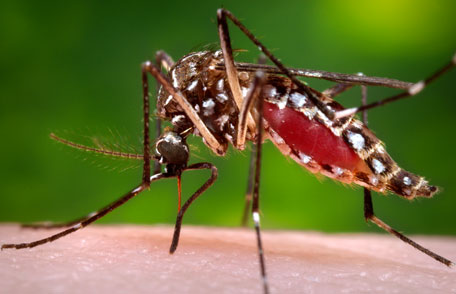
TOPEKA – The Kansas Department of Health and Environment (KDHE) has discovered that four Culex species mosquito pools collected from traps in Reno, Shawnee and Johnson counties are positive for West Nile virus in preliminary testing, and that two birds in Shawnee County have tested positive for West Nile virus.

In addition, Kansas is reporting the first case of West Nile virus in 2017 in a person from Barton County. These findings may indicate that West Nile virus transmission could occur much earlier in 2017 than in previous years.

The Culex species are known to transmit West Nile virus, but are not known to transmit Zika virus.

West Nile virus can be spread to people through bites from infected mosquitoes, but it is not contagious from person to person. Symptoms range from a slight headache and low-grade fever to swelling of the brain or brain tissue and in rare cases, death. People who have had West Nile virus before are considered immune.

KDHE has developed West Nile virus risk levels to help guide prevention efforts for both communities and individuals. These risk level reports will be posted weekly at https://www.kdheks.gov/epi/arboviral_disease.htm. All three regions of Kansas are currently at the high risk level.

KDHE recommends the following precautions to protect against West Nile Virus:

  • When you are outdoors, use insect repellent containing an EPA-registered active ingredient on skin and clothing, including DEET, picaridin, oil of lemon eucalyptus or IR3535. Follow the directions on the package.
  • Many mosquitoes are most active at dusk and dawn. Be sure to use insect repellent and wear long sleeves and pants at these times, or consider staying indoors during these hours.
  • The elderly or immunocompromised should consider limiting their exposure outside during dusk and dawn when the Culex species mosquitoes are most active.
  • Make sure you have good screens on your windows and doors to keep mosquitoes out.
  • Get rid of mosquito breeding sites by emptying standing water from flower pots, buckets and barrels.
  • Change the water in pet dishes and replace the water in bird baths weekly.
  • Drill holes in tire swings so water drains out.
  • Keep children’s wading pools empty and on their sides when they are not being used.

Cases are most common in the late summer and early fall. In 2012, there were 57 cases of West Nile virus in the state, the most cases since the virus first made its way into Kansas in 2002. More recently, in 2016, 34 cases were identified in Kansas. Among these cases, 21 were hospitalized, and there were five deaths. In addition to tracking cases of human illnesses caused by West Nile virus, KDHE assesses the potential for West Nile virus by conducting mosquito surveillance, including laboratory testing.

Birds generally are not tested for West Nile virus in Kansas, and KDHE will not be collecting information about dead birds. If you find a dead bird, KDHE recommends that you wear gloves, place the bird in a plastic bag, and dispose of it in the garbage.

KDHE maintains an Arboviral Disease Surveillance web page that is updated weekly at https://www.kdheks.gov/epi/arboviral_disease.htm. The Centers for Disease Control and Prevention provides a web page with additional information about West Nile virus and preventing mosquito bites at https://www.cdc.gov/features/StopMosquitoes/.

For questions about West Nile virus or other Arboviral diseases, please contact the KDHE Epidemiology hotline at (877) 427-7317.

State GOP chairman considers run for Kansas Sec. of State

SUBMITTED

WICHITA — Sedgwick County Clerk and Kansas Republican Party Chairman Kelly Arnold announced he will consider a run for Kansas Secretary of State. Arnold’s announcement comes on the heels of Secretary Kris Kobach’s decision to not seek re-election.

“In considering how I can make the greatest contribution to our state, I am exploring a run for Kansas Secretary of State. As Sedgwick County Clerk, I have strong experience in providing quality, efficient service to Kansans and in supporting elections officials across the state. I look forward to listening to my fellow Kansans as I consider this office.” Arnold said.

Arnold was sworn in as Sedgwick County Clerk in January 2009 and was re-elected to his third term in 2016. Arnold is a member of the Kansas County Clerks and Election Officials Association, a network representing the clerks and elections officials in Kansas’ 105 counties. He has earned the designation of Certified Master County Clerk, from Wichita State University’s Hugo Wall School of Public Affairs.

In addition to holding elected office, Arnold serves as Vice Chairman of the Kansas Public Employees Retirement System Board and Chairman of the Board of Directors at Hillsboro State Bank. After graduating from McPherson High School, Arnold earned degrees in Business Management and Finance at Tabor College. A fifth-generation Kansan, Arnold makes his home in Wichita where he is a member of Pathway Church.

Kansas Leadership Center offers leadership transformation grants

KLC

WICHITA-Are you working to make Kansas a better place? Then the Kansas Leadership Center is looking to partner with you!

We want to collaborate with organizations and communities to develop the leadership skills necessary to tackle tough challenges. This is where you come in.

We hope that your group or organization will apply for a Leadership Transformation Grant. The goal of these grants is to ensure that any organization or group has the resources necessary to boost leadership capacity. The grants provide up to $50,000 in leadership training by allotting your team up to 80 slots in the Kansas Leadership Center’s core programs in 2018.

Anyone in Kansas can apply, but here are the types of groups we could imagine applying:

· Education: School districts, school support organizations, PTOs, school boards, etc.
· Community-Minded Business Organizations: Civic clubs, business associations, economic coalitions, etc.
· Government: City, county or state government entities, etc.
· Non-Profits: Community Foundations, United Ways, community coalitions, etc.
· Faith: Churches, district level entities, collaborative faith initiatives, etc.

To learn more about whether this opportunity is right for you, you are invited to an informational webinar with any others in your organization at 10 a.m. on Fri., June 16 or 1 p.m. on Fri., June 30.

For more information and to apply visit https://kansasleadershipcenter.org/transformationgrant.

If you have questions or want to RSVP for a webinar, email KLC Director of Initiatives Thomas Stanley at [email protected].


Kansas participating in national study of opioid use among the justice-involved

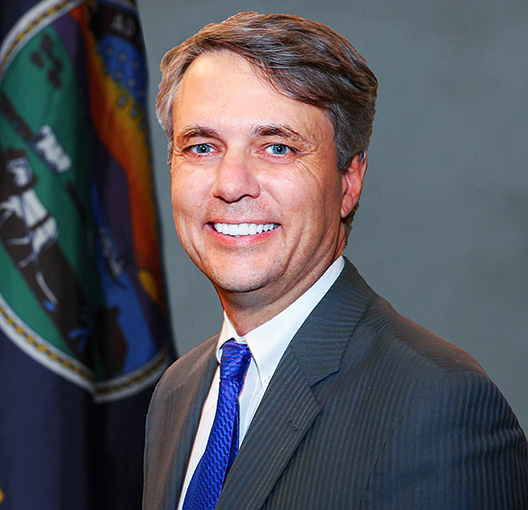
Kansas Lt. Gov. Jeff Colyer, M.D.

KDOC

TOPEKA–Kansas and seven other states have been selected by the National Governors Association (NGA) as leaders in the fight against the growing issue of opioid abuse nationwide. The pilot group will focus on reducing opioid use among people involved with the criminal justice system.

The Kansas Department of Corrections (KDOC), in partnership with Lt. Gov. Dr. Jeff Colyer and the Kansas Department on Aging and Disabilities (KDADS), was awarded a grant to participate in the NGA Center for Best Practices Learning Lab, an eight-month project devoted to developing strategies for the entire nation to apply to the opioid-use crisis.

Dr. Colyer, a practicing physician and Hays native, is committed to reducing the abuse of prescription medications in Kansas. Drug poisoning deaths due to opioids in Kansas increased by 28 percent from 2013 to 2015, making it the leading cause of specific drug poisoning deaths in the state, according to the Kansas Department of Health and Environment.

“The important work being done by KDOC and KDADS is crucial to balancing the availability of physician-prescribed medications and controlling the misuse of prescription drugs, said Dr. Colyer. “With the number of deaths continuing to rise at an alarming rate, this problem must be addressed.”

Criminal offenders being a group of particular concern in the fight against opioid use, KDOC applied to participate in the learning lab entitled Expanding Access to Opioid Use Disorder Treatment for Justice-Involved Populations.

“The fact that we were one of just eight states chosen to participate shows that we have been doing innovative work in this area and are seen as a leader,” KDOC Sec. Joe Norwood said.

At least 15 percent of the more than 6,000 offenders leaving Kansas prisons every year have a history of opioid misuse and/or a diagnosis of opioid use disorder. Substance misuse on a larger scale plagues the Kansas prison/parole population.

A team including staff from KDOC, KDADS and Dr. Colyer’s office is representing the state June 5 and 6 at a conference in Boston at which the eight states have come together to discuss their contributions to the study. The gathering in Boston will be followed by numerous conference calls, webinars and sharing of data. In January 2018 the states will report to NGA on results and future plans.

Copyright Eagle Radio | FCC Public Files | EEO Public File