We have a brand new updated website! Click here to check it out!

Learn to sail this summer

learn-to-sailKDWPT

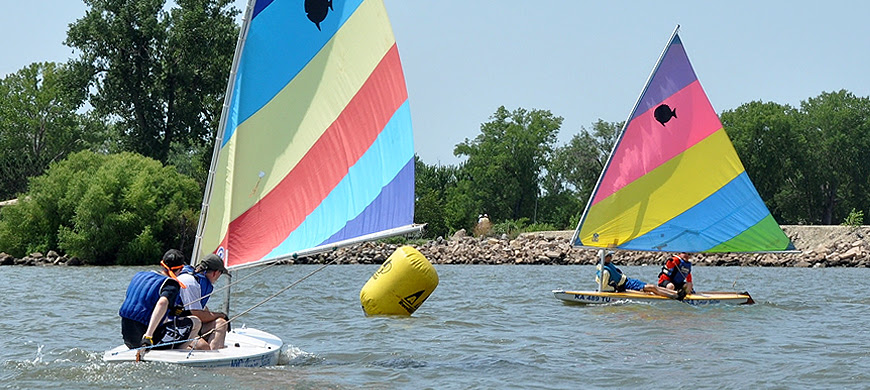
PRATT – Nothing says “summer” quite like sailing, and nobody knows sailing quite like the Ninnescah Sailing Association (NSA) at Cheney State Park. That’s why members of NSA are gearing up for another year of “Learning To Sail” courses this summer to introduce to others the joys of sailing. Open to members and non-members, the program is led by experienced, certified U.S. sailing instructors, who will share their knowledge of basic boat-handling skills, sailing terminology, watercraft safety, knot tying and more. And of course, plenty of time will be spent on the water.

Participants age 18 or older can choose between courses beginning June 20, July 18, or take a Basic Keelboat course August 12. Youth can choose between camps taking place June 26-30 or July 24-28.

Adult courses are $250 per non-member, and $195 for NSA members. Youth courses are $150 for non-members, and $125 for NSA members. The Basic Keelboat class is $125 for non-members and $75 for NSA members.

Life jackets, course materials, use of sailboats, and safety equipment are all included in the course fee. Graduates of the class interested in joining NSA will have their initiation fee waived and pay half-price on their first year of membership.

For information and to sign up, visit www.ninnescah.org.

National Safe Boating Week May 20-26

boat-putting-on-lifejacketKDWPT

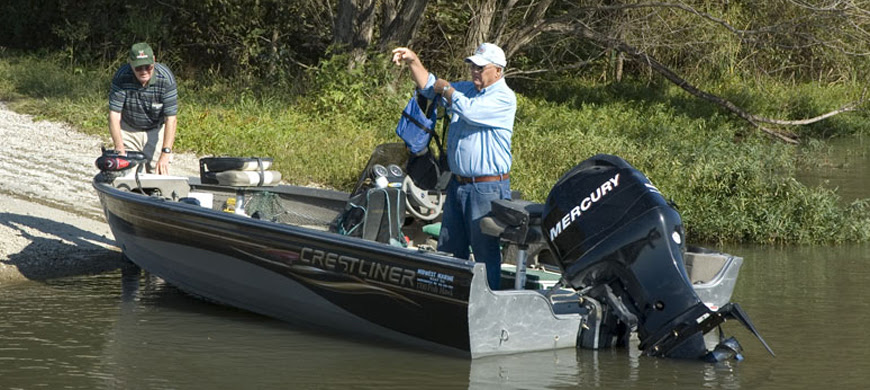
PRATT – What looks like a perfect day for boating can quickly become hazardous if someone ends up in the water. Boating safety advocates across the United States and Canada have teamed up to promote safe and responsible boating – including consistent life jacket wear every time boaters are on the water – during National Safe Boating Week, held from May 20-26, 2017.

“Each year hundreds of people lose their lives in boating incidents, but they may still be alive if they had been wearing a life jacket,” said Rachel Johnson, executive director of the National Safe Boating Council (NSBC). NSBC is the lead organization for the North American Safe Boating Campaign, a yearlong effort focused on boating safety that kicks off annually with National Safe Boating Week.

“It’s not enough to just own a life jacket and store it on a boat, you must wear it,” Johnson said.

U.S. Coast Guard statistics show that drowning was the reported cause of death in three-fourths of recreational boating fatalities in 2015, and that 85 percent of those who drowned were not wearing life jackets.

Today’s life jackets are more comfortable, cooler and lighter than the bulky orange jackets most boaters are familiar with. Innovative options, such as inflatables, allow for mobility and flexibility during boating activities such as fishing, paddling or hunting.

Kansas law requires all youth 12 and younger to wear life jackets when on a boat, but lives can be saved if everyone onboard wears a U.S. Coast Guard approved life jacket.

“Being a strong swimmer is no excuse to not wear a life jacket. An incident can happen in less than a second when you are least prepared for it, and a life jacket can be the difference between surviving that incident or potentially losing your life,” said Chelsea Hofmeier, Boating Education coordinator for the Kansas Department of Wildlife, Parks and Tourism (KDWPT). “Getting your Kansas Boater Safety Education Certification is another way to ensure your boating days are safer and more enjoyable,” Hofmeier added.

The Kansas Boater Safety Education course is offered three ways ­­– home study packet, online and classroom. Go to www.ksoutdoors.com, click on “Boating,” then on “Boating Education” to learn more.

The North American Safe Boating Campaign unites the efforts of a wide variety of boating safety advocates and is produced under a grant from the Sports Fish Restoration and Boating Trust Fund, administered by the U.S. Coast Guard. For more information and to follow the campaign on social media, please visit www.safeboatingcampaign.com.

Preventing the spread of Aquatic Nuisance Species

aquatic-nuisance-speciesKDWPT

PRATT – It’s fishing and boating season, and the Kansas Department of Wildlife, Parks and Tourism (KDWPT) reminds boaters and anglers that they play a critical role in preventing the spread of aquatic invaders that threaten Kansas waters. Anyone who boats or fishes in Kansas can learn more about Aquatic Nuisance Species (ANS) at ProtectKSWaters.org.

ANS in Kansas include: white perch, two species of Asian carp – silver and bighead, zebra mussels, and three plant species – salt cedar, Eurasian watermilfoil and purple loosestrife. Kansas boaters and anglers should be familiar with the regulations put in place to prevent the spread of ANS.

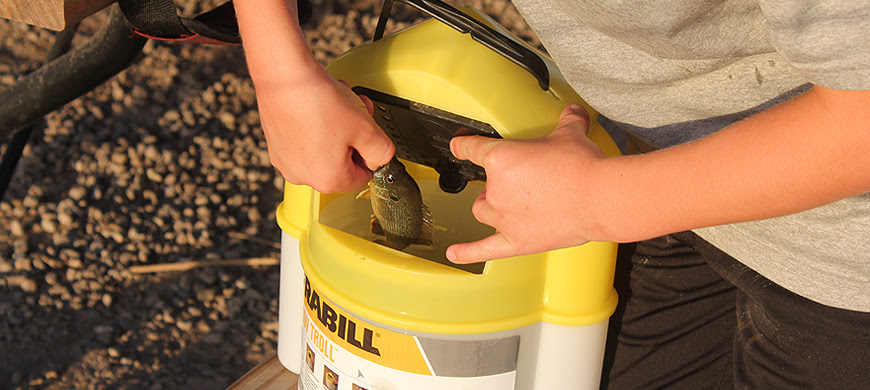
Live baitfish may be caught and used as live bait only within the common drainage where caught. However, live baitfish shall not be transported and used above any upstream dam or barrier that prohibits the normal passage of fish. Live baitfish collected from designated aquatic nuisance waters shall be possessed or used as live bait only while on that water and shall not be transported from the water alive. Bluegill and green sunfish collected from non-designated aquatic nuisance waters may be possessed or used as live bait anywhere in the state.

Live bait purchased from a permitted bait dealer can be used anywhere in the state but no live fish may be transported from an ANS designated water. Baitfish must be disposed on land or in approved receptacles. Bilges and livewells must also be drained before leaving.

These regulations are necessary because zebra mussel larvae, called veligers, are microscopic and suspended in the water column. At Kansas lakes with established zebra mussel populations, there may be as many as 1,000 veligers in a single gallon of lake water. Within 2-3 weeks, the veligers settle out under the weight of their forming shell. Adult zebra mussels look like small clams with jagged brown or black stripes. They attach to underwater surfaces and can reach densities of 100,000 individuals per square meter. Zebra mussels can clog water intake pipes, costing electric generating plants an estimated $145 million annually to control them. In addition, shells from dead mussels can accumulate along shorelines, making wading and swimming dangerous.

Silver and bighead carp threaten Kansas waterways and fish populations. These prolific plankton eaters can eat up to 40 percent of their body weight each day, competing with native fish for food and threatening the diversity and quality of other aquatic life. When young, Asian carp resemble native minnows and shad, which is why baitfish regulations limit the movement of wild-caught baitfish. When grown, Asian carp can weigh up to 100 pounds, and they are prone to leaping out of the water when disturbed by a passing motorboat, posing a real physical threat to boaters.

There are three primary ways the public can help stop ANS from spreading:

CLEAN – DRAIN – DRY– boats and equipment after every visit to any lake or river

DON’T MOVE LIVE FISH – between bodies of water or up streams

DON’T DUMP BAIT IN THE WATER OR DRAINAGE DITCHES – Instead, discard bait on dry land or in an approved receptacle

Learn more about aquatic nuisance species at ProtectKSWaters.org and in the 2017 Kansas Fishing Regulations Summary.
Kansas chosen to participate in federal academy for behavioral health programs

sanhsa-logoKDADS

TOPEKA – Kansas is one of 10 states that have been selected to participate in the federal Substance Abuse and Mental Health Services (SAMHSA) Policy Academy that will devise initiatives to strengthen recovery-oriented behavioral health services and supports for Kansans.
The Kansas Department for Aging and Disability Services’ Behavioral Health Commission is convening a team of agency staff and stakeholders to carry out this initiative, entitled “Bringing Recovery Supports to Scale Technical Assistance Center Strategy” (BRSS TACS).

The Policy Academy will support the state in planning and carrying out initiatives to build and strengthen recovery-oriented services and supports.

The Policy Academy will take place from May to September, 2017, and will include multiple virtual and onsite activities. Team planning sessions will focus on team building, developing a shared recovery vision, analyzing Kansas’ existing strengths, resources, and challenges and drafting an action plan to build, strengthen and sustain recovery-oriented services and supports.
Knowledge-building sessions will feature national experts sharing resources and discussing promising practices on recovery-oriented workforce development topics. Speakers and experts will be available for on-demand consultations with the state team.

By the close of the Policy Academy, Kansas will have developed an action plan for implementation. The team will then finalize the action plan and receive virtual follow-up technical assistance from SAMHSA for up to six months to support implementation.

Kansas team participants will include KDADS’ Mental Health Director Michelle Sweeney, Adult Consumer Affairs Program Coordinator Carrie Billbe, Systems of Care Project Coordinator Kelsee Torrez, Projects Coordinator Charles Bartlett, Problem Gambling Project Coordinator Carol Spiker, along with Manager of Pathfinder Recovery Center at the Central Kansas Foundation in Salina Don Greene, Director of Behavioral Health Initiatives with the Community Engagement Institute at Wichita State University Randy Johnson, Director of Clinical Services for Four County Mental Health Center in Independence Steve Denny, Executive Director of Behavioral Health, Optum Behavioral Health Sandra Hashman, and Director of Regional Contracting/Kansas Provider Relations for Beacon Health Options Frances Breyne.

States participating in the 2017 Policy Academy include Alaska, Arkansas, Florida, Georgia, Illinois, Kansas, New Jersey, New York, Utah and West Virginia.

For more information, visit: https://www.samhsa.gov/brss-tacs.

Sen. Moran and bipartisan group of senators introduce legislation to honor first responders

2017_police-week-white-bkgd-web-fwOFFICE OF SEN. MORAN

WASHINGTON – U.S. Senator Jerry Moran (R-Kan.) this week joined a bipartisan group of senators in introducing the Honoring Hometown Heroes Act to honor first responders who make the ultimate sacrifice.

The legislation would amend the U.S. flag code to allow the governor of a state to order the American flag to be lowered to half-staff in the event that a local first responder dies while serving in the line of duty. Currently, Governors only have the ability to order the flag to fly at half-staff after the death of a government official or the death of a member of the armed forces during combat.

“The police officers and firefighters who put their lives on the line to protect us deserve not only our gratitude but also our recognition,” said Sen. Moran. “This legislation will make certain that state leaders are empowered to honor and recognize the sacrifices of our first responders. As we commemorate National Police Week, we reflect on ways to show our appreciation – flying our flag at half-staff to honor those who have given their lives is a simple way to begin.”

The Honoring Hometown Heroes Act is supported by police officers and firefighters from across the nation.

“Everyday our law enforcement officers act heroically to save and help people they have never met before from all walks of life,” said President of the Fraternal Order of Police Chuck Canterbury. “These officers take an oath to protect and service their communities to make it a better and safer place for all those that live there. They are even willing to lay down their lives in the service of others.”

“First responders knowingly place their lives in jeopardy to preserve the lives of others. Sadly, not all of these first responders return to their families and homes,” said President and Chairman of the International Association of Fire Chiefs John D. Sinclair. “This simple yet effective and profound action will allow residents across the United States to honor first responders who have made the ultimate sacrifice.”

“Every community across America relies on fire fighters and emergency medical technicians to respond to a variety of emergency situations. Sadly, more than one hundred times annually, these dedicated emergency responders pay the ultimate price by selflessly giving their very life for the service and protection of their community,” said President of the International Association of Firefighters Harold A. Schaitberger. “The Honoring Hometown Heroes Act is an important piece of legislation that recognizes the sacrifices made by our emergency response professionals.”

The bipartisan bill is also supported by the Federal Law Enforcement Officers Association, National Association of Police Organizations, National Fallen Firefighters Foundation, National Volunteer Fire Council, National Honor Guard Commanders Association, National Honor Guard Academy and National Fire Academy Alumni Association.

National Police Week started on Sunday, May 14th and ends on Saturday, May 20th.

Free fishing throughout Kansas June 3 & 4

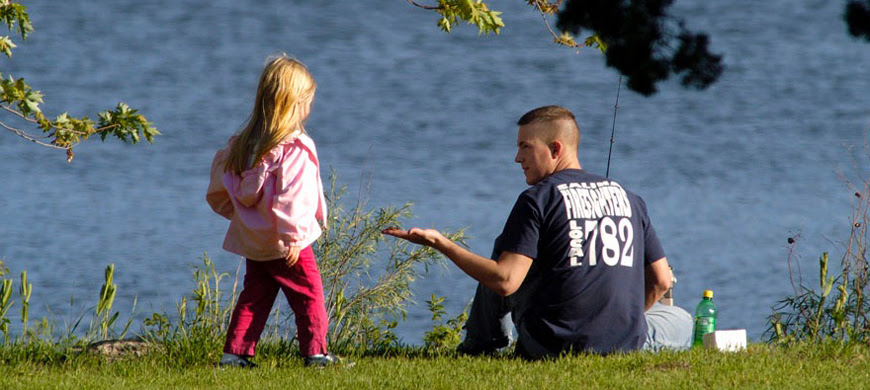
adult-and-kid-fishing-kdwptKDWPT

PRATT – Summertime colds can be good-time killers, but there’s another kind of summer fever that’s sure to be a good-time creator: fishing fever.been fishing before, are looking to brush up your skills, or just want a fun, family-friendly event to take your kids to, the Aquatic Education calendar at ksoutdoors.com has your prescription for fishing fever. Simply visit ksoutdoors.com and click “Special Fishing Programs For You,” then “Aquatic Education Information.” The calendar will be on the right-hand side and there you’ll find fishing events nearly every weekend throughout the season, starting in May.

Here are just a few you won’t want to miss:

-May 13: Fishing Education event at Academy Sports, west Wichita. Starting at 11 a.m., Bass Federation members and FishKS representatives will be on-site to teach fishing techniques, knot-tying, and more.

-May 20: Staff at Great Plains Nature Center, 6232 East 29th St N, Wichita, will be hosting their annual fishing clinic and Walk With Wildlife event open to the public.

-June 3 and 4: “Free Fishing Weekend” throughout the state. During this event, you can fish any public waters without a fishing license.

-June 10: Family Outdoor Adventure Day at Cabela’s, Kansas City. Several outdoor organizations including Fishing’s Future will be available for fishing activities and outdoor recreation education.

KDWPT, in partnership with Fishing’s Future, coordinates and conducts over 175 fishing education events every year through the FishKS program ­– that’s in addition to the many private and non-profit organizations who host events with FishKS, too.

If you would like to invite FishKS to be part of your fishing or aquatic education event, please contact David Breth at (620) 672-5911. Demand is high, so attendance can’t be guaranteed, but FishKS staff will do their best to assist in any way possible.

For more information on aquatic education events and how you can help, visit ksoutdoors.com and click “Special Fishing Programs For You,” then “Aquatic Education Information.”

Missouri targets doctor dearth, expands first-in-nation law

doctorJEFFERSON CITY, Mo. (AP) — Numerous doctors from around the U.S. could become eligible to treat patients in Missouri’s underserved areas as a result of a planned expansion of a first-in-the-nation law aimed at addressing doctor shortages.

The newly passed Missouri legislation would broaden the reach of a 2014 law that sought to bridge the gap between communities in need of doctors and physicians in need of jobs.

Supporters have touted the law as a model for other states.

The law created a new category of “assistant physicians” for people who graduated from medical school and passed key medical exams but were not placed in residency programs. But it took nearly 2½ years to implement.

Missouri’s new legislation turns back the clock, so those who became ineligible during the slow rollout still can qualify.

Plan for new Kansas prison faces skepticism from lawmakers


Lansing Correctional Facility (Photo courtesy KDOC)

TOPEKA, Kan. (AP) — A plan in Kansas to build a new prison to replace the state’s oldest and largest lockup faces bipartisan skepticism from legislators worried that their oversight is being skirted.

Republican Gov. Sam Brownback’s administration expects by the end of the week to have a list of qualified companies interested in building the new prison in Lansing.

The project would cost up to $155 million. The cash-strapped state could finance it with bonds or lease the new prison from a private company for up to 40 years before buying it.

Legislators must approve demolition of existing buildings and authorize any bonds for the project.

Brownback’s administration can sign a lease-purchase agreement with a private company on its own. But lawmakers have considered requiring another review of the project by legislative leaders.

Outdoor Writers of Kansas help Kansas disabled veterans get outdoors

outdoor-writers-of-kansas-logoKDWPT

PRATT – Outdoor Writers of Kansas (OWK) members have stepped up again to help fund hunting and fishing licenses for Kansas disabled veterans. OWK members challenge all Kansas conservation organizations to match or beat their 2017 donation of $1,000.

Each fiscal year, the Kansas Legislature appropriates funding to the Kansas Department of Wildlife, Parks and Tourism (KDWPT) to provide hunting and fishing licenses for Kansas military veterans with service-related disabilities of 30 percent or more. Initially the funding was adequate, but as the number of veteran license applications has increased, funding has run out before the end of the fiscal year. When that happens, KDWPT uses donations to pay for licenses. Recently, the Ford County Sportsmen’s Club made a $1,000 donation, but there are still several hundred disabled veteran license applications awaiting funding.

Anyone can donate, and hunters and anglers who purchase licenses online can check a donation box. Any individual or organization interested in helping can mail a donation made out to WildTrust, specifying the Disabled Veterans License account. Checks can be mailed to KDWPT, c/o WildTrust, 512 SE 25th Ave., Pratt, KS 67124. Visit www.ksoutdoors.com/License-Permits-Veteran-Hunting-and-Fishing-Licenses for more information.

OWK is a nonprofit professional organization with members who are dedicated to communicating about Kansas’ hunting, fishing, and other outdoor- and wildlife-related recreation. Members meet twice a year and raise money to send youngsters to the Kansas Wildlife Federation’s Outdoor Adventure Camp, purchase equipment for the KDWPT Pass It On youth program, the Steve Harper OWK/Kansas Wildscape scholarship, as well as other outdoor programs.

May is Master Angler Month

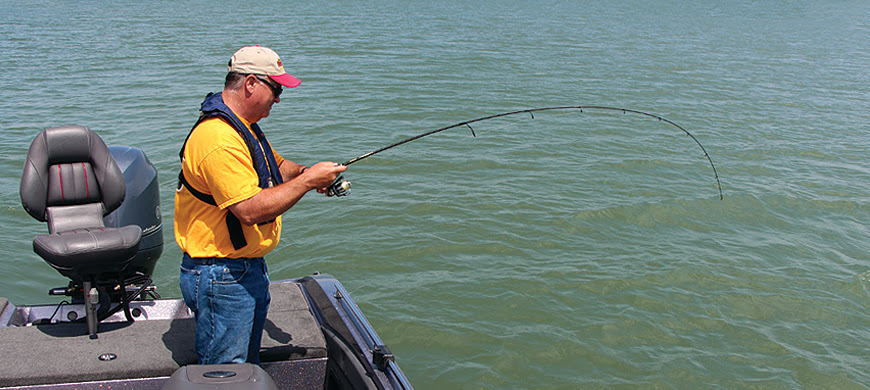
fishing-kdwptKDWPT

PRATT–Dedicated anglers fish for the love of fishing. Whether they take some fish home to eat or practice catch and release, all anglers enjoy preserving the memories of special moments on the water. Just mention fishing to a dedicated angler and you’re sure to see a smartphone appear with photos from a recent trip. And there’s another way to remember your biggest catches: a Kansas Department of Wildlife, Parks and Tourism (KDWPT) Master Angler Award.

The Master Angler Award program recognizes anglers’ catches that meet or exceed minimum lengths for 36 fish species. Minimum lengths for each species are listed on Page 39 of the 2017 Kansas Fishing Regulations Summary, and at www.ksoutdoors.com under “Special Fishing Programs.” A Master Angler Award application form is also available at both locations.

Once a fish that meets the requirements is caught, for example a 23-inch largemouth bass, the angler must measure it and take a color photograph. Then, mail their completed application and photograph to Information Services, KDWPT, 512 SE 25th Ave., Pratt, KS, 67124. A digital image and application can be emailed to [email protected].

Once the species is confirmed, a custom certificate suitable for framing will be mailed to the applicant. A Master Angler Award is a great way to remember your biggest fish, and since fish that meet or exceed the minimum lengths are considered trophy-sized, each certificate you earn is a testament to your angling skill.

Kansas pleased China will again allow U.S. beef imports

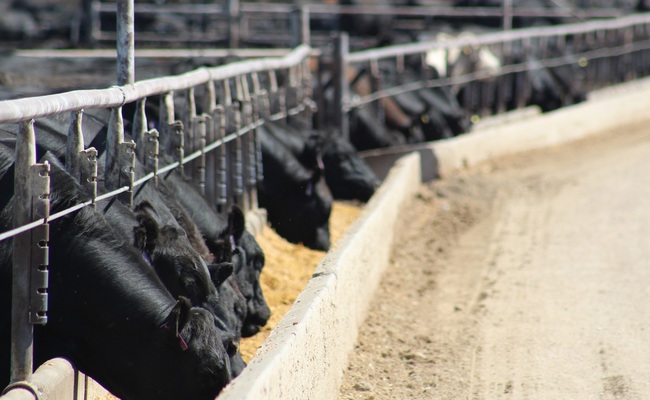
beef cattle feedingKDA

MANHATTAN — Kansas Governor Sam Brownback and Secretary of Agriculture Jackie McClaskey released a statement in response to Thursday’s announcement from the U.S. Department of Commerce that China will once again allow imports of U.S. beef.

“Kansas welcomes the news that an agreement has been reached to open China’s borders to U.S. beef after being locked out of that market for the last 13 years,” said Governor Brownback. “We commend the Trump Administration for this achievement. Restoring U.S. beef exports to China opens the door to sell high quality, safe and delicious Kansas beef to nearly 1.4 billion new customers in China.”

“This is tremendous news for Kansas agriculture,” said Secretary McClaskey. “The Kansas beef industry is the single largest agricultural sector in the state, making it a significant contributor to the Kansas economy, generating more than $15 billion annually. We are committed to working with the Kansas beef industry to take full advantage of this export opportunity, which will have a major impact as we continue to identify ways to grow Kansas agriculture.”

Kansas House panel adds funds for at-risk kids

school fundingTOPEKA, Kan. (AP) — The Latest on the Kansas Legislature’s debate on the state’s budget problems and education funding (all times local):

4:50 p.m.

Kansas legislators looking to boost spending on programs for at-risk public school students have decided to be more generous than previously planned.

A House committee worked Friday on a bill that would phase in a $783 million increase in annual aid to public schools over five years.

The Kansas Supreme Court ruled in March that the state’s funding for its 286 local school districts is inadequate. The court said helping under-performing students is a key issue.

The bill initially had a lower total cost, but committee members voted Friday to add an additional $21 million for programs for students who are at risk of failing. That’s an extra $111 per student for the 2017-18 school year.

The committee hopes to vote on the entire plan Monday.

___

1:45 p.m.

Kansas legislators have advanced a proposal that would help the state a little with its budget problems by closing sales tax exemptions while promising a future reduction in the tax on groceries.

The House gave first-round approval to the measure Friday on a voice vote. It expects to take a final vote Monday.

The measure would raise $115 million over the next two years by applying the state’s 6.5 percent sales tax to a few services such as towing, security, pet boarding and non-residential cleaning.

Kansas faces projected budget shortfalls totaling $887 million through June 2019. The bill would lessen the need to increase other taxes.

But new revenue would be offset starting in July 2020 by a reduction in the sales tax on groceries to 6.4 percent.

___

7:15 a.m.

Kansas legislators are hoping to advance a proposal to increase spending on public schools even though some lawmakers question whether it would be adequate.

A special House committee planned to vote Friday on a bill that would phase in a $762 million increase in aid to the state’s 286 local school districts over five years.

The bill also creates a new per-student formula for distributing the money to see that enough goes to programs for at-risk students.

Kansas spends more than $4 billion a year on aid to its public schools. But the state Supreme Court ruled in March that education funding is inadequate.

Lawmakers must also close projected budget shortfalls totaling $887 million through June 2019. They expect to raise income taxes but haven’t settled on a plan.

Kansas House advances bill on sales tax breaks

TOPEKA, Kan. (AP) — Kansas legislators have advanced a proposal that would help the state a little with its budget problems by closing sales tax exemptions while promising a future reduction in the tax on groceries.

The House gave first-round approval to the measure Friday on a voice vote. It expects to take a final vote Monday.

The measure would raise $115 million over the next two years by applying the state’s 6.5 percent sales tax to a few services such as towing, security, pet boarding and non-residential cleaning.

Kansas faces projected budget shortfalls totaling $887 million through June 2019. The bill would lessen the need to increase other taxes.

But new revenue would be offset starting in July 2020 by a reduction in the sales tax on groceries to 6.4 percent.

Copyright Eagle Radio | FCC Public Files | EEO Public File