We have a brand new updated website! Click here to check it out!

Moran to WFP USA: Kansans help feed the world

U.S. Sen. Jerry Moran (R-KS) with World Food Program USA

By WORLD FOOD PROGRAM USA 

WASHINGTON, D.C. –  Throughout our nation’s history, leaders from across the aisle have dedicated their careers to ending global hunger.

Senator Jerry Moran from Kansas is one of those leaders. Senator Moran is chair and co-founder of the Senate Hunger Caucus and a member of the Senate Appropriations Subcommittee on State and Foreign Operations, and throughout his career, he has worked with the World Food Programme to implement programs and policies that promote food security. We recently sat down with Senator Moran to learn more about his commitment to feeding hungry families across the world.

WFP USA: Why do you personally care about global food security?

Sen. Moran: The call to feed the world has been answered by so many Kansans before me. Each of us is taught at a young age that it is our duty to help those in need. Kansans take that moral responsibility to heart. As individuals, we help our neighbors. Through churches and local organizations, we feed our communities. And as a country, America leads the world in providing food for millions of people in need of assistance around the globe.

WFP USA: Imagine you’re hosting a town hall meeting in Kansas and you’re met with skepticism about global engagement generally or food aid in particular. Why should Kansans and the rest of America care about global food security?

Sen. Moran: American farmers are linked to global markets and, by extension, to the wellbeing of people everywhere. Today, 821 million people around the world suffer from chronic hunger. About 113 million are facing immediate, life-threatening hunger. America’s international food assistance programs build stronger markets and more stable societies. They also provide a reliable market for American farmers right now when they need it most.

Food security also contributes to our national security. When governments cannot feed their own people, chaos and violence often follow. Food assistance provided by the United States leads to greater stability in regions of the world important to America’s strategic interests. When parents have access to food, they can provide a better future for their children. And when hunger no longer impedes a child’s ability to learn, they can remain and thrive in school, leading them down a path to greater opportunities.

While our country’s collective moral convictions make fighting hunger the right thing to do, the benefits we receive as a nation from reducing global food insecurity also make it the smart thing to do.

WFP USA: America has always been a leader in the fight against global hunger. Looking back at our history of hunger relief, what are key U.S. policies and programs that have made a big difference in reducing hunger abroad?

Sen. Moran: Kansans in particular have a long history of leading the fight to end global hunger. Most notably, Senator Bob Dole from Kansas (a Russell native) worked to expand our nation’s efforts to provide food to the most vulnerable populations around the world, including young school girls, through the Dole-McGovern Food for Education Program. It is an honor to continue this tradition and example set by Senator Dole as we continue the fight against hunger.

And, of course, Food for Peace has also been instrumental in fighting global hunger.

WFP USA: Let’s look specifically at the Food for Peace Program. This year marks its 65th anniversary. What role has this program played in addressing global hunger?

Sen. Moran: Since Food for Peace was signed into law 65 years ago by President [Dwight] Eisenhower, a native Kansan (from Abilene), it has reached over 4 billion people in the world. Food for Peace is the cornerstone of U.S. international food aid programs. It provides U.S.-grown food to hungry people in some of the most dangerous and hardest to reach areas in the world, including in conflict zones. From the aftermath of the Korean War to conflicts in the Middle East, Africa and South Asia today, Food for Peace continues to provide hope for people who have nowhere else to turn. With several areas of the world facing famine or near-famine conditions today, Food for Peace has never been more important to addressing global hunger.

WFP USA: How are you currently working to fight global hunger? Are there any pieces of related legislation that you’re passionate about passing to advance this cause?

Sen. Moran: As a member of the Senate Appropriations Committee, I work to prioritize funding for our international food aid programs, including Food for Peace and Dole-McGovern. Each year, Congress must decide how to allocate limited funds among many important policies across government. I fight for international food aid programs to be at the top of the priority list because these programs help save lives around the world, contribute to global stability and provide important markets for American farmers.

WFP USA: Sen. Moran, you serve a large agriculture producing state. How do you see food assistance programs creating and expanding markets for U.S. agriculture products?

Sen. Moran: Kansas is a top wheat, sorghum and beef producing state. We also grow corn, soybeans and cotton, and are one of the fastest growing dairy production states in the nation. Kansans’ ability to earn a living in rural areas is by exporting the food and fiber we grow to consumers around the world. Through international food aid programs, we are helping to connect the bounty of food that farmers and ranchers produce in Kansas with people facing starvation around the world.

Good harvests, coupled with a lack of markets, have made large stockpiles of grain a familiar site across the state in recent years. I pulled over to the side of the road to take a photo in Kensington, Kansas of a huge pile of sorghum on the ground because all of the grain elevators were full. I’ve shown that photo to President Trump, Secretary Perdue and others to illustrate the importance of export markets for Kansas farmers and ranchers. The photo has also raised the question – how do we do better at getting the large amounts of food we grow in Kansas to people who are facing hunger and starvation?

WFP USA: What is your hope for the future of America’s role in global food security?  What do you think we need to do as Americans to ensure that everyone across the world has the food they need to not only survive, but also reach their full potential?

Sen. Moran: In my lifetime I believe we can end hunger, malnutrition and achieve food security across the world. We can accomplish this if America continues to lead the world in combatting hunger. This is an issue in which the morally correct thing to do is also what’s in the best interest of our country. By continuing to invest in Food for Peace, Dole-McGovern and other international food-aid programs, we will save lives around the world and reduce conflict by promoting greater social and economic stability. 

To read the full World Food Program USA Q&A with Sen. Moranclick here.

Kansas teacher semifinalist in Harbor Freight Tools for Schools Teaching Excellence prize

CALABASAS, Calif. — A Kansas high school skilled trades teacher is among 50 teachers and teacher teams from across the country who were named today as semifinalists for the 2019 Harbor Freight Tools for Schools Prize for Teaching Excellence.

Mark Meyer, who teaches agricultural education at Marion High School in Marion, and his skilled trades program are in the running for a share of $1 million in total cash awards.

Meyer was chosen by an independent panel of judges from among a field of 749 skilled trades teachers who applied for the prize. The semifinalists—some competing as individuals and some as teacher teams—hail from 26 states and specialize in trades including manufacturing, welding, construction, automotive and agriculture mechanics.

Meyer has more than 30 years’ experience teaching agriculture and welding. Growing up on a dairy farm gave him early experience with fixing equipment, and his passion for teaching skilled trades comes from his belief that students learn best by applying what they learn.

Meyer’s students pursue activities that reinforce physical science concepts, like studying Bernoulli’s principle before designing wind turbine blades to maximize power production.

Meyer is also a teacher leader, training dozens of teachers nationwide in the Curriculum for Agriculture Science Education (CASE) course in agriculture power and technology and in mechanical systems in agriculture.

“We never cease to be amazed by the talent, creativity and resourcefulness of skilled trades educators,” said Danny Corwin, executive director of Harbor Freight Tools for Schools. “This year’s semifinalists teach more than a dozen trades and have spent a collective 800 years in the classroom—teaching our students critical skills that our country needs—and we couldn’t be more excited to honor their work.”

The full list of the 50 semifinalists is posted here.

The 2019 semifinalists now advance to a second round of competition, where they will be asked to respond to online expert-led video learning modules designed to solicit their insights and creative ideas about teaching practices. The contenders will be asked how ideas from the modules might be used to inspire students to achieve excellence in the skilled trades. Two rounds of judging, each by separate independent panels of reviewers, will narrow the field to 18 finalists and, finally, name the three first-place and 15 second-place winners. Winners will be announced on Oct. 24.

The 18 winners will split $1 million in prizes. First-place winners will each receive $100,000, with $70,000 going to their public high school skilled trades program and $30,000 to the individual skilled trades teacher or teacher team behind the winning program. Second-place winners will each be awarded $50,000, with $35,000 going to their public high school program and $15,000 to the teacher or team. Past winners have dedicated their winnings to modernizing their shops, investing in specialized tools, promoting their programs to families and purchasing equipment to prepare students for higher-level accreditations. Semifinalists whose school, district or state policy prohibits receipt of the individual portion of prize earnings were eligible to apply on behalf of their school’s skilled trades program. If they win, the entire prize will be awarded to the school.

The Harbor Freight Tools for Schools Prize for Teaching Excellence was started in 2017 by Eric Smidt, the founder of national tool retailer Harbor Freight Tools. The prize recognizes outstanding instruction in the skilled trades in U.S. public high schools and the teachers who inspire students to learn a trade that prepares them for life after graduation. Now, in the third year of the prize, more than 150 teachers have been recognized as winners or semifinalists. Winners are invited to attend an annual convening to share best practices for advancing excellence in skilled trades education.

“Skilled trades teachers help hundreds of thousands of students each year experience the satisfaction and sense of accomplishment that comes from learning a trade,” Smidt said. “These teachers, their students and skilled tradespeople everywhere, too often don’t receive the respect and gratitude they deserve. Without them, construction would halt, homes, cars and appliances would fall into disrepair, and our infrastructure would crumble. We are thrilled to be able to honor and elevate the importance of their work.”

About Harbor Freight Tools for Schools
Harbor Freight Tools for Schools is a program of The Smidt Foundation, established by Harbor Freight Tools Founder Eric Smidt, to advance excellent skilled trades education in public high schools across America. With a deep respect for the dignity of these fields and for the intelligence and creativity of people who work with their hands, Harbor Freight Tools for Schools aims to drive a greater understanding of and investment in skilled trades education, believing that access to quality skilled trades education gives high school students pathways to graduation, opportunity, good jobs and a workforce our country needs. Harbor Freight Tools is a major supporter of the Harbor Freight Tools for Schools program. For more information, visit us at harborfreighttoolsforschools.org/ and on Facebook, Instagram and Twitter.

– SUBMITTED –

If you thought vaping was safe, Kansas researchers have bad news

A robot at KU’s School of Medicine takes the vapor from e-cigarettes to test it on human cells from lung donors.

By  CELIA LLOPIS-JEPSEN
Kansas News Service

KANSAS CITY — Many people figure vaping spares their health because it lets them inhale nicotine in aerosols instead of sucking in smoke from burning cigarettes.

New research from the University of Kansas casts doubt on that, raising the specter that vaping nicotine may cause some of the same respiratory problems that plague and even kill smokers today.

“Vaping is just considered not harmful, even though there are no data to support that statement,” researcher Matthias Salathe said. “There are more and more data to actually oppose that statement.”

Salathe chairs the Department of Internal Medicine at KU’s School of Medicine, where his lab uses a robot that vapes to test the effects on human cells obtained from deceased lung donors.

The team’s latest research, published last month by the American Journal of Respiratory and Critical Care Medicine, found vaping nicotine damaged the natural ability of those cells to clear out mucus.

“Vaping is just considered not harmful, even though there are no data to support that statement … There are more and more data to actually oppose that statement,” Salathe said.

That dysfunction leads to chronic bronchitis — and the coughing, shortness of breath and fatigue that come with it. Scientists such as Salathe worry that means the vaping trend sweeping the U.S. could eventually translate into more people developing chronic obstructive pulmonary disease.

Commonly caused by smoking, COPD is already a leading cause of death in the United States.

The KU researchers found that the aerosols from nicotine e-cigarettes hurt mucus-clearing abilities in sheep, too. (Sheep were used because of similarities between their respiratory system and that of humans.)

Yet the KU research remains at the pre-clinical phase, meaning scientists have more work ahead to answer the question with greater certainty.

Taken in context with other research, though, Salathe sees reason for worry. His lab’s results add to a mounting body of evidence that vaping causes such problems, including evidence from studies on living people who vape.

Getting more definitive answers, though, takes time. Rigorous scientific research can’t move as fast as the vaping craze that now has millions of U.S. teenagers inhaling nicotine. And diseases like COPD play out over years.

“To really know, we need to wait 10 to 20 years, right? To see whether these humans are actually developing the diseases that we predict,” Salathe said. “The question is, now from a policy point of view, is that an acceptable experiment to actually do in the population?”

Tobacco use remains the No. 1 preventable cause of death in the U.S.

More than 20 cities and counties across Kansas have banned the sale of tobacco-related products to people under the age of 21 in hopes of preventing them from becoming hooked.

View a partial list of Kansas cities and counties with local Age 21 rules

That’s based on studies that show most people who become addicted long-term begin using nicotine in their teens.

Last month the Kansas Supreme Court upheld local bans on sales to people under 21 in a case brought by vape and tobacco shops against the city of Topeka.

Celia Llopis-Jepsen reports on consumer health and education for the Kansas News Service. You can follow her on Twitter @Celia_LJ or email her at celia (at) kcur (dot) org. The Kansas News Service is a collaboration of KCUR, Kansas Public Radio, KMUW and High Plains Public Radio focused on the health and well-being of Kansans, their communities and civic life.

KDHE names State Medicaid Medical Director

Dr. John Esslinger

KDHE

TOPEKA – The Kansas Department of Health and Environment (KDHE) announces that Dr. John Esslinger has been named as the State Medicaid Medical Director. This position had previously been vacant.

“We are thrilled that Dr. Esslinger has decided to join our team,” said Adam Proffit, KDHE Medicaid Director. “His vast experience, both as a clinician, as well as several years of direct involvement with KanCare, will have a tremendous impact on the members we serve.”

Dr. Esslinger is a graduate of the University of Minnesota for both his undergraduate and medical degrees. His specialty training was at Children’s Mercy through UMKC in Kansas City. He is board certified in Pediatrics and Neonatal-Perinatal Medicine. He practiced for 12 years at Omaha Children’s Hospital and subsequently was the Vice President for Medical Affairs for that facility.

Dr. Esslinger has been in managed care since 1999 and has experience in commercial and government programs. He has focused primarily on government programs, mostly Medicaid, since 2008, but he has also had experience in the insurance brokerage industry at Lockton in Kansas City. He has been employed by managed care plans in Kansas since 2014.

“I am delighted to be part of KDHE. I am confident that I can contribute to the department’s mission of providing quality, cost-effective care to Kansas citizens,” Dr. Esslinger said.

Livestock owners alerted to virus in nearby states

KDA

MANHATTAN — With Texas, Colorado and New Mexico reporting multiple confirmed cases of vesicular stomatitis virus (VSV), the Kansas Department of Agriculture is encouraging livestock owners to be aware and take precautions, particularly with animals that may be comingling with other animals at competitions and similar events. At this time, there have been no cases of VSV reported in Kansas.

VSV is a viral disease which primarily affects horses, but can also affect cattle, sheep, goats, swine, llamas and alpacas. The disease is characterized by fever and the formation of blister-like lesions in the mouth and on the dental pad, tongue, lips, nostrils, ears, hooves and teats. Infected animals may refuse to eat and drink, which can lead to weight loss.

There are no USDA-approved vaccines for VSV.

The primary way the virus is transmitted is from biting insects like black flies, sand flies and midges. Owners should consider treatments to reduce insects where animals are housed. VSV can also be spread by nose-to-nose contact between animals. The virus itself usually runs its course in five to seven days, and it can take up to an additional seven days for the infected animal to recover from the symptoms. Premises with animals diagnosed with VSV are quarantined until at least 14 days after the last affected animal is diagnosed.

VSV is considered a reportable disease in Kansas. Any person who suspects their animals may have VSV should contact their local veterinarian or state animal health official.

KDA has implemented increased importation requirements from the affected regions to help prevent the spread of VSV into Kansas. Likewise, many states have now enhanced their importation requirements as well. Therefore, animal health officials strongly encourage all livestock owners and veterinarians to call the animal health authority in the destination state for the most current import requirements prior to travel.

The latest VSV situation reports are available at this USDA website: https://www.aphis.usda.gov/aphis/ourfocus/animalhealth/animal-disease-information/cattle-disease-information/vesicular-stomatitis-info.

If you have questions or are seeing suspicious lesions on your animals, please contact the KDA Division of Animal Health at 785-564-6601.

Flooding increases mosquito population in Kansas

KDHE

TOPEKA – The Kansas Department of Health and Environment recommends Kansans take preventive measures against mosquito bites this summer.

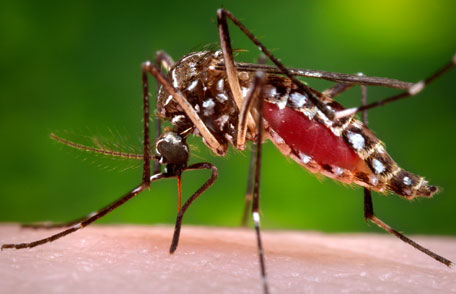
Floods throughout the state have caused an increase in mosquito populations. Mosquito surveillance in Reno, Sedgwick and Shawnee counties has shown an increase Culex species mosquitoes which can transmit West Nile virus and other viruses that can affect humans. This species of mosquitoes is most active at dawn and dusk.

“West Nile virus can be spread to people through bites from infected mosquitoes, but it is not contagious from person to person,” said KDHE Secretary Lee Norman, MD. “Symptoms range from a slight headache and low-grade fever to swelling of the brain or brain tissue and, in rare cases, death.”

Since 2002 there have been 677 cases and 35 deaths in Kansans from West Nile virus. To date, there have been no cases of West Nile virus reported to KDHE in 2019. People who have had West Nile virus before are considered immune. Cases are most common from mid-July through late September.

KDHE has developed West Nile virus risk levels to help guide prevention efforts for both communities and individuals. These risk level reports will be posted weekly at; https://www.kdheks.gov/epi/arboviral_disease.htm. All six regions of Kansas are currently at moderate risk level.

KDHE recommends the following precautions to protect against West Nile virus:

  • When you are outdoors, use insect repellent containing an EPA-registered active ingredient on skin and clothing, including DEET, picaridin, oil of lemon eucalyptus, or IR3535. Follow the directions on the package.
  • Many mosquitoes are most active at dusk and dawn. Be sure to use insect repellent and wear long sleeves and pants at these times or consider staying indoors during these hours.
  • The elderly or immunocompromised should consider limiting their exposure outside during dusk and dawn when the Culex species mosquitoes are most active.
  • Make sure you have good screens on your windows and doors to keep mosquitoes out.
  • Get rid of mosquito breeding sites by emptying standing water from flower pots, buckets and barrels. Change the water in pet dishes and replace the water in bird baths weekly. Drill holes in tire swings so water drains out. Keep children’s wading pools empty and on their sides when they aren’t being used.

West Nile virus in horses can be fatal. The virus can cause inflammation of the brain and spinal cord. Approximately 33 percent of horses infected with West Nile virus will die. A West Nile virus vaccine for horses is available and owners are encouraged to vaccinate or booster their animals.

KDHE maintains an Arboviral Disease Surveillance web page that is updated weekly: https://www.kdheks.gov/epi/arboviral_disease.htm. The Centers for Disease Control and Prevention provides this web page with additional information about West Nile virus and preventing mosquito bites:https://www.cdc.gov/features/StopMosquitoes/.

For questions about West Nile virus or other Arboviral diseases, contact the KDHE Epidemiology hotline at 877-427-7317.


Entrenched stereotypes keeping military women from front lines, say KU profs

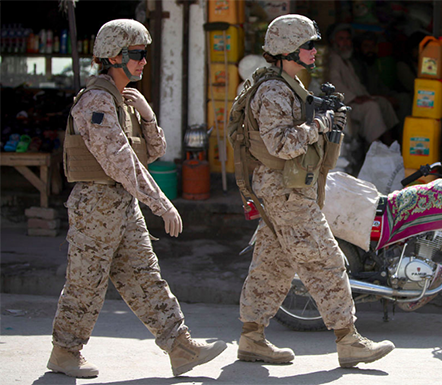
Two members of a U.S. Marine Corps Female Engagement Team patrol a town in Afghanistan during 2010.

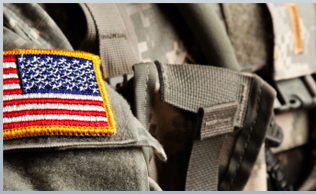
LAWRENCE — For more than a century, it was culturally unacceptable for women to join men in the front lines of combat in the U.S. military. Even though the policy banning women from combat roles has been rescinded, their integration into the front line and special operations has been slow and met with resistance.

Two University of Kansas researchers have published a book on factors that have slowed the integration, citing “organizational obliviousness,” or entrenched stereotypes as the primary culprit.

Even when military members are supportive of women taking increased combat roles, ingrained gender stereotypes of both men and women at several levels have held back progress, wrote Alesha Doan and Shannon Portillo in “Organizational Obliviousness: Entrenched Resistance to Gender Integration in the Military,” published by Cambridge University Press. Stereotypes are then normalized by organizational policies and practices, and their subtlety can render them invisible.

Doan, associate professor in KU’s School of Public Affairs & Administration and in the Department of Women, Gender & Sexuality Studies, and Portillo, associate professor of public affairs & administration and assistant vice chancellor of undergraduate programs at KU’s Edwards Campus, conducted focus groups and surveys with men and women — both enlisted and officers — in the U.S. Army for the brief book.

“We’re public administration scholars and the military is the largest public organization in the country, but it is incredibly understudied,” Portillo said. “The fall of 2013 was a very special time in the military as the combat ban policy was lifted, but it wasn’t clear how it would be implemented, from a task standpoint, if women would be able to do the same work men in special forces do and how it would work practically.”

The authors write that resistance to gender integration exists in the organization at three levels: individual, cultural and institutional.

Alesha Doan, assoc. professor, KU School of Public Affairs & Administration

“Gender stereotypes are ingrained in organizational society writ large, so individuals easily — and often unconsciously — draw on them,” Doan said. “Our research findings illuminate how gender stereotypes are frequently used to oppose and resist changes, particularly when the changes have the potential to disrupt an organization’s culture and standard operating procedures.”

Although some of the respondents were supportive of integrating women into combat roles and Special Forces, they had numerous concerns that were shared by those who opposed gender integration.

For example, physical strength was a concern of some soldiers. Many respondents repeated common stereotypes that men are rational thinkers and physically strong while women are emotional and physically weak. Male participants often rationalized that their own wives or girlfriends would not be able to handle the physical demands of special forces; therefore, no women could. Others pointed to a well-known example of four female trainees who were unable to pass a qualification obstacle course as evidence that women couldn’t physically pass muster. What they didn’t cite was that 75 of 100 men were also unable to pass the course.

Leadership was another common obstacle, the authors found. While men routinely pursue leadership roles, women often put off starting a family until they can reach such roles. However, once they are in a position to advance, they are expected to have families as part of fitting the leadership ideal, creating a catch-22. Mentorship in the Army was also important, as respondents and separate research have indicated quality mentorship especially helps women in the military.

Shannon Portillo, asst. professor, KU School of Public Affairs

“That parallels what we know about teaching,” Portillo said. “Everyone benefits from good teaching, but those from disadvantaged backgrounds benefit even more.”

Many men reported wanting to mentor women, but they were afraid to do so for several reasons. Some men said they felt they needed witnesses present when working with women to fend off accusations of impropriety or favoritism, while others said they worried they would be falsely accused of sexual harassment if they tried mentoring women.

Both men and women in the study reported the mandatory sexual harassment training was not helpful, as men said it scared them away from working with women and women reporting it reinforced the idea of their gender as victims. That’s despite the fact that men are much more likely to be victims of sexual assault in the military due to sheer numbers.

That those stereotypes existed widely at the individual level was reflected in the cultural level of the organization and was thus represented in policies and practices, the authors wrote. Therefore, even if there is not malice or actions taken to actively exclude or harm others, in the end both happen. Progress is being made in becoming gender-neutral and integrating women into combat roles, say the authors who have previously written about gender stereotypes and combat, but room for improvement remains.

“We argue that obliviousness is not just on a person-to-person basis,” Portillo said. “We focus here on gender and how resistance to changes regarding gender happen throughout the organization, but the concept could be applied to other identities as well. One of the biggest takeaways in the book is entrenched organizational resistance is not just about policy change. It’s about the individual and structural practices of the organization. Stereotypes and attitudes are so ingrained in the culture it takes time to change.”


Kansas companies participate in STEP grant trade missions

Mike Bergmeier, left, of Shield Ag in Hutchinson, speaks with potential customers at the AGRO 2019 ag equipment show in Ukraine.

KDA

MANHATTAN — The Kansas Department of Agriculture recently hosted two State Trade Expansion Program (STEP) Grant trade missions to Foro Mascotas Pet Food International in Guadalajara, Mexico, and AGRO 2019 in Kyiv, Ukraine. The trade missions provided Kansas companies an opportunity to showcase and offer their products to an international audience. Companies participating in the trade mission to Mexico included: Engineered Systems and Equipment (E.S.E), Caney, and NorthWind Technical Services, Sabetha. Companies participating in the trade mission to Ukraine included: Moridge Manufacturing Inc. (Grasshopper Company), Moundridge, ShieldAg Equipment, Hutchinson, and USC, Sabetha.

“The STEP Grant was designed to help small businesses expand their exports. We’ve been fortunate in Kansas to have received the STEP grant to help Kansas farmers, ranchers and agribusinesses to explore new markets or increase the value of export sales in existing markets,” said Suzanne Ryan-Numrich, international trade director at KDA.

Exports are important to the Kansas economy. In 2018, over $3.8 billion of agricultural goods were shipped around the globe to 74 different countries.

The trade missions were sponsored by KDA and funded in part through a cooperative agreement with the U.S. Small Business Administration using a STEP grant in cooperation with the Kansas Department of Commerce.

Ray Garvey, export manager at the Grasshopper Company, was among those who traveled to AGRO 2019. “From my point of view, there are several aspects of the AGRO show that were a success,” he said. “I want to thank the state of Kansas and the SBA for this opportunity to discover a new market in Ukraine. I’m looking forward to further exploring this market for my company.”

The Kansas Department of Agriculture is dedicated to providing an environment that enhances and encourages economic growth of the agriculture industry and the Kansas economy including the further development and expansion of marketing opportunities for agricultural goods and services around the globe.

The KDA is offering an upcoming opportunity for Kansas farmers, ranchers and agribusinesses to participate in a livestock genetic trade mission to Uruguay this fall, from September 10-16. Additionally, two STEP Grant trade missions are planned for 2020: VICTAM Asia/Petfood Forum Asia, Bangkok, Thailand, March 24-26; and NAMPO Harvest Day, Bothaville, South Africa, May 12-15. Interested persons should contact Ryan-Numrich at [email protected] or 785-564-6704.

SW Kansas man dies after tire blowout

Hays Post

MEADE COUNTY — A southwest Kansas man died late Wednesday night after a tire blew out on his vehicle in Meade County.

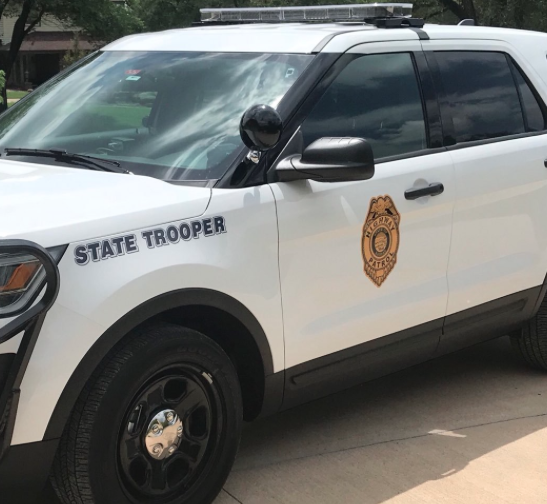
The Kansas Highway Patrol reported Calvin Dean McGonigle, 56, Ashland, was driving south on Kansas 23 about 11:20 p.m., when a tire blew out on his 1996 Ford Explorer. The vehicle entered the ditch, started to roll and then entered a culvert, ending on its top.

McGonigle was transported to Western Plains Medical Complex in Dodge City, where he later died.

According to KHP, McGonigle was not wearing a seat belt.

Moran intros VA housing legislation in honor of Kansas veteran

OFFICE OF SEN. MORAN

WASHINGTON – U.S. Senators Jerry Moran (R-Kan.) and Kyrsten Sinema (D-Ariz.) – both members of Senate Veterans’ Affairs Committee – introduced the Paul Benne Specially Adaptive Housing Improvement Act of 2019 to expand Specially Adapted Housing (SAH) eligibility for seriously injured or ill veterans. This legislation is named after Spring Hill, Kan. native, Army Colonel (Ret.) Paul Benne, MD, MPH.

U.S. Representatives Gus Bilirakis (FL-12), David Roe (TN-01) and Mike Levin (CA-49) introduced companion legislation, the Ryan Kules Specially Adaptive Housing Improvement Act of 2019, in the U.S. House of Representatives.

In 2013, Col. Benne developed a medical condition that led to his retirement from the U.S. Army after 23 years of service. Col. Benne was rated 100 percent disabled at the time of his retirement. In 2016, Col. Benne was fitted by the Department of Veterans Affairs (VA) for a wheelchair and applied for an SAH grant, as neither the Benne’s home nor vehicle could accommodate his new wheelchair. After more than a year of navigating the VA, Col. Benne and his wife, Christine, contacted Sen. Moran’s office for assistance. Within three months of Sen. Moran’s office working with Col. Benne to engage the VA, Col. Benne was given a favorable decision on his adaptive housing claim and provided SAH grants.

This legislation – developed to prevent future difficulties similar to those Col. Benne faced while trying to access an SAH grant – would give seriously ill veterans priority consideration for SAH grants, with the definition of “seriously ill” to be determined by the secretary of the VA; would double the maximum number of awarded grants from 3 to 6 per veteran; and would increase the number of authorized applications per Fiscal Year from 30 to 120.

“This legislation will serve veterans who may need similar assistance to that received by Colonel Benne by expanding SAH eligibility qualifications for seriously ill or injured veterans,” said Sen. Moran. “This modernized and expanded grant program will allow veterans to utilize vital SAH grants in a way that best fit their needs – providing greater support and improving the quality of life for many of our nation’s veterans. Thank you to Colonel Benne and his wife, Christine, for their decades of selfless service to our nation and for their advocacy, resiliency and willingness to share their story, which will undoubtedly help many veterans in the future.”

“Many veterans carry wounds from their service that make everyday life more challenging,” said Sen. Sinema. “That is why our bill is so important; it breaks down barriers and helps veterans access the specially adaptive housing benefits they’ve earned.”

“Sen. Moran is good about putting veterans first,” said Army Colonel (Ret.) Benne, MD, MPH. “This SAH grant has given me the ability to stay at home and my family the ability to better care for me. As my disease continues to change, the ability to change my surroundings will be met with this legislation.”

“We are pleased with the introduction of S. 2022,” said Paralyzed Veterans of America Executive Director Carl Blake. “This legislation is very important to PVA members because it will provide critical improvements to the Specially Adaptive Housing benefits that help them live healthy, productive lives in homes that meet there needs in their communities. We look forward to its swift passage.”

“S. 2022 will improve the quality of life for many wounded warriors and their families by helping ensure their homes fit their abilities,” said Wounded Warrior Project CEO Lt. Gen. (Ret.) Mike Linnington. “We are grateful to Sen. Jerry Moran for sponsoring this bill and to Sen. Kyrsten Sinema for co-sponsoring, and we thank them both for their leadership and great fidelity to our nation’s wounded warriors.”

“Wounded warriors face unique challenges in recovering from their injuries,” said Wounded Warrior Project Combat Stress Recovery Program Director Former U.S. Army Capt. Ryan Kules. “The Specially Adapted Housing benefit has helped me tremendously, and renewing this benefit every 10 years will help ensure wounded veterans’ homes can be adapted as our needs change throughout our lives.”

Col. Benne, a Spring Hill, Kan. native and University of Kansas School of Pharmacy graduate, served on both Fort Riley and Fort Leavenworth during his 23 years of service in the United States Army, most recently as chief of the Department of Public Health at Irwin Army Medical Hospital on Fort Riley. He and his wife, Christine, reside in Manhattan, Kan.

KHP: One fatality over July 4 holiday

KHP

TOPEKA – The Kansas Highway Patrol is releasing its Independence Day Holiday Activity Report.

The reporting period for the holiday ran from 6:00 p.m. on Wednesday, July 3, 2019 through 11:59 p.m. on Sunday, July 7, 2019.

KHP personnel assisted 1,151 motorists over the holiday reporting period and worked one fatal crash.

Information in the table is compared to data from both 2017 and 2018. The reporting period for 2018 was shorter than that of 2017 and 2019.

Spurling joins Department of Revenue as legislative liaison

Ethan Spurling

KDOR

TOPEKA – Secretary Burghart announces the selection of Ethan Spurling to take over the position of legislative liaison for the Kansas Department of Revenue. Spurling joins the Department after serving as operations and scheduling coordinator in Governor Laura Kelly’s office since January.

“Ethan will bring a unique perspective to this position with his previous experience and relationship building at the municipal level,” Secretary Mark Burghart said. “We look forward to taking that experience and expanding that within his role.”

Prior to his time with the Kelly-Rogers administration, Spurling served the city of Frontenac as a city councilman for almost four years.

“It was during my time serving as a city councilman I found a great understanding of civic duty.” Spurling said. “This is a great opportunity to continue that passion while working alongside legislators to help Kansans.”

Spurling is a 2018 graduate of Pittsburg State University with degree in Political Science and International Studies.

Gov. appoints executive director to Office of Native American Affairs

OFFICE OF GOV.

TOPEKA – Gov. Laura Kelly today announced the appointment of Chris Howell as executive director of the Office of Native American Affairs and Governor’s Tribal Liaison.

The Native American Affairs office serves as the liaison for the governor to ensure that Native American concerns and needs are addressed in state policymaking.

“Chris will step into this important role with a breadth of relevant and meaningful experience in both the public and private sector,” Kelly said. “I appreciate his willingness to serve in such an important capacity, and help work toward positive state-tribal relations.”

Howell, of Lawrence, most recently served as Director of Tribal Relations for Burlington Northern-Santa Fe Railway, and was involved in tribal outreach and communications with more than 86 tribal nations located along the BNSF railway system. Howell has served multiple state administrations, including as Interim Executive Director and Chief Operating Officer of the Kansas Arts Commission. He graduated with a B.A. in business from Emporia State University.

Howell is a citizen of the Pawnee Nation of Oklahoma.

Copyright Eagle Radio | FCC Public Files | EEO Public File