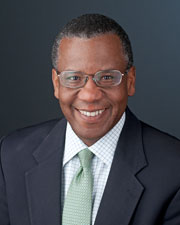
Reggie Robinson (Photo courtesy University of Kansas)
OFFICE OF GOV.
TOPEKA – Today Governor Laura Kelly announced Reggie Robinson as the facilitator for the Kansas Criminal Justice Reform Commission.
“Reggie has a distinct and esteemed background that will contribute greatly to this position,” Kelly said. “Kansas needs comprehensive criminal justice reform, and Reggie will be integral to this effort.”
Robinson, a Lawrence resident, currently serves as Vice Chancellor for Public Affairs at the University of Kansas. Previously, Robinson served as the director of the School of Public Affairs and Administration from July 2014 – August 2017. He was a professor of law and Director for the Center of Law and Government at Washburn University. Robinson was a White House Fellow and Special Assistant to Attorney General Janet Reno in 1993. He served as Deputy Associate Attorney General of the U.S. from 1996 – 1997, and Acting Director for Department of Justice’s Office for Victims of Crime from 1997 – 1998.
Robinson received his undergraduate and graduate law degrees from the University of Kansas. He also served in the U.S. Army as an active duty field artillery officer.
The Kansas Criminal Justice Reform Commission was created as part of HB 2290, which passed during the 2019 legislative session. The governor appoints one criminal defense attorney or public defender, one member representative of the faith-based community, and one facilitator to provide administrative assistance to develop a project plan and assist the Commission in its duties. This facilitator is not a member of the Commission.
Luc Bensimon was one of four transgender individuals who sued Kansas officials over the state’s refusal to allow them to change the sex listed on their birth certificates.
By DAN MARGOLIES Kansas News Service
Kansas has agreed to change its policy and allow transgender people born in the state to update the sex listed on their birth certificates.
The Kansas Department of Health and Environment on Friday entered into a consent decree that ends a lawsuit brought by four native Kansans and the Kansas Statewide Transgender Education Project, Inc. (K-STEP).
The policy change is significant because birth certificates can determine access to education, employment, health care, travel and the ability to obtain other identification documents.
“It actually will affect the day-to-day lives of every transgender person born in Kansas,” said Omar Gonzalez-Pagan, senior attorney at Lambda Legal, which represented the plaintiffs. “It means that the state will finally recognize transgender people for who they are and respect that identity.”
Until now, Kansas was one of only three states that didn’t allow people to change their birth certificates to reflect a gender identity that differs from the one they were assigned at birth.
Federal courts have struck down similar policies in Idaho and Puerto Rico, leaving only Ohio and Tennessee with such policies.
The plaintiffs in the Kansas suit filed last October alleged that the state’s policy violated the due process and equal protection clauses of the Constitution. They also argued that it violated their free speech rights under the First Amendment.
Gov. Laura Kelly lauded the consent decree, saying “(I)t was time for Kansas to move past its outdated and discriminatory anti-transgender policy.”
“This decision acknowledges that transgender people have the same rights as anyone else, including the right to easily obtain a birth certificate that reflects who they are,” Kelly said in a statement.
Under the consent decree, Kansans wanting to apply for an updated birth certificate can now do so by submitting a sworn statement accompanied by a passport, driver’s license or a certification from a healthcare professional confirming their gender identity.
Gonzalez-Pagan said the policy change builds not just on Lambda Legal’s court victories in Idaho and Puerto Rico, but years of advocacy by transgender people in Kansas, “who have been fighting for this for a long time.”
“That includes Stephanie Mott,” Gonzalez-Pagan said. “I wish she could have lived to the day where she would see this victory that she had fought so hard for.”
Mott founded K-STEP, which was a plaintiff in the lawsuit, along with Nyla Foster, Luc Bensimon, Jessica Hicklin, and an individual identified only as C.K. Mott had sued Kansas separately over its policy previously, but later dropped her lawsuit. She died suddenly in March.
“Her advocacy to make Kansas better is remembered in this important decision and in other progress she achieved for transgender people,” Kelly said in her statement.
Before Kelly assumed office this year, Kansas had been hostile to expanding legal protections to include LGBT individuals.
In 2015, then-Gov. Sam Brownback rescinded an order by former Gov. Kathleen Sebelius barring discrimination against LGBT employees of the state.
And last year, Kansas was one of 16 states that urged the U.S. Supreme Court to rule that it’s legal to fire people for being transgender.
The Kansas Office of Vital Statistics routinely approved driver’s license amendments until 2012, when the Brownback administration told the agency to stop doing so.
Tom Witt, executive director of Equality Kansas, said that made it difficult for transgender people to get driver’s licenses in other states and to register to vote in Kansas because of birth certificate requirements imposed by then-Secretary of State Kris Kobach.
“Just to be able to put a child in school, the birth certificate has to be disclosed to the school,” Witt said. “And in instances where you have a transgender child, those children were being outed. If you go in and get hired in a new job opportunity and you have to provide a birth certificate, those employees were being outed.
“So having the state of Kansas enter into this consent agreement is a big day for transgender Kansans.”
Dan Margolies is a senior reporter and editor at KCUR. You can reach him on Twitter@DanMargolies.
Chemistry class at Topeka West High School (Photo by Chris Neal/Shooter Imaging)
By STEPHEN KORANDA Kansas News Service
Education officials in Kansas are taking a two-pronged approach to reducing teacher shortages: raising pay and fast-tracking teaching assistants and other professionals to the front of the classroom.
Last year, Kansas schools had more than 600 vacant positions. Many of the openings were concentrated in rural areas and the state’s most urban districts.
Low pay has been blamed for much of the trouble attracting and retaining teachers. But education officials believe they have an opportunity to tackle that with the recent boosts to state funding.
Lawmakers have approved multi-year school funding increases amounting to hundreds of millions of dollars in response to a long-running lawsuit over school spending. That has given districts a chance to offer teacher raises that could be difficult to fit into school budgets in the past.
“We have an obligation to pay people more,” Education Commissioner Randy Watson said at a State Board of Education meeting this week. “We have an opportunity that the governor and the Legislature together have given us.”
The largest union representing teachers in the state is also urging districts to use the funding increase to pay school staff more.
The Kansas National Education Association said in a statement Thursday that average teacher pay in Kansas is around $49,800. The national union’s rankings show neighboring states range from just over $50,000 in Missouri to $54,500 in Nebraska.
“Teachers are professionals who shouldn’t need to work two, and sometimes three jobs to make ends meet,” KNEA President Mark Farr said.
Schools have been offering raises, but it wasn’t just salaries for teachers that lagged during leaner years.
Mark Tallman
Mark Tallman, with the Kansas Association of School Boards, said many districts would also like to restore programs cut during the state budget troubles that followed the national recession and the state income tax cuts passed in 2012.
“Boards recognize the need and desire to increase salaries,” Tallman said. “But that’s not the only claim on those new dollars. All this has to be balanced together.”
With the recession over, the hot economy is posing a new challenge for districts when it comes to hiring and keeping teachers.
Teachers often have job opportunities at schools in other states or completely different industries. The qualities that make a good teacher also make them attractive workers for higher-paying careers.
“If you can communicate with people, if you have patience, if you can solve problems, all of those can be transferable to many other professions,” Tallman said.
Beyond pay, Kansas is utilizing targeted programs to get people into teaching in unconventional ways. Two state-run pilot initiatives have shown success in filling vacancies, licensing 126 new teachers over the last two years.
Most of those newly minted teachers are in special education. The others are teaching at the elementary level.
The elementary program allows people with degrees in a field other than education to teach. The special ed initiative makes it easier for paraprofessionals to become fully licensed. Both programs require additional college coursework to get the license.
The state has multiple alternative licensing initiatives that have helped get teachers in the classroom, according to Board of Education Chair Kathy Busch.
“Some of our vacancies are in places where it’s hard for them to get teachers in the first place,” she said. “So sometimes they’re able to almost grow their own teachers right there in their buildings.”
In Garden City, that strategy of growing local teachers looks especially important. Afton Huck, the district’s human resources coordinator, hopes licensing teachers from the area might make them more likely to stay. The school district hasn’t had as much luck when recruiting teachers from out-of-state.
“It’s hard to retain those teachers,” she said. “After they get two or three years of experience they’re ready to go back to their home state.”
The alternative licensing programs are also important because there are simply fewer students graduating with education degrees. The Garden City district has sent representatives to colleges and career fairs in more than a dozen states to recruit teachers.
“Some of the universities that we’ve gone to in the past have totally shut down the programs because they just don’t have enough students interested in the educational program,” said Roy Cessna, public information coordinator for Garden City schools.
The Garden City district had around 30 vacancies at the beginning of last school year and managed to fill about half of them by the midpoint of the year. Huck said they expect to have a similar shortage this year.
The Kansas City school district is using state programs and adding their own additional supports to attract teachers. That district struggles especially to fill special education vacancies, partly because those teachers often need additional education.
“They have to be willing to go beyond that bachelor’s degree,” said Cynthia Fulks, the district’s director of recruitment.
The district pays bonuses to teachers who fill slots in high-need areas like math, science and English. There’s also help to pay for advanced degrees or other training. A waiver program allows teachers of other subjects to fill special education slots immediately while taking the additional needed classes.
With teacher shortages becoming the norm, the attitude has shifted from when recruitment was focused on ramping up in advance of the new school year. Now it’s a constant effort.
“It’s never over for us, anymore,” Fulks said. “Recruitment, for us, really has become a year-round type of activity.”
This fall, after districts have finished hiring teachers and started the new school year, the state Board of Education will compile numbers showing whether the two-pronged approach has been effective in cutting the classroom deficit.
“I’m hopeful we’ll see some improvement,” Busch said, “but I don’t think we’re over the hump yet.”
Stephen Koranda is Statehouse reporter for Kansas Public Radio and the Kansas News Service, a collaboration of KCUR, Kansas Public Radio, KMUW and High Plains Public Radio covering health, education and politics. Follow him on Twitter @kprkoranda.
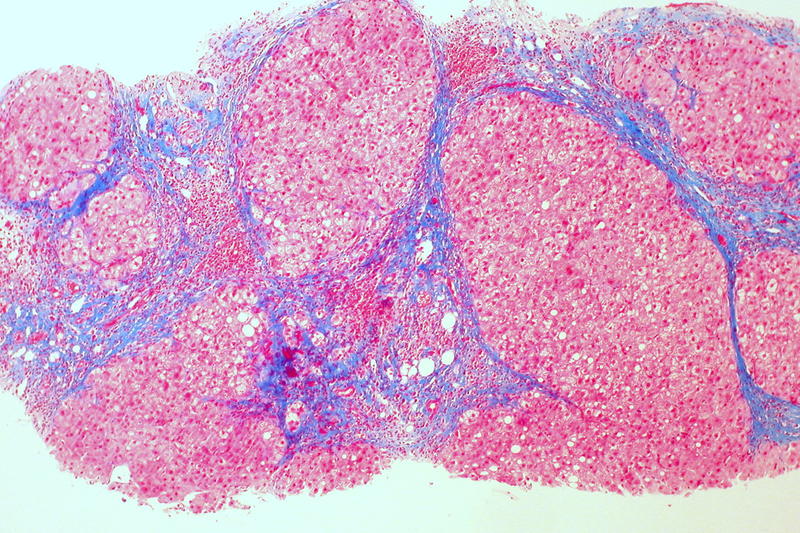
Cirrhosis of the liver as shown with staining. [Ed Luthman, Creative Commons (BIT.LY/31QRFNM)]ByCELIA LLOPIS-JEPSEN Kansas News Service
Kansas can no longer put off care for Medicaid patients with hepatitis C because of a recent legal settlement. But hundreds of the state’s prison inmates not covered by that lawsuit will have to wait another year for the pricey treatment.
That raises concerns about whether the delay constitutes cruel and unusual punishment under the U.S. Constitution, civil rights lawyers say, because inmates have the right to medical care.
“This is a fairly clear Eighth Amendment violation,” said Lauren Bonds, legal director for the ACLU of Kansas, which brought the Medicaid lawsuit. “Delayed treatment is unconstitutional.”
Kansas prison officials say more than 700 inmates currently have hepatitis C, a virus that attacks the liver and that’s most commonly contracted by sharing needles to inject illegal drugs. The state Department of Corrections expects about half will receive treatment this year, starting with those who’ve developed liver cirrhosis from the virus.
That’s on top of about 100 inmates treated in recent months, agency spokeswoman Jeanny Sharp said.
“The treatment strategy,” she said, “aligns with what many other states that were sued were asked to do.”
Kansas, she said, is doing it voluntarily.
Legal challenges
States landed in legal hot water in recent years for limiting hepatitis C treatment for their Medicaid and prison populations in response to the sky-high cost of new drugs. The drugs offered highly effective treatment to clear infections up, but with price tags that could total nearly $100,000 per person.
Kansas settled the Medicaid lawsuit, agreeing to no longer limit coverage of hepatitis C medication to those with more advanced liver scarring, while forcing others to wait.
The suit didn’t cover prisons, but last fall, Kansas began screening all inmates for hepatitis C.
The corrections department says costs vary, but tend to run between $15,000 and $17,000 to treat the typical inmate. That can involve several months of daily medication.
The state will spend $6 million in fiscal 2020 on treating about half of its inmates with hepatitis C, a corrections official last week told a meeting of state leaders charged with signing off on the expense. Gov. Laura Kelly and the legislative leaders agreed unanimously.
Waiting for treatment
As it stands, inmates with less advanced hepatitis C will need to wait until fiscal 2021.
The corrections department wanted more funding to treat them this year instead, but the governor’s office didn’t request the full amount from the Legislature.
A spokeswoman said Tuesday Kelly is committed to ensuring inmates get treatment.
The state “will move as quickly as possible to treat every prisoner affected,” Dena Sattler wrote, “and if additional funding is required to keep providing treatment before the next fiscal year, the Governor will make additional budget recommendations as necessary.”
More inmates are testing positive for hepatitis C than initially estimated — about 13 percent of people entering the prison system.
It can take years for the outward signs and symptoms of the virus to develop, such as jaundice and fatigue.
About one in four people who get hepatitis C fend it off naturally. For most, the disease takes its toll, causing chronic infections.
As many as one in five eventually develop cirrhosis and one in 20 get liver cancer. Some cases require liver transplants.
Studies suggest early hepatitis C treatment benefits patients, while delaying treatment can harm their long-term health.
Bonds, of the ACLU, wouldn’t rule out heading back to court to press for speedier hepatitis C treatment in prisons. At the same time, she said the ACLU understands the system is facing budgetary hurdles.
“We do want to recognize and at least acknowledge that there has been some progress made,” she said. “We do want to be reasonable and see if there is a non-litigation means to get prisoners treated more quickly.”
The ACLU is continuing to monitor hepatitis C treatment for Medicaid patients, too. Under the terms of the state’s settlement with the group, Kansas agreed to hand over quarterly updates on how many patients are prescribed treatment and whether their requests get approved.
Previously, the state’s privatized Medicaid program, KanCare, approved only patients with the most serious liver scarring. It made them pass extensive sobriety tests, too.
The settlement says Kansas can only impose a three-month drug-free period instead of six, and that it can’t reject patients for using alcohol or illegal drugs that aren’t taken by needle.
Celia Llopis-Jepsen is a reporter for the Kansas News Service, a collaboration of KCUR, Kansas Public Radio, KMUW and High Plains Public Radio covering health, education and politics. You can reach her on Twitter @Celia_LJ or email celia (at) kcur (dot) org.
SMOLAN — No one was injured when a fireworks-related blaze destroyed a home in Smolan Thursday night.
Saline County Sheriff Roger Soldan said Friday that deputies and Rural Fire District No. 6 personnel were dispatched to 201 S. Front in Smolan at 11 p.m. Thursday.
The owners of the house, Mayo (age 60) and Jerre Morgan (age 69), reported that they had their teenage granddaughter and a couple of friends over to shoot fireworks, Soldan said. Afterward, the fireworks debris was picked up and placed in a cardboard box in the garage, he said. At approximately 11 p.m., the couple went to check on popping noises they heard coming from the garage and found the garage on fire, Soldan said.
Everyone was able to escape without injury, he said.
Two vehicles, one in the driveway and one in the house, also were destroyed.
In addition to the house, a 2011 Ford Escape parked in the driveway and a 2017 Ford Explorer parked in the garage were destroyed, Soldan said. Total loss was estimated at $261,500, he said.
LAWRENCE — New research from the University of Kansas shows machine learning is capable of identifying insects that spread the incurable disease called Chagas with high precision, based on ordinary digital photos. The idea is to give public health officials where Chagas is prevalent a new tool to stem the spread of the disease and eventually to offer identification services directly to the general public.
Chagas is particularly nasty because most people who have it don’t know they’ve been infected. But according to the Centers for Disease Control and Prevention, some 20 percent to 30 percent of the 8 million people with Chagas worldwide are struck at some later point with heart rhythm abnormalities that can bring on sudden death; dilated hearts that don’t pump blood efficiently; or a dilated esophagus or colon.
Left, an example image of an individual of Triatoma dimidiata. (A) Raw image and (B) final image with background removed digitally. Courtesy Khalighifar, et al. Right, this image shows that with more data (such as digital images of triatomine), the accuracy of deep learning used by the KU researchers increases whereas prior techniques plateau after a certain point. (Courtesy MDPI under a Creative Commons license)
The disease is caused most often when triatomine bugs — more commonly known as “kissing bugs” — bite people and transmit the parasite Trypanosoma cruzi into their bloodstreams. Chagas is most prevalent in rural areas of Mexico, Central America and South America.
A recent undertaking at KU, called the Virtual Vector Project, sought to enable public health officials to identify triatomine that carry Chagas with their smartphones, using a kind of portable photo studio for taking pictures of the bugs.
Now, a graduate student at KU has built on that project with proof-of-concept research showing artificial intelligence can recognize 12 Mexican and 39 Brazilian species of kissing bugs with high accuracy by analyzing ordinary photos — an advantage for officials looking to cut the spread of Chagas disease.
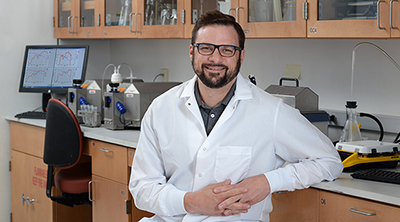
Ali Khalighifar, a KU doctoral student at the Biodiversity Institute and the Department of Ecology and Evolutionary Biology, headed a team that just published findings in the Journal of Medical Entomology. To identify the kissing bugs from regular photos, Khalighfar and his colleagues worked with open-source, deep-learning software from Google, called TensorFlow that is similar to the technology underpinning Google’s reverse image search.
“Because this model is able to understand, based on pixel tones and colors, what is involved in one image, it can take out the information and analyze it in a way the model can understand — and then you give them other images to test and it can identify them with a really good identification rate,” Khalighifar said. “That’s without preprocessing — you just start with raw images, which is awesome. That was the goal. Previously, it was impossible to do the same thing as accurately and certainly not without preprocessing the images.”
Khalighifar and his coauthors — Ed Komp, researcher at KU’s Information and Telecommunication Technology Center, Janine M. Ramsey of Mexico’s Instituto Nacional de Salud Publica, Rodrigo Gurgel-Gonçalves of Brazil’s Universidade de Brasília, and A. Townsend Peterson, KU Distinguished Professor of Ecology and Evolutionary Biology and senior curator with the KU Biodiversity Institute — trained their algorithm with 405 images of Mexican triatomine species and 1,584 images of Brazilian triatomine species.
At first, the team was able to achieve, “83.0 and 86.7 percent correct identification rates across all Mexican and Brazilian species, respectively, an improvement over comparable rates from statistical classifiers,” they write. But after adding information about kissing bugs’ geographic distributions into the algorithm, the researchers boosted the accuracy of identification to 95.8 percent for Mexican species and 98.9 percent for Brazilian species.
According to Khalighifar, the algorithm-based technology could allow public health officials and others to identify triatomine species with an unprecedented level of accuracy, to better understand disease vectors on the ground.
“In the future, we’re hoping to develop an application or a web platform of this model that is constantly trained based on the new images, so it’s always being updated, that provides high-quality identifications to any interested user in real time,” he said.
Khalighifar now is applying a similar approach using TensorFlow for instant identification of mosquitoes based on the sounds of their wings and frogs based on their calls.
“I’m working right now on mosquito recordings,” he said. “I’ve shifted from image processing to signal processing of recordings of the wing beats of mosquitoes. We get the recordings of mosquitoes using an ordinary cell phone, and then we convert them from recordings to images of signals. Then we use TensorFlow to identify the mosquito species. The other project that I’m working right now is frogs, with Dr. Rafe Brown at the Biodiversity Institute. And we are designing the same system to identify those species based on the calls given by each species.”
While often artificial intelligence is popularly portrayed as a job-killing threat or even an existential threat to humanity, Khalighifar said his research showed how AI could be a boon to scientists studying biodiversity.
“It’s amazing — AI really is capable of doing everything, for better or for worse,” he said. “There are uses appearing that are scary, like identifying Muslim faces on the street. Imagine, if we can identify frogs or mosquitoes, how easy it might be to identify human voices. So, there are certainly dark sides of AI. But this study shows a positive AI application — we’re trying to use the good side of that technology to promote biodiversity conservation and support public health work.”
Images: Left, an example image of an individual of Triatoma dimidiata. (A) Raw image and (B) final image with background removed digitally. Courtesy Khalighifar, et al. Right, this image shows that with more data (such as digital images of triatomine), the accuracy of deep learning used by the KU researchers increases whereas prior techniques plateau after a certain point. Courtesy MDPI under a Creative Commons license.
KANSAS CITY, MO. -The ‘dog days of summer’ are upon us and millions of Americans will find refuge from the heat at pools, ponds, lakes, rivers and streams across our nation during the Independence Day weekend.
The Kansas City District, U.S. Army Corps of Engineers (USACE) reminds everyone that no matter the size of the water you recreate in you should never forget about water safety.
Here are some tips to remember when you are in or around the water this 4th of July:
* Alcohol and water do not mix. When under the influence of alcohol and underwater, you can suffer from an inner ear condition (caloric labyrinthitis) that causes you to become disoriented and not know which way is up.
* High water and flooding conditions still persist. Many lakes, rivers, and streams are still at flood stage from record rainfall this spring. Keep an eye out for visible and submerged objects while on the water. Avoid swift currents that make boating difficult and unsafe.
* Give your life jacket an annual checkup. Test the buckles, stitches, straps, and fabric to make sure everything is still in good shape. A life jacket will not save your life if it can no longer function as intended. Your life is worth more than a $40 purchase from the local outdoor store.
* Prepare for sudden weather changes. Anyone from the Midwest knows that if you wait 10 minutes the weather will change. Don’t get caught on the water in severe weather. If you are caught in an unexpected storm make sure everyone has on their life jackets and have them sit on the bottom of the boat close to the centerline.
* Leave fireworks at home. Using pyrotechnics poses a high risk of starting fires in parks and habitat areas, and are not allowed on Corps lands, to include all lakes in the Kansas City District. Recreation officials encourage visitors to attend local fireworks displays in nearby communities.
* Campfires and barbecues are only allowed in designated areas. Some locations have restrictions on open fires, so check the information kiosks at recreation areas for site-specific fire restrictions and safety notices. If charcoal briquettes are allowed, be sure they cool completely before disposal — never dump hot coals onto the ground where they can ignite nearby vegetation. Be mindful of fire risks before lighting wood, charcoal or gas fire.
* Wear your life jacket. The majority of water tragedies may have been prevented by simply wearing a life jacket. Please do your friends and loved ones a favor – and wear it.
Please take the time to consider all of these safety tips while recreating over the busy Independence Day weekend. For more information on these and other safety information please follow us on Facebook, Twitter, and visit Pleasewearit.com.
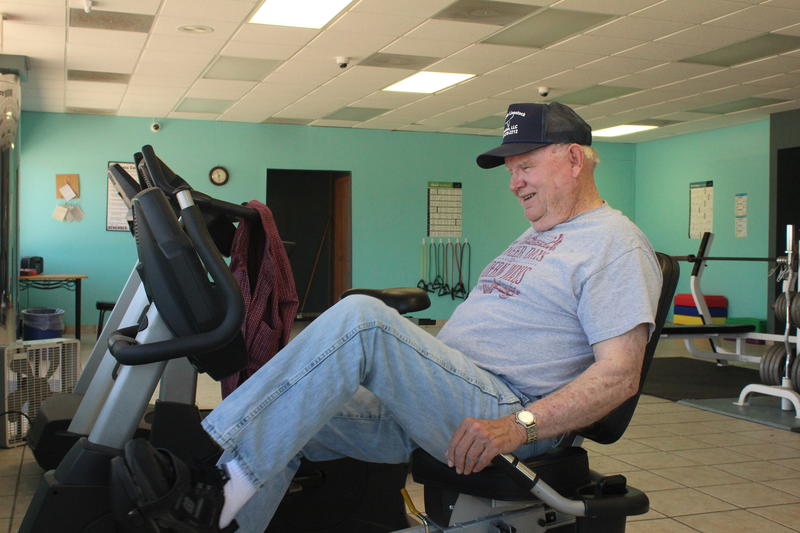
Elmer Drennan works out at 54 Fitness in Moran, Kansas.
By STEPHAN BISAHA Kansas News Service
It’s what you’d expect in a small gym. Treadmills. Squat rack. Elliptical machine.
But 54 Fitness, located in the 500-person town of Moran in Allen County, still holds remnants of the building’s previous lives. Tile flooring. Booth seating. A washroom designed for rinsing off grease, not sweat.
Before becoming the town’s fitness center, the gym was a steakhouse. And before that, a gas station.
“There was a lot of grease dirt that had to be lifted up out of the tile,” said Larry Ross, a retired conformance lab manager who helped with the conversion. “We literally scrubbed each one of these tiles a dozen times.”
Despite the open land and escape from congested cities and suburbs, Kansans living in remote parts of the state often exercise less than city folk. Sidewalks are rare. Driving is more common than walking. And there’s a distinct lack of fitness centers.
Small towns often lack the money for large recreational centers. Or have enough gym rats to tempt a private owner to open up shop.
At least one consequence: higher rates of obesity and other diseases linked to inactivity.
That’s left some communities experimenting with creative, and relatively cheap, ways to help people burn calories.
Farming is becoming increasingly mechanized, even robotized. That’s meant less physical strain on farmers, but also larger waistlines as the job becomes more sedentary.
La Harpe, Kansas, converted part of its city hall into an exercise room.
One fix suggested by the CDC includes building more workout centers.
“Even if you want to be physically active in rural areas,” said Geoffrey Whitfield, an epidemiologist with the CDC’s Division of Nutrition, Physical Activity and Obesity, “you might not have the ability to do so because the facilities just don’t exist.”
While exercise has been linked to reducing the risk for all those factors, getting a gym to move into — or stay open — in a rural town is challenging.
Small, urban and specialized fitness studios have grown in popularity — think hip-hop yoga and swimming pool spin classes. But small, rural gyms lack the membership numbers needed to pay the rent.
“Lots and lots of small gyms have gone out because they just couldn’t make money,” said Greg Ferris, the lobbyist for the Kansas Health and Fitness Association.
Yet economic development group Thrive Allen County said those living in the eastern Kansas county still want a place to work off the fat.
That led Thrive to help small towns in Allen County earn grants to fund creative ways to bring exercise to their communities. Both Elsemore and La Harpe took rooms in their schools-turned-city halls and transformed them into workout spaces.
Thrive made the investment to improve not just residents’ physical health, but also their social well-being.
“I look at it as preventative health,” said Thrive Allen County CEO Lisse Regehr. “The more you breakdown on social isolation, the more you help people as they age be more active and physically fit.”
The town of Moran converted a gas station into a public gym called 54 Fitness in reference to the highway it sits on.
Moran was looking to find its own spot for a fitness center in 2017. That’s when one of its council members thought about the failed gas station-turned-failed steakhouse. Located at the intersection of U.S. 54 and U.S. 59, it was being used as a storage space.
The city decided to convert the old filling station into what is now 54 Fitness.
It lacks personal trainers and locker rooms. Yet the former gas station comes with advantages. Big windows provide a front row view of a wind farm going up above the tree-line. The gym’s located at the (relatively) heavily trafficked intersection.
Moran isn’t the only place to recognize that gas stations tend to sit on prime real estate. Sneaker-maker Reebok hopes to follow Moran’s lead and turn more gas stations into gyms.
Those living and working in Moran have the option to drive 15 minutes to Iola for a workout. But the motivation to go to the gym can be hard enough without adding a 30-minute round trip.
School psychologist Foster LaVon said she wouldn’t bother spending a chunk of her morning on an elliptical machine if it wasn’t for the convenience of having a workout spot in Moran.
The Kansas Department of Health and Environment says gyms can be helpful, but it doesn’t provide funding for them.
Instead, it suggests towns invest in improving their man-made environment. Sidewalks that make a town more walkable can help the health of everyone, not just those willing to drag themselves to the gym or with the extra money to spend on a membership.
But improving that can prove expensive. A mile of sidewalk can be a six-figure cost. Making a town more dense for easier walking is a huge undertaking.
Meanwhile, a grant shy of $30,000 covered the equipment for Moran’s 54 Fitness. Volunteer and donations covered most of the rest.
Other rural towns with deeper pockets have decided that new gyms are worth the investment. Humboldt in Allen County recently built an 11,000-square-foot recreational center. Wichita County in western Kansas is looking to do the same.
Local boosters in Wichita and Allen County said gyms are also a way to attract and retain young people. Millennials value a good sweat, along with a nice place to do it, more than previous generations.
Even a small center like 54 Fitness holds appeal for young people. Hanna Hoffman recently moved out of Moran with her fiance. Both value fitness and in her argument to move back to Moran, having that exercise option is a clear selling point.
“We have a gym and there’s a restaurant and a gas station,” Hoffman said. “That’s really all we need.”
Stephan Bisaha reports on education for KMUW in Wichita and the Kansas News Service, a collaboration of KMUW, Kansas Public Radio, KCUR and High Plains Public Radio covering health, education and politics. Follow him on @SteveBisaha or email bisaha (at) kmuw (dot) org.
Zebra mussel found at Lyon State Fishing Lake near Emporia
KDWPT
TOPEKA – The Kansas Department of Wildlife, Parks and Tourism (KDWPT) has confirmed the presence of invasive zebra mussels in Lyon State Fishing Lake in Lyon County. Routine samples collected by KDWPT Aquatic Nuisance Species staff to detect zebra mussels were found to contain zebra mussel larvae (also called veligers). Upon finding the veligers, staff returned to the lake and located an established population of adult zebra mussels. Similar sampling is conducted by KDWPT at more than 100 waterbodies across the state.
The 135-acre lake is located 12 miles north and two miles east of Emporia on Rd 270. Lyon State Fishing Lake is owned and operated by KDWPT. The lake and surrounding wildlife area are popular destinations for fishing, hunting, hiking, and a variety of other outdoor-related activities.
While the zebra mussel population is currently small, there is no known method to completely rid a lake of this invasive species. The zebra mussels were likely introduced by “hitchhiking” with un-suspecting lake-goers. Adults are able to attach to boats or other equipment and the microscopic zebra mussel veligers may be present in any water originating from an infested lake or stream. Densities as high as 1,000 veligers per gallon have been recorded in Kansas waters.
“This is the first new population of zebra mussels found in the state in 18 months, which is the longest period of time between new lake infestations since 2006. While it is unfortunate that zebra mussels have been spread to a new lake, I remain hopeful that these occurrences will be less frequent as more people have become aware of zebra mussels, their impacts, and how to prevent moving them,” said Chris Steffen, aquatic nuisance species coordinator for KDWPT.
Lyon State Fishing Lake will be added to the list of ANS-designated waters in Kansas, and notices will be posted at various locations around the waterbody. Live fish may not be transported from ANS-designated waters. The sharp-shelled zebra mussels attach to solid objects, so lake-goers should be careful when handling mussel-encrusted objects and when grabbing an underwater object when they can’t see what their hands may be grasping. Visitors should protect their feet when walking on underwater or shoreline rocks.
Zebra mussels are just one of the non-native aquatic species that threaten our waters and native wildlife. After using any body of water, people must remember to follow regulations and precautions that will prevent their spread:
Clean, drain and dry boats and equipment between uses
Use wild-caught bait only in the lake or pool where it was caught
Do not move live fish from waters infested with zebra mussels or other aquatic nuisance species
Drain livewells and bilges and remove drain plugs from all vessels prior to transport from any Kansas water on a public highway.
For more information about aquatic nuisance species in Kansas, report a possible ANS, or see a list of ANS-designated waters, visit ProtectKSWaters.org.
ABOUT ZEBRA MUSSELS
Zebra mussels are dime-sized mollusks with striped, sharp-edged, two-part shells. They can produce huge populations in a short time and do not require a host fish to reproduce. A large female zebra mussel can produce 1 million eggs, and then fertilized eggs develop into microscopic veligers that are invisible to the naked eye. Veligers drift in the water for at least two weeks before they settle out as young mussels which quickly grow to adult size and reproduce within a few months.
After settling, zebra mussels develop byssal threads that attach their shells to submerged hard surfaces such as rocks, piers, and flooded timber. They also attach to pipes, water intake structures, boat hulls, propellers, and submerged parts of outboard motors. As populations increase, they can clog intake pipes and prevent water treatment and electrical generating plants from drawing water. In 2012, two Kansas communities, Council Grove and Osage City, experienced temporary water shortages from zebra mussel infestations before water intake structures could be cleaned up. Removing large numbers of zebra mussels to ensure adequate water flow can be labor-intensive and costly.
Zebra mussels are native to the Black and Caspian seas of western Asia and eastern Europe and were spread around the world in the ballast water of cargo ships. They were discovered in Lake St. Clair and the Detroit River in 1988 and quickly spread throughout the Great Lakes and other rivers including the Mississippi, Illinois, Ohio, Tennessee, Arkansas and Hudson. They were first discovered in Kansas in 2003 at El Dorado Reservoir. Despite public education efforts to alert boaters about the dangers of zebra mussels and how to prevent spreading them, the species continues to show up in new lakes every year. Moving water in boats and bait buckets has been identified as a likely vector.
John Thyfault, Ph.D., professor in the Department of Molecular and Integrative Physiology at the KU School of Medicine. Photo by Selena Jabara, KU Medical Center
By KRISTI BIRCH KU News Service
A researcher in the Department of Molecular and Integrative Physiology at the University of Kansas School of Medicine has launched a new study to investigate some surprising ways that statins, which are some of the most prescribed medications in the world, can adversely impact a person’s health over time.
In the United States, where cardiovascular disease is the leading cause of death, slightly more than half of American adults, more than 40 million people, take a statin to lower their cholesterol and ward off heart attack and stroke, according to the Centers for Disease Control and Prevention.
John Thyfault, Ph.D., who is also a research scientist at the Kansas City VA Medical Center, is collaborating with Darrell Neufer, Ph.D., director of the East Carolina Diabetes and Obesity Institute and professor in the Department of Physiology at Brody School of Medicine at East Carolina University, to conduct a clinical trial to determine how atorvastatin, the most prescribed statin in the United States, can impede skeletal muscle function and, ironically, lessen the benefits of the simplest, most effective way to improve cardiovascular health: aerobic exercise. The study is supported by a $3 million grant from the National Institutes of Health.
Statins were designed to fight cardiovascular disease by blocking the liver’s production of low-density lipoprotein, also known as “bad” cholesterol, that at high levels forms blockages that stop the flow of blood to the heart and brain. In 2013, the American Heart Association and the American College of Cardiology jointly recommended that statins be prescribed not only when a patient has survived a cardiovascular event or has high levels of bad cholesterol, but also for prevention of cardiovascular disease when a patient has other metabolic risk factors, such as obesity and high blood pressure. This change in guidelines encouraged providers to prescribe statins for primary prevention (before disease even occurs) to patients with even a moderate risk of a heart attack.
“That’s a big question: should statins be used for primary prevention or not?” said Thyfault.
Thyfault and Neufer both stress that the purpose of the study is not to discount the life-saving benefit that statins offer people with, or at high risk for, cardiovascular disease. “Millions of people take and benefit from them,” said Thyfault. “Statins are important. “But we don’t know enough yet about the risk-benefit ratio for taking them. That’s why we’re doing this study.”
Dr. Thyfault and a cardiologist at the University of Kansas Health System discuss this research and how it could impact patient care
A Catch-22
Before joining forces, Thyfault and Neufer each conducted research separately on the effect of statins on a critical biological component of metabolic health: skeletal muscle mitochondria. Mitochondria are tiny energy factories in the cell that consume oxygen and use it to convert food into energy. The more high-functioning mitochondria that skeletal muscles have, the more they can consume oxygen. Muscle mitochondria plays a key role in aerobic fitness, which is the capacity for the body to use oxygen during exercise and a critical indicator of a person’s cardiovascular health.
Research in animals had shown that some statins reduce the number of mitochondria in muscles and their ability to use oxygen. Neufer’s research team in North Carolina wanted to see if the same thing were true in humans. They put study participants on a high dose of a daily statin, and took skeletal muscle biopsies before and throughout the eight-week study period. The result? By the end of the study, the capacity of the mitochondria to consume oxygen was cut in half. “We’d never seen anything like that in a human,” said Neufer. “It was kind of shocking.”
Meanwhile, Thyfault had led a 2013 study looking at how taking statins impact the benefits of doing regular aerobic exercise. Aerobic exercise improves aerobic fitness, the body’s ability to consume and utilize oxygen, and skeletal muscle is a key component. Aerobic fitness has been shown to be a significant predictor of a person’s cardiovascular health and their risk for early death. Regular aerobic exercise should lead to higher aerobic fitness and better skeletal muscle mitochondrial function, important exercise adaptations that improve health.
In this study, a group of overweight, sedentary participants were put on a 12-week exercise program, either jogging or walking on a treadmill for 5 days each week. Meanwhile, half the participants took a daily statin, while the other half did not. At the end of 12 weeks, the statin-free participants increased their aerobic fitness and their skeletal muscle mitochondrial content by at least 10 percent. Meanwhile, those on the statin had no increase in their aerobic fitness — and the number of mitochondria in their muscles actually declined.
Thyfault and Neufer knew the drop in mitochondrial function demonstrated in both studies was meaningful as well as concerning. For one thing, it could explain statins’ already-known potential side effects: mild muscle pain and weakness and an increased risk for type 2 diabetes.
But it also presented an interesting catch-22: People on statins are routinely advised to get regular aerobic exercise to further minimize their chance of having a cardiovascular problem. At what point does the benefit of a statin cease to outweigh its potential to curtail the cardiovascular gains made by exercising?
Cost-benefit analysis
Instead of looking at the impact of just one dosage of statins, Thyfault and Neufer’s ongoing new study will measure the effects of both low (20 milligrams) and high (80 milligrams) dosages of atorvastatin at multiple points in time over the course of a year. In doctor’s offices all across the country, patients are routinely prescribed the high dose because previous large trials had shown that dose lowered mortality in patients who had already had a heart attack or stroke. “But the truth is, 20 milligrams also lowers cholesterol significantly, and many people might not need that 80 milligram dose,” said Thyfault.
At different timepoints during the study year, skeletal muscle biopsies will be taken and put into a machine that measures the capacity of mitochondria to “respire,” or use oxygen. Mitochondrial content in muscle will also be measured. Participants will also undergo blood tests, as well as assessments of skeletal muscle function, strength, and performance as well as aerobic capacity. These measures will show whether the statin causes a progressive decline in muscle mitochondrial function and aerobic fitness, and how the decline is determined by the dose of the statin and how long it was taken.
In the second part of the study, the researchers will also examine how low or high statin therapy affects the ability of the participants to improve aerobic fitness following a 12-week exercise intervention. The participants will exercise — either on a bike, treadmill or elliptical machine — five times per week. At the beginning and end of the trial, the researchers will measure aerobic fitness and other indicators of skeletal muscle mitochondrial function. Participants will breathe into a machine that measures how much oxygen they consume while they are exercising. The more oxygen they take in, the better their aerobic capacity.
By comparing these measurements as well as other factors such as heart rate after exercise, the researchers can determine if the statin lessens the aerobic fitness benefits of exercise, and if so, how that impairment is determined by the duration and dose of the statin.
They expect the high dose of the statin, and longer durations of taking it, to lead to decreased mitochondrial function. Their hope is that the 20 milligram dose will not have a negative effect on skeletal muscle mitochondrial function or interfere with a person’s ability improve their aerobic fitness. Ultimately Thyfault and Neufer want their research to help both physicians and patients understand the cost-benefit ratio of prescribing and taking a statin.
“If we’re right, that means some patients could potentially take the low dose of a statin and exercise, and get all the benefits of both without the negative effects of the statin,” said Thyfault. “That seems like a better way to go.”
And as Neufer points out, the study has other implications as well. It could, for example, indicate how different doses of a statin affect the natural muscle loss that occurs with aging. People lose muscle mass gradually after age 30, and reason for that is believed to be that muscles lose mitochondrial function over time. “One of our concerns is that statins could accelerate that process,” he said. “This study is a starting point to understand that.”
TOPEKA– The Kansas Department of Health and Environment, Office of the State Fire Marshal and Safe Kids Kansas would like to remind Kansans of the importance of fireworks safety this Independence Day. Fireworks are dangerous to both adults and children if not handled properly.
Out of 207 reported fireworks-related injuries in Kansas in 2018, males between the ages of 9 and 34 were the most commonly injured demographic, according to the 2018 Kansas Fireworks Injury Survey. Males represented 64 percent of the total number of injuries. Nearly half of the injuries involved children under the age of 18. Hands, eyes, face and head injuries were among those reported.
“Hand injuries are the most common injury seen in Kansas, at 34 percent,” Cherie Sage, Director of Safe Kids Kansas, said. “It’s really important for little hands to not light fireworks. This includes sparklers, which burn at a temperature hot enough to melt glass. We encourage parents to let their little ones use glow sticks instead of sparklers.”
The data was collected through voluntary reporting from Kansas hospitals and administered by the Office of the State Fire Marshal.
“We want all Kansans to have a fun, safe Fourth of July,” Doug Jorgensen, Fire Marshal for the State of Kansas, said. “We know the safest way to enjoy fireworks is to visit public fireworks displays conducted by trained professionals who know how to properly handle fireworks. If you are going to purchase and partake in consumer fireworks, a few simple precautions can prevent you or your loved ones from becoming one of these statistics.”
Jorgensen added that always using a long-handled lighter to ignite fireworks, lighting from a solid, flat and stable platform and making sure fireworks debris has cooled off completely before disposing, are tips that can significantly lower the risk of injuries and fires.
“It’s everyone’s responsibility to ensure a safe and healthy holiday,” Lee Norman, Secretary of KDHE, said. “Having a water supply handy, being prepared with first aid kits and following the laws and safety protocols are just a few ways Kansans of every age can come together for a great, safe Fourth of July.”
Other tips include:
Have an adult supervise all fireworks activities
Always ignite fireworks outdoors
Light only one firework at a time
Never re-ignite malfunctioning fireworks
Store fireworks in a cool, dry place
Bottle rockets and M80s are illegal in Kansas and extremely dangerous. The use or sale of these banned fireworks is considered a crime under Kansas law. It is also illegal in Kansas to shoot fireworks on or under any vehicle, on any public roadway, within 50 feet of a fireworks stand or where fireworks are stored, and at gas stations or any place liquid gas – including propane – is stored.
Always refer to the local ordinances as to whether fireworks are allowed in your area as well as what types. Some cities or counties have restricted dates/times or types of fireworks that may be sold or discharged.
For more information on fireworks safety, visit FireMarshal.ks.gov/fireworkssafety or SafeKidsKansas.org.
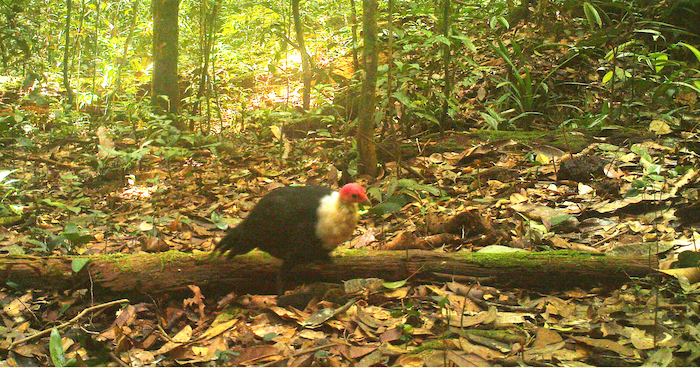
White-breasted Guineafowl. (Photo credit: Benedictus Freeman)
KU NEWS SERVICE
LAWRENCE — Growing up in Liberia during that country’s brutal 14-year civil war, Benedictus Freeman and his family fled into the rainforest, where they survived for years eating bush meat and foraging. The rainforest provided Freeman sustenance and protection — but more than that, the experience ignited a passion in him for understanding and preserving nature.
University of Kansas doctoral student Benedictus Freeman. (Photo credit: Benedictus Freeman)
“At that time, I really didn’t know how important the forest would become for me — I saw the forest as a source of resources like food and shelter,” said Freeman, who today is a doctoral student in ecology & evolutionary biology at the University of Kansas and KU Biodiversity Institute. “But I developed an interest in nature there, and eventually I started studying forestry for my undergraduate degree. That actually influenced my decision to get more interested in nature and conservation.”
The rainforests that once protected Freeman and his family host one of West Africa’s flagship bird species — the White‐breasted Guineafowl (Agelastes meleagrides). Now, Freeman is lead author of a new paper in the peer-reviewed journal Avian Research that projects the geographic distribution of the bird through 2050 as it shifts habitat due to climate change.
“This bird is endemic to West Africa, but it’s not fully understood — it’s poorly studied,” Freeman said. “Because of this poor history, there’s very little understanding about its range. Our study recharacterizes its distribution and helps us to understand to what extent it’s distributed across the region. The bird is threatened, and it’s of conservation concern. So that’s why it was selected for study.”
According to Freeman, the vulnerable White-breasted Guineafowl, which has appeared on Liberian postage stamps, serves as an iconic “flagship species,” conservation of which could preserve habitat of many lesser-known animals at the same time.
The KU researcher said West Africa suffers from extensive deforestation due to increasing populations, urbanization, agriculture expansion (both substance farming and industrial-scale farming of palm oil), logging and mining. Because of its exclusive dependence on the forest for habitat, the White-breasted Guineafowl is particularly susceptible to habitat loss.
“It occurs within rainforest habitats in West Africa where it feeds like regular birds, like chickens feed, and depends on insects and seeds and things,” Freeman said. “The important thing about this bird is that it’s a specialist — it’s more restricted to rainforest habitats. There is a sister species (Black Guineafowl, Agelastes niger) of the same bird that occurs on the other side of the Guinean forest, but this one is range-restricted, and it’s only found in this region. It’s not going to be found anywhere else in the world.”
Climatic range gains and losses for White‐breasted Guineafowl projected based on climate model projections for 2050. The top map shows potential range gains while the bottom map shows potential range losses. (Credit: Benedictus Freeman, et al.)
Freeman hopes his research predicting the distribution of the bird in coming decades can help inform policymakers about which areas of rainforest should be prioritized for conservation.
For the new paper, Freeman and his colleagues — Daniel Jiménez‐García of Benemérita Universidad Autónoma de Puebla in Mexico, Benjamin Barca of the Royal Society for the Protection of Birds in Sierra Leone and Matthew Grainger of Newcastle University in the United Kingdom — used occurrence data from the Global Biodiversity Information Facility and datasets about occurrences of the White-breasted Guineafowl in Sapo National Park in Liberia and Gola Rainforest National Park in Sierra Leone, including data collected by Freeman.
The authors used environmental datasets from NASA and other open sources to perform ecological niche modeling, which the researchers said “integrates known occurrences of species and environmental variables (e.g., temperature, precipitation) to characterize potential future geographic distributions of species in response to global climate change.”
The team created maps showing current and likely future habitats where the White‐breasted Guineafowl could migrate in response to a shifting climate. Unexpectedly, there was good news for the iconic bird in the findings: “The projected impacts of climate change on the geographic distribution of White-breasted Guineafowl were minimal, suggesting stability across the species’ range for the present and in the future, at least as regards climate change effects,” researchers said. “Low sensitivity to climate change in this species does match the general observation for West African birds.”
However, the team found coastal areas where the White‐breasted Guineafowl is found today would be degraded by sea-level rise and resulting coastal erosion, destroying some of the species’ range.
As for Freeman, this summer he’s back in Liberia conducting more fieldwork on birds in some of the same areas his team found to be suitable for the White-breasted Guineafowl.
“We were pleased to document populations at the sites where we worked, and then we were able to collect data on other bird species,” he said. “We have some interesting records that might be species not yet known to science, but we need to do some detailed studies.”
Freeman aims to finish his doctorate at KU next year, he said. After that, he’ll look for opportunities for postdoctoral work.
“I don’t know exactly where that’s going to be,” he said. “But I’m hoping that wherever I get a good job, I can have an opportunity to work in West Africa to do more research. There’s a huge capacity gap in that area. There’s a need to have homegrown scientists involved with this kind of research specifically. So, my passion is to work there.”
TOPEKA – The Kansas Republican Party announced Monday that it has hired Shannon Golden as its Executive Director. Golden comes to the Kansas Republican Party from Kansas Senate President Susan Wagle’s office. Golden was Senator Wagle’s Communications Director.
According to Michael Kuckelman, Kansas Republican Party Chair, the search for the Executive Director has been a four-month search and he looked at several candidates prior to deciding on Golden. “One of my priorities is to improve our messaging and I am convinced Shannon can deliver our message for us. In regard to her experience, “I have been impressed with Shannon in my interactions with the Senate. Shannon stood out in her ability and her professionalism.”
“I look forward to Shannon helping me lead the party. As Executive Director, Shannon will be responsible for the day to day operations of the KS GOP as well as working closely with me to develop strategy and policy leading into the 2020 elections.” – KS GOP Chairman Mike Kuckelman
“I’m looking forward to meeting with and working with Shannon. 2020 is going to be an important campaign cycle for Kansas Republicans. We’ll need to ensure we have a candidate and operation that can hold our all-important Senate seat. Team Marshall is wishing her well and standing by to help in any way we can.” – Congressman Roger Marshall
“National politics takes up all the oxygen, but state and local politics is where the differences are made. I’m glad to see that is where the party is focusing its efforts.” – Insurance Commissioner Vicki Schmidt
“The Kansas Republican Party has made a wise choice with the hiring of Shannon as Executive Director. I’ve worked with Shannon for the last 2 sessions and I can attest to her political knowledge, work ethic, and ability to build coalitions. Congratulations to the KSGOP.” – Senator Jim Denning
“It is projected that there will be a record turnout of Kansas Republicans in the 2020 elections. The Kansas Republican Party has the ability to expand our supermajorities in both chambers of the Kansas Legislature in addition to taking back the 3rd Congressional District in the 2020 election” said Kansas Republican Party Executive Director Shannon Golden. “I look forward to working with the Kansas Republican Party team and Republicans across our state to make that a reality.”