Weren’t able to make it to the 25th annual Ellis County Festival of Faith? Just want to relive the moment?
Check out Sunday’s entire event below or catch it on television on Eagle Ch. 14 and 614 at 11 a.m. and 4 p.m. Tuesday through Friday and 2 and 7 p.m. Saturday and Sunday.
HUTCHINSON, Kan. – A Kansas woman was arrested Sunday night on U.S. Highway 50 by Reno County Sheriff Deputies after she failed to stop for them leading to a chase.
Just after 10 p.m. on Sunday, Kansas Highway Troopers received a call of a hit and run accident at U.S. 50 and Partridge Road.
Reno County Sheriff Deputies responded and saw the vehicle traveling east bound on U.S. 50 with one tire missing.
When Samantha Caravalho, 28, Hutchinson, ultimately did stop, there were flames coming from the vehicle’s right fender.
Deputies initially had trouble getting her from the vehicle and she informed them she had four kids in the vehicle.,
Deputies safely removed the children and then used a fire extinguisher to put out the fire.
They were then able to get Caravalho from the vehicle and she was taken to jail.
Potential charges against Caravalho include DUI, two counts of aggravated battery, felony flee and elude and four counts of felony endangerment of a child.
Her bond in the case is set at $27,500 she should make a first court appearance on Tuesday.
ELLIS COUTY- A woman from Hays was hospitalized in an accident just before 1:30 p.m. Monday in Ellis County.
The Kansas Highway Patrol reported a 2013 Chevy Traverse driven by Amanda Marie Truan, 34, Gorham, was northbound on the U.S. 183 Bypass just west of Hays.
The Chevy rear-ended a northbound 2010 Ford Fusion driven by Kelli L. Thiel. 50, which made a sudden stop, according to the KHP.
Thiel was transported to Hays Medical Center. Truan was not injured.
Thiel was not wearing a seat belt, according to the KHP.
ENGLEWOOD, Colo. (AP) – Broncos GM John Elway says doctors have ordered coach Gary Kubiak to take a week off after experiencing a migraine and that special teams coordinator Joe DeCamillis will serve as interim coach Thursday night in San Diego.
Kubiak was lethargic following Denver’s 23-16 loss to Atlanta on Sunday night and was taken from the stadium via ambulance and hospitalized overnight.
He was in the process of being discharged from the hospital and sent home when Elway held a 2 p.m. MST news conference at team headquarters.
Kubiak, 55, had a health scare in 2013 when he was coach of the Houston Texans, suffering a “mini-stroke” and collapsing at halftime of a game against Indianapolis. He returned 10 days later.
Five members of the physics faculty at Fort Hays State University will present their favorite Nobel Prize winners at the next Science Cafe at 7 p.m. Tuesday, Oct. 11, at Gella’s Diner, 117 East 11th St., Hays.
Presenters are Dr. Gavin Buffington, Dr. C.D. Clark, Dr. Eric Deyo, Dr. Jack Maseberg and Dr. Kent Rohleder.
This Science Cafe is sponsored by FHSU’s Science and Mathematics Education Institute.
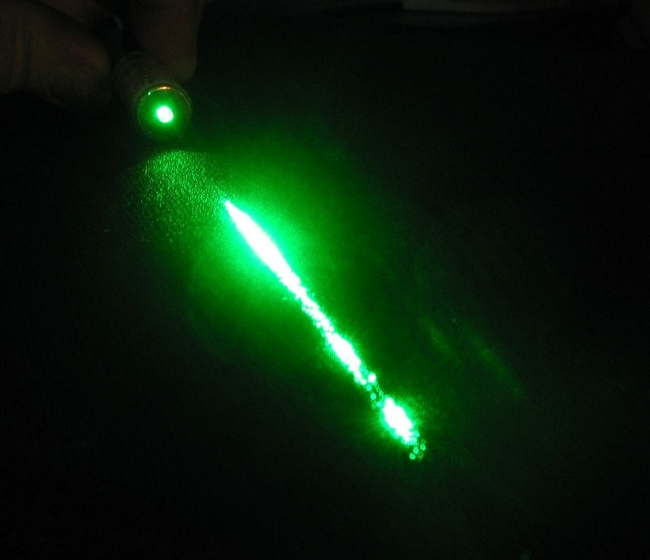
SALINE COUNTY – Law enforcement authorities in Saline County are investigating report of a laser being pointed at an airplane near Saline Regional Airport.
On Friday, the Salina Airport Authority notified the Saline County Sheriff’s office after a pilot reported a green laser was pointed at him just before 9 p.m.
The beam was reported to have come from about 6 miles southwest of the airport.
Deputies located and spoke with some individuals in the area but were not able to locate the source of the laser, according to Saline County Undersheriff Roger Soldan.
The map depicts in green those counties where a survey respondent reported the presence of Colorado marijuana.
TOPEKA – The Kansas attorney general’s office today published a new report that shows marijuana from Colorado has permeated nearly all parts of Kansas, Attorney General Derek Schmidt said.
The report, which includes information from Trego and Ellis counties, also shows that Colorado’s decision to “legalize” marijuana has resulted in a sharp increase in the availability of marijuana-laced “edibles” in Kansas, a phenomenon rarely encountered here before the Colorado experiment.
Since Colorado changed its state law to allow recreational as well as medical use of marijuana, persistent anecdotal reports from law enforcement agencies in Kansas had suggested Colorado marijuana was readily flowing into Kansas despite assurances that federal authorities would exercise their authority to prevent Colorado marijuana from flowing into nearby states where it remains illegal. But solid data about the extent of the problem was unavailable.
Click HERE to read the entire report.
In December 2015, Schmidt exercised his authority under Kansas law to gather information from local law enforcement officials and began surveying all county and district attorneys, sheriffs and police departments in the state about their specific experiences with marijuana coming from Colorado. The information provided by 320 responding law enforcement agencies and 70 prosecutors’ offices is compiled in the report released today.
“This report provides the first data-based snapshot of the specific effects Colorado’s experiment in ‘legalization’ is having in Kansas,” Schmidt said. “I hope this information will serve to better inform policy discussions and debates. Whatever one’s views on the merits of Colorado’s choice to ‘legalize’ and on the federal government’s decision to look the other way despite the commands of federal law, it is clear that decisions made in Colorado and Washington, D.C., are having a significant effect in Kansas.”
The report summarizes its findings as follows:
The survey responses demonstrate that Colorado marijuana is prevalent in Kansas. While some jurisdictions reported an increase in overall levels of marijuana crimes, the major effect of Colorado marijuana ‘legalization’ appears to be that high grade marijuana from Colorado has to a large extent replaced lower grade marijuana from Mexico and home grown marijuana. Numerous jurisdictions also reported a significant rise in the availability of marijuana edibles and other marijuana products, such as waxes and oils, originating from Colorado.
A copy of the report is available on the attorney general’s website at www.ag.ks.gov/survey-results. That site also links to the raw information collected from the responding law enforcement agencies and prosecutors.
Fire Prevention Week is held annually on the anniversary of the Great Chicago Fire, Oct. 8-10, 1871. There were more than 300 deaths and 100,000 people were left homeless.
The 2016 theme of Fire Prevention Week is Don’t Wait-Check The Date! Replace Smoke Alarms Every 10 Years.
“Smoke alarms need to be replaced every 10 years,” according to city of Hays Firefighter Travis Johannes. “Carbon monoxide alarms should be replaced sooner–every five years.”
Smoke alarms are key to home fire safety. “Sixty percent of home fire deaths occur in houses without working smoke alarms,” Johannes noted. Those statistics come from the National Fire Protection Association (NFPA), which also reports half of home fire deaths result from fires reported between 11 p.m. and 7 a.m. when most people are asleep.
(Click to enlarge)
Smoke and carbon monoxide (CO) alarms should be tested monthly. “Working smoke and carbon monoxide alarms warn you in time to take proper life-saving action. If your smoke or carbon monoxide alarm goes off, get everyone out of the house and call 911,” Johannes said.
He recommends installing smoke alarms in each bedroom, outside each sleeping area, and on each level of a home. Carbon monoxide is an odorless, tasteless and colorless gas. CO alarms should be placed on each level of a home, especially near sleeping areas.
The Hays Fire Department has free smoke and carbon monoxide alarms who cannot afford them. This month, HFD, as well as the Ellis, Victoria and Ellis County Fire Departments are teaming up with the Western Kansas Chapter of the American Red Cross to provide free smoke alarms in the community. HFD will also assist senior citizens or those with limited mobility with installing alarms, checking alarms, or changing alarm batteries.
Second-graders watch the smoke rise to the ceiling of the HFD mobile fire safety house at Roosevelt Elementary School in 2013.
During Fire Prevention Week, Hays firefighters are taking their mobile Fire Safety House to local third-grade classes. The students learn where smoke and carbon monoxide detectors should be placed in their homes, what to do if one goes off and how to develop a home fire escape plan with their families.
In 2014, U.S. fire departments responded to an estimated 367,500 home structure fires. These fires caused 2,745 deaths, 11,825 civilian injuries, and $6.8 billion in direct damage, according to the NFPA.
“Fire Prevention Week is a good time to check your alarms and change the batteries,” Johannes reminded homeowners.
For more information, contact HFD at (785) 628-7330.
OSAGE COUNTY – Authorities in Osage County are investigating the death of an infant.
Just after 11:30 a.m. on Sunday, first responders were dispatched to a home in the 1100 Block of Laing Street in Osage City after report of a 2-month-old infant girl who was not breathing, according to a social media report.
Efforts to revive the child were unsuccessful.
The infant was transported to Frontier Forensics in Kansas City to determine cause of death.
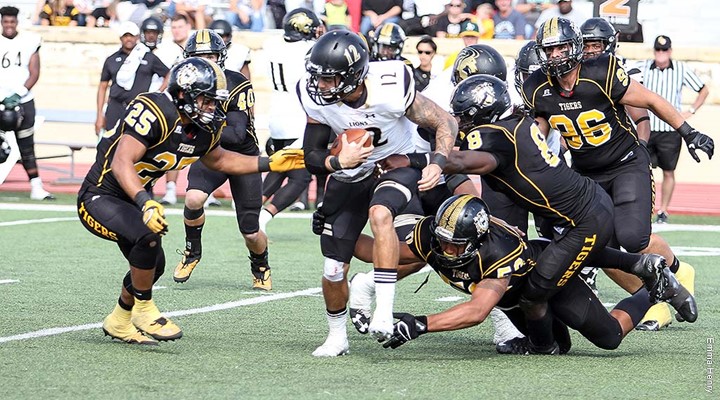
KANSAS CITY, Mo. – Fort Hays State quarterback Jacob Mezera and kicker Brandon Brown earned two of the three weekly MIAA Football Athlete of the Week honors on Monday (Oct. 10). Mezera was named the Offensive Athlete of the Week, while Brown was named Special Teams Player of the Week, following an impressive 54-41 win at Pittsburg State.
Mezera set a new Fort Hays State record for total offense in a game with 508 yards (446 passing and a team-high 62 rushing yards) in the 54-41 win at Pittsburg State. The performance ranks fourth all-time in the MIAA as he became just the fifth player ever in MIAA history to produce at least 500 yards of total offense in a game. He also tied the FHSU record for most touchdown passes in a game with five and had a hand in six touchdowns total, adding one rushing score for the day. His 446 passing yards were third most in a single game at FHSU, only behind Robert Long who had performances of 467 and 465 yards in 1985. However, with Long playing in the NAIA era, Mezera’s passing total was a new school record for the NCAA Division II era, going past Mike Garrison’s 435 at Missouri Western in 2010. He distributed the ball to nine different receivers with Charles Tigner as his top target (8 catches for 160 yards). The win marked the first time FHSU defeated PSU in consecutive games in Pittsburg for the first time since 1970 and 1972.
Brown was a perfect 4-of-4 on field goal attempts and 6-of-6 on extra point attempts in the 54-41 win over Pittsburg State. Brown converted field goals from 19, 38, 37, and 49 yards. The 49-yard field goal was a season long for Brown and tied the seventh longest field goal in FHSU history. He averaged 60.5 yards per kickoff, producing four touchbacks. Brown is now 13-of-14 on field goal attempts this year, with his only miss from over 50 yards.
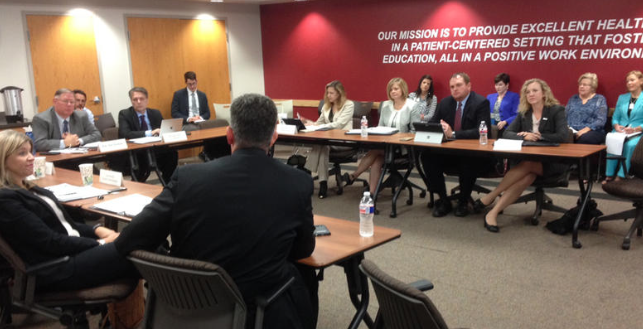
The nine-member Rural Health Working Group met Thursday in Salina as part of its yearlong effort to come up with suggestions for Gov. Sam Brownback and the Kansas Legislature. BRYAN THOMPSON / HEARTLAND HEALTH MONITOR
A working group charged with finding “Kansas solutions” to the problems surrounding health care delivery in rural Kansas still hasn’t settled on a direction.
Near the end of Rural Health Working Group’s meeting Thursday in Salina, Rep. Jim Kelly of Independence asked the other members to at least consider what he called “the 800-pound gorilla” in the room: Medicaid expansion. Kelly thinks expanding eligibility for Medicaid might help other communities avoid the hospital closure that occurred in Independence.
“I don’t want another community to be in that position, and I don’t want rural communities all over Kansas — some frontier — to have difficulty accessing health care,” said Kelly, a Republican who is one of nine members appointed by Gov. Sam Brownback to the group. “What the final product looks like, I don’t know. Because I know that, to be acceptable, it’s probably going to have to have certain components to it. It’s going to have to be a Kansas-type plan.”
But Lt. Gov. Jeff Colyer, who leads the group, said Brownback wants its members to find solutions that don’t involve expanding eligibility for Medicaid, the federal-state health insurance program people with low incomes or disabilities.
“The charge of this commission was to discuss issues regardless of whether or not you have Medicaid expansion,” Colyer said. “Whether you have Medicaid expansion or not, we’re still going to have shortages of doctors. We’re still going to have hospitals that close. We’re still going to have shortages of nurses, and we’re going to have a number of issues as our population ages.”
Colyer said he wanted the group to look for other ways to address those issues and leave the Medicaid expansion discussion to the Legislature.
‘They want to talk about it’
That discussion is likely to be more robust in the 2017 legislative session. In previous years, Brownback allies in legislative leadership managed to block debate on the issue.
But Rep. Dan Hawkins, a Wichita Republican who is a member of the working group and chairs the House Health and Human Services Committee, said the political environment has shifted.
“The Legislature fundamentally changed during the primary,” Hawkins said. “The electorate spoke, and we need to be listening, and anybody that isn’t listening is tone deaf. I’m certainly not tone deaf. That was certainly a message that Medicaid expansion is something that people want to discuss. They want to talk about it. We’re going to do that.”
Hawkins still doesn’t favor expanding Medicaid, which in Kansas is a $3 billion privatized program known as KanCare, because of concerns that it will cost the state more than estimated. Even so, the Wichita Republican expects the House health committee to consider at least two Medicaid expansion proposals in the next session.
“We will have a discussion. We will have a committee vote, and we’ll see where it goes from there,” Hawkins said. “We’ll see what the Legislature thinks, and of course if the governor will sign whatever we were to come up with.”
Hawkins favors spending more money to shore up the network of safety net clinics across the state over expanding Medicaid.
“They are probably the most crucial thing we have for our uninsured and for our Medicaid patients,” he said.
Missed opportunity?
As executive director of the Kansas Association for the Medically Underserved, Denise Cyzman is all for giving a shot in the arm to safety net clinics. But she said Medicaid expansion has a role in that.
“If you want to invest in your safety net system, invest by allowing KanCare to expand,” Cyzman said. “It impacts all parts of the health system, but most importantly it impacts the health of Kansans, and I think that should always be first and foremost in our mind.”
Her organization estimates that Medicaid expansion would provide its 43 member clinics with a total of $8.6 million to $14.6 million in additional revenue that would cover care for at least 43,000 safety net clinic patients.
However, Cyzman holds out little hope that the working group will recommend expanding Medicaid. She sees that as a missed opportunity, especially for the thousands of Kansans who are too poor to qualify for subsidized coverage through the Affordable Care Act but not poor enough to get coverage through Medicaid.
“Many of those are folks that we serve at the safety net clinic system,” she said. “There are many more that are not accessing health care at all, because they’re not sure how they can pay for it, they’re afraid of what they might find. So ultimately when they do seek health care, they’re going to be sicker, they’re going to require more care, and it’s going to be more costly. And all of us as taxpayers end up with that burden.”
Members of the working group did show signs of agreement during Thursday’s meeting on expanding the use of telemedicine and better incorporating behavioral health care into primary care.
Colyer anticipates two more meetings for the group, in November and December, before it makes recommendations to Brownback and the Legislature at the start of the 2017 session.
Bryan Thompson is a reporter for KHI News Service in Topeka, a partner in the Heartland Health Monitor team.
St. Cloud, Minn., Technical Community College virtual campus
FHSU University Relations and Marketing
The Institute for New Media Studies at Fort Hays State University worked with St. Cloud, Minn., Technical Community College recently to create an interactive, virtual, reality-based navigation system for college campuses. The project — a customized information and visualization system — was created by Dr. Gordon Carlson, director of the institute, and two Fort Hays State students.
Waypoint software performs kiosk and informational functions for new students and guests without the need for proprietary hardware or licensing. Real-time walking directions can be visualized from any vantage point and sent to the user’s mobile devices without the need for dedicated servers.
Navigation and orientation systems like this are typically expensive and require long-term commitments to a particular vendor.
The institute won the contract through a competitive bid and was able to deliver the project on time, under budget, and for a fraction of the cost of the next lowest bidder, said Carlson.
“This research collaboration shows the institute is developing products comparable to private industries and shows that we can perform the same services on campus with our faculty and students,” he said.
“In a time when universities are competing for limited funding, it is good to know the institute can win resources that support student learning and research while making substantial contributions to the community.”
Brittney Funk, Hays, a graduate student in communication studies, and Caleb Scholz, Crete, Neb., an undergraduate student in applied technology, assisted Carlson in developing the system. From drafting 3D models of buildings, traveling to St. Cloud to meet with stakeholders and designing images and graphics, the process took seven months to complete.
The project was submitted to and accepted by the League for Innovation in Community Colleges’ STEMtech Conference, where academic institutions and industry partners gather each year to develop and showcase projects and future opportunities. Carlson will present the work to a national audience, alongside Joyce Helens, SCTCC president, and Vi Bergquist, CIO.
“The virtual campus project has so many potential uses, from wayfinding, to security training, to making prospective students familiar and comfortable with the layout of the campus,” said Bergquist.
“It is very exciting for us to have this technology available for our faculty, staff and students,” said Carlson.
Revenue generated from the contract also supports a project called Tiger Range, which seeks to build an immersive virtual reality model of FHSU.
The project was created through an intensive communication studies and issues course, along with an applications in communication course that saw FHSU juniors and seniors recreate campus buildings in industry-standard 3D software, work with the campus architect and develop communication strategies for implementing the software on a broader basis.
Tiger Range will provide the basis for a number of simulation, training and educational applications, such as safety instruction, new faculty orientation, and institutional marketing and advancement. The second phase of the project is aimed at serving college student retention programs and fundraising through partnerships with college foundations.
WACO, Texas – Fort Hays State moved closer to the Top 25 in the latest AFCA Division II Poll, released on Monday. The Tigers are now the second-highest team among the receiving votes list after their 54-41 win at Pittsburg State. The result knocked Pittsburg State out of the list of receiving votes teams.
With the win in Pittsburg, the Tigers gained much more traction in the poll, going from eight votes last week to 48 this week. Only Ferris State (Mich.) has more votes in the receiving votes section with 76. Wayne State (Mich.), currently ranked No. 25, received 85 votes this week. The Tigers are still seeking to crack the top 25 for the first time in program history.
Northwest Missouri State and Emporia State continue to represent the MIAA in the top 25. Defending national champion Northwest Missouri State continues to hold the nation’s top ranking, now with 21 consecutive victories going back to the start of the 2015 season. Emporia State moved up six more spots this week to No. 12. Fort Hays State (48 votes) and Central Missouri (1 vote) are the only two MIAA teams among the receiving votes list.
If the Tigers want to continue their charge towards the top 25, they will have to end a streak of eight consecutive losses in Topeka this week. The Tigers have defeated Washburn six times since 1988, but all six wins have been in Hays. The last time FHSU claimed a victory over Washburn in Topeka was 1987.
Below is the AFCA Division II Top 25 Poll for October 10, 2016.
Rank
School (1st votes)
Record
Pts.
Prev.
1.
Northwest Missouri St. (30)
6-0
750
1
2.
Grand Valley St. (Mich.)
6-0
717
2
3.
Shepherd (W.Va.)
5-0
686
3
4.
Midwestern St. (Texas)
5-0
665
7
5.
Tuskegee (Ala.)
6-0
613
8
6.
Sioux Falls (S.D.)
6-0
588
9
7.
California (Pa.)
5-0
542
15
8.
Harding (Ark.)
6-0
514
16
9.
Texas A&M-Commerce
4-1
485
4
10.
North Alabama
3-1
459
11
11.
Ashland (Ohio)
5-1
428
17
12.
Emporia St. (Kan.)
5-1
364
18
13.
Indiana (Pa.)
4-1
358
6
14.
LIU-Post (N.Y.)
6-0
339
21
15.
Henderson St. (Ark.)
5-1
319
5
16.
Slippery Rock (Pa.)
5-1
304
19
17.
Valdosta St. (Ga.)
4-1
253
25t
18.
Assumption (Mass.)
5-1
200
22
19.
Azusa Pacific (Calif.)
5-1
179
10
20.
Florida Tech
4-1
149
23
21.
North Carolina-Pembroke
5-1
148
24
22.
Bemidji St. (Minn.)
5-1
132
25t
23.
Colorado Mesa
5-1
118
13
24.
West Georgia
4-2
90
12
25.
Wayne St. (Mich.)
5-1
85
NR
Others Receiving Votes: Ferris St. (Mich.), 76; Fort Hays St. (Kan.), 48; Minnesota-Duluth, 46; Fairmont St. (W.Va.), 24; Newberry (S.C.), 23; Southwest Baptist (Mo.), 14; Black Hills St. (S.D.), 9; Colorado School of Mines, 9; Truman St. (Mo.), 9; Southern Arkansas, 4; Notre Dame (Ohio), 2; Central Missouri, 1.








 By BECKY KISER