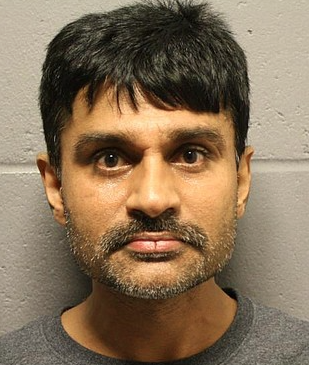
Jeremy Lewis Davis, age 42, passed away Saturday, August 6, 2016 in Hays. He was born April 24, 1974 in Mexia, Texas to Gayla Grissom Stricklin.
He had worked in Pipeline Construction in the past.
He is survived by a sister, Audra Teague and husband John of Hays; a brother, David Rutherford and wife Audrey of Michigan; three daughters, Ashley Davis, Cheyenne Clouses and Kassi davis; four nephews, Tray Rutherford, Trent Ruherford, Chase Rutherford and Justin Esner; four nieces, Chelsea Teague, Angeline Mephem, Abby Johnson and Haley Rutherford as well as several aunts, uncles and cousins.
He is preceded in death by his mother.
Private family services will be held at a later date. Arrangements in care of Brock’s-Keithley Funeral Chapel and Crematory 2509 Vine Hays, KS 67601.
LAWRENCE, Kan. (AP) — A Kansas motel owner who nearly stabbed his wife to death last summer has been sentenced to probation, in part because of the cultural ramifications his incarceration would have had on his family.
An attorney for 46-year-old Navinkumar Patel told Shawnee County District Judge Robert Fairchild on Thursday that in the Hindu culture of Patel’s family, his wife and children would essentially be “ostracized” if he were sent to prison.
The Lawrence Journal-World reports Patel pleaded no-contest in March to attempted second-degree murder and criminal threat for stabbing his wife in the abdomen at the Super 8 he owns in Lawrence.
A doctor testified that Patel suffers from bipolar disorder, which was made worse by alcohol addiction.
SALINE COUNTY- Law enforcement authorities in Saline County are investigating an early Friday morning robbery and searching for two suspects.
Just after 1 a.m. on Friday, A 28-year-old male employee at Burger King, 316 E. Iron, was in the process of closing the business for the night, when two individuals were able to get inside the restaurant according to Police Captain Mike Sweeney.
The two suspects, one male and one female, battered the clerk and demanded money.
They received an undisclosed amount of cash before leaving the restaurant.
Sweeney said the male suspect was about 5’8″ and the female was also about 5’8″ with a husky build.
They were wearing dark, long sleeve clothing with some type of mask covering their faces. The clerk was not able to provide any further description.
Anyone with information pertaining to this robbery is asked to call the Salina Police Department at 785-826-7210 or Salina/Saline County Crime Stoppers at 785-825-TIPS.
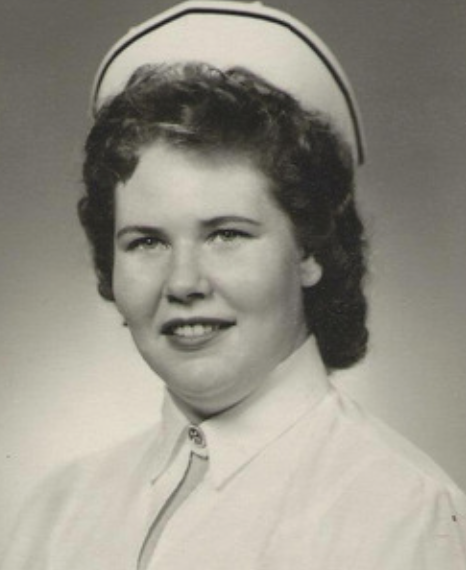
Nedra Ann Blazek, 78, died August 25, 2016, at Great Bend Health and Rehabilitation Center.
She was born October 27, 1937, in Oklahoma City, Oklahoma, the daughter of Roy Lee and Mary (Turner) Clay. Nedra graduated from Great Bend High School in 1955 and then St. Rose Hospital School of Nursing in 1957. She worked in Nursing for 42 years, retiring from Ellinwood District Hospital in 1999. Nedra was a former member of the V.F.W. Auxiliary in Claflin.
On January 11, 1959, she married Harold “Boots” Blazek in Great Bend, Kansas. He preceded her in death on October 8, 2013.
Survivors include three children: Mark Blazek and his wife Becky of Salina, Joe Blazek of Great Bend, and Kristi Blazek and her husband Greg Burkhart of Palmer Lake, Colorado; grandchildren, Sara Blazek-Brownfield and husband Adam Brownfield of Wichita, Molly Skeen and husband Jason Skeen of Hays, Patrick Blazek of Denver, and Tyler Blazek of Salina; and her favorite four legged companion, Ellie.
She was preceded in death by her parents, husband, stepfather, Charles Wiysel, and a brother, Norvell “Pete” Clay.
Memorial service will be 2 p.m., Sunday, August 28, 2016, at Nicholson-Ricke Funeral Home Chapel, with the Rev. Shelly G. Klingensmith presiding. Per her wishes, there will be no visitation as cremation has taken place.
Memorials may be made to the Mile High Weimaraner Rescue or Western Plains Animal Refuge in care of Nicholson-Ricke Funeral Home, PO Box 146, Hoisington, KS 67544.
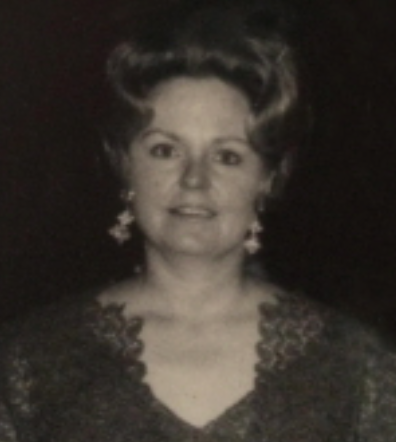
Bonnie Jean (Hiser) Bain passed away Sunday, August 21, 2016 at the Green Oaks Nursing & Rehabilitation Center in Arlington, Texas at the age of 78. She was born on February 28, 1938 in Hominy, Oklahoma to the late Grady and Bessie (Smith) Hiser. She graduated from high school in 1956 and on October 10, 1959 she was united in marriage to George Bain in Kingfisher, Oklahoma. They were blessed with four children, Anastasia, Christinia, Nickolaus, and Samuel.
Bonnie took great pride in her family and loved raising and taking care of them. When she wasn’t working outside the home as a secretary and office worker, she enjoyed keeping busy with cooking, quilting, and taking care of her home. She also liked spending time bowling with her friends or taking in a good book when she had time to herself.
Bonnie is survived by her children Anastasia Norman and husband Hal of Fort Worth, TX, Cristinia Bain of Cedar Hill, TX, Nickolaus Bain and wife Keri of Tyler ,TX, and Samuel Bain and wife Blanca of Palm Valley, TX; siblings Ted and Freda Lambert of Palco, Joe and Gail Botinelly of Wichita, Roy and Diane Hiser of Conway Springs, and Dale and Wilma Hiser of Cleveland, TN; six grandchildren, and three great-grandchildren.
She was preceded in death by her parents Grady and Bessie Hiser, husband George Bain, and brother Marvin Hiser.
It has been said, “Mothers hold their children’s hands for a short while, but their hearts forever.” Bonnie loved working with her hands, always loving, caring and giving more of herself. Because she never tired of doing good and blessing us, indeed her loving touch will be with us forever.
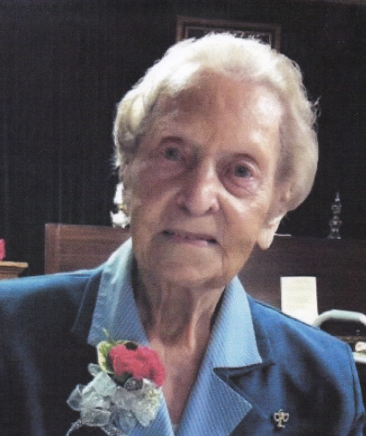
Marcella Louise Dolezal, the daughter of Frank Kalivoda and Rosa (Kauer) Kalivoda, was born October 4, 1915 at rural Agenda, KS and passed away on August 24, 2016 at the Belleville Health Care Center at the age of 100 years, 10 months, and 20 days.
Marcella grew up and attended the Dillehay School, graduating from Agenda Rural High School. On June 20, 1934, she was united in marriage to Elmer Dolezal and to this union was born: Loren Lee and Joe Franklyn. The couple made their home on a farm south of Cuba, KS for many years. They moved to Belleville in 1997.
Marcella worked in the Food Departments in School, Hotels, and the Kravemore Restaurant. She was in the original staff at the Republic County Hospital when it opened in 1960 as head of the Foods Department.
Marcella then served as Republic County Treasurer for 6 terms (12 years) and continued to work in the treasurer’s office until her retirement in 1982.
She was a member of the Cuba Presbyterian Church Guild and the Republic County Czech Club, serving as president and secretary. She also was a member of the Kansas Czech Club, the Lodge Junior Eagles, serving as president and secretary/trustee, a member of E.H.U. and also of the Red Hat Society.
Marcella was preceded in death by her parents, her husband Elmer in 1999; her siblings, Mildred Steier, Edgar Kalivoda, and Donald Kalivoda, and her grandson, Mark Dolezal in June of 2016.
She is survived by two sons, Loren (Beverly) Dolezal of Lawrence, KS and Joe (Sue) Dolezal of Hays, KS; 5 grandchildren, 16 great grandchildren, and 4 great great grandchildren.
Funeral services will be held at 2:00PM, Saturday, August 27, 2016 at the Cuba Presbyterian Church, Cuba,KS with Pastor Phil Goombi, officiating.
Interment will be at the National Bohemian (Kopsa) Cemetery, rural Cuba, KS.
Friends may call from 9 AM until 9 PM on Friday at the Bachelor-Surber Funeral Home, Belleville, KS where the family will greet friends from 7:30PM until 9 PM.
Memorials are suggested to the Cuba Presbyterian Church or Meadowlark Hospice.
Online condolences at www.bachelor-surber.com.
Bachelor-Surber Funeral Home, Belleville, KS is in charge of the arrangements.
TOPEKA – Thirty Kansas Lottery players have each won a “suite” VIP racing experience prize package to Kansas Speedway for the NASCAR races in October! The lucky winners were drawn this week in the second of two Kansas Speedway online-only second-chance drawings.
To become eligible for the October NASCAR prize packages, players entered their non-winning $5 Super Red Hot Crossword instant scratch tickets online through the Kansas Lottery’s Players Club from January 14 through 12 p.m. August 23, 2016. There were 60,259 entries in the drawing. The 30 winners are:
1. Harold Roberts of Lawrence
2. Janice Becker of Great Bend
3. Erik LeQue of Cherryvale
4. Kathy Deacon of Augusta
5. Sheri North of Wichita
6. Wanita Johnson of Hutchinson
7. Michelle Murrin of Clay Center
8. Lizzy McMichael of Salina
9. Barb Nelson of Ottawa
10. Shelle Manning of Valley Center
11. Preston Pannell of Wichita
12. Dean Durow of Gardner 13. Jami Kirkland of Quinter
14. William Tiemeyer of Wichita
15. Angie Harding of Wichita
16. Mike Greenamyre of Merriam
17. Charles McAdams of Belle Plaine 18. Alberta Rogers of Liebenthal
19. Vernon Coleman II of Wichita
20. Bruce Perney of Topeka
21. Jennifer Foster of Clearwater
22. Robin Hicks of Bonner Springs 23. Ronald Smith of Catharine
24. Maria Arras of Garden City 25. Cindy Keller of Quinter
26. Dewayne Lipe of Salina
27. Alan Hulbert of Valley Center
28. Richard Schuman of Salina
29. Kristie Tisdale of Marysville
30. Caicey Crutcher of Hoisington
Each Kansas Speedway grand prize includes two tickets for the ARCA Series race Friday, October 14, NASCAR XFinity Series Kansas Lottery 300 race Saturday, October 15, and the “Race for Chase” NASCAR Sprint Cup Hollywood Casino 400 race Sunday, October 16, 2016; two admissions to the Kansas Lottery’s winners’ suite at Kansas Speedway, including food and beverage; one double occupancy hotel room for Thursday, Friday and Saturday nights at Great Wolf Lodge; round trip trolley tickets between the hotel and track; $400 cash; and mandatory state and federal income withholding taxes on the prize. Each grand prize is valued at approximately $4,800.
The 30 winners will receive an email for address verification followed by a mailed claim form. Winners must claim their prize package within 14 days from the date of the drawing, or the next eligible entry will be declared the winner.
For more information on games, promotions, winning numbers, and unclaimed prizes, or to join the free Kansas Lottery Players Club, visit www.kslottery.com.
PARIS (AP) — Apple issued a security update on Thursday after powerful espionage software was found targeting an activist’s iPhone in the Middle East. Apple said in a statement that it fixed the vulnerability immediately after learning about it.
Computer forensics experts tell The Associated Press the spyware takes advantage of three previously undisclosed weaknesses in Apple’s mobile operating system to take complete control of iPhone handsets.
Two reports published Thursday by the San Francisco-based Lookout and internet watchdog group Citizen Lab outline how the spyware could compromise an iPhone or iPad with the tap of a finger, a trick so coveted in the world of cyberespionage that one spyware broker said last year that it had paid a $1 million dollar bounty to programmers who’d found a way to do it.
For the second time this year, Heartland Community Foundation is announcing the opening of a grant cycle for the counties it serves – Ellis, Trego and Rooks Counties.
The gift from the Dane G. Hansen Foundation, as well as gifts from very generous donors, allows Heartland the privilege of making grants in Ellis, Rooks and Trego Counties. This newly announced competitive grant application period begins August 15, 2016 and runs through October 1, 2016. Applications will be considered for funding through the Dane G. Hansen Community Grant Fund and can be found at www.heartlandcommunityfoundation.org.
Earlier this year Heartland Community Foundation, through its existing funds, along with a very generous gift from the Dane G. Hansen Foundation funded over $250,000.00 in grant applications in the three counties served. The Dane G. Hansen Foundation continues to support the efforts of rural America in beautifying their communities, providing needed services and funding necessary and exciting projects throughout the region.
“It was clear to us as we completed the competitive grant application cycle in June of this year the needs in our communities continue,” said Sandy Jacobs, Executive Director of the Heartland Community Foundation.
Jacobs added, “Emphasis will be on programs or projects that include community involvement and volunteerism and those organizations that have partially self-funded the projects they present. We take very seriously the confidence the Dane G. Hansen Foundation places in Heartland Community Foundation. The fact they recognize the work of community foundations such as ours and choose to partner with those foundations speaks to Hansen’s overall mission of improving the quality of life for citizens of northwest Kansas. We believe we are in a unique position to find and fund projects that will have the most impact in local areas.”
The Heartland Community Foundation was established in 2007 as an affiliate of the Great Salina Community Foundation. Heartland serves communities and their residents in Ellis, Rooks and Trego counties. For more information on our foundation, visit our website at www.heartlandcommunityfoundation.org.
Ice storms, tornadoes, and flooding – Kansas has them all and more. Do you really know how long food will stay safe in the refrigerator if your power is out? Or what foods and supplies you should have on hand in case of emergencies?
Starting September 1, Prepare Kansas 2016 will provide tips on keeping food safe in emergency situations. This year’s program will be conducted through social media on Facebook. No registration is required, so Kansans and anyone interested in planning ahead for emergencies can follow on Facebook at any time during September, pick up handy information and interact with K-State extension specialists and agents.
Throughout 2015, a total of 126 tornadoes occurred across the state, which made it the fourth highest year for tornados since 1950, according to the Kansas Department of Emergency Management.
“Kansas has its share of disasters, whether it’s a tornado, a house fire or a homeowner’s basement flooding. K-State Research and Extension is committed to working with people across the state to help them be prepared for anything that comes their way,” said Kansas State University associate professor Elizabeth Kiss. “We can’t always keep disasters from happening, but we know that being as prepared as possible– whether it’s putting a thermometer in your refrigerator and freezer, making an emergency kit or having copies of your important financial records in a separate, safe place– aids in the recovery from disasters.
Kiss, a K-State Research and Extension financial management specialist writes the Prepare Kansas blog, which provides tips and resources on a range of emergency preparedness topics, including this year’s focus on food safety during September.
“It is very important to keep food safety in mind before, during and after emergencies such as power outages and floods, to help prevent food loss and to reduce the likelihood of people getting sick from eating contaminated food.” said Londa Nwadike, consumer food safety specialist with K-State Research and Extension. “Some of the food safety practices that are important in emergency situations are good practices to help prevent people from getting sick at any time.”
More information on Prepare Kansas will be available in September on our Ellis County Facebook page at www.facebook.com/K-State Research and Extension- Ellis County and any time at https://blogs.k-state.edu/preparekansas/. Please follow the Prepare Kansas media campaign to be better prepared in September.
Linda K. Beech is Ellis County Extension Agent for Family and Consumer Sciences.
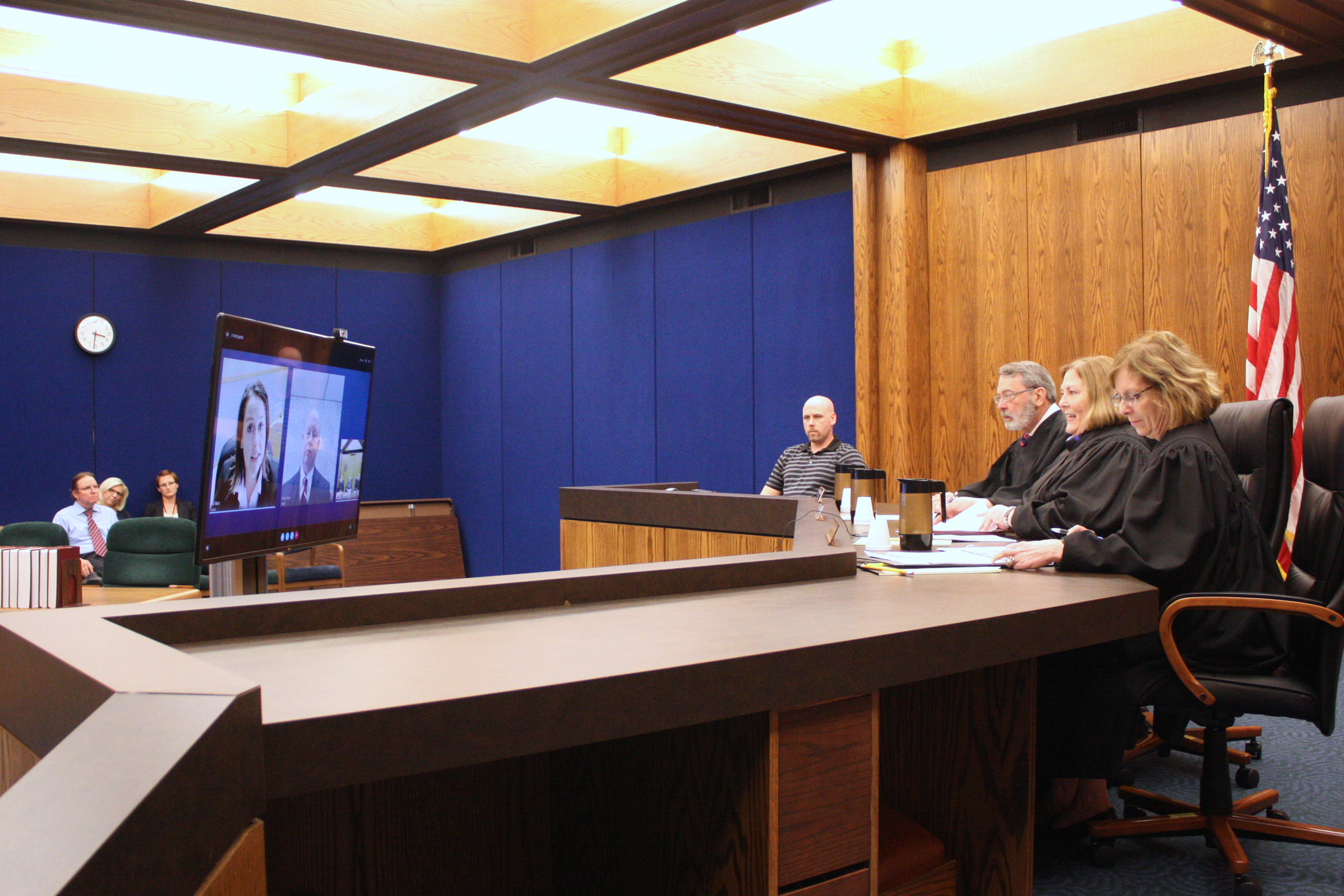
Attorneys Jill A. Elliott (L) and Tony A. Potter (R) appear August 16 by videoconference before a Court of Appeals panel made up of Judges (L to R) Patrick McAnany, Karen Arnold-Burger (presiding), and Kathryn Gardner. It was the first oral argument by videoconference in the Court of Appeals courtroom.
Office of Judicial Administration
TOPEKA—Two lawyers who appeared August 16 before a three-judge panel for the first oral argument by videoconference in the Court of Appeals’ courtroom didn’t dispense with formalities. They stood as the judges entered the courtroom, even though they were in their Hill City offices more than 250 miles away from the Kansas Judicial Center in Topeka.
The case heard was No. 114,507: Ronald Nickelson and Betty Nickelson vs. Alice Olive Bell, et al, an appeal of a Graham County District Court decision involving ownership interests in surface rights and mineral rights on a piece of real estate.
For Jill Elliott, the attorney representing eight individuals descended from record mineral owners on the property – Alice Olive Bell et al — being in familiar surroundings eased the stress of her first appearance before a Court of Appeals panel.
“It was comforting for me to be able to do it from my office,” Elliott said. “I have two monitors, so I was able to have the court videoconference on one monitor and my notes on the other. It was easy to use. I would do it again.”
It also saved Elliott a lot of time and her clients’ expense. It’s a three and a half hour drive to Topeka from her office in Hill City, a significant investment for an oral argument that lasted about 30 minutes.
Tony Potter, the attorney representing the Nickelsons, agrees with Elliott that it saved time and expense. However, he said it felt odd to give his oral argument speaking to his computer.
“It was different giving my argument to a monitor rather than to the judges in a courtroom. But overall, it worked really well,” said Potter.
Unlike Elliott, this was not Potter’s first time in front of a Court of Appeals panel. He listed past arguments in Garden City, Norton, Salina, Topeka, and Wichita.
“The court has always been very gracious about making sure attorneys don’t have to travel far, but this was still an adjustment for me,” he said.
Potter noted that hearing cases by videoconference is another example of how courts are finding ways to use technology. He likened it to the introduction of electronic filing, which is available to attorneys in good standing in all state courts in Kansas and is required in some of them, like the Court of Appeals and Supreme Court.
Although last week’s oral argument wasn’t the first to be heard by a Court of Appeals panel, it was the first to be heard in the court’s second-floor courtroom in the Kansas Judicial Center. The first was May 17, when attorneys from Liberal and Johnson, both in southwest Kansas, appeared by Skype before a panel meeting in a judicial center conference room.
“We were really pleased with the success of our first videoconference in May, and we are equally pleased with the success of last week’s videoconference in the courtroom,” said Thomas Malone, chief judge of the Court of Appeals. “We’ve been fortunate to have attorneys willing to test drive the technology with us, and that has been extremely helpful.”
Malone was the presiding judge on the panel that heard the case in May. A panel of three other Court of Appeals judges heard the case in the courtroom last week, with Judge Karen Arnold-Burger as the presiding judge.
Arnold-Burger said it was a valuable learning experience for her and her fellow judges, and she looks forward to opportunities to do it again. She sees it as an important option for parties involved in a case and the attorneys who represent them.
“I view the court’s use of videoconferencing technology as an access to justice issue,” Arnold-Burger said. “It cuts down the cost of litigation for the parties, but their issues of law are still being addressed. It allows lawyers to make more efficient use of their time.”
Being convenient and accessible has been a mainstay of the Court of Appeals, according to Judge Joe Pierron, the longest-serving judge currently on the court and a longtime proponent of court videoconferencing. But, he said, the leap to videoconferencing has taken time.
“One hurdle is getting beyond the mindset that oral arguments must be done in person, but it helps that more people are being exposed to videoconferencing in areas like education,” Pierron said. “Then it becomes a balancing question for the attorney and his or her client. Is it a greater benefit to appear in person, or is it an opportunity to save the cost of the attorney’s time and travel? In a few years, we may be saying, ‘How in the world did we get along without this?'”
Pierron gives credit to others for helping introduce videoconferencing in the Court of Appeals. First he mentioned Richard Greene, chief judge of the Court of Appeals in 2011 and 2012. Support also came from Chief Judge Malone, who succeeded Greene, and Chief Justice Lawton Nuss of the Supreme Court. It was their steadfast support of the idea, Pierron said, that helped move the concept forward.
For Nuss, he said his own law practice was his guide.
“I practiced law for 20 years, and I had to be cognizant of what litigation cost my client,” he said. “Oral argument by videoconference won’t replace all in-person appearances, but there will be instances where it makes sense. Achieving the desired result is paramount, and some cases do lend themselves to videoconference because it’s a great help to the lawyer and the client.”
Last week’s courtroom videoconference was a follow-on to a Kansas Court of Appeals Videoconferencing Committee pilot project to use videoconferencing in lieu of personal appearances for some appellate court cases under specific circumstances. The committee reviewed available technology, its use by Kansas government agencies, and related procedural issues, and produced Recommendations for Videoconferencing in Kansas Courts
Conducting some appellate-level oral arguments by videoconference also was a recommendation of the Blue Ribbon Commission, which convened in 2010 to identify ways court operations could be improved and modernized.