OLATHE, Kan. (AP) — Garmin International says it is planning a $200 million expansion at its headquarters in Olathe.
Garmin and the city of Olathe announced Friday that the company will build a new manufacturing and distribution center and new road through its campus. The project is expected to take two years.
The Kansas City Star reports after the expansion is completed, the company plans to renovate its existing manufacturing and warehouse space for research, development and office space.
The company currently employs about 2,800 at its headquarters. The expansion will accommodate another 2,600 workers.
Company spokesman Ted Gartner says officials have not decided whether about 600 Garmin workers who work elsewhere in the Kansas City area will be moved to the expanded headquarters.
KANSAS CITY, Kan. (AP) Two Kansas City men have been charged with robbing a bank on the Kansas side of the metropolitan area.
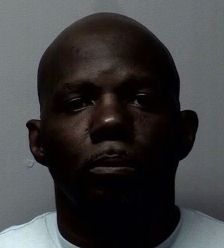
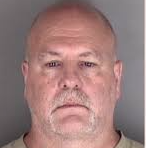
The U.S. attorney’s office says 57-year-old Terry Lovelady and 42-year-old Chad English were charged Thursday in federal court.
Lovelady is accused in the criminal complaint of robbing a Leawood branch of the Central Bank of the Midwest on Wednesday. The complaint says English drove the getaway car during a chase that ended when the vehicle jumped a curb, rolled down a hill and came to a stop in a St. Joseph Medical Center parking lot.
The men face up to 20 years in federal prison if convicted.
No attorney is listed for Lovelady in online court records. English’s attorney didn’t immediately return an email message from The Associated Press.
DETROIT (AP) — The U.S. is seeking to forcibly limit how fast trucks, buses and other large vehicles can travel on the nation’s highways.
A new proposal Friday would impose the nationwide limit by electronically capping speeds with a device on newly made U.S. vehicles that weigh more than 26,000 pounds. Regulators are considering a cap of 60, 65 or 68 miles per hour, though that could change.
The government says capping speeds for large vehicles will reduce the 1,115 fatal crashes involving heavy trucks that occur each year.
The proposal offered by the National Highway Traffic Safety Administration and Federal Motor Carrier Safety Administration is subject to public comment before becoming final.
WICHITA – An inmate in the Sedgwick County Detention Facility was hospitalized briefly with a head injury after being attacked by another inmate on Thursday.
Shortly before 1 p.m. a 41 year old male inmate attacked a 38 year old male inmate, according to a media release.
A team of deputies responded and were able to control the situation.
As a result of the attack, the victim was hospitalized briefly with a head injury. The victim has since been returned to the detention facility and is being cared for in the clinic.
Sheriff’s detectives investigated the incident and presented the case to the District Attorney’s Office. The suspect in the case is being charged with aggravated battery according to a news release from the Sedgwick County Sheriff’s Office.
Colorado, Kansas and Nebraska established an agreement this week in the longstanding conflict over water from the Republican River basin, as the Republican River Compact Administration signed two resolutions, according to a media release from Kansas Governor Sam Brownback.
Representatives from the three states have been meeting monthly for over two years, in an effort to change the approach and improve how they manage interstate water matters. This effort has created a new focus on transparency and certainty as all three states work to serve their water users. The intent of these resolutions is to replace the need for annual reviews and instead provide long-term surety to water users.
“Signing these resolutions shows the commitment from all three states to engage in open and transparent dialogue for the past two years,” said Kansas Governor Sam Brownback. “This long-term agreement will ultimately improve water management for water users in Kansas as well as Nebraska and Colorado.”
The resolutions signed this week will provide flexibility and greater certainty to all water users in the region, while remaining consistent with the terms of the Republican River Compact and the Final Settlement Stipulation of 2002. The three states have been involved in various litigation and arbitrations for the past 15 years over administration of water in the Republican River basin, and this agreement is a significant and positive step forward, with the next steps focusing on working with the basin’s water users to implement these agreements.
“We are proud to be part of this historic agreement,” said Colorado Governor John Hickenlooper. “For the first time since signing the Compact, the three states have worked together to resolve their issues without litigation and have brought certainty to the water users in the basin. This is how we do our best work in Colorado and defines our approach to addressing our water challenges — cooperation and collaboration.”
It has been a priority of the states to collaborate on interstate water matters to ensure each state’s water users are protected while also maintaining a positive working relationship between the compacting states. “These resolutions represent a long-term strategy for representing each state and ultimately improving water management for water users in all three states,” said Nebraska Governor Pete Ricketts.
The Republican River basin begins in the plains of eastern Colorado and flows through northwest Kansas and southern Nebraska, ultimately returning to Kansas. The Republican River Compact was negotiated during the early 1940s with participation by the states of Colorado, Kansas and Nebraska and a representative of the President of the United States. The Compact was formally signed in 1942.
Its purposes are to provide for equitable division of such waters, remove all causes of controversy, promote interstate comity, promote joint action by the states and the United States in the efficient use of water and the control of destructive floods, and provide for the most efficient use of waters in the Republican River basin.
The state official in each of the three states who is charged with administering water law serves on the Republican River Compact Administration. For more information about the Compact, go to the following websites:
Members of county commissions from across the state were in Hays on Thursday and Friday for the Kansas Association of Counties meeting hosted by Ellis County.
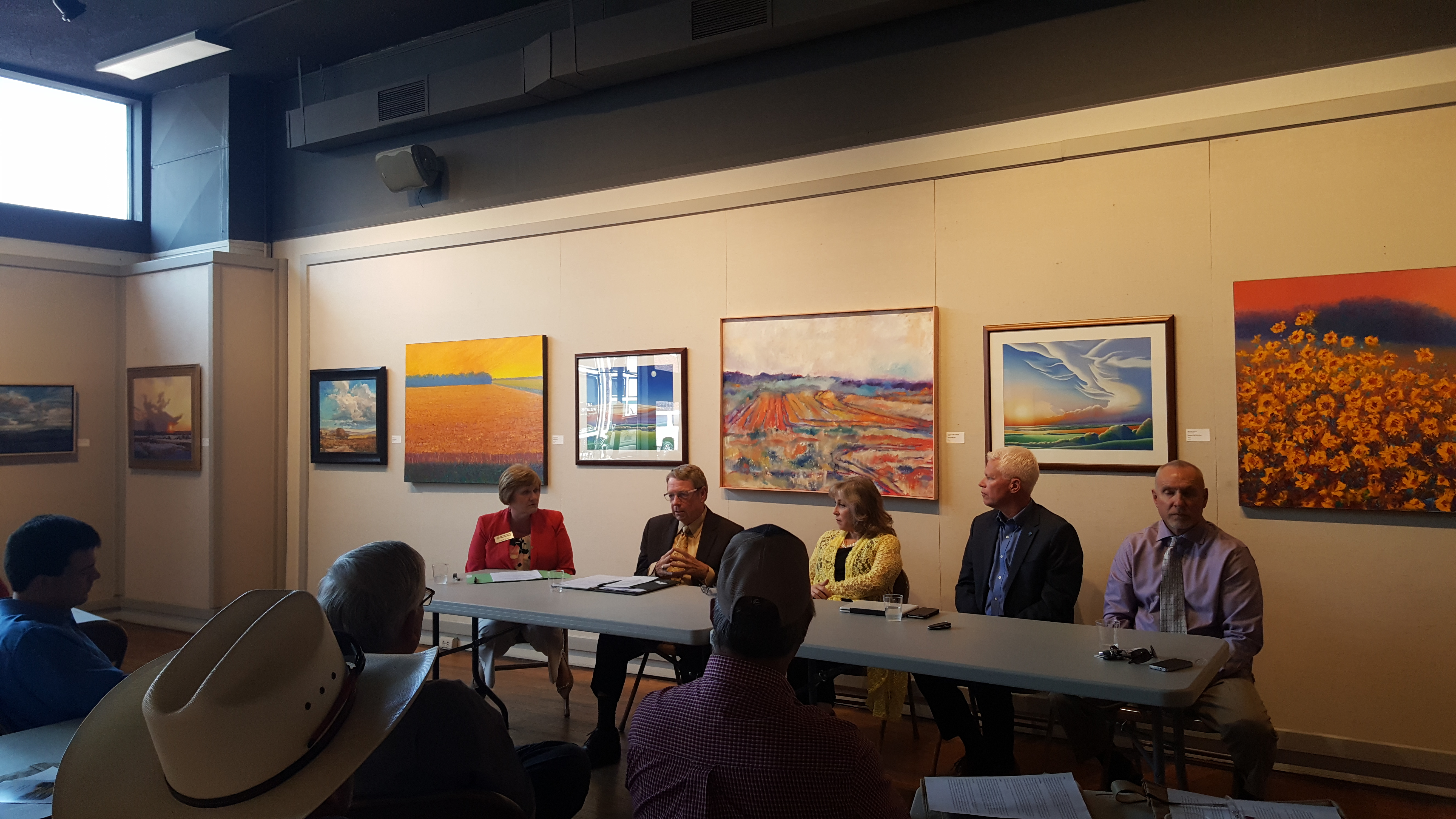
On Thursday, the group attended a forum at the Hays Arts Council, featuring local business and community leaders to discuss what the organization and county governments can do to help expand the region.
The overwhelming theme was the need for everyone to work together.
Hays Medical Center President and CEO Dr. John Jeter said Kansans’ drive to be independent can have a negative effect.
“One of the biggest threats really to Kansas and other rural states, which is also one of the biggest attributes that we have, is our sort of obsession with being independent,” Jeter said. “That independence sometimes gets in the way of making smart business decisions, smart public policy decisions.”
Fort Hays State University President Mirta Martin agreed, saying, “That is part of the pioneer work ethic that is prevalent throughout the state.”
“We do the right thing because it’s the right thing to do but we don’t tell about it because that’s considered to be boasting,” she added.
Midwest Energy President Earnie Lehman said, “I worry that we suffer collectively from low self-esteem.”
“It gets us into playing defense, it’s how do we protect, hang on to what we have,” Lehman said. “We absolutely have to keep our focus on growing the pie.”
Martin added Hays and the surrounding communities in western Kansas benefit from each other’s success.
“We’re one community connected together,” Martin said. “What’s good for the town is good for the university and what’s good for the university is good for the town.”
Martin said cooperation between communities and higher education to help create and establish the workforce of the future.
Martin said, “It’s incumbent upon all of us to help those students graduate.”
She said part of that is on the communities in helping students become a part of the community.
“They come to the university, they don’t find a job, they don’t find a place (and) they don’t find community,” Martin said.
She said at FHSU 70-percent of the students are first-generation students and, if they do not find what they are looking for here, they will go back to their farms — many of them without the advanced education they need to be a part of the workforce of the future.
Eagle Communications President and CEO Gary Shorman said, for businesses in the state to be successful, they need a local government that will work with businesses that are being overburdened by state and federal regulations.
“If we’re going to be successful here or in our other areas,” Shorman said, “we have to have a government that works with us.”
He said sometimes governments are not always “here to help.”
“Having local elected officials that help us work and grow and find ways to facilitate growth makes a big difference,” Shorman said.
He said, “So many business will look at, whether it’s our area or somebody else’s area, of how friendly is their government and the government agencies there to make things happen.”
“That ability to work together and say, ‘Hey, I’m pro-business, I want to make things happen is important,’ ” Shorman said.
Jeter said from his perspective, in the healthcare industry, “It is amazingly difficult to get people to work together in this state, unfortunately.”
Lehman said one of the advantages utility companies have are having their employees live in the communities they serve.
“Utilities are positioned to be a partner to the community from the beginning,” Lehman said.
He also said having an elected board of directors helps balance their focus throughout the region.
The group also pointed to the Hays community as a great example of cooperation between local businesses and government.
“Our employees are embedded deeply with each other in support of community institutions like Fort Hays, Downtown Hays, ect.,” said Lehman.
Claire Gustin, Vice President for Member Services and External Affairs of Sunflower Electric, served as the moderator of the event.
Once a year, the KAC holds a meeting outside of Topeka. The group also had meetings Friday at the new Ellis County Emergency Services Building.
WICHITA, Kan. (AP) — Authorities say a Pokemon Go player has crashed his car in southern Kansas while playing the mobile game.
KAKE-TV reports that the crash happened Thursday morning on Wichita State University’s campus in Maize. Maize police said the man has been playing Pokemon Go while driving when his car collided with a pole in a parking lot.
The man in his 20s received cuts and scrapes. His car had to be towed from the lot.
WASHINGTON (AP) — The Food and Drug Administration wants all U.S. blood banks to start screening for Zika virus, a major expansion intended to protect the nation’s blood supply from the mosquito-borne disease.
The new advisory means all U.S. states and territories will need to begin testing blood donations for Zika. Previously, the requirement was limited to areas with active Zika transmission, such as Puerto Rico and two Florida counties.
Blood banks already test donations for HIV, hepatitis, West Nile virus and other blood-borne viruses.
Last month, the FDA told blood centers in Miami and Fort Lauderdale to immediately stop collecting donations until they could begin screening each unit of blood for Zika. The order followed now-confirmed reports of local Zika transmission — the first in the continental U.S.
Accredited for blood centers in Kansas include
The University of Kansas Hospital Kansas City
Overland Park Regional Medical Center Overland Park
Irwin Army Community Hospital Ft. Riley
Stormont-Vail RHC Topeka
Via Christi Hospital St. Francis In Wichita
Via Christi Hospital St. Joseph In Wichita
Labette Health Parsons
Menorah Medical Center Overland Park
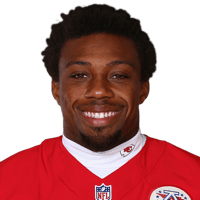
KANSAS CITY, Mo. (AP) – A person familiar with Eric Berry’s plans tells The Associated Press that the All-Pro safety will report to practice Sunday, giving him one preseason game to prepare for the season.
The person spoke to the AP on condition of anonymity Friday because he wasn’t authorized to speak publicly.
Berry was given the franchise tag early in the offseason but has not signed the deal, which means he could skip all of training camp without being fined. Once he signs the one-year contract, he will make just over $10.8 million, making him the league’s highest-paid safety.
The Chiefs had hoped to sign Berry to a long-term deal in the offseason, but the two sides were never close to reaching an agreement by the July 15 deadline.
TOPEKA, Kan. (AP) — A man who had alcohol in his system when he killed a family of five in a crash 30 years ago has been charged with driving under the influence.
Shawnee County sheriff’s Sgt. Todd Stallbaumer says deputies spotted 52-year-old Daryl Goodnow, of Meriden, attempting to drive a pickup truck Wednesday with a light pole lodged underneath. The Topeka Capital-Journal reports that Goodnow was transported to the Shawnee County Jail and has been released on bond.
Goodnow was 21 in 1986 when the truck he was driving crossed the center line of U.S. 75 and collided head-on with a sport utility vehicle. The crash killed a rural Mayetta couple and three children.
Goodnow was released on parole in 1991 but violated it with a 1995 DUI arrest in Topeka.
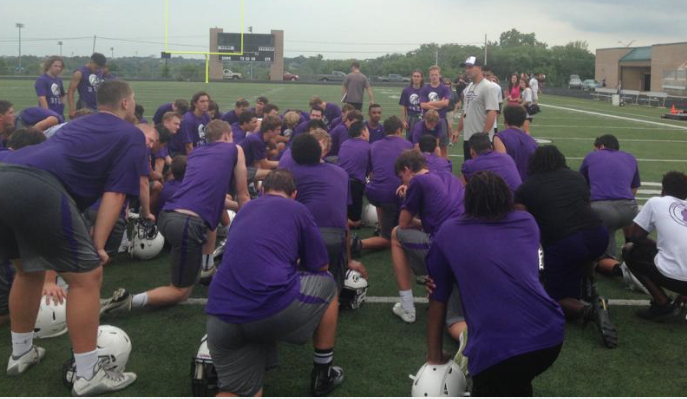
Photo by Andy Marso/KHI News Service Mike Zegunis, football coach at Blue Valley Northwest High School, addresses his team during a recent practice at the Overland Park school. Kansas high schools are starting the second year under new rules that limit full-contact football practice. Players aren’t allowed to go all-out until the fifth practice. Once games start, full-contact practices are limited to an hour and a half, and contact isn’t allowed the day after games. –
BY ANDY MARSO
Familiar sounds filled the air at Blue Valley Northwest High School’s first football practice of the year.
Rock music playing over the sound system. Whistles blaring. Coaches yelling instructions.
But one sound wasn’t present: helmets colliding.
That’s because the Kansas State High School Athletic Association, or KSHSAA, approved new rules last year limiting full-contact football practice.
Players aren’t allowed to go all-out until the fifth practice. Once games start, full-contact practices are limited to an hour and a half, and contact isn’t allowed the day after games.
The new rules — formed with help from the National Federation of State High School Associations Concussion Summit Task Force — are meant to reduce players’ head injuries and brain trauma that have parents increasingly asking whether football is right for their kids.
Not everyone is a fan.
“I personally don’t like the limited contact setting because you’re not allowed to go 100 percent, basically, and I just can’t play football like that,” said Garret Tierney, a senior running back and linebacker at Blue Valley Northwest in Overland Park.
But Tierney said his mom and grandparents are concerned about the connection between football and head injuries.
Tierney doesn’t think he’s ever had a concussion. But concussions aren’t the only worry when it comes to football.
Researchers at Boston University have studied the brains of people who played football at several levels — high school, college and pro — and found some indication of chronic traumatic encephalopathy (CTE), a degenerative brain disease, at all levels.
One of the brains came from Zack Langston, who about 10 years ago was a hard-hitting linebacker at Blue Valley Northwest who would go on to play at Pittsburg State University.
Langston fatally shot himself in the chest in 2014 after years of battling mood swings and rage characteristic of severe CTE. He was 26.
Acute concussions are the most obvious types of brain injury. But CTE like Langston had builds slowly, over time, and so far can only be diagnosed after death. That makes it hard for high school players, and their parents, to know exactly what risks they’re facing.
NFL kick returner and wide receiver Josh Cribbs held a room full of reporters riveted when he spoke as part of a panel discussion about head trauma at the April conference of the Association of Health Care Journalists.
Josh Cribbs, left, an NFL kick returner and wide receiver, spoke as part of a panel discussion about head trauma earlier this year at a conference of the Association of Health Care Journalists. Cribbs talked about gaming the NFL’s concussion tests to stay on the field, even after he’d been hit so hard he blacked out temporarily. CREDIT ANDY MARSO / HEARTLAND HEALTH MONITOR
Cribbs talked about gaming the NFL’s concussion tests to stay on the field, even after he’d been hit so hard he blacked out temporarily. He talked about being knocked out for multiple commercial breaks, then coming to and looking to the scoreboard to see who his team was playing.
Steve Sanders, a former NFL player and friend of Cribbs who also was on the panel, shook his head.
“Even though I’m hearing this for probably the 10th time, I’m sitting here like ‘Wow,’” Sanders said.
Cribbs said a neurology specialist told him he has “unspecific change in my white brain matter,” but neither the specialist nor anyone else could tell if it’s the buildup of tau protein that causes CTE.
“I had a brain MRI and CAT scan and everything recently with the clinic, and I had my doctor tell me I have a healthy brain for a person in their late 50s,” Cribbs said. “I’m 32 years old.”
But Cribbs has played a decade in the NFL, following four years at Kent State University.
How much risk he would have faced if his football career ended after high school is hard to evaluate.
Charles Bernick, associate medical director for the Cleveland Clinic’s Lou Ruvo Center for Brain Health, said during the panel discussion that there’s scant research on CTE among student-athletes.
“There’s just not a lot on that,” he said, “and that’s why in these decisions and discussions of youth football, we don’t have a lot of hard facts to guide that or to absolutely say, you know, it’s dangerous.”
Bernick said the number of blows to the head is the biggest contributing factor for CTE, but other factors likely are at play as well: genetics, lifestyle, environment. Two people who get hit the same number of times aren’t likely to react the same way.
“We know trauma is necessary, but we don’t know the other risk factors,” Bernick said. “We don’t have any consensus in the diagnosis of CTE, and we don’t have any way to really diagnose it in imaging at the moment. All these things people are working on, but you have to understand at this level there’s a lot of unknowns in work on CTE.”
Other sports also carry risks
More research on head trauma is underway at places like Boston University, the National Institutes of Health and the Department of Defense.
Since 2011, Bernick has been studying the brain function of athletes — not just football players, but boxers and mixed martial arts fighters as well.
He said CTE has affected hockey players, while veterans of recent wars in Iraq and Afghanistan who survived blast injuries also could be susceptible.
Former pro soccer player Brandi Chastain has agreed to donate her brain for research after death, providing more insight into studies that thus far have focused almost exclusively on the brains of male athletes.
KSHSAA officials like Brent Unruh, a certified athletic trainer who is the association’s sports medicine liaison, said the focus on football shouldn’t obscure the fact that all sports carry some risk of head injury.
“Girls’ soccer this past year actually has their overall concussion rate the same or even a little higher than football,” Unruh said, citing data collected by athletic trainers nationwide. “It’s the first time that it’s reached that level. So it’s definitely not just football.”
Still, football has taken the brunt of CTE awareness, with youth participation numbers dropping for several years before a slight rebound last year.
The head football coach at Blue Valley Northwest, Mike Zegunis, said he thinks the sport has not received enough credit for safety improvements, whether it’s the new contact limits or coaching that emphasizes proper blocking and tackling techniques.
“There’s so much good that can come from kids playing football, I think it would be a tragedy if we started losing more and more people because of what the game of football can do for teaching boys to become men,” said Zegunis, who’s entering his 12th year coaching the Huskies.
Mark Lentz, KSHSAA assistant executive director, said the contact limitation rules are in place so kids can enjoy the benefits with fewer risks.
“We’re not guaranteeing that someone’s not going to get a concussion, which no one can do,” Lentz said. “But we’re minimizing the risk. … Does this mean it’s the perfect system? I don’t know. But is it something we believe that can be built upon? Absolutely.”
Andy Marso is a reporter for KHI News Service in Topeka, a partner in the Heartland Health Monitor team. You can reach him on Twitter @andymarso
Big Creek Crossing is once again gearing up for “Football and Fashion,” set for 3 p.m. Saturday.
The event features autographs with Fort Hays State University football players to be followed by a showcase of back to school fashion.
“Football and Fashion started last year,” said Katie Dorzweiler, BCC property manager. “We’ve always done the football signing, and we wanted to make it more involved for the customer and the families, so we decided to do the fashion show.”
“It’s a good way to get the football team out to the public,” said Matt Cook, assistant athletic director. “See the players without their helmets on, so they can get to see them a little bit and get to know who they are.”
FHSU football coaches will accompany the players along with representatives of the FHSU cheerleading squad.
Visitors will also have the opportunity to register for a drawing for FHSU football season tickets, according to Cook.
The fashion show will showcase clothes for everyone from kindergarten through college, along with professional attire for teachers as well with every BCC tenant will be involved in some way during the event, according to Dorzweiler.
“Most of the stores will either showcase their fashion, offer a sale or have a coupon for something,” she said.
Major retailer JCPenney will offer an exclusive coupon for the event and some of the newest tenets will be involved, as well, with incoming boutique Glik’s offering coupons for their expected opening on Oct. 20.
Kathy Schupman – who recently took over as owner of Tandy’s Gifts – will provide decorations for the event.
Victor E. Tiger, the FHSU mascot, is also expected to make an appearance at during the event and a live radio remote is planned featuring Eagle’s Gerard Wellbrock — the Voice of the FHSU Tigers. The remote is sponsored by Nex-Tech Wireless.
“We had such a great turnout last year, so we are hoping for the same this year,” Dorzweiler said.
TOPEKA – Kansas has a new millionaire, following Wednesday’s Powerball drawing. One ticket matched the first five Powerball numbers, but not the Powerball to win the $1 million cash prize. The winning numbers in the August 24 Powerball drawing are 9-11-25-64-65 Powerball 16.
The winning ticket was sold in southwest Kansas, which includes the following 24 counties: Greeley, Wichita, Scott, Lane, Ness, Rush, Hamilton, Kearny, Finney, Hodgeman, Pawnee, Stanton, Grant, Haskell, Gray, Ford, Edwards, Kiowa, Morton, Stevens, Seward, Meade, Clark and Comanche.
Players have 365 days from the date of a drawing to claim Powerball and other draw game prizes. Since no tickets matched all numbers in the August 24 Powerball drawing, the estimated jackpot for Saturday night’s drawing is $142 million, with a cash option of $98.1 million.
For more information on games, promotions, winning numbers, and unclaimed prizes, or to join the free Kansas Lottery Players Club, visit www.kslottery.com.
A $150,000 lottery prize sold in northwest Kansas also remains unclaimed. Click HERE for details.

 OLATHE, Kan. (AP) — Garmin International says it is planning a $200 million expansion at its headquarters in Olathe.