SEDGWICK COUNTY- Law enforcement authorities in Sedgwick County are investigating a fatal stabbing and have made two arrests.
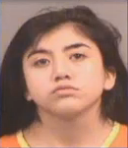
Police booked an 18-year-old Yvonne Mosqueda for murder and robbery and a 28-year-old Boe Wayne Adams for murder, robbery, forgery, and resist, according to Monday’s online media b
Just before 4p.m. Friday, officers were dispatched to a home in the 800 block of N. Chautauqua in Wichita.
Mosqueda-photo Sedgwick Co.
They found the home owner Otto Meyer, 86, Wichita dead from multiple stab wounds, according to a social media report from police.
Police also reported locating the victim’s stolen 1989 Chevy extended cab, long bed pickup in a parking lot near Lawrence Dumont Stadium.
Police would not explain the relationship between the suspects and victim.
HUTCHINSON — About 400 copies of the Hutchinson Community College’s student newspaper, the Collegian, reportedly were seized by school administration Friday, one of the paper’s reporters said Monday.
Jeff Leddy, student reporter, said he had taken the newspapers to the college’s student union to distribute them when the head of college security approached him and said he had been directed by the vice president of academic affairs to take the papers.
About 100 of the 500 papers in the press run had already been put in racks, but Leddy said he did not know where the rest of the papers were taken.
Although Leddy was not informed why the papers were taken, he said he thought it might be because of a story about a work-study student assigned to the journalism department being removed from a lab.
Friday’s incident comes after a semester of contention between college administration and student journalists and the paper’s adviser.
The adviser and student reporters first came under scrutiny in December after the paper printed a story about disciplinary actions taken against a member of the nursing department.
Leddy and other students were brought up on disciplinary charges, including academic dishonesty. The college asked Leddy and other students to sign immunity letters that would bar them from talking about the proceeding in the future. He and other students refused to sign the agreements.
Leddy said he and other student journalists had further investigated the college’s disciplinary policies, but opted to not publish the stories for fear of reprisal.
He said he believed the work-study student who was removed from her lab was targeted because of her association with the student newspaper.
Leddy said the paper’s adviser, Alan Montgomery, had been suspended, as well, and the students’ remaining week of journalism courses would be canceled.
Carter File, the college’s president, told Hays Post Monday morning that copies of the Collegian were out in racks and he would look into allegations that papers were seized.
He said the college was in the middle of a personnel issue, but would not confirm Montgomery was suspended.
Monday afternoon, File told Hays Post that the newspapers were, in fact, taken from Leddy, but that because the journalism classes had been canceled, the newspapers were given to the student council for distribution to students.
Montgomery was not available for immediate comment.
Max Kautsch, Kansas Press Association attorney, said the seizure of the papers was a clear violation of constitutional rights.
“The real story here is the college locking up newspapers,” he said. “It is a clear violation of the students’ First Amendment rights.”
The student newspaper is partially supported by student fees. Kautsch said the role of the administration needs to be better defined.
“The college obviously believes it can do whatever it wants,” he said, “and the students think they are independent. That is where ligation comes in.”
Although Kautsch suggested the students had grounds for a lawsuit, Leddy, 24, said he would not likely file one, saying a federal lawsuit would be too costly to pursue.
Leddy said he still does not know if he remains under investigation by the college.
Leddy, in his second year at the college, said he will not return to HCC in the fall, but transfer to Wichita State University where he plans to study journalism. Leddy is a U.S. Marine Corps veteran and said he preferred to take his GI bill dollars elsewhere.
“I do not feel welcome here, especially when I don’t know what is happening,” he said. “There is an air of hostility and suspicion and the constant targeting of us at the student publication.”
An audit found that the Kansas Department for Children and Families, which oversees the foster care system, could be “more proactive” in ensuring that contractors follow state and federal rules. The audit was presented Friday to a legislative committee. CREDIT FILE PHOTO / KANSAS NEWS SERVICE
An audit of the Kansas foster care system found the state doesn’t ensure children are placed close to home or receive all services they need.
The Legislature’s independent auditing team presented the third part of its report on the Kansas foster care system Friday to the Legislative Post Audit Committee. The final part of the audit attempted to answer if the state’s two foster care contractors have sufficient resources to provide services and if privatization has improved children’s outcomes and lowered costs.
Kansas privatized its foster care system in 1997. Two contractors provide foster care services, with KVC Health Systems overseeing the eastern counties and Saint Francis Community Services taking Wichita and western Kansas.
Lawmakers have called for reform of the state’s foster care system after several high-profile child deaths and a string of record-breaking years for children in the system. As of late February, more than 6,900 children were in the state’s custody — up 34 percent since 2012.
Kristen Rottinghaus, a principal auditor, told the committee that some children had been placed as far as 100 miles from their homes even if a bed was available in their home county. She said that most children who needed mental health or medical services received them, but some didn’t or had long waits.
The Kansas Department for Children and Families, which oversees the foster care system, also could be “more proactive” in ensuring that contractors follow state and federal rules, Rottinghaus said. For example, some caseworkers hired to check on children in their foster homes don’t have the required two years of experience, she said.
DCF Secretary Phyllis Gilmore said the department audited the contractors in 2012 and is continuously working with them on improvement plans. DCF took a hands-off approach with the contractors until a few years ago, she said.
“This is a culture shift for the agency,” she said. “As you know with all culture shifts, they come slowly.”
Oversight Questions
Deneen Dryden, director of prevention and protection services at DCF, told the committee that the department meets with the contractors weekly to work on improvements. She said the contractors wouldn’t agree that the department’s oversight wasn’t aggressive enough.
“I kind of chuckled inside” at that statement, she said.
Sen. Laura Kelly, a Topeka Democrat, asked Dryden whether DCF had taken action after an earlier audit found the contractors sometimes waited as long as a year to check caseworkers’ names against the child abuse and neglect registry. Dryden said the department and the contractors were working together on a solution, which didn’t satisfy Kelly.
“That one doesn’t seem that complicated to me,” Kelly said. “It’s the state’s responsibility to oversee the contractors.”
The contractors also struggle to hire enough staff and enlist enough foster homes in some counties, Rottinghaus said.
“Overall, we found that the foster care system may not have sufficient capacity” to serve all children in it, she said. “We found there appeared to be enough (foster) beds statewide, but in some communities there were not enough beds.”
DCF has increased salaries for caseworkers, offered incentives to those who work in underserved areas, and provided laptops and cell phone alarms for employees when they work in the field, Gilmore said. Child welfare systems in other states also have trouble recruiting, she said.
Melissa Ness, a senior adviser with Saint Francis Community Services, told the committee that more services for families are needed at the community level.
“We can do our part, but we need other people to stand up and do their part to build a stronger system,” she said.
No Privatization Answer
The audit didn’t fully answer whether privatization has produced better foster care services. Kansas’ performance on federal foster care measurements has been about the same since 2000, Rottinghaus said.
Auditors didn’t offer an opinion on whether Kansas should stay with its privatized system but noted it could cost $8 million or more annually to transfer responsibility to DCF, which generally pays higher salaries.
The audit originated in December 2015, when the committee asked auditors to answer seven questions about the foster care system. They declined to include an eighth question about possible discrimination against same-sex couples who wanted to be foster parents.
The first part of the audit, released in July 2016, found DCF didn’t ensure that all scheduled monthly visits between children and caseworkers happened. It also found the department granted nearly all exceptions related to the number of children who could be in a home and didn’t require families to prove they had the financial resources to care for a child.
Gilmore said then that the problem with monthly visits was a record-keeping issue and that it had changed its policies to ensure children were placed in homes with adequate space and resources.
The second piece of the audit, released in September, found DCF complied with most federal rules related to foster care.
Meg Wingerter is a reporter for the Kansas News Service, a collaboration of kcur.org, Kansas Public Radio and KMUW covering health, education and politics. You can reach her on Twitter @MegWingerter.
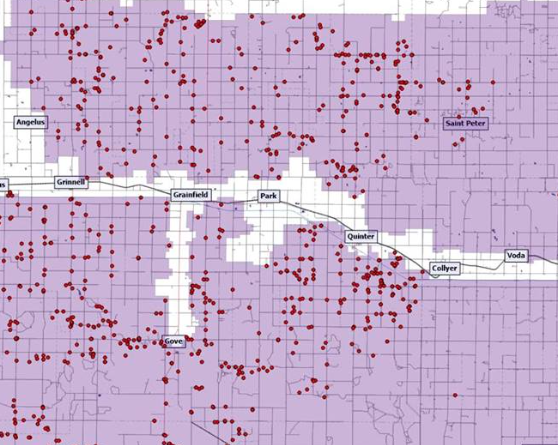
Outage just before noon Monday-photo Western Coop Electric Assn-Red dots below indicate current meters that are without power.
DODGE CITY, Kan. (AP) — Tens of thousands of people are without power after a spring storm dumped more than a foot of snow across part of western Kansas.
National Weather Service meteorologist Mark Buller says that from 10 to nearly 20 inches fell from Friday night through Sunday afternoon in an approximately 40-mile wide band in northwest and west-central Kansas.
He says the heavy snow, combined with 40 to 60 mph winds, downed tree limbs. Drifts of up to 5 feet were recorded. Kansas Division of Emergency Management spokeswoman Katie Horner says about 42,000 electric customers were without power at the height of the storm.
The storm briefly shut down Interstate 70, and other roads remained closed Monday. National Guard teams have been called out at least 40 times to rescue stranded motorists.
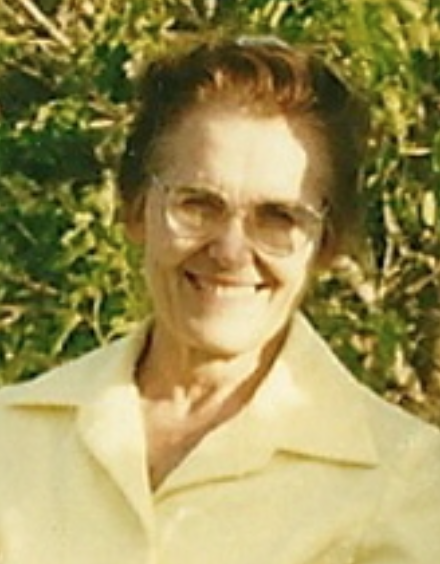
Dorothy Arlene Jamison was born to Vernon E. Kysar and Edith M. (Allen) Kysar in Quinter, Kansas on November 20, 1931. She passed away on April 29, 2017 at the Gove County Medical Center Long Term Care in Quinter where she spent the last two months of her life. She had lived in Lawrence, Kansas for the three previous years with her husband A. Thomas Jamison. Dorothy attended grade and high school in Quinter, graduating in 1949. She attended Fort Hays Kansas State College in 1950 where she obtained her teaching certificate. She taught grade school in Hill City, Kansas for one year and on May 27, 1951 she married A. Thomas Jamison. They celebrated their 65th anniversary in 2016.
Together, Tom and Dorothy moved from Quinter to Hoxie, Kansas shortly after getting married and bought their farm while Dorothy taught for one more year in a small rural school near the farm in Sheridan County. They were blessed with the birth of their son Jon in 1952. Dorothy loved the farm and worked tirelessly in her flower beds and gardens along with helping out with the wheat harvests and alfalfa crops. She joined the teaching staff at Hoxie Grade School in the early 1960’s and spent the over 30 years as the assistant librarian where her love for books and children was on display for over three decades. After retirement she spent several years as a member of the Northwest Kansas Regional Library System.
Dorothy was an excellent cook and loved to bake and cook for family and friends. She loved her family and spent many vacations with Tom and her brothers and sisters, and all of the children, at her parent’s ranch near Gunnison, Colorado where many side trips were taken to see the beauty of the southwest United States. Dorothy will be remembered as a good neighbor, a woman who was always warm and friendly to both friends and strangers, and a person who loved nature, music, and all of her many pets and flowers. Her compassion and caring will be remembered by many whom she touched over the years.
Survivors include her son Jon and wife Vicki of Lawrence; grandson Joshua of Lawrence; granddaughter Allison of Chicago, IL; sisters Marian Shaw of Oxnard, CA, and Kathy Howard of Topeka; brothers Doug Kysar and wife Patricia of Palco, and Gilbert Kysar of Olathe; brothers-in-law Marlan Jamison of Quinter, and Richard and Ronald Jamison of Regina, NM; sister-in-law Dyann and Claire Armstrong of Wauseon, OH.
She was preceded in death by her parents Vern and Edith Kysar, husband Tom Jamison, and sister Shirley Jamison.
Dorothy joined the Dunkard Brethren Church in 1951 and was a faithful member of the church until her health started to seriously decline about 10 years ago. She taught Sunday School to the children and loved to sing songs with the congregation. She had great faith in God and lived her life by example.
Funeral services will be held at 10:00am on Thursday, May 4, 2017 at the United Methodist Church in Quinter. Burial will follow in the Baker Township Cemetery in Quinter. Friends, family and neighbors are invited to a luncheon at the church following the burial. Visitation will be held from 1:00-7:00pm on Wednesday at Mickey-Leopold Funeral Home. The family will receive friends from 2:00-6:30pm.
BARTON COUNTY – A Kansas woman died in an accident just before 1:30 p.m. Friday in Barton County.
The Kansas Highway Patrol reported a 2009 Bush Hog ATV driven by Ashley Reichuber, 21, Ellinwood, was westbound in the north ditch along U.S. 56 six miles east of Ellinwood.
A 2015 Nissan passenger vehicle driven by Fernando Vega, 52, Kansas City, hit the ATV as Reichuber attempted to make a left turn onto 1st Road.
Reichuber and a passenger Abbie Reichuber, 19, Ellinwood, were transported to the hospital in Ellinwood where Ashley died, according to the KHP.
Vega and a passenger were properly restrained at the time of the accident, according to the KHP.
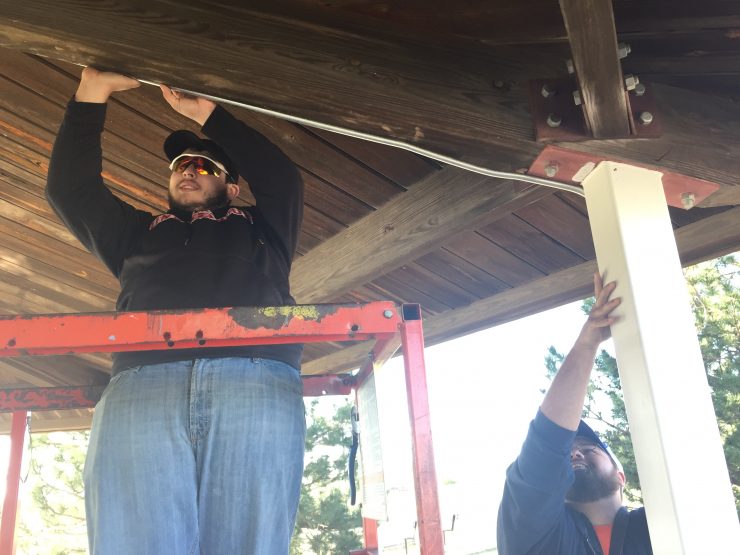
Connor Katt, NCK Tech electrical technology student (L), prepares electrical wires to be fed through a pipe to the Kiwanis Park shelter.
By BECKY KISER Hays Post
Thanks to an “illuminating” project by NCK Tech students, those enjoying Kiwanis Park, 17th and Harvest Road, will now be able to do so after dark.
The electrical technology students spent two days last week installing two electrical receptacles and a light for the shelter house.
“People will be able to use an electric grill and have a light turned on when they need to,” said Allan Hill, instructor and Electrical Technology Department chairman. “We’re running power from the power source underground to the shelter.”
The students took skills they learned in classes and labs to the real-world park setting, including wiring of electrical wire receptacles and light switches and bending in conduit wire.
“We ran PVC pipe underground the first day. The second day, they learned how to pull wire through that pipe and hook it all up,” Hill explained.
NCK Tech has a partnership with the city of Hays to have their students complete projects which would otherwise need to be done by city employees. In exchange, the school is charged no rent for a city-owned building which houses the NCK Tech Big Creek Campus downtown at 101 Main Street.
Hill supervises the work between the electrical power pole and the adjacent shelter.
The same day seven students were completing the Kiwanis Park project, seven other students were involved in another hand-on project at the main NCK Tech campus, 2205 Wheatland Ave, installing exit lights in school buildings.
Students graduating from the electrical technology program in Hays usually have no problem finding employment.
“I have seven more second-year students and they all have jobs and are out away and working,” Hill said.
The city pays for supplies used by NCK Tech in its various projects for the city.
“The ones working here in the park are first-year students. With the construction business as high as it is, electricians are needed everywhere. These guys, if they’re willing to move or even stay in the area, there’s jobs waiting for them to go find.”
Kris Dewell wants you to get a mammogram. One saved her life.
Dewell is the honorary chairwoman of this year’s Hays’ Susan G. Komen Race for the Cure.
The race raises money to support mammography, a local navigator who helps answer questions for breast cancer patients and national breast cancer research. Seventy-five percent of funds raised during the race will be used for local programs.
Dewell has a family history of breast cancer. Her grandmother died of breast cancer before she was born, and her mother fought off breast cancer twice.
Dewell was tested for a gene that has been linked to breast cancer, but the test was negative.
Because of her family history, she still felt it was important to receive mammograms. Her first test was at the age of 35.
Dewell was diagnosed when she was 50. Her tumor was found when it was small thanks to early detection and was removed with a lumpectomy.
She had friends who went through much more difficult treatment, but someone told her she was an example of how mammograms can work.
“Someone told me, ‘You are an example of how it is supposed to work,’” she said. “We are supposed to find it early so you don’t need all this stuff.”
She had a good friend who went through treatment at the same time and had to endure chemotherapy and radiation.
“I always felt guilty because I was not sicker,” she said. “but [my friend] said later that helped her seeing me and knowing that people do survive. I think that is just natural that you boost each other’s spirits.”
Dewell has two sons and a 1-year-old granddaughter. She remains concerned about the genetic history in her family. She also has talked to her daughter-in-laws about the importance of mammograms.
“I don’t know why people don’t get mammograms,” she said. “when I know it saves lives.”
Dewell has been cancer-free for 17 years, but the fear of a reoccurrence is always there. She receives a mammogram once a year. Waiting for the results can be tough.
“It never goes away,” she said. “It is not something that you quit worrying about.”
She hopes research being funded through Susan G. Komen will not only help improve treatment for patients like her but give hope for the next generation, including her granddaughter.
How to get involved:
The Susan G. Komen Race in Hays will be Saturday.
The survivor breakfast starts at 7 a.m. and a survivor parade and celebrations will be at 9:15 a.m. in Municipal Park. There is a 5K, which starts at 7:45 a.m. and a one-mile family walk that starts at 9:45 a.m.
Cost is $35 for adults and virtual runners and $20 for youth. Registrations will be taken up to and including the day of the event.
To register and for a complete schedule of events click here.
Major sponsors include Eagle Communications, HaysMed and Midwest Energy.
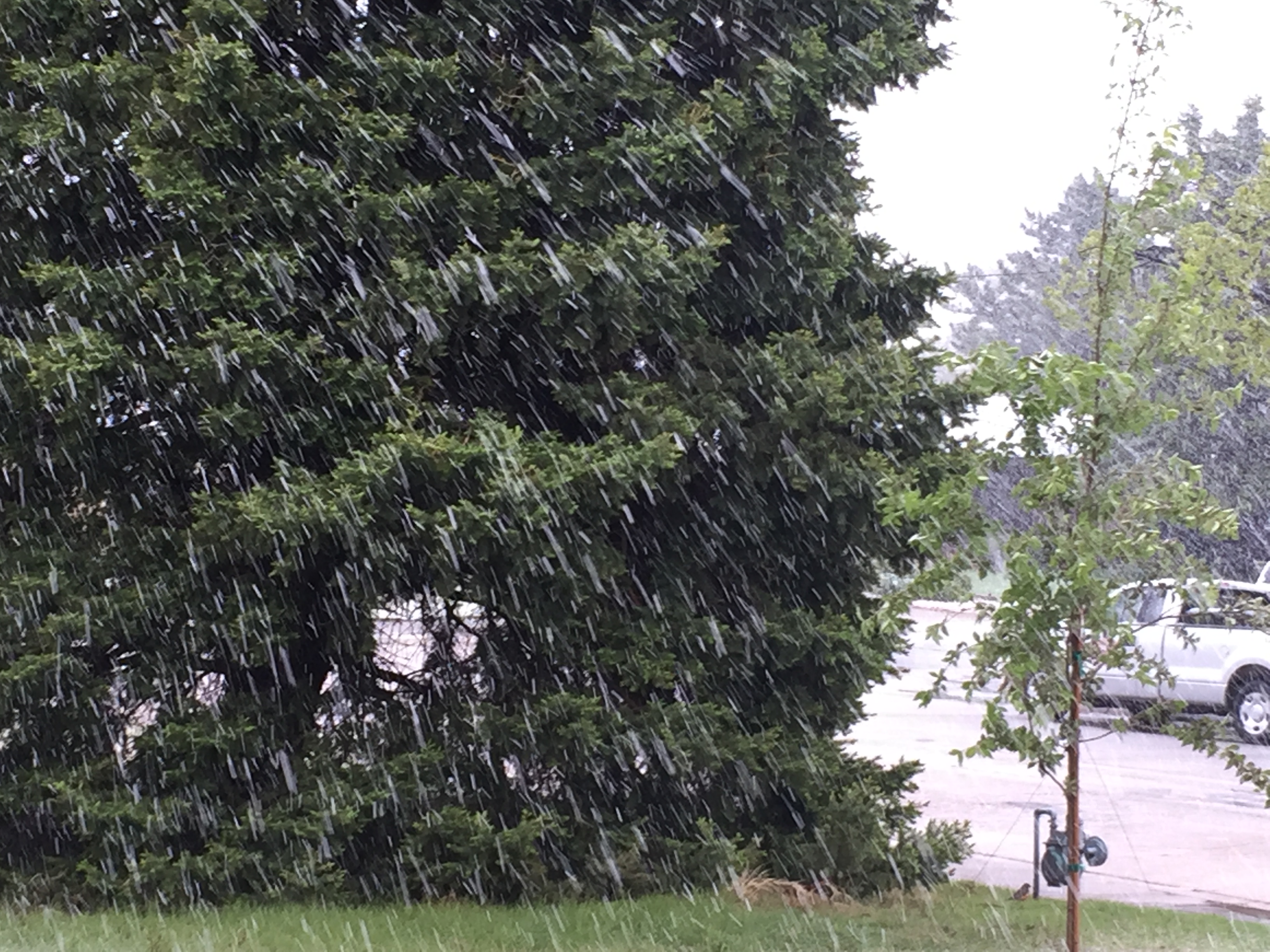
Rain and unusual snowfall in Hays over the weekend, the final days of April.
It was welcome moisture with none of the problems far western Kansas experienced with up to 17 inches of snow reported in Colby.
Friday’s high in Hays was 63 degrees with 0.40 inches of rain falling at the official reporting station, the K-State Agricultural Research Center south of town.
Saturday’s high was a much cooler 40 degrees with 1.99 inches of rain received.
Still cooler on Sunday, April 30, the high in Hays was just 37 degrees with the overnight low dipping to 31 degrees. Although there were snowflakes seen falling in the morning following another 0.18 inches of rain, according to Joe Becker, weather record keeper, there was no measurable amount of snow. Light periodic sprinkles continued throughout Sunday with more light snowfall recorded at 10:30 p.m. Sunday.
The official total rainfall so far for the year in Hay is 10.86 inches.
The weekend rainfall total measured at the Eagle Media Center, 2300 Hall, was 1.78 inches. Catherine had an inch more precipitation at 2.77 inches.
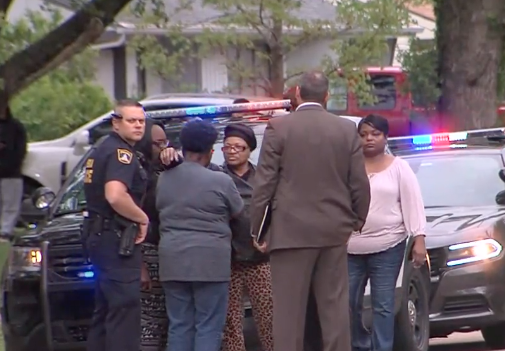
police on the scene of Sunday’s shooting investigation -photo courtesy WIBW-TV
SHAWNEE COUNTY – Law enforcement authorities continue to investigate a shooting at a home that is a private business which provides residential services to those with special needs.
Just after 3p.m. Sunday, police responded to report of a shooting in the 4100 Block of SW 28th in Topeka, according to a media release.
When officers arrived at the residence they found five individuals in the home with gunshot wounds. Four were pronounced dead at the scene.
One person was transported to a local hospital with non-life threatening injuries.
Police say the individual responsible identified as Joshua Gueary, 25, Topkea is among the deceased.
Police say Gueary shot and killed Larry Gueary, 29, Jesus Galvez, 64, and Soren Galvez, 20, all of Topeka. Jushua Gueary died of a self-inflicted gunshot wound, according to police.
Police continue to investigate at the residence and a vehicle that may have a connection to the crime.
—————–
SHAWNEE COUNTY – Law enforcement authorities are investigating a shooting at a home that is a private business which provides residential services to those with special needs.
Just after 3p.m. Sunday, police responded to report of a shooting in the 4100 Block of SW 28th in Topeka, according to an online media briefing.
When officers arrived at the residence they found five men with gunshot wounds. Four were pronounced dead at the scene.
One person was transported to a local hospital with non-life threatening injuries.
Police believe the individual responsible is among the deceased.
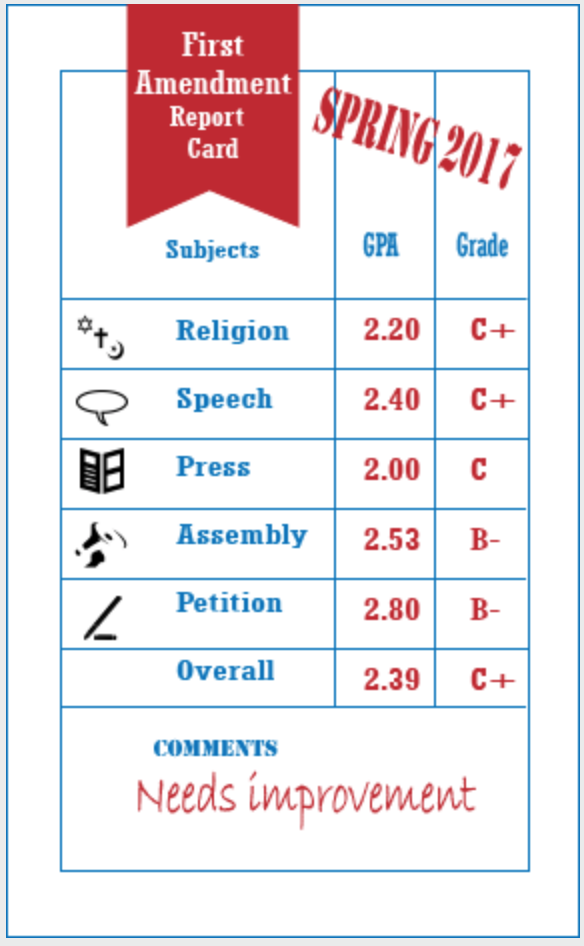
When it comes to our core freedoms, is a “C+” grade good enough?
A new “First Amendment Report Card,” released by the First Amendment Center of the Newseum Institute, gives our First Amendment freedoms — religion, speech, press, assembly and petition — a barely passing grade.
The grades were assigned by 15 panelists from across the political spectrum, some of them experts on First Amendment issues overall, and some who focus on specific areas such as religion or press.
Gene Policinski is senior vice president of the First Amendment Center.
Assembly and petition — the rights to gather peaceably with like-minded people without government restriction or prosecution, and ask the government for changes in policies and practices — received the highest marks, at a “B-.” Religion and speech were graded at a “C+,” while press was given a “C.”
On press, for example, panelists pointed to President Trump’s campaign threat to “open up” libel laws in order to more easily sue media outlets; the administration blocking certain news organizations from attending White House briefings; the “fake news” phenomenon; and the president’s general enmity for the press.
Assembly and petition received the highest grades, with panelists noting that recent protests and political marches were classic demonstrations of both freedoms, and that the government took no action to crack down on them or the resulting media coverage.
Perhaps you — or I, since I didn’t participate in the grading — might have rated the freedoms differently. Good. That would mean we were thinking critically about those basic freedoms, which define us as citizens and enable our democracy to function as such.
And no doubt some will say that in a contentious world, and with an electorate split straight down the middle on most issues, it would be too much to expect a more favorable assessment of the First Amendment.
But I’ll admit that a “C+” leaves me uneasy.
For too long, too many of us have either taken those freedoms for granted, assuming that they will always be there, or considered them in narrow ways (believing, for example, that freedom of speech is not for those with whom we disagree, or that so-called fringe faiths are not really covered by freedom of religion).
Many more of us live in ignorance of the freedoms that were so dearly won. Each year, when results of the First Amendment Center’s State of the First Amendment survey are released, the survey consistently finds that large numbers of Americans — sometimes more than one-third — cannot name a single freedom provided by the 225-year old amendment.
The report card, titled “The First Amendment in the Age of Trump,” nonetheless reflects issues that are not limited to the president’s first 100 days, or to the time he spends in office.
Some of those issues have been simmering for years. The Tea Party and the Occupy Wall Street movements raised issues around speech, assembly and petition to new levels of awareness. The “culture wars” around matters of faith — from the silly, such as whether to call them “Christmas” or “Holiday” trees, to the very serious, such as federal policies that may discriminate against Muslims — have raged for decades, and show no signs of abating.
Surveys dating well back into the 1990s chart a growing public apprehension about the credibility, motives and bias of the news media, and a worrisome erosion of support for the press’s role as a “watchdog on government.” Amidst worsening public opinion, journalists have also had to contend with shrinking resources as they attempt to track government officials’ performance and measure government effectiveness.
The quarterly report card is not intended, and could not be, the final word on our First Amendment freedoms — the issues are too complex and the disputes too numerous, and filled with far too many twists and turns.
But the grading system will serve to call our attention, particularly over time, to a need to defend one or more freedoms from momentary threats and longer-term assaults on our free expression and religious liberty rights.
Stay tuned — a new First Amendment Report Card will be issued each quarter, prompting us all to take a closer look at how we understand, defend and practice our First Amendment freedoms. And maybe one day we’ll get to add another grading area — one where you and I and our fellow citizens get an “A” for effort.
Gene Policinski is chief operating officer of the Newseum Institute. He can be reached at [email protected]. Follow him on Twitter: @genefac.
As of 12:30 p.m., all roads in Northwest Kansas have reopened except for U.S. 83 from Oberlin to the Nebraska state line.
For up-to-date information on road closures and road conditions, call 511 in Kansas or 866-511-5368 outside Kansas, or check travel information online at www.kandrive.org.
LAWRENCE – Mikayla Linn of Hays was among a select group of students from the University of Kansas School of Pharmacy Class of 2019 to be inducted into the school’s honor society on April 11.
Linn earned the right to join the school’s Rho Chi chapter by finishing in the top 20 percent of the class academically after her first three semesters.
The Rho Chi Society encourages high standards of conduct and character and fosters fellowship among its members. The society seeks universal recognition of its members as lifelong intellectual leaders in pharmacy, and as a community of scholars, to instill the desire to pursue intellectual excellence and critical inquiry to advance the profession.
The group performs many public service events and provides tutoring services for their fellow pharmacy students throughout the year.