Helen E. Allen, 97, Hays, formerly of Ellis, died Monday, July 10, 2017 at Brookdale Senior Living Community.
She was born April 29, 1920 in Hawkeye, Iowa the daughter of Rev. Claus and Elizabeth (Bunge) Meyn. She graduated from Augustana College in Rock Island, Illinois with an M.E. Degree, and while there she sang in the college chorus all four years. She was also a soloist in the Rock Island Lutheran Church Choir. The choir sang in Carnegie Hall, New York City; Orchestra Hall in Chicago, Illinois; and other concert halls in the east. The Augustana Choir also recorded on RCA Records.
After graduation, she taught music in Illinois for three years. She and her husband, Tad Allen, were united in marriage in 1945. After his untimely death in 1950, Helen moved to Ellis, Kansas with her two young sons, where she began teaching in the elementary school. She earned her Bachelor’s Degree in Elementary Education at Fort Hays State University and later her Master’s Degree.
Helen retired from teaching in May of 1985 and then joined the Retired Teachers Association in Hays and was the song leader for the group. She also gave private piano lessons in her home, continuing until she was eighty years old. She was the choir director at Christ Lutheran Church in Ellis for 25 years. Throughout the years, she sang at funerals as well as solos for church services. She also sang in the Hays and Ellis Community Choirs. She was an honorary member of the Ellis Rotary Club as pianist as well as a part-time pianist at the Good Samaritan Society in Ellis. Occasionally she played piano and organ duets and sang in the choir at Christ Lutheran Church. Memberships included the Young Matrons Club, Delta Kappa Gamma of Hays, 50 years of membership in P.E.O. of Ellis, lifetime member of the Fort Hays Alumni Association, and Christ Lutheran Church of Ellis. She enjoyed classical music, travelling, gardening, and playing cards.
Survivors include her son; Jim Allen and daughter-in-law, Monica, of Indianapolis, Indiana, her sister; Sylvia Coles and brother-in-law, Robert, of Buffalo, New York, and three nephews; Dr. Steve Meyn and wife Heidi of Toronto, Canada, Darcy Coles of San Francisco, California, and Richard Meyn of Springfield, Oregon.
She was preceded in death by her husband Tad Allen, a son; Warren Allen, brother and sister-in-law; Drs. Werner and Faye Meyn, a nephew; David Meyn, and a niece; Susan Meyn.
Funeral services entrusted to Hays Memorial Chapel Funeral Home and will be announced at a later date. Condolences may be left for the family at www.haysmemorial.com or via email at [email protected]
Alfred Clifford Matthaei, age 82, passed away on Saturday, July 8, 2017 at his home in Greeley County, Kansas. He was born on January 1, 1935 in Canistota, South Dakota, the son of Clifford A. And Charlotte Negherbon Matthaei. A resident of Greeley County, Kansas since 2005 moving from Red Bluff, California, he was retired from the Department of Interior as a Reclamation Officer.
Alfred was a member of the Community Of Christ Church and VFW both of Red Bluff, California and was a Veteran of the Korean Conflict and serving as a Staff Sargent for the United State Air Force.
On July 8, 1957 he married Sandra Kramer in Rockville, Maryland. She passed away on October 25, 1998 in Redding, California.
Survivors include his One Son – Clifford Matthaei of Tribune, Kansas, Three Daughters – Debra Hoffman of Tribune, Kansas, Bonnie Salminen of Red Bluff, California, Brenda Boyd of Red Bluff, California, One Brother – Robert Matthaei of Salem, South Dakota, Two Sisters – Martha Koepsell of Salem, South Dakota, Mary Brude of Sioux Falls, South Dakota, Six Grandchildren and Eleven Great Grandchildren.
He was preceded in death by his Parents and Wife – Sandra Matthaei.
Graveside Memorial Services will be held at 11:00 a.m. Saturday, July 29, 2017 at the Pleasant Ridge Cemetery in Armour, South Dakota.
Memorials in lieu of flowers may be made to Red Bluff VFW in care of Price & Sons Funeral Home.
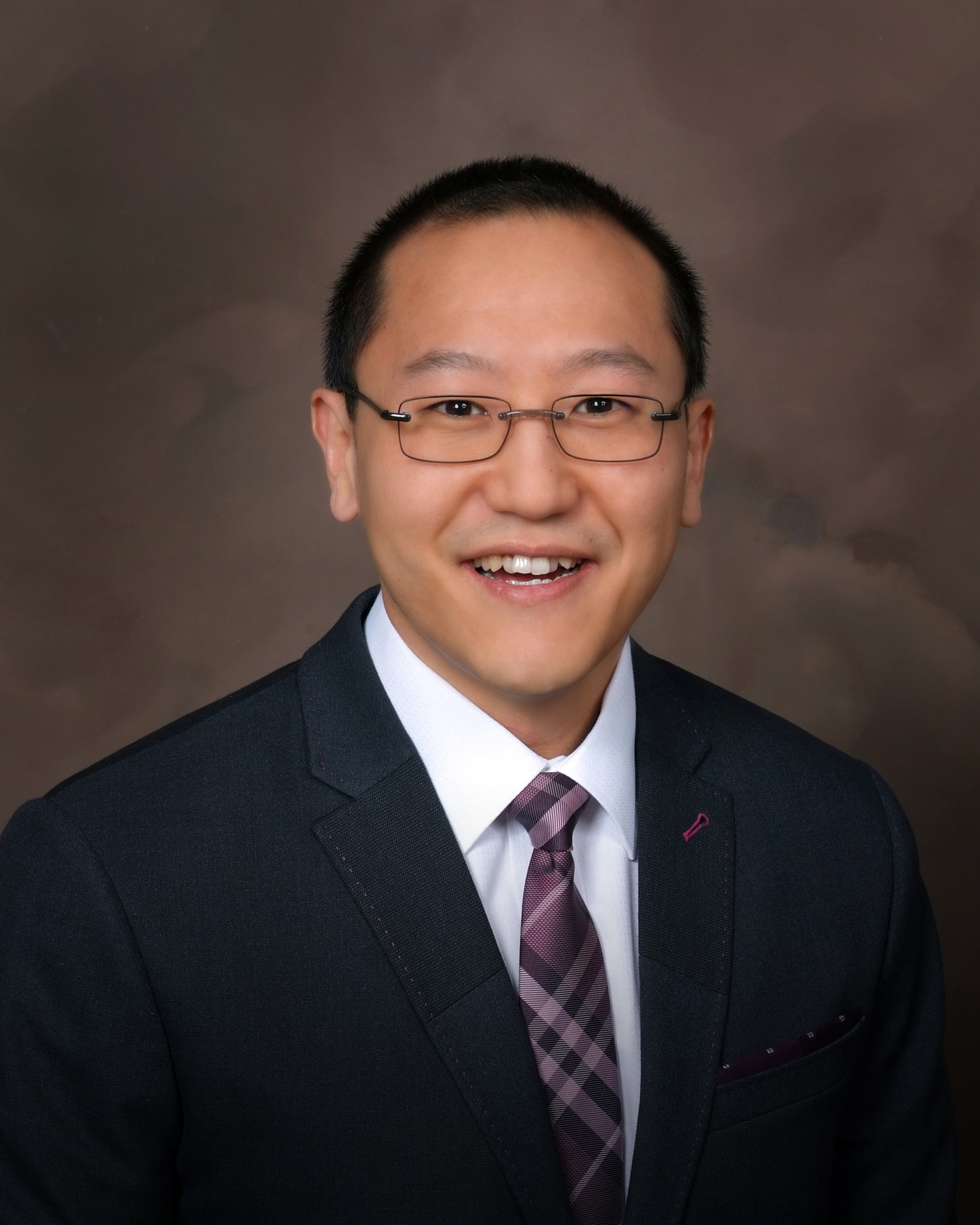
Dr. Byungsoo KoHaysMed recently welcomed Dr. Byungsoo Ko to the medical staff.
Dr. Ko received his medical degree from the Hanyang University College of Medicine, South Korea, M.D. He completed his residency in Internal Medicine at the University of Minnesota Medical Center and fellowship in Cardiology and Interventional Cardiology at the University of Utah, Division of Cardiovascular Disease.
Dr. Ko is also board certified by the American Board of Internal Medicine in Cardiovascular Disease and Internal Medicine.
Dr. Ko is seeing patients at the DeBakey Heart Clinic.
Baker Hughes reported 952 active drilling rigs across the country Friday, up 12. There are 763 total rigs drilling for oil in the US, which is up seven and more than double the number from last year at this time. There are 189 rigs actively targeting natural gas. In Canada 14 rigs fell off the active list, down to 175 total. Independent Oil & Gas Service reported 13 active rigs in eastern Kansas, down one, and 20 west of Wichita, down two. In Ellis County, they’re moving in completion tools at one lease. Drilling is underway at one lease in Barton County, where they’re moving in rotary tools at one site, and moving in completion tools at two more.
There were just 14 permits filed last week for drilling at new locations across Kansas, 724 so far this year. There were three east of Wichita and 11 in Western Kansas, including one in Barton County.
Independent Oil & Gas Service reported 31 new well completions last week across the state, 21 in eastern Kansas and 10 west of Wichita. There was one new completion in Russell County and one in Stafford County.
Operators across Kansas filed just 141 intent-to-drill notices last month, for a mid-year total of 781. That’s more than last year’s 448, but well below the 1,285 filed through the second quarter of 2015, and the 3,831 intents filed in 2014. There were six intents filed with the KCC in June in Barton County, three in Ellis County, one in Russell County and one in Stafford County.
In a first-of-its-kind settlement, an Oklahoma oil company has come to terms with a woman who sued them for injuries suffered in a 2011 earthquake she said was caused oilfield saltwater disposal. The Stillwater News-Press reports Spress Oil settled with Sandra and Gary Ladra for an undisclosed amount. The 5.7 magnitude earthquake in Central Oklahoma was the state’s largest ever. Sandra Ladra was injured when rocks and bricks from her chimney fell on her legs. The initial lawsuit claimed damages totaling more than $75,000. The Oklahoma Supreme Court had to determine whether the courts or the Oklahoma Corporation Commission had jurisdiction over the matter before it could be heard. This means future cases will be heard by the courts and not state regulators. The Ladras’ lawsuit continues against another oil company, with a hearing scheduled July 12.
Halliburton has hired about 100 new oilfield workers each month this year to keep up with surging demand in West Texas, a sharp turnaround after the job-killing oil bust. The Houston Chronicle reports the oil field service company has expanded its active fleet of fracking trucks and pumps by 30 percent in recent months. Its workforce in the region has grown by more than a third to 2,700 employees. Many of those were recruited outside of West Texas. The company held job fairs in places like Alabama, Mississippi and Nevada.
China has ramped up purchases of U.S.crude, as the glut makes our product cheaper than its Mideast rivals. The Wall Street Journal says China now buys 100,000 barrels a day from the U.S., 10 times the average of a year earlier, shortly after Congress lifted the US export ban. Imports in April and May jumped to more than 180,000 barrels a day on average. U.S. oil sales to China may reach more than $1 billion this year, up from $150 million last year. Russia, Saudi Arabia and Angola are still the top suppliers to China.
We told you about the first supertanker to ever navigate the channel at Corpus Christi last month. The New York Times says the successful docking of the French-flagged supertanker Anne at Occidental is seen as the herald of an export boom. There’s already ample evidence: oil exports grew slowly through most of 2016, but this year there has been a surge reaching 1.3 million barrels a day — roughly 15 percent of domestic production — which even at today’s depressed prices is worth more than $1.5 billion a month.
Mexico’s state oil firm Pemex lost $3.2 million per day from fuel theft last year. That’s the equivalent of two percent of total sales. According to a government report cited by BN Americas, Pemex reported a total of 6,537 illegal taps on pipelines last year, larger than earlier reports and the highest annual number so far. The number in 2009 was 310. Media reports in Mexico say the big players now are the criminal drug gangs acting in concert with corrupt oil company officials.
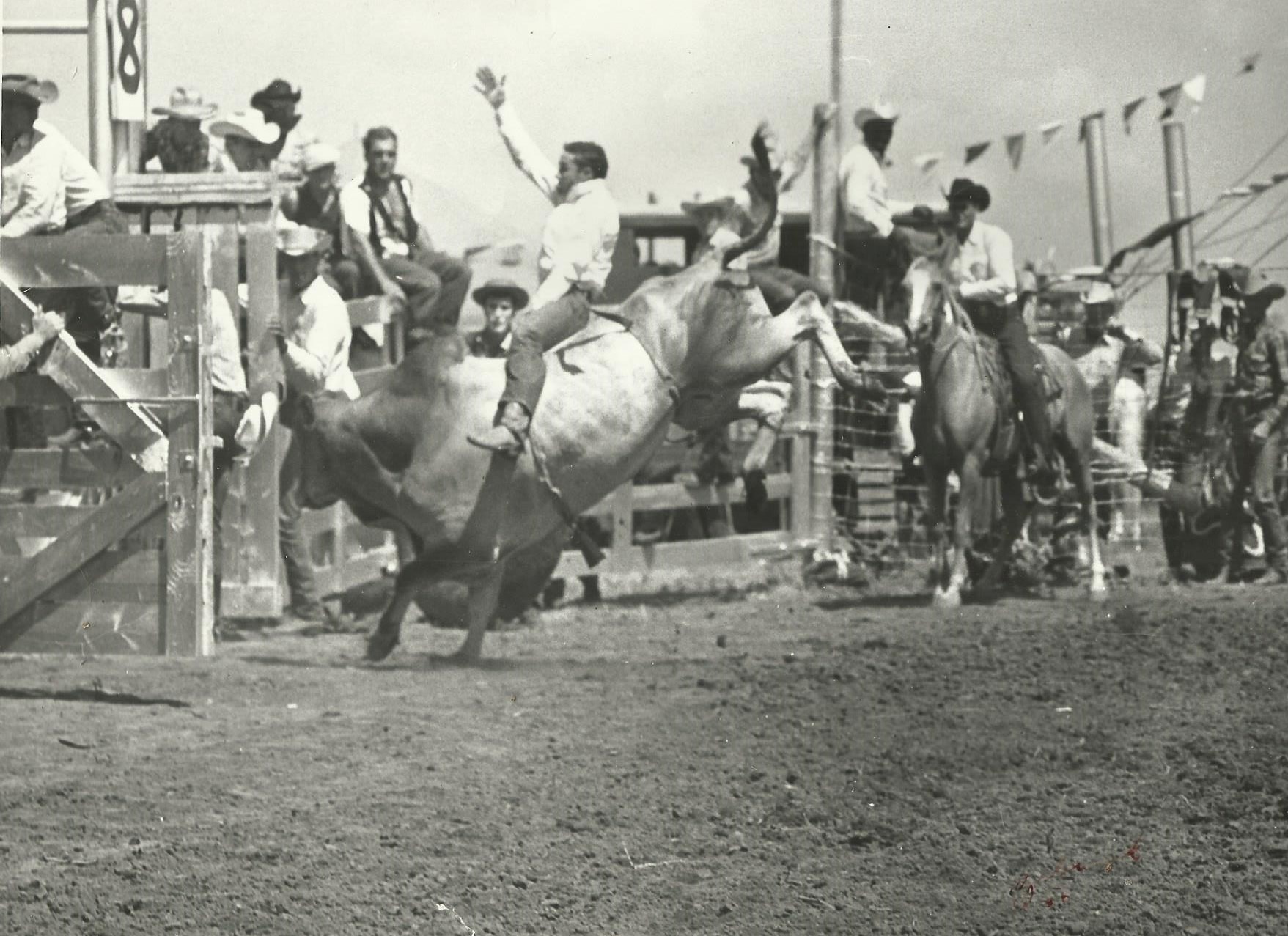
Nat Berney rides a bull at a rodeo. The Phillipsburg man was a contestant, member of the Phillipsburg Rodeo Association, and a rodeo judge.
PHILLIPSBURG – Nat Berney left this world fifteen years ago, but his legacy lives on through rodeo and through Kansas Biggest Rodeo.
Berney, a former bareback rider, calf roper and bull rider, grew up in Phillips County and competed professionally across the Great Plains states. But his heart was in Phillipsburg.
Nat, the son of Nathaniel John and Edna (Bandt) Berney, rodeoed during his high school days, then served in Korea. He loved rodeo so much, while in Korea he built a barrel to practice riding so he could stay in shape.
Before he went to Korea, he and Betty Munyon married. They had been engaged for a year, and with the Korean Conflict going on, “we didn’t know what to do,” Betty said. “So we decided to go ahead and get married,” which they did in 1951. Nat went to Korea, and Betty went to work at the gas company.
When he came home, their lives returned to a routine for the young couple: work during the week and take off on the weekends to rodeo. Betty often traveled with Nat, and because he needed a horse for the calf roping, they traveled with a horse trailer, sleeping in the back of it or in the bed of the truck during the overnight trips. Betty, with a contagious laugh and a light-hearted attitude, loved being on the road with her husband. She loved all parts of rodeo, but the bull riding wasn’t always her favorite. “I didn’t always like to see him ride bulls,” she said. She remembered at a rodeo in Lewellen, Neb., one time, that he and world-champion cowboy Jim Shoulders drew the same bull. Nat rode it; Shoulders didn’t. “I never will forget that,” she said. “That was really something.”
Nat Berney gets on a bareback horse at the Phillipsburg rodeo. The Phillipsburg native, who passed away in 2002, also competed in the bull riding and calf roping and was a member of the Phillipsburg Rodeo Association.
Throughout his rodeo career, he never suffered serious injuries except for one. It was at a rodeo in Nebraska, when he got bucked off a bull and landed flat on his back. He was in the Phillipsburg hospital for that one, a “bad one,” Betty said. The doctor used pulleys on his legs, to stretch them out, Betty remembered. His time in the military was harder on him than rodeo was, Betty said. When Nat visited the doctor in Wichita, the doctor would pick out pieces of shrapnel from his limbs.
Nat, who worked as maintenance supervisor at the refinery in Phillipsburg, quit riding when his boss told him to slow down with his rodeo competing, or he might lose his job. His boss didn’t like it when Nat was injured and couldn’t work.
The couple had three children and two others who considered them like second parents. Their children: Rand, LaRhonda Groen and Lisa Todd, often traveled with them when Nat was competing. All three enjoyed riding, and Lisa competed in the barrel racing at the Phillipsburg rodeo once. When Nat’s parents died, they raised his brother, Larry. And when Danzey Price’s parents passed away, Danzey would sleep in his pickup in their driveway, “till Nat put a stop to it,” Betty said, and invited him into the house.
Betty loved being on the road with Nat and she would sit behind the chutes with the cowboys and listen to them talk. She has a knack with words, poetry and songs, and she got lots of ideas through the cowboys’ conversations. She wrote poetry, including “Being A Cowboy’s Wife,”, and songs like “Riggins, Rosin and Rodeo,” which she copyrighted. She’s had songs recorded, which played on local radio station KKAN-KQMA during rodeo time.
Nat and Betty both became involved in the Phillipsburg rodeo. He was a shareholder and served as secretary after Wally Sullivan. The couple did a little of everything with the rodeo: carried flags in the parade, served as secretary, and Betty was asked to write tributes to volunteers. She wrote a tribute for long-time rodeo secretary Sullivan, when he retired, and for volunteers Bill Kennedy and Ray Lake.
They made good friends with rodeo people, too. Betty remembers pro rodeo announcer Hadley Barrett, who announced the Phillipsburg rodeo from 1977 through 1983. He and Nat were friends. Glenn Strange, the bartender from the TV series “Gunsmoke” made an appearance at the Phillipsburg rodeo and came to the Berney household, where he and Betty sat on the patio and talked. And steer wrestler Wilbur Plaugher (who also was rodeo clown at the Phillipsburg rodeo) was friends with Lisa, the youngest Berney child, when she was four or five. “Lisa would walk out with him at the rodeo grounds, holding his hand,” Betty said. “He loved to come out here” to their house.
In his older days, Nat became a rodeo judge for Little Britches Rodeo and pro rodeo. The Little Britches contestants appreciated him, because he would help them and give them tips on what to do. He judged pro rodeos, including the Phillipsburg rodeo once, when a judge didn’t show up.
He died suddenly of pancreatitis in 2002 at the age of 71, and Betty still misses him. “I loved him so much,” she said. Everybody liked Nat. “He was the guy that would stop and talk to people,” Betty said. “He was just a special person, and he was usually on a one-to-one basis with everybody. He would listen to them.”
With his memorial money, Betty bought a flagpole for the rodeo grounds, and a stone marker with her husband’s name and his contribution to the rodeo. “I think he would have liked that,” she said. “He was very patriotic.” The pole and memorial sit in front of the rodeo office on the east side of the grounds.
Betty, who is 85 years young, makes it out to the Phillipsburg rodeo each year, unless she has company. Then she needs to rest up. Her kids are grown and gone: Randy lives in Manhattan, LaRhonda in South Carolina, and Lisa in Missouri. She has six grandsons and two granddaughters, two great-grandsons and a great-granddaughter.
The Phillipsburg rodeo takes place this year August 3-5 at the rodeo grounds one mile north of Phillipsburg. Performances begin at 8 pm each night, and tickets can be purchased at Heritage Insurance in Phillipsburg (785.543.2448) and at the gate. They range in price from $12 to $18.
For more information, visit the rodeo’s website at KansasBiggestRodeo.com, its Facebook page (search for Kansas Biggest Rodeo) or call 785.543.2448.
###
Cutline: Nat Berney gets on a bareback horse at the Phillipsburg rodeo. The Phillipsburg native, who passed away in 2002, also competed in the bull riding and calf roping and was a member of the Phillipsburg Rodeo Association.
Cutline: Nat Berney rides a bull at a rodeo. The Phillipsburg man was a contestant, member of the Phillipsburg Rodeo Association, and a rodeo judge.
An open area in First Call for Help’s new building that could be renovated into sleeping rooms for transitional housing.
It may look like an empty shell now, but the non-profit First Call For Help has big dreams for a portion of the space at its new location.
The organization would like to eventually build sleeping rooms for transitional housing at its new location at 607 E. 13th St. The organization moved there at the end of June.
The organization had been leasing space at the Hadley Center, but its programs had outgrown the space. Also Linda Mills, director, said owning a building made more economic sense than continuing to rent.
There are a wide range of housing options available in Hays. Efficiency apartments can start at $400 to $500. However, families living on minimum wage often struggle to find something with enough space in their price range.
“We would like to be able to offer at least a step in that direction to try to help them stabilize for housing,” Mills said. “What that looks like we are not exactly sure yet.
“We are considering transitional housing, which would be a place for people to stay while they build the necessary resources to be able to get their own housing situation and create some stability.”
First Call served 268 individuals last year, 117 of those needed shelter.
An office in First Call for Help’s new building 607 E. 13th St.
If an individual or family loses housing, saving enough for a deposit can be difficult.
Noel Morales found himself in this very spot Thursday afternoon. He moved to Hays from Puerto Rico to live with his son.
The two quarreled over Morales’ Christian religious beliefs.
He felt he had no choice but to move out.
Morales, 54, a native of Chicago, is a veteran who flew missions over Korea and Lebanon during peace times. He is unable to work because of an injury to his hand in the military and a back injury he received while working in Puerto Rico.
A balcony fell on him, and doctors told him he would never walk again. Morales explained God intervened, and after a year in physical therapy, he walked again.
Morales was able to pay for his deposit and a debt he owed for his plane ticket to the U.S., but the $1,119 per month he receives in VA benefits and disability left no money for groceries.
He walked a mile and half in 90-degree heat to seek assistance from First Call, the first charity assistance he said he has ever asked for in his life.
Morales struggled to hold back tears. He said he is a proud man and it was hard to ask for help.
“It means a lot,” he said. “These people are helping others. When people do that, it shows love. … They are helping people grow.”
First Call gave Morales hygiene items and a bag of food from its newly expanded food pantry and pointed him to other resources, including the Learning Center where he might be able to earn his GED.
Space in the First Call for Help’s new building that is being used as a food pantry.
Mills said the food pantry is not meant to replace other resources in the community but will allow the center to offer one-time immediate assistance to those needing food.
Mills admitted transitional housing is a far-off dream at this point. First Call will have to bring in an architect to see what facilities could be constructed within its new building. Then it would require raising 10s of thousands of dollars in a capital campaign to do the renovations.
Work is still underway to finish the office spaces in the new building. Much of the work thus far has been done with the help of volunteers.
The new space should allow First Call to run its BackPack for kids campaign out of the building, conduct informal classes for clients and conduct board meetings.
When F.D.R. proclaimed that “We have nothing to fear but fear itself,” we had not yet developed nuclear warfare. Today, with nuclear armaments expanding in North Korea and the increasing threat of non-governmental terrorists securing or building nuclear bombs, there is good reason to be very worried.
John Richard Schrock is a professor at Emporia State University.
We came closer to nuclear annihilation in the Cuban missile crisis under President Kennedy than most of us realize. In the bio-documentary of Robert McNamara, “Fog of War,” we hear the taped committee discussion where Kennedy faces two replies from the Soviet Union. J.F.K. wisely follows the civilian advice to respond to the less militaristic message. As a high school student at that time, I joined the rest of America in sighing relief that all ended well.
But we came much closer to an exchange of nuclear missiles and worldwide devastation than we knew. William J. Perry, the U.S. Secretary of Defense from 1994 to 1997 was a young photo analyst at the time. In his book “My Journey at the Nuclear Brink,” he reveals the pure luck that prevented a civilization-ending war. The Soviet fleet that approached our Cuban blockade included submarines equipped with nuclear torpedoes. Because underwater communication was difficult, the Soviet submarine captains had been given full authorization to decide whether to open fire. When our fleet attempted to force a submarine to the surface, the submarine captain gave the order to fire nuclear torpedoes at our destroyer. It was only by chance that the fleet commander, Vasili Arkhipov, was aboard that submarine and countered the order—and prevented World War III.
But the U.S. had risky commanders as well, including General Curtis LeMay whose advice to go ahead and bomb the Cuban missile sites was rejected by Kennedy. Only long afterward did we learn that the Soviet commanders manning those Cuban missiles, similar to the submarine captains, had been given discretion to launch without further orders. We now know that had General LeMay’s plan been enacted, there is little doubt that some of those nuclear missiles—including warheads targeted at Washington, D.C.—would have gotten through.
To a hammer, every problem looks like a nail. In the cases of Generals Douglas MacArthur and Curtis LeMay, every problem had a military solution with nuclear options included. There are notable exceptions, including Dwight Eisenhower and George Marshall. But our history has shown the wisdom of a civilian Secretary of Defense.
We laugh at the naive “duck-and-cover” school exercises of the early Cold War era. But although the deadly and long-lasting effects of nuclear blasts and fallout radiation are now better understood, they are nearly completely missing from the modern school curriculum.
The actual effects of nuclear warfare are barely perceived by a public that would simply rather not know. Ironically, one of the more accurate portrayals was filmed in Lawrence. “The Day After” aired in November 1983 on ABC stations. Although it was seen by over 100 million people, there is little evidence today of any residual appreciation for the civilization-ending impact of a full-scale nuclear war. The decades-long “nuclear winter” and other effects of these weapons remain beyond the comprehension of supposedly well-informed modern citizens.
Nor do today’s generals really understand the destructive force of nuclear warfare. Thanks to the test ban treaty, we no longer have any generals who have witnessed a nuclear bomb. Harold Agnew, a physicist from our Manhattan Project, explains “…you don’t know what heat is until you’ve seen the heat from a 10 megaton, 15 megaton hydrogen bomb. The most impressive thing about the heat is it doesn’t stop, it just gets hotter and hotter and you start to really worry even though you’re 20 some miles away….” Agnew believed that if generals felt the intensity of that distant inferno firsthand, they would never order a thermonuclear bombing. No audio-visuals, no modern media in 3-D, could ever replace the feel of that heat penetrating your body. But today’s generals whose only imagery of the H-bomb is from conventional weapons and abstract videos made this a more dangerous world.
So, where is a school curriculum that helps our next generation understand these things—if there is to be another generation?
Ever hear of digging prickly pear cactus out of a pasture for 50 cents an acre?
I hadn’t either until longtime Phillips County resident Max Schick told me his story.
Schick was a boy of 10 back in the mid ‘30s when the U.S. government paid people to rid their grass of prickly pear cactus. He and his older brother toiled for two years on his family’s 65-acre pasture to rid the land of these sticky, nuisance plants threatening the western Kansas short-grass prairie.
Extremely drought-resistant, the prickly pear cactus was thriving during the drought of the Dirty Thirties crowding out the grassland and food supply of cattle.
There’s a bit of untold irony here as well. Some of the grass survived only because the cattle couldn’t reach it because of the cactus spines and stickers.
“Back then, the cactus hills dotted the pasture like fly specs,” Schick says. “They were everywhere in the pasture.”
On his family’s farm, located approximately seven miles northeast of Logan, Schick and his brother dug the cactus out of the ground with a shovel. They couldn’t afford gloves and were always fighting the little red stickers that broke off the plant and became embedded in their clothes and skin.
Every night when they finished digging cactus, the two boys would go down to the pond and try to wash themselves clean of the prickly pear cactus.
“The pond was our shower back then,” Schick recalls. “It’s how we got clean.”
The Schick brothers dug from breakfast to dinner and from dinner until supper time. After about two days of digging, they’d go out with a team and wagon and load up the cactus. Then, they’d turn around and haul the pesky cactus to the farmstead and throw them in a rick or stack.
“You had to dig each plant out of the ground and then take ‘em clean out of the pasture,” Schick says. “At the bottom of each cactus was a little bit of a root, about as round as your little finger and a couple inches long. If you didn’t get the root and all, the cactus would sprout and grow again.”
When the brothers finally finished the prickly pear excavation project, their uncle and grandfather received payment from the government. The sum of approximately $32.50 was considered a gold mine back then, Schick says.
“I didn’t get anything, my brother kept it all,” he says. “I was just trailing along for the fun. At 10 years of age and seven miles from a town we only went to three times a year, what did I need money for?”
Young Schick has no regrets about the two years of his young life spent digging prickly pear cactus out of his family’s pasture. He prefers to look at this period in his life that made him appreciate what he did have.
It was also during this time he discovered a treasure that still holds his interest nearly 80 years later.
“I can remember it like it was yesterday,” Schick remembers. “It was along about 11 in the morning and I was pretty tired from all that digging. There he lay in a low spot in the pasture a few feet from a cactus I was workin’ on.”
That’s when the Phillips County farm boy discovered his first arrow head.
“It was about two inches long and worked on both sides,” Schick says. It was made of flint with a round, good point – a real beauty.”
Since that day many years ago, the Phillipsburg resident still collects, trades and admires his Native American arrow heads. He’s walked many a mile and worn out the knees on more than one pair of coveralls in search of his passion littered across the High Plains prairie.
Just a few months shy of 90, Schick reports he’s “doin’ fine.”
And with autumn just around the corner, he’s beginning to think about his pumpkin patch and telling stories with youngsters. But don’t kid yourself, he still finds time to look through his collection of arrow heads – especially his favorites.
John Schlageck, a Hoxie native, is a leading commentator on agriculture and rural Kansas.
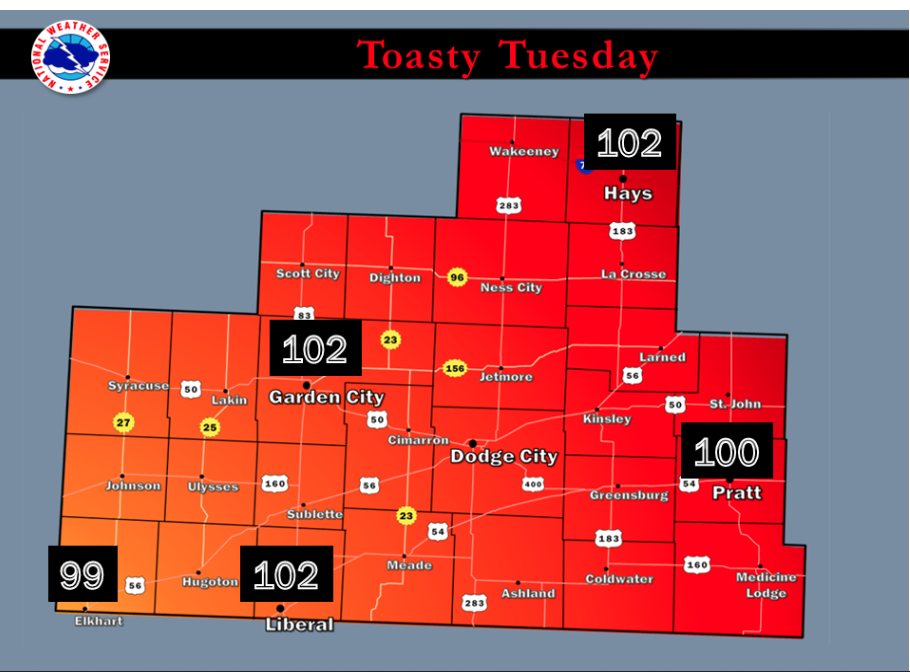
Today Sunny and hot, with a high near 103. Breezy, with a south southwest wind 7 to 12 mph increasing to 15 to 20 mph in the afternoon.
Tonight Partly cloudy, with a low around 74. Breezy, with a south southwest wind 15 to 20 mph decreasing to 8 to 13 mph after midnight.
Wednesday Mostly sunny, with a high near 99. South southwest wind 9 to 11 mph.
Wednesday Night A 30 percent chance of showers and thunderstorms, mainly before 1am. Mostly cloudy, with a low around 71. East southeast wind 6 to 10 mph.
Thursday A 20 percent chance of showers and thunderstorms after 1pm. Partly sunny, with a high near 94. South southeast wind around 7 mph becoming east northeast in the morning.
Thursday Night A 40 percent chance of showers and thunderstorms. Mostly cloudy, with a low around 70.
Friday A 30 percent chance of showers and thunderstorms after 1pm. Partly sunny, with a high near 94.
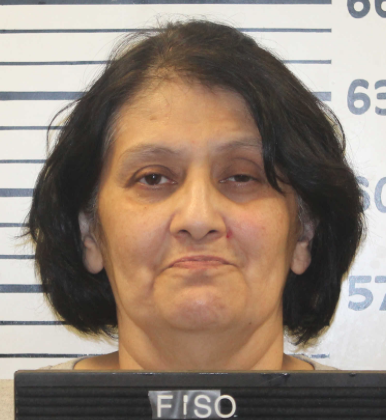
FINNEY COUNTY – Law enforcement authorities are investigating a suspect for aggravated battery.
Just before 2 a.m. Monday, police were dispatched to 700 Safford Street in Garden City for reference a person who had been run over by a vehicle, according to a media release.
The investigation revealed the suspect, Diane Wagner, 57, Garden City, had responded to the 700 block of Safford Street to pick up her grandson. An argument ensued between family and Wagner attempted to leave the residence in her vehicle with the child.
The victim attempted to remove the child from the car as Wagner was leaving. The victim clung to the vehicle and was dragged down the alley until she lost her grip and her legs were run over by the rear wheel of the vehicle.
The victim was transported to St. Catherine Hospital where she was treated and released for minor injuries.
Wagner was arrested and lodged in the Finney County Jail and could face the possible charge of Aggravated Battery.
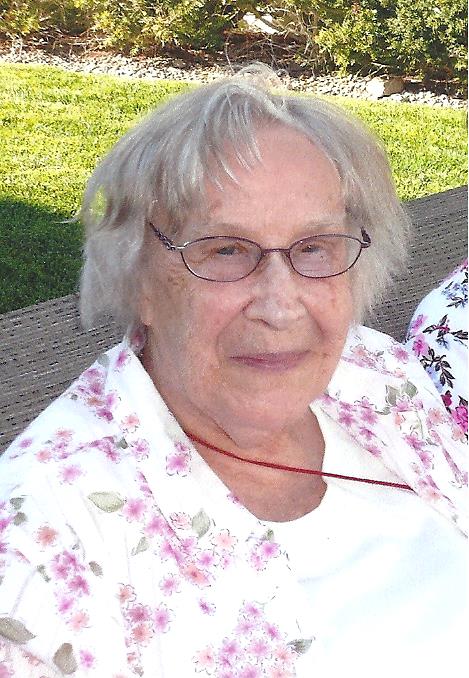
 Helen E. Allen, 97, Hays, formerly of Ellis, died Monday, July 10, 2017 at Brookdale Senior Living Community.












 Tonight Partly cloudy, with a low around 74. Breezy, with a south southwest wind 15 to 20 mph decreasing to 8 to 13 mph after midnight.