TOPEKA, KS — The Kansas Volleyball Association is pleased to announce the 2017 Week 4 Volleyball Rankings. Due to the timing of the release of the new 2017-18 KSHSAA classifications, this week’s rankings still reflect the previous classifications, but the rankings will be adjusted for the new classifications in Week 5. Information is based on records that were submitted by September 25.
Hays High slips one spot to No. 9 in 4A Division I while TMP-Marian holds at No. 4 in Class 3A. Plainville remains third in Class 2A with Wheatland-Grinnell still No. 1 in 1A Division II. Otis-Bison dropped on spot to No. 4.
Class 6A
1. Blue Valley North 14-3 (1)
2. Blue Valley West 18-2 (3)
3. Olathe Northwest 11-3 (2)
4. Olathe North 18-3 (4)
5. Manhattan 17-6 (7)
6. Washburn Rural 14-4 (8)
7. Lawrence 11-4 (10)
8. Blue Valley 11-6 (6)
9. Lawrence-Free State 19-7 (5)
10. Shawnee Mission Northwest 16-7 (NR)
Class 5A
1. St. James Academy 18-4 (1)
2. Lansing 14-1 (2)
3. De Soto 16-2 (4)
4. Newton 22-4 (7)
5. Maize 21-6 (5)
6. Goddard 18-2 (3)
7. St. Thomas Aquinas 13-9 (6)
8. Andover 15-4 (8)
9. Shawnee Heights 11-7 (10)
10. Pittsburg 16-2 (9)
Class 3A
1. Kingman 24-0 (1)
2. Silver Lake 18-4 (2)
3. Hesston 16-1 (3)
4. Thomas More Prep-Marian 22-1 (4)
5. Nemaha Central 23-1 (5)
6. Douglass 13-2 (6)
7. Cheney 15-4 (8)
8. Garden Plain 12-6 (7)
9. Beloit 16-2 (10)
10. Royal Valley 12-4 (9)
Class 2A
1. Heritage Christian 19-2 (1)
2. St. Mary’s-Colgan 21-3 (2)
3. Plainville 17-0 (3)
4. Kiowa County 17-2 (4)
5. Inman 16-2 (5)
6. Udall 21-0 (6)
7. Smith Center 17-5 (8)
8. Valley Falls 15-5 (7)
9. Valley Heights 16-6 (10)
10. Jefferson County North 13-5 (9)
Twenty years ago, Top Notch Cleaners started a coat drive for local kids in the area who could not afford to get coats for the winter season. Over the years, other organizations started to get involved, including Master Cleaners. The coat drive has continued to grow and draw attention from places outside of Kansas as the leftover coats have been sent to places such as American Indian reservations and even Hurricane Katrina victims.
For Amy Smith of Top Notch Cleaners, it was her parents that made the idea a reality 20 years ago.
“A lot of it was my parent’s idea, mainly my dad’s. He grew up as a little kid on a farm over by Walker Army Airfield and a lot of times, having a lot of kids, they did not have money for everybody to get new coats so they got a lot of Army stuff like Army jackets and things like that. … He commented on how there is obviously a need here in Hays,” Smith said. “He thought that with having a cleaners service, it would be a good idea for us to maybe initiate it and get it started.”
Smith says in the first couple years, a lot of coats were donated but not as many people were picking them up. Once they moved the date back on the coat drive, there was more success.
“We got a lot better response by moving the date back because, by the beginning of October, usually we have had a cold spell where people go to the closet to get their jackets out and it kind of reminds them,” she said. “It is just a better timing for it and then we try and have them given out before Halloween because usually by Halloween we have had a couple cold days and the kids are going to be needing them.”
Although it is a coat drive, Ryan Gottschalk of Master Cleaners said it is not just coats that can be donated for the drive.
“We have people year round that drop off stuff at our store for the drive. Coats, hats, gloves and jackets as they go through their closets throughout the year and we collect them and save them until it gets to be time for the coat drive,” he said.
The biggest demand has always been children’s coats. Although Smith sets up boxes for coats at USD 489 schools and sends fliers home with USD 489 students, she said there are never enough coats for kids at the giveaway.
“Our coat giveaway starts at 9 in the morning and usually by 9:30 all of the kids coats that we and Master Cleaners have are gone,” Smith said. “Between us and Master Cleaners, we get anywhere between 1,200 to 1,600 items and kids coats are such a small fraction. We are lucky if we get 100 to 200 kids coats out of those.”
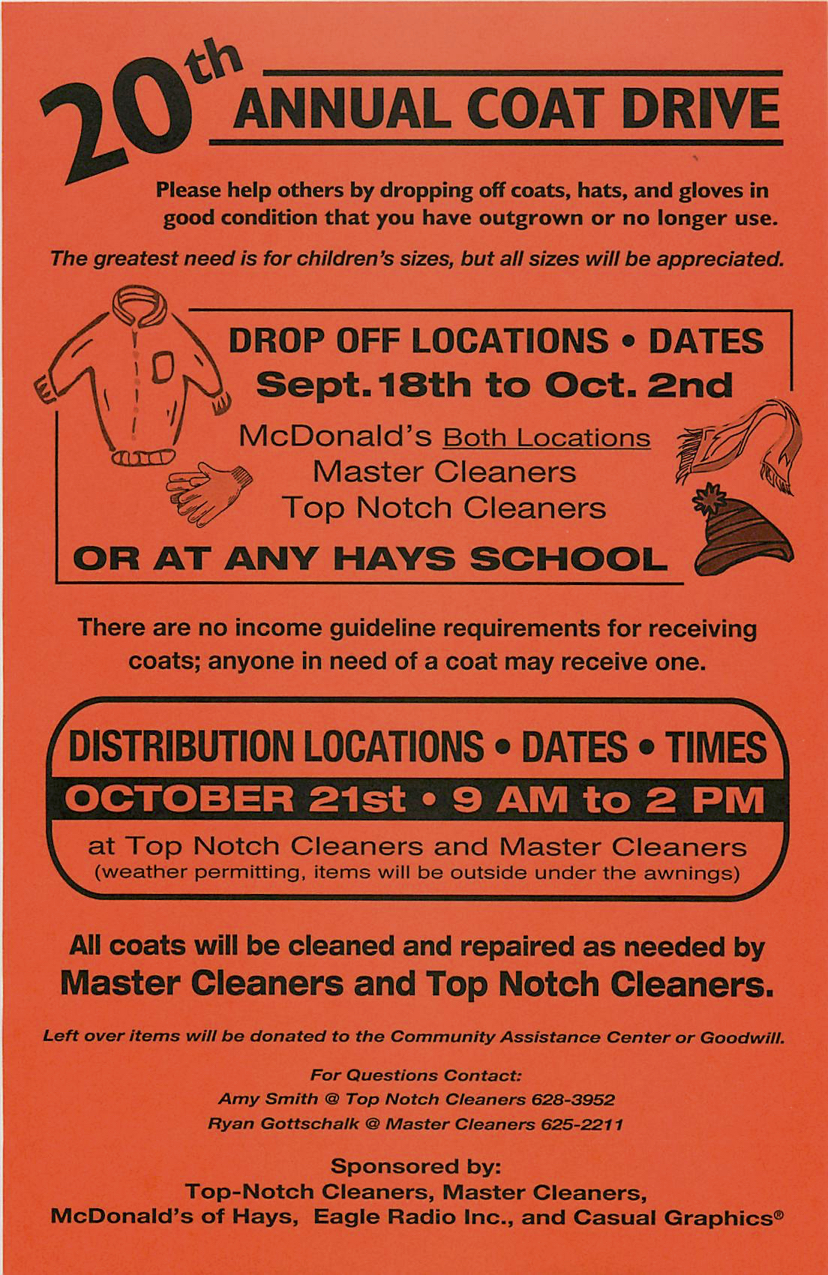
If you are looking to donate coats, hats or gloves that have been outgrown or are no longer used, you can drop off those items at both McDonald’s locations in Hays, Top Notch Cleaners, 201 W. Eighth, or Master Cleaners, 200 W. 8th through Oct. 2. Items can also be dropped off at any Hays school, including Thomas More Prep-Marian and Holy Family Elementary. If you miss the deadline, the schools will be taking items past Oct. 2.
The coat drive distribution will be at both Top Notch Cleaners and Master Cleaners on Oct. 21, from 9 a.m. to 2 p.m. Any leftover items will be given away and not sold. There are no income guideline requirements for receiving coats; anyone in need of items can receive them.
Lynette Marie Callahan, 48, former Munjor, Kansas, resident, died Tuesday, September 26, 2017, at her home in Frisco, Texas.
She was born August 29, 1969, in Hays, Kansas, to Leslie E. and Linda (Weigel) Gross. She married Thomas L. Callahan on October 27, 1995, in Las Vegas, Nevada.
She was a production Manager for PrimeLending in Dallas, Texas. She was a 1988 graduate of Thomas More Prep-Marian High School and attended Fort Hays State University. She was a member of The St. Francis of Assisi Catholic Church in Frisco, Texas. She lived in Amarillo, Carrollton and moved to Frisco, Texas in 2006.
Survivors include her husband, Thomas L. Callahan, Frisco, TX; one son, Sean Callahan, Frisco, TX; one daughter, Hannah Callahan, Frisco, TX; her parents, Leslie and Linda Gross, Munjor, KS; one brother, Len Gross and wife, Patricia, Dumas, TX; two sisters, LaNae Lang and husband, Greg, Hays, KS; LaShana Hunt and husband, Troy, Lawrence, KS; her mother-in-law, Shirley Callahan, Warwick, Rhode Island; numerous nieces and nephews.
She was preceded in death by her grandparents, Joe and Rose (Pfannenstiel) Gross; and Albinus and Velma (VonLintel) Weigel.
Services are 10:00 A.M. Monday, October 2, 2017, at St. Francis of Assisi Catholic Church, Munjor, Kansas. Burial in St. Francis of Assisi Cemetery, Munjor, Kansas.
A Vigil service / rosary will be at 7:00 P.M. Sunday, at Cline’s Mortuary of Hays, 1919 East 22nd Street, Hays, Kansas.
Visitation is from 1:00 to 3:00 P.M. Sunday, and from 6:00 to 9:00 P.M. Sunday, at Cline’s Mortuary of Hays, 1919 East 22nd Street, Hays, Kansas.
Memorials are suggested to St. Francis of Assisi Catholic Church or TMP-Marian High School.
Condolences can be left by guestbook at www.keithleyfuneralchapels.com or can be sent e-mail to [email protected].
Kansas education officials did little to promote a public comment period for a school accountability plan designed to steer the state through 2030 and guide nearly $2 billion in federal spending.
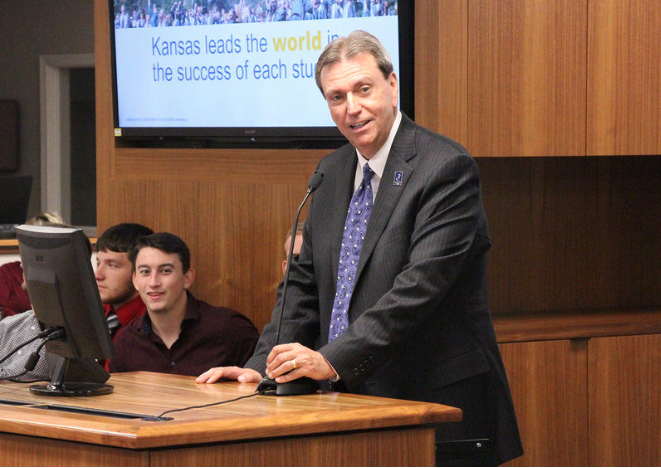
Randy Watson, Kansas education commissioner, says state officials gathered input for an educational initiative in 2015 that helped inform their work on a plan that could guide $2 billion in federal funding through 2030. CELIA LLOPIS-JEPSEN / KANSAS NEWS SERVICE
While some states that publicized town halls and launched online surveys for their plans collected comments by the thousands, Kansas officials didn’t use such tools nor issue news releases or social media posts about the state’s public comment period.
Fewer than 20 people submitted feedback during the 30-day period — primarily the month of August — when the draft was available on the Kansas State Department of Education’s website.
Education Commissioner Randy Watson said that number isn’t a concern.
“What it speaks to is that most people in Kansas are attuned to where the (state) board is heading” with its vision for schools, he said. “And the people that are engaged and wanting to know about the impact of the ESSA plan, they are giving us feedback for that.”
ESSA refers to the Every Student Succeeds Act, a federal statute on better serving students — particularly those who are historically disadvantaged or underserved.
States were charged with crafting accountability plans that demonstrate how they will comply with the law, which replaced its predecessor, called the No Child Left Behind Act, in 2015. Kansas submitted its plan to the U.S. Department of Education on Sept. 12. Watson said Kansas had gathered public input for a separate initiative in 2015 that helped inform its work on complying with ESSA.
Public notices
Jawanda Mast, an advocate for children with disabilities, disagrees with Watson’s assessment. Mast, whose teenage daughter attends school in Olathe, said she knew Kansas was required to publish its draft online for public comment but had difficulty finding it. She reached out to the department to ask for the link.
“I am pretty involved and kind of know what’s going on,” said Mast, who has concerns about how details in Kansas’ ESSA plan will affect special education. “If it’s that hard to find, it’s not very public.”
Through an open records request, the Kansas News Service sought all notices used to announce the public comment period and copies of the submitted comments.
The agency provided a screenshot of its public comment page — which was part of the early childhood, special education and federally funded services section of its website — and an invitation sent to an email list for specialists in early childhood and special education.
“These are the two tools that were used to get the message out,” an attorney for the agency wrote.
It did not use social media. During the 30-day comment period, however, it did share dozens of posts on social media platforms regarding other agency news.
The Kansas State Department of Education posted a notice of the public comment period on its website. CLICK to EXPAND
Sixteen people or organizations submitted feedback. The agency initially delayed releasing the public comments to the Kansas News Service, citing an exemption to open records law pertaining to documents in which opinions are expressed.
Martha House, a longtime school librarian in Council Grove, was among those who wrote in. House said she and other librarians had kept an eye out for town hall opportunities to discuss the ESSA plan, but seeing none, watched for the 30-day online commenting window.
Several current and former school librarians were among those who wrote in with concerns about the plan’s lack of specifics on leveraging libraries to bolster student achievement.
“We had to try,” said House, president of the Kansas Association of School Librarians. “There are some things that librarians can really contribute to.”
Advisory committee
Watson and education deputy commissioner Brad Neuenswander say Kansas had an ESSA advisory committee that met two or three times a year to discuss and help shape the plan.
Meeting dates and minutes were posted online, and the gatherings attracted extra participants who shared their thoughts.
The group included nearly 40 people, according to a list provided by the agency. About half were employees from large and small school districts across the state, representing various roles and functions, such as special education and school administration.
Others represented private schools, the postsecondary sector, education advocacy groups such as the teachers union and school board association, parents of children with disabilities and others.
“We try to get a lot of voice,” Neuenswander said. “We try to have a large enough representation of what we believe Kansas student population looks like, as well as trying to keep it a manageable enough group.”
Watson and Neuenswander also said they discussed and showed the ESSA draft in a variety of other contexts, such as at superintendent meetings.
“I would say most of what we did was get comments when we were out in the field,” Neuenswander said.
‘Deep and broad’
Kansas receives about $150 million annually for the federal programs tied to its ESSA plan, the bulk of which goes toward addressing academic achievement in low-income communities.
Chad Aldeman, of Bellwether Education Partners, a consulting group that promotes school improvement for underserved students in particular and is independently reviewing state ESSA plans, said states would benefit from seeking “both deep and broad” input because “no one person can represent an entire state.”
Aldeman has not reviewed what steps Kansas took, but he said most states used a combination of advisory committees and broader public outreach tools, such as surveys.
“If you think accountability matters, then you want a system that people can understand and react to,” he said.
The Kansas News Service reviewed dozens of other state websites for ESSA information and found news releases from all but two announcing the release of the drafts and calling for public comment.
Some states added summaries or readers’ guides to the dense policy blueprints — which can be upward of 100 or 200 pages — held town halls, supplemented the statutory minimum 30-day comment period with surveys or enlisted the help of school districts to notify families about input opportunities.
Such varied approaches were recommended by the Council of Chief State School Officers, which brings together heads of education for each state.
“Most states reached out to many stakeholders in different ways,” council spokeswoman Olympia Meola wrote in an email.
Last year the council published a guide on engaging communities in the ESSA process. It advised drawing on a range of strategies, such as leaning heavily on Facebook and Twitter to reach parents, using blogs and online surveys, and distributing printed materials to reach families that don’t have computers.
The group also suggested releasing glossaries, summaries free of education jargon, or other materials that make the ESSA draft more accessible to non-educators and clarify how it relates to the state’s own strategic vision.
“The intent of ESSA is to make sure the people affected by the law are at the table from the start of the process,” the guide said.
To that end, it advocated for starting early, to avoid a situation in which people feel they have been invited to give input only after decisions have been made.
Multiple drafts
According to a partial list of ESSA plans compiled on the Collaborative for Student Success’ UnderstandingESSA.org website, at least 15 states released more than one draft to the public.
Oklahoma is among those 15. It issued three drafts during 2016 and 2017, starting with a preliminary version published online with a survey that attracted more than 3,000 comments on questions such as what tests to use for measuring student progress and whether to spend certain funds on teacher retention or other efforts.
“In making those decisions, it was so very critical we heard from stakeholders,” said Robyn Miller, deputy superintendent for the Oklahoma State Department of Education.
It solicited comments from dozens of groups and institutions — from Native American tribes to military bases — and issued nearly 800 invitations for input.
The state held town halls and online webinars, seeking student participation at each, and 1,000 people turned out at seven locations statewide.
“I think from draft to draft, those stakeholders who have been very vocal, they could see that they were heard,” Miller said.
For example, Oklahoma added plans to recognize schools with robust arts or science programs in its online school accountability tool that families can navigate for information. The state also adopted feedback from its school librarians similar to the input that librarian House and others provided in Kansas.
Kansans Can
The Kansas State Department of Education did conduct dozens of public meetings and gather thousands of comments in 2015, but that was unrelated to ESSA. Those efforts gleaned input from educators, families and businesses on what skills they thought today’s youths need to succeed and the role of schools in instilling those.
The feedback they received became the backbone for Kansans Can, the Kansas State Board of Education’s vision, which includes outcomes like success after high school and social skills and emotional growth among students.
“None of that is included in our ESSA plan,” Neuenswander said. “The board’s vision is not part of the ESSA plan.”
Instead, Neuenswander and Watson described ESSA as a subset of their agency’s work.
But because the Kansas ESSA plan is geared at meeting requirements for receiving and spending federal dollars, it contains many details above and beyond what was discussed on the Kansans Can listening tour.
It asks schools to more than triple test score proficiency rates for some student subgroups — such as African-Americans, English language learners and children with disabilities — by 2030. That would mean boosting scores on standardized math and reading tests at steep annual rates that the Kansas Association of School Boards is concerned have not previously been achieved and sustained on this scale.
The state also was required to make decisions in its plan about:
How to support struggling schools.
What steps to take if they miss progress targets.
How to ensure children in minority racial and ethnic groups or from low-income families have equal access to qualified, skillful, experienced teachers.
Whether to spend certain funds on improving equitable access to good teachers.
Some of these nitty-gritty components are what concerned Mast, the parent from Olathe.
Kansas, for example, used a key statistical threshold to determine which schools will have to meet which accountability targets. The state said it chose a threshold that is statistically sound, but Mast worries it will exempt many schools from goals related to serving children with disabilities. That’s one reason she wanted more public discussion.
“I did not feel like they were very transparent,” she said.
Watson and Neuenswander said the state education department’s ESSA plan fits with the Kansans Can vision. The proficiency targets and the goal of a 95 percent graduation rate, for example, reflect the State Board of Education’s push to meet Kansas workforce needs and ensure students are ready for life after high school.
The agency wasn’t trying to discourage public comments on its ESSA plan, Watson said, but did want to avoid causing any confusion in which the public might think educational officials were shifting away from Kansans Can.
The listening tour for that vision was one reason the agency didn’t see a need for more extensive outreach on ESSA.
“We felt like we already had the input of what Kansans wanted,” Watson said. “So we didn’t have to go repeat that process.”
LOUISVILLE, Ky. (AP) — The Latest on a federal fraud and bribery scandal in college basketball (all times local):
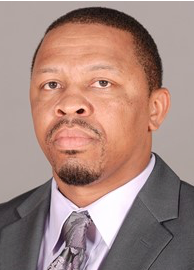
The FBI says Oklahoma State assistant basketball coach Lamont Evans, a Kansas State alum, has surrendered to federal authorities in allegations that he took bribes to influence star athletes.
FBI special agent Jessica Rice says Evans surrendered to federal marshals early Wednesday on federal corruption charges following an investigation into the criminal influence of money on coaches and players in the NCAA.
Rice says Evans is scheduled to make an initial appearance before U.S. Magistrate Charles Goodwin about 3 p.m. Wednesday.
According to the papers, Evans expected $2,000 a month for his services. Evans said it was necessary to use his influence over the youngsters early in their college careers because many of them are “one and done,” meaning they play one year of college ball before joining the NBA, according to court papers.
Evans graduated with a degree in social science from K-State in 2009. He worked with the Wildcat basketball program as a Student Assistant from 2008-09, a Graduate Manager from 2009-2011, and an Assistant Coach 2011-12, according to his OSU bio.
12:35 p.m.
The acting U.S. attorney in Manhattan says the picture of college basketball painted by criminal charges his office brought against four college assistant coaches and an Adidas executive is not a pretty one.
Joon Kim made the comment at a news conference Tuesday after the charges were unsealed in Manhattan federal court. Assistant coaches at Arizona, Auburn, the University of Southern California and Oklahoma State were expected to appear in courts later Tuesday to face the charges.
Kim says the case against 10 men, including sports agents and marketing professionals, exposed “the dark underbelly of college basketball.” He says the coaches exploited the “trust of the players they coached and recruited.”
It was not immediately clear who will represent the coaches in court.
___
The director of global sports marketing for Adidas is among those charged in a bribe-paying scheme that federal authorities say was designed to match agents and advisers to players before they became NBA stars.
James Gatto was arrested Tuesday along with nine others, including four assistant basketball coaches from Arizona, Auburn, the University of Southern California and Oklahoma State. It was not immediately clear who will represent him in court.
In criminal complaints, authorities said agents and financial advisers paid bribes to assistant coaches to get them to introduce them to star college players and their parents before the students turned professional.
Authorities said the coaches received thousands of dollars in bribes, enabling the agents and others to get a slice of the millions of dollars the athletes could eventually make in the NBA.
___
9:50 a.m.
Federal prosecutors have announced charges of fraud and corruption in college basketball, including against four coaches.
The coaches work at Oklahoma State, Auburn University, Arizona and the University of Southern California.
They were among 10 people charged in New York City federal court. Others included managers, financial advisers and representatives of a major international sportswear company. The details will be discussed at a news conference on Tuesday afternoon.
In court papers, prosecutors said the FBI has since 2015 been investigating the criminal influence of money on coaches and student-athletes who participate in intercollegiate basketball governed by the NCAA.
They said the probe has revealed numerous instances of bribes paid by athlete advisers, including financial advisers and associate basketball coaches, to assistant and associate basketball coaches to exert influence over student athletes.
Goodland, Kansas, resident Julie Lee Schlick, 78, died Sunday, September 24, 2017, at the Medical Center of Aurora, in Aurora, Colorado.
She was born March 29, 1939, in Drumright, Oklahoma, the daughter of Bonnie Lee (Hawkins) and Ferris Pete Saffa. She attended elementary and secondary schools in Drumright and later completed a one year accounting vocational training program in Salina, KS, before establishing residence in Hays, Kansas.
There she eventually met and married her husband, Ralph George Schlick on November 22, 1962. During the first six years of their lives together they welcomed into their lives their three daughters, Mary, Betty, and Suzie and lived for a time in the Kansas communities of Hays, Salina, and Pratt and Tulsa, Oklahoma. Eventually, they settled in Hays in 1968 and lived for nearly 45 years before moving to assisted living at Wheat Ridge Acres in Goodland, Kansas, starting in 2014. Altogether, Julie and Ralph enjoyed 53 years of marriage before his departing a year and a half ago.
Besides raising her three daughters, Julie worked various part-time secretarial and restaurant service jobs until 1973 when she and Ralph became mobile home park managers of Countryside Estates and Countryside West in Hays and did so for almost ten years. During her leisure time she enjoyed tending to her flowers, playing cards with friends, engaging in various craft projects, and reading.
Throughout her life, people described Julie as a one of a kind lady who often surprised people by her directness and attention to detail. Not everyone appreciated her outspoken nature, but if someone were wise enough to look past her sometimes “sparky” exterior, he/she recognized in Julie a person who experienced a lot of early life pain who was doing her best to move beyond it. She was a very caring, loving person for whom family, loyalty, responsibility and justice mattered deeply. More than probably anything else, she was most proud of her loving husband, daughters and grandchildren.
Preceding her in death were her parents, siblings Joseph Michael and an infant brother, son-in-law, Tom Rohr, and husband, Ralph.
Surviving family includes daughters Mary Warren and her husband Craig of Salina; Betty Rohr of Cedar Rapids, Iowa; Suzie Reichert and her husband, Keith of Denver, Colorado; five grandchildren Anthony Warren, Jessica Warren, Anthony Rohr, Katrina Rohr, Sheldon Nelson; and five great-grandchildren.
Funeral service will be Thursday, September 28, 2017 at 2:00pm MT, at the Koons-Russell Funeral Home in Goodland, with Pastor Doug Amend presiding. Burial will follow in the Goodland Cemetery.
Family and friends may share their respects on Wednesday, 5:00pm-7:00pm at the funeral home, or Thursday before the funeral, 1:00pm-2:00pm.
Memorials may be designated to the Julie Schlick Memorial and may be left at the service or mailed to Koons-Russell Funeral Home, 211 North Main, Goodland, KS. 67735-1555.
Elaine Ann Johnson, age 70, died on Monday, September 25, 2017 at Locust Grove Village Care Center, LaCrosse, Kansas. She was born on November 20, 1946 in Great Bend, Kansas the daughter of Wesley and Ruth Miller Hagelgantz.
She was a member of the Bazine Seventh Day Adventist Church. Elaine taught Home Economics for many years in Chicago, Colorado, Florida, Washington state and Bazine. She also worked as a social worker for SRS family welfare.
She married Daniel Johnson on May 21, 1978 in Peaceful Valley, Colorado. He preceded her in death on November 16, 2016.
Other survivors include one brother, Robert and his wife Loa Hagelgantz of Bazine; sister-in-law, Linda Hagelgantz of Topeka; and numerous nieces and nephews and great nieces and nephews. She was preceded in death by her parents, husband, and brother, Calvin Hagelgantz.
Funeral Service will be on Sunday, October 1, 2017, 2:00 p.m. at the Seventh Day Adventist Church, LaCrosse with burial in the Bazine Cemetery. Viewing will be at Fitzgerald Funeral Home, Ness City on Friday, September 29 from 1:00 p.m. until 9:00 p.m. and on Saturday from 9:00 a.m. until 9:00 p.m. with the family present from 5-7 p.m.
Memorial contributions may be given to the Adventist Development and Relief Agency or KZBA 100.1 FM Bazine Christian Radio Association.
HARPER COUNTY—Three earthquake in two days shook portions of Kansas. A quake at 8:30p.m. Tuesday measured a magnitude 2.7 and was centered approximately fourteen miles southeast of Harper, according to the U.S. Geological Survey.
That followed a 2.6 magnitude quake at 2:15 p.m. Tuesday approximately five-mile northeast of Harper. On Monday, a 2.5 quake was centered thirteen miles northwest of Harper. There are reports of damage or injury from the quakes.
The USGS reported also reported a series of five quakes measuring 2.7 – 3.2 in Sedgwick, Harper and Sumner County September 10-15.
——–
HARPER COUNTY —A small earthquake shook Kansas on Monday. The quake measured a magnitude 2.5 and was centered approximately 13-miles northwest of Harper, according to the U.S. Geological Survey.
It is the first earthquake in Kansas in more than a week. The USGS reported a series of five quakes measuring 2.7 – 3.2 in Sedgwick, Harper and Sumner County September 10-15.
There are no reports of damage or injury from Monday’s quake.
TOPEKA – The Kansas Water Office’s (KWO) Smoky Hill-Saline Regional Advisory Committee (RAC) and city of Hays will host a Conservation Field Day for the area to share projects being implemented to address regional water issues.
The event will be Friday, October 13, starting at 9 a.m., at the K-State Agriculture Research Center Auditorium, 1232 240th Ave, Hays. The public is encouraged to attend the tour and learn about the area’s water conservation efforts as well as issues that continue to face the region.
There will be presentations from the city of Hays and Smoky Hill-Saline RAC in the morning. A tour will follow the lunch of the conservation projects being implemented around Hays and end by 2 p.m.
Lunch will be provided but RSVPs are required by Friday, September 29, to the Kansas Water Office at 785-296-3185.
The scene of Tax office shooting-photo courtesy KWCH
WICHITA, Kan. (AP) — The state is investigating reports that workers at a Wichita tax office were unable to call 911 on their office phones after a co-worker was shot last week.
Kansas Organization of State Employees executive director Robert Choromanski says that workers shouldn’t have to use their personal cellphones in an emergency. And he “questioned how many critical minutes, or seconds, elapsed before emergency services could be contacted.”
State spokeswoman Rachel Whitten confirmed Tuesday that employees have complained about the inability to call 911. Whitten said Secretary Sam Williams visited the Wichita office Monday and made a test call to 911, which went through.
Ricky Wirths is charged with attempted first-degree murder in the shooting of tax agent Cortney Holloway. Revenue officials say Wirths owes almost $400,000 in taxes.
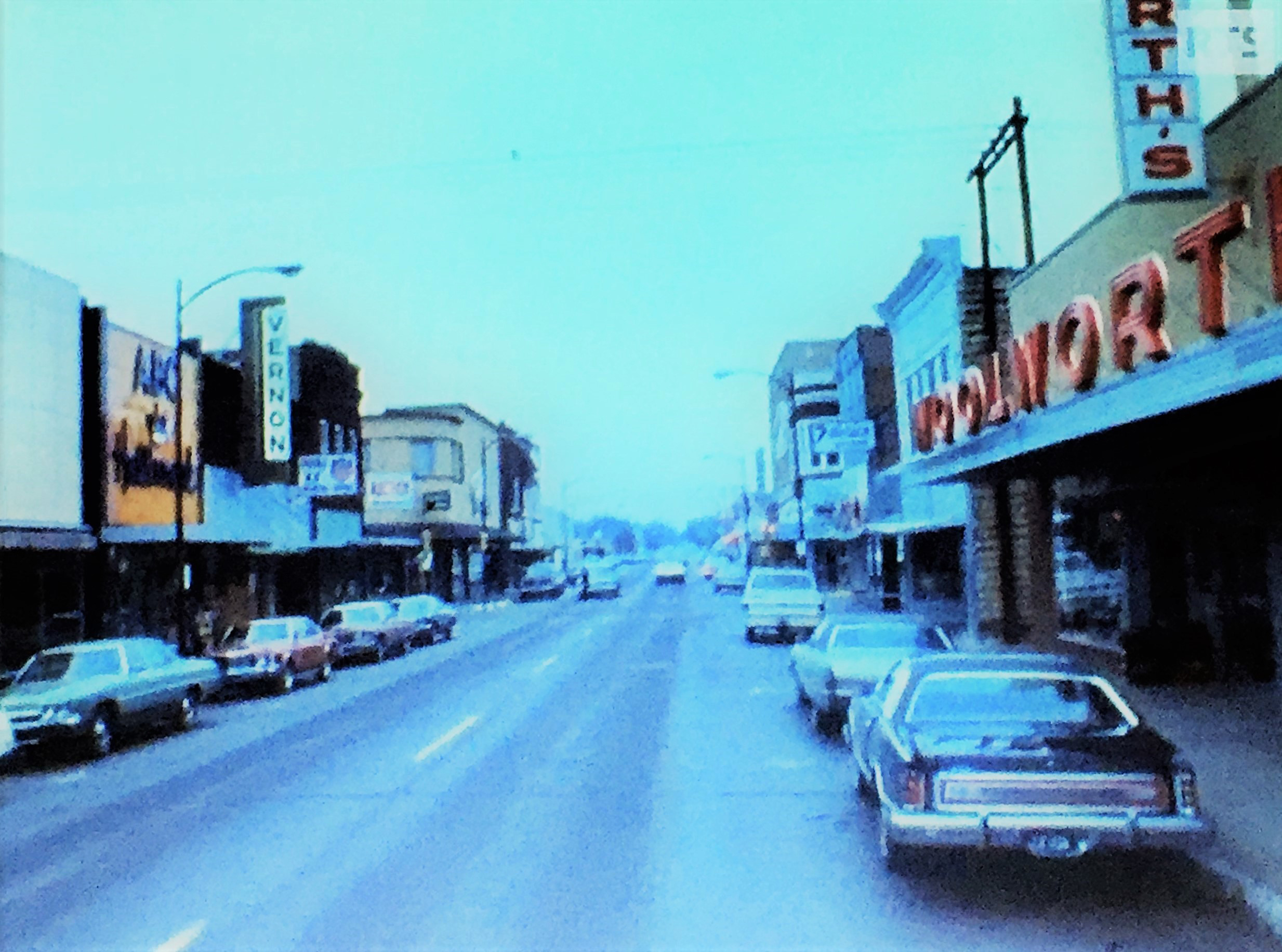
Scene from “A Quiet America,” the 1976 documentary about Hays.
Mark your calendars for the first ever authorized public U.S. showing of “A QUIET AMERICA” – Saturday, October 14 in the Beach/Schmidt Performing Arts Center.
In honor of the 150th Anniversary of Hays & Ellis County, the Hays Arts Council has paid licensing fees & is proudly presenting this film for OUR 50th Anniversary. . . without French voice-over and free & open to everyone! (This is an authorized presentation of the film that was circulating on Facebook for a short time early this year)
This 1976 documentary was produced by Swiss Television (and a French production team) to highlight small-town America during our country’s bi-centennial year. Hays, Kansas was the community they chose and the film (1 hr, 22 min) is truly a time-capsule treasure of our community, its history, & citizens nearly a half-century ago.
Lynette Marie Callahan, age 48, formerly of Munjor, Kansas died Tuesday, September 26, 2107, at her home in Frisco, Texas.
Services will be 10 AM on Monday, October 2, 2017 at St. Francis of Assisi Catholic Church in Munjor, Kansas.
Visitation will be Sunday 1 PM – 3 PM and 6 PM – 9 PM with a parish vigil service at 7 pm all at Cline’s-Keithley Mortuary, 1919 East 22nd Street, Hays, Kansas. Monday visitation will be at the church 9 AM until service time.
For the first time in the history of the Hays High School musical, all rehearsals will be held at the high school.
The reason for this change is mainly because the musical performances will take place at Beach Schmidt Auditorium. Choral instructor, and director of the musical, Johnny Matlock said he sees no drawbacks to the new setup.
“At 12th Street Auditorium we were limited,” Matlock said. “The stage space constrained what could be happening at any point in time. The chairs there are not ideal for singing, and only one aspect of the show could be worked on at a time, choreography, blocking or singing.”
Matlock’s hope for the rehearsals this year is that efficiency is maximized.
“With multiple rooms to work with different groups we can get a lot more done in less time,” Matlock said. “Also, if we have downtime here students have space to work on homework, and they have Wi-Fi.”
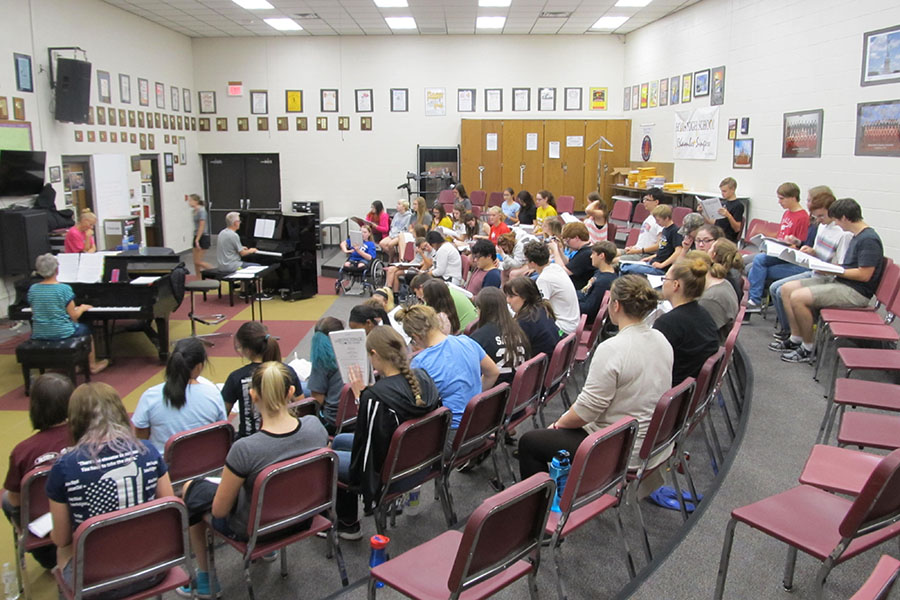
The musical cast will use the three different rooms, all serving different purposes. The cafeteria will be used mainly for choreography, the wrestling room will be used mainly for blocking, and the choir room will be used for singing.
Artistic Director (of the musical) Jenny Rajewski sees many advantages to the new format as well.
“The students won’t have to travel to 12th Street anymore, which will save a lot of time and be much safer,” Rajewski said. “It also will be much more convenient for the students.”
Rajewski mainly works with blocking (placement of cast members) and acting in the show. She will use the wresting room where she has a Marley dance mat roughly the size of the Beach Schmidt stage set up.
Rajewski is a huge believer in using the mat instead of the stage at 12th street and her only concern as of right now is from the shared space.
“I’m really only worried about interference from non-musical members,” Rajewski said. “Unfortunately, because it’s a shared space we can’t be sure something won’t happen to the mat.”
The mat will be permanently set up in the wrestling room until the performances of the show. It will be taped down to make it easier to manage, but has not been yet. Due to this there has already been a bit of chaos with the mat.
“I went into the wrestling room to find the mat all out of place and moved around,” Rajewski said. “It was annoying but not a problem that couldn’t be fixed.”
Fortunately, once the mat is taped down this kind of incident should not be a problem.
“I really prefer working like this, with the mat and all,” Rajewski said. “It’s less confined than 12th Street, there’s less problems. It’s simpler, and it’s more like how professional companies do productions.
This year’s musical production is The Hunchback of Notre Dame.